
What this is
- This article discusses carbohydrate (CHO) periodization strategies for enhancing endurance training adaptations.
- It introduces the , suggesting optimal muscle glycogen levels for training.
- The authors propose a model called 'fuel for the work required' to optimize CHO availability based on training demands.
Essence
- The article presents a framework for in endurance training, emphasizing the importance of muscle glycogen levels. It outlines how manipulating CHO availability can enhance training adaptations while maintaining performance.
Key takeaways
- Reduced carbohydrate availability during training can enhance metabolic adaptations in skeletal muscle. Studies indicate that training with low glycogen can increase oxidative enzyme activity and improve exercise capacity.
- The posits a specific range of muscle glycogen concentration that optimizes training adaptations. Training below this threshold may enhance cell signaling and gene expression related to endurance.
- The proposed 'fuel for the work required' model advocates for daily adjustments in CHO availability based on training intensity and duration. This approach aims to balance glycogen levels with the demands of upcoming training sessions.
Caveats
- The optimal strategy remains unclear and may vary based on individual athlete needs and specific training goals. Further research is necessary to establish effective protocols.
- Current evidence on the is limited and requires more empirical validation. The relationship between glycogen levels and performance adaptations needs further exploration.
Definitions
- Carbohydrate periodization: A strategy for adjusting carbohydrate intake around training sessions to optimize performance and adaptations.
- Glycogen threshold hypothesis: The concept that there exists a specific muscle glycogen concentration that optimally supports training adaptations.
Simplified
Key Points
| Periodically completing endurance training sessions (e.g. 30–50% of training sessions) with reduced carbohydrate (CHO) availability modulates the activation of acute cell signalling pathways (73% of 11 studies), promotes training-induced oxidative adaptations of skeletal muscle (78% of 9 studies) and, in some instances, improves exercise performance (although only 37% of 11 studies demonstrated performance improvements). |
| We propose the presence of a muscle glycogen threshold whereby exceeding a critical absolute level of glycogen depletion during training is especially potent in modulating the activation of acute and chronic skeletal muscle adaptations associated with ‘train low’. |
| Future research should attempt to quantify the glycogen and CHO cost of endurance athletes’ typical training sessions so as to increase our understanding of the exercise conditions that may elicit the proposed glycogen threshold and thereby inform practical application of ‘fuel for the work required’ paradigm. |
Introduction
The principle of ensuring sufficient carbohydrate (CHO) availability before, during and after training and competition is widely recognized as the fundamental nutritional priority for athletic populations. Indeed, the foundation of current sport nutrition guidelines [1] were developed by Scandinavian researchers in the late 1960s with the introduction of the muscle biopsy technique [2–5] and the classical ‘super-compensation’ model of CHO loading. In another landmark study in 1981, Sherman and colleagues [6] observed similar magnitudes of glycogen super-compensation with a less severe protocol (i.e., without the exhaustive exercise and CHO restriction phase), whereby several days of a combined exercise taper and moderate CHO intake (e.g. 5 g kg−1 body mass) is followed by 3 days of higher CHO intake (8 g kg−1 body mass). While these data have practical application from a precompetition perspective, one of the most overlooked components of this study is that no differences in half-marathon running performance (as completed on an outdoor 220 m running track) were observed between trials, despite differing pre-exercise muscle glycogen status. The authors allude to this finding when discussing their data:“The performance times indicate that carbohydrate loading was of no benefit to performance during the 20.9 km run. In fact, performance times were actually slower in the trials with higher levels of muscle glycogen. This suggests that anything above a minimal level of muscle glycogen is unnecessary for performance of a given intensity and duration. More importantly, the practical question may not be how much can I super-compensate but rather, does my diet contain enough carbohydrate to maintain adequate stores of muscle glycogen on a day-to-day basis for training and performance runs?” (p. 117).
Accordingly, the aim of this article is to present a contemporary overview of CHO periodization strategies for training from both a theoretical and practical perspective. We begin by outlining the effects of various train-low paradigms on modulating cell signalling pathways, training adaptations and exercise performance. We then present our rationale for the ‘glycogen threshold hypothesis’, a window of absolute muscle glycogen concentration of which training sessions could be commenced within so as to provide a metabolic milieu that is conducive to modulating cell signalling. We close by presenting a practical model of CHO periodization according to the principle of ‘fuel for the work required’. As opposed to chronic periods of CHO restriction, this model suggests that CHO availability should be manipulated day-to-day and meal-by-meal according to the intensity, duration and specific training goals. With this in mind, we define CHO availability as the sum of the endogenous (i.e., muscle and liver glycogen) and exogenous CHO (i.e. CHO consumed before and/or during exercise) that is available to sustain the required training intensity and duration. According to this definition, it is possible to have insufficient CHO availability (even if exercise is commenced with high pre-exercise muscle glycogen stores) if an inadequate dose of CHO is consumed during exercise to sustain the desired workload [13]. Alternatively, it is possible to commence exercise with reduced muscle glycogen yet still be considered to have sufficient CHO availability if the exogenous CHO consumed during exercise permits the completion of the required training intensity and duration [14].

Schematic overview of the potential exercise-nutrient-sensitive cell signalling pathways regulating the enhanced mitochondrial adaptations associated with training with low CHO availability. (1) Reduced muscle glycogen enhances both AMPK and p38MAPK phosphorylation that results in (2) activation and translocation of PGC-1α and p53 to the mitochondria and nucleus. (3) Upon entry into the nucleus, PGC-1α co-activates additional transcription factors (i.e. NRF1/2) to increase the expression of COX subunits and Tfam, as well as autoregulating its own expression. In the mitochondria, PGC-1α co-activates Tfam to coordinate regulation of mtDNA, and induces expression of key mitochondrial proteins of the electron transport chain, e.g. COX subunits. Similar to PGC-1α, p53 also translocates to the mitochondria to modulate Tfam activity and mtDNA expression, and to the nucleus where it functions to increase expression of proteins involved in mitochondrial fission and fusion (DRP-1 and MFN-2) and electron transport chain proteins. (4) Exercising in conditions of reduced CHO availability increases adipose tissue and intramuscular lipolysis via increased circulating adrenaline concentrations. (5) The resulting elevation in FFA activates the nuclear transcription factor, PPARδ, to increase expression of proteins involved in lipid metabolism, such as CPT1, PDK4, CD36 and HSL. (6) However, consuming pre-exercise meals rich in CHO and/or CHO during exercise can downregulate lipolysis (thereby negating FFA-mediated signalling), as well as reducing both AMPK and p38MAPK activity, thus having negative implications for downstream regulators. (7) High-fat feeding can also modulate PPARδ signalling and upregulate genes with regulatory roles in lipid metabolism (and downregulate CHO metabolism), although high-fat diets may also reduce muscle protein synthesis via impaired mTOR-p70S6K signalling, despite feeding leucine-rich protein.eukaryotic translation initiation factor 4E-binding protein 1,AMP-activated protein kinase,carbohydrate,cluster of differentiation 36,cytochrome c oxidase,carnitine palmitoyltransferase 1,dynamin-related protein 1,fatty acid,fatty acid binding protein,glucose,glucose transporter type 4,hormone-sensitive lipase,intramuscular triglycerides,large neutral amino acid transporter,leucine,mitofusion-2,mammalian target of rapamycin complex 1,p38 mitogen-activated protein kinase,tumor protein 53,ribosomal protein S6 kinase,pyruvate dehydrogenase kinase 4,-peroxisome proliferator-activated receptor gamma coactivator 1-α,peroxisome proliferator-activated receptor,mitochondrial transcription factor A 4EBP1 AMPK CHO CD36 COX CPT1 Drp1 FA FABP GLU GLUT4 HSL IMTG LAT1 LEU Mfn2 mTORC1 p38MAPK p53 p70S6K PDK4 PGC 1α PPARδ Tfam
Carbohydrate (CHO) Restriction Enhances Cell Signalling and Gene Expression, and Modulates Components of Training Adaptation and Exercise Performance
| Reference | Subjects | Duration | Exercise protocol and glycogen status (mmol/kg dw) | Skeletal muscle adaptations | Exercise performance outcomes |
|---|---|---|---|---|---|
| Twice per day model | |||||
| Hansen et al. [] [9] | 7 Untrained men | 10 weeks5 days × week | Knee extensor exercise. One leg trained 50% of sessions with low glycogen (LOW), while the other trained all sessions with high glycogen (HIGH). Second session glycogen in LOW—pre: 200, post: 100 mmol/kg dw, respectively | Greater increase in CS activity in the LOW conditionIncreased β-HAD activity in the LOW condition only | Improved TTE for knee extensor exercise |
| Yeo et al. [] [17] | 14 trained male cyclists/triathletes | 3 weeks4 × week | 100 min steady-state cycling (63% PPO) followed by 8 × 5-min intervals at maximal pace either 2 h (LOW) or 24 h (HIGH) later. Pre-interval exercise glycogen—LOW: 256, HIGH: 390. Post-exercise glycogen—LOW: 124, HIGH: 229 | Increased CS and β-HAD activity in the LOW condition onlyIncreased COXIV protein content in the LOW condition only | Similar improvements (10%) in 60-min TT for both groups |
| Morton et al. [] [18] | 23 active men | 6 weeks4 × week | 6 × 3-min running (90% VO). NORM trained once per day, while LOW + PLA and LOW + GLU trained twice per day (every other day). LOW + GLU ingested CHO before and during every second training session. Pre exercise glycogen—LOW: 232 and 253, HIGH: 412 and 387 in the gastrocnemius and vastus lateralis, respectively. Post-exercise glycogen—LOW: 107 and 176, HIGH: 240 and 262 in the gastrocnemius and vastus lateralis, respectively2max | Greater increase in SDH activity in LOW + PLA compared with LOW + GLU and NORM | Similar improvements in VOand YoYoIR2 for all groups2max |
| Yeo et al. [] [23] | 12 trained male cyclists/triathletes | Acute exercise | 100-min steady-state cycling (63% PPO) followed by 8 × 5-min intervals at maximal pace either 2 h (LOW) or 24 h (HIGH) later. Pre-interval exercise glycogen—LOW: 256, HIGH: 390. Post-exercise glycogen—LOW: 124, HIGH: 229 | Greater phosphorylation of AMPKin LOWThr172 | NA |
| Hulston et al. [] [19] | 14 trained male cyclists | 3 weeks6 × week | 90-min cycling at 70% VOfollowed by (2 h apart) HIT (8 × 5 min) in the LOW group. The HIGH group performed alternate days of either steady state or HIT cycling. Acute glycogen status not measured2max | β-HAD protein content increased in LOW onlyIncreased fat utilization from muscle triglycerides in LOW only | Similar improvements in 60-min TT for both groups |
| Cochran et al. [] [22] | 10 Active men | Acute exercise | HIT cycling (5 × 4-min at 90–95% heart rate reserve) twice per day (separated by 3 h). One group consumed CHO (2.3 g.kg) between sessions (HIGH), whereas the other group restricted CHO intake (LOW). Pre-pm exercise glycogen—LOW: 256, HIGH: 390. Post-exercise glycogen—LOW: 124, HIGH: 229 | Greater phosphorylation of p38MAPK in LOW following pm exerciseSimilar increase in PGC-1α and COXIV gene expression | NA |
| Cochran et al. [] [20] | 18 Active men | 2 weeks3 days × week | HIT cycling (5 × 4 min at 60% PPO) twice per day (separated by 3 h). One group consumed CHO (2.3 g kg) between sessions (HIGH), whereas the other group restricted CHO intake (LOW). Acute glycogen status not measured | Similar increase in maximal CS activity and protein content of both CS and COXIV | Greater improvement in 250-kJ TT performance in the LOW group |
| Fasted training model | |||||
| Akerstrom et al. [] [27] | 9 Active men | Acute exercise | 2 h one-legged knee extensor exercise (60%) in either a fasted (FAST) or fed (exogenous CHO during; FED) state. Pre-exercise glycogen: 500 mmol/kg dw in both groups. Post-exercise glycogen: 300 and 200 in the FED and FAST states, respectivelyWmax | Reduced AMPKα2 activity in FED | NA |
| Lee-Young et al. [] [49] | 9 Active men | Acute exercise | 120-min cycling (65% VO) exercise in either a fasted (FAST) or fed (exogenous CHO during; FED) state. Pre-exercise glycogen: 500 mmol/kg dw in both groups. Post-exercise glycogen: 150 and 100 in the FED and FAST states, respectively2peak | Similar increases in AMPKα2 activity and AMPKα2and ACC-βphosphorylationThr172Ser222 | NA |
| De Bock et al. [] [31] | 20 Active men | 6 weeks3 × week | 1–2 h cycling (75% VO). One group trained in the fasted state (FAST), with the other consuming CHO before and during exercise (FED). Acute glycogen status not measured2peak | FABP increased in the FAST condition only | NA |
| Nybo et al. [] [32] | 15 untrained men | 8 weeks3–4 × week | 3–6 min of high-intensity intervals (70–85% VO). Subjects received either CHO or PLA during exercise. Acute glycogen status not measured2max | Greater increases in β-HAD activity and basal muscle glycogen content in the PLA group only | Similar improvements in peak power, VOand 15-min TT performance2max |
| Van Proeyen et al. [] [30] | 20 active men | 6 weeks4 × week | 1–1.5 h cycling (70% VO). One group trained in the fasted state (FAST), with the other consuming CHO before and during exercise (FED). Acute glycogen status not measured2max | CS and β-HAD maximal activity increased in the FAST condition only | Similar improvements in 1-h TT performance in both groups |
| Sleep-low model | |||||
| Pilegaard et al. [] [15] | Study A: 6 active menStudy B: 6 active men | Acute exerciseAcute exercise | Study A: 1-legged glycogen-depleting exercise followed by 2-legged cycling (2 h at 45% VO) on the subsequent day. Pre-exercise glycogen—LOW: 337, HIGH: 609. Post-exercise glycogen—LOW: 306, HIGH: 423Study B: 3 h of 2-legged knee extensor exercise with either NORM or LOW glycogen. Pre-exercise glycogen—LOW: 240, HIGH: 398. Post-exercise glycogen—LOW: 101, HIGH: 1532max | Study A: Enhanced gene expression of PDK4, LPL and HKII at rest in LOW onlyStudies A and B: Enhanced gene expression of PDK4 and UCP3 post-exercise in LOW only | NANA |
| Wojtaszewski et al. [] [36] | 8 Trained men | Acute exercise | 60-min cycling at 70% VOwith either LOW or HIGH muscle glycogen (from exercise/diet manipulation the previous day). Pre-exercise glycogen—LOW: 163, HIGH: 909. Post-exercise glycogen—LOW: 150, HIGH: 4002peak | Increased AMPKα2 activity in LOW onlyGreater phosphorylation of ACCin LOWSer221 | NA |
| Chan et al. [] [37] | 8 active men | Acute exercise | 60-min cycling (70% VO) with either HIGH or LOW glycogen (achieved by exercise/diet manipulation the previous evening). Pre-exercise glycogen—LOW: 163, HIGH: 375. Post-exercise glycogen—LOW: 17, HIGH: 1022peak | Greater phosphorylation of p38MAPK in LOWEnhanced gene expression of IL-6 in LOW | NA |
| Steinberg et al. [] [21] | 7 active men | Acute exercise | 60-min cycling at 70% VOwith either LOW or NORM muscle glycogen. Pre-exercise glycoge—LOW: 150, HIGH: 390. Post-exercise glycogen—LOW: 17, HIGH: 1112max | Greater AMPKα2 activity, phosphorylation of ACCand nuclear translocation of AMPKα2 in LOW onlyEnhanced gene expression of GLUT4 in LOWSer221 | NA |
| Bartlett et al. [] [38] | 8 active men | Acute exercise | HIT running (6 × 3 min at 90% VO). The LOW group performed glycogen-depleting cycling the night before and restricted CHO overnight. The HIGH group consumed a high-CHO breakfast and CHO during exercise. Pre-exercise glycogen – LOW: 100, HIGH: 500. Post-exercise glycogen—LOW: 80, HIGH: 3002max | Phosphorylation of ACCand p53in LOW onlyEnhanced gene expression of PGC-1α, PDK4, Tfam and COXIV in LOWSer79Ser15 | NA |
| Psilander et al. [] [24] | 10 trained male cyclists | Acute exercise | 6 × 10-min cycling (64% VO2) with either HIGH or LOW glycogen (achieved by exercise/diet manipulation 14 h previously). Pre-exercise glycogen—LOW: 166, HIGH: 478. Post-exercise glycogen—LOW: 130, HIGH: 477max | Enhanced gene expression of PGC-1α in LOWIncreased gene expression of PDK4 and COXIV in LOW only | NA |
| Lane et al. [] [39] | 7 trained male cyclists | Acute exercise | Evening bout of high-intensity cycling (8 × 5 min at 82.5% PPO) followed by 120-min steady-state cycling (50% PPO) the subsequent morning. The LOW group restricted CHO overnight, whereas the HIGH group consumed a high-CHO diet (4 g.kg BM). Pre-exercise glycogen—LOW: 349, HIGH: 459. Post-exercise glycogen—LOW: 266, HIGH: 338 | Greater phosphorylation of ACCpost-AM exercise in LOWEnhanced gene expression of CD36, FABP3 and PDK4 post-AM exercise in LOWSer79 | NA |
| Marquet et al. [] [40] | 21 male triathletes | 3 weeks6 × week | HIT (8 × 5 min cycling at 85% MAP or 6 × 5-min running at individual 10-km intensity) in the evening followed by LIT (60-min cycling at 65% MAP) the subsequent morning. One group consumed CHO between training sessions (HIGH), whereas the other group restricted CHO intake (LOW). Acute glycogen status not measured | NA | Improved 10-km running TT performance and improved TTE cycling (150% peak aerobic power) in the LOW group only |
| Marquet et al. [] [41] | 11 trained male cyclists | 1 week6 × week | HIT (8 × 5-min cycling at 85% MAP) in the evening followed by LIT (60-min cycling at 65% MAP) the subsequent morning. One group consumed CHO between training sessions (HIGH), whereas the other group restricted CHO intake (LOW). Acute glycogen status not measured | NA | Improved 20-km cycling TT performance in the LOW group only |
| Recover-low model | |||||
| Pilegaard et al. [] [16] | 9 active men | Acute exercise | 75-min cycling (75% VO) followed by 24 h recovery with either HIGH or LOW CHO diet. Glycogen was restored to 576 and 348 with HIGH and LOW CHO diets, respectively, at 24 h2max | Gene expression of PDK4, UCP3, LPL and CPT1 remained elevated for 8–24 h with CHO restriction post-exercise | NA |
| Jensen et al. [] [54] | 15 male triathletes | Acute exercise | 4-h cycling (56% VO) followed by 4 h recovery feeding with either HIGH (1 g.kg.h) or LOW (water only) CHO. Post-exercise glycogen—LOW: 234, HIGH: 245. 4-h glycogen—LOW: 264, HIGH: 4442max | Similar gene expression of PGC-1α, Tfam, NRF-1, COXIV, PDK4, LPL, PPAR, UCP3 and GLUT4 in both groups | NA |
| High-fat feeding | |||||
| Hammond et al. [] [43] | 10 active men | Acute exercise | High-intensity running (8 × 5 min at 85% VO) followed by steady-state running (60 min at 70% VO) 3.5 h later. Steady-state running was either commenced with high or low (but high fat) CHO availability. Muscle glycogen was similar in both groups (200 mmol/kg dw) post-steady-state running2peak2peak | p70S6K activity was suppressed with high-fat feedingSimilar gene expression of PGC-1α, p53, CS, Tfam, PPAR and ERRα in both groups | NA |
| Periodized model | |||||
| Impey et al. [] [48] | 11 amateur male cyclists | Acute exercise | Based on the principle of ‘fuel for the work required’. 4 × 30 s HIT cycling (150% PPO) and 45 min steady-state cycling (50% PPO) followed by 1 min efforts (80% PPO) until exhaustion with either HIGH or LOW glycogen (by previous exercise/diet manipulation for 36 h previously). The HIGH group consumed CHO before, during and after exercise, whereas the LOW group consumed leucine-enriched protein | 36 h of prior CHO restriction enhanced p53, SIRT1 and Tfam gene expression. CHO restriction before and during exercise induced work-efficient AMPK signalling. Post-exercise CHO restriction and keeping glycogen < 100 mmol/kg dw reduced p70S6K activity | Exercise capacity (1-min efforts at 80% PPO) enhanced in HIGH trial (158 vs. 100 min) |
| Burke et al. [] [45] | 22 international male race walkers | 3 weeks7 × week | 3 weeks of intensified training (race walking, resistance training, cross training). Athletes consumed three different diets across the training period: (a) high CHO; (b) LCHF; (c) periodized CHO intake with periods of low CHO training. Acute glycogen status not measured | NA | Similar improvements in VObetween all groupsImproved 10-km race times in the high CHO and periodized CHO groups (no change in LCHF)LCHF diet increased the Ocost of race walking2peak2 |
| Gejl et al. [] [55] | 26 elite male endurance athletes | 4 weeks7 × week | 4 weeks of intensified training. Athletes either performed all sessions with high CHO availability or followed a periodized model, performing three sessions per week with reduced CHO availability. Glycogen content was 400 mmol/kg dw following LOW carbohydrate availability training session | Similar increase in maximal CS activityNo increase in β-HAD activity in either group | Similar improvement in VOand 30-min TT performance between groups2max |
| Positive | No/equivalent change | Negative | |
|---|---|---|---|
| Muscle (= 25)n | |||
| Signalling (= 11)n | 73% (= 8)Steinberg et al. []Cochran et al. []Yeo et al. []Akerstrom et al. []Wojtaszewski et al. []Chan et al. []Bartlett et al. []Lane et al. [] n [21] [22] [23] [27] [36] [37] [38] [39] | 27% (= 3)Hammond et al. []Impey et al. []Lee-Young et al. [] n [43] [48] [49] | 0% |
| Gene expression (= 12)n | 75% (= 9)Pilegaard et al. [a, b]Pilegaard et al. []Steinberg et al. []Psilander et al. []Chan et al. []Bartlett et al. []Lane et al. []Impey et al. [] n [15] [16] [21] [24] [37] [38] [39] [48] | 25% (= 3)Cochran et al. []Hammond et al. []Jensen et al. [] n [22] [43] [54] | 0% |
| Enzyme activity/protein content (= 9)n | 78% (= 7)Hansen et al. []Yeo et al. []Morton et al. []Hulston et al. []Van Proeyen et al. []De Bock et al. []Nybo et al. [] n [9] [17] [18] [19] [30] [31] [32] | 22% (= 2)Cochran et al. []Gejl et al. [] n [20] [52] | 0% |
| Physiological responses | |||
| Lipid oxidation (= 17)n | 47% (= 8)Yeo et al. []Hulston et al. []Akerstrom et al. []Wojtaszewski et al. []Bartlett et al. []Lane et al. []Hammond et al. []Impey et al. [] n [17] [19] [27] [36] [38] [39] [43] [48] | 53% (= 9)Pilegaard et al. [a]Marquet et al. [,]Van Proeyen et al. []De Bock et al. []Nybo et al. []Burke et al. []Lee-Young et al. []Gejl et al. [] n [15] [40] [41] [30] [31] [32] [45] [49] [52] | 0% |
| Efficiency/economy (= 2)n | 50% (= 1)Marquet et al. [] n [40] | 50% (= 1)Burke et al. [] n [45] | |
| Performance | |||
| Exercise performance changes (= 11)n | 37% (= 4)Hansen et al. []Cochran et al. []Marquet et al. [,] n [9] [20] [40] [41] | 63% (= 7)Yeo et al. []Morton et al. []Hulston et al. []Van Proeyen et al. []Nybo et al. []Burke et al. []Gejl et al. [] n [17] [18] [19] [30] [32] [45] [52] | 0% |
| Impaired training intensity (= 3)n | 0% | 0% | 100% (= 3)Yeo et al. []Hulston et al. []Lane et al. [] n [17] [19] [56] |
Twice Per Day Training
On the basis that reduced pre- [15] and post-exercise [16] muscle glycogen availability augments expression of genes regulating substrate utilization and mitochondrial biogenesis, initial training studies adopted a ‘training twice every second day versus once daily’ research design. In this approach, subjects complete a morning training session to reduce muscle glycogen followed by several hours of reduced CHO intake so that the second training session of the day is commenced with reduced muscle glycogen. Using this model, 3–10 weeks of ‘train low’ increases oxidative enzyme activity [9, 17–19], whole body [17, 19] and intramuscular lipid utilization [19] and improves exercise capacity [9] and performance [20]. It is difficult to ascertain if the enhanced training response is mediated by the upregulation of transcriptional responses induced by CHO restriction in recovery from the morning exercise session and/or the enhanced cell signalling responses [21–24] associated with commencing the afternoon training session with reduced muscle glycogen. In addition to low glycogen availability, there may also be compounding effects of stacking training sessions in close temporal proximity where altering the mechanical, metabolic and hormonal environment may also modulate the enhanced training response. Notwithstanding a potential reduction in absolute training intensity in the afternoon session [17], the twice per day model provides a practical framework whereby the accumulative total time with reduced muscle glycogen is increased. Depending on the length of the interval between the first and second session (i.e. recover low) and the actual duration of the second training session (i.e. train low), the accumulated low glycogen period could range from 3 to 8 h.
Fasted Training
Exercising fasted represents a simpler model of ‘train low’ whereby breakfast is consumed after a morning training session. In this model, pre-exercise muscle glycogen is not different between fasted or fed conditions, but liver glycogen and circulating glucose is higher during fed conditions. In contrast, increased free fatty acid (FFA) availability and lipid oxidation occur in fasted conditions when exercise is matched for intensity, duration and work performed [25]. Depending on the timing of CHO feeding in relation to the commencement of exercise (e.g. > 60 min before exercise versus < 10 min before and/or during exercise), such differences in FFA availability may manifest from the beginning of exercise [25] or not until after 30–40 min of exercise, respectively [26]. Exercising fasted increases AMP-activated protein kinase (AMPK) activity [27] and post-exercise gene expression [28, 29], while several weeks of fasted training increases oxidative enzyme activity [30], lipid transport protein content [31] and resting glycogen storage [32]. However, it is noteworthy that such adaptations are likely regulated via CHO restriction as opposed to true fasted conditions. Indeed, consuming approximately 20 g of whey protein before and during CHO-restricted training sessions still permits mobilization of FFAs [33] and activation of the AMPK signalling axis [34], while also improving net muscle protein balance [35].
Sleep Low, Train Low
In the ‘sleep low, train low’ model, participants perform an evening training session, restrict CHO during overnight recovery, and then complete a fasted training session the following morning. The accumulative total time with reduced muscle glycogen could therefore extend to 12–14 h depending on the timing and duration of the training sessions and sleep period. Acute models of ‘sleep low, train low’ (where morning exercise is commenced with glycogen < 200 mmol/kg dw) enhance the activation of AMPK, p38 mitogen-activated protein kinase (p38) and tumour protein p53 (p53) signalling [36–38], although responses are attenuated if trained cyclists complete a morning steady-state session (thus suggesting that both intensity and training status are important) where pre- and post-exercise glycogen content is 350 and 250 mmol/kg dw, respectively [39]. Using a sleep-low model similar to that used by Lane and colleagues [39], Marquet et al. [40, 41] observed that 1–3 weeks of sleep-low training in elite triathletes and cyclists improves cycling efficiency (3.1%), 20 km cycling time-trial performance (3.2%) and 10 km running performance (2.9%) compared with traditional train-high approaches. At present, the extent of CHO restriction required to elicit conditions considered best representative of ‘sleep low’ are not well-defined. However, it is noteworthy that studies demonstrating beneficial effects on cell signalling [38] and performance adaptations [40, 41] have completely restricted CHO after the evening training session and after subjects were fed a protein-only meal or beverage. Nonetheless, similar to other train-low models, the sleep-low paradigm is subject to the obvious limitations of lack of a placebo controlled, double-blinded design. Such limitations are particularly relevant where performance improvements have been observed with only three sessions of ‘sleep low, train low’ [41].
High-Fat Feeding
In addition to manipulating CHO availability, it is possible that associated elevations in circulating FFA availability also regulate relevant cell signalling pathways. Indeed, the exercise-induced activation of p38MAPK is suppressed with pharmacological ablation of FFA availability [42]. Nonetheless, while we acknowledge the potential role of acute FFA-mediated signalling (as occurring secondary to the primary intervention of CHO manipulation), it is unlikely that CHO restriction in combination with chronic high-fat feeding is beneficial for training adaptations. Indeed, 1–5 days of high-fat feeding reduces the expression [43] and activity of the pyruvate dehydrogenase (PDH) complex [44], ultimately impairing CHO oxidation and high-intensity performance. Furthermore, Burke et al. [45] observed that exercise economy and performance were negatively impacted in elite race walkers following 3 weeks of a high-fat diet when compared with periodized and high CHO availability. Emerging data also suggest that high-fat feeding may impair muscle protein synthesis [46], potentially via reduced activation of mammalian target of rapamycin (mTOR) and ribosomal protein S6 kinase (p70S6K) signalling [43].
Amalgamation of Train-Low Paradigms and CHO Restriction-Induced Calorie Restriction
In the real-world environments of elite endurance athletes, it is likely that athletes practice an amalgamation of the aforementioned train-low paradigms (either through default of their current training structure or via coach and sport scientist-led practices), as opposed to undertaking one strategy in isolation. Additionally, elite athletes may also undertake 20–30 h of training per week, whereas many of the study designs reviewed thus far have utilized training programmes of < 10 h per week. The complexity of practical train-low models is exacerbated by observations that endurance athletes practice day-to-day or longer-term periods of energy periodization (as opposed to CHO per se) in an attempt to reduce body and fat mass in preparation for competition [10, 47] (Morton, unpublished observations). Indeed, the performance improvements observed by Marquet et al. [40] were also associated with a 1 kg reduction in fat mass induced by the sleep-low model. Notwithstanding reductions in body mass, it is indeed possible that many of the skeletal muscle adaptations associated with ‘train low’ are mediated by repeated and transient periods of energy restriction as opposed to CHO restriction per se. We observed that the post-exercise expression of peroxisome proliferator-activated receptor gamma coactivator 1-α (PGC-1α), p53, mitochondrial transcription factor A (Tfam) and peroxisome proliferator-activated receptor (PPAR) messenger RNA (mRNA) were elevated with similar magnitude and time-course when a low CHO and high-fat diet was consumed versus an isoenergetic high-CHO feeding strategy [43]. Such data conflict with previous observations from our laboratory [38], where post-exercise CHO and calorie restriction augments the expression of many of the aforementioned genes. Given the similarities in metabolic adaptation to both CHO and calorie restriction, such data raise the question as to whether the enhanced mitochondrial responses observed when training low are actually due to transient periods of calorie restriction (as mediated by a reduction in CHO intake) as opposed to CHO restriction per se. This point is especially relevant given that many endurance athletes present daily with transient periods of both CHO and calorie restriction due to multiple training sessions per day, as well as longer-term periods of suboptimal energy availability [47].
The Glycogen Threshold Hypothesis: Muscle and Performance Adaptations Associated with CHO Restriction Occur Within a Range of Absolute Muscle Glycogen Concentrations
![Overview of studies supporting the glycogen threshold hypothesis. Studies are categorized into those examiningcell signalling,gene expression andmuscle contractile capacity and post-exercise signalling. Inand, the green bars represent the trial within the specific study that has been completed with high muscle glycogen, and the red bars represent the trial completed with low muscle glycogen. The length of the bar in both instances corresponds to the pre- and post-exercise muscle glycogen concentration. Additionally, in studies from the authors’ laboratory (Bartlett et al. [] and Impey et al. []), black and white circles represent individual subjects’ pre- and post-exercise muscle glycogen concentrations, respectively. In, a variety of CHO manipulation protocols have been adopted to examine the effect of high (green bars) and low (red bars) muscle glycogen concentration on contractile properties and post-exercise cell signalling. The shaded area represents a potential muscle glycogen threshold in which exercise should be commenced (albeit specific to the training status of the participants studied in these investigations).AMP-activated protein kinase,acetyl-CoA carboxylase,calcium,cytochrome c oxidase,p38 mitogen-activated protein kinase,ribosomal protein S6 kinase,pyruvate dehydrogenase kinase 4,-peroxisome proliferator-activated receptor gamma coactivator 1-α,mitochondrial transcription factor A a b c a b c [38] [48] AMPK ACC Ca COX p38MAPK p70S6K PDK4 PGC 1α Tfam + 2](https://europepmc.org/articles/PMC5889771/bin/40279_2018_867_Fig2_HTML.jpg.jpg "Click to view full size")
Overview of studies supporting the glycogen threshold hypothesis. Studies are categorized into those examiningcell signalling,gene expression andmuscle contractile capacity and post-exercise signalling. Inand, the green bars represent the trial within the specific study that has been completed with high muscle glycogen, and the red bars represent the trial completed with low muscle glycogen. The length of the bar in both instances corresponds to the pre- and post-exercise muscle glycogen concentration. Additionally, in studies from the authors’ laboratory (Bartlett et al. [] and Impey et al. []), black and white circles represent individual subjects’ pre- and post-exercise muscle glycogen concentrations, respectively. In, a variety of CHO manipulation protocols have been adopted to examine the effect of high (green bars) and low (red bars) muscle glycogen concentration on contractile properties and post-exercise cell signalling. The shaded area represents a potential muscle glycogen threshold in which exercise should be commenced (albeit specific to the training status of the participants studied in these investigations).AMP-activated protein kinase,acetyl-CoA carboxylase,calcium,cytochrome c oxidase,p38 mitogen-activated protein kinase,ribosomal protein S6 kinase,pyruvate dehydrogenase kinase 4,-peroxisome proliferator-activated receptor gamma coactivator 1-α,mitochondrial transcription factor A a b c a b c [38] [48] AMPK ACC Ca COX p38MAPK p70S6K PDK4 PGC 1α Tfam + 2
Fuel for the Work Required: Practical Application of the Glycogen Threshold Hypothesis
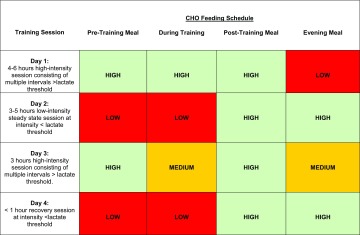
Critical Reflections and Limitations on Practical Application of the Glycogen Threshold Hypothesis

Muscle glycogen utilization according to studies incorporating varied exercise intensity, duration, and pre-exercise muscle glycogen concentration. Such data illustrate how the pattern of glycogen use can vary (according to the interactive effects of the aforementioned parameters) and how this should be considered in relation to the proposed glycogen threshold (shaded area). Data represent a sampling from studies compiled from cycling exercise protocols only and represent glycogen use in the vastus lateralis muscle
Conclusions
The emergence of CHO availability (specifically muscle glycogen concentration) as a regulator of training adaptation is now an accepted area of research that has practical implications for athlete training strategies. While this is a hot topic among athletes, coaches and sport scientists, the optimal periodization strategy to implement periods of CHO restriction into an overall training programme is not well understood. Furthermore, practical models of CHO (and energy) periodization are likely to be highly specific to the training structure and culture of the sport in question, as well as the athlete’s specific training goals. Accordingly, we have merely presented a hypothetical framework of fuelling for the work required to illustrate how isolated train-low models can be amalgamated to produce day-by-day and meal-by-meal manipulation of CHO availability. While we readily acknowledge the requirement for sport-specific models and long-term training studies (especially to demonstrate if train-low muscle adaptations actually correspond to meaningful changes in exercise performance), we also pose several fundamental questions that are relevant across many sporting models. First, does the presence of a ‘graded’ muscle glycogen threshold really exist, and, if so, how is this affected by training status? Second, should train-low sessions always be left to low-intensity-type sessions or is it the deliberate completion of a high-intensity session (even at the expense of a potential reduction in absolute workload) that is really required to create the metabolic milieu that is conducive to signalling? Third, what is the minimal CHO intake and glycogen concentration required to facilitate periods of ‘train low’ without compromising absolute training intensity during specific sessions? Fourth, is the enhanced training response associated with ‘train low’ regulated by CHO and/or energy restriction, and, if the latter, how do we periodize and structure such training interventions without inducing maladaptations? Finally, are there novel molecular targets and protein modifications/localization that also contribute to the regulation of nutrient and exercise sensitive pathways? When considered this way, it is remarkable that the study of only 500 g of substrate (the approximate whole-body storage of CHO) remains as exciting as ever.