
What this is
- This research investigates the prognostic significance of glucagon-like peptide-1 receptor () expression across various cancer types.
- It evaluates how expression correlates with overall survival in a large cohort of cancer patients.
- The findings reveal that expression can have both protective and adverse effects on survival, depending on the tumor type.
Essence
- Increased expression correlates with improved overall survival in some cancers, while it is linked to poorer survival in others. This duality suggests that expression is a significant biomarker for cancer prognosis.
Key takeaways
- Increased expression is associated with improved overall survival in bladder cancer, breast cancer, esophageal adenocarcinoma, renal clear cell carcinoma, and thyroid carcinoma.
- Higher expression correlates with poorer survival outcomes in cervical squamous cell carcinoma, lung squamous cell carcinoma, stomach adenocarcinoma, and uterine corpus endometrial carcinoma.
- expression does not significantly impact overall survival in several cancers, indicating its role as a context-dependent biomarker.
Caveats
- The study's retrospective design may limit the generalizability of the findings to broader patient populations.
- Variations in tumor stages and treatment protocols could introduce biases affecting the interpretation of 's prognostic significance.
Definitions
- GLP1R: Glucagon-like peptide-1 receptor, a target for therapies in diabetes and obesity, with potential implications in cancer biology.
Simplified
Introduction
Glucagon-like peptide-1 (GLP-1) receptor agonists have emerged as a pivotal class of medications primarily used in the treatment of type 2 diabetes mellitus (T2DM) and obesity [1, 2]. Approved GLP-1 agonists include exenatide (Byetta, Bydureon), liraglutide (Victoza for diabetes, Saxenda for obesity), albiglutide (Tanzeum), dulaglutide (Trulicity), lixisenatide (Lyxumia in Europe, Adlyxin in the U.S.) and semaglutide (Ozempic, Rybelsus for diabetes, Wegovy for obesity). Additionally, tirzepatide, a dual GLP-1 and GIP agonist (Mounjaro for diabetes, Zepbound for obesity) is another recent addition to this class of drugs. These agents function by mimicking the actions of endogenous GLP-1, a hormone that is secreted by the gut in response to food intake [1, 2]. The activation of the GLP-1 receptor (GLP1R) triggers several physiological responses, including enhanced insulin secretion, inhibition of glucagon release, and delayed gastric emptying, all of which contribute to improved glycemic control and reduced body weight [1, 2]. Due to their efficacy, GLP1R agonists are widely prescribed, with millions of patients benefiting from their metabolic effects.
Beyond their well-documented metabolic benefits, there is a growing interest in the potential effects of GLP1R agonists on cancer biology [3 –9]. The widespread use of these drugs, combined with the fact that cancer is a leading cause of morbidity and mortality globally, necessitates a deeper understanding of how GLP-1 signaling might influence cancer risk and survival. Emerging data suggest that GLP-1 and its downstream mediators, including fibroblast growth factor-21 (FGF-21), could have significant roles in cancer development and progression [3 –5, 8, 10 –40]. However, the relationship between GLP1R activation and cancer is complex, with some studies suggesting protective effects while others indicate potential risks [8].
Recent data highlight this complexity. A large-scale epidemiological studycompared the incidence of obesity-related cancers in patients treated with GLP1R agonists versus those treated with insulin or metformin [3]. It found a significant reduction in the risk of several cancers among GLP1R agonist users compared to insulin users, but no clear benefit compared to metformin, and even a potential increased risk of kidney cancer [3]. This raises critical questions about whether these observed effects are directly due to GLP-1 receptor activation or are secondary consequences of weight loss and other metabolic changes induced by these drugs. The limitations of this study, including its retrospective design and the difficulty in separating direct drug effects from the consequences of weight loss, underscore the need for further investigation.
This study was designed to evaluate the prognostic significance of GLP1R expression across various cancer types, with the hypothesis that GLP1R expression might serve as an indicator of certain cancers' sensitivity to glucagon/GLP-1 signaling. We hypothesized that patients with tumors exhibiting high GLP1R expression could experience distinct survival outcomes, potentially reflecting their tumors' responsiveness to GLP1R activation. To test this hypothesis, we conducted a comprehensive analysis of survival data across multiple cancer types, using integrated cancer patient cohorts from the Kaplan–Meier Plotter platform [41 –43]. This approach allowed us to examine the relationship between GLP1R expression levels and patient outcomes, and to contextualize these findings within the broader landscape of clinical data on GLP1R agonist use [41, 42].
Methods
Differential gene expression across multiple tissue types
We employed the database from the previously established TNMplot project to compare gene expression levels between tumor and normal samples across multiple datasets [44]. In this platform we have integrated data from The Cancer Genome Atlas (TCGA) and The Genotype-Tissue Expression (GTEx) repositories. RNAseq based gene expression data was processed as previously described [44] and tumor tissues were compared to non-cancerous tissues from the same organ. Notably, normal whole blood from GTEx was used as the normal tissues for acute myeloid leukemia samples. Each tumor type was processed independently, and the differential gene expression was determined by computing a Mann–Whitney U-test. Statistical significance was set at p < 0.05. We employed a boxplot for the visualization of the data.
Survival analysis across different tumor types
We employed Cox proportional hazards regression analysis to assess the correlation between GLP1R and GCG expression and overall survival. As the gene arrays can have multiple probe sets for a selected gene, the probe set 208400_at was selected for GLP1R and 206422_at for GCG in the survival analysis. These probe sets were previously assigned the most representative for these genes [51].
To avoid missing a correlation due to different cutoff values (e.g., because of using a median gene expression as a cutoff), each analysis was performed by using the best available cutoff. In this, each available cutoff value between the lower and upper quartiles of expression were evaluated, and the best performing cutoff was used in the final analysis. False discovery rate was computed to correct for multiple hypothesis testing. In addition to hazard rate (HR), logrank p and 95% confidence intervals were also computed. Finally, Kaplan–Meier plots were drawn to visualize the survival differences between those patients who had high expression and those who had low expression of the selected gene.
| Feature | Bladder carcinoma | Breast cancer | Cervical squamous cell carcinoma | Colorectal cancer | Esophageal Adenocarcinoma | Head-neck squamous cell carcinoma | Kidney renal clear cell carcinoma | Kidney renal papillary cell carcinoma | Liver hepatocellular carcinoma | Lung adenocarcinoma | Lung squamous cell carcinoma | Ovarian cancer | Stomach adenocarcinoma | Thyroid carcinoma | Uterine corpus endometrial carcinoma | Pancreas carcinoma |
|---|---|---|---|---|---|---|---|---|---|---|---|---|---|---|---|---|
| Number of patients | 405 | 1090 | 304 | 454 | 80 | 500 | 530 | 288 | 371 | 513 | 501 | 374 | 375 | 502 | 543 | 177 |
| Sex | ||||||||||||||||
| Female | 107 | 1079 | 304 | 214 | 23 | 133 | 186 | 76 | 121 | 276 | 130 | 374 | 137 | 367 | 543 | 80 |
| Male | 301 | 12 | - | 240 | 141 | 368 | 344 | 213 | 250 | 239 | 371 | - | 243 | 135 | - | 97 |
| Stage | ||||||||||||||||
| Definition | AJCC | AJCC | FIGO | AJCC | AJCC | AJCC | AJCC | AJCC | AJCC | AJCC | AJCC | FIGO | AJCC | AJCC | FIGO | AJCC |
| 1 | 2 | 181 | 162 | 75 | 17 | 25 | 265 | 172 | 171 | 276 | 244 | 1 | 55 | 281 | 339 | 21 |
| 2 | 130 | 619 | 69 | 176 | 70 | 71 | 57 | 21 | 86 | 121 | 162 | 21 | 112 | 52 | 51 | 146 |
| 3 | 140 | 248 | 45 | 128 | 50 | 78 | 123 | 52 | 85 | 84 | 84 | 292 | 151 | 112 | 124 | 3 |
| 4 | 134 | 20 | 21 | 64 | 8 | 259 | 82 | 15 | 5 | 26 | 7 | 57 | 39 | 55 | 29 | 4 |
| Pathological T | ||||||||||||||||
| 1 | 3 | 279 | 140 | 11 | 29 | 45 | 271 | 193 | 181 | 169 | 114 | NA | 20 | 143 | NA | 7 |
| 2 | 119 | 631 | 71 | 77 | 38 | 133 | 69 | 32 | 94 | 277 | 293 | NA | 84 | 164 | NA | 24 |
| 3 | 194 | 138 | 20 | 309 | 77 | 96 | 179 | 60 | 80 | 47 | 71 | NA | 168 | 170 | NA | 141 |
| 4 | 58 | 40 | 10 | 56 | 4 | 171 | 11 | 2 | 13 | 19 | 23 | NA | 100 | 23 | NA | 3 |
| Pathological N | ||||||||||||||||
| 0 | 237 | 514 | 133 | 267 | 67 | 172 | 239 | 50 | 252 | 332 | 319 | NA | 113 | 229 | NA | 49 |
| 1 | 46 | 361 | 60 | 105 | 64 | 65 | 16 | 24 | 4 | 95 | 131 | NA | 99 | 223 | NA | 123 |
| 2 | 75 | 120 | NA | 82 | 10 | 164 | NA | 4 | NA | 74 | 40 | NA | 76 | NA | NA | NA |
| 3 | 8 | 76 | NA | NA | 6 | 7 | NA | NA | NA | 2 | 5 | NA | 74 | NA | NA | NA |
| Pathological M | ||||||||||||||||
| 0 | 196 | 908 | 116 | 333 | 121 | 187 | 420 | 95 | 266 | 346 | 411 | NA | 334 | 280 | NA | 79 |
| 1 | 11 | 22 | 10 | 64 | 8 | 1 | 78 | 9 | 4 | 25 | 7 | NA | 26 | 9 | NA | 4 |
Results
Differential gene expression across different tumor types
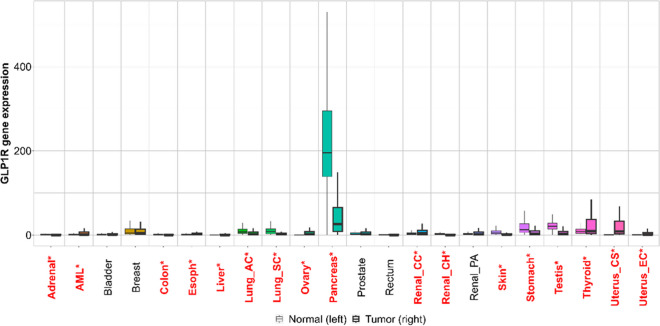
Similarly, GCG expression was markedly higher in pancreatic tumor tissues, with the median value reaching approximately 35,000, compared to nearly zero in normal pancreatic tissues. This finding aligns with the known role of GCG in pancreatic function and its dysregulation in pancreatic cancer. Prostate and ovarian tumors also exhibited a moderate increase in GCG expression compared to their normal counterparts, but the expression levels were significantly lower than those observed in the pancreas. In most other tissues, GCG expression remained low and consistent between normal and tumor samples, further underscoring the specificity of GCG overexpression in pancreatic cancer. These results highlight the potential of GLP1R and GCG as biomarkers for pancreatic cancer, given their marked overexpression in tumor tissues compared to normal tissues.

GLP1R gene expression across normal and tumor tissues in various cancer types. The box plot illustrates the mRNA expression levels of GLP1R in a range of normal (left) and tumor (right) tissues across multiple cancer types. The tissues analyzed include the adrenal gland, acute myeloid leukemia (AML; control: while blood from the GTEx), bladder, breast, colon, esophagus, liver, lung (adenocarcinoma and squamous cell carcinoma), ovary, pancreas, prostate, rectum, renal (clear cell carcinoma, chromophobe, papillary adenoma), skin, stomach, testis, thyroid, uterus (cervical squamous cell carcinoma, endocervical adenocarcinoma, endometrial carcinoma), and others. Tissues labeled in red represent statistically significant differences between normal and tumor expressions, with higher or lower GLP1R expression observed in tumor tissues. The black boxes indicate median values, while the whiskers represent the range of expression levels
GLP1R expression and survival in different tumor types

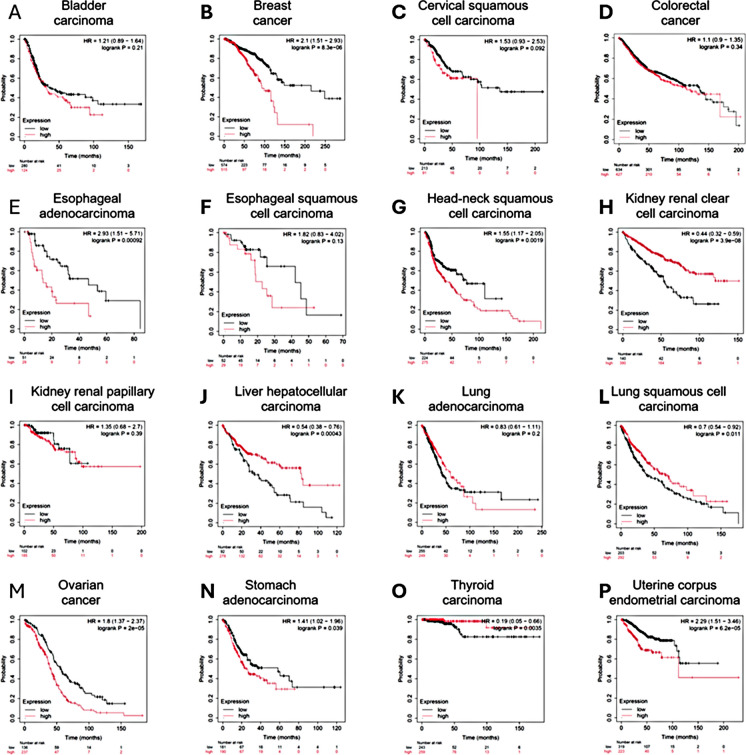
Correlation between GLP1R expression and overall survival across various tumor types. This figure presents Kaplan–Meier survival curves illustrating the correlation between GLP1R expression levels and overall survival in different tumor types. Each panel represents a distinct cancer type, with high (red) and low (black) GLP1R expression groups compared
GCG expression and survival in different tumor types

Correlation between GCG expression and overall survival across various tumor types. This figure presents Kaplan–Meier survival curves showing the correlation between GCG expression levels and overall survival in different tumor types. Each panel represents a specific cancer type, comparing high (red) and low (black) GCG expression groups
Gene expression and prognostic implications of GLP1R and GCG in pancreatic cancer

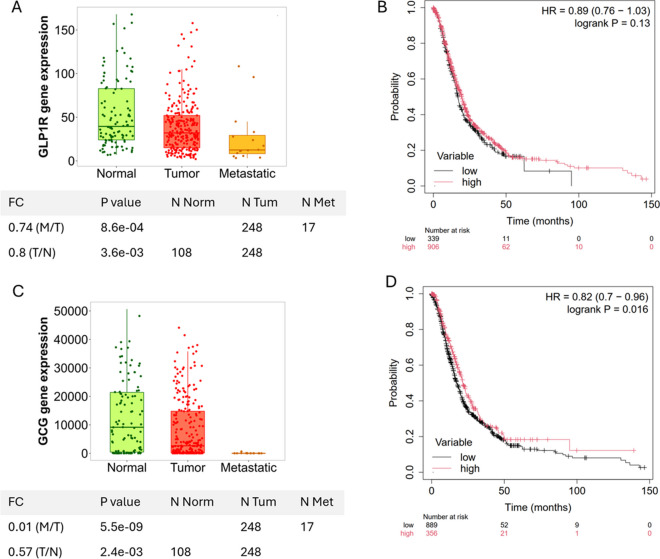
GLP1R and GCG gene expression and their impact on overall survival in pancreatic cancer. This figure presents the gene expression levels of GLP1R and GCG in normal, tumor, and metastatic tissues of pancreatic cancer, along with their correlation with overall survival in patients. Panel A shows that GLP1R expression is significantly lower in pancreatic tumor tissues compared to normal tissues ( = 3.64e-03) and further reduced in metastatic pancreatic tissues ( = 8.6e-04). Panel B displays the Kaplan–Meier survival curve, indicating that high GLP1R expression is associated with a non-significant trend toward improved survival (HR = 0.89, logrank = 0.13). Panel C illustrates that GCG expression is significantly lower in pancreatic tumor tissues compared to normal tissues ( = 2.47e-03), with an even more pronounced reduction in metastatic pancreatic tissues ( = 5.57e-09). Panel D shows the Kaplan–Meier survival curve, where high GCG expression is significantly associated with improved overall survival in pancreatic cancer patients (HR = 0.82, logrank = 0.016). These findings suggest that both GLP1R and GCG expressions are reduced in pancreatic tumor and metastatic tissues, with higher expression levels, particularly of GCG, potentially associated with better survival outcomes in pancreatic cancer patients p p p p p p
Discussion
This study presents a comprehensive analysis of the relationship between GLP1R and GCG expression and overall survival across various cancer types. Our findings demonstrate that increased GLP1R expression is associated with improved overall survival in certain cancers, such as bladder cancer, breast cancer, esophageal adenocarcinoma, renal clear cell carcinoma, and thyroid carcinoma. Conversely, higher GLP1R expression correlates with poorer survival outcomes in cancers such as cervical squamous cell carcinoma, lung squamous cell carcinoma, stomach adenocarcinoma, and uterine corpus endometrial carcinoma. Notably, GLP1R expression appears to have no significant impact on overall survival in cancers such as esophageal squamous cell carcinoma, head-neck squamous cell carcinoma, renal papillary cell carcinoma, liver hepatocellular carcinoma, lung adenocarcinoma, ovarian cancer, and pancreatic cancer. Similarly, increased GCG expression is linked to improved survival in renal clear cell carcinoma, liver hepatocellular carcinoma, lung squamous cell carcinoma, and thyroid carcinoma. However, higher GCG expression is associated with decreased survival in breast cancer, cervical squamous cell carcinoma, esophageal adenocarcinoma, head-neck squamous cell carcinoma, ovarian cancer, stomach adenocarcinoma, and uterine corpus endometrial carcinoma. GCG expression did not significantly influence survival outcomes in bladder cancer, esophageal squamous cell carcinoma, renal papillary cell carcinoma, lung adenocarcinoma, and pancreatic cancer.
The dual role of GLP1R expression in cancer survival highlights the complexity of GLP-1 signaling in cancer biology [8]. GLP-1R is expressed at both the mRNA and protein levels across a diverse array of tissues, including the lungs, vasculature, pancreatic islets and acini, gastrointestinal tract, kidneys, gonads, urogenital system, and thyroid [40, 52]. However, the expression levels can vary significantly between these different tissues [40, 52]. Cancers arising from these tissues frequently exhibit altered GLP-1R expression [33, 35, 40]. In some cancers, such as those in the bladder, increased GLP1R expression may be protective, potentially reflecting a beneficial response to GLP-1R activation. This could be due to mechanisms such as the anti-inflammatory effects of GLP-1 agonists, their influence on metabolic pathways, or their ability to modulate cancer cell proliferation and apoptosis. On the other hand, the association between high GLP1R expression and decreased survival in cancers like cervical squamous cell carcinoma and lung squamous cell carcinoma suggests that GLP-1R activation may promote tumor progression in these contexts. This might involve pathways related to cell growth and survival that are differentially regulated in these tumor types. The observation that GLP1R expression has no effect on survival in several other cancers suggests that the impact of GLP-1R signaling is highly context-dependent and may vary based on the tumor microenvironment, genetic mutations, or other factors. The data on GCG expression further complicate this picture, showing both protective and harmful associations with cancer survival, depending on the cancer type.
In vitro and preclinical studies highlight the complexity of GLP-1 signaling in cancer biology. For instance, GLP-1R agonists like liraglutide have been shown to slow the progression of cholangiocarcinoma by inhibiting cell migration and reducing tumor growth, despite the association of GLP-1R expression with poor histological grading in intrahepatic cholangiocarcinoma tissues [10]. Additionally, GLP-1R activation inhibits glioma cell migration, invasion, and epithelial-to-mesenchymal transition, [22] as well as suppresses the growth and promotes apoptosis in ovarian [28] and prostate cancer cells [34]. Lentiviral overexpression of GLP-1R has also been demonstrated to attenuate prostate cancer cell proliferation by inhibiting cell cycle progression [20]. Moreover, GLP-1R agonists, including liraglutide, have been shown to inhibit proliferation, cell cycle progression, and/or migration in lung [13], pancreatic [31, 32], prostate [26], endometrial [15, 23], and murine colon cancer cells [38], although they were reported to promote the proliferation of breast cancer cells [14]. Contrarily, other studies have indicated that GLP-1R agonists do not affect the growth or survival of human pancreatic [53], colon [25], or thyroid cancer cells [27]. Furthermore, liraglutide has been shown to enhance the chemosensitivity of pancreatic cancer cells to gemcitabine [18] and prostate cancer cells to enzalutamide [19], and to increase radiosensitivity in prostate cancer cells through AMPK activation and subsequent inhibition of p-mTOR, cyclin B, and p34cdc2 activation [24]. Notably, both liraglutide and the GLP-1 receptor agonist exenatide significantly increased intestinal growth in healthy mice without promoting dysplasia or tumor formation in the colons of carcinogen-treated mice [37]. These findings underscore the multifactorial nature of cancer and the need to understand the specific roles that GLP-1 signaling plays in different tumorigenic processes.
Our findings are consistent with existing literature that shows a mixed impact of GLP-1 receptor agonists on cancer risk and outcomes in humans [5, 8]. For instance, in the study by Wang et al., a retrospective cohort design was employed to investigate the impact of GLP-1 receptor agonists on the incidence of 13 obesity-associated cancers in patients with type 2 diabetes [3]. The study analyzed data from over 1.6 million patients, comparing those treated with GLP-1 receptor agonists against those treated with insulin or metformin. The findings revealed that the use of GLP-1 receptor agonists was associated with a significant reduction in the risk of several cancers compared to insulin. Specifically, patients using GLP-1 receptor agonists exhibited a lower risk of esophageal, colorectal, endometrial, gallbladder, kidney, liver, ovarian, and pancreatic cancers, as well as meningioma and multiple myeloma [3]. In contrast, compared to metformin, GLP-1 receptor agonists did not demonstrate a significant reduction in cancer risk and were associated with an increased risk of kidney cancer [3]. Interestingly, in our study, high GLP-1R expression was not associated with poorer survival for either type of kidney cancer studied. These results suggest that while GLP-1 receptor agonists may offer protective effects against certain obesity-related cancers, particularly when compared to insulin, their impact varies by cancer type and may be less favorable compared to metformin. The findings also imply that insulin use could potentially promote cancer growth, underscoring the importance of considering cancer risk when selecting antidiabetic therapies. A recent study by Bukavina et al. [5] analyzed a large claims-based clinical data set to investigate the association between GLP-1 receptor agonist use and the incidence of urologic cancers, including prostate cancer, kidney cancer, and bladder cancer, in patients with T2DM. The analysis, which included data from 1,276,762 patients prescribed various antidiabetic medications, revealed that GLP-1 receptor agonist use was associated with a higher risk of bladder cancer compared to SGLT2 inhibitors (HR 1.47), kidney cancer compared to metformin (HR 1.45), and prostate cancer compared to insulin (HR 1.32) [5]. These findings suggest a potential increased risk of urologic malignancies with GLP-1 receptor agonists. Interestingly, in our study, high GLP-1R expression was associated with significantly increased survival in both bladder carcinoma and renal clear cell carcinoma, while it had no effect on survival in renal papillary cell carcinoma. Other studies have also reported that the use of sitagliptin and exenatide significantly increases the risk of pancreatitis and pancreatic cancer compared to other therapies [39]. Additionally, Mendelian randomization studies suggest that GLP-1 receptor agonists may decrease the risk of breast cancer while potentially increasing the risk of colorectal cancer [4]. Yang et al. [54] conducted a comprehensive analysis of the U.S. Food and Drug Administration Adverse Event Reporting System (FAERS) database, spanning from 2004 to 2021, to investigate the association between glucagon-like peptide-1 receptor agonists (GLP-1RAs) and tumor-related adverse events. The study identified a total of 3,593 tumor adverse event reports linked to GLP-1RA use, with a significant proportion involving pancreatic (30.5%) and thyroid (12.9%) cancers [54]. Notably, the reporting odds ratio (ROR) for pancreatic cancer was elevated at 3.19 (95% CI: 2.95–3.45), indicating a higher reporting frequency compared to other drugs [54]. Conversely, the ROR for thyroid cancer was 1.72 (95% CI: 1.50–1.97), suggesting a less pronounced association. The study also observed that the RORs for pancreatic and thyroid cancers were higher with long-acting GLP-1RAs compared to short-acting ones [54]. These findings underscore the importance of vigilant monitoring for tumor-related adverse events in patients undergoing GLP-1RA therapy, particularly concerning pancreatic and thyroid cancers. Taken together, the results emphasize the complexity of GLP-1R signaling across different cancer types and suggest that the effects of GLP-1 receptor activation may vary widely depending on the specific tumor biology. Further investigation is necessary to validate these associations and to determine whether they are causal or influenced by confounding factors.
In contrast to concerns raised in the broader literature [6 –8], our study found that higher GLP1R expression was associated with substantially better survival in patients with thyroid carcinoma. Consistent with our findings, a previous study reported that GLP-1R expression in papillary thyroid carcinomas is negatively correlated with tumor multifocality [35]. These findings are particularly intriguing given the FDA's warnings about the potential increased risk of thyroid cancer, specifically medullary thyroid carcinoma, in patients treated with the GLP-1 receptor agonists [6, 7]. The positive correlation between high GLP1R expression and improved survival in our study suggests that, while GLP-1 receptor agonists may increase the risk of developing thyroid cancer, those tumors with higher GLP1R expression could be more responsive to GLP-1R signaling, leading to better clinical outcomes. This could imply a potential protective role of GLP1R in the context of established thyroid cancer, possibly by modulating tumor behavior [12] or enhancing the efficacy of treatment. However, the exact mechanisms underlying this relationship remain unclear, and further research is needed to fully understand how GLP1R expression influences thyroid cancer progression and survival.
This duality in GLP-1R's role may reflect the complex interplay between the drug's metabolic effects, its direct action on cancer cells, and the broader hormonal and environmental context within the body. Several potential mechanisms could explain the observed effects of GLP-1 agonists on cancer development and survival. These include the role of GLP-1R in regulating fibroblast growth factor 21 (FGF21) synthesis, which has been implicated in cancer biology, as well as its anti-inflammatory effects, which could suppress tumor-promoting inflammation. Weight loss induced by GLP-1 agonists may also play a protective role by reducing obesity-related cancer risks. Conversely, the promotion of insulin secretion by GLP-1 agonists could, in certain contexts, stimulate tumor growth, particularly in cancers sensitive to insulin and insulin-like growth factors.
In addition to their role in tumor biology, GLP-1R agonists have shown potential cardioprotective effects, particularly in mitigating chemotherapy-induced cardiotoxicity. This is a critical consideration for cancer patients undergoing treatment with cardiotoxic agents, such as anthracyclines. Recent studies [55, 56] highlight that GLP-1R agonists may protect against cardiotoxicity by modulating oxidative stress, inflammation, and mitochondrial dysfunction, thereby preserving cardiac function during chemotherapy.
Given the varying effects of GLP1R expression on survival across different cancer types, the use of GLP-1 receptor agonists in obese or diabetic patients at high risk for cancer should be approached with caution. Clinicians should consider the specific cancer risks associated with GLP-1R agonists and balance these against the benefits of glycemic control and weight loss. In patients with a high risk of cancers where GLP1R expression is associated with poor outcomes, alternative therapies might be more appropriate. Conversely, for patients at risk of cancers where GLP1R expression is protective, GLP-1 receptor agonists could be considered a beneficial option.
While our study provides important insights, it is crucial to recognize its limitations. Methodological factors such as variations in tumor stages, interactions with established prognostic biomarkers, differences in treatment protocols, socioeconomic factors, and the analytical methods used may introduce biases that could influence the interpretation of our findings. Additionally, the retrospective nature of our study may limit the generalizability of the results to broader patient populations. The heterogeneity of the cancers analyzed and the differing effects of GLP1R and GCG expression indicate that the relationship between GLP-1 signaling and cancer is likely more intricate than this study alone can elucidate. Future research should focus on integrating GLP1R signaling-related gene expression signatures with existing biomarkers to improve prognostic accuracy across multiple cancer types. Analyzing gene expression profiles from tumors in patients treated with GLP-1 receptor agonists and other related therapies will be vital. This approach could provide deeper insights into how these drugs interact with the tumor microenvironment and influence cancer progression, ultimately leading to more personalized and effective treatment strategies. Further, the impact of GLP-1R agonists on cancer outcomes may vary significantly based on patient age and sex, emphasizing the need to consider age- and sex-specific factors in evaluating their therapeutic use. Elderly patients may experience differential responses to GLP-1R agonists due to age-related changes in GLP1R expression, tumor microenvironment, and systemic physiology. For example, reduced regenerative capacity and altered immune function in older adults could influence both the efficacy and safety of GLP-1R agonists in managing cancer outcomes. Additionally, elderly patients often present with multiple comorbidities and polypharmacy, which could further modulate the effects of these agents. Sex-specific factors are equally important, particularly in hormone-sensitive cancers such as breast and endometrial cancers, which may exhibit unique responses to GLP-1R signaling. Emerging studies have highlighted sex-dependent variations in cancer biology and treatment responses, suggesting that GLP-1R agonists could interact differently with tumor progression pathways in male versus female patients. For instance, the influence of GLP1R expression on estrogen or progesterone receptor-positive tumors might explain differential survival outcomes in cancers like breast and uterine carcinomas. Given these considerations, future research should prioritize stratified analyses to delineate the age- and sex-specific impacts of GLP-1R agonists on cancer progression and survival. Such studies would provide valuable insights into optimizing the therapeutic use of GLP-1R agonists in diverse patient populations, ensuring personalized and effective cancer management.
In conclusion, this study provides a nuanced view of the role of GLP1R expression in cancer survival, highlighting both protective and adverse associations depending on the cancer type. These findings underscore the complex role of GLP-1 receptor agonists in cancer risk and survival and suggest that the therapeutic use of these agents should be carefully tailored to the individual patient's cancer risk profile. Future research should focus on elucidating the molecular mechanisms underlying the differential effects of GLP1R expression in various cancers. Prospective studies are needed to confirm these findings and to explore how these effects might be modulated by other factors, such as concurrent therapies, genetic mutations, and the tumor microenvironment. Given the diverse effects of GLP1R and GCG expression on cancer survival, clinicians should exercise caution when prescribing GLP-1 receptor agonists, particularly in patients with known cancer risks. Tailored treatment plans that consider both the metabolic benefits and potential oncological risks of GLP-1 receptor agonists are essential for optimizing patient outcomes.