
What this is
- This review discusses the glucagon-like peptide-1 receptor () and its therapeutic implications.
- is crucial for regulating blood glucose and lipid metabolism, with applications in various diseases.
- The review traces the development of GLP-1 receptor agonists (GLP-1RAs) and their expanding role in treating conditions beyond diabetes.
Essence
- GLP-1 receptor agonists (GLP-1RAs) show promise in treating diabetes and a variety of other diseases, including obesity and neurodegenerative disorders. Their mechanisms involve enhancing insulin secretion and reducing inflammation.
Key takeaways
- GLP-1RAs have demonstrated efficacy in multiple conditions, including obesity, cardiovascular diseases, and neurodegenerative disorders. They enhance insulin secretion and inhibit glucagon release, contributing to improved metabolic control.
- Recent studies indicate that GLP-1RAs can slow the progression of neurodegenerative diseases like Alzheimer's and Parkinson's, offering potential neuroprotective benefits through anti-inflammatory mechanisms.
- The ongoing development of GLP-1RAs includes formulations that require less frequent dosing, improving patient compliance and treatment outcomes.
Caveats
- The review does not provide specific clinical trial data, which may limit the understanding of the efficacy and safety of GLP-1RAs in various populations.
- While GLP-1RAs show promise in multiple therapeutic areas, the long-term effects and potential side effects require further investigation.
Definitions
- GLP-1R: A receptor that mediates the effects of glucagon-like peptide-1, involved in glucose regulation and lipid metabolism.
- GLP-1RA: Synthetic agents that mimic GLP-1, enhancing insulin secretion and reducing appetite.
Simplified
Introduction
In recent years, GLP-1R and its agonists have garnered widespread attention in the medical community. GLP-1R, a core member of the GPCR family, is widely present on the surfaces of various cells in the human body.1,2 By specifically binding to the key hormone GLP-1, it regulates blood glucose levels and lipid metabolism.3,4 This receptor and its agonists hold significant therapeutic potential, reshaping the treatment approaches for multiple diseases, including diabetes, cardiovascular disorders, and neurodegenerative diseases.5–7 GLP-1 is a peptide produced by the cleavage of proglucagon, mainly synthesized in the intestinal mucosal L-cells, pancreatic islet α-cells, and neurons in the nucleus of the solitary tract.3,4 GLP-1RAs mimic the action of endogenous GLP-1, activating GLP-1R, thereby enhancing insulin secretion, inhibiting glucagon release, delaying gastric emptying, and reducing food intake through central appetite suppression.8–10 These mechanisms make GLP-1RAs powerful tools for controlling blood glucose and improving metabolic syndrome. Furthermore, their multifaceted mechanisms of action suggest potential applications beyond traditional metabolic disorders. From the discovery of the GLP-1 fragment GLP-1(7-37) to the development of more stable and long-acting GLP-1 analogs, these milestones represent significant breakthroughs in the medical field.11,12 For instance, the success of exenatide has not only spurred the development of potent GLP-1 analogs such as liraglutide and semaglutide but also unveiled the vast potential of GLP-1RAs in treating various systemic diseases. These developments underscore the importance of GLP-1RAs in modern therapeutics. The applications of GLP-1RAs extend far beyond diabetes management.5
Here we summarized the complex mechanisms of GLP-1RAs and their latest advancements in treating various diseases, such as musculoskeletal inflammation, obesity, cardiovascular diseases, NAFLD, neurodegenerative diseases, and various cancers. We introduce recent studies that demonstrate the remarkable performance of GLP-1RAs in slowing the progression of neurodegenerative diseases, reducing inflammation, and enhancing cardiovascular health. For example, in the treatment of Alzheimer's diseases (AD) and Parkinson's diseases (PD), GLP-1RAs have shown potential in slowing disease progression, while their anti-inflammatory properties offer new hope for conditions such as osteoarthritis (OA), rheumatoid arthritis (RA) and cardiovascular diseases.13–15 By integrating the latest clinical trial data, we explore the efficacy of GLP-1RAs in treating diseases of the nervous, cardiovascular, endocrine, and digestive systems. We show readers that GLP-1RAs have also been found to significantly reduce the risks of heart failure, atherosclerosis (AS), and hypertension, highlighting their broad therapeutic potential.16–19 As new indications continue to be developed, GLP-1 drugs demonstrate immense potential in the medical field, with future research expected to expand their therapeutic applications. The comprehensive exploration of their benefits underscores their transformative potential in medicine, positioning them as a promising approach for addressing a wide array of health issues and paving the way for new research and clinical applications.
The future of GLP-1RA therapy is promising. Researchers are developing more efficient formulations, such as long-acting and oral versions, to improve patient compliance and outcomes. With increasing clinical evidence, GLP-1RAs are set to become essential in treating complex and chronic diseases, offering significant health benefits and addressing unmet medical needs, thus enhancing patient quality of life and solidifying their role in future medical advancements.
Review of the history and milestones in GLP-1 research

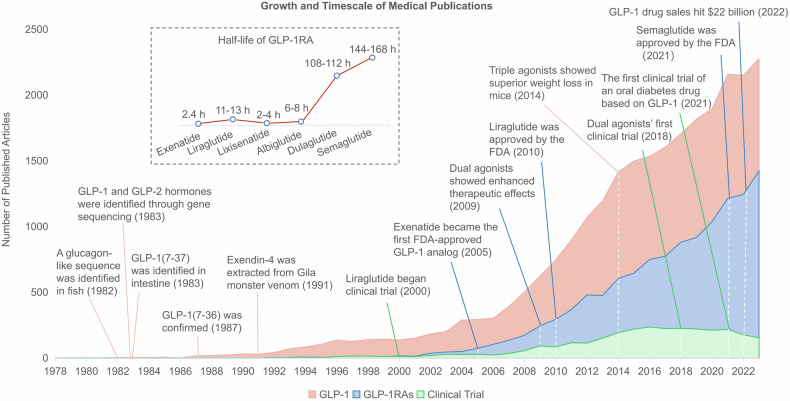
Growth and Timescale of Medical Publications on GLP-1 and GLP-1RAs. This figure illustrates the number of published articles over time, from 1978 to 2022, related to GLP-1 and GLP-1RAs, along with significant milestones in clinical trials. The data is visualized through three layered area graphs, each representing a different category of publications: research on GLP-1 (red area), GLP-1RAs (blue area), and clinical trials (green area). Key milestones are annotated on the timeline, including the identification of GLP-1 and GLP-2 through gene sequencing in 1983, the extraction of Exendin-4 from Gila monster venom in 1991, and the first FDA approval of a GLP-1 analog, Exenatide, in 2005. Liraglutide's clinical trials began in 2000 and the drug's FDA approval in 2010. Notable is the steep increase in the number of publications from 2000 onwards, reflecting a growing interest and development in the field. The peak in 2022 corresponds to GLP-1 drug sales hitting $22 billion, with the approval of semaglutide by the FDA in 2021 and the initiation of the first clinical trial for an oral diabetes drug based on GLP-1 in the same year. This graph underscores the expanding research and clinical importance of GLP-1-related therapies in the treatment of diabetes. The x-axis represents the year, ranging from 1978 to 2023, and the y-axis quantifies the number of published articles, with a scale ranging from 0 to 2500 articles annual. GLP-1RAs are artificial protein formulations that exhibit partial or complete amino acid sequence similarity to endogenous GLP-1 within the human body. These compounds possess enhanced stability, extended half-lives, and heightened biological potency, enabling them to mimic the actions of GLP-1. Ongoing advancements in research and development have resulted in the production of GLP-1RA with increasingly prolonged half-lives
GLP-1
GLP-1 is a peptide hormone generated through the enzymatic breakdown of proglucagon. It is synthesized in L-cells located in the intestinal mucosa, α-cells found in the pancreatic islet, and neurons residing in the nucleus of the solitary tract.29 GLP-1, an endocrine hormone, is secreted by enteroendocrine L-cells located in the distal jejunum, ileum, and colon in response to nutrient ingestion and neuroendocrine stimulation. It originates from the preproglucagon precursor, which undergoes enzymatic processing within intestinal L-cells, ultimately giving rise to GLP-1(1-37) and GLP-1(7-36) amide or GLP-1(7-37) peptide variants.30,31 GLP-1 is an incretin hormone that plays a pivotal role in the meticulous control of human blood glucose levels.32,33 Nevertheless, its duration of action is rather ephemeral, lasting a mere 1–2 min within the circulatory system under typical physiological conditions.34,35 Subsequently, GLP-1 undergoes enzymatic degradation facilitated by dipeptidyl peptidase IV (DPP-4), leading to the loss of its biological efficacy.36
GLP-1R
GLP-1R, a member of the GPCR family, exhibits specific affinity for GLP-1. It predominantly localizes to the cellular membrane of diverse cell types throughout the human body.37 Indeed, GLP-1R is present beyond the confines of the pancreas and extends to a multitude of organs and tissues throughout the body. Its extensive distribution and involvement in diverse physiological processes emphasize the important role of GLP-1R beyond the regulation of glucose metabolism.38–40 The phenotype observed after GLP-1R knockout (KO) includes various physiological and metabolic changes. GLP-1R plays a role in the central nervous system (CNS) regulation of appetite. GLP-1R KO can lead to increased appetite, contributing to weight gain.1 GLP-1R is involved in regulating both insulin and glucagon secretion, and its knockout can impair pancreatic function, thereby affecting the balance of these hormones and glucose homeostasis.41,42 GLP-1R is expressed in the cardiovascular system, and its knockout has implications for cardiovascular function.43,44 GLP-1R is present in the CNS, and its absence might contribute to alterations in behavior, mood, or cognitive function.45,46
GLP-1RAs
GLP-1RAs result from intricate structural modifications to GLP-1, enabling them to not only replicate the pharmacological functions of GLP-1 but also impede its hydrolysis by DPP-4, thereby extending the drug's half-life.47,48 These synthetic protein preparations exhibit partial or complete amino acid sequence homology with endogenous GLP-1, rendering them resistant to degradation which resulting in a prolonged half-life and heightened biological activity.47,48 By emulating the biological activity of natural GLP-1, GLP-1RAs effectively fulfill the role of GLP-1, effectively lowering blood glucose levels without increasing the risk of hypoglycemia and demonstrating favorable safety profiles.49 GLP-1RAs represent a pharmacotherapeutic category of injectable hypoglycemic agents that are sanctioned as adjunctive therapies to diet and exercise for the management of type 2 diabetes mellitus (T2DM) in adult patients and potentially hold promise in addressing other medical conditions.7,50,51 As researchers dive deeper into their multifaceted properties, these medications exhibit the potential to offer therapeutic benefits across a spectrum of diseases in human populations.
The development of GLP-1RAs
The Gila monster, which lives in the deserts of the Americas, can eat up to half its own body weight in one sitting, but its blood sugar remains stable, and its metabolic system runs smoothly despite this large amount of food.52,53 In 1992, Dr. John Enn discovered an exopeptide in the saliva of the Gila monster which he named exendin-4. Dr. John found that exenatide is an analog of human GLP-1RA, with 53% homology to human GLP-1RA; exenatide can stimulate human insulin secretion and regulate blood glucose levels in the body. This hormone is not readily degraded by DPP-4 to GLP-1 in the human body and can act for 12 h or longer.25
In 2005, exenatide was approved by the U.S. Food and Drug Administration (FDA) for use in treating T2DM;52 thus began the competition between various GLP-1RAs. GLP-1RAs are being developed to be more similar to the natural GLP-1 hormone found in the human body. This is achieved by replacing and modifying specific amino acids in human GLP-1.54,55 By doing so, the resulting product has a higher similarity or homology to the amino acid sequence of human GLP-1. In addition, efforts are being made to extend the duration of action of GLP-1RAs. Currently, some GLP-1RAs require daily injections, which can be inconvenient for patients. Therefore, researchers are working toward developing formulations that can be administered once a week, providing a longer-lasting effect and reducing the frequency of injections.56,57 Furthermore, there is a focus on developing GLP-1RAs that can be taken orally without the need for injections. This oral preparation would offer a more convenient and comfortable option for patients, potentially leading to better treatment compliance.58,59 Overall, the future research direction of GLP-1RAs involves making them more similar to those in the human body, extending their duration of action, and creating oral formulations for easier administration.60,61 These advancements aim to improve patient experience, compliance, and treatment outcomes.
| Date | Brand name | GLP-1RA | Half-life | Dose (SC) | Molecular formula | Clinial trial focus |
|---|---|---|---|---|---|---|
| 2005 | Byetta | Exenatide | 2.4 h | 5 μg or 10 μg b.i.d sc | CHNOS1492344047 | Parkinson disease |
| 2010 | Victoza/Saxenda | Liraglutide | 11-13 h | 0.6 mg and 1.2 or 1.8 mg q.d sc | CHNO1722654351 | Cardiovascular disease |
| 2013 | Adlyxin (U.S)/Lyxumia (EU) | Lixisenatide | 2–4 h | 10 μg then 20 μg q.d sc | CHNOS2153476165 | Early Parkinson disease |
| 2014 | Tanzeum | Albiglutide | 6-8 h | 30 or 50 mg q.w sc | CHNO1482244045 | Cardiovascular disease |
| 2014 | Trulicity | Dulaglutide | 108-112 h | 0.75 or 1.5 mg q.w sc | CHNOS2646404470483618 | Type 2 diabetes |
| 2017 | BYDUREON BCise | Exenatide (ER) | 2 w | 2 mg q.w sc | CHNOS1842825060 | Type 1 diabetes |
| 2017 | Ozempic | Semaglutide | 6-7 d | 0.25 mg then 0.5 mg q.w sc | CHNO1872914559 | obesity-related heart failure |
| 2019 | Rybelsus | Oral Semaglutide | 24 h | 3 mg then 7 mg q.d po | CHNO1872914559 | Type 2 diabetes |
| CV benefit | Renal benefit | Weight loss | Patient adherence | HbA1c reduction | HbA1c problem | Injection reactions | GI side effects | Antibody issues | |
|---|---|---|---|---|---|---|---|---|---|
| Exenatide | + | −− | −− | − | −− | ||||
| Lixisenatide | + | −− | −− | − | − | ||||
| Oral Semaglutide | ++ | + | −− | −− | |||||
| Dulaglutide | ++ | + | ++ | ++ | −−− | ||||
| Liraglutide | + | ++ | ++ | ++ | −− | −− | |||
| Exenatide (ER) | ++ | ++ | − | − | |||||
| Semaglutide (S.C) | +++ | +++ | +++ | ++ | ++ | − |
Current GLP-1RAs
GLP-1RAs are synthetic protein preparations that have partial or complete amino acid sequence homology with GLP-1 found in the body, are not easily degraded, have longer half-lives and have stronger biological activity. They can play the role of GLP-1.49 GLP-1RA is primarily used for the treatment of T2DM68 and works by mimicking the action of the naturally occurring hormone GLP-1, which is released by the intestines in response to food intake. GLP-1 helps regulate blood sugar levels by stimulating the release of insulin, suppressing glucagon secretion (which raises blood sugar levels), and slowing the rate at which the stomach empties, leading to a feeling of fullness and reduced appetite.69 In addition to its use in diabetes management, GLP-1RA has also shown potential in other areas of research. Studies have explored its effects on weight loss, NAFLD,70 and neurodegenerative diseases such as AD.71 Furthermore, GLP-1RA has been investigated for its potential to reduce the risk of cardiovascular events in patients with or without diabetes.5,19 Like any medication, GLP-1RAs may have side effects, including nausea, vomiting, diarrhea, and injection site reactions. These side effects are often mild and tend to improve over time.72–74 Rare but serious side effects may include pancreatitis and allergic reactions.75
Exenatide
Exenatide is a medication that belongs to the class of drugs known as GLP-1RAs. It is a synthetic version of the hormone exendin-4, which is found in the saliva of the Gila monster, a venomous lizard native to the southwestern United States.76 Exenatide is composed of 39 amino acids and shares 53% sequence identity to human GLP-1. The second position of its N-terminus is glycine (alanine in GLP-1), which is not easily degraded by the DPP-4 enzyme.77 Compared with GLP-1, the C-terminus of its amino acid sequence contains 9 additional amino acid residues (PSSGAPPPS), which are not easily degraded by peptide chain endonucleases; thus, it has a long half-life and strong biological activity.78 The average half-life of exenatide is 2.4 h, 2 to 3 times per day.78
Liraglutide
Liraglutide is a medication used to treat T2DM and obesity.79,80 In the treatment of T2DM, liraglutide helps lower blood sugar levels by increasing insulin production and reducing glucose production by the liver.81 It also slows stomach emptying, which helps control appetite and reduce food intake.82,83 In addition to lowering blood sugar levels, liraglutide helps to reduce body weight by suppressing appetite and reducing energy intake,84,85 but its associated costs and need for daily injections may limit its use in individuals with obesity.86–88 Liraglutide was first approved by the FDA in 2010 under the brand name Victoza for the treatment of T2DM.83,89–92 Since then, it has also been approved for other indications, such as chronic weight management, under the brand name Saxenda.62 Liraglutide has an arginine at position 34 (GLP-1(7-37)) that is lysine, and its lysine at position 26 connects to a 16-carbon palmitic acid side chain linked by glutamic acid. Liraglutide shares 97% sequence homology with human GLP-1 and can bind to and activate GLP-1R.78 The elimination half-life of liraglutide is 13 h, and only one injection per day is required.62
Lixisenatide
Lixisenatide was developed by Sanofi to treat T2DM.64,93 Structurally, lixisenatide is based on the exenatide structure but lacks proline at position 38, and six lysines are linked after serine at position 39.94 The six lysine residues increase the rigidity of the molecule's structure, thus allowing its drug properties to be improved.78 These changes stabilize its structure, prevent protein degradation of the molecule in the circulation, and increase the circulation time enough to ensure once-daily injection (compared with exenatide, which is injected two or three times daily). The average half-life of lixisenatide is approximately 3–4 h.95 Lixisenatide is a short-acting GLP-1RA agent,96,97 and once-daily lixisenatide can improve patient compliance to a certain extent and reduce the occurrence of hypoglycemia.98–100 The injection is usually given within one hour before the first meal of the day, preferably at the same time each day. It is important to avoid injecting lixisenatide after a meal or in case of a missed meal. The initial recommended dosage of lixisenatide is 10 mcg once daily for at least 14 days. After the initial period, its dosage may be increased to 20 mcg once daily if additional glycemic control is needed. The maximum recommended dosage is 20 mcg once daily.101
Albiglutide
Albiglutide was approved by the FDA in 2014. As a GLP-1RA,102 albiglutide works by stimulating insulin release and reducing glucagon production, leading to improved blood sugar control in patients with T2DM.102,103 Albiglutide is a long-acting GLP-1RA injected subcutaneously once a week. The half-life of albiglutide is approximately 4 to 7 days.102 Compared with the structure of human GLP-1(7-36), the amino acid sequence of albiglutide contains an arginine at position 8 (in GLP-1, this residue is lysine), and two modified GLP-1 peptide chains are fused to human serum albumin (HSA), thereby greatly extending its half-life.104,105 Albiglutide is typically prescribed in combination with diet and exercise. The dosage of albiglutide is usually 30 mg once a week. It is administered as a subcutaneous injection (just under the skin). The injection site can be the thigh, abdomen, or upper arm.102
The FDA set several usage restrictions upon the initial approval of Tanzeum (albiglutide), reflecting considerations of suitability and safety for specific patient groups. Firstly, Tanzeum is not recommended as a first-line treatment for patients inadequately controlled with diet and exercise.49 Secondly, its safety and efficacy remain unclear in patients with a history of pancreatitis as it has not been studied in this group.106 Additionally, Tanzeum is not suitable for treating type 1 diabetes or diabetic ketoacidosis, related to its pharmacological action and target disease. It is also not recommended for patients with existing gastrointestinal disease to avoid potential side effects or exacerbating the condition.107 Further, serious risks associated with Tanzeum use include pancreatitis, acute kidney injury, renal impairment, and pneumonia, further limiting its use in specific conditions or susceptible patients. These restrictions and warnings demonstrate the FDA's stringent consideration of patient safety in the drug approval process.108 In March 2015, the FDA required a black box warning on Tanzeum due to the observed risk of thyroid C-cell tumors in animals, although it is unclear if this effect also occurs in humans.108 Later, the FDA added a warning about the risk of anaphylactic shock to the medication's label. This reaction is severe and potentially life-threatening, including symptoms like unease, tingling, dizziness, itching, hives, swelling, difficulty breathing, and fainting.81,107,109
Tanzeum was discontinued by GlaxoSmithKline (GSK) in 2017, primarily due to economic factors.110,111 Despite GSK's attempts to gain a competitive edge through low pricing, Tanzeum failed to achieve sufficient market acceptance.106 In 2017, Tanzeum was removed from the preferred drug list of leading pharmacy benefit manager (PBM) company Express Scripts and was replaced by Eli Lilly's Trulicity, highlighting Tanzeum's weak market presence.106,108 Moreover, this decision was part of a broad strategic reform led by GSK's new CEO Emma Walmsley.106 This reform aimed to refocus the company's efforts on areas with higher revenue potential, such as respiratory and HIV treatments, as well as oncology and immunology.108 Additionally, Tanzeum struggled to establish a significant market share in the competitive GLP-1RA market, which was another reason GSK decided to withdraw the drug globally.108
Dulaglutide
Dulaglutide was approved by the FDA in 2014 for the treatment of T2DM.112 Dulaglutide is a once-weekly long-acting GLP-1RA. Compared with the structure of human GLP-1(7-37), the amino acid sequence of dulaglutide contains glycine at position 8, glutamic acid at position 22, and glycine at position 36.113 It was then fused to the constant region (Fc) of modified human immunoglobulin G4 (IgG4) via a "-(Gly-Gly-Gly-Gly-Ser) 3-Ala-" bridge and exhibits an average biological half-life of 90 h.105 Dulaglutide is the first large-molecule GLP-1RA, and the weekly dosing frequency of dulaglutide can greatly improve patient compliance.33,78,104,114
Semaglutide
Semaglutide is a long-acting GLP-1RA agent used once weekly to improve glycemic control in patients with T2DM.115 Compared with the structure of human GLP-1(7-37), the amino acid sequence of semaglutide contains diaminoisobutyric acid at position 8, arginine at position 34, and acylated lysine at position 26.31 Semaglutide has a longer aliphatic chain and increased hydrophobicity, but its hydrophilicity is greatly enhanced by PEG modification of the short chain. Modified DPP-4 can not only mask the enzymatic hydrolysis site of DPP-4 but also bind closely with albumin to reduce renal excretion and prolong the half-life.35,104,116 On August 22, 2022, Novo Nordisk announced the primary results of the Phase II clinical trial for the dual-action compound CagriSema, which demonstrated effective blood sugar reduction and weight loss. CagriSema is composed of the GLP-1 RA semaglutide and the long-acting insulin analog cagrilintide, and can be administered subcutaneously once a week.117
Beinaglutide
Beinaglutide was the first original drug approved for the treatment of obesity in China and the third GLP-1 class reduction drug approved worldwide, and it represents a new treatment option for overweight and obese patients.67,118,119 Beinaglutide, a recombinant human GLP-1 (rhGLP-1) polypeptide, exhibits a remarkable resemblance to human GLP-1(7-36), with nearly 100% homology.120 This innovative compound demonstrates dose-dependent efficacy in regulating glycemic control, suppressing appetite, delaying gastric emptying, and facilitating weight reduction.121 Consequently, beinaglutide holds significant promise for advancing research in the areas of overweight/obesity and nonalcoholic steatohepatitis (NASH).67,122 Beinaglutide is a natural human GLP-1(7-36)-NH2 expressed in Escherichia coli. This product was approved for the treatment of T2DM; it has a half-life of 11 minutes and requires 3 injections per day.78
Polyethylene glycol liraglutide
Polyethylene glycol liraglutide (PEG-loxenatide) is a long-acting GLP-1RA. It was the world's first PEGylated long-acting GLP-1RA.123 PEG-loxenatide is used for blood glucose control in adult patients with T2DM. Structurally, the product was optimized on the basis of exenatide, and the glycine 2, methionine 14 and asparagine 28 positions were modified to improve enzyme stability and chemical stability based on the polypeptide backbone. Moreover, the C-terminal serine of the peptide was replaced by cysteine via site-directed mutagenesis performed with polyethylene glycol.78 The half-life of PEG-loxenatide is approximately 1 week.123
Multi agonists
In recent years, the development of dual and triple agonists related to GLP-1 has been vigorously pursued.124–126 The design concept of these multi-agonists is to simultaneously regulate multiple key metabolic pathways to achieve more effective control over blood sugar, body weight, and overall metabolic health.43 Currently, these drugs are primarily in the development and clinical trial stages, but preliminary research results have shown their potential powerful effects in reducing blood sugar and body weight.127,128
Dual agonists
Dual agonists target both the GLP-1R and another specific receptor.124,129 A common combination is GLP-1 with GIP or insulin-like growth factor.130 For example, a popular dual agonist, tirzepatide (brand name Mounjaro), activates both GLP-1 and GIPR.124 GLP-1, by activating its receptor, increases insulin secretion and reduces glucagon secretion, thereby lowering blood sugar levels.131–133 Additionally, GLP-1 helps to delay gastric emptying and suppress appetite, aiding in weight management.121,134 GIP, another insulin secretion agonist, helps release insulin, particularly after eating, enhancing the effects of GLP-1 and thereby improving the overall therapeutic efficacy of the drug.125,130 In 2022, tirzepatide was approved by the FDA for the treatment of T2DM in the United States.135,136 It is considered a significant breakthrough in diabetes treatment and is also being studied for the treatment of obesity due to its significant weight loss effects.135 Tirzepatide is developed by Eli Lilly and has proven to provide superior blood sugar control and significant weight loss, making it particularly valuable in the treatment of T2DM.136–138 Research and clinical trials have shown that tirzepatide not only improves blood sugar levels but also has a positive impact on cardiovascular risk factors.139–141 Although dual agonists show advantages in efficacy, their safety and tolerability continue to be a focus of ongoing monitoring.141 Common side effects include gastrointestinal reactions, such as nausea and vomiting, which are typically more common during the initial stages of treatment.141,142 The Phase III clinical trials of tirzepatide were conducted in 77 research centers across seven countries, including the United States, Brazil, and Japan.143 The trials recruited adult participants with T2DM and significantly reduced body weight and improved blood sugar control in these patients.143 The safety profile of tirzepatide is similar to other drugs in its class, providing an effective new treatment option for patients with T2DM and obesity. Current dual agonists under investigation also include efinopegdutide and cotadutide.144–147
Triple agonist
Triple agonists go even further.148 These drugs act by simultaneously targeting three different agonists GLP-1R, the GIPR, and the GCGR.149–151 These receptors each have independent yet complementary roles in the treatment of diabetes and obesity.150,152,153 Activation of the GLP-1R can enhance insulin secretion, reduce glucagon secretion, delay gastric emptying,154 and suppress appetite.155,156 GIPR activation also promotes insulin release, especially after meals, helping to improve glucose utilization.157,158 Activation of the insulin or Insulin-like Growth Factor 1 (IGF-1) receptor can enhance insulin sensitivity, improve glucose absorption and utilization by cells, and potentially have positive effects on cardiovascular health and long-term energy balance.159 As of now, GLP-1-related triple agonists are primarily still in the development stage and have not been widely approved for use.159 These drugs are not yet widely available on the market but have shown some potential in clinical trials.160,161 For example, HM15211, a triple agonist developed by Hanmi Pharmaceutical in South Korea that activates GLP-1R, GIPR and GCGR has entered early clinical trials for the treatment of obesity and non-alcoholic steatohepatitis (NASH).162,163 Retatrutide (LY-3437943), a novel triple agonist developed by Eli Lilly that targets GLP-1R, GIPR and GCGR, has shown potential in preliminary clinical data for providing excellent blood sugar control and significant weight reduction.158,161,164,165 However, activating multiple receptors may lead to more complex side effects, and in some experiments, dual and triple agonists have indeed shown more severe side effects.165,166 Retatrutide has now entered Phase III clinical trials.161 The results of the Phase II clinical trials of retatrutide were published in The Lancet in 2023.161 The trials involved adult participants with T2DM aged 18 to 75, conducted across 42 research and medical centers in the United States.161 Over a period of 24 weeks, all dosage groups of retatrutide showed significant improvements in reducing glycated hemoglobin (HbA1c) and body weight compared to the placebo group, especially in the higher dosage groups. In terms of safety and tolerability, the adverse events were primarily mild to moderate gastrointestinal reactions, with no reports of severe hypoglycemia or death.161
In summary, dual and triple agonists related to GLP-1 represent significant advances in the field of diabetes treatment,167,168 demonstrating the future trend of enhancing therapeutic effects by targeting multiple biomarkers.136,169,170 With the accumulation of more clinical data and the development of new drugs, these treatment options are expected to provide more effective and comprehensive treatment choices for diabetes patients.161,167
Small molecule GLP-1RAs
Currently, most GLP-1RAs are based on proteins or peptides, meaning they are large molecules typically administered via injection.37 Small molecule GLP-1RAs are chemically synthesized, and compared to protein-based drugs, they generally have smaller molecular sizes.171 The development of small molecule GLP-1RAs aims to overcome some of the limitations of traditional protein or peptide-based GLP-1RAs, such as the need for injection. Small molecule drugs may offer the possibility of oral administration, which is more convenient and acceptable for patients.171 Additionally, small molecule drugs may have better tissue permeability, longer half-lives in the body, and lower production costs. As of now, research on small molecule GLP-1RAs is still mainly in the laboratory and early clinical trial stages.172 The challenges in developing these drugs include ensuring that they can effectively mimic the biological activity of large molecule GLP-1RAs while maintaining efficacy and selectivity. This review article will introduce some of the small molecule drugs that are currently receiving significant attention:
Orforglipron
Orforglipron is an oral small molecule GLP-1RA developed jointly by Eli Lilly and Chia Tai Tianqing Pharmaceutical Group.173 Its research findings were recently presented orally at the 83rd Scientific Sessions of the American Diabetes Association and published in the New England Journal of Medicine. In a 26-week study, orforglipron demonstrated a significant dose-dependent effect on weight loss, with weight reduction ranging from 8.6% to 12.6% across various dosages, compared to only 2.0% in the placebo group. By week 36, this weight loss effect was even more pronounced, increasing from 9.4% to 14.7%, while the placebo group saw a reduction of only 2.3%. Additionally, in another Phase II study targeting patients with T2DM, orforglipron also showed significant effects in reducing A1C and weight, achieving the study's primary and secondary endpoints. In this study, participants taking orforglipron experienced an average A1C reduction of 2.1% and an average weight loss of 10.1 kilograms at 26 weeks, which was significantly greater than those in the placebo and dulaglutide groups. Between 65% and 96% of participants taking orforglipron achieved an A1C level below 7.0% at 26 weeks.174 Currently, Eli Lilly has initiated a Phase III development program to further investigate the efficacy and safety of orforglipron in treating obesity, overweight, and T2DM.
Danuglipron
Danuglipron is an oral GLP-1RA developed by Pfizer. In May 2023, Pfizer released the results of a Phase 2b clinical trial of the drug. The study involved 411 adult patients with T2DM and was designed as a randomized, double-blind, placebo-controlled trial where patients received varying doses of danuglipron or a placebo. The results showed that during the 16-week treatment period, patients who received the highest dosage (120 mg twice daily) of danuglipron experienced an average reduction in HbA1c of 1.16 percentage points and a weight loss of 4.17 kilograms. All dosages of danuglipron significantly reduced patients' HbA1c and fasting blood glucose levels, with more pronounced weight loss effects observed in the 80 mg and 120 mg doses compared to the placebo group. Common adverse reactions included nausea, diarrhea, and vomiting.172
GSBR-1290
GSBR-1290 is an oral small molecule GLP-1RA developed by Structure Therapeutics, aimed at treating T2DM and obesity. On December 18, 2023, Structure Therapeutics published the latest clinical data for GSBR-1290 on its official website.175 Currently, GSBR-1290 is undergoing a 12-week Phase 2a randomized, double-blind, placebo-controlled clinical trial to assess its effectiveness in treating patients with T2DM and obesity. To date, the trial has enrolled 94 participants, with 54 in the T2DM group and 40 in the obesity group. Regarding safety, the majority of reported adverse events were mild to moderate, ranging from 88% to 96%, depending on the specific study group. Among the 60 participants treated with GSBR-1290, only one (2.8%, from the T2DM group) discontinued the study due to drug-related adverse events (AEs). As for clinical outcomes, in the T2DM group, there was a significant reduction in HbA1c (decreased by 1.01% to 1.02%, placebo-adjusted) and a clinically meaningful decrease in body weight of 3.26% to 3.51% after 12 weeks of treatment. In the obesity group, there was a significant and clinically meaningful reduction in body weight of 4.74% at week 8, with weight continuously decreasing during the 8-week treatment period.175
Classical pathophysiological mechanisms of GLP-1
GLP-1 signaling pathway
GLP-1 initiates signaling by binding to its receptor, GLP-1R, which is a G-protein-coupled receptor.176,177 When GLP-1 binds to GLP-1R, it triggers the activation of G-proteins, leading to an increase in the intracellular second messenger cAMP.34,39,177 The rise in cAMP activates protein kinase A (PKA), which then promotes the synthesis and secretion of insulin and inhibits the release of glucagon.178,179 Additionally, cAMP can activate Rap1 through EPAC (Exchange Protein directly Activated by cAMP),180–182 which is involved in regulating insulin secretion.180,181,183 GLP-1 also activates the phosphoinositide 3-kinase (PI3K)/protein kinase B (Akt) pathway, which is crucial for maintaining the survival and function of pancreatic β-cells.184–187
Interactions with other pathways
GLP-1 not only promotes the release of insulin but also enhances the response of pancreatic β-cells to insulin through the PI3K/Akt pathway, thereby improving insulin signal transduction and increasing the sensitivity of peripheral tissues to insulin.1,188 GLP-1 reduces hepatic glucose production, partly by inhibiting the expression and activity of key gluconeogenic enzymes.189–191 Activation of GLP-1R leads to the production of cAMP (cyclic Adenosine Monophosphate), which is achieved by activating Adenylyl Cyclase (AC).191,192 Following the activation of GLP-1R, the βγ subunits of GPCRs can directly activate Class I PI3Ks.1 These PI3Ks typically include the PI3Kα and PI3Kβ isoforms, which are composed of regulatory subunits containing SH2 domains and catalytic subunits.193 These subunits can directly interact with the activated GPCR or do so via intermediary proteins such as insulin receptor substrate.194,195 The activated PI3K catalyzes the conversion of membrane phospholipid Phosphatidylinositol-4,5-bisphosphate (PIP2) into Phosphatidylinositol-3,4,5-trisphosphate (PIP3).196 The generation of PIP3 is a crucial step for the activation of Akt, as PIP3 provides a membrane docking site for Akt, facilitating its translocation to the cell membrane.197 Akt, also known as Protein Kinase B (PKB), once positioned at the membrane, can be phosphorylated by PIP3-dependent kinase 1 (PDK1) and possibly PDK2 (such as mTORC2).196–198 The phosphorylation of Akt is necessary for its full activation, allowing it to regulate a variety of downstream effector proteins involved in cell survival, proliferation, metabolism, and glucose transport.199 Activated Akt promotes the expression and translocation of GLUT4 (Glucose Transporter Type 4) to the cell membrane, increasing cellular glucose uptake.200–202 Simultaneously, Akt promotes cell survival by phosphorylating and inhibiting a series of pro-apoptotic proteins, such as Bad and the FOXO family.202–204 Moreover, Akt can activate mTORC1, further promoting cell growth and protein synthesis. Through these molecular mechanisms, GLP-1 not only plays a crucial role in the treatment of diabetes by enhancing the function and protecting pancreatic β-cells from apoptosis, but it may also offer potential therapeutic benefits in fields such as cardiovascular and neural protection.198,205,206 GLP-1 can also enhance the uptake and utilization of glucose in muscle and adipose tissues.207–209 And GLP-1's action in the brain reduces appetite and may influence energy expenditure.176,210,211 These effects involve interactions with other satiety and hunger signals, such as PYY, CCK, insulin, and leptin.212,213
The pathophysiological mechanism of GLP-1 in metabolic diseases
GLP-1 plays a crucial role in the pathophysiology of metabolic diseases, particularly in T2DM and obesity.213–215
Role of GLP-1 in T2DM
GLP-1 significantly influences the functionality of pancreatic β-cells and α-cells, contributing to its therapeutic effect on T2DM.132,216,217 As a vital incretin hormone, GLP-1 enhances glucose-dependent insulin secretion.3 It also promotes proliferation and reduces apoptosis of pancreatic β-cells, thereby maintaining their quality and functionality.130,218 At the molecular level, GLP-1 activates the cAMP response element-binding protein (CREB) via its receptor (GLP-1R), a transcription factor crucial for expressing the insulin gene.3,130,219 GLP-1 also activates PKA and EPAC through a cAMP-dependent pathway.1,220 PKA, a key enzyme, phosphorylates various target proteins, affecting their activity and function, which in turn promotes insulin synthesis and secretion.178,180 The PI3K/Akt signaling pathway, activated by GLP-1, plays a vital role in maintaining pancreatic β-cell survival and promoting their proliferation.221,222 Activation of Akt stimulates β-cell proliferation, reduces apoptosis, and enhances insulin secretion by regulating downstream effector molecules like Forkhead box protein O1 (FoxO1) and the glucose transporter type 2 (GLUT2).223,224
GLP-1 also inhibits glucagon release from α-cells, which is beneficial for reducing blood glucose levels since glucagon promotes hepatic gluconeogenesis.131,225 GLP-1's action on α-cells regulates glucagon release.131 The direct impact of GLP-1 on these cells slows the secretion of glucagon, essential for maintaining glucose stability, especially postprandially.131,226 When GLP-1 binds to its receptor on α-cells, it activates intracellular cAMP production.227 In α-cells, increased cAMP affects glucagon synthesis and release.228 PKA, activated by cAMP, can regulate the activity of K-ATP channels in α-cells.228,229 The opening of these channels is controlled by the intracellular ATP/ADP ratio.229 Specifically, PKA modifies the open state of K-ATP channels through phosphorylation, affecting the cell membrane's potential and intracellular calcium ion concentration.230,231 By modulating the activity of K-ATP channels, GLP-1 indirectly controls the calcium signaling in α-cells, thereby influencing glucagon secretion.232,233 GLP-1 inhibits the release of glucagon from α-cells through multiple mechanisms. GLP-1 can directly bind to the receptors on the surface of α-cells in the pancreas, inhibiting the secretion of glucagon from these cells.234,235 Glucagon is a hormone secreted by pancreatic α-cells that stimulates the liver to release glucose. Therefore, inhibiting the release of glucagon is crucial when blood glucose levels need to be lowered. GLP-1 can stimulate pancreatic β-cells to release insulin.236,237 Insulin not only directly lowers blood glucose levels but also further inhibits glucagon secretion from α-cells through a feedback mechanism.238 The high concentration of insulin in the local pancreatic environment creates a negative feedback effect, reducing the amount of glucagon secreted by α-cells.234 Additionally, GLP-1 can reduce blood glucose production by delaying gastric emptying and decreasing appetite, which also contributes to overall blood glucose control.239,240 In summary, GLP-1 lowers blood glucose levels and inhibits glucagon secretion through direct action on α-cells, promotion of insulin secretion, and regulation of gastrointestinal activity.241
GLP-1R is expressed not only on β-cells and α-cells but also on δ-cells in the pancreatic islets.242 δ-cells primarily secrete somatostatin, which is an important regulatory hormone.242 The expression of GLP-1R on δ-cells helps to inhibit the secretion of glucagon.242 When GLP-1 binds to GLP-1R on δ-cells, it activates these cells and promotes the secretion of somatostatin.243 Somatostatin is a potent inhibitory hormone that affects the surrounding α-cells and β-cells. It acts directly on neighboring α-cells to inhibit the secretion of glucagon and can also indirectly influence α-cells by inhibiting the secretion of other hormones.243 In the local islet environment, a high concentration of somatostatin creates an inhibitory milieu, further reducing the activity of α-cells and the secretion of glucagon.244 Additionally, somatostatin can inhibit gastrointestinal activity, reducing the secretion of pancreatic enzymes and gastric acid, thereby indirectly decreasing the demand for glucagon.245,246 Hence, GLP-1 activates δ-cells and promotes somatostatin secretion, forming a multi-layered inhibitory mechanism that effectively reduces glucagon secretion.
The relative expression levels of GLP-1R on α-cells and δ-cells exhibit certain differences. These variations significantly influence the role of GLP-1 in regulating islet function and glucose homeostasis.131 Research indicates that the expression level of GLP-1R on α-cells is relatively low.131 Although GLP-1Rs are present, they are limited in number, making the direct inhibitory effect of GLP-1 on α-cells relatively weak.247 The primary action often occurs through indirect mechanisms, such as insulin and somatostatin.244 Conversely, the expression level of GLP-1R on δ-cells is relatively high.248 GLP-1 can effectively bind to receptors on δ-cells, stimulating the secretion of somatostatin.248 As a broad-spectrum inhibitory hormone, somatostatin can effectively inhibit glucagon secretion from α-cells and insulin secretion from β-cells.249,250 Relevant studies suggest that the expression of GLP-1R on δ-cells is crucial for GLP-1's regulation of somatostatin secretion and the overall inhibitory effect on glucagon.248,251,252 This mechanism is particularly evident in the use of GLP-1-based drugs, such as GLP-1RAs, in the treatment of T2DM. In summary, the relatively higher expression of GLP-1R on δ-cells allows GLP-1 to indirectly inhibit glucagon secretion by promoting somatostatin secretion. In contrast, the lower expression of GLP-1R on α-cells results in a limited direct effect. Although these three types of cells each have distinct functions, it is more important to note that the somatostatin, glucagon, and insulin they secrete work together through mutual regulation and feedback mechanisms to maintain blood glucose balance and overall metabolic homeostasis.253,254

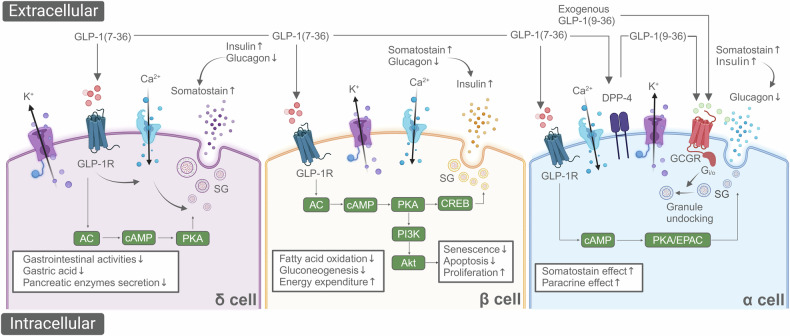
Mechanisms of Blood Glucose Reduction by GLP-1 in Pancreatic α, β, and δ Cells. This illustration demonstrates how GLP-1 reduces blood glucose levels by acting on different pancreatic cell types. In β cells, GLP-1(9–36) activates the GLP-1R, which increases cAMP levels, subsequently activating PKA and CREB, leading to the promotion of insulin secretion. The PI3K/Akt pathway enhances glucose sensitivity in β cells, promoting insulin secretion. This pathway also supports β cell survival and proliferation, ensuring an adequate β cell mass to maintain normal insulin secretion. This signaling cascade results in increased insulin gene expression, enhanced protein synthesis, improved cell survival, and reduced apoptosis. Additional metabolic effects include fatty acid oxidation, gluconeogenesis, and energy expenditure. In α cells, GLP-1(7-36) mainly regulates function through indirect mechanisms. GLP-1R expression is lower in α cells compared to β and δ cells, resulting in relatively less direct action of GLP-1 on α cells. Through paracrine effects via β cells, GLP-1 enhances insulin secretion, which in turn inhibits glucagon secretion from α cells. Additionally, GLP-1 promotes somatostatin secretion from δ cells, which inhibits glucagon secretion from α cells. GLP-1(7-36) can suppress glucagon secretion in α cells by increasing cAMP levels, activating PKA and EPAC, leading to a decrease in intracellular calcium concentration and reduced glucagon release. GLP-1(9–36) inhibits glucagon secretion by activating inhibitory G proteins (Gi/o) and suppressing PKA activity through a GCGR-dependent mechanism. By promoting the undocking of secretory granules (SG), GLP-1(9–36) reduces the number of granules available for exocytosis, thereby decreasing the release of glucagon. δ cells primarily secrete somatostatin. GLP-1(7-36) regulates somatostatin secretion by modulating calcium channels and affecting membrane potential changes. The action of GLP-1(7-36) on δ cells may be more indirect, such as through the influence on hormones secreted by β and α cells (insulin and glucagon), which indirectly affects δ cell somatostatin secretion. Additionally, somatostatin can inhibit gastrointestinal activities, reducing the secretion of pancreatic enzymes and gastric acid, thereby indirectly lowering the demand for glucagon
Role of GLP-1 in obesity
GLP-1 reduces appetite and food intake through its actions in the CNS.212,260,261 By interacting with receptors in the hypothalamus, GLP-1 influences satiety and reduces the consumption of food in both animals and humans.262 It functions not only in peripheral tissues but also directly within the CNS, crossing the blood-brain barrier or being produced centrally to act on the brain.262,263 GLP-1 regulates energy balance and food intake by acting on specific brain regions, especially the hypothalamus, a key area responsible for hunger and fullness sensations.264–266 The hypothalamus contains various neurons that respond to different nutritional signals and hormones, like GLP-1, to regulate food intake.265,266 When GLP-1 binds to its receptors in the hypothalamus, it activates specific neurons, including those that promote satiety (POMC/CART neurons) and inhibits those that induce hunger (NPY/AgRP neurons), thereby enhancing the feeling of fullness and reducing food intake.233,267
GLP-1 can slow down gastric emptying through its effects on smooth muscles and the nervous system in the gastrointestinal tract.264,268 Released at the gut's end, GLP-1 acts on its receptors in the gastrointestinal tract, leading to reduced gastric muscle contractions and extended food retention in the stomach.264,269 Furthermore, GLP-1 can slow down gastric emptying by activating the vagus nerve, a part of the autonomic nervous system crucial for regulating the activities of the gastrointestinal tract.268 When activated, the vagus nerve can reduce the contraction of the stomach, thereby slowing down food emptying.269 The prolonged retention of food in the stomach enhances the feeling of fullness, naturally reducing overall food intake.270,271 Additionally, slower gastric emptying helps stabilize postprandial blood glucose levels. Reducing food intake and extending satiety are significant for weight management and loss. By regulating gastric emptying, GLP-1 not only aids in short-term appetite control but may also contribute positively to long-term energy balance and weight management.176
GLP-1RAs and diseases
As a rising star in recent years, GLP-1RAs are not only effective in metabolic diseases but also play a role in non-metabolic disorders, affecting multiple systems including the musculoskeletal, nervous, cardiovascular, and digestive systems, and can even have implications in oncological diseases.
Musculoskeletal system
Disorders associated with the musculoskeletal system often cause painful swelling and permanent damage in the joints of the body, especially the hips, knees and thumbs. These diseases may affect more people in today's aging society. Because of the close relationship between risk factors in human metabolism and the expression of GLP-1R in the musculoskeletal system, GLP-1RAs may have great potential in the treatment of many diseases of the musculoskeletal system.15,272
GLP-1RAs and joint disorders
GLP-1RAs in OA
GLP-1R expression was detected via immunohistochemistry in articular chondrocytes from both normal and osteoarthritic individuals.273 The primary outcome of GLP-1R expression involves suppressing the release of cytokines into the synovial fluid, leading to a reduction in inflammation.274,275 This, in turn, diminishes additional downstream effects, including oxidative stress, the secretion of pro-degradative substances, modifications to cell phenotype (hypertrophy, M1/M2 macrophage phenotype, fibrosis), and damage or deterioration of joint cells (apoptosis, senescence).15,276
The activation of GLP-1R is linked to decreased NF-κB pathway activity Treatment with GLP-1RAs can effectively mitigate chondrocyte apoptosis caused by endoplasmic reticulum stress and alleviate the associated inflammatory response.277–280 This effect is accomplished through the inhibition of JNK, NF-κB, and other relevant signaling pathways.273 Moreover, GLP-1RAs could decelerate the progression of OA and mitigate pathological damage in a rat OA model.273 In addition, in a rat model of inflammatory OA induced by monoiodoacetic acid (MIA), researchers have shown that the activation of GLP-1R triggers the PKA/CREB signaling pathway, leading to a reduction in cartilage inflammation.281
Inflammation in OA is closely related to the activation of macrophages.282,283 These cells accumulate in the synovial membrane and subchondral bone, releasing pro-inflammatory cytokines such as TNF-α, IL-1β, and IL-6, which promote the degradation of joint cartilage and the inflammatory response.284–286 Macrophages express GLP-1Rs, which are involved in regulating their inflammatory responses. Binding of GLP-1 or GLP-1RAs to these receptors can activate the cAMP/PKA signaling pathway, affecting key transcription factors like NF-κB.287,288
This binding initiates typical GPCR signaling, leading to G protein activation and increased intracellular cAMP.289 The rise in cAMP activates PKA, a versatile protein kinase that phosphorylates various target proteins.290–292 In macrophages, PKA regulates gene expression by phosphorylating transcription factors like CREB.293 CREB activation can promote the expression of anti-inflammatory genes while inhibiting inflammatory genes.294,295 In inflammation regulation, NF-κB is a key transcription factor.296–298 Typically, NF-κB binds to its inhibitor IκB in the cytoplasm.297,299 When IκB is phosphorylated and degraded, NF-κB can move to the nucleus, activating multiple inflammation-related genes.300,301 This not only affects the intracellular signaling of macrophages but also their response to the external environment, including their effects on chondrocytes and other synovial cells.302–305
GLP-1R signaling, through PKA, inhibits this process, possibly by promoting IκB stability or inhibiting its phosphorylation, thus reducing NF-κB activation and nuclear translocation.8,281 Through these mechanisms, GLP-1R signaling influences the production of inflammatory factors in macrophages.306 For example, the reduction in TNF-α, IL-1β, and IL-6 helps regulate local and systemic inflammatory responses.307,308 Additionally, GLP-1R signaling may affect other macrophage functions, such as phagocytosis, migration, and cell survival.281
By reducing macrophage-mediated inflammatory responses, GLP-1RAs have the potential to alleviate symptoms of OA, including pain and joint stiffness.281,309 Moreover, reducing inflammation may slow down the degradation of joint cartilage, providing long-term joint protection.310,311 GLP-1RAs also enhance autophagy, a process of cellular clearance of damaged and outdated components.13,312 Regulation of autophagy may help remove harmful proteins and other cellular debris accumulated under inflammatory conditions, which is potentially important for maintaining the health of joint tissues.313,314
In one study, OA was induced in rats by injecting MIA into the knee joint, mimicking the pathological changes of human OA.315 Subsequently, rats were treated with liraglutide through subcutaneous injection to observe its therapeutic effect on OA.315 The expression levels of GLP-1R, PKA/CREB signaling pathway components, and inflammation-related proteins (such as TNF-α, IL-1β, and IL-6) in the rat knee cartilage tissue were measured using Western blot and immunoprecipitation techniques.315 The results showed that, in the OA rat model, liraglutide could activate the PKA/CREB signaling pathway and inhibit the inflammatory response through this pathway, thereby alleviating OA symptoms.316 These findings provide scientific evidence for developing new OA treatment strategies, confirming the potential of GLP-1 agonists in treating OA.315–317
GLP-1R is expressed in human monocyte-derived macrophages and the mouse macrophage cell line RAW264.7.279,318 c-Jun N-terminal kinase (JNK) is a mitogen-activated protein kinase (MAPK) involved in regulating cellular stress responses and inflammation.318 Signal Transducer and Activator of Transcription 3 (STAT3) is a transcription factor involved in cell growth, differentiation, and inflammatory responses.319–321 Researchers found that activation of GLP-1R could play a key role in regulating macrophage polarization by adjusting the phosphorylation levels of JNK and STAT3.318,322 Macrophages have two polarization states, M1 typically has pro-inflammatory properties, while M2 has anti-inflammatory properties.323–325 Specifically, activation of GLP-1R leads to an increase in cAMP levels, which in turn activates PKA, a widely regulating enzyme of cellular functions, capable of phosphorylating a variety of target proteins, thereby initiating the PKA/CREB signaling pathway.326,327 This not only prevents the phosphorylation of JNK but also promotes the phosphorylation of STAT3, aiding the shift of macrophages to an anti-inflammatory M2 phenotype.327 In the inflammatory environment, the M1 to M2 shift promoted by GLP-1 is crucial for reducing the expression of inflammatory factors such as IL-6, TNF-α, and iNOS.8,15,328
Chondrocytes are the only cell type in joint cartilage, responsible for synthesizing and maintaining the integrity of the cartilage matrix.329,330 In degenerative joint diseases like OA, the metabolic balance of chondrocytes is disrupted, leading to the overproduction of degrading enzymes and inflammatory mediators, including iNOS, MMP-13, and ADAMTS5 (a disintegrin and metalloproteinase with thrombospondin motifs 5), which participate in cartilage degradation and inflammatory processes.331 iNOS (inducible nitric oxide synthase) produces nitric oxide (NO) during inflammation, modulating signal transduction; MMP-13 (matrix metalloproteinase-13) is involved in cartilage degradation;331 ADAMTS5 is closely related to cartilage damage and inflammation.332–334 The NO produced by iNOS, as a free radical, can regulate intracellular signal transduction and modulate the inflammatory response.335,336 The expression of iNOS is primarily activated by the NF-κB pathway, which is activated and translocated to the nucleus upon inflammatory stimulation (such as bacterial endotoxins or pro-inflammatory cytokines), thus increasing the transcription and expression of iNOS.337–339 GLP-1 can exert its anti-inflammatory effects by activating its receptor, GLP-1R.339 When GLP-1 binds to GLP-1R, it activates the cAMP signaling pathway, leading to increased cAMP levels.1,340 The rise in cAMP further activates PKA, which can inhibit the NF-κB signaling pathway, reducing the production of inflammatory factors such as iNOS and other inflammation-related proteins.12,340,341 The expression of MMP-13 is regulated by IL-1β and TNF-α. These factors promote the transcription of the MMP-13 gene by activating the MAPK and NF-κB signaling pathways.342–344 The GLP-1R signaling pathway may also affect the expression of MMP-13 and ADAMTS5, by reducing the signal transduction caused by IL-1β, thus decreasing their synthesis.345,346 GLP-1 may also reduce the expression of cartilage-degrading enzymes by inhibiting the MAPK pathway or activating anti-inflammatory pathways such as PI3K/Akt, thereby alleviating cartilage damage.206,347
In another study, treatment of primary mouse chondrocytes with liraglutide reduced the mRNA expression levels of iNOS, MMP-13, and ADAMTS5, leading to a decrease in the secretion of inflammatory markers, including NO, prostaglandin E, and IL-6.348 Similarly, in human chondrocytes stimulated by TNF, GLP-1 analogs (such as liraglutide) showed an anti-catabolic effect, reducing the mRNA expression of MMP-3, MMP-13, and ADAMTS5.349,350 At the same time, the levels of two important components of the cartilage matrix, proteoglycans (a large molecule and a major component of the cartilage matrix) and type II collagen (the main structural protein of cartilage), increased.349,350 This change suggests that liraglutide not only inhibits inflammation and cartilage degradation but may also promote the synthesis and accumulation of cartilage matrix, thereby helping to protect and repair joint cartilage.273 Furthermore, a study using the anterior cruciate ligament transection (ACLT) rat model further confirmed that subcutaneous injection of liraglutide at 50 μg/kg/day, whether for 3 weeks or 6 weeks, could reduce OARSI scores, highlighting the potential of liraglutide in treating joint degeneration.273
GLP-1RAs and RA
The role of GLP-1RA was also investigated in RA, which is characterized by chronic inflammation of the synovium and joint destruction. In fibroblast-like RA synoviocytes, the administration of lixisenatide resulted in a reduction in the inflammatory response.347 This was achieved by decreasing the expression of proinflammatory cytokines such as tumor necrosis factor (TNF), interleukin-6 (IL-6), and interleukin-8 (IL-8).15,351,352 Moreover, lixisenatide has been shown to inhibit matrix metalloproteinase (MMP) activity and effectively block various cell signaling pathways, including the JNK, activator protein-1, and NF-κB pathways.353 These findings confirm that in the synovium, GLP-1R is expressed on two different cell types, macrophages and fibroblast-like synoviocytes, which are specialized cells distributed within the synovial intima and subintima, and these cell types play important roles in hyaluronic acid synthesis, metabolite processing, and clearance of matrix degradation fragments.354
GLP-1RAs and musculoskeletal health
GLP-1RAs and bone
The quality of bone depends on bone metabolism, and the main factors affecting bone metabolism include osteoclasts, osteoblasts, and calcitonin.355–357 According to most related studies, osteoclasts and osteoblasts are indispensable for bone remodeling, and bone resorption and bone formation are mediated by osteoclasts and osteoblasts, respectively.358 GLP-1R is present in bone marrow stem cells (BMSCs),15,359 osteoblasts,15 osteocytes,360 and osteoclasts,361 and GLP-1RAs have the potential to impact these cells.
GLP-1RAs and osteoclasts The greater degree of bone degradation observed in mice lacking GLP-1R indicates that GLP-1R signaling suppresses osteoclast differentiation and bone resorption.362 In an experimental study in which osteoclast formation and bone resorption were induced in mice through lipopolysaccharide (LPS) administration, researchers discovered that simultaneous treatment with exendin-4 resulted in a significant decrease in the number of osteoclasts, the proportion of bone resorption pits, and the levels of the bone resorption marker CTX compared to injection with LPS alone.363 According to previous reports, exendin-4, a GLP-1RA, has the potential to inhibit LPS-induced osteoclast formation and bone resorption in vivo.363,364 This inhibition is believed to occur through the suppression of LPS-induced TNF-α production in macrophages.15 Studies have indicated that GLP-1R KO mice exhibit greater numbers of osteoclasts and greater bone resorption than wild-type controls.364 Additionally, µCT analysis revealed that, compared with their wild-type counterparts, hyperlipidemic rats treated with subcutaneous GLP-1 for 3 days exhibited increased bone mass in the femur and vertebrae.365
Diabetic patients have a higher risk of fractures than does the general population.366 Mice with type 1 diabetes (T1D) exhibit a reduction in bone mineral density (BMD) and compromised microstructural integrity.367 The administration of liraglutide also impeded osteoclastic bone formation, thereby inhibiting bone resorption and exerting protective effects on bone health in T1D mice.367 Specifically, liraglutide, both alone and in combination with insulin, effectively suppressed the formation of osteoclasts. This effect is achieved by reducing the expression of Trem2 and NFATc1 and downregulating the expression of CTSK and TRAP to inhibit bone resorption activity. These findings provide further evidence for the impact of GLP-1RAs on osteoclastic bone resorption.367 A study involving 12-week-old ovariectomized mice revealed that administering liraglutide for 4 weeks effectively prevented the loss of trabecular bone. The analysis of bone tissue morphology revealed that there were no alterations in the rate of bone formation or in the levels of calcitonin or sclerostin in these mice. These findings suggest that liraglutide specifically reduces bone resorption without influencing bone formation.368
Since GLP-1R is expressed in thyroid C cells and GLP-1 directly stimulates the secretion of calcitonin, which is a potent inhibitor of bone resorption in osteoclasts, GLP-1 may contribute to the nutrient-mediated reduction in bone resorption.369,370 Genetic disruption of GLP-1R signaling leads to cortical osteopenia and heightened bone fragility, primarily caused by increased bone resorption by osteoclasts. This change was accompanied by a decrease in thyroid calcitonin expression. Furthermore, the administration of exogenous GLP-1 resulted in elevated calcitonin expression in the thyroids of normal (wild-type) mice.362 The administration of calcitonin successfully reduced the levels of urinary deoxypyridinoline in GLP-1R knockout mice. Additionally, treatment with GLP-1RA and exendin-4 increased the expression of the calcitonin gene in the thyroids of normal (wild-type) mice. These findings provide evidence that the regulatory influence of endogenous GLP-1R signaling on bone resorption is likely mediated through pathways that involve calcitonin.362 Considering the expression of the GLP-1R in thyroid C cells and the ability of GLP-1 to stimulate calcitonin secretion through a cAMP-mediated mechanism in vitro, it is plausible that calcitonin plays a role in the alterations in bone metabolism observed in GLP-1R-treated animals.369,370 Later, quantitative real-time PCR analysis demonstrated that the administration of exendin-4, a GLP-1RA, resulted in significant upregulation of thyroid calcitonin mRNA levels in wild-type mice.362
GLP-1RAs and Osteoblasts Osteoblasts arise through the differentiation of mesenchymal stem cells and play a crucial role in the process of bone formation. Stimulating GLP-1R in BMSCs triggers the buildup of nuclear β-catenin, which, in turn, activates osteogenic genes by binding with TCF7L12.371 In osteoblasts, the administration of GLP-1 and GIP incretins suppressed the excessive expression of the pro-degradative enzymes MMP-3 and MMP-13 induced by IL-1β stimulation.372 In vitro, GLP-1 disrupts the ability of osteoblasts to survive and differentiate by triggering the activation of c-Fos, which is a proto-oncogene.373 In fact, when BMSCs are exposed to exendin-4, the expression of genes related to bone development factors such as Runx and Osterix, as well as genes responsible for producing the bone matrix such as Balp and Bglap, is upregulated. Moreover, stimulation of GLP-1R in BMSCs results in the accumulation of β-catenin in the cell nucleus. This accumulation facilitates the binding of β-catenin to TCF7L12, triggering the activation of genes associated with osteogenesis.371

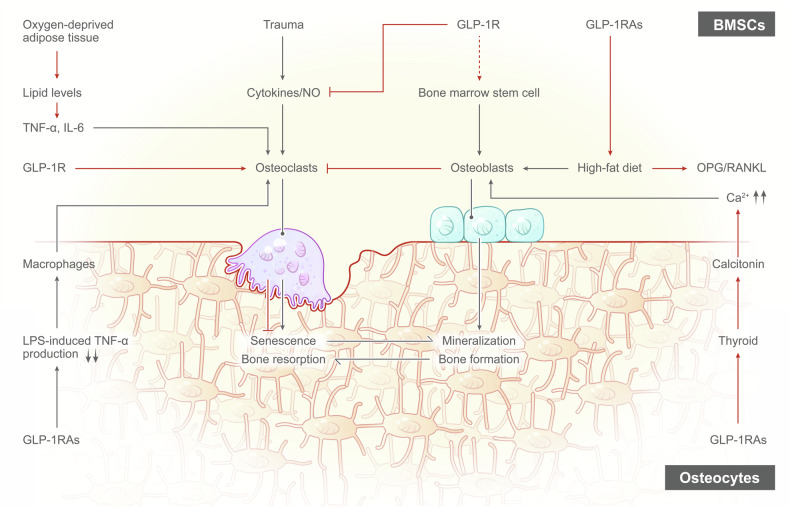
The Effects of GLP-1RAs on osteoclasts and osteoblasts. GLP-1RAs aid in weight loss by regulating the gut-brain axis and interacting with leptin, while weight loss can alleviate the harmful effects of obesity on the body, particularly in knee OA, by reducing joint loading and inflammation. Obesity disrupts bone metabolism and leads to increased bone resorption, but GLP-1RAs can inhibit this damage and improve bone health by increasing the OPG/RANKL ratio, reducing osteoclast activity, and promoting bone formation
GLP-1RAs and muscle
GLP-1RAs and Muscle Atrophy In previous experiments, exendin-4 (Ex-4) inhibited the expression of myostatin (MSTN), atrophy-factor F-box only protein 32 (atrogin-1) and muscle ring finger protein 1 (MuRF-1) in dexamethasone-treated C2C12 myotubes.376–378 In a dexamethasone-induced muscle atrophy model, Ex-4 ameliorated muscle atrophy by inhibiting muscle atrophy factor and enhancing myogenic factors (MyoG and MyoD), thereby increasing muscle mass and function. In the muscle atrophy mouse model, Ex-4 also increased muscle mass and muscle fiber size and improved muscle function. In addition, treatment with the long-acting GLP-1RA duraglutide restored muscle mass and function in DBA/2J-mdx mice.379
GLP-1RAs, particularly PF1801, have demonstrated effective relief in inflammatory myopathies, such as polymyositis (PM), through preclinical studies.376,380 The therapeutic effects of PF1801 are primarily achieved by modulating several key proteins that play central roles in inflammation and cellular metabolism.380 Firstly, the expression of GLP-1R is enhanced in the inflamed muscle fibers under pathological conditions, revealing the critical role of GLP-1R in regulating the muscle's response to inflammation.381 PF1801 activates these receptors, initiating a series of biological responses that influence the inflammatory state of muscle cells, thereby alleviating inflammation. Next, PF1801 exerts its effects by activating AMP-activated protein kinase (AMPK).382 As a central node in energy sensing and metabolic regulation, the activation of AMPK helps maintain cellular energy balance and prevents cell death due to energy depletion.383,384 Importantly, the activation of AMPK reduces the expression of phosphoglycerate mutase 5 (PGAM5), which plays a promotive role in cell necrosis by contributing to mitochondrial dysfunction and the production of reactive oxygen species (ROS).385–387 Thus, by inhibiting PGAM5, AMPK suppresses necrosis, reduces ROS accumulation, and mitigates oxidative stress.385,387 PF1801 displays its anti-inflammatory effects by lowering levels of inflammatory mediators such as TNFα, IL-6, and HMGB1, and enhances the cell's antioxidant capability by upregulating molecules like Nfe2l2, Hmox1, Gclm, and Nqo1, which further improves cellular defense against oxidative stress and protects them from further damage.382 Through this sophisticated molecular regulation, PF1801 not only alleviates inflammation and necrosis in muscle fibers but also enhances the energy and antioxidant status of muscle cells.382 This contributes to maintaining muscle strength and reducing inflammation. This comprehensive change reflects how alterations in the expression of individual key proteins can impact the entire metabolic and inflammatory pathways, thereby improving disease conditions and enhancing therapeutic efficacy.376
GLP-1RAs in Enhancing Exercise Endurance Studies indicate that acute exercise and short-term endurance training significantly increase GLP-1 secretion in mice. In endurance-trained men, GLP-1 plasma concentrations are elevated immediately at 30 and 45 minutes after exercise.388 To confirm the role of GLP-1 in enhancing physical endurance and the possible mechanisms involved, an in vivo AAV-mediated GLP-1 overexpression model and an in vitro siRNA-mediated AMPK knockdown model were generated. We demonstrated that GLP-1 enhances physical endurance by inducing skeletal muscle remodeling, which may be mediated by GLP-1R/AMPK signaling.389 Overall, GLP-1 secretion is induced by exercise. Overexpression of GLP-1 in skeletal muscle can improve endurance. These results suggest that GLP-1 may improve exercise endurance in mice by enhancing skeletal muscle glycogen synthesis and glucose uptake. Mitochondrial content and function in skeletal muscle are regulated by GLP-1.389 The interaction between GLP-1 and its receptor GLP-1R initiates the AMPK signaling cascade within skeletal muscle tissue. This initiation precipitates a multitude of alterations in the cellular milieu, notably the augmentation of mitochondrial biogenesis-a mechanism responsible for the genesis of new mitochondria. Furthermore, GLP-1 augments mitochondrial efficacy, as manifested by the ameliorated oxidative metabolism of muscle tissue. This enhancement is demonstrable through an increase in mitochondrial DNA content, the upregulation of genes integral to mitochondrial biogenesis, and the increased expression of proteins pivotal in oxidative phosphorylation. These cellular transformations contribute significantly to enhanced endurance during exercise, thereby underscoring the critical role that GLP-1 plays in the regulation of mitochondrial function and content in skeletal muscle.389
GLP-1RAs and fat metabolism
GLP-1RAs work via numerous mechanisms that contribute to weight loss, one of the most well-known of which is the gut-brain axis.212,213,390 Within this axis, GLP-1 functions by acting on both the gut and the brain.391 Furthermore, the combination of GLP-1-mediated signaling and the adipocyte hormone leptin has recently garnered increased interest. Notably, leptin may serve as a crucial biological signal for GLP-1, working in synergy, to decrease food intake and body weight. The effects of the leptin-GLP-1 interaction may be governed by intracellular signaling pathways, including those involving phosphorylated STAT3 and PTP1B.15,392
In Wistar rats, a diet high in fat was found to lead to a decrease in the ratio of OPG/RANKL, which resulted in increased bone resorption and ultimately a reduction in bone mass. The administration of GLP-1RA or exendin-4 to rats fed a high-fat diet resulted in an increase in the OPG/RANKL ratio and a reduction in the degree of bone loss. It was observed that the treatment of rats on a high-fat diet with exendin-4 resulted in a decrease in the number of osteoclasts and the area of eroded surfaces, while there was an increase in the osteoid area, bone mass, and trabecular bone volume. These effects were compared to those of untreated controls that were also maintained on a high-fat diet.393 As a result, GLP-1RAs could mitigate the detrimental effects of hyperlipidemia-induced skeletal defects, leading to an improved prognosis in individuals with OA.

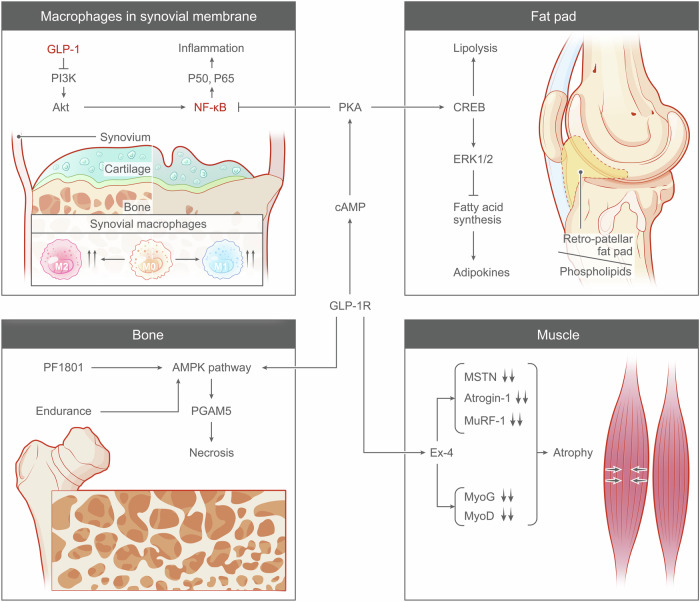
The Effects of GLP-1RAs on Musculoskeletal System. GLP-1RAs inhibit chondrocyte apoptosis, reduce inflammation, and protect articular chondrocytes in OA and RA through various mechanisms, including suppressing cytokine release, inhibiting the NF-κB pathway, and reducing inflammation-related gene expression. They have shown to reduce the inflammatory response by decreasing the expression of proinflammatory cytokines and inhibiting matrix metalloproteinase activity and cell signaling pathways. GLP-1R expression is found in macrophages and fibroblast-like synoviocytes, which are important for maintaining synovial fluid homeostasis. GLP-1R signaling stimulates calcitonin secretion, which inhibits bone resorption, and disruption of GLP-1R leads to increased bone resorption and decreased calcitonin expression. GLP-1RAs have pleiotropic effects on skeletal muscle, including inhibiting muscle atrophy, preserving muscle strength, and enhancing exercise endurance, through GLP-1R-mediated signaling pathways. GLP-1RAs can influence the composition of the phospholipid layer on cartilage, leading to beneficial effects on joint health and potentially facilitating repair of existing damage in individuals with OA
GLP-1RAs in nervous system
In the nervous system, GLP-1 can decrease oxidative stress and inflammatory responses, potentially through reducing the generation of ROS and decreasing the expression of inflammatory cytokines. Activation of its receptor by GLP-1 can promote the phosphorylation of CREB, subsequently fostering the expression of genes related to neuronal survival and regeneration.396–399
GLP-1RAs and nerve cells
GLP-1 can modulate peripheral nerves through the ERK (extracellular signal-regulated kinase) signaling pathway, reducing the occurrence of neurological dysfunction.400 Researchers have discovered that GLP-1RAs exhibit a noticeable increase in the level of phosphorylated ERK1/2 within the sciatic nerve of diabetic rats. This observation led them to speculate that GLP-1 analogs might possess distinct neurotrophic properties and exert protective effects specifically on the nerve.71,395,401–403
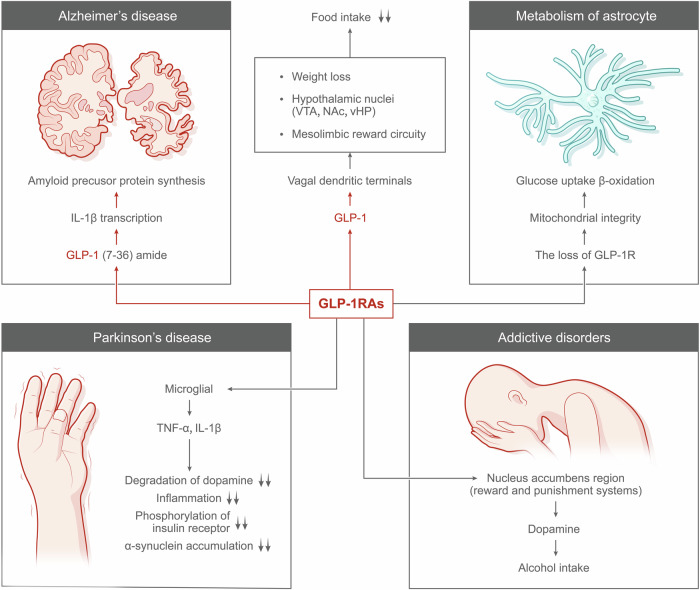
Astrocytes, the most abundant cell type in adult brain nerve tissue, have recently been recognized for their pivotal role in regulating glucose and energy homeostasis.404–406 These cells not only respond to signals from leptin and insulin but also adapt to alterations in brain metabolism to accommodate behavioral changes by controlling glucose transport.406,407 Furthermore, astrocytes express GLP-1R, which has been found to be crucial for their proper functioning.408 Studies have shown that the loss of GLP-1R in astrocytes can impair mitochondrial integrity, leading to the dysfunction and inhibition of glucose uptake and β-oxidation.407 GLP-1 inhibits glucose uptake in astrocytes and promotes beta-oxidation, which is essential for regulating energy balance in the brain and maintaining mitochondrial integrity.406 When GLP-1R is knocked out in astrocytes, it activates an integrated stress response, which affects the overall metabolic state by increasing the production of FGF21.405 This suggests that signaling through GLP-1R in astrocytes is crucial for maintaining the metabolic stability and functionality of the cells.406 FGF21 is recognized as a stress response factor that addresses mitochondrial dysfunction in cells. In astrocytes lacking GLP-1R, the increase in FGF21 is associated with improved systemic glucose homeostasis and memory formation.406 This indicates that FGF21 not only plays a role in cellular stress responses but also has a significant role in regulating brain function and systemic metabolism.406 Therefore, endogenous GLP-1R signaling in astrocytes plays a critical role in maintaining mitochondrial homeostasis and is dependent on FGF21 to effectively regulate glucose metabolism.406,407
GLP-1RAs can alleviate neuroinflammation by acting on the nervous system, thereby offering additional relief from pain in patients.6,409,410 During a previous experiment, researchers induced pain and observed symptoms of cognitive impairment in rats through spinal nerve ligation. Then, the researchers administered exendin-4 via intrathecal injection to the experimental rats and observed a reduction in pain sensitivity, alleviation of neural inflammation, and suppression of inflammatory factors such as IL-1β, TNF-α, and iNOS. This finding suggests a direct correlation between the analgesic effects of GLP-1R signaling and its Anti-neuroinflammatory activity.411 In another study, 3D fluorescence microscopy was used to eliminate proteins within chondrocytes in the subchondral bone of cartilage, resulting in bone transparency and the acquisition of high-resolution 3D images. By utilizing this methodology, researchers have revealed that GLP-1RAs can exhibit affect the axon terminals of sensory neurons. Ultimately, it was revealed that cholinergic fibers are present within the subchondral bone of individuals with OA, and the release of acetylcholine (Ach) triggered by vagus nerve stimulation plays a prominent role in combating inflammation across various diseases while also providing pain relief.412 Notably, GLP-1RAs, including exendin-4, have been shown to attenuate microglial activation, resulting in a reduction in the expression of proinflammatory cytokines such as TNF-α and IL-1β. By modulating inflammatory responses, GLP-1RAs can help prevent the degeneration of dopamine-producing cells.413 GLP-1RAs play a neuroprotective role in neurons by facilitating neuronal survival and promoting neuronal growth, thereby preserving the structural and functional integrity of synapses.6,14 Furthermore, GLP-1 signaling indirectly enhances and restores the insulin signaling pathway in neurons, leading to a reduction in the phosphorylation of insulin receptor substrates and the burden caused by monomeric α-synuclein.414 Together, these effects contribute to the protection of dopaminergic neurons (source). Exenatide has been shown to mitigate the phosphorylation of insulin receptor substrates and the accumulation of monomeric α-synuclein.414 By activating the GLP-1 signaling pathway, exenatide exhibits neuroprotective effects and safeguards dopaminergic neurons.5
The most well-known mechanism through which GLP-1RAs affect weight loss is through the endocrine pathway, but its role in the nervous system should not be overlooked.415–417 GLP-1RAs can exert their local effects by activating vagal dendritic terminals that innervate the gut.418–420 This activation holds the ability to modulate food consumption by reducing food intake and conveying signals of satiety to the brain.391 GLP-1 and GLP-1 analogs exert their effects on food intake and body weight through a myriad of neural substrates, encompassing several hypothalamic nuclei (including the arcuate nucleus of the hypothalamus, periventricular hypothalamus, and lateral hypothalamic area), hindbrain nuclei (such as the parabrachial nucleus and medial nucleus tractus solitarius), the ventral subregion of the hippocampus (vHP), and nuclei embedded within the mesolimbic reward circuitry (including the ventral tegmental area, VTA, and nucleus accumbens, NAc).421,422 Remarkably, GLP-1R activation in certain nuclei (such as the VTA, NAc, and vHP) elicits reductions in food intake and body weight without concurrent nausea responses.392
The relationship of inflammatory response and neurodegenerative disease
In the research conducted by Daniel J. Drucker's team, the mechanism of anti-inflammatory action of GLP-1RAs was explored, revealing a key role for the CNS in regulating this anti-inflammatory effect.423 The study began by inducing inflammation in mice through the injection of various Toll-like receptor (TLR) agonists and then assessed the inflammation by measuring plasma tumor necrosis factor-alpha (TNF-α) levels.423 It was observed that the GLP-1RA, exendin-4, significantly reduced the TNF-α levels caused by various TLR agonists, indicating that exendin-4 can lower the TNF-α levels induced by multiple TLR agonists.423 The research further demonstrated that this anti-inflammatory effect was not mediated by GLP-1R in the blood or endothelial cells but required the GLP-1R in the CNS.
Additionally, to simulate sepsis caused by polymicrobial infection and assess the impact of GLP-1RAs, the study utilized a cecal content injection method. It was found that semaglutide, a long-acting GLP-1RA, could improve symptoms caused by sepsis, reduce body temperature, and decrease the bacterial load in multiple organs, along with the levels of inflammatory factors in plasma and lungs.423 These findings further confirmed the central role of the CNS in regulating the anti-inflammatory effects of GLP-1RAs, highlighting the potential application of GLP-1RAs in anti-inflammatory treatment.
The study also discovered the roles of α1-adrenergic and δ- and κ-opioid receptors in this process. Specifically, blocking the α1-adrenergic receptors with prazosin or the opioid receptors with nalbuphine interfered with the ability of GLP-1RAs to reduce plasma TNF-α levels, indicating the critical importance of these pathways in the anti-inflammatory effects mediated by GLP-1 activation. The α1-adrenergic receptors, found on the surface of cells, facilitate various physiological responses, including regulating vascular contraction and heart rate. The use of prazosin, an α1-adrenergic receptor blocker, showed that the ability of GLP-1RAs to reduce TNF-α in plasma was disrupted, signifying the vital role of α1-adrenergic receptors in the anti-inflammatory action of GLP-1RAs. Opioid receptors, which are associated with pain regulation, mood, and immune responses, include δ and κ types. The use of nalbuphine, a blocker of δ- and κ-opioid receptors, also disrupted the effect of GLP-1RAs on reducing TNF-α levels, highlighting the essential role of these opioid receptors in the anti-inflammatory effects mediated by GLP-1RAs.423
Furthermore, the study emphasized that neurons in specific brain regions, such as the hindbrain and hypothalamus, co-express GLP-1R along with α1-adrenergic and δ-opioid receptors, suggesting a localized mechanism within the CNS that could coordinate peripheral anti-inflammatory responses. This co-expression indicates a mechanism within the CNS allowing these neurons to sense and respond to the peripheral inflammatory state. Through the interaction of these receptors, the brain can receive signals of peripheral inflammation and respond through neural signaling, thereby modulating or alleviating the inflammatory response. This receptor co-expression on neurons in specific brain regions may enable the brain to finely regulate the body's response to inflammation. For instance, when peripheral tissues become inflamed, the related signals might be transmitted to the brain through these receptors on the neurons, and the brain could then respond to these signals via neural pathways, thus regulating the level of peripheral inflammation.423
GLP-1RAs and AD
AD is a progressive and irreversible neurodegenerative disorder characterized by an unclear etiology and pathogenesis.424 In AD, GLP-1(7-36) amide inhibits IL-1β transcription and prevents cognitive dysfunction, amyloid precursor protein synthesis, and cell death. It also enhances learning and memory by promoting long-term potentiation (LTP).425,426 In a murine model of AD, the administration of GLP-1RAs effectively reduced the levels of pathological markers associated with AD. These markers include oligomeric antibodies and amyloid plaque load. Furthermore, GLP-1RAs have been shown to attenuate microglial activation and improve memory-related behaviors.71 Moreover, GLP-1RAs have demonstrated considerable therapeutic promise in animal models of both PD and AD.427–429 The compound NLY01 is particularly effective at attenuating the activity of proinflammatory microglia and preventing the transformation of astrocytes to a reactive phenotype. This activity is instrumental in safeguarding hippocampal neurons from the deleterious impacts of glutamate-induced excitotoxicity and hypoxic conditions. In the context of AD, where neuroinflammation and neurotoxicity are prominent pathological hallmarks, the modus operandi of NLY01 offers a potential therapeutic avenue to mitigate analogous pathological mechanisms inherent to this neurodegenerative condition.430
GLP-1RAs and PD
PD is a chronic neurodegenerative disorder that affects the CNS and is the second most prevalent neurodegenerative disease worldwide.14 GLP-1RAs are promising pharmacological agents for treating PD due to their potential to preserve the integrity and function of dopaminergic neurons. In addition to its effects on metabolic regulation, GLP-1, when synthesized within the brain, exhibits neuroprotective properties.397,427,431 A clinical trial titled "Liraglutide in Early Parkinson's Disease" was published in the New England Journal of Medicine, exploring the effects of liraglutide on patients with early-stage PD diagnosed within the last three years.432 The research was a 14-month Phase II double-blind randomized controlled trial. The results showed that liraglutide had a modest positive effect on improving motor function and performed well in terms of safety and tolerability, although there were some manageable gastrointestinal side effects.432 The study emphasizes the need for further research into the potential benefits and risks of liraglutide in patients at different stages of PD.432
GLP-1RAs and addictive disorders
Researchers have discovered that semaglutide has the ability to reduce both recurrent alcohol consumption and overall alcohol intake in rats by more than 50%.433 Specifically, alcohol-dependent rats were administered semaglutide, which resulted in a significant reduction in their alcohol consumption.433 Further investigation into the mechanism underlying the alcohol-reducing effects of semaglutide suggested that this effect may involve the modulation of alcohol-induced rewards and punishments within the brain. Researchers have also shown that semaglutide impacts the reward and punishment systems in the brains of mice, particularly in the nucleus accumbens region, which is part of the limbic system.433 It is believed that alcohol activates the brain's reward and punishment system, triggering the release of dopamine, a neurotransmitter associated with pleasure and reward, both in humans and animals. However, the administration of semaglutide appeared to block this process, potentially leading to a diminished alcohol-induced reward and punishment response within the body.433 Remarkably, compared with untreated rats, treated rats exhibited a significant reduction in alcohol intake, which was reduced by half.433 These findings highlight the potential therapeutic efficacy of semaglutide in mitigating alcohol consumption.434

The effects of GLP-1RAs on nervous system. GLP-1RAs have diverse effects, including alleviating neuroinflammation and pain in OA, reducing food intake and improving body weight, protecting peripheral nerves, maintaining astrocyte function and metabolic homeostasis, and showing potential therapeutic benefits in AD and PD. Semaglutide, a diabetes drug, can also reduce alcohol consumption by modulating the brain's reward and punishment systems
GLP-1RAs in the cardiovascular system
In the cardiovascular system, GLP-1 can reduce cardiac ischemia-reperfusion injury through the activation of specific signaling pathways, such as the PI3K/Akt pathway.437,438 This involves modulating the cell apoptosis process, for example, by decreasing the Bax/Bcl-2 ratio in cardiomyocytes, reducing cytochrome C release, and caspase activation.438,439 GLP-1 can also enhance endothelial function by promoting the production of NO, possibly through activating eNOS, thereby affecting vasodilation, anti-inflammatory actions, and anti-atherosclerosis.43,192,440,441
GLP-1RAs and AS
AS is characterized by the formation of fibrofatty plaques within arterial walls and is one of the foremost global causes of mortality.5 GLP-1RAs, as exemplified by liraglutide and semaglutide, exhibit pronounced cardiovascular protective effects.43 Liraglutide and semaglutide have been demonstrated to be effective at reducing lipid and blood pressure levels through numerous scientific investigations, thereby contributing to the mitigation of AS and cardiovascular ailments.442 Preclinical studies have documented the inhibitory effects of GLP-1RAs on the development of AS in animal models.443 These agents exert their anti-atherosclerotic effects through various mechanisms, including by improving blood lipid profiles,444 preserving endothelial integrity and regulating endothelial function,445 as well as modulating inflammatory processes.70
GLP-1RAs confer substantial benefits for individuals with AS owing to their multifaceted impact on various aspects of cardiovascular health.39,40,446 Notably, GLP-1RAs exhibit pronounced efficacy in optimizing blood lipid profiles by effectively suppressing chylomicron secretion in the intestine, thereby mitigating the occurrence of postprandial hyperlipidemia.447 Moreover, these agents promote hemodynamic equilibrium,18 diminish thrombotic propensity,448 alleviate endothelial oxidative stress,449 attenuate inflammatory processes,450 and foster a favorable balance of the gut microbiota,451 all of which collectively contribute to the salutary effects of these agents in patients with AS.
GLP-1RAs have been shown to exert beneficial effects on the maintenance of endothelial integrity. One study suggested that GLP-1RAs exert direct endothelial protective effects by activating the GLP-1R-dependent AMPK/Akt/eNOS pathway. This pathway facilitates the generation of NO, thereby contributing to the preservation of vascular health and endothelial function. Additionally, GLP-1RAs facilitate the maintenance of endothelial barrier integrity, thus playing a crucial role in preventing vascular leakage.452 Endothelial cells exhibit enhanced NO production and concurrent suppression of endothelin formation, resulting in vascular smooth muscle relaxation and vasodilation mediated by the endothelium (e.g., GLP-1, exenatide, and liraglutide).453 Indeed, GLP-1RAs, including exenatide, liraglutide, and semaglutide, have been linked to the diminished expression of matrix metalloproteinases (MMPs).454–456 MMPs are a class of enzymes that play a crucial role in the breakdown of extracellular matrix components. Excessive MMP activity can lead to the weakening of fibrous caps and increase the risk of plaque rupture in atherosclerotic lesions.454 By reducing MMP expression, GLP-1R stimulation may help preserve the integrity of fibrous caps and mitigate the risk of plaque rupture.
GLP-1RAs have been shown to reduce the levels of systemic inflammatory markers.457,458 Importantly, the effective management of inflammation is widely acknowledged to play a crucial role in the prevention of cardiovascular diseases.459,460 The anti-inflammatory effects of GLP-1RAs contribute to the attenuation of atherosclerotic plaque lesion development through various mechanisms. First, GLP-1RAs have been shown to inhibit the expression and release of proinflammatory cytokines, such as IL-6 and TNF-α, thereby inhibiting the overall inflammatory response.461 GLP-1RAs can suppress the activation of nuclear factor-kappa B (NF-κB), a key transcription factor involved in the regulation of inflammatory processes.462 Inhibition of the NF-κB signaling pathway leads to the decreased production of inflammatory mediators, including adhesion molecules and chemokines, which are crucial for the recruitment of immune cells to sites of inflammation.463 In addition, liraglutide can delay the formation of AS by inducing cell cycle arrest in vascular smooth muscle cells through the AMPK pathway.5
GLP-1RAs and hypertension

The Effects of GLP-1RAs on Carotid Body Activation. GLP-1 by inhibiting the chemoreception in carotid body cell activity to adjust the new mechanism of sympathetic nerve excitability, and points out that GLP-1 agonists can inhibit the origin of the carotid body around chemical reflection to lighten the sympathetic nerve excitability, which is expected to improve the sympathetic activity of the patients with high blood pressure, reduce blood pressure levels
GLP-1RAs and heart failure
The prevalence of left ventricular ejection fraction (LVEF)-preserved heart failure continues to increase. The symptoms in patients are severe and often accompanied by functional impairments, especially in the obese population. Heart failure with preserved ejection fraction (HFpEF) accounts for approximately half of all heart failure cases, with patients bearing a high symptomatic burden and physical limitations that impact their daily lives. These limitations include fatigue, shortness of breath, reduced exercise capacity, and limb swelling. Currently, there are no approved targeted therapies for LVEF-preserved heart failure associated with obesity. Moreover, GLP-1R has not yet been identified on human myocardial cells, negating any direct effects of GLP-1RAs on myocardial cells.470
Recently, studies have shown that the GLP-1RA Meg peptide also enters the ejection fraction reserve following heart failure therapy. The results of a trial of semaglutide in obese patients with HFpEF showed a significant amelioration of symptoms and improvements in motor function and weight loss compared with patients treated with a placebo.470 In this study, researchers randomized 529 patients with heart failure with a preserved ejection fraction and body mass index (weight in kilograms in the square of the height in meters) ≥30 to receive once-weekly injections of semaglutide (2.4 mg) or placebo for 52 weeks. The two primary endpoints were the Kansas City Cardiomyopathy Questionnaire clinical summary score (KCCQ-CSS, which ranges from 0 to 100) and the Kansas City Cardiomyopathy Questionnaire Clinical Summary Score (KCCQ-CSS). Higher scores indicate fewer symptoms and physical limitations and weight change from baseline. The confirmatory secondary endpoints included the change in the 6-min walking distance, a hierarchical composite of death and heart failure events; the difference between the change in the KCCQ-CSS and the change in the 6-min walking distance; and the change in the C-reactive protein (CRP) level.470 In this trial, semaglutide benefited patients with heart failure and preserved ejection fraction by intervening with upstream metabolic drivers. This agent differs from earlier therapies that were designed to reduce myocardial loading or induce neurohumoral blockade. These positive results indicate that the change in myocardial cells may not be the primary driver of HFpEF; instead, the multisystem pathologic processes that are associated with this condition have long been well established as drivers of its clinical presentation and outcomes.470
One could argue that the success of sodium-glucose cotransporter 2 (SGLT2) inhibitors, and now of GLP-1RAs, suggests that metabolic abnormalities play an important role in driving HFpEF.470 SGLT2 inhibition is also known to benefit patients with heart failure and a reduced ejection fraction.471 The mechanisms by which SGLT2 inhibitors treat heart failure include lowering blood glucose levels by inhibiting the SGLT2 protein in the renal tubules and reducing glucose reabsorption in the tubules.472 Promoting the urinary excretion of sodium and water reduces fluid retention and hypervolaemia, thereby reducing the load on the heart.473 It also improves myocardial energy metabolism, increases fatty acid oxidation in the myocardium, and improves myocardial energy supply.474 Moreover, these agents reduce the risks of myocardial inflammation and fibrosis and improve cardiac structure and function.475 By the way, a clinical study published in "Nature Metabolism" detailed the effects of semaglutide and dapagliflozin (an SGLT2 inhibitor) on blood sugar control in patients with T2DM of different pathophysiological types.476 It was found that semaglutide performed better than dapagliflozin in reducing HbA1c levels.476 The study results suggest that semaglutide may be a more suitable choice for patients with severe insulin deficiency, while dapagliflozin might be effective for a broader range of patients with metabolic abnormalities.476
If SGLT2 inhibitors and GLP-1RAs are effective in patients with heart failure (regardless of whether the ejection fraction is reduced or preserved), the commonalities between the two types of heart failure may be greater than is often thought. If so, the two types of heart failure may be very similar, except that the cause of heart failure with a preserved ejection fraction may not be the same as that with a reduced ejection fraction.477–479 If this is indeed the case, then both types of heart failure are syndromes caused by multiple metabolic and inflammatory changes; however, heart failure with reduced ejection fraction also has a regional cause. Therefore, intrinsic cardiac load and capacity do not improve in patients with heart failure with reduced ejection fraction, and patients HFpEF benefit only from the treatment of abnormal metabolism and inflammation.475,480,481
The encouraging results obtained with semaglutide in patients with heart failure and a preserved ejection fraction may provide a new option for this patient population, in which additional therapy, as well as another upstream therapy for patients with a higher BMI who have indications for this condition, is urgently needed. The clinical translation of these trial results, which will be important for the comparison of GLP-1RAs with SGLT2 inhibitors in the treatment of patients with heart failure and a preserved ejection fraction, remains to be determined.470,478,482–484
GLP-1RAs in the digestive system
Treatment with GLP-1RAs can alleviate insulin signaling by reducing the phosphorylation of Akt protein (Decreased Akt-P) and activating Protein Kinase C-ε (PKC-ε).485,486 This affects the synthesis of triacylglycerol (TAG), phosphatidic acid (di-P PA), and diacylglycerol (DAG) in the liver.206,487 These changes lead to a reduction in the production of non-esterified fatty acids (LCFAs) and glucose, as well as a decrease in the synthesis of VLDL (Very Low-Density Lipoprotein).3
GLP-1RAs and NAFLD/NASH
When dietary nutrients are ingested, endogenous incretins (GIP and GLP-1) activate K and L cells in the gut, which then secrete GIP and GLP-1.488–490 In the pancreas, this stimulates the secretion of insulin and inhibits the secretion of glucagon.491 In the brain, it reduces appetite and improves satiety.130,133 In the gastrointestinal tract, it lowers the synthesis and secretion of triglycerides.491 By regulating appetite, insulin secretion, and lipid metabolism, GLP-1RAs have potential benefits in the treatment of NAFLD, NASH, and T2DM.130,492,493
NASH is a liver disease primarily caused by fat accumulation, which can progress to liver fibrosis, cirrhosis, or even liver cancer.494–498 The role of GLP-1 in NASH has garnered attention due to its potential in regulating metabolism, improving insulin sensitivity, and exerting anti-inflammatory effects.17,499–503 Insulin resistance, a common occurrence in NASH patients, is a key driver of the disease's progression.504–506 GLP-1 enhances the insulin signaling pathway in the liver by activating the GLP-1R, especially through the phosphorylation of insulin receptor substrates and the activation of the PI3K/Akt signaling pathway, thereby increasing hepatic insulin sensitivity, facilitating glucose uptake and utilization, and reducing hepatic gluconeogenesis.3,507
GLP-1RAs reduce liver fat accumulation by activating AMPK, which inhibits fatty acid synthesis enzymes and promotes fatty acid β-oxidation, thus diminishing lipid droplet accumulation in hepatocytes.508–511 Additionally, GLP-1 mitigates liver inflammation and fibrosis by inhibiting the NF-κB pathway, reducing the release of pro-inflammatory cytokines such as TNF-α and IL-6, and thus suppressing inflammatory pathways.307,413
In terms of apoptosis inhibition, GLP-1 activates the PI3K/Akt signaling pathway, enhances the expression of the anti-apoptotic protein Bcl-2, and inhibits the activation of caspase family proteins, reducing cell apoptosis.206 This helps prevent the progression of NASH to liver fibrosis and cirrhosis. The weight-loss effect of GLP-1RAs also benefits NASH improvement, by reducing appetite and increasing energy expenditure to promote weight loss, thereby indirectly ameliorating NASH.206,512 Thus, GLP-1 and its agonists slow down the progression of NASH and may positively impact the reversal of liver fibrosis.513,514 These signaling pathways suggest that GLP-1 and its receptor agonists may influence the progression of NASH through multiple mechanisms, providing several potential therapeutic targets including: FOXO1, a transcription factor that plays a critical role in regulating glucose and lipid metabolism. GLP-1 can improve abnormalities in glucose metabolism and excessive lipid accumulation by modulating the activity of FOXO1.5,514 Sirt1, a protein deacetylase, plays a key role in delaying cellular aging and regulating metabolism.515–517 GLP-1 may improve the liver's antioxidant capacity and metabolic function by activating Sirt1, thereby helping to alleviate the pathological changes associated with NASH.
A 2023 study published in the "Journal of Hepatology" reported on a Phase IIa trial aimed at evaluating the efficacy and safety of efinopegdutide in patients with NAFLD, comparing it to semaglutide.144 Efinopegdutide is a dual agonist for GLP-1R and GIPR.144 The study used a randomized, open-label design and employed magnetic resonance imaging technology (MRI-PDFF) to measure liver fat content (LFC) after 24 weeks of treatment. Results showed that efinopegdutide was more effective in reducing LFC compared to semaglutide. Additionally, the study assessed weight and metabolic responses, finding that efinopegdutide's tolerability was similar to that of semaglutide, although certain gastrointestinal side effects were more common. Overall, efinopegdutide emerged as a promising option for the treatment of NAFLD.144
GLP-1RAs and gastrointestinal cancers
GLP-1 and its receptor agonists show some potential in the treatment of gastrointestinal cancers, although this remains an emerging area of research.518–521
Hepatocellular carcinoma (HCC)
Initially developed for treating diabetes, GLP-1RAs have shown potential in treating NASH, which is closely related to HCC.513 Studies suggest that the anti-inflammatory and metabolic effects of GLP-1RAs might also influence the progression of liver diseases, including HCC.503,512,518 These effects include modulating cell proliferation, inflammation, and oxidative stress in liver cells, all of which are key factors in the development and progression of HCC.513,522 In a mouse model induced with NASH-related HCC, treatment with liraglutide (a type of GLP-1RA) was shown to prevent the progression of hepatocellular carcinoma.518 This was observed through improved glycemic control, reduced occurrence of liver cancer, and better liver histology compared to the control group.518 Studies indicate that liraglutide may inhibit liver carcinogenesis through its metabolic effects, suggesting that GLP-1RAs could potentially play a role in preventing or managing HCC in the context of NASH.523 Not only hepatocellular carcinoma, but GLP-1 has also shown potential in the treatment of other gastrointestinal tumors.524,525
Pancreatic cancer
Researchers first compared the expression of GLP-1R in human pancreatic cancer tissues with adjacent non-tumorous pancreatic tissues, finding generally lower or absent expression of GLP-1R in pancreatic cancer tissues.520 Subsequently, the study observed that treatment with liraglutide, both in vitro (cell culture models) and in vivo (mouse models), inhibited the tumor formation and metastatic capabilities of pancreatic cancer cells by activating GLP-1R.520 The anti-tumor effect of liraglutide is related to its inhibition of the PI3K/Akt signaling pathway, as the activation of Akt is crucial for promoting cell survival and proliferation, and liraglutide can inhibit this process in a dose-dependent manner.520,526 In the context of T2DM, liraglutide, by regulating the PI3K/Akt pathway and activating GLP-1R, effectively inhibits the growth and spread of pancreatic cancer cells.520
Colorectal cancer
The potential impact of GLP-1RAs on colorectal cancer (CRC) treatment is achieved through the modulation of Bone Morphogenetic Protein 4 (BMP4).519 In T2DM and CRC, the regulation of BMP4 is abnormal, which is a key focus of the research.519 Specifically, high blood glucose-induced insulin resistance in CRC cells leads to increased BMP4 expression, which activates the BMP4-Smad1/5/8 signaling pathway.519 The activation of this pathway enhances cell proliferation and metastatic capabilities by promoting epithelial-mesenchymal transition (EMT), thereby increasing the invasiveness and metastatic potential of tumors. However, GLP-1RAs have been shown to reduce BMP4 levels through exogenous administration. Studies have shown that treating CRC cells with GLP-1RA can inhibit cell proliferation induced by insulin resistance by downregulating BMP4. Therefore, BMP4 becomes a potential therapeutic target in CRC, especially in a diabetic context where high blood glucose significantly affects cancer progression through the BMP4 pathway.519 Ultimately, GLP-1RA, by regulating BMP4 and its effects on cell proliferation and metastasis, provides a promising treatment approach.519 This not only demonstrates the role of GLP-1RA in diabetes management but also offers potential for integrating diabetes and cancer treatment.520 This finding emphasizes the importance of considering metabolic status in cancer treatment and the necessity for further research in this area.519 While early models have shown promising results, the application of GLP-1RAs in cancer treatment has not yet been established and requires further clinical trials.527
Conclusions and perspective
Primarily recognized for their role in diabetes mellitus treatment, GLP-1RAs have demonstrated significant benefits in cardiovascular health, skeletal muscle-related diseases, obesity management, and neurodegenerative conditions, among others. In this review, we delved into the multifaceted role of GLP-1R, especially its significance in disease contexts beyond traditional glucose metabolism. It explored the mechanisms of action of GLP-1RAs and their therapeutic potential in a wide array of diseases, such as diabetes mellitus, providing new insights into metabolic disease management. These findings underscore the multifunctionality of GLP-1R as a therapeutic target and its involvement in various biological processes, emphasizing its role in addressing complex disease mechanisms. GLP-1 acts on the GLP-1R, activating multiple intracellular signaling pathways, including the cAMP/PKA pathway, the PI3K/Akt signaling pathway, and pathways related to anti-inflammatory and anti-oxidative stress responses, among others. These pathways play a crucial role in its wide-ranging therapeutic effects, extending the benefits of GLP-1RAs beyond metabolic diseases. While the therapeutic benefits of GLP-1RAs in diabetes management are well-established, their emerging role in other diseases suggests novel treatment strategies. Conclusively, research on GLP-1R and its agonists marks a promising direction in metabolic disease therapy, extending their potential beyond glucose regulation and offering hope for more comprehensive approaches in addressing metabolic diseases. This research necessitates continued exploration, potentially revolutionizing future therapeutic strategies.
In the intensely competitive GLP-1 drug market, simply enhancing drug efficacy is no longer sufficient to make new products stand out. Looking ahead, the key strategies for product innovation and differentiation are likely to focus on five main directions: expanding the therapeutic indications, achieving precision treatment with multiple biological targets, optimizing the clinical application of drug combinations, developing new formulations of oral medications, and extending the duration of drug action. These strategies not only illustrate the depth and breadth of pharmaceutical research but also signify the frontier of future medical innovations. Firstly, expanding indications is a current hotspot in GLP-1 drug research. GLP-1 drugs have been found applicable for various diseases such as cardiovascular disease, NASH, AD, and chronic kidney disease. For instance, semaglutide has been approved and is being researched for indications including obesity, T2DM, reducing cardiovascular risk, chronic kidney disease, NAFLD, and AD, indicating that the development of new indications could provide new growth opportunities for GLP-1 drugs. Secondly, efficacy is the core criterion for evaluating drugs, and currently, multi-target GLP-1 drugs have shown better efficacy. For example, triple-target agonists like retatrutide are leading multi-target GLP-1 drugs. Moreover, combination therapies have demonstrated significant advantages, such as Novo Nordisk's CagriSema (semaglutide + cagrilintide), which shows superior glycemic control and weight reduction effects compared to semaglutide alone, demonstrating that combination therapy can achieve more than the sum of its parts while reducing side effects.117 Additionally, to improve patient compliance, it is crucial to extend the drug's half-life. This has been achieved through techniques such as peptide sequence modification, peptide lipidation, albumin fusion, and Fc fusion. For example, scientists are developing GLP-1 drugs that require only monthly injections. Lastly, considering some patients' resistance to injections, oral medications have become the preferred option. However, the oral GLP-1 product, Rybelsus, has low bioavailability and requires cumbersome daily administration, which reduces its convenience. Therefore, enhancing bioavailability and stability will be key in the future, although breakthroughs in once-weekly oral GLP-1 drugs are still awaited. With the increasing prevalence of metabolic diseases globally, interventions targeting GLP-1R could play an important role in reducing the burden of these conditions. Collaborative efforts among researchers, clinicians, and pharmaceutical developers are essential to translate these scientific insights into effective and accessible treatments.