
What this is
- This study evaluates the impact of (GLP1-RA) on healthcare utilization and mortality in patients with () and type 2 diabetes (T2D).
- It compares outcomes of GLP1-RA users to those using () among U.S. veterans aged 35 and older from 2006 to 2021.
- The primary outcome is the rate of acute healthcare utilization, with secondary outcomes including all-cause mortality and cardiovascular events.
Essence
- GLP1-RA use in patients with moderate to advanced is linked to lower rates of acute healthcare utilization and all-cause mortality compared to . No significant difference in cardiovascular events was observed.
Key takeaways
- GLP1-RA users experienced a 10% lower annual rate of acute healthcare utilization compared to users. This suggests that GLP1-RA may reduce the burden of healthcare visits in this population.
- All-cause mortality was 16% lower among GLP1-RA users compared to those on . This indicates potential benefits of GLP1-RA in improving survival rates in patients with .
- No significant differences in cardiovascular events were found between the two groups, suggesting that while GLP1-RA may improve healthcare utilization and mortality, it does not affect cardiovascular outcomes.
Caveats
- The study's retrospective design limits the ability to confirm medication adherence and causality. Results may not be generalizable due to the predominantly male and Caucasian cohort.
- Data on the cause of death was not available, preventing determination of whether the decrease in mortality was related to cardiovascular causes.
Definitions
- Chronic Kidney Disease (CKD): A long-term condition characterized by a gradual loss of kidney function over time, often leading to end-stage renal disease.
- Glucagon-like peptide-1 receptor agonists (GLP1-RA): A class of medications that mimic the effects of the hormone GLP-1, promoting insulin secretion and lowering blood sugar levels.
- Dipeptidyl peptidase-4 inhibitors (DPP4i): A class of medications that inhibit the enzyme DPP-4, increasing levels of incretin hormones to help control blood sugar.
Simplified
Introduction
Diabetic kidney disease is the leading cause of end stage renal disease (ESRD) and results in considerable economic burden1–3. Patients with chronic kidney disease (CKD) and ESRD due to type 2 diabetes (T2D) are prone to complications such as frequent hypoglycemia, infections, or cardiovascular events, which lead to increased healthcare utilization4–7. Adjusted rates of hospitalization for patients with CKD are consistently higher than similar patients without CKD, and worse CKD stage are associated with increased rate of hospitalization8.
Historically, glucose lowering agents approved for management of T2D in patients with advanced CKD have been limited to insulin and sulfonylureas despite their associated risk of hypoglycemia and neutral effect on cardiovascular outcomes or progression of kidney disease9. Dipeptidyl peptidase-4 inhibitors (DPP4i) and Glucagon Like Peptide-1 Receptor Agonists (GLP1-RA) were introduced around 2006 and are now increasingly prescribed due to their demonstrated safety in advanced kidney disease10–12. Both the Kidney Disease Improving Global Outcomes guidelines and American Diabetes Association Standards of Care recommend GLP1-RA as the preferred glucose lowering class for people with T2D and moderate to advanced CKD or ESRD because of their demonstrated cardiovascular benefits in people with T2D at high risk of cardiovascular disease, which includes CKD13,14.
Despite these recommendations, there is limited real-world data evaluating outcomes of GLP1-RAs specifically in patients with moderate to advanced CKD or ESRD. Small-scale studies in patients on hemodialysis show promising results with decreased risk of hypoglycemia, reduction in insulin dose requirement, and improved glycemic control with use of GLP1-RA15,16. However, data to the contrary also exist and some small studies raised concerns that GLP1-RA use in CKD may be associated with more gastrointestinal side effects, hypoglycemic events, and loss of muscle mass17,18. There is little published data on the effect of GLP1-RA therapy on American healthcare resource utilization in patients with CKD. Furthermore, GLP1-RA is known to be associated with decreased all-cause mortality and cardiovascular mortality in the general diabetes population19–21, but real-world data in patients with moderate to advanced kidney disease is limited.
In this work, we emulated a target clinical trial comparing rate of acute healthcare utilization, all-cause mortality, composite cardiovascular events, and kidney disease progression in patients with moderate to advanced CKD initiating GLP1-RAs versus DPP4is in real world practice within the Veterans Healthcare Administration (VHA).
Results
Baseline patient characteristics
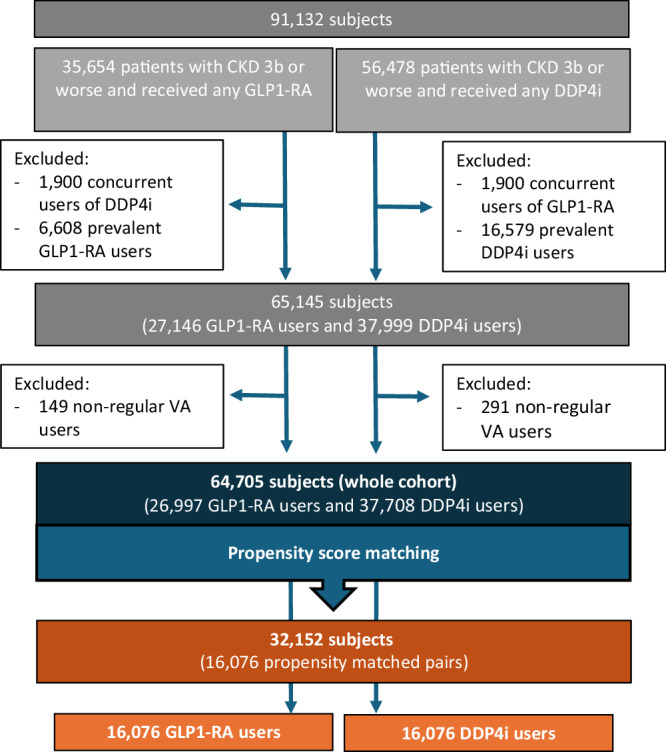
After propensity score matching, 16,076 matched pairs of GLP1-RA and DPP4i users were identified and included in the primary analysis. The propensity score distribution between the groups was balanced (Supplemental Fig. S2). After propensity matching, there was no significant difference in baseline characteristics between the two groups for all variables included. The full list of baseline characteristics by propensity matched group is outlined in Table 1. In the propensity score-matched cohort, the mean age of the matched patients was 72 years of age, 95% were male with mean BMI of 33.5 (SD 5.9) kg per m2. New prescription initiation increased each interval year, with the highest number of new prescriptions prescribed between FY 2019–2021 (66.3% of GLP1-RA and 67% of DPP4i initiations). At baseline, 98.7% of patients in both groups had HbA1c > 6.5%, with mean HbA1c of 8.0% (SD 1.1 in GLP1-RA group and 1.2 DDP4i, respectively) and mean glucose of 172 (SD 35 and 37) mg per dL. On average both groups used 2.6 (SD 1.2 and 1.1) anti-diabetes medication classes and 73.6% and 74.9% of patients used insulin during the baseline period in the GLP1-RA and DPP4i groups, respectively. Most patients had diabetes with complications: 66.5% and 66.9% of patients had diabetes ketoacidosis or uncontrolled diabetes, 15.1% and 15% had documented hypoglycemia within the GLP1-RA and DPP4i groups, respectively. Mean baseline eGFR was 48.5 (SD 11.7 and 11.8) mL per min per 1.73 m2. Cardiac comorbidities at baseline were highly prevalent: 98.6% and 98.5% of patients had hypertension, 55.2% and 55.1% of patients had coronary artery disease, and 33.9% and 34% of patients had congestive heart failure, within the GLP1-RA and DPP4i groups, respectively. Both GLP1-RA and DPP4i groups had an average of 2.3 (SD 4.4 and 4.1) inpatient admissions and 7.8 (14.1 and 12.9) ED visits during the baseline period which had an average duration of 132 months (~11 years) in both groups. The annual rate of acute healthcare visits was 0.93 and 0.94 events/year, and use of durable medical equipment was 40.2% and 40.9% for the GLP1-RA and DPP4i groups, respectively.

Flow chart of patient selection and final study sample. CKD chronic kidney disease, GLP1-RA glucagon like peptide 1 receptor agonists, DPP4i dipeptidyl peptidase 4 inhibitors, VA veteran affairs.
| PS-matched cohort | Cohort before matching | |||||
|---|---|---|---|---|---|---|
| GLP1-RA( = 16,076)n | DPP4i( = 16,076)n | St Diff | GLP1-RA( = 26,997)n | DPP4i( = 37,708)n | St Diff | |
| Baseline demographics and characteristics | ||||||
| Age, years | 71.9 (8.1) | 71.8 (8.7) | 0.01 | 71.1 (8.0) | 73.9 (9.4) | 0.33 |
| Male Gender | 15,344 (95) | 15,344 (95) | <0.001 | 25,697 (95) | 36,243 (96) | 0.046 |
| Race | 0.013 | 0.045 | ||||
| Black | 3277 (20.4) | 3700 (23) | 5349 (19.8) | 8360 (22.2) | ||
| White | 11,511 (71.6) | 10,861 (67.6) | 19,502 (72.2) | 25,582 (67.8) | ||
| Other races | 472 (2.9) | 447 (2.8) | 698 (2.6) | 1268 (3.4) | ||
| Unknown/missing | 816 (5.1) | 1068 (6.6) | 1448 (5.4) | 2498 (6.6) | ||
| Study intervals | ||||||
| Index date period | ||||||
| Years 2006–2009 | 124 (0.8) | 112 (0.7) | 0.009 | 161 (0.6) | 687 (1.8) | 0.112 |
| Years 2010–2012 | 239 (1.5) | 243 (1.5) | 0.002 | 259 (1.0) | 2072 (5.5) | 0.027 |
| Years 2013–2015 | 693 (4.3) | 605 (3.8) | 0.028 | 717 (2.7) | 5194 (13.8) | 0.413 |
| Years 2016–2018 | 4355 (27) | 4339 (27) | 0.002 | 5790 (21.5) | 12,287 (32.6) | 0.253 |
| Years 2019-2021 | 10,665 (66.3) | 10,777 (67) | 0.015 | 20,070 (74.3) | 17,468 (46.3) | 0.598 |
| Duration of baseline period, days | 3950 (1505) | 3953 (1449) | 0.002 | 4051 (1471) | 3597 (1497) | 0.307 |
| Duration of follow up period, days | 795 (701) | 789 (691) | 0.008 | 727 (637) | 1031 (860) | 0.402 |
| Social and family history during baseline period | ||||||
| Family history of cardiovascular diseases | 733 (4.6) | 720 (4.5) | 0.004 | 1401 (5.2) | 1374 (3.6) | 0.075 |
| Smoking at any time | 6419 (39.9) | 6459 (40.2) | 0.005 | 11,219 (41.6) | 13,697 (36.3) | 0.107 |
| Alcohol-related disorders | 1615 (10.1) | 1615 (10.1) | 2657 (9.8) | 3459 (9.2) | 0.023 | |
| Substance-related disorders | 2090 (13) | 2105 (13.1) | 0.003 | 3701 (13.7) | 2990 (10.6) | 0.096 |
| Vital signs during baseline period | ||||||
| Systolic blood pressure, mmHg | 137 (11) | 137 (11) | 0.006 | 136 (11) | 137 (11) | 0.033 |
| Diastolic blood pressure, mmHg | 75 (7) | 75 (7) | 0.005 | 75 (7) | 75 (7.6) | 0.073 |
| Body mass index, kg per m | 33.5 (5.9) | 33.5 (5.9) | 0.004 | 34.6 (6.1) | 31.8 (5.7) | 0.478 |
| <25 kg per m2 | 677 (4.2) | 652 (4.1) | 0.008 | 776 (2.9) | 3339 (8.9) | 0.256 |
| 25 to <30 kg per m2 | 4171 (26.0) | 4114 (25.6) | 0.008 | 5560 (20.6) | 12,640 (33.5) | 0.294 |
| 30 to <35 kg per m2 | 5691 (35.5) | 5788 (36.0) | 0.013 | 9291 (34.4) | 12,472 (33.1) | 0.028 |
| 35 to <40 kg per m2 | 3413 (21.2) | 3406 (21.2) | 0.001 | 6706 (24.8) | 6066 (16.1) | 0.218 |
| 40 to <45 kg per m2 | 1439 (9.0) | 1427 (8.9) | 0.003 | 3063 (11.4) | 2198 (5.8) | 0.198 |
| ≥45 kg per m2 | 685 (4.3) | 689 (4.3) | 0.001 | 1601 (5.9) | 993 (2.6) | 0.163 |
| Healthcare utilization during baseline period | ||||||
| Number of outpatient encounters | 314 (301) | 316 (318) | 0.005 | 348 (318) | 251 (279) | 0.327 |
| Number of inpatient admissions | 2.3 (4.4) | 2.3 (4.1) | <0.001 | 2.5 (4.4) | 1.9 (3.8) | 0.145 |
| Number of ED visits | 7.8 (14.1) | 7.8 (12.9) | 0.002 | 8.3 (13.8) | 6.3 (12.3) | 0.153 |
| Number of combined ED and hospitalization | 10.1 (17.5) | 10.1 (16.0) | 0.006 | 10.8 (17.1) | 8.2 (15.1) | 0.012 |
| Annual rate of acute healthcare utilization, EPY | 0.93 (1.9) | 0.94 (1.9) | 0.006 | 0.97 (1.7) | 0.92 (5.9) | 0.012 |
| Use of durable medical equipment | 6468 (40.2) | 6577 (40.9) | 0.014 | 11,554 (42.8) | 12,854 (34.1) | 0.18 |
| Diabetes and its complications during baseline period | ||||||
| Diabetes with ketoacidosis or uncontrolled diabetes | 10,694 (66.5) | 10,749 (66.9) | <0.001 | 19,524 (72.3) | 19,413 (51.5) | 0.439 |
| Diabetes with ophthalmic manifestations | 7676 (47.8) | 7679 (47.8) | <0.001 | 14,171 (52.5) | 14,143 (37.5) | 0.394 |
| Diabetes with neurological manifestations | 9621 (59.9) | 9662 (60.1) | 0.005 | 17,806 (66.0) | 17,618 (46.7) | 0.395 |
| Diabetes with circulatory manifestations | 2321 (14.4) | 2345 (14.6) | 0.004 | 4474 (16.6) | 4020 (10.7) | 0.173 |
| Diabetes with unspecified manifestations | 9190 (57.2) | 9367 (58.3) | 0.022 | 17,532 (64.9) | 14,980 (39.7) | 0.522 |
| Diabetes with hypoglycemia | 2419 (15.1) | 2418 (15.0) | <0.001 | 4600 (17.0) | 4145 (11.0) | 0.175 |
| Any hypoglycemic or hyperglycemic events | 11,063 (68.8) | 11,107 (69.1) | 0.006 | 20,095 (74.4) | 20,417 (54.2) | 0.09 |
| Plasma glucose, mg per dL | 172 (35) | 172 (37) | 0.001 | 177 (356) | 162 (36) | 0.41 |
| Mean HbA1c during baseline period, % | 8.0 (1.1) | 8.0 (1.2) | 0.006 | 8.2 (1.1) | 7.6 (1.1) | 0.52 |
| >6.5% | 15,866 (98.7) | 15,871 (98.7) | 0.003 | 26,763 (99.1) | 36,752 (97.5) | 0.13 |
| >9% | 12,270 (76.3) | 12,419 (77.3) | 0.022 | 22,393 (82.6) | 22,068 (58.5) | 0.55 |
| Glucose lowering medication classes utilized during baseline period | ||||||
| Metformin | 11,922 (74.2) | 11,917 (74.1) | 0.001 | 20,817 (77.11) | 25,292 (67.1) | 0.225 |
| Sulphonylurea | 11,895 (74.0) | 11,869 (73.8) | 0.004 | 19710 (73) | 27,943 (74.1) | 0.025 |
| Thiazolidinediones | 4196 (26.1) | 4229 (26.3) | 0.005 | 7407 (27.4) | 9121 (24.2) | 0.074 |
| α-glucosidase inhibitors | 1097 (6.8) | 1077 (6.7) | 0.005 | 1821 (6.8) | 2616 (6.9) | 0.008 |
| Amylin analog | 36 (0.2) | 31 (0.2) | 0.007 | 101 (0.4) | 36 (0.1) | 0.058 |
| SGLT2i | 1341 (8.3) | 1212 (7.5) | 0.03 | 4199 (15.6) | 1319 (3.5) | 0.421 |
| Insulins | 11,839 (73.6) | 12,036 (74.9) | 0.03 | 22,426 (83.1) | 17,278 (45.8) | 0.845 |
| Number of anti-diabetes medication classes | 2.6 (1.2) | 2.6 (1.1) | 0.001 | 2.8 (1.2) | 2.2 (1.2) | 0.525 |
| Other comorbidities during baseline period | ||||||
| Cardiac arrest and ventricular fibrillation | 106 (0.7) | 112 (0.7) | 0.005 | 269 (1) | 184 (0.5) | 0.059 |
| Acute myocardial infarction | 2066 (12.9) | 2019 (12.6) | 0.009 | 4044 (15.0) | 3811 (10.1) | 0.148 |
| Coronary artery disease | 8880 (55.2) | 8854 (55.1) | 0.003 | 16,188 (60.0) | 19,044 (50.5) | 0.191 |
| Acute cerebrovascular disease | 1559 (9.7) | 1543 (9.6) | 0.003 | 2684 (9.9) | 3428 (9.1) | 0.029 |
| Cerebrovascular disease | 4628 (28.8) | 4539 (28.2) | 0.01 | 8063 (29.9) | 10,025 (26.6) | 0.073 |
| Hemiplegia/quadriplegia | 297 (1.9) | 302 (1.9) | 0.002 | 490 (1.8) | 649 (1.7) | 0.007 |
| Dementia | 877 (5.5) | 898 (5.6) | 0.006 | 1266 (4.7) | 2272 (6.0) | 0.059 |
| Congestive heart failure | 5452 (33.9) | 5468 (34.0) | 0.002 | 10,651 (39.5) | 10,510 (27.9) | 0.072 |
| Atrial fibrillation | 6897 (42.9) | 6943 (43.2) | 0.006 | 12305 (45.6) | 14107 (37.4) | 0.166 |
| Hypertension | 15,855 (98.6) | 15,841 (98.5) | 0.007 | 26,680 (98.8) | 36,871 (97.8) | 0.081 |
| PCI procedure | 956 (6.0) | 946 (5.9) | 0.003 | 1846 (6.8) | 1587 (4.2) | 0.115 |
| CABG | 486 (3.0) | 471 (2.9) | 0.005 | 971 (3.6) | 800 (2.1) | 0.089 |
| Peripheral vascular disease | 4958 (30.8) | 4933 (30.7) | 0.005 | 8850 (32.8) | 10389 (27.6) | 0.114 |
| Chronic obstructive pulmonary disease and bronchiectasis | 6485 (40.3) | 6478 (40.3) | 0.001 | 11,671 (43.2) | 13,559 (36.0) | 0.149 |
| Rheumatoid arthritis; Systemic lupus erythematosus and connective tissue disorders | 560 (3.5) | 552 (3.4) | 0.003 | 960 (3.6) | 1172 (3.1) | 0.025 |
| Liver disease-mild | 1356 (8.4) | 1406 (8.8) | 0.011 | 2621 (9.7) | 2461 (6.5) | 0.117 |
| Liver disease-severe | 220 (1.4) | 248 (1.5) | 0.014 | 414 (1.5) | 464 (1.2) | 0.026 |
| Malignancy other than skin cancer | 3781 (23.5) | 3682 (22.9) | 0.01 | 5995 (22.2) | 9263 (24.6) | 0.056 |
| Metastatic neoplasm | 294 (1.8) | 304 (1.9) | 0.005 | 439 (1.6) | 839 (2.2) | 0.044 |
| Acquired Immunodeficiency Syndrome6 | 115 (0.7) | 107 (0.7) | 0.006 | 179 (0.7) | 253 (0.7) | 0.001 |
| Anemia | 7267 (45.2) | 7271 (45.2) | 0.001 | 12,396 (45.9) | 16,842 (44.7) | 0.025 |
| Thyroid disease | 3149 (19.6) | 3133 (19.5) | 0.003 | 5495 (20.4) | 6881 (18.3) | 0.052 |
| Gait abnormality | 5230 (32.5) | 5233 (32.6) | <0.001 | 9395 (34.8) | 10444 (27.7) | 0.154 |
| Arthritis | 10,250 (63.8) | 10,207 (63.5) | 0.006 | 17,694 (65.5) | 22,606 (60.0) | 0.116 |
| Falls | 2407 (15) | 2426 (15.1) | 0.003 | 4341 (16.1) | 4914 (13) | 0.087 |
| Incontinence | 1851 (11.5) | 1862 (11.6) | 0.002 | 3220 (11.9) | 3881 (10.3) | 0.052 |
| Muscle wasting | 3493 (21.7) | 3505 (21.8) | 0.002 | 6146 (22.8) | 7244 (19.2) | 0.087 |
| Osteoporosis | 611 (3.8) | 605 (3.8) | 0.002 | 963 (3.6) | 1550 (4.1) | 0.028 |
| Parkinsonism | 853 (5.3) | 862 (5.4) | 0.002 | 1481 (5.5) | 1760 (4.7) | 0.037 |
| Peripheral neuropathy | 9523 (59.2) | 9549 (59.4) | 0.003 | 17,705 (65.6) | 17,012 (45.1) | 0.421 |
| Impaired vision | 6747 (42) | 6748 (42) | <0.001 | 11,432 (42.4) | 15,044 (39.9) | 0.05 |
| Weight loss | 1094 (6.8) | 1078 (6.7) | 0.004 | 1606 (6.0) | 2857 (7.6) | 0.065 |
| Anxiety | 4343 (27) | 4340 (27) | <0.001 | 7907 (29.3) | 8544 (22.7) | 0.152 |
| Depression | 7100 (44.2) | 7170 (44.6) | 0.009 | 12,742 (47.2) | 14,049 (37.3) | 0.202 |
| Chronic pain | 5092 (31.7) | 5078 (31.6) | 0.002 | 9321 (34.5) | 9948 (26.4) | 0.178 |
| Failure to thrive | 157 (1) | 164 (1) | 0.004 | 209 (0.8) | 418 (1.1) | 0.035 |
| Fatigue | 4289 (26.7) | 4248 (26.4) | 0.006 | 7841 (29.0) | 8221 (21.8) | 0.167 |
| Hearing loss | 8281 (51.5) | 8265 (51.4) | 0.002 | 14,206 (52.6) | 18,420 (48.9) | 0.075 |
| Obesity | 11,133 (69.3) | 11,170 (69.5) | 0.005 | 20,367 (75.4) | 21,275 (56.4) | 0.41 |
| Comorbidity scores during baseline period | ||||||
| Weighted Charlson Comorbidity Total Score6 | 7.3 (3.3) | 7.3 (3.3) | 0.0005 | 7.6 (3.3) | 6.4 (3.4) | 0.367 |
| Frailty Index | 0.37 (0.15) | 0.37 (0.15) | <0.001 | 0.38 (0.15) | 0.33 (0.15) | 0.325 |
| Non-frail | 273 (1.7) | 285 (1.8) | 0.006 | 348 (1.3) | 1105 (2.9) | 0.114 |
| Pre-frail | 2151 (13.4) | 2137 (13.3) | 0.003 | 2948 (10.9) | 6851 (18.2) | 0.207 |
| Frail-mild | 3775 (23.5) | 3792 (23.6) | 0.002 | 5826 (21.6) | 10,166 (27.0) | 0.126 |
| Frail-moderate | 3865 (24) | 3823 (23.8) | 0.006 | 6512 (24.1) | 8482 (22.5) | 0.039 |
| Frail-severe | 6012 (37.4) | 6039 (37.6) | 0.003 | 11363 (42.1) | 11104 (29.5) | 0.267 |
| Cardiovascular risk | 20.7 (5.3) | 20.1 (5.3) | 0.004 | 20.6 (5.3) | 21.0 (5.3) | 0.09 |
| <5% | 70 (0.4) | 71 (0.4) | 0.001 | 109 (0.4) | 160 (0.4) | 0.003 |
| 5 to <10% | 660 (4.1) | 686 (4.3) | 0.008 | 1201 (4.5) | 1288 (3.4) | 0.053 |
| 10 to <15% | 1462 (9.1) | 1447 (9) | 0.003 | 2445 (9.1) | 3194 (8.5) | 0.021 |
| 15 to <20% | 4399 (27.4) | 4425 (27.5) | 0.004 | 7547 (28.0) | 9744 (25.8) | 0.048 |
| 20 to <25% | 6084 (37.9) | 6046 (37.6) | 0.005 | 10,162 (37.6) | 14,714 (39.0) | 0.028 |
| 25 to <30% | 3104 (19.3) | 3088 (19.2) | 0.003 | 5099 (18.9) | 7634 (20.3) | 0.034 |
| ≥30% | 297 (1.9) | 313 (2) | 0.007 | 434 (1.6) | 974 (2.6) | 0.068 |
| Other laboratory investigations during baseline period | ||||||
| LDL Cholesterol, mg per dL | 86.8 (24.02) | 86.8 (23.5) | 0.001 | 85.9 (23.6) | 88.0 (24.3) | 0.91 |
| HDL, mg per dL | 38.9 (9.1) | 38.9 (9.1) | 0.002 | 38.2 (8.8) | 39.9 (9.7) | 0.188 |
| Total Cholesterol, mg per dL | 160.8 (31.5) | 160.6 (31.7) | 0.006 | 160.5 (31.5) | 161 (31.6) | 0.015 |
| eGFR, mL per minute per 1.73 m2 | 48.5 (11.7) | 48.5 (11.8) | 0.003 | 49 (11.5) | 47.7 (11.8) | 0.111 |
| Creatinine, mg per dL | 1.65 (0.7) | 1.66 (0.8) | 0.007 | 1.63 (0.67) | 1.68 (0.83) | 0.66 |
| Other medications utilized during baseline period | ||||||
| ACEi/ARB | 14,718 (91.6) | 14,723 (91.6) | 0.001 | 25,082 (92.9) | 33,593 (89.1) | 0.134 |
| Alzheimer meds | 563 (3.5) | 594 (3.7) | 0.01 | 796 (3.0) | 1691 (4.5) | 0.081 |
| Anti-anginal | 5167 (32.1) | 5076 (31.6) | 0.012 | 9686 (35.9) | 10234 (27.1) | 0.189 |
| Anti-arrhythmic | 1638 (10.2) | 1611 (10.0) | 0.006 | 3014 (11.2) | 3461 (9.2) | 0.066 |
| Oral Anticoagulant | 3588 (22.3) | 3574 (22.2) | 0.002 | 6559 (24.3) | 71,234 (18.9) | 0.131 |
| Parenteral anticoagulant | 1444 (9) | 1409(8.8) | 0.008 | 2633 (9.8) | 2782 (7.4) | 0.085 |
| Antidepressant | 8652 (53.8) | 8719 (54.2) | 0.008 | 15,419 (57.1) | 17,432 (46.2) | 0.219 |
| Other antihypertensives | 7603 (47.3) | 7651 (47.6) | 0.006 | 13,020 (48.2) | 17,094 (45.3) | 0.058 |
| Other antiplatelets | 4744 (29.5) | 4641 (28.9) | 0.014 | 8629 (32.0) | 9808 (26.0) | 0.131 |
| Antipsychotic | 1769 (11) | 1796 (11.2) | 0.005 | 3022 (11.2) | 3704 (9.8) | 0.045 |
| Anti-smoking | 3882 (24.2) | 3966 (24.7) | 0.012 | 7122 (26.4) | 7487 (19.9) | 0.155 |
| ASA | 8465 (52.7) | 8510 (52.9) | 0.006 | 14,721 (54.5) | 17,746 (47.1) | 0.15 |
| Beta blocker | 11,932 (74.2) | 11,913 (74.1) | 0.003 | 20,983 (77.7) | 26,065 (69.1) | 0.196 |
| Benzodiazepine | 4768 (29.7) | 4795 (29.8) | 0.004 | 8453 (31.3) | 9829 (26.1) | 0.116 |
| Calcium channel blocker | 10,622 (66.1) | 10,640 (66.2) | 0.002 | 18,198 (67.4) | 23,694 (62.8) | 0.096 |
| COPD medications | 4147 (25.8) | 4161 (25.9) | 0.002 | 7656 (28.4) | 8419 (22.3) | 0.139 |
| Corticosteroids | 5651 (35.2) | 5662 (35.2) | 0.001 | 10,108 (37.4) | 11,363 (30.1) | 0.155 |
| Diuretics | 10,884 (67.7) | 10,875 (67.7) | 0.001 | 18,876 (69.9) | 23,809 (63.1) | 0.144 |
| Loop diuretics | 7923(49.3) | 7953 (49.5) | 0.004 | 14,885 (55.1) | 16,039 (42.5) | 0.254 |
| Non-statin | 6543 (40.7) | 6482 (40.3) | 0.008 | 11,774 (43.6) | 13,388 (35.5) | 0.166 |
| Statin | 14,976 (93.2) | 14,971 (93.1) | 0.001 | 25,559 (94.7) | 33,956 (90.1) | 0.175 |
| CKD stage at index date | ||||||
| Creatinine, mg per dL | 2.0 (1.1) | 2.0 (1.1) | 0.008 | 2.0 (1.0) | 2.0 (1.1) | 0.053 |
| eGFR, mL per minute per 1.73 m2 | 37.5 (11.1) | 37.5 (11.4) | 0.001 | 37.3 (10.8) | 37.9 (11.3) | 0.053 |
| CKD stage 1 | 13 (0.08) | 12 (0.07) | 0.002 | 19 (0.1) | 35 (0.1) | 0.008 |
| CKD stage 2 | 379 (2.4) | 398 (2.48) | 0.008 | 599 (2.2) | 914 (2.4) | 0.014 |
| CKD stage 3a | 2756 (17.1) | 2786 (17.3) | 0.005 | 4459 (16.5) | 6654 (17.7) | 0.03 |
| CKD stage 3b | 9486 (59) | 9384 (58.4) | 0.13 | 15,883 (58.8) | 22,691 (60.2) | 0.027 |
| CKD stage 4 | 2870 (17.9) | 2897 (18) | 0.004 | 5287 (19.6) | 5911 (15.7) | 0.103 |
| CKD stage 5 | 572 (3.6) | 599 (3.7) | 0.009 | 750 (2.8) | 1503 (4.0) | 0.067 |
| Glycated hemoglobin at index date | ||||||
| Glycated hemoglobin at index date | 8.5 (1.6) | 8.5 (1.7) | 0.001 | 8.6 (1.6) | 8.1 (1.6) | 0.32 |
| ≤7.5% | 4484 (27.9) | 4502 (28) | 0.003 | 6322 (23.4) | 14,233 (37.8) | 0.31 |
| 7.5% to <9.0% | 6425 (40) | 6385 (39.7) | 0.005 | 10,836 (40.1) | 14,332 (38.0) | 0.04 |
| ≥9.0% | 5167 (32.1) | 5189 (32.3) | 0.003 | 9839 (36.4) | 9143 (24.3) | 0.27 |
Primary and secondary outcomes in propensity-matched cohort

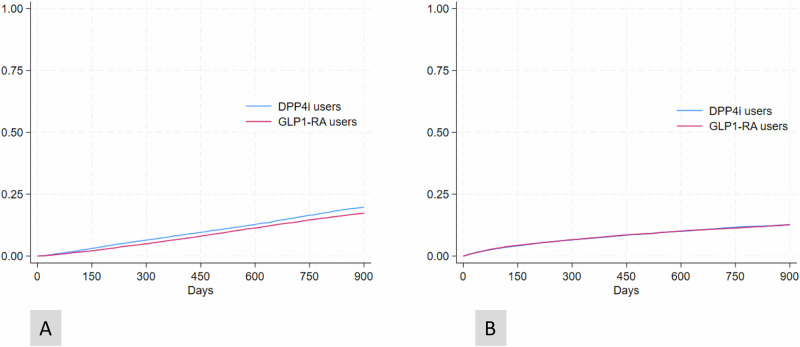
Kaplan-Meier curves for all-cause mortality and first composite cardiovascular event. Panel 2A: Kaplan–Meier curves for time to all-cause mortality (HR: 0.86, 95%CI: 0.81–0.90); and Panel 2B: Kaplan–Meier curves for cardiovascular events (HR: 0.99, 95%CI: 0.93–1.06). CI confidence interval, DPP4i dipeptidyl peptidase 4 inhibitors, GLP1-RA glucagon like peptide 1 receptor agonists, HR hazard ratio, K-M Kaplan-Meier failure estimates.
| Outcome | GLP1-RA | DPP4i | Odds ratio or coefficient of regression (95%CI) | -valuep |
|---|---|---|---|---|
| = 16,076n | = 16,076n | |||
| Annual Rate of acute healthcare utilization, EPY | 1.52 (4.8) | 1.67 (4.4) | −0.15 (−0.25 to −0.05)a | 0.004 |
| All-cause Death | 2847 (17.7%) | 3287 (20.5%) | 0.84 (0.79 to 0.89)b | <0.001 |
| Cardiovascular events | 1757 (10.9%) | 1782 (11.1%) | 0.98 (0.92 to 1.06)b | 0.66 |
| Combined kidney outcome | 359 (2.23%) | 557 (3.46%) | 0.64 (0.56 to 0.73)b | <0.001 |
Post-hoc analyses
CKD progression composite outcome was decreased within the GLP1-RA group as compared to DPP4i group, with 2.23% of patients within GLP1-RA group having significant progression of CKD as compared to 3.46% within the DPP4i group (OR 0.64., 95% CI 0.56–0.73, p < 0.001). In a post-hoc analysis of microalbuminuria during follow-up, GLP1-RA users has significantly lower levels compared with DPP4i users; however, this analysis is limited by a large proportion of data missingness (Supplementary Table S1).The pattern of association of GLP1-RA with decreased acute healthcare utilization, CKD progression and all-cause death despite no difference in CV outcomes persisted in additional analyses excluding patients with ESRD (Supplementary Table S2) and after adjusting for A1c at follow-up and use of other anti-hyperglycemic medications (Supplementary Table S3).
A post-hoc analysis of selected safety outcomes showed increased odds of hypoglycemic events in propensity score-matched GLP1-RA users compared to DPP4i users (10.3% vs 9.3%, respectively; OR 1.13, 95%CI 1.05–1.21). Gastrointestinal symptoms were not significantly different in GLP1-RA users compared to DPP4i users (23.3% vs 22.7%, respectively; OR 1.04, 95%CI 0.98–1.09) (Supplementary Table in supplementary online material). S4
Exploratory subgroup analysis of the whole cohort showed similar overall trends in benefits in rates of acute healthcare utilization, all-cause mortality, and CKD progression but not combined cardiovascular composite event outcome within the GLP1-RA group compared to DPP4i group, although there was treatment effect heterogeneity between several subgroups (Supplementary Fig. [A-D] in supplementary online material). In the post-hoc per protocol analysis, a total of 16,075 pairs of propensity score-matched patients were included. There were no differences in any baseline characteristics between groups, after matching. Outcomes are illustrated in Supplementary Table and Supplementary Fig. . S3 S5 S4
Discussion
The current study, emulating a hypothetical clinical trial, reveals significantly lower acute healthcare utilization among a national cohort of patients enrolled at the VHA with moderate to advanced CKD following initiation of GLP1-RA as compared to propensity score matched active comparators. Over a mean (SD) follow-up of 2.2 (1.9) years, the annual rate of acute healthcare utilization was 10% lower in the GLP1-RA group compared to active comparators. Additionally, our study found that the odds of death from any cause was 16% lower in the GLP1-RA group compared to active comparators within the same follow-up period. No difference was found in a composite of cardiovascular event outcomes (which did not include death). The odds of having CKD progression was 36% lower within the GLP1-RA group as compared to DPP4i group.
Our population of patients with moderate to advanced CKD constituted older patients (mean age 72 years) with high prevalence of diabetes complications (over 50% with at least one complication), high frailty (~60% had moderate or severe frailty and <2% were not frail), high comorbidity burden (mean weighted CCI score of 7.3), and high mortality (~19% during follow up period). Furthermore, this population had high utilization of medications known to improve outcomes (for example, 93% were on statins, 92% were on Angiotensin-converting enzyme inhibitors or angiotensin II receptor blockers, among others). Therefore, the noted improvements in healthcare utilization, mortality, and kidney outcomes are in addition to what could be provided by the best-known standard of care and therefore clinically relevant.
Previous studies in a general population with T2D have demonstrated cost savings with use of sodium glucose transporter-2 inhibitor (SGLT2i) as compared to either DDP4i or GLP1-RA22–25, however, there have been no prior studies to our knowledge examining direct cross-comparison of healthcare utilization between use of DDP4i and GLP1-RA in CKD in the United States. Incretin mimetics have demonstrated safety and efficacy in advanced kidney disease, however multiple studies have shown that use of GLP1-RA have shown improvements in glycemic control, body weight reductions, improved beta cell function, and decreased incidence hypoglycemia as compared to DPP4i in a general diabetes population26–31, effects which might explain the reduction of acute healthcare utilization observed in this study of patients with CKD treated with GLP1-RA as compared to DPP4i.
Cardiovascular outcomes studies in people with T2D and high cardiovascular risk have shown that DPP4i have an overall cardio-neutral profile32–37, while GLP1-RAs were associated with decreased all-cause mortality and major adverse cardiovascular events (MACE)38. However, not all studies evaluating use of GLP1-RAs on CV outcomes have shown significant reductions in non-fatal CV events. For example, ELIXA trial found no difference in the primary endpoint of composite CV events (13.4% within the treatment group with lixisenatide compared to 13.2% within the placebo group)39. Additionally, PIONEER 6 study, there was no noted difference in the occurrence of non-fatal myocardial infarction, non-fatal stroke, or unstable angina with oral semaglutide40. Furthermore, most evidence for cardiovascular event reduction with use of GLP1-RA has been within a general diabetes population, and evidence for patients with moderate to advanced kidney disease has been limited. In a pooled metanalysis of major placebo-controlled trials, Sattar et al found a 12% reduction in all-cause mortality and 14% relative risk reduction in 3-point MACE; there was no statistical heterogeneity in subgroup analysis by eGFR, however, the proportion of patients with CKD was low (only 14% in GLP-1RA group had eGFR < 60 mL per min per 1.73 m2)21. Studies that have included larger proportions of patients with CKD are few, and the observations on cardiovascular outcomes have been mixed. For example, in a separate pooled analysis of 4 major clinical trials reporting cardiovascular events in patients with T2D and CKD, Kelly et al. failed to find an association between GLP-1RA and reduction of composite cardiovascular events41. Recently, several retrospective studies of patients with T2D and CKD found that although use of GLP1-RA was associated with improved overall survival compared to use of DPP4i, there was no significant difference in cardiovascular outcomes42,43. Our finding of similar incidence of non-fatal cardiovascular outcomes with GLP1-RA compared to DPP4i is in line with the recently published FLOW study that randomized people with early to mid-stage CKD to semaglutide or placebo, which reported similar incidence of non-fatal myocardial infarction and non-fatal stroke across the semaglutide and placebo treated groups, despite a significantly reduced risk of major kidney disease events and all-cause death44.
Our finding of a significant reduction in CKD progression outcome in association with GLP1-RA use is also consistent with the findings of the FLOW study44. This effect on CKD progression persisted across all subgroups, although there was some heterogeneity of effect based on index date. Regardless, our study provides real-world evidence in support of the renal-protective effect of GLP1-RA on kidney function in patients with moderate to advanced CKD, although mechanisms of kidney protection remain to be elucidated. The effect of GLP1-RA on kidney function is likely multifactorial – possible indirect factors such as effect on weight reduction and glycemic control might contribute, in addition to direct effects on inflammation, oxidative stress, and natriuresis45–47.
Limitations
Our study has several limitations. First, due to the retrospective nature of our study, we were unable to verify medication adherence. We defined index date as the date of first pharmacy fill of either GLP1-RA or DPP4i, and operated under the assumption that patients are taking the prescribed medication as directed. Secondly, there is heterogeneity within medication classes and doses; different GLP1-RA were prescribed throughout the study according to the GLP1-RA agent approved within the VHA at time of prescription (Supplemental Table S6). Thirdly, the class of GLP1-RA medications are restricted within the VHA system and require pharmacy approval or endocrinology consultation48, which may have resulted in potential heterogeneity between the GLP1-RA and DPP4i group. As such, we designed this study using propensity score matching method and included as many covariates as possible. Fourth, our data cannot identify cause of death; hence, we could not verify if the decrease in mortality was related to a decrease in cardiovascular mortality or other disease categories. Similarly, our definition for cardiovascular diseases did not include death due to acute cardiovascular events. Lastly, our study cohort was predominantly Caucasian and male, reflective of the population cared for within the VHA system, thus results may not be generalizable to a wider population, although some recent studies found that VHA population have similar health characteristics as individuals with other insurance coverage suggesting greater generalizability.
In conclusion, this real-world study emulating a target clinical trial shows that among a national cohort of patients enrolled at the VHA with moderate to advanced CKD, use of GLP1-RA was associated with lower annual rate of acute healthcare utilization, lower all-cause mortality, and lower kidney events as compared to treatment with DPP4i. There was no significant difference in cardiovascular events (not including CV death) between the matched groups. Further studies are needed to validate these findings and to elucidate the mechanisms of clinically important outcomes with GLP1-RA use in patients with moderate to advanced CKD.
Methods
This retrospective cohort study was approved by the Orlando Veterans Affairs Health Care System Institutional Review Boards (protocol number 1680940-1), which waived informed consent since data were fully de-identified before providing access to the investigators. This study followed Reporting of Observational Studies in Epidemiology (STROBE) guidelines. This study used national data from the VHA Corporate Data Warehouse hosted at VHA Informatics and Computing Infrastructure (VINCI) to emulate a hypothetical target clinical trial. VINCI is a research platform for health services research at VHA according to published and validated protocols49. We extracted data from fiscal years (FY) 2006 to end of FY 2021 from patients who met eligibility criteria and filled either GLP1-RA or DPP4i prescriptions. Extracted data encompassed inpatient and outpatient diagnosis and procedure codes, vital signs, laboratory data, and pharmacy fill data.
Study population
The study included all adults aged 35 years or older who are regular VHA users (as defined by presence of at least one inpatient or outpatient medical encounter), with at least one set of vital signs, and one set of laboratory investigation (including glucose, glycated hemoglobin [HbA1c], serum creatinine, and lipid panel) during the baseline period. From this population, we identified a cohort of patients with moderate to advanced kidney disease defined as having two or more consecutive eGFR values < 45 mL per min per 1.73 m2 obtained over a span of three consecutive months and who were newly initiated on GLP1-RA or DPP4i at a time having already met the eGFR criteria. Cohort entry was defined as the date the above eGFR criteria was met. Diabetes was not a specified inclusion criterion; however, VA formulary at time of the study restricted use of these medications to patients with T2D48.
Study groups
We used an active comparator, new-user design to emulate a clinical trial, in which participants are newly initiated on study's medications. A summary of the protocol emulating a randomized control trial is outlined in the supplementary table S7. This design mitigates the risk of immortal time bias and minimize confounding due to unmeasured characteristics, as previously described50. We also used propensity score to match study groups on predefined characteristics, emulating participants' randomizations using predefined stratifications criteria The study groups included: (1) GLP1-RA group: patients who initiated GLP1-RA, and (2) active comparator group, consisted of patients who initiated DPP4i, both initiated after meeting eGFR entry criteria. We excluded prevalent users who initiated the respective treatment before cohort entry and patients who were concomitant users of GLP1-RA and DPP4i. Entries were censored at the last date of the study period, or the date of GLP1-RA initiation among DDP4i users who discontinued DDP4i and started GLP1-RA. We also censored entries at time of death when estimating the acute cardiovascular composite event outcome.
Study intervals
Index date was defined as the date of initiation (first fill) of either GLP1-RA or DPP4i. The baseline period, used to describe baseline characteristics of the study groups, included the period between the first available inpatient or outpatient encounter during the study period (FY2006–FY2021) and the index date. The follow up period used to examine outcomes irrespective of ongoing use of the medication (emulating a modified intention-to-treat analysis of a clinical trial), started from the index date, and continued until study end (October 30, 2021), death, or initiation of a GLP1-RA in the DPP4i group, whichever came first (Fig. in Supplementary online Methods). S1
Pre-specified outcomes
The primary outcome was defined as the annual rate of acute healthcare utilization (number of events per year of follow-up): calculated as the sum of urgent care visits, Emergency Department visits, and hospitalizations divided by the duration of follow-up. Urgent care or ED visits were identified by stop codes as described in Managerial Cost Accounting Office of the VHA (see list in Supplementary Table S1)51.
The pre-specified secondary outcomes were (1) all cause-mortality and (2) incidence of a cardiovascular composite event outcome that included: first occurrence of acute myocardial infarction, cardiac arrest or ventricular fibrillation, acute stroke, or coronary revascularization, as previously described and validated using validated International Classification of Diseases, 9th Revision, Clinical Modification (ICD-9-CM) and 10th Revision, Clinical Modification (ICD-10-CM) and procedure codes52–54. One inpatient diagnosis, or 2 different outpatient encounter diagnoses were required to meet criteria for a respective event (see list in Supplementary Table S9).We extracted date of death from the VHA Death Ascertainment File which contain mortality data from the Master Person Index file in CDW and the Social Security Administration Death Master File.
Post-hoc outcomes
We examined the following outcomes:Composite outcome of CKD progression: defined as doubling of serum creatinine during follow up (mean serum creatinine during follow up divided by mean serum creatinine at index date ≥2) or incident stage 5 CKD during follow up period. Albuminuria during follow-up period was also examined, but not included in the composite outcome due to high percentage of missing values.Safety outcomes: examined odds of hypoglycemic events using administrative codes validated in prior studies55,56 and gastrointestinal symptoms (constipation, diarrhea, change in bowel habits, abdominal pain, or ileus) during follow up period using administrative codes, as described in prior publications57.
Prespecified subgroup analyses were stratified by duration of GLP1-RA or DPP4i use (at least 6-months, 1-year, and 2-years of use) within their respective groups; and stratified by CKD disease stage at index date (stage 3a or better, stage 3b, and stage 4 or worse). Further post-hoc exploratory subgroup analyses of outcomes within the whole cohort (before propensity score-matching) were completed within the following subgroups: (1) age (less than 60 years of age), 60 to 75 years, and greater than 75 years, (2) body mass index (less than 30 kg per m2, between 30 to 45 kg per m2, and above 45 kg per m2), (3) frailty status at baseline (non-frail or frail), (4) Charlson comorbidity index (low CCI, moderate CCI, or high CCI), (5) change in weight at follow-up from baseline (no weight loss or weight gain, less than 5% weight loss, between 5 and <10% weight loss, or greater than 10% weight loss), (6) index date (before or after 10/1/2015), and (7) excluding patients with eGFR <15 mL per min per 1.73 m2. We also examined our outcomes after adjusting for mean hemoglobin A1c during follow up, use of other classes of glucose-lowering medications, and number of glucose-lowering medication classes used during follow up period. This last analysis was added to explore if outcomes might be related to other medications added during follow up, rather than GLP1-RA or DPP4i use.
Data extraction
This study used extracted data from the national VINCI database. We extracted data from fiscal years (FY) 2006 to end of FY 2021 from patients who met eligibility criteria. Laboratory data were extracted at two different points: throughout the baseline period and at the point closest to the index date, since the long baseline period may not reflect the actual value at time of drug initiation. Laboratory values were captured using 2 different techniques: (1) searching the name of the test in the laboratory database and (2) using LOINC codes that were known to be at utilization in the VA at its time (supplemental table ). Duplicate values were identified and removed. Extreme values were discarded. Overall, only 0.21% of the laboratory investigation values were identified as extreme and discarded. Missing data was replaced by the mean when possible (see supplemental Table ) S10 S11
eGFR was calculated using MDRD formula without race consideration: GFR, in mL/min per 1.73 m2 = 175 × SCr (exp[−1.154]) × Age (exp[−0.203]) × (0.742 if female). Stage 5 CKD was defined as an incident decrease in mean estimated glomerular filtration rate (eGFR) during the last year of follow up to <15 mL per min per 1.73 m2 (stage 5). Similarly, extreme values for weight, systolic blood pressure, and diastolic blood pressure were discarded. Overall, 0.0007% of the values were identified as extreme and discarded and, imputed values constituted <0.02% of available data.
Cohort characterization and propensity score matching
Patients' baseline demographic, clinical characteristics, and healthcare utilization were extracted from the entire baseline period. Disease categories were described using validated definitions58–60. To ensure comparability of the two treatment groups, we calculated 3 different comorbidity scores: the VHA frailty index, using a previously described approach60; the weighted Charlson Comorbidity Index (CCI) which have been shown to improve the performance over the original score with c-statistics of 0.861,62; and cardiovascular risk as calculated by D'Agostino method63. We created a propensity score to match GLP1-RA users and DDP4i users at a ratio of 1:1 using 120 characteristics selected a priori (listed in Table 1), Variables included: age, gender (self-reported), race and ethnicity (self-reported), demographics, personal history, vital signs, comorbidities, comorbidity and cardiovascular scores, frailty score, healthcare utilization, laboratory values, glucose-lowering medication classes, and other medication classes.
We used the routine by Leuven and Sianesi to perform nearest number matching using the logit model with no replacement64,65. We explored a caliper width of 0.01, which approximately represented 0.2 times the standard deviation of the logit of the propensity scores, as suggested in prior publications66. This caliper achieved balance in differences, without residual statistically significant differences between treatment groups on all covariates. After propensity score creation, pseudo R2 decreased to <0.0001, indicating that successful balance has been achieved67. Supplemental Figs. S2(A) and S2(B) depict kernel graphs of propensity score before and after matching, respectively.
Statistical analyses
Statistical analyses were performed using STATA version 18 (College Station, TX) via the secured VINCI workspace. Baseline characteristics were compared using Chi-square tests for dichotomous variables and t-test for continuous variables. The primary analysis examined the difference in annual rate of acute healthcare utilization within the propensity score matched cohort using t-test and multivariate linear regression analysis. The secondary outcomes (all-cause mortality and cardiovascular composite event outcome) and post-hoc outcomes (combined kidney outcome and safety outcomes) were compared using logistic regression analysis, in which the outcome of interest was the dependent variable and use of GLP-RA or DDP41 as independent variable. Statistical significance of primary and secondary outcomes was defined as two-tailed p-values < 0.05. We also performed time to event analysis using Cox proportional-hazards regression model to estimate the hazard ratio (HR) and 95% confidence intervals (CI) for all-cause mortality and cardiovascular composite event outcome for GLP1-RA group compared to DDP4i group. Entries were censored at the last date of the study period, or the date of GLP1-RA initiation among DDP4i users who discontinued DDP4i and started GLP1-RA. We also censored entries in date of death, when estimating the cardiovascular composite event outcome. Additional exploratory subgroup analysis of the overall cohort was performed with separate regression models with outcome of interest being the dependent variable, use of GLP1-RA or DDP4i as independent variable, and propensity score as a covariate. Subgroup analysis was conducted using the overall cohort to maximize sample size within each subgroup. Interaction terms with variables considered in subgroups analysis were also examined. Since 40 separate interaction analyses were performed, an adjusted p-value of p < 0.0012 indicates statistically significant interaction after applying Bonferroni correction.
Lastly, we conducted a post-hoc per-protocol analysis, in which outcomes were truncated or censored at 90 days after the date of the last prescription of either medication in their perspective group. To avoid ascertainment bias due to differences in duration of medication use in the two comparison groups, we created a new propensity score-matched cohort including the duration of follow-up based on per-protocol analysis, using the same previous specifications of the primary analysis. We used the same baseline demographics, clinical characteristics, and healthcare utilization used in the primary analysis. Similar to our primary analysis, we calculated 3 different comorbidity scores: the VHA frailty index60, the weighted CCI61,62,and cardiovascular risk as calculated by D'Agostino method63. We created a propensity score, using 120 characteristics, as in primary analysis except for duration of follow up, which reflected now the duration of follow up based on per-protocol analysis. We matched the comparison groups using a multivariable logistic regression to estimate the propensity score and performed nearest number matching with a caliper of 0.01 with no replacement, using same technique as our primary analysis. This caliper was found to reduce standardized differences after matching to <0.1 and maximize study size.
Reporting summary
Further information on research design is available in the linked to this article. Nature Portfolio Reporting Summary
Supplementary information
Supplementary Information Reporting Summary Transparent Peer Review file