
What this is
- Alzheimer's disease (AD) is a leading cause of dementia, characterized by amyloid-β accumulation and tau hyperphosphorylation.
- This review examines the potential of (MSC-exos) in therapeutic and diagnostic roles for AD.
- MSC-exos can cross the blood-brain barrier, deliver neurotrophic factors, and modulate inflammation, offering a promising avenue for treatment and early diagnosis.
Essence
- MSC-derived exosomes show promise for treating and diagnosing Alzheimer's disease by delivering neuroprotective factors and modulating disease pathways.
Key takeaways
- MSC-exosomes can cross the blood-brain barrier, enhancing amyloid clearance and supporting neuronal survival. This ability positions them as effective therapeutic agents in AD.
- Exosomes derived from MSCs contain bioactive molecules that can modulate neuroinflammation and promote synaptic function, indicating their potential for disease modification.
- Clinical trials have begun to explore the safety and feasibility of MSC-exos, suggesting a shift towards cell-free therapies that may address current limitations in AD treatment.
Caveats
- Current clinical studies on MSC-exosomes are limited in size and scope, making it difficult to draw definitive conclusions about efficacy.
- Standardization of exosome isolation and characterization methods is crucial to ensure reproducibility and clinical applicability.
- Regulatory challenges and ethical considerations remain significant hurdles for the clinical translation of MSC-exosome therapies.
Definitions
- Mesenchymal stem cell-derived exosomes (MSC-exos): Nanosized extracellular vesicles that carry proteins, lipids, and nucleic acids from mesenchymal stem cells, influencing cellular communication and modulating disease pathways.
Simplified
Introduction
Alzheimer's disease (AD) is the most prevalent form of dementia and a progressive neurodegenerative disorder with major global impact (A. Kumar, Sidhu, et al. 2024). Age is the strongest predictor of onset; about one in nine individuals over 65 is affected, and more than six million people in the United States live with AD (2023 Alzheimer's Disease Facts and Figures 2023). Since Alois Alzheimer's first description in 1906, diagnostic criteria have evolved to combine clinical assessment with biomarker‐based approaches that enable identification of preclinical stages (2023 Alzheimer's Disease Facts and Figures 2023; Qiu et al. 2009). With rising life expectancy, projections estimate up to 152 million cases by 2050, underscoring a mounting public health challenge (Qiu et al. 2009). In the United States, AD is the fifth leading cause of death, and mortality attributed to AD has more than doubled since 2000, highlighting the need for earlier detection and more effective interventions beyond symptomatic relief (2023 Alzheimer's Disease Facts and Figures 2023; Chaddha et al. 2025).
Neuropathologically, AD features extracellular amyloid‐β (Aβ) deposition and intracellular hyperphosphorylated tau, which contribute to synaptic dysfunction and neuronal loss in memory‐critical regions such as the hippocampus and cortex (DeTure and Dickson 2019; Mehrnoosh et al. 2025). Clinically, patients develop progressive deficits in memory, executive function, and language that culminate in loss of independence (Safiri et al. 2024). Non‐age risk factors include cardiometabolic disease, Down syndrome, and lifestyle elements such as inactivity and poor diet (Edwards et al. 2019). Mechanistically, altered processing of amyloid precursor protein (APP) with accumulation of Aβ and tau hyperphosphorylation triggers neuroinflammation, vascular dysfunction, and synaptic failure that drive degeneration (Kamatham et al. 2024; Tenchov et al. 2024).
Current drugs such as donepezil and rivastigmine offer modest symptomatic benefit and do not halt progression, while side effects can limit use in older adults (Passeri et al. 2022; Abbas Raja et al. 2025). Consequently, multi‐target strategies are under investigation, including immunomodulation, anti‐amyloid and anti‐tau approaches, and regenerative modalities. Mesenchymal stem cell–derived exosomes (MSC‐exos) are particularly promising because they carry bioactive cargos with anti‐inflammatory and neurotrophic actions, show low immunogenicity, and can be engineered for delivery to the central nervous system (Z. J. Ma et al. 2020; Shah et al. 2024; Pinky et al. 2021). This review outlines AD pathophysiology to frame the therapeutic and diagnostic potential of MSC‐exos and summarizes ethical and regulatory considerations relevant to translation.
Pathophysiology of AD
Aβ peptides, particularly Aβ42, are generated by β‐ and γ‐secretase cleavage of APP. They aggregate into oligomers and plaques that disrupt synaptic transmission and activate microglia and astrocytes, which initiate inflammatory cascades (Grewal et al. 2025). In parallel, tau normally stabilizes microtubules but in AD becomes hyperphosphorylated, detaches, misfolds, and forms neurofibrillary tangles that impair axonal transport and promote neuronal death (W. Zhang et al. 2023). These molecular abnormalities are accompanied by cholinergic deficits, glial activation, and progressive atrophy in hippocampal and cortical networks that are essential for learning and memory (Sheppard and Coleman 2020).
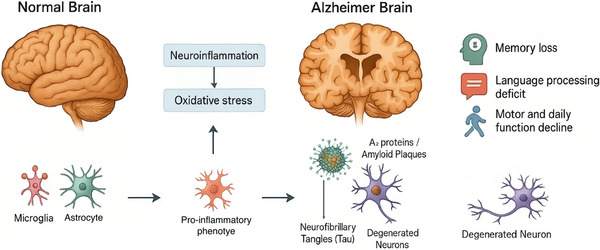
Several partially overlapping hypotheses describe disease initiation and spread. The cholinergic hypothesis attributes cognitive decline to loss of cholinergic neurons and acetylcholine, which can amplify the impact of Aβ on synaptic communication (Z. R. Chen et al. 2022). The amyloid hypothesis proposes that accumulation of Aβ, especially Aβ42, triggers downstream tau pathology, synaptic failure, and neurodegeneration (X. Zhang et al. 2018). Braak et al. (2011) described a six‐stage framework that maps a stereotyped progression of tau pathology and correlates more closely with dementia severity than amyloid plaque burden, which supports the idea that amyloid may initiate pathology while tau better tracks neurodegeneration (Bloom 2014). Cerebral amyloid angiopathy (CAA) further contributes to vascular dysfunction and cognitive decline (Greenberg et al. 2020) (Figure 1).
In sum, converging processes that include Aβ accumulation, tau dysregulation, synaptic injury, neuroinflammation, and vascular pathology create a multifactorial landscape that supports the rationale for multi‐node interventions such as mesenchymal stem cell (MSC) exosome strategies (Kamatham et al. 2024; Bhatti et al. 2023). Table 1 links these hallmarks to exosome relevance (Checler et al. 2021; Rawat et al. 2022; Cai et al. 2022; de Godoy et al. 2018; Govindpani et al. 2019).

AD is marked by Aβ plaques, tau tangles, and severe neuronal degeneration. These pathological changes lead to cortical atrophy, memory loss, and impaired cognitive function.
| Hallmark of AD | Molecular mechanism | Exosome‐associated role | Consequence in CNS | Therapeutic implication | Ref |
|---|---|---|---|---|---|
| Aβ aggregation | APP cleavage by β‐ and γ‐secretases → Aβ42 oligomers | Exosomes carry APP, BACE‐1, Aβ peptides | Plaque formation, synaptic dysfunction | MSC‐exos may enhance Aβ clearance via microglia | Checler et al. () [2021] |
| Tau hyperphosphorylation | Abnormal phosphorylation of tau → neurofibrillary tangles | Exosomes transport tau seeds between neurons | Cytoskeletal collapse, neuronal death | Potential target for exosome‐mediated tau degradation | Rawat et al. () [2022] |
| Neuroinflammation | Microglial/astrocytic activation → cytokine storm | Exosomes modulate M1/M2 microglial polarization | Exacerbated neuronal damage | MSC‐exos deliver anti‐inflammatory miRNAs (IL‐10, IL‐4) | Cai et al. () [2022] |
| Synaptic dysfunction | Loss of cholinergic signaling, oxidative stress | Exosomes regulate synaptic proteins (PSD‐95, synaptophysin) | Impaired learning and memory | Exosome therapy restores synaptic plasticity | de Godoy et al. () [2018] |
| Vascular dysfunction | CAA, hypoperfusion | Exosomes influence angiogenesis (VEGF, HGF) | Reduced nutrient/oxygen delivery | MSC‐exos stimulate angiogenesis and perfusion | Govindpani et al. () [2019] |
Neuroregeneration Therapy
Stem Cells
Stem cells are defined by self‐renewal and multipotency and have been investigated for neurological disorders, with encouraging signals first seen in transplantation studies for Parkinson's disease (Shao et al. 2025; Hussen et al. 2024). Beyond cell replacement, transplanted stem cells release trophic and immunomodulatory factors that support neuronal survival and recruit endogenous precursor cells, thereby promoting repair (Y.‐T. Wang and Yuan 2022). While pluripotent platforms such as hESCs and induced pluripotent stem cells (iPSCs) offer theoretical scalability, their clinical translation in neurodegeneration is constrained by immune, ethical, and tumorigenicity concerns and by manufacturing complexity; hence, their discussion here is kept brief (Volarevic et al. 2018; Matoba and Zhang 2018; Romito and Cobellis 2016; Wuputra et al. 2020).
In AD, MSCs and their secreted exosomes have emerged as the most practical regenerative avenue because MSCs are accessible from bone marrow, adipose tissue, and umbilical cord, exhibit low immunogenicity, and possess robust paracrine activity (Deokate et al. 2024; Kulus et al. 2021; X. Han et al. 2025). MSC‐exos carry proteins, lipids, and nucleic acids that can modulate disease pathways. In AD models, MSC‐exos mitigate neuroinflammation, support synaptic function, and facilitate amyloid clearance, consistent with their cargo of neurotrophic and anti‐inflammatory mediators (Shah et al. 2024). Targeted and noninvasive delivery strategies strengthen this rationale. Conjugation of MSC‐exos with the rabies virus glycoprotein (RVG, neuronal‐tropic peptide) peptide increases neuronal tropism in APP/PS1 (mouse model expressing mutant APP and PSEN1) mice, with greater hippocampal and cortical accumulation, reduced astrocyte activation and amyloid burden, and improved performance in the Morris water maze, together with a shift toward anti‐inflammatory cytokine profiles (Sun et al. 2021; Cui et al. 2019). Intranasal administration of small extracellular vesicles produced by three‐dimensional cultures of bone marrow MSCs improves learning and memory in 5XFAD (five‐mutation familial AD mouse model) mice, lowers plaque burden in the hippocampus, and reduces colocalization of glial fibrillary acidic protein (GFAP) with amyloid, suggesting concurrent anti‐amyloid and anti‐inflammatory effects (Cone et al. 2021).
Mechanistically, MSCs and their exosomes promote anti‐inflammatory signaling, stimulate neurogenesis through pathways such as Wnt, and enhance proteostasis. In vitro and in vivo studies indicate reductions in toxic Aβ42 that align with increased autophagy and lysosomal activity, while synaptic markers and neuronal survival improve in parallel (Planat‐Benard et al. 2021; Oh et al. 2015; Qin et al. 2022). Collectively, these data support MSC‐exos as a cell‐free, immunologically compatible modality that can engage multiple AD nodes from inflammation to synaptic resilience, and they provide a focused foundation for the clinical perspectives detailed below.
Exosomes
Isolation of Exosomes
Several methods are currently employed for the isolation of exosomes, each with distinct advantages and limitations: Ultracentrifugation: This remains the most commonly used and conventional technique for exosome isolation from stem cell cultures and biofluids. Initial low‐speed spins remove cells and debris, while subsequent high‐speed ultracentrifugation pellets crude exosomal fractions. These preparations may be used directly or further refined by density gradient ultracentrifugation to improve purity (Coughlan et al. 2020).Size‐based filtration: Exosomes can also be enriched by passing samples through filters with defined pore sizes or by size‐exclusion chromatography, thereby eliminating larger vesicles (> 150 nm) and smaller particles (< 50 nm). Although this method ensures size uniformity, it is not sufficient for true enrichment; ultracentrifugation is often applied as a complementary step (Doyle and Wang 2019).Polymer precipitation: Precipitation with hydrophilic polymers such as polyethylene glycol (PEG) reduces exosome solubility, forcing them to sediment within the exosomal size range (30–150 nm). This method is simple and feasible with standard laboratory equipment; however, yield and purity strongly depend on polymer size and concentration (Chavda et al. 2023; Al‐Sahlawi et al. 2024).Immunoaffinity capture: Exploiting the presence of specific surface proteins on exosomes, this method employs antibodies coupled to agarose beads or magnetic particles to selectively isolate subpopulations with high purity. Immunoaffinity is widely used in both research and clinical applications, including biomarker discovery and diagnostic assays. Its limitations include high cost and dependence on available antibody reagents (De Sousa et al. 2023).
Cell Culture
MSCs, one of the main sources of therapeutic exosomes, require carefully controlled culture conditions to maintain viability and functionality. Typically, MSCs are grown in Dulbecco's Modified Eagle Medium (DMEM) supplemented with fetal bovine serum (FBS), which provides essential nutrients and growth factors. To prevent microbial contamination, antibiotics and antifungal agents are added. Cultures are maintained at 37°C in a humidified atmosphere containing 5% CO2, conditions that closely mimic the physiological environment (Z. J. Ma et al. 2020; H. Yu, Zhang, et al. 2025). For translational applications, however, it is critical to minimize or completely eliminate animal‐derived components. Thus, serum‐free or chemically defined media are increasingly employed. Once MSCs reach the appropriate confluence, they can be expanded or harvested for exosome production, ensuring that they remain healthy and retain their multipotent differentiation potential (Wa et al. 2024).
Biogenesis, Secretion, and Uptake
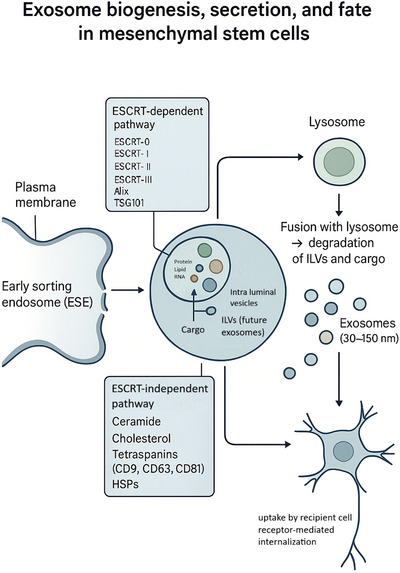
Exosome formation follows a highly orchestrated sequence of events beginning with endocytosis and culminating in vesicle release. Initially, early sorting endosomes (ESEs) are generated through plasma membrane invagination, incorporating extracellular molecules and surface proteins (Q. F. Han et al. 2022). During endosome maturation, the inward budding of the limiting endosomal membrane produces intraluminal vesicles (ILVs), which accumulate within multivesicular bodies (MVBs) (Y. Wang, Xiao, et al. 2024). The endosomal sorting complex required for transport (ESCRT) machinery is the primary regulator of this process. Comprising ∼30 proteins, the ESCRT system is organized into four complexes (ESCRT‐0, ‐I, ‐II, ‐III) and associated proteins (Vps4, Alix, Tsg101). Together, they coordinate ubiquitinated cargo recognition, membrane deformation, vesicle scission, and recycling of ESCRT components (C. Wang, Chen, et al. 2023).
In parallel, ESCRT‐independent pathways also contribute to exosome biogenesis. These involve tetraspanins, ceramides, cholesterol, phosphatidic acids, and heat‐shock proteins (HSPs), all of which regulate lipid reorganization and RNA cargo loading (C. Wang, Chen, et al. 2023). Cytoplasmic materials including RNA, proteins, and lipids are then packaged into ILVs, while the Golgi apparatus and endoplasmic reticulum provide additional input (Gurung et al. 2021). The fate of MVBs is bifurcated: some fuse with lysosomes or autophagosomes for degradation, whereas others are trafficked along the cytoskeletal network to the plasma membrane, where vesicle fusion releases exosomes into the extracellular milieu (Yadav et al. 2024). Ceramides are particularly enriched in secretory MVBs compared with degradative ones, suggesting that lipid composition influences vesicle destiny (Horbay et al. 2022). Exosomes are characterized by a distinct set of molecular markers. Protein markers include flotillin, Alix, TSG101, and tetraspanins (CD9, CD63, CD81), while lipids such as ceramide and sphingomyelin are highly concentrated, reflecting their lipid raft origin (Gurung et al. 2021) (Figure 2).

Exosome biogenesis, secretion, and fate in mesenchymal stem cells. Early sorting endosomes mature into multivesicular bodies containing intraluminal vesicles (future exosomes) that are loaded with proteins, lipids, and RNAs through ESCRT‐dependent and ESCRT‐independent pathways. These multivesicular bodies either fuse with lysosomes for degradation or with the plasma membrane to release 30–150 nm exosomes, which are then taken up by recipient cells via receptor‐mediated internalization.
Exosomes as Biomarkers of AD
Current AD diagnostics rely on cerebrospinal fluid (CSF) biomarkers such as Aβ42/40, total tau, and phosphorylated tau, together with cognitive assessments and neuroimaging including positron emission tomography (PET) and CT. These standards have clear value but face limitations for population‐level screening and longitudinal monitoring, since CSF collection is invasive and imaging can be costly and variably interpreted. Because AD pathology often precedes symptoms by years, there is an unmet need for minimally invasive biomarkers that detect earlier disease stages (Hampel et al. 2023; Modat et al. 2023; X. Zhang et al. 2017; Staffaroni et al. 2017).
Exosomes are nanosized extracellular vesicles that encapsulate proteins, lipids, and nucleic acids reflective of their parent cells. In the nervous system, neuron‐derived exosomes (NDEs) display surface molecules that facilitate selective uptake by recipient cells. Crucially, exosomes can be isolated from accessible biofluids such as blood, urine, and saliva, and their stability after collection supports clinical workflows (M. A. Kumar, Baba, et al. 2024; Huo et al. 2021; Delshad et al. 2025). Reports on exosome concentration and size in AD are not fully consistent, which likely reflects differences in biofluid source, isolation method, and analytic pipelines. Convergence across studies will require standardized collection, isolation, and characterization protocols to clarify the diagnostic meaning of these morphological metrics (Soliman et al. 2021; Yakubovich et al. 2022).
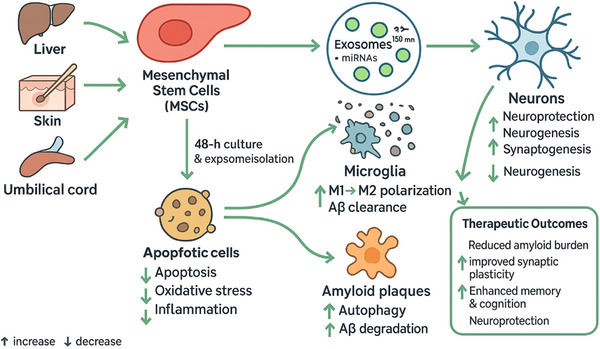
Molecular cargo offers stronger translational traction. Proteomic analyses have identified AD‐linked proteins within exosomes, including β‐site APP cleaving enzyme‐1 (BACE‐1), sAPPα, sAPPβ, γ‐secretase components, and Aβ peptides, directly connecting vesicle content to amyloidogenic pathways (Zhao et al. 2023). Lipidomic data suggest that specific lipids and plasmalogen glycerophosphoethanolamines are enriched in brain‐derived exosomes from AD, providing a complementary signature (Ghadami and Dellinger 2023). Exosomal microRNAs also show reproducible alterations: panels measured in serum and CSF frequently detect upregulation of species such as miR‐15a‐5p and downregulation of others including miR‐15b‐3p and miR‐29c, consistent with disease‐related gene regulatory shifts (Bhome et al. 2018; Xia et al. 2019; Wei et al. 2020). By integrating exosomal markers with established amyloid and tau measures, composite signatures may improve diagnostic performance and staging while enabling less invasive, repeatable sampling (M. A. Kumar, Baba, et al. 2024; Dehghani et al. 2025). Figure 3 summarizes how MSC‐derived exosomes could deliver miRNAs, proteins, and neurotrophic factors to modulate neurogenesis, Aβ clearance, immune tone, and synaptic plasticity in the AD brain (Mukerjee et al. 2025).
Among blood‐based approaches, enrichment of brain‐derived exosomes has been proposed as a liquid biopsy for AD. Although their abundance in plasma is lower than in CSF, brain‐derived vesicles can cross the blood–brain barrier (BBB) and retain molecular information from their neuronal origins, enabling peripheral capture of central signals (Shah et al. 2024; A. Kumar, Nader, et al. 2024). Immunoprecipitation from plasma allows selective recovery of neuronal or glial exosomes and may reduce diagnostic overlap seen with conventional CSF thresholds of Aβ42/40, T‐tau, and p‐Tau181. Multicenter studies reporting correlations between protein levels in blood‐derived exosomes and CSF strengthen their potential as surrogate indicators of central pathology (Mukerjee et al. 2025; Guha et al. 2019).
NDEs carry synaptic and lysosomal proteins that have been associated with progression from mild cognitive impairment to dementia and with disease severity, supporting roles in early detection and longitudinal monitoring (Huo et al. 2021; Winston et al. 2016). Astrocyte‐derived exosomes (ADEs) contain complement proteins that vary by stage and often harbor higher levels of proteins relevant to amyloid processing than NDEs, highlighting astroglial contributions and potential therapeutic targets (Goetzl et al. 2018; Y. Yu, Wang, et al. 2025).
Translation to practice will require large, well‐controlled cohorts with harmonized pre‐analytics and analytics. Standardized operating procedures for isolation, quantification, and molecular profiling are essential to reproducibility and clinical adoption. Even so, current evidence positions exosome‐based assays as promising complements to CSF and imaging, with potential to enable earlier detection and more precise tracking of AD biology (Youssef et al. 2025; X. Li et al. 2019).

MSC‐derived exosomes deliver miRNAs, proteins, and neurotrophic factors to neurons and microglia in the AD brain, promoting neurogenesis, Aβ clearance, immune regulation, and neuroprotection. These effects collectively enhance synaptic plasticity and cognitive function.
Exosome‐Based Therapeutics in AD
Beyond diagnostics, exosomes also hold significant therapeutic promise, particularly through their association with MSCs. Compared with iPSCs or neural stem cells (NSCs), MSCs are favored for their safety profile, versatility, and robust immunomodulatory capacity (M. A. Kumar, Baba, et al. 2024). They exert neuroprotective effects by releasing neurotrophic factors such as brain‐derived neurotrophic factor (BDNF) and vascular endothelial growth factor (VEGF), which promote neuronal survival, neurogenesis, and synaptic remodeling (Yari et al. 2022). MSCs also demonstrate low tumorigenic risk, are relatively easy to obtain from sources such as bone marrow and adipose tissue, and exhibit low immunogenicity, facilitating allogeneic transplantation without the need for extensive immunosuppression (Fan et al. 2020).
Through paracrine signaling and exosome release, MSCs deliver a diverse array of therapeutic molecules including growth factors, microRNAs, and membrane‐bound proteins. These mediators collectively inhibit apoptosis, reduce oxidative stress, and enhance neuronal regeneration (Nasirishargh et al. 2021). Neurotrophins secreted by MSCs, including VEGF, hepatocyte growth factor (HGF), nerve growth factor (NGF), and neurotrophin‐3, support neuritic outgrowth and functional recovery in damaged brain regions (M. Li et al. 2022). Importantly, MSC‐exos also regulate immune responses by shifting microglia away from a pro‐inflammatory M1 phenotype toward a neuroprotective M2 state. This dual action not only dampens chronic neuroinflammation but also promotes microglial clustering around amyloid deposits, thereby facilitating Aβ clearance through autophagic and lysosomal mechanisms (Miron et al. 2024).
Experimental studies further illustrate the versatility of MSC‐derived exosomes. For instance, exosomes secreted by hypoxia‐preconditioned MSCs have been shown to enhance learning and memory in transgenic AD mice, reduce amyloid accumulation, and elevate synaptic protein expression. These findings suggest that the therapeutic efficacy of MSC‐exos can be modulated by preconditioning strategies, reflecting their adaptability to different physiological environments (Tan et al. 2024). Similarly, soluble factors secreted by MSCs, such as galectin‐3 or ICAM‐1, have been shown to stimulate neprilysin (NEP) production in microglia, enhancing amyloid degradation. Collectively, these actions highlight the ability of MSC‐derived exosomes to alter the neurodegenerative microenvironment and support neuronal resilience (M. A. Kumar, Baba, et al. 2024; Shao et al. 2025).
Moreover, bone marrow–derived MSCs have been shown to recruit microglia through chemokine signaling (e.g., CCL5), inducing protective cytokines such as IL‐4 and neprilysin, which together reduce amyloid burden and improve cognitive outcomes. These mechanistic insights indicate that exosome‐mediated pathways are not passive byproducts of stem cell therapy but active contributors to its therapeutic benefits (Regmi et al. 2022). Importantly, ongoing research suggests that tailoring the properties of MSC‐derived exosomes, through genetic modification, preconditioning, or optimized culture conditions, may further enhance their efficacy in combating AD pathology (Liao et al. 2024).
MSC‐derived exosomes transport miRNAs, proteins, and enzymes that converge on canonical AD pathways (Oveili et al. 2023). For amyloid biology, exosomal miR‐29 family and miR‐107 have been linked to the regulation of APP and BACE‐1, while delivery of neprilysin and insulin‐degrading enzyme (IDE) supports proteolysis of Aβ. Autophagy and lysosome function are promoted through TFEB activation and cathepsin cargo, which facilitates clearance of misfolded proteins and amyloid species (Bécot et al. 2020). For tau pathology, miR‐132 or miR‐212 and miR‐146a have been associated with modulation of tau kinases and phosphatases, which can reduce tau phosphorylation and spread (Boscher et al. 2020).
Synaptic resilience is supported by exosomal neurotrophins such as BDNF and NGF that engage TrkB or ERK or phosphoinositide 3‐kinase (PI3K) or protein kinase B (Akt) signaling to enhance dendritic spine stability, long‐term potentiation (LTP), and expression of synaptic proteins including postsynaptic density protein‐95 (PSD‐95) and synaptophysin (Numakawa and Kajihara 2023). Neuroinflammation is attenuated through delivery of miR‐21, miR‐124, and miR‐146a, which downregulate nuclear factor kappa‐B (NF‐κB) activity and shift microglia from an M1 to an M2 phenotype with increased IL‐4 and IL‐10 and reduced TNF‐α and IL‐1β (Slota and Booth 2019). Anti‐apoptotic and antioxidant effects follow from activation of PI3K or Akt and upregulation of SOD and peroxiredoxins, which lowers oxidative stress (Y. Chen et al. 2021). Together, these mechanisms provide a biologically coherent basis for the behavioral and histologic improvements observed in preclinical models and suggest measurable endpoints such as neuron‐derived exosomal BACE‐1 and synaptic proteins, phospho‐tau to total tau ratios, and autophagy markers for early phase trials (Shiau et al. 2022). To integrate therapeutic and diagnostic perspectives, we map how MSC‐exosomal cargos engage specific pathways to modify AD processes and yield measurable readouts. This framework connects miRNA and protein cargos to Aβ clearance, tau regulation, synaptic repair, neuroinflammation, and neurovascular support, providing testable endpoints for trials, as summarized in Table 2.
| Exosomal cargo | Primary target or pathway | Disease process affected | Expected effect | Potential readout | Ref |
|---|---|---|---|---|---|
| miR‐29, miR‐107 | APP or BACE‐1 regulation | Amyloidogenesis | Lower Aβ production | Plasma or CSF Aβ42/40 ratio; NDE BACE‐1 | Lei et al. (), W. X. Wang et al. () [2015] [2008] |
| NEP, IDE, cathepsins | Proteolysis or lysosome | Aβ clearance | Higher degradation and clearance | IDE activity; lysosomal markers in NDEs; amyloid PET | Grimm et al. (), Huang et al. () [2013] [2025] |
| TFEB axis components | Autophagy or lysosome biogenesis | Proteostasis | Enhanced removal of misfolded proteins | LC3 or p62 ratios; NDE TFEB targets | X. Wang, Xie, et al. (), Xiao et al. () [2023] [2015] |
| miR‐132 or miR‐212 | Tau kinases or phosphatases | Tau phosphorylation | Lower p‐Tau and reduced spread | Plasma or CSF p‐Tau; tau PET | M. Zhang and Bian () [2021] |
| BDNF, NGF | TrkB or ERK or PI3K or Akt | Synaptic plasticity | Higher LTP and synaptic proteins | NDE PSD‐95 or synaptophysin; cognitive composites | Liu et al. () [2022] |
| miR‐124, miR‐146a, miR‐21 | NF‐κB and microglial polarization | Neuroinflammation | M1 to M2 shift; lower TNF‐α and IL‐1β | ADE cytokine cargo; TSPO‐PET | Mavroudis et al. (), Wan et al. () [2023] [2022] |
| VEGF, HGF | Angiogenesis or perfusion | Neurovascular unit | Improved cerebral perfusion | MRI perfusion measures | Fayazi et al. (), Manuel et al. (), Yari et al. () [2021] [2017] [2022] |
Clinical Perspectives
Although early‐phase studies of MSC‐based therapies in AD models are encouraging, translation into clinical settings is still in progress. Human trials investigating MSCs from bone marrow, adipose tissue, and umbilical cord sources have begun to report safety and feasibility, yet conclusive results regarding efficacy remain limited (X. Han et al. 2025). The path forward will require not only larger and more rigorous clinical studies but also the development of standardized protocols for exosome characterization and delivery. If these hurdles can be overcome, exosome‐based biomarkers and therapeutics may fundamentally transform both the diagnosis and treatment of AD, offering a future where earlier detection, more precise monitoring, and targeted intervention are possible (Shahlaei et al. 2025). Over the last decade, multiple clinical trials have explored the therapeutic potential of MSCs in AD, utilizing a range of stem cell sources, delivery routes, and experimental protocols. While most of these investigations remain in early stages, the accumulating evidence has provided valuable insights into feasibility and safety (Hu and Wang 2022).
In the United States, a trial involving 33 patients with AD assessed the intravenous delivery of bone marrow‐derived MSCs. Although the treatment was well tolerated, no significant cognitive improvement was reported (Brody et al. 2023). A separate American study enrolled 21 participants and tested adipose‐derived MSCs through the same administration route. This study also supported safety but was limited by its small sample size, which restricted meaningful conclusions (A Phase 1/2, Randomized, Double‐Blind, Placebo‐Controlled Study to Evaluate the Safety and Efficacy of AstroStem, Autologous Adipose Tissue Derived Mesenchymal Stem Cells, in Patients With Alzheimer's Disease 2017). South Korea has been particularly active in this field, conducting several trials with umbilical cord blood–derived MSCs (UCB‐MSCs). One study tested intracerebroventricular infusion in 45 patients and confirmed the safety of the approach, but its effect on disease progression remained uncertain (A Double‐blind, Single‐center, Phase 1/2a Clinical Trial to Evaluate the Safety and Exploratory Efficacy of Intraventricular Administrations of NEUROSTEM Versus Placebo Via an Ommaya Reservoir in Patients With Alzheimer's Disease 2014). Another Korean trial used direct intracerebral transplantation of UCB‐MSCs in nine patients; while again no major safety concerns emerged, the therapeutic benefits were weak (Open‐Label, Single‐Center, Phase 1 Clinical Trial to Evaluate the Safety and the Efficacy of NEUROTSTEM‐AD in Patients With Dementia of the Alzheimer's Type 2011).
Ongoing and planned trials are expanding these efforts. In the United States, new studies are recruiting or preparing to recruit patients to evaluate intravenous bone marrow‐derived MSCs in groups ranging from 40 to 80 participants, with an emphasis on both safety and anti‐inflammatory effects (A Phase IIa Study of Allogeneic Human Mesenchymal Stem Cells in Subjects With Mild to Moderate Dementia Due to Alzheimer's Disease 2016; A Phase 2b, Randomized, Double‐Blind, Placebo‐Controlled Study to Assess the Efficacy and Safety of AstroStem, Autologous Adipose Tissue Derived Mesenchymal Stem Cells, in Patients With Alzheimer's Disease 2020). South Korea is simultaneously running another intracerebroventricular study with UCB‐MSCs, while several smaller pilot projects in China are investigating umbilical cord‐derived MSCs delivered intravenously, though the status of these trials is not clearly reported (Exploratory Efficacy Study of NEUROSTEM in Subjects Who Control Group of NEUROSTEM Phase‐I/IIa Clinical Trial 2021; Clinical Study on the Safety and Efficacy of Umbilical Cord Mesenchymal Stem Cell Injection in the Treatment of Mild and Moderate Alzheimer's Disease 2016). Some investigations have faced setbacks; for example, a US phase I trial designed to evaluate intravenous adipose‐derived MSCs in 24 patients was terminated due to disruptions caused by the COVID‐19 pandemic (A Clinical Trial to Determine the Safety and Efficacy of Hope Biosciences Autologous Mesenchymal Stem Cell Therapy (HB‐adMSCs) for the Treatment of Alzheimer's Disease 2020).
Innovative administration routes are also being tested. A Chinese study is currently examining nasal delivery of adipose‐derived MSCs in a small group of nine patients, an approach intended to bypass invasive procedures while enhancing direct access to the central nervous system (Open‐Label, Single‐Center, Phase I/II Clinical Trial to Evaluate the Safety and the Efficacy of Exosomes Derived From Allogenic Adipose Mesenchymal Stem Cells in Patients With Mild to Moderate Dementia Due to Alzheimer's Disease 2020). In addition, a very large‐scale clinical trial has been registered in the United States, planning to enroll up to 5000 patients to examine MSC therapy safety and efficacy on a population‐wide level. Despite this progress, the field remains at an exploratory stage, and much work is needed to harmonize protocols, standardize endpoints, and establish long‐term outcome measures. Together, the trials summarized in Table 2 motivate a focused interpretation of why early studies often yield neutral cognitive outcomes and how future designs can address these limitations (Table 3) (Evaluation of the Safety, Tolerability and Efficacy of Regenerative Therapy for the Treatment of Various Chronic, and Acute Conditions 2020).
| Country | Source of MSCs | Route of administration | Patient sample size | Key outcomes | Ref |
|---|---|---|---|---|---|
| USA | Bone marrow | Intravenous | 33 | Safe, no significant cognitive improvement | Brody et al. () [2023] |
| USA | Adipose tissue | Intravenous | 21 | Safe, but small sample size limited conclusions | A Phase 1/2, Randomized, Double‐Blind, Placebo‐Controlled Study to Evaluate the Safety and Efficacy of AstroStem, Autologous Adipose Tissue Derived Mesenchymal Stem Cells, in Patients With Alzheimer's Disease () [2017] |
| South Korea | Umbilical cord blood (UCB) | Intracerebroventricular | 45 | Safe; efficacy on disease progression unclear | A Double‐blind, Single‐center, Phase 1/2a Clinical Trial to Evaluate the Safety and Exploratory Efficacy of Intraventricular Administrations of NEUROSTEM Versus Placebo Via an Ommaya Reservoir in Patients With Alzheimer's Disease () [2014] |
| South Korea | UCB | Intracerebral transplantation | 9 | Safe; weak therapeutic evidence | Open‐Label, Single‐Center, Phase 1 Clinical Trial to Evaluate the Safety and the Efficacy of NEUROTSTEM‐AD in Patients With Dementia of the Alzheimer's Type () [2011] |
| China | Adipose‐derived MSCs | Intranasal | 9 | Innovative delivery, under evaluation | Open‐Label, Single‐Center, Phase I/II Clinical Trial to Evaluate the Safety and the Efficacy of Exosomes Derived From Allogenic Adipose Mesenchymal Stem Cells in Patients With Mild to Moderate Dementia Due to Alzheimer's Disease () [2020] |
Follow‐up and Current Status of Representative Trials
The bone marrow and adipose intravenous studies in the United States reported acceptable safety with neutral cognitive outcomes in small cohorts, and one adipose trial was terminated early due to pandemic‐related disruption. Umbilical cord blood studies in South Korea have established procedural safety with intracerebroventricular or intracerebral delivery, while effects on disease progression remain uncertain. Additional trials are recruiting to refine dose, delivery route, and target populations, including intranasal administration designed to improve brain exposure. Together, these examples illustrate feasibility, underscore the need for standardized manufacturing and endpoints, and motivate biomarker‐driven designs in prodromal stages.
Interpreting Neutral Clinical Outcomes
Several early trials report safety without a clear cognitive benefit. Likely contributors include small sample sizes, variability in cell source and manufacturing that alters exosome yield and cargo, suboptimal dose or frequency, systemic delivery with limited brain exposure, short follow‐up windows, heterogeneous endpoints, concomitant medications and cerebrovascular comorbidities, immunosenescence, and enrollment late in the disease continuum. These factors motivate standardized GMP manufacturing and characterization, dose finding with pharmacodynamic biomarkers, brain‐targeted delivery such as intranasal or ligand‐directed exosomes, enrichment of prodromal or mild cognitive impairment cohorts, and composite outcomes that integrate fluid biomarkers with sensitive cognitive domains.
Ethical and Regulatory Considerations
Translation of MSC‐ and exosome‐based approaches into clinical practice requires robust ethical oversight and operational rigor. Protocols should obtain Institutional Review Board or Research Ethics Committee approval, be prospectively registered with defined data and safety monitoring, and include clear informed consent that explains the investigational nature of exosome products, foreseeable risks, the possibility of no direct personal benefit, data and privacy safeguards including biobanking and future sample use, and the right to withdraw without penalty (Lee et al. 2024). Because many AD participants have cognitive impairment, capacity must be assessed and, where needed, consent obtained from a legally authorized representative with ongoing assent from the participant (L. Wang, Zhang, et al. 2024). Operationally, donor screening and traceability, GMP‐compliant manufacturing, standardized release testing, and chain‐of‐custody procedures are essential to limit heterogeneity and contamination (Thakur and Rai 2024). For diagnostics, blood‐based liquid biopsy strategies using brain‐derived extracellular vesicles are advancing but remain within evolving regulatory frameworks (A. Kumar, Nader, et al. 2024). In the United States, exosome‐based assays would be regulated as in vitro diagnostics or as laboratory‐developed tests under CLIA, and would require rigorous analytical and clinical validation before clinical deployment (C. Y. Ma et al. 2024). In the European Union, the In Vitro Diagnostic Regulation requires CE marking with evidence of safety, performance, and clinical utility (Humbert et al. 2025). Across Asia, regulators follow similar principles, and to date, there is no broad approval for routine clinical use of exosome‐based Alzheimer's diagnostics, reflecting a cautious stance that emphasizes validation and patient safety (Cleary et al. 2025). Convergent global expectations therefore prioritize analytical validity, clinical validity, and clinical utility, together with harmonized international guidance, standardized isolation and characterization workflows, and post‐marketing surveillance to ensure public trust and safe clinical translation (Wen et al. 2025).
Advantages and Challenges of MSC‐Based Therapies
MSCs hold a unique place in regenerative medicine because of their ability to differentiate into multiple lineages, including osteocytes, chondrocytes, and adipocytes, while also exerting strong immunomodulatory effects. These properties make them attractive for neurodegenerative disorders, where both neuronal loss and chronic inflammation drive disease progression (X. Han et al. 2025). Preclinical research has even suggested that MSCs may have antitumorigenic properties, with studies showing reduced proliferation and migration of various human cancer cell lines when cultured in MSC‐conditioned environments (Ramuta and Kreft 2022). From a practical standpoint, MSCs can be harvested from bone marrow, adipose tissue, or umbilical cord blood using relatively simple and minimally invasive techniques. Their low immunogenicity allows for transplantation across donors with a minimal risk of rejection (Karaoz et al. 2019; Al‐Ameer et al. 2025). In addition, most clinical experiences so far indicate that single MSC administrations are safe and rarely trigger adverse immune responses. Nevertheless, repeated administrations may raise concerns about alloantibody formation, which underscores the need for careful long‐term monitoring (Sanabria‐de la Torre et al. 2021).
The limitations are equally important. Despite the enthusiasm, only a small number of AD clinical trials involving MSCs have been completed, and the results from animal models do not yet provide conclusive proof of efficacy (Mastrolia et al. 2019). Furthermore, the mechanisms through which MSCs exert neuroprotective effects remain incompletely understood, with paracrine signaling, immunomodulation, and exosome release all implicated. Ethical, social, and regulatory issues also complicate the landscape (Fan et al. 2020). In the United States, the FDA has so far only approved cord blood–derived stem cell products, yet numerous clinics continue to market unregulated and expensive stem cell interventions, raising concerns about patient safety and public trust. Establishing clear international regulatory frameworks and ensuring ongoing monitoring of patients receiving stem cell–based interventions are therefore critical for advancing the field responsibly (Brinsfield et al. 2024) (Table 4).
| Category | Advantages | Challenges | Clinical significance | Future perspective | Ref |
|---|---|---|---|---|---|
| propertiesBiological | Multipotent, immunomodulatory, anti‐inflammatory | Incomplete understanding of mechanisms | Broad therapeutic potential | Need deeper mechanistic studies | Liao et al. () [2024] |
| profileSafety | Non‐tumorigenic, low immunogenicity | Repeated use may trigger alloantibodies | Safer than iPSCs/ESCs | Optimize dosing regimens | Shah et al. () [2024] |
| potentialBiomarker | Reflect CNS pathology, accessible in blood/saliva | Variability in exosome isolation | Early diagnosis possible | Develop standardized protocols | Shahlaei et al. () [2025] |
| efficacyTherapeutic | Promote neurogenesis, reduce Aβ/tau, restore synapses | Limited clinical efficacy evidence | Disease modification possible | Combine with precision medicine | Reza‐Zaldivar et al. () [2019] |
| landscapeRegulatory | Minimally invasive collection | Unregulated clinics, ethical concerns | Protects patients | Establish global regulatory frameworks | Shah et al. () [2024] |
Conclusions
MSC‐Exos have emerged as powerful mediators of intercellular communication between MSCs and neural cells, including microglia and neurons. These nanoscale vesicles carry microRNAs, trophic factors, enzymes, and immunoregulatory molecules that collectively promote neurogenesis, reduce inflammation, and protect hippocampal neurons from damage. Notably, their immunomodulatory and neuroprotective effects are often comparable to, or even greater than, those observed with parent MSCs. Unlike whole‐cell therapies, MSC‐Exos function independently of the host microenvironment, maintaining stability in phenotype and activity across different conditions. This consistency makes them an appealing cell‐free therapeutic platform. By avoiding challenges such as cell engraftment, tumorigenicity, or immune rejection, exosome‐based therapies may overcome many of the limitations of direct stem cell transplantation. Consequently, MSC‐Exos are increasingly recognized as a potential alternative to cell‐based therapies, offering a safer, more controlled, and scalable strategy for tackling neurocognitive disorders such as AD. As clinical trials continue to refine their application, exosome‐based therapeutics may soon shift from experimental promise to clinical reality.
Author Contributions
Vinay Patil: conceptualization, writing–original draft, writing–review and editing, supervision. Bhavin Parekh: conceptualization, writing–original draft, writing–review and editing, supervision. Amit Sharma: conceptualization, writing–original draft, writing–review and editing, supervision. Husni Farah: conceptualization, writing–original draft, writing–review and editing, supervision. Renuka Jyothi‐S: conceptualization, writing–original draft, writing–review and editing, supervision. Swati Mishra: conceptualization, writing–original draft, writing–review and editing, supervision. Anima Nanda: conceptualization, writing–original draft, writing–review and editing, supervision. Shaker Al‐Hasnaawei: conceptualization, writing–original draft, writing–review and editing, supervision. Manoj Kumar‐Mishra: conceptualization, writing–original draft, writing–review and editing, supervision.
Funding
The authors have nothing to report.
Ethics Statement
The authors have nothing to report.
Consent
The authors have nothing to report.
Conflicts of Interest
The authors declare no conflicts of interest.