
What this is
- This research investigates the relationship between COVID-19 vaccinations and ().
- It analyzes data from 16 studies focusing on four vaccines: Oxford-AstraZeneca, Pfizer-BioNTech, Moderna, and Johnson and Johnson.
- The study identifies the incidence of associated with these vaccines and compares the risk across different vaccine types and doses.
Essence
- COVID-19 vaccinations are associated with an increased risk of (), particularly after the first dose. Viral-vector vaccines show a higher incidence of compared to mRNA vaccines.
Key takeaways
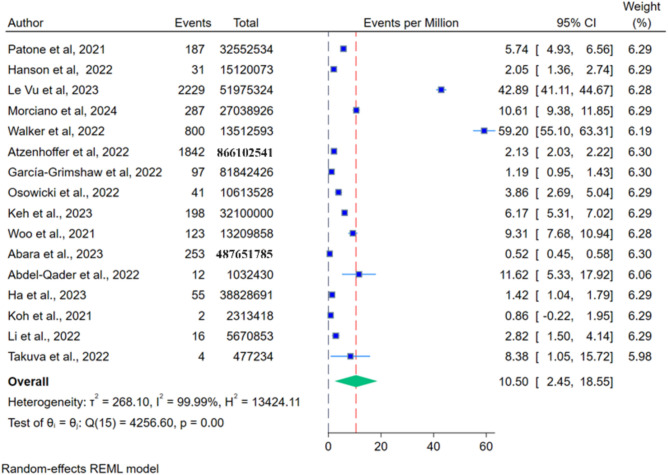
- The overall incidence of after COVID-19 vaccination is 10.5 cases per million doses. This indicates a notable risk associated with vaccination, warranting further investigation.
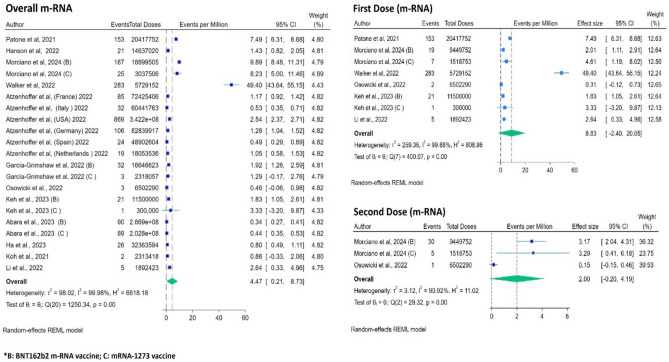
- Viral-vector vaccines are linked to 11.01 cases per million doses, significantly higher than the 4.47 cases per million associated with mRNA vaccines. This suggests a differential risk based on vaccine technology.
- The first dose of viral-vector vaccines has a incidence of 17.43 cases per million, compared to only 1.47 cases per million after the second dose. This highlights a greater risk following the initial vaccination.
Caveats
- The study's findings are limited by the heterogeneity of the included studies, which may affect the reliability of the results. Variations in study design and population characteristics could introduce bias.
- Detailed demographic data regarding vaccine recipients were not fully available, limiting the ability to generalize findings across different populations.
- The study did not employ a safety signals protocol for causality assessment, which may affect the interpretation of the association between vaccines and .
Definitions
- Guillain-Barré Syndrome (GBS): An immune-mediated neurological condition characterized by rapidly progressing muscle weakness and sensory disturbances, potentially leading to paralysis.
Simplified
Introduction
The outbreak of "Severe Acute Respiratory Syndrome Coronavirus 2 (SARS-CoV-2), also known as the COVID-19 Pandemic", caused a substantial adverse impact on public health, the economy, psychological well-being, and the loss of millions of human lives globally1,2. The COVID-19 pandemic caused panic conditions among the public due to swift transmission, the severity of diseases, emerging and re-emerging characteristics, and various variants of the virus, further enhancing the alarming situation worldwide. Many countries have executed strict measures to mitigate the COVID-19 pandemic. These policies include wearing face masks, social distancing, quarantine, lockdowns, travel restrictions, and vaccination3.
Vaccination is the most significant medical intervention against the COVID-19 pandemic and is the best strategy for inducing immunity and preventing diseases. Vaccines are convenient measures to improve healthcare outcomes and healthy life expectancy by preventing and controlling infectious diseases at regional and global levels4,5.
Since December 2020, COVID-19 vaccines have developed great hope to fight against the deadly pandemic. Many vaccines were introduced worldwide, however, a few vaccine types which were frequently used include "viral vector vaccines, COVID-19 messenger RNA (mRNA) based vaccines, inactivated or attenuated virus vaccines, and protein-based vaccines"6,7. These vaccines significantly minimised the pandemic, but at the same time, the literature highlighted the rising risk of neurological adverse events such as "acute disseminated encephalomyelitis, transverse myelitis, aseptic meningitis, and myositis." The mechanism behind these neurological complications is due to molecular mimicry, neurotoxicity, and aberrant immune reactions, which have been recognized to describe the vaccines' allied nervous system problems8,9.
The vaccines are highly beneficial for the prevention of the pandemic, and the vaccination campaign against the COVID-19 pandemic is a significant public health strategy to eliminate the disease burden and prevent the pandemic10. About 13.57 billion doses have been managed globally, with 7.03 million daily doses11. Despite the life-saving role of vaccination against SARS-CoV-2 and COVID-19, vaccines are not completely free from complications and concerns about vaccine-related side effects have grown worldwide12. Safe and effective vaccines are a game-changing tool, but it is also essential to understand the adverse neurological events such as Guillain Barré Syndrome (GBS) associated with COVID-19 vaccination. Recent reports on COVID-19 vaccinations and GBS are leading to regulatory, clinical and public health concerns. However, the literature is lacking in establishing the links between frequently used COVID-19 vaccines and GBS. The study findings may provide appropriate information and better understanding to healthcare officials and policymakers while establishing public health strategies. Therefore, this study aimed to investigate the adverse events of COVID-19 Vaccination Oxford–AstraZeneca, Pfizer-BioNTech, Moderna, Johnson and Johnson on Guillain Barré Syndrome (GBS).
Methods
The study was conducted in the "Department of Physiology, College of Medicine, King Saud University, Riyadh, Saudi Arabia."
Data extraction
The data was composed from the relevant databases regarding the adverse events of "Oxford–AstraZeneca (ChAdOx1nCoV-19/ChAdOx1-S), Pfizer-BioNTech (BNT162b2 mRNA), Moderna (mRNA-1273), and Johnson and Johnson (Janssen- Ad.26.COV2. S), COVID 19 Vaccination on Guillain–Barré Syndrome (GBS)". The required information was recorded from various databases, including "PubMed, Web of Science, Google Scholar, World Health Organization (WHO), and Centers for Disease Control and Prevention (CDC)." The key terms used to record the information include: "Coronavirus, SARS-CoV-2, COVID-19 pandemic, vaccines, adverse events, complications, Oxford–AstraZeneca (ChAdOx1nCoV-19/ChAdOx1-S), Pfizer-BioNTech (BNT162b2 mRNA), Moderna (mRNA-1273), and Johnson and Johnson (Janssen-Ad.26.COV2. S), vaccine, Moderna vaccine". The information was gathered without specific limitations on publication status or study design; however, the English language of publication was imposed. Two research team members reviewed the literature, and their findings were entered. After that, another co-author rechecked the literature and their findings. From the 128 identified documents, we included 16 documents in the analysis, synthesis, and discussion.
Inclusion and exclusion criteria
The documents included in this study must be original and data containing the information on adverse events of "Oxford–AstraZeneca (ChAdOx1nCoV-19/ ChAdOx1-S), Pfizer-BioNTech (BNT162b2 mRNA), Moderna (mRNA-1273), and Johnson and Johnson (Janssen- Ad.26.COV2. S) COVID 19 Vaccination on Guillain–Barré Syndrome (GBS)". The vaccines other than GBS adverse events were excluded from the study. Moreover, we included original studies, however, brief communications, letters to the editor, case reports, and review articles were excluded from the study. The information was gathered without specific limitations on publication status or study design; however, the English language of publication was imposed.
Statistical analysis
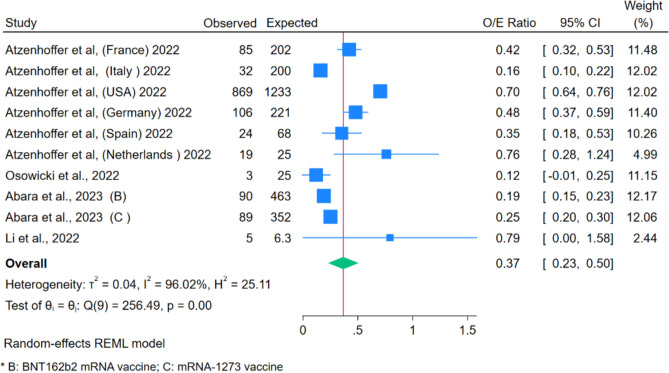
The statistical analyses were performed using STATA18 and RStudio version 4.3.2. From all these studies, relevant information was retrieved, such as the total number of GBS events, total population and total COVID-19 doses administered and estimated total number of events per million doses using the formula Events/Total Doses given*1,000,000. We pooled the results using a random effect model. We also calculated the O/E (Observed/Expected) ratio with corresponding 95% confidence intervals. The OE analysis involved a comparison of the number of GBS reports after the vaccine with the expected number of cases in each study. The results for each study were pooled using a random effects model. O/E incident ratio of > 1 was considered elevated, and < 1 was considered lower. Some studies also mentioned risk ratios (RR), which were extracted and pooled to explore the link between GBS and COVID-19 vaccine using the Mantel–Haenszel method13. This was only done for studies that reported RR, and the number of studies was three or more. We analyzed the association overall regardless of the vaccine technology used. We also sub-grouped the studies into 1st vs 2nd dose, m-RNA vs viral vector vaccines and finally, specific vaccine types. A p-value p < 0.05 was considered significant for all analyses. The "Cochrane chi-squared test (Chi2) was used to evaluate heterogeneity among articles; a p-value < 0.05 indicates the existence of heterogeneity. I2 value was calculated. I2 is a measure of heterogeneity and a method for calculating the associated 95% CI. I2 expresses the proportion of variability in a meta-analysis. I2 values ≥ 50% and p < 0.05 indicated a moderate to high degree of heterogeneity among pooled studies14. Egger's test was performed wherever appropriate to evaluate publication bias, further assessed by visually examining the symmetry in funnel plots. A leave-one-out sensitivity analysis was performed to check the reliability of some studies.
Ethics approval
This study was exempted from ethical approval or informed consent because data were obtained from publicly available sources.
Results
| Author, Year, Country | Study type | Vaccine | Age, total vaccinated population, total number of doses | Number of GBS cases |
|---|---|---|---|---|
| Patone et al., 2021, England[15] | Self-controlled case series study | ChAdOx1nCoV-19 BNT162b2 mRNA | Mean Age: 55 years Total: 32,552,534 | 187 events 28 days after the first dose |
| Hanson et al. 2022, USA[16] | Cohort | mRNA-1273 Ad.26.COV2. S | Mean Age: 46.5 years, Total: 7 894 989, Doses: 15 120 073 | 31 cases between 1–42 days after the last dose |
| Le Vu et al., 2023, France,[17] | Self-controlled case series study | ChAdOx1-S & Ad26.COV2-S | Median Age: 57 Total: 58,530,770 Doses: 88.8% with at least first dose | 2229 cases after one dose of the vaccines between 1–42 days |
| Morciano et al., 2024, Italy[18] | Self-controlled case series study | ChAdOx1-S BNT162b2 mRNA-1273 Ad26.COV2-S | Median age: 56 Total: 15,986,009 Doses: 27,038,926 | 287 new cases of GBS after the first or second dose |
| Walker et al., 2022, UK[19] | Self-controlled case series | ChAdOx1 BNT162b2 | Median Age: 62 Total: 13,512,593 | 800 cases of GBS between 1–42 days after first dose |
| Atzenhoffer et al., 2022, European Union, USA, Ecuador, Iceland, Norway, Switzerland, Uruguay[20] | Cohort study | ChAdOx1-S BNT162b2 mRNA-1273 Ad26.COV2-S | Median Age: 57 Total doses of mRNA vaccine: 770,856,446 Total doses of adenovirus vaccine: 95,246,095 | 1232 cases for all mRNA-based vaccines within 1–42 days 610 cases for all adenovirus-based vaccines within 1–42 days |
| García-Grimshaw, 2022, Mexico[21] | Retrospective study | ChAdOx1nCoV-19 BNT162b2 mRNA-1273 Ad26.COV2-S | Median Age: 44 Doses: 81,842,426 | 97 cases within 42 days after the last dose |
| Osowicki et al., 2022, Australia[22] | Case series | ChAdOx1-S BNT162b2 | Median Age: 65 Total: 6.6. million Doses: 10,613,528 | 41 cases within 42 days after the last dose |
| Keh et al., 2023, England[23] | Population-based study | ChAdOx1nCoV-19 BNT162b2 mRNA-1273 | Age: 18 + years Total: 55,980,000 Doses: 32.1 million | 198 cases within 6 weeks of the last dose |
| Woo et al., 2021, USA[24] | Retrospective study | Ad26.COV2. S | Age: > 18 years Doses: 13 209 858 | 123 cases within 42 days after the last dose |
| Abara et al., 2023, USA[25] | Cohort Study | BNT162b2 mRNA-1273 Ad26.COV2-S | Median Age: 55 Dose: 487,651,785 | 253 cases within 42 days after the last dose |
| Abdel-Qader et al., 2022, Jordan[26] | Prospective study | ChAdOx1nCoV-19 BNT162b2 | Population: 658,428 Doses: 1,032,430 | 12 cases 14 days after the first or second dose |
| Ha et al., 2023, South Korea[27] | Prospective Regional Surveillance Study | m-RNA vaccine viral vector vaccine | Age: 86.8% of 13 million people, Total doses: 38,828,691 | 55 cases within 42 days after the first or second dose |
| Koh et al., 2021, Singapore[28] | Prospective study | BNT162b2 mRNA-1273 | Median Age: 59 ys Total: 1,398,074 Doses: 65.5% of people got 2 doses, the rest 1 dose | 2 cases with a median latency period of 4 days |
| Li et al., 2022, UK & Spain[29] | Population-based cohort & self-controlled case series | ChAdOx1nCoV-19 BNT162b2 | Median Age: UK (48), Spain (47) Total: 8 330 497 got at least one dose | 11 cases in the UK, 21 days after ChAdOx1nCoV-19 first dose. 5 cases in Spain 21 days after BNT162b2 first dose |
| Takuva et al., 2022, South Africa[30] | Open-label phase 3b implementation study | Ad26.COV2. S | Median age: 42 Total: 477,234 Dose: 477,234 | 4 cases within 28 days of a single vaccine dose |
Guillain–Barré Syndrome (GBS) incidence after COVID-19 vaccination irrespective of the vaccine types

Forest plot for per million events for Oxford–AstraZeneca, Pfizer-BioNTech, Moderna, and Johnson and Johnson vaccines on Guillain–Barré Syndrome.

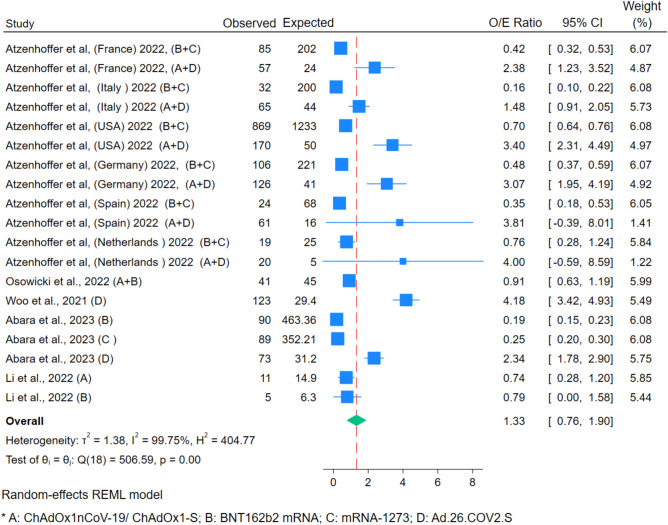
Forest Plot for O/E analysis for all vaccine Oxford–AstraZeneca, Pfizer-BioNTech, Moderna, and Johnson and Johnson vaccines on Guillain–Barré Syndrome.
![Forest Plot for RR for all vaccine vaccines Oxford–AstraZeneca, Pfizer-BioNTech, Moderna, and Johnson and Johnson vaccines on Guillain–Barré Syndrome. [*A: ChAdOx1nCoV-19/ ChAdOx1-S; B: BNT162b2 mRNA; C: mRNA-1273; D: Ad.26.COV2. S vaccines].](https://europepmc.org/articles/PMC11322667/bin/41598_2024_66999_Fig3_HTML.jpg "Click to view full size")
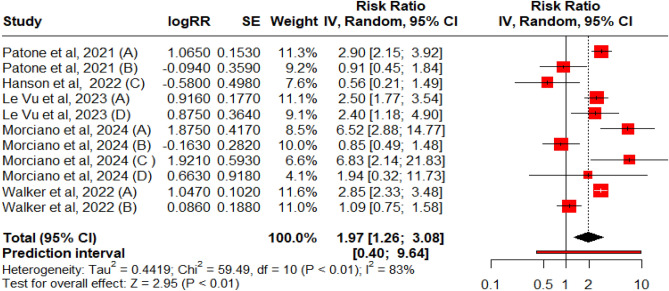
Forest Plot for RR for all vaccine vaccines Oxford–AstraZeneca, Pfizer-BioNTech, Moderna, and Johnson and Johnson vaccines on Guillain–Barré Syndrome. [*A: ChAdOx1nCoV-19/ ChAdOx1-S; B: BNT162b2 mRNA; C: mRNA-1273; D: Ad.26.COV2. S vaccines].
Association between m-RNA and viral-vector vaccine with GBS incidence mRNA vaccines
Our study analysed two types of m-RNA-based vaccines: the BNT162b2 mRNA vaccine and the mRNA-1273 vaccine. The mRNA vaccines accounted for 2076 cases, and 1,237,638,401 doses of the vaccines were given. The sensitivity analysis (leave-one-out) was done wherever appropriate and showed that no single study significantly affected the effect size for each outcome.

Forest Plots for GBS events per million doses of vaccines (overall, first dose and second dose of mRNA vaccine).

Forest Plot for O/E Ratio for m-RNA vaccines.
| COVID-19 vaccines | Number of studies | Number of GBS cases | Number of vaccine doses | Cases per million doses of vaccine | Cases per million during first & second doses of Vaccines |
|---|---|---|---|---|---|
| Viral-vector vaccines (Oxford/AstraZeneca; Johnson and Johnson) | 13 | 1630 | 193,535,249 doses of vaccine | 11.01 GBS cases per million doses of vaccine | First dose: 17.43; Second dose: 1.47 cases per million |
| mRNA vaccines (Pfizer-BioNTech and Moderna) | 12 | 2076 | 1,237,638,401 doses of vaccines | 4.47 GBS per million doses of vaccines | First dose: 8.83 Second dose: 2 events per million doses |
Viral vector-based vaccines
Our study analysed two viral vector-based vaccines (ChAdOx1nCoV-19/ ChAdOx1-S vaccine and Ad.26.COV2. S vaccine). The total number of viral-vector vaccine doses was approximately 193,535,249, which were linked to around 1,630 GBS cases. Sensitivity analysis (leave-one-out) was performed wherever appropriate and showed that no single study significantly affected the effect size for each outcome.


Specific vaccines and their association with GBS incidence
Oxford AstraZeneca (ChAdOx1nCoV-19/ChAdOx1-S) vaccine

Forest Plots for GBS events per million doses of ChAdOx1nCoV-19 vaccine.

Forest Plot for risk ratio RR for ChAdOx1nCoV-19 vaccine.
| COVID-19 vaccines | Number of studies | Number of GBS cases | Number of vaccine doses | Cases per million doses of vaccine | Risk ratio and significance level* |
|---|---|---|---|---|---|
| Viral-vector vaccines | |||||
| Oxford/AstraZeneca | 8 | 1339 | 167,786,902 | 14.2 cases | RR: 2.96 (95% CI 2.51–3.48, p < 0.01) |
| Johnson and Johnson | 7 | 235 | 60,256,913 | 8.80 cases | RR: 2.47 (95% CI 1.30–4.69, p < 0.01) |
| mRNA vaccines | |||||
| Pfizer-BioNTech, | 10 | 1609 | 916,053,583 | 7.20 cases | RR: 0.99 (95% CI 0.75–1.32, p = 0.96) |
| Moderna | 6 | 419 | 420,420,909 | 2.26 cases | –– |
Pfizer-BioNTech (BNT162b2 mRNA) vaccine


Moderna mRNA-1273 vaccine

Forest Plots for GBS events per million doses of Moderna mRNA-1273 vaccine.
Johnson and Johnson (Ad.26.COV2. S) vaccine


Discussion
The COVID-19 vaccines demonstrated remarkable efficacy in preventing COVID-19 morbidity and mortality and have been the key milestone in the worldwide efforts to combat the COVID-19 pandemic1. However, the adverse neurological events following the COVID-19 vaccination have raised great concerns globally31. The present study results revealed a significant risk for GBS after the administration of the COVID-19 vaccine. The viral-vector vaccines were linked to higher GBS cases per million vaccine doses. Moreover, the GBS cases incidence after the first dose was higher than the second dose. The adverse events following COVID-19 vaccination are relatively rare but have been documented across the various vaccine platforms.
Bragazzi et al.32 conducted a study on the global burden of GBS and reported that the prevalence and disability of GBS have continued to escalate. There are about 150,095 total cases of GBS which resulted in 44,407 cases years lived with disability (YLDs) worldwide. Globally, there was a 6.4% increase in the prevalence of GBS per 100,000 population32. However, the COVID-19 pandemic further increased this incidence of GBS.
The manifestations of adverse neurological events following COVID-19 vaccination are diverse and may involve both central and peripheral nervous system dysfunction29. However, more severe neurological conditions, such as GBS, characterised by acute onset muscle weakness and sensory disturbances, have been reported following COVID-19 vaccines33–36.
GBS is an immune-mediated neurological condition characterized by swiftly developing ascending weakness, with sensory loss and nervous system involvement, leading to muscle weakness, paralysis, and sometimes life-threatening complications37. While the exact cause of GBS is not fully understood, it is triggered by infections or vaccinations and acute inflammatory demyelinating polyneuropathy. Several vaccines have been associated with GBS in the past. Therefore, there is a chance that the COVID-19 vaccines can also be associated with GBS38. The literature suggested the potential mechanisms are immune-mediated, the occurrence of GBS after the first dose of vaccines may cause an immune reaction sustained by later doses39. These findings need further clarification since the literature on the type of vaccine and recipient count is not available for comparison.
The recent studies examining the possible relationship between the COVID-19 vaccination and GBS have produced mixed findings. Some studies have reported a slightly elevated risk of GBS following vaccination, particularly with specific vaccine formulations40. However, other studies have found no increase in GBS risk associated with COVID-19 vaccination41. The global community concerns regarding the potential for COVID-19 vaccination to trigger GBS exist, but available evidence suggests that such events are exceedingly rare. Continued surveillance and research are necessary to understand any potential association better and ensure the safety of COVID-19 vaccination programs. Effective communication of risks and benefits is essential to maintain public trust and confidence in vaccination efforts amidst the ongoing pandemic.
The underlying molecular mechanisms of these adverse events of COVID-19 vaccines and GBS remain incompletely understood but are thought to involve immune-mediated processes, molecular mimicry, cross-reactive antibodies, or vaccine-induced inflammatory responses targeting the nervous system. The literature also highlights that anti-ganglioside antibodies and complement activation play a role in the pathogenesis of the GBS. The vaccine's components can induce anti-ganglioside antibodies leading to inflammation. The immune cells produce antibodies against S-protein, which cross-reacts with gangliosides, and antibodies damage the neurons, thus leading to their demyelination38,42.
Study strengths and limitations
Similar to other scientific studies, this study has strengths and limitations that must be considered while developing and implementing these results in any policy guidelines. This is the first study of its kind to explore the detailed analysis of four frequently used COVID-19 vaccines and their adverse effects on GBS.In this study, we analyzed the data regarding the type of vaccines, cases/events per million doses of vaccines, and their impact on GBS. Moreover, this study provided collective information on the adverse events of four frequently used vaccines on GBS. The study's limitations include the heterogeneity of the literature due to differences in study design, population, interventions, and outcomes measured. Moreover, detailed information about vaccination demographics is not fully available. Therefore, further studies are required to achieve better conclusions. Another limitation is that we did not use of safety signals protocol for causality assessment between adverse events following immunization to minimize the biases and confounders43,44.
Conclusions
A positive and significant association was seen between the administration of the COVID-19 vaccine and the risk of GBS. The viral-vector vaccines are associated with 11.01 GBS cases per million vaccine doses. The incidence of GBS after the first dose was higher at 17.43 events per million compared to 1.47 cases per million in the second dose. The COVID-19 vaccination can be associated with GBS. Although the GBS cases after COVID-19 vaccination are relatively low, vaccination against COVID-19 is not to be delayed. The health officials must rule out the neurological manifestations associated with COVID-19 vaccination. Healthcare providers should remain vigilant in recognizing and managing these events, and ongoing surveillance and research are essential to elucidate the underlying mechanisms and optimize management strategies. Despite these challenges, the benefits of COVID-19 vaccination in mitigating the impact of the pandemic remain paramount, and efforts to address vaccine-related adverse events must be balanced with the imperative to achieve widespread immunization and control the spread of SARS-CoV-2.
Supplementary Information
Supplementary Information. Supplementary Information.