
What this is
- The study investigates the role of in chondrocyte aging and its relationship to osteoarthritis (OA).
- It examines p16 expression in both murine and human cartilage, finding significant upregulation with age.
- Despite the correlation between p16 expression and markers of senescence, its inactivation does not prevent OA development.
Essence
- serves as a biomarker for aging chondrocytes but does not directly influence the onset of osteoarthritis. Chondrocyte senescence effects on OA are likely mediated by the senescence-associated secretory phenotype () rather than by p16 itself.
Key takeaways
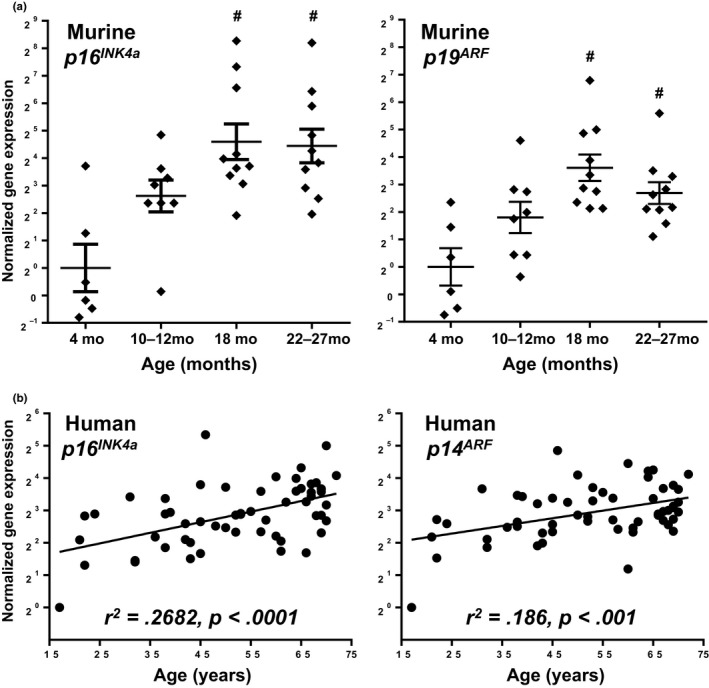
- expression increases approximately 50-fold in murine cartilage from 4 to 18 months of age. This significant increase correlates with aging and suggests a role in chondrocyte dysfunction.
- In human chondrocytes from 57 cadaveric donors, age accounts for 27% of the variation in levels. This indicates that p16 expression is closely tied to the aging process in human cartilage.
- Somatic inactivation of p16 in murine chondrocytes does not prevent the development of age-related or injury-induced osteoarthritis. This suggests that factors beyond p16 are responsible for OA progression.
Caveats
- The study relies on murine models, which may not fully replicate human OA pathology. Further research is needed to confirm these findings in human tissues.
- While is a useful biomarker, its role in the pathophysiology of OA may be more complex than indicated, possibly involving other senescence-related mechanisms.
Definitions
- p16INK4a: A cyclin-dependent kinase inhibitor that regulates the cell cycle and is associated with cellular senescence.
- SASP: The senescence-associated secretory phenotype, a set of pro-inflammatory factors produced by senescent cells.
Simplified
INTRODUCTION
Cellular senescence plays an instrumental role in limiting the development of pathological states including cancer, but the accumulation of senescent cells with aging also contributes to age‐related tissue dysfunction (He & Sharpless, 2017). Cellular senescence is a complex phenotype characterized by two arms: a stress‐induced, durable cell cycle arrest and the production of a suite of pro‐inflammatory molecules known as the senescence‐associated secretory phenotype (SASP) (Childs, Durik, Baker & van Deursen, 2015; Coppe, Desprez, Krtolica & Campisi, 2010; Munoz‐Espin & Serrano, 2014). The senescence biomarker p16INK4a mediates cell cycle arrest through inhibition of cyclin‐dependent kinase 4 and 6 (CDK4/6), but p16INK4a expression is not required for production of the SASP (Coppe et al., 2011). Furthermore, in vivo evidence suggests that the primary functional consequence of high p16INK4a expression with aging is to limit the proliferation of specific cell types during homeostasis or in response to injury (Janzen et al., 2006; Krishnamurthy et al., 2006; Liu et al., 2011; Molofsky et al., 2006; Sousa‐Victor et al., 2014). Several groups, however, have suggested cell cycle independent effects of p16INK4a and CDK4/6 inhibition (Goel et al., 2017; Murakami, Mizoguchi, Saito, Miyasaka & Kohsaka, 2012), and it is unclear whether reduced p16INK4a expression can protect tissues from age‐related pathologies that are associated with the SASP but not with replicative failure.
Chondrocytes are metabolically active and synthesize cartilage matrix throughout adulthood. These cells exhibit an interesting replicative biology, showing extremely low proliferation rates in adult humans and mice during homeostasis (Aigner et al., 2001; Decker et al., 2017). Chondrocyte proliferation can occur during the development of osteoarthritis (OA) in the form of cell clusters, but it is not known if this replicative response is regenerative, pathologic, or epiphenomenal (Lotz et al., 2010). Chondrocytes also display features of senescence with aging and OA, likely in response to macromolecular damage that accumulates in these long‐lived cells (Martin & Buckwalter, 2001; McCulloch, Litherland & Rai, 2017; Price et al., 2002; Rose et al., 2012). OA progression is driven by inflammatory cytokines that initiate a cascade of matrix degradation, and the prominent role for SASP factors such as matrix metalloproteinase 13 (MMP‐13) and interleukin 1 alpha (IL‐1α) implicates senescent cells in the joint as a source of these catabolic molecules (Loeser, Collins & Diekman, 2016). The functional role of p16INK4a in cartilage aging and OA is less clear, although knockdown and overexpression studies in cultured chondrocytes have confirmed that p16INK4a expression is associated with the production of catabolic factors involved in dedifferentiation and OA (Philipot et al., 2014; Zhou, Lou & Zhang, 2004). Further evidence that non‐cell‐autonomous effects of senescence contribute to OA has come from a recent study showing that selective elimination of senescent cells can mitigate the development of OA (Jeon et al., 2017). This "senolytic" approach seeks to target senescent cells that are marked by high expression of p16INK4a, in line with findings from related murine models showing that the depletion of p16INK4a‐high cells in old animals can ameliorate features of aging and extend lifespan (Baker et al., 2011, 2016; Kirkland, Tchkonia, Zhu, Niedernhofer & Robbins, 2017).
The largely hyporeplicative nature of chondrocytes as well as the association between senescence and OA encouraged us to pursue murine and human studies to directly address the role of p16INK4a expression in cartilage aging. Toward that end, we studied p16INK4a expression and proliferation in cultured chondrocytes and employed a Cre recombinase driven approach to examine the effects of somatic p16INK4a inactivation in well‐defined murine models of physiological and injury‐driven OA.
RESULTS
Increased p16gene expression in murine and human articular cartilage with aging INK4a
We determined the expression of p16INK4a with aging in murine chondrocytes by performing quantitative RT–PCR on cartilage tissue isolated from the proximal femur. In accord with observations in other murine tissues (Krishnamurthy et al., 2004), there was a significant increase in p16INK4a expression (48.4‐ and 43.5‐fold, respectively) in the 18‐month and 22‐ to 27‐month groups as compared to skeletally mature mice of 4 months of age (p < .01, Figure 1a). A significant but less robust upregulation was seen in the related gene product p19ARF, with an average fold increase of 24.4‐ and 12.9‐fold at 18 months and 22–27 months of age, respectively (p < .01, Figure 1a). These data support the concept that the physiological stresses of aging induce expression of the Ink4a/Arf locus, even in a hyporeplicative cell type such as chondrocytes. To determine whether aged murine chondrocytes display other characteristic features of senescent cells, we assessed senescence‐associated β‐galactosidase (SA β‐gal) activity (Dimri et al., 1995). Consistent with reports in human chondrocytes (Martin & Buckwalter, 2001), chondrocytes from 22‐ to 24‐month‐old mice displayed a higher percentage of SA β‐gal‐positive cells as compared to 5‐ to 9‐month‐old mice (p = .03, Figure S1).
The expression of p16INK4a with aging was also evaluated in primary human chondrocytes isolated from the cartilage of 57 cadaveric donors without evidence of OA. The donors were between 17 and 72 years old and age was responsible for 27% of the variation in p16INK4a levels (Figure 1b, r2 = .2682, p < .0001). The expression of ARF (denoted as p14ARF for human cells) was also significantly correlated with age (Figure 1b, r2 = .186, p < .001) but to a lesser extent than p16INK4a. Expression of p16INK4a and p14ARF showed a strong correlation with each other (r2 = .6962, p < .001, data not shown). The expression of additional candidate genes with potential involvement in senescence or cell cycle inhibition was examined for a relationship to age, but only p16INK4a and p14ARF showed a significant correlation to age (Table 1). Thus, the analysis of human chondrocytes suggests that INK4a/ARF expression is particularly affected by the process of chondrocyte aging.

Gene expression in murine and human cartilage with age. (a)(left) and(right) gene expression of hip cartilage from wild‐type mice. ≥ 6 per group; mean ± ; < .05 to 4 months by, Tukey's post hoc. (b) Gene expression in primary human chondrocytes from 57 cadaveric donors.andvalues from linear regression analysis shown p16 p19 n SEM p R p INK ARF ANOVA 4a # 2
| Gene name (symbol) | Taqman Assay ID | /value to agerP2 |
|---|---|---|
| (variant 1)p16CDKN2AINK4a | Custom assay | .2058/<.01* |
| (variant 4)p14CDKN2AARF | Custom assay | .1283/<.05* |
| p15 ()CDKN2B | Hs00793225_m1 | .0403/>.05 |
| p21 ()CDKN1A | Hs00355782_m1 | .0982/>.05 |
| p27 ()CDKN1B | Hs01597588_m1 | .0032/>.05 |
| Cyclin D1 ()CCND1 | Hs00765553_m1 | .0150/>.05 |
| Interleukin 1β (β)IL‐1 | Hs00174097_m1 | .0159/>.05& |
| Interleukin 6 ()IL‐6 | Hs00985639_m1 | .0007/>.05 |
| Interleukin 8 ()IL‐8 | Hs00174103_m1 | .0086/>.05 |
| Matrix metalloproteinase 1 ()MMP‐1 | Hs00899658_m1 | .0465/>.05 |
| Matrix metalloproteinase 3 ()MMP‐3 | Hs00968305_m1 | .0005/>.05 |
| Matrix metalloproteinase 13 ()MMP‐13 | Hs00942584_m1 | .0013/>.05 |
| Insulin‐like growth factor binding protein ()IGFBP3 | Hs00426289_m1 | .0037/>.05 |
| Plasminogen activator inhibitor 1 ()PAI‐1/SERPINE1 | Hs01126606_m1 | .0189/>.05 |
| Monocyte chemoattractant protein 1 ()MCP‐1/CCL2 | Hs00234140_m1 | .0259/>.05 |
| Vascular endothelial growth factor A ()VEGFA | Hs00900055_m1 | .002/>.05 |
| Aggrecan ()ACAN | Hs00153936_m1 | .0044/>.05 |
| Interleukin 1α (α)IL‐1 | Hs00174092_m1 | Undetectable (expression in only six samples) |
| Interferon gamma ()IFNg | Hs00989291_m1 | Undetectable (no expression in any samples) |
In vitro human chondrocyte proliferation is controlled by multiple cyclin‐dependent kinases
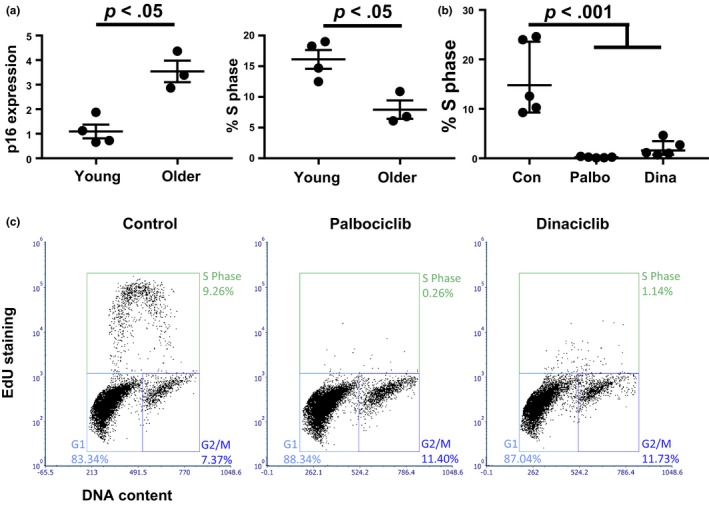
The proliferation of human chondrocytes is restrained in vivo by the dense extracellular matrix of cartilage, but these cells retain the potential for proliferation upon culture in low density monolayer conditions. To determine whether increased p16INK4a expression with aging has the potential to alter chondrocyte proliferation, we analyzed cell cycle entry in a set of young and older chondrocyte donors (24.25 ± 2.6 vs. 64 ± 2.1 years old) using a pulse of 5‐ethynyl‐2′‐deoxyuridine (EdU). In this cohort, older donors had a 3.5‐fold average increase in p16INK4a gene expression (Figure 2a, left, p < .05) and displayed a significantly reduced number of cells in S phase as compared to the younger donors (Figure 2a, right, 7.9% vs. 16.1%, p < .05). To explore a potential mechanistic role for p16INK4a in regulating proliferation in this setting, we used pharmacological inhibition of CDK4/6 to mimic high expression of p16INK4a. Palbociclib inhibits the binding of CDK4/6 to D type cyclins and has been developed as a promising therapeutic for cancers with altered function of the Cyclin D‐CDK4/6‐p16INK4a pathway (Fry et al., 2004; Otto & Sicinski, 2017). Palbociclib completely inhibited the proliferation of human chondrocytes (p < .001, Figure 2b, c). Inhibition of CDK1/2/5/9 with Dinaciclib was similar to Palbociclib in preventing cell cycle entry, indicating that human chondrocytes are sensitive to inhibition of multiple CDKs. These results suggest that aging reduces the potential for chondrocytes to enter S phase when stimulated in monolayer culture, and that these effects on proliferation could be caused by altered regulation of several pathways including the Cyclin D‐CDK4/6‐p16INK4a axis.

Effect of cyclin‐dependent kinase () inhibition on human chondrocyte proliferation. (a) A set of young and older (24.25 ± 2.6 vs. 64 ± 2.1 years old) donors were analyzed forgene expression (left) and the percentage of cells in S phase during monolayer culture (right).Value shown bytest. (b) S phase percentage in chondrocytes from five donors treated with vehicle control, 1 μPalbociclib, or 50 nDinaciclib.Value shown bywith Tukey's post hoc. (c) Representative flow cytometry plots for percentage S phase calculation after a 4‐hr pulse of 5‐ethynyl‐2′‐deoxyuridine (EdU) CDK INK ANOVA p16 p t p 4a m m
p16expression correlates with SASP factors independent of chronological aging INK4a
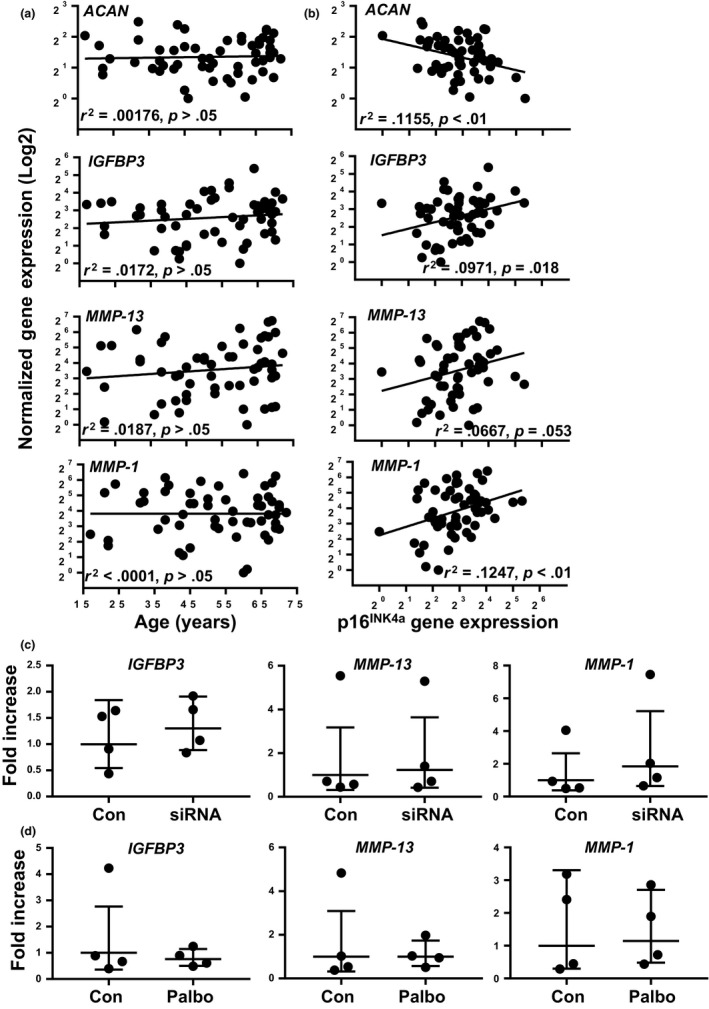
In addition to increased expression with chronological age, p16INK4a responds to physiological demands that accelerate the rate of aging. This has allowed p16INK4a expression to serve as a biomarker of molecular aging, which can be used to measure the senescence burden and predict cellular function in some settings (Koppelstaetter et al., 2008; Liu et al., 2009; Wood et al., 2016). To determine this relationship in primary human chondrocytes, we analyzed whether the expression of p16INK4a was associated with markers of chondrocyte dysfunction independent of chronological aging (Figure 3). Expression of several SASP markers showed a positive correlation to p16INK4a levels despite no correlation to age: insulin‐like growth factor binding protein 3 (IGFBP3, r2 = .0971, p = .018), matrix metalloproteinase 1 (MMP‐1, r2 = .1247, p < .01), and a strong trend for MMP‐13 (r2 = .0667, p = .054). The expression of Aggrecan (ACAN), which is a positive marker of extracellular matrix synthesis, showed a significant reduction in donors with high levels of p16INK4a expression (r2 = .1155, p < .01). This gene expression pattern suggests that p16INK4a levels may represent the degree of dysfunction in human chondrocytes.
We analyzed the expression of SASP genes that showed a positive correlation to p16INK4a levels in the context of INK/ARF knockdown. Within one day of transfection, pooled siRNA targeting both genes reduced expression of p16INK4a and ARF to undetectable levels and less than 10% expression of scrambled siRNA controls, respectively. The expression of IGFBP‐3, MMP‐1, and MMP‐13 was unaffected by knockdown of p16INK4a and ARF (Figure 3c). When Palbociclib was used to mimic p16INK4a‐mediated cell cycle arrest, these same SASP factors were also unaffected (Figure 3d). These data support the concept that while SASP markers correlate with p16INK4a expression, p16INK4a or cell cycle arrest is not required for production of the SASP.

Gene expression in primary human chondrocytes. Data from 57 donors aged 17–72 years old are presented as a function of (a) age or (b)gene expression. The lowest value for each plot was set to 1.andvalues from linear regression analysis shown., Aggrecan;3, insulin‐like growth factor binding protein 3;, matrix metalloproteinase. (c) The effect of scrambled control or sitargetingandon gene expression. (d) The effect of Palbociclib treatment on gene expression. In panels (c) and (d), data were normalized to control and all comparisons by pairedtest were not significant ( > .05) p16 R p p16 p14 t p INK ACAN IGFBP MMP RNA INK ARF 4a 2 4a
Somatic inactivation of p16in murine chondrocytes INK4a
Given the correlation of p16INK4a expression with chronological aging and the SASP, as well as the potential for CDK4/6 inhibition to restrain chondrocyte proliferation, we sought to determine the effects of somatic p16INK4a loss in the chondrocyte compartment. Toward that end, we utilized Cre recombinase to eliminate exon 1α of p16INK4a in chondrocytes in vivo at skeletal maturity using a previously reported floxed p16INK4a allele (p16L; Monahan et al., 2010) and an inducible, chondrocyte‐specific Aggrecan Cre driver (Acantm1(cre/ERT2)Crm; Henry et al., 2009). A loxP‐stop‐loxP ZsGreen fluorescent reporter allele was also included in a subset of mice to facilitate fluorescent activated cell sorting (FACS) of chondrocytes that had undergone Cre‐mediated recombination. To test the efficacy of this system, chondrocytes were isolated by FACS 1 month after tamoxifen injection, showing undetectable levels of p16INK4a by qPCR in cells sorted from Acantm1(cre/ERT2)Crmp16L/L (p16INK4a loss) mice, with retained expression in Acantm1(cre/ERT2)Crmp16INK4a+/+ (p16INK4a intact) controls (Figure S2A). The consistency of recombination in the articular cartilage after tamoxifen injection was demonstrated with anti‐tdTomato immunohistochemistry in mice containing Acantm1(cre/ERT2)Crm and loxP‐stop‐loxP tdTomato fluorescent reporter alleles (Figure S2B).
We examined the effects of p16INK4a loss on the expression of chondrocyte mRNA markers, expecting little or no effect of p16INK4a deletion in young mice due to the low expression at this age. To determine whether p16INK4a loss would affect any age‐related increase in SASP factor production, we also analyzed gene expression of murine chondrocytes from 9‐ to 18‐month‐old animals. Mmp‐13 showed significantly increased expression in older mice (p < .001, Figure S2C), but there was no effect of p16INK4a loss in either age group. Expression of Igfbp3 showed a similar trend but was not statistically significant. In addition to gene expression, Mmp‐13 protein was detected by immunohistochemistry in joints with and without p16INK4a loss at 18 months (Figure S2D). These data indicate that p16INK4a can be efficiently deleted from CreERT2‐expressing chondrocytes via tamoxifen induction in adult mice, but that this deletion does not inhibit the increased production SASP factors during physiologic aging in mice.
The somatic loss of p16INK4a can initiate increased cell division and cancer in a cell‐type‐specific fashion (Liu et al., 2011), leading us to investigate chondrocyte proliferation and neoplasia in this cohort. We did not observe neoplasia in the articular cartilage, but did note a high rate of medullary neoplasia accompanied by abundant intramedullary bone formation in Acantm1(cre/ERT2)Crmp16L/L mice (Figure S3). This neoplastic process did not appear to alter the histological features of the articular cartilage or underlying subchondral bone, but may have had indirect effects on joint function. To determine whether Acantm1(cre/ERT2)Crm‐driven loss of p16INK4a initiated widespread proliferation of articular chondrocytes at the joint surface, we provided BrdU through the drinking water for long‐term pulsing experiments. Articular chondrocytes with p16INK4a loss remained refractory to proliferation even in the context of cartilage damage induced by destabilization of the medial meniscus (DMM) that might stimulate attempted repair, as 3 weeks of continuous BrdU treatment only marked areas of early osteophyte formation (Figure S4A). This low rate of proliferation is one reason that Acantm1(cre/ERT2)Crm‐driven recombination persists in the articular cartilage over time, as demonstrated by immunohistochemistry targeting the product of a loxP‐stop‐loxP reporter allele 6 months after initiating recombination with tamoxifen (Figure S4B). These data suggest that articular chondrocytes exhibit little if any proliferation in adult murine cartilage, even in the setting of p16INK4a loss.
We also used in vitro culture of murine chondrocytes to explore the effect of p16INK4a loss on expansion rate and the development of replicative senescence. In these studies, we isolated chondrocytes from 3‐week‐old mice and expanded the cells through four passages. Cells with p16INK4a loss showed similar expansion rates and lost replicative potential at the same passage as chondrocytes from littermate controls that retained p16INK4a expression (Figure S5A). Additional features of senescence such as extensive staining for SA β‐gal (Figure S5B) and increased expression of the SASP marker Igfbp3 were also not affected by somatic loss of p16INK4a (Figure S5C).
Somatic loss of p16in chondrocytes does not protect mice from OA INK4a
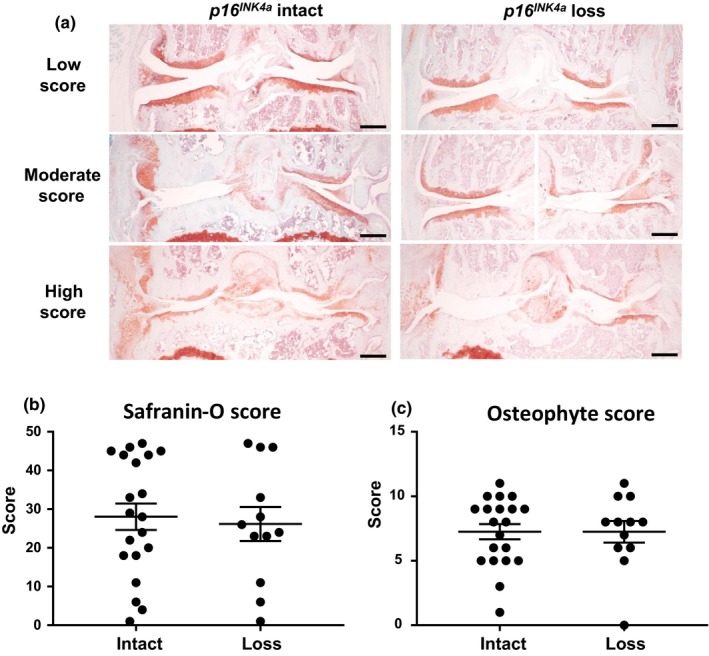
The functional effects of p16INK4a loss in chondrocytes in vivo were further explored by analyzing the extent of age‐related OA in animals with or without p16INK4a deletion in chondrocytes. Littermate cohorts of Acantm1(cre/ERT2)Crmp16INK4a+/+ and Acantm1(cre/ERT2)Crmp16L/L male mice were treated with tamoxifen at 4 and 12 months of age to induce p16INK4a loss. The development of OA was evaluated in mice sacrificed at 18 months of age using established histological scoring systems based on the loss of Safranin‐O staining and osteophyte formation in the load‐bearing cartilage of the femoral condyle and tibial plateau (McNulty et al., 2011). Spontaneous age‐related OA occurs with variable progression in male C57BL/6 mice, and our histological results underscored this variability by demonstrating mild, moderate, and severe OA at 18 months of age (Figure 4a). The Safranin‐O staining scores showed a similar distribution in both cohorts, indicating that inducing p16INK4a loss in chondrocytes is insufficient to prevent cartilage degradation with age (p > .05, Figure 4b). The effect on osteophyte formation, which is another marker of OA development in both human and murine joints, also showed no change with somatic inactivation of p16INK4a (p > .05, Figure 4c).
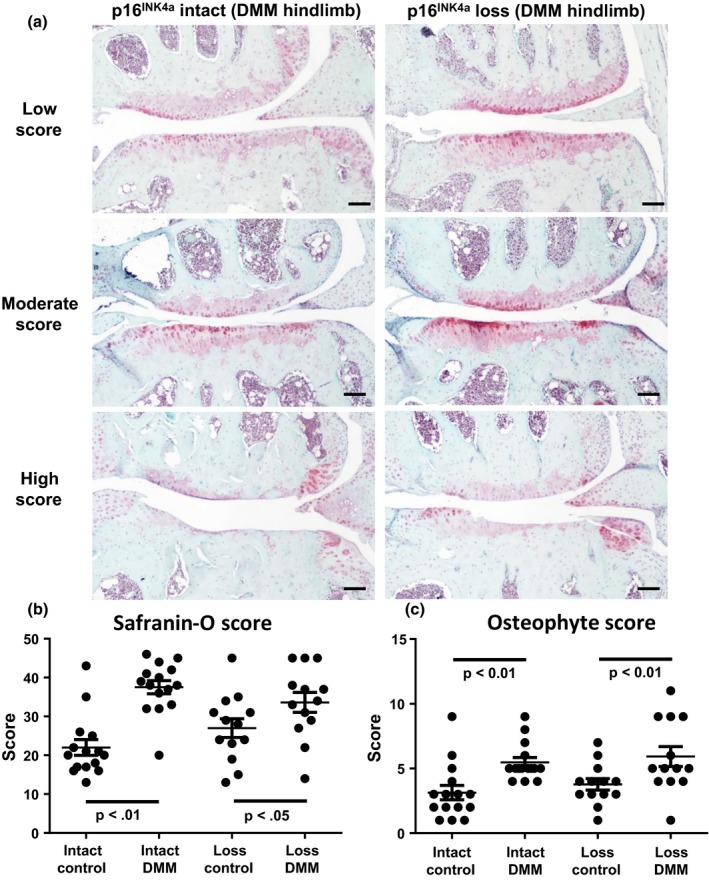
Given that no effect of p16INK4a deletion was observed in aging‐associated OA, we sought to provoke a more severe and phenotypically homogeneous form of OA through DMM. Applying our genetic approach to a joint injury model was also motivated by the demonstration that p16INK4a expression increases with transection of the anterior cruciate ligament and that elimination of senescent cells can mitigate post‐traumatic OA (Jeon et al., 2017). DMM surgery was performed on littermate cohorts of Acantm1(cre/ERT2)Crmp16INK4a+/+ and Acantm1(cre/ERT2)Crmp16L/L male mice at 12 months of age and we assessed cartilage degradation 8 weeks after surgery. Histological evidence of cartilage degradation was present in the medial compartment of DMM hindlimbs (Figure 5a). As expected, DMM surgery increased both the Safranin‐O and osteophyte scores as compared to the contra‐lateral control hindlimbs in both the p16INK4a intact and p16INK4a loss cohorts (p < .05, Figure 5b,c). As was the case for age‐induced OA, however, there was no difference in the degree of OA when comparing the DMM hindlimbs of p16INK4a loss mice to the DMM hindlimbs of p16INK4a intact mice (p > .05, Figure 5b,c). These results indicate that p16INK4a loss in chondrocytes is insufficient to protect from the development of age‐induced or post‐traumatic OA.

Effect ofloss on spontaneous age‐related. (a) Histological sections of hindlimbs from 18‐month‐old mice were stained with Safranin‐O (red, glycosaminoglycans) and Fast Green (green, collagen). Representative images of mice with mild, moderate, and high total joint Safranin‐O scores from bothintact andloss groups are shown. Scale bars = 200 μm. Sections were scored by a blinded observer for (b) the degree of Safranin‐O staining loss (high = , max score = 48) and (c) the size of osteophytes (high = , max score = 12). Analysis by Mann–Whitney test showed no significant difference between groups ( > .05) for either measure p16 p16 p16 p INK OA INK INK OA OA 4a 4a 4a

Effect ofloss on injury‐induced. (a) Histological sections of hindlimbs from mice 8 weeks after destabilization of the medial meniscus () surgery were stained with Safranin‐O (red, glycosaminoglycans) and Fast Green (green, collagen). Representative images of the medial side ofhindlimbs from mice with mild, moderate, and high total joint Safranin‐O scores are shown. Scale bars = 100 μm. Sections were scored by a blinded observer for (b) the degree of Safranin‐O staining loss (high = , max score = 48) and (c) the size of osteophytes (high = , max score = 12). Analysis by Mann–Whitney test showed no significant difference between groups ( > .05) for either measure p16 p INK OA DMM DMM OA OA 4a
DISCUSSION
Advanced chronological age is the most prevalent risk factor for the development of OA. There is mounting evidence that the dysfunctional chondrocyte phenotype that emerges with aging and OA is characteristic of cellular senescence (McCulloch et al., 2017). While p16INK4a is known to inhibit cellular proliferation with aging and senescence in many tissues, the lack of chondrocyte proliferation in vivo provides an opportunity to assess whether p16INK4a plays a functional role in aging that is independent of cell cycle inhibition, as has been proposed in other physiological settings (Goel et al., 2017; Murakami et al., 2012). In this study, we found that p16INK4a expression is an effective biomarker of chondrocyte dysfunction despite not being an essential mediator of age‐related or injury‐induced OA. These results provide biological insight into the functional effects of increased p16INK4a expression with aging. Furthermore, our findings support translational work that seeks to identify and eliminate senescent cells from tissue compartments that drive age‐related disease.
The expression of p16INK4a increases with age in both murine and human cartilage. In murine cartilage, p16INK4a gene expression increased approximately 50‐fold from skeletal maturity at 4 months to either 18 or 22–27 months of age. In primary chondrocytes from human cadaveric donors without evidence of OA, p16INK4a and the related transcript p14ARF were the only genes tested that showed a significant correlation to age. Furthermore, we used Palbociclib treatment (mimicking high p16INK4a expression) to demonstrate that chondrocytes are responsive to CDK4/6 inhibition when cultured ex vivo under conditions that support proliferation. In line with reports of senescent features in other postmitotic cells such as neurons (Jurk et al., 2012) and osteocytes (Farr et al., 2016), our results demonstrate that the INK4a/ARF locus is potently activated with aging even in a cell type that is not affected by replicative exhaustion in vivo.
The possibility that increased p16INK4a expression in chondrocytes may contribute to age‐related OA independent of growth arrest led us to investigate the functional consequence of somatic inactivation in a murine model. We found that the somatic loss of p16INK4a in chondrocytes did not protect against either age‐related or post‐traumatic OA. This finding is interesting in light of the beneficial effect of selectively eliminating senescent cells from murine hindlimbs after anterior cruciate ligament transection (ACLT) (Jeon et al., 2017). ACLT is a more severe model than DMM (Fang & Beier, 2014), but the more likely explanation for the discrepancy is that our approach eliminated p16INK4a without affecting the SASP, whereas the senolytic compound reduced the production of SASP factors from the joint. Indeed, in some settings, p16INK4a may even restrain the development of the SASP (Coppe et al., 2011). Together, these results support the interpretation that the effects of chondrocyte senescence on OA development are more likely to be driven by the SASP arm of senescence without the requirement of p16INK4a expression.
Age‐associated changes occur in many of the cells and tissues of the joint, which together play an active role in the development of OA through mechanisms such as the propagation of inflammatory cascades (Loeser, 2013). Of particular relevance is the recent finding that osteocytes exhibit features of cellular senescence with age, including expression of p16INK4a and SASP markers (Farr et al., 2016). Our in vivo approach focused on the role of p16INK4a in chondrocytes through the use of the Acantm1(cre/ERT2)Crm allele that targets articular chondrocytes and meniscal cells (Henry et al., 2009), as well as a fraction of osteoblasts through direct conversion of hypertrophic growth plate chondrocytes (Ono, Ono, Nagasawa & Kronenberg, 2014; Zhou et al., 2014). Given our findings that interfering with p16INK4a expression did not alter SASP production, investigating p16INK4a loss in cell types with greater proliferative potential than chondrocytes may be of interest. For example, synovial fibroblasts and progenitor cells in the superficial zone of cartilage could be targeted for p16INK4a loss with the Prg4tm1(GFP/cre/ERT2)Abl allele (Kozhemyakina et al., 2015). Lineage tracing studies have suggested that subpopulations of synovial cells harbor regenerative potential (Decker et al., 2017) and a proliferative block in these cells through senescence may limit this capacity with aging. Our findings may have also been influenced by the development of medullary neoplasia with associated bone production in the Acantm1(cre/ERT2)Crmp16L/L mice. This confounding factor may have limited the potential beneficial effects of p16INK4a loss in this cohort. While the articular cartilage was not affected, altered bone marrow function can cause indirect effects due to systemic differences such as extramedullary hematopoiesis.
Regardless of the functional role for p16INK4a in OA development, investigating p16INK4a expression as a biomarker of chondrocyte dysfunction has important biological and translational implications due to the challenges of identifying tractable markers of senescence in vivo (Sharpless & Sherr, 2015). Despite the limitations of any particular marker of senescence, the emergence of chondrocytes demonstrating high p16INK4a expression, SASP, and SA β‐gal staining is indicative of the potential for senescence in this tissue compartment. Human chondrocytes with high expression of p16INK4a had reduced expression of Aggrecan and increased expression of the catabolic SASP factors MMP‐1, MMP‐13, and IGFBP3, even though expression of these genes had no relationship to age. Our interpretation is that high p16INK4a expression marks a subset of chondrocytes with the potential to cause tissue dysfunction through secretion of catabolic factors. The quantity of this subset increases during aging (thus the correlation of p16INK4a to age) and p16INK4a also serves as a biomarker that identifies chondrocytes with greater potential for secreting factors that drive tissue dysfunction (thus the correlation of p16INK4a to SASP markers). The utility of p16INK4a as a biomarker of molecular age in other cell types has been demonstrated by assessing the impact of lifestyle modifications such as smoking or exercise (Liu et al., 2009), predicting the risk for particular negative outcomes after chemotherapy (Demaria et al., 2017), and screening the quality of potential donor organs (Koppelstaetter et al., 2008). For chondrocytes, screening patients for low p16INK4a expression may improve the outcomes of autologous chondrocyte implantation procedures, as the success of this procedure requires avoidance of senescence to ensure sufficient expansion and subsequent re‐differentiation of the chondrocytes (Ashraf et al., 2016).
Further characterization of p16INK4a expression as a biomarker of chondrocyte senescence may also support the development of senolytic therapies for OA. The clinical development of senolytic therapies will require accurate identification of senescent cells before and after treatment (Kirkland et al., 2017). Identifying the patients most likely to respond to senolytics is particularly important for OA, as patient stratification for clinical trials is likely necessary to overcome the heterogenous nature and slow progression of the disease (Karsdal et al., 2016). As was demonstrated for age‐related osteoporosis, clearing senescent cells or directly inhibiting the SASP can change the balance of anabolic and catabolic processes in aged tissues (Farr et al., 2017). Senolytics are particularly attractive for OA because they have the potential to clear multiple cell types that secrete SASP factors into the joint space. Importantly, the periodic clearance of senescent cells from the joint was shown to have a long‐term benefit after ACLT despite a short half‐life of the compound (Jeon et al., 2017), indicating that sustained pharmacologic activity is not required. Intriguingly, this study also presented evidence that clearing p16INK4a‐high cells may limit the development of age‐related spontaneous OA in addition to the more extensive studies in the context of post‐traumatic OA (Jeon et al., 2017). The ability to directly disrupt the age‐associated decline in tissue function that underlies most cases of OA would be a significant advance (Collins, Diekman & Loeser, 2018). Our findings on the role of p16INK4a expression in human and murine cartilage aging will help guide the development of therapies that seek to reduce the burden of senescence as a treatment for OA.
EXPERIMENTAL PROCEDURES
Generation of mouse colonies
All animal experiments were performed under protocols approved by the Institutional Animal Care and Use Committee of the University of North Carolina at Chapel Hill. The Acantm1(cre/ERT2)Crm allele (Henry et al., 2009) (received from Dr. Benoit de Crombugghe, now available as stock #019148; Jackson Labs, Bar Harbor, ME, USA) was crossed to a p16L conditional allele (Monahan et al., 2010). For OA studies with p16INK4a intact (Acantm1(cre/ERT2)Crmp16INK4a+/+) and p16INK4a loss (Acantm1(cre/ERT2)Crmp16L/L) cohorts, male mice of C57BL/6 background were used due to the known development of hindlimb OA. For flow cytometry cell sorting, the loxP‐stop‐loxP ZsGreen reporter mouse (Gt(ROSA)26Sortm6(CAG‐ZsGreen1)Hze/J stock # 007906; Jackson Labs) was crossed into mice with or without loss of p16INK4a. For lineage tracing and some flow cytometry cell sorting, mice containing Acantm1(cre/ERT2)Crm were crossed to the loxP‐stop‐loxP tdTomato reporter mouse (Gt(ROSA)26Sortm14(CAG‐tdTomato)Hze/J stock # 007914; Jackson Labs). For in vitro monolayer expansion studies, a constitutive type II collagen Cre driver (Col2a1‐Cre) was used to recombine the p16L conditional allele in chondrocytes without the necessity of tamoxifen induction (Sakai et al., 2001).
RNA isolation and qPCR from murine cartilage
Cartilage tissue was dissected from the proximal end of the femur from C57BL/6 mice with the following ages: 4, 10–12, 18, and 22–27 months. Tissue was placed in ceramic bead tubes (MP Bio, Santa Ana, CA, USA) containing Trizol (Thermo Fisher Scientific, Waltham, MA, USA) and isolated using a Precellys® 24 homogenizer (Bertin Corp, Rockville, MD, USA). RNA was isolated using phenol chloroform extraction and NucleoSpin® column clean‐up (Macherey‐Nagel, Düren, Germany). Reverse transcription was performed using the ImProm‐II™ system (Promega Corporation, Madison, WI, USA) according to the manufacturer's instructions and quantitative RT–PCR was performed with TaqMan™ Universal Master Mix on a QuantStudio™ 6 Flex machine (Applied Biosystems, Foster City, CA, USA). Custom TaqMan™ primers specific to murine p16INK4a (Assay ID: AIMSG0H; F: CGGTCGTACCCCGATTCAG; R: GCACCGTAGTTGAGCAGAAGAG; probe AACGTTGCCCATCATCA) and p19ARF (Assay ID: AIMSH0Y; F: TGAGGCTAGAGAGGATCTTGAGAAG; R: GTGAACGTTGCCCATCATCATC; probe: ACCTGGTCCAGGATTC) were used, with data normalized to murine Tbp as a housekeeping control (Mm00446973_m1; Applied Biosystems). For studies involving gene expression analysis of murine chondrocytes with and without p16 loss, chondrocytes were sorted based on Cre‐driven fluorescent reporters directly into Trizol, RNA was cleaned with NucleoSpin® columns, and RNA reverse transcribed with qScript XLT reagent (Quantabio, Beverly, MA, USA). Taqman primer probes for Mmp13 (Mm00439491_m1) and Igfbp3 (Mm01187817_m1) were used for SASP analysis.
Culture of murine chondrocytes and senescence‐associated β‐galactosidase (SA β‐gal) analysis
For studies on cell expansion, chondrocytes from 3‐week‐old Col2a1‐Cre; loxP‐stop‐loxP ZsGreen mice were digested overnight using 0.4 mg/ml Collagenase P. Cells sorted as zsGreen‐positive chondrocytes were plated at 10,000 cells/cm2 and passaged weekly. In the final passage, some wells were stained for SA β‐gal (Cell Signaling Technologies, Danvers, MA) according to the manufacturer's recommendations. After DAPI counterstain, five matched bright field and fluorescent images were taken for each independent cell preparation to quantify the percentage of positively stained cells.
Tamoxifen injection and destabilization of the medial meniscus (DMM) surgery
At four months of age (and again at 12 months for the aging study), mice received three doses of 25 mg/kg tamoxifen (Sigma‐Aldrich, St. Louis, MO, USA) in corn oil (Sigma‐Aldrich) by intraperitoneal injection to activate the Cre recombinase. The DMM surgery (Glasson, Blanchet & Morris,) was performed on mice at 12 months of age as described previously (Loeser et al.,). Briefly, mice were anesthetized with isoflurane, access to the joint space was obtained through a para‐patellar incision, and the medial meniscotibial ligament was transected using a scalpel. Mice recovered with normal movement and were sacrificed 8 weeks after the surgery. 2007 2012
Histological assessment of OA
Murine hindlimbs were dissected at sacrifice and fixed for 3–4 days in 4% paraformaldehyde (Electron Microscopy Sciences, Hatfield, PA, USA) at 4°C before decalcification in Immunocal for 3–4 days at room temperature (age‐related OA study) or 19% EDTA for 2 weeks at room temperature (DMM study). Joints were embedded in paraffin and coronal sections of 4–5 μm were taken from the mid‐coronal plane for histological assessment. Slides stained with Safranin‐O (proteoglycans)/Fast Green (collagen)/Hematoxylin (nuclei) were used to analyze a Safranin‐O score as previously described (McNulty et al., 2011). Briefly, the four quadrants of the load‐bearing region (medial and lateral sides of the femoral condyle and tibial plateau) were summed after grading on a 0–12 scale, with 12 representing complete loss of staining or tissue over more than 2/3 of the surface. An articular cartilage structure score was also generated as previously described (McNulty et al., 2011), which showed similar results to the Safranin‐O staining score but with less sensitivity to subtle changes in OA progression (data not shown). Slides stained with hematoxylin and eosin were used to assess osteophyte score, with each quadrant graded on a 0–3 scale for osteophyte size as previously described (Rowe et al., 2017). For immunohistochemistry with a primary antibody targeting tdTomato (cat # 600‐401‐379; Rockland Immunochemicals, Limerick, PA) or targeting Mmp‐13 (ab84594; Abcam, Cambridge, UK), antigen retrieval was performed with heated sodium citrate and sections were stained using the VECTASTAIN® Elite ABC‐HRP kit (Vector Laboratories, Burlingame, CA).
Human chondrocyte isolation and qPCR
Human ankle tissue was provided by Dr. Susan Chubinskaya at Rush University Medical Center (Chicago, IL) through the Gift of Hope Organ and Tissue Donor Network (Elmhurst, IL). Donors with OA (Collins grade ≥ 3) were excluded. As previously described (Loeser, Pacione & Chubinskaya, 2003), cartilage tissue was dissected and sequentially digested with Pronase and Collagenase to obtain chondrocytes. Cell pellets were snapped frozen and stored at −80°C until RNA isolation with RNeasy columns (Qiagen, Hilden, Germany). RNA was reverse transcribed using the ImProm‐II™ system (Promega) and analyzed for gene expression as indicated in Table 1.
Cell cycle analysis of primary human chondrocytes
Isolated primary chondrocytes were plated in six‐well plates (Corning, Corning, NY, USA) at 20,000 cells/cm2 in DMEM/F12 media (Gibco, Life Technologies, Carlsbad, CA, USA) with 10% fetal bovine serum (Sigma‐Aldrich), penicillin/streptomycin (Gibco), and amphotericin B (Sigma‐Aldrich). For studies comparing young (24.25 ± 2.6 years old) and older donors (64 ± 2.1 years old), a 4‐hr pulse of EdU was added 22–26 hr after a media change to label cells in S phase. Cells were harvested by trypsinization, fixed in 1% paraformaldehyde, and permeabilized with 0.1% Saponin (Sigma‐Aldrich). Incubation was performed with Click‐It™ EdU Alexa Fluor™ 555 according to the manufacturer's instructions and DAPI was used to label DNA for assessment of 2n and 4n content. Cells were analyzed on either a CyAn flow cytometer (Beckman Coulter, Brea, CA) or Attune NxT (Thermo Fisher) flow cytometer.
CDK inhibition and siRNA treatment of primary chondrocytes
For assessment of cell cycle inhibition in five donors (67 ± 5.7 years old), 1 μm Palbociclib (PD‐0332991 HCl, ChemShuttle, Wuxi, China) or 50 nm Dinaciclib (Selleck Chem, Houston, TX) was delivered to chondrocytes for 26 hr, with the inclusion of EdU for the final 4 hr. For knockdown of the INK/ARF locus, chondrocytes from four donors underwent Amaxa Nucleofection (Lonza, Basel, Switzerland) for treatment with 1 μm siRNA SMARTPool (Dharmacon, Lafayette, CO) that targets both p16INK4a and ARF or a scrambled control. Gene expression for SASP markers was analyzed 3 days after transfection.
Statistical analysis
Statistical analysis and plotting were performed using Prism 7 (GraphPad, La Jolla, CA, USA) and flow cytometry data were processed with FCS Express (De Novo Software, Glendale, CA, USA). Data are plotted as individual points with bars indicating mean ± standard error of the mean (SEM). Correlations for human chondrocyte gene expression to age and p16INK4a were performed using linear regression of data normalized to the housekeeping gene YWHAZ, with r2 indicating goodness of fit. For Safranin‐O and osteophyte scores, data were analyzed using nonparametric tests (Kruskal–Wallis for one‐way ANOVA, Mann–Whitney test for comparing two unmatched groups, and Wilcoxon signed rank test for paired analysis of control vs. DMM limbs). All other analysis was performed on normally distributed data using t test or ANOVA with Tukey's post hoc analysis.
CONFLICT OF INTERESTS
NES is a co‐founder of G1 therapeutics and HealthSpan Diagnostics. NES and RFL have been consultants for Unity Biotechnology. CSC is a consultant for Zoetis and Pfizer.
AUTHORS' CONTRIBUTIONS
BOD involved in research design, data collection, data analysis, and manuscript preparation. GAS analyzed and collected the data. JAC designed the research and collected the data. AKK collected the data and developed the system. SLS collected the data and developed the system. NKM analyzed and collected the data. CSC analyzed and collected the data. RFL involved in research design, data analysis, and manuscript preparation. NES involved in research design, data analysis, and manuscript preparation.