
What this is
- This systematic review evaluates the effects of type 2 diabetes mellitus (T2DM) medications on ().
- , often linked to insulin resistance, can progress to more severe conditions like ().
- The review includes 52 studies with a total of 64,708 patients, assessing various pharmacological treatments.
- Findings suggest that GLP-1 receptor agonists, SGLT2 inhibitors, and PPAR-γ agonists may effectively improve parameters.
Essence
- T2DM medications, particularly GLP-1 receptor agonists, SGLT2 inhibitors, and PPAR-γ agonists, show potential in improving and . However, study designs and quality vary significantly.
Key takeaways
- GLP-1 receptor agonists demonstrate significant effects on endpoints, with improvements in liver enzymes and hepatic steatosis.
- SGLT2 inhibitors also show promise, with studies reporting resolution of steatohepatitis in 44% of patients treated with empagliflozin.
- The review notes considerable heterogeneity in study designs, limiting the comparability of results and the overall conclusions.
Caveats
- Many studies included in the review had moderate quality, with variations in treatment protocols and patient populations affecting outcomes.
- Most research was conducted on male patients, raising concerns about the generalizability of findings to female populations.
- The review refrains from meta-analysis due to significant heterogeneity among studies, which could lead to misleading conclusions.
Definitions
- metabolic dysfunction-associated steatotic liver disease (MASLD): An accumulation of lipids in the liver exceeding 5% of parenchymal cells, not due to alcohol or other diseases.
- metabolic dysfunction-associated steatohepatitis (MASH): A more severe form of MASLD characterized by inflammation and fibrosis in the liver.
Simplified
INTRODUCTION
Metabolic dysfunction‐associated steatotic liver disease is defined as an accumulation of lipids in more than 5% of the parenchymal cells of the liver in absence of excessive alcohol consumption, drug use or other diseases that can induce steatosis.1 Intrahepatic fat accumulation may cause inflammation, ballooning of the hepatocytes and fibrosis, which then is known as metabolic dysfunction‐associated steatohepatitis (MASH).2 This condition may lead to liver cirrhosis followed by liver failure or hepatocellular carcinoma.3 MASLD has been associated with obesity, metabolic syndrome and type 2 diabetes (T2DM). It may not be surprising that international studies suggest that over 60% of T2DM patients have MASLD.4
All of these metabolic diseases are closely linked to higher cardiovascular and liver‐related mortality which is a worldwide growing problem.5 MASLD on itself has also been associated with cardiovascular disease.6, 7 The prevalence of MASLD across the globe has been estimated to be close to 30%.2, 8 Despite these large numbers, there is a lack of awareness in diagnosing and staging MASLD in T2DM patients, even though early diagnosis and treatment could prevent or even reverse progression.9
Insulin resistance plays a crucial role in the development of MASLD, resulting in less efficient adipose tissue inhibition of lipolysis leading to an increased release of free fatty acids (FFAs) in the circulation.10 In addition, insulin resistance is associated with elevated concentrations of circulating triglyceride rich lipoproteins, the FFAs generated during lipolysis of these lipoproteins contribute significantly to hepatic steatosis.11 Finally, insulin resistance upregulates hepatic de novo lipogenesis.12 All these mechanisms closely related to insulin resistance lead to hepatic lipid accumulation.10 The accumulation of lipids and insulin resistance may lead to oxidative stress and activation of inflammatory pathways in the liver, resulting in cellular damage and finally fibrosis.13, 14
Various interventions such as lifestyle modifications, pharmacological treatment and bariatric surgery are currently being investigated in relation to MASLD/MASH.15, 16, 17 Weight reduction and dietary changes have shown to be effective in the treatment of MASLD, although this has not been established with internationally accepted criteria as those required for pharmacological interventions. Multiple drugs used in the treatment of T2DM such as sodium‐glucose cotransporter 2 (SGLT)‐inhibitors and glucagon‐like peptide 1 (GLP1) receptor agonists may have a beneficial effect on MASLD/MASH, while other drugs may have a negative effect due to increase in body weight like sulfonylurea derivatives (SU) and insulin.17 Several trials including T2DM treatments in subjects with MASLD have described promising results and large phase 3 studies are underway. The aim of this paper was to systematically review existing evidence for beneficial effects on MASLD by T2DM drug treatment in order to provide clinicians up to date information on which to base their treatment choices.
METHODS
This systematic literature review was conducted in accordance with the Preferred Reporting Items for Systematic Reviews and Meta‐analysis (PRISMA) guidelines and the Cochrane review handbook.18
Search Strategy
We conducted an extensive literature search to identify all studies evaluating T2DM medication in subjects with MASLD using the MEDLINE (Pubmed) electronic database, the Cochrane Library and CINAHL database. We included articles published until January 2025 and set a restriction on English language. Our search strategy included the terms: Metabolic dysfunction‐associated steatotic liver disease, "MASH", "Non‐alcoholic Fatty Liver Disease", "Nonalcoholic Steatohepatitis", "Diabetes Mellitus", "Hypoglycemic Agents" and "Pharmacotherapy". The full search strategy has been included in Data . Additionally, reference lists were manually checked to identify potentially eligible studies. S1
Study selection
Eligible studies were (randomized) controlled trials or non‐randomized single arm studies conducted in adult patients with MASLD and T2DM on pharmacological diabetes treatment. We excluded studies that reported inclusion of patients with a history of liver transplantation, diagnosed with other liver diseases or with secondary causes of steatosis (e.g. viral hepatitis, autoimmune hepatitis, hepatocellular carcinoma, alcoholic fatty liver disease), type 1 diabetes or other types of diabetes and pregnant individuals. The primary outcome of interest was reduction in hepatic steatosis based on either imaging or biopsy. Secondary outcomes of interest included changes in MASLD (assessed by biomarkers), hepatic fibrosis (assessed by liver biopsy, imaging or biomarkers) and change in HbA1c, weight and liver enzymes. Review papers were excluded. Studies were reviewed and included by the authors independently (LK, LM, AB) and discrepancies were resolved through discussion.
Data extraction
Data from included studies was extracted using standardized templates. We registered study characteristics, interventions, measurement method, patient population characteristics and outcomes measured by imaging, scores or histology.
Quality assessment
The included studies were assessed for quality using Cochrane's Handbook Risk of Bias Tool by the authors. The Revised Cochrane risk‐of‐bias tool for randomized trials (RoB2) was used for the included randomized clinical trials. This tool focuses on different domains of bias (outcome data, randomization process, intervention and reporting) formulating a conclusion about methodological quality of the study evaluated.18 Single arm studies were assessed on risk of bias using the Risk of Bias in Non‐randomized studies of interventions (ROBINS‐I) assessment tools.19
Data analysis
Reduction of MASH was defined as improvement in hepatic steatosis based on imaging or biopsy in the measuring scale used in the reported article. Improvement of secondary outcomes was defined as improvement (change) of the assessed biomarkers. Improvement of hepatic fibrosis was defined as an improvement in the ratio, score or index as used in the specific study or as non‐worsening of the fibrosis. Total primary and secondary results on MASH improvement were summarized in a narrative overview. Due to expected heterogeneity in study design and study population pooled effect estimates were not calculated.
RESULTS
Study selection
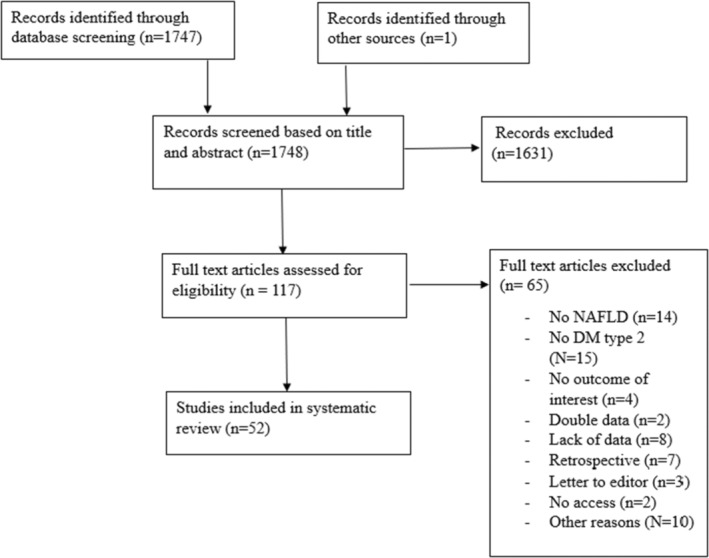
In total 1748 articles were screened for eligibility. After checking for duplicates, articles were screened on abstract only (Figure 1). Most articles were excluded on subject and research design. Reviews and in‐vitro experiments were excluded. 117 articles were screened full text. After detailed review, 52 full‐text papers fulfilled the inclusion criteria. One trial included both, patients with and without T2DM and reported combined outcome measurements.20 Two trials reported on the same cohort but used two different interventions.21, 22 Another two trials used the same cohort, but the second trial combined the treatment of the first trial and did a follow up of another 24 weeks.23, 24

Flowchart summarizing the literature search and study selection process. DM, diabetic Mellitus; NAFLD, non‐alcoholic fatty liver disease.
Methodological quality
The three reviewers agreed on 52 articles until January 2025. All 52 studies fulfilled the mandatory criteria. Median quality was moderate (as shown in Data ). Interestingly, different studies were not designed to investigate the research question. D2 and D5 in the ROBINS‐2 assessment were therefore scored 'some concerns.' In the studies evaluated with ROBINS D1 and D6 were scored moderate, due to differences in trial design. S1
Overall study characteristics
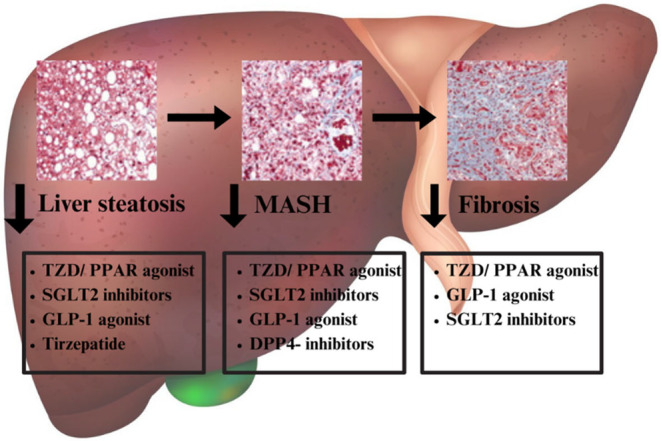
The number of included patients per study ranged from 9 to 50.742 and most patients were male. Data was collected from 64.708 patients in total. Patients differed in previous treatments and on‐treatment medication. Mostly, Fibroscan™, HR‐MRI, CT and biopsy were used to evaluate the degree of hepatic steatosis. The duration of the treatment periods ranged from 5 to 125 weeks. Detailed baseline characteristics are reported in Table 1. Outcomes of the different treatment modalities are reported in Tables 2 and 3. An overview of the different agents and their results is reported in Table 4. Figure 2 depicts a schematic picture of the various stages of disease progression where the different agents act to mitigate progression.

Different agents and their effects on steatosis, MASH or fibrosis. Overview of the different treatment modalities and where they exert their function on the different stages of metabolic dysfunction‐associated liver disease. The TZD derivates/ PPAR agonists, SGLT2 inhibitors, GLP‐1 agonist seem to improve liver steatosis as well as MASH and fibrosis, whereas Tirzepatide improves steatosis and DDP4‐inhibiors improve MASH. Legend; TZD, Thiazolidinedione derivates; PPAR, Peroxisome proliferator‐activated receptor, DPP4, dipeptidyl peptidase‐4; SGLT‐2, sodium‐glucose co‐transporter‐2; GLP1, glucagon‐like peptide‐1.
| Author, Year, Reference | Study type | Groups | Dosage | Patients (n) | Study length (weeks) | Female (%) | Mean BMI (kg/m)2 | Diabetes duration (years) | Previous treatment | HbA1 (%) | Histology diagnose NASH (%) | Imaging | AST (U/L) | ALT (U/L) |
|---|---|---|---|---|---|---|---|---|---|---|---|---|---|---|
| TZD | ||||||||||||||
| Lee Y 2017 [70003] | Non‐randomized, open label, single arm | Lobeglitazone | 0.5 mg qd | 43 | 24 | 35 | 27.5 | ‐ | Drug‐free/naive/metformin | 7.4 | ‐ | Fibroscan | 31.7 | 43.7 |
| Cusi K 2016 [70003] | Single‐center, parallel‐group, randomized, placebo‐controlled study | A: pioglitazone B: placebo | 45 mg qd | 50 (24) 70003 51 (28) 70003 | 72 | 28 31 | 34.3 34.5 | ‐ | Metformin, sulfonylureas, insulin | 6.3 6.4 | 42 45 | H‐MRS | 47 43 | 62 57 |
| Omer Z 2010 [70003] | Randomized, single‐center study | A:metformin B:rosiglitazone C:metformin and rosiglitazone | 1700 mg/d 4 mg/d 1700 mg/d, 4 mg/d | 22 20 22 | 48 | 32 55 50 | 30.8 28.4 32.5 | ‐ | ‐ | 5.8 6 6.9 | 100 100 100 | ‐ | 46.1 53.8 51.4 | 63.1 64.9 72.5 |
| Belfort R 2006 [70003] | Randomized, double‐blinded, placebo‐controlled study | A: pioglitazone B: placebo | 45 mg qd ‐ | 26 21 | 24 | 54 67 | 33.5 32.9 | ‐ | ‐ | 6.2 6.2 | 100 100 | H‐MRS | 47 42 | 67 61 |
| Bril F 2018 [70003] | Prospective randomized study | A: pioglitazone B: placebo | 45 mg qd ‐ | 52 | 72 | 29 | 34.4 | ‐ | ‐ | 6.9 | 100 | H‐MRS | 53 | 71 |
| TZD/SGLT‐2 inhibitor | ||||||||||||||
| Hooshmand Gharabagh L 2024 [70003] | Open label, randomized clinical trial | A: min 1500 metformin + empagliflozin B: min 1500 mg metformin + pioglitazone | A:10 mg qd B: 30 mg qd | 32 30 | 24 | 43.3 40 | 31.23 28.48 | ‐ | No SLGT2‐i, thiazolidinedione, stable dose of metformin for 3 months | 8.73 8.82 | ‐ | Ultrasound +fibroscan | 22.9 20.26 | 27.6 24.73 |
| Yoneda M 2021 [70003] | Open‐label, prospective, single center, randomized clinical trial | A: tofogliflozin B: pioglitazone | 20 mg qd 15‐30 mg qd | 21 19 | 24 | 38.1 57.9 | 29.4 30.8 | ‐ | No other SGLT2, thiazolidinedione, insulin, GLP‐1 agonist or Vitamin E | 7.22 7.06 | ‐ | MRI‐PDFF | 54 64 | 84 79.3 |
| Yoneda M 2022 [70003] | Open‐label, prospective, single center, randomized clinical trial | A: tofogliflozin B: pioglitazone, followed by combination therapy | 20 mg qd 15‐30 mg qd | 20 12 | 48 | 40 50 | 29.6 31.5 | ‐ | Other SGLT2, thiazolidinedione, insulin, GLP‐1 agonist | 7.24 7.33 | ‐ | MRI‐PDFF | 53 70 | 82.2 82.2 |
| Ito D 2017 [70003] | Randomized open‐label, active‐controlled trial | A: pioglitazone B: ipragliflozin | 30 mg qd 50 mg qd | 34 32 | 24 | 47 56 | 29.9 30.7 | 9.5 8.7 | Metformin/DPP4‐inhibitor/sulfonylurea/insulin | 8.3 8.5 | ‐ | CT‐scan | 43.3 39.7 | 53.1 57.4 |
| Cho 2021 [70003] | Randomized, open‐label, parallel group trial | A: pioglitazone B: dapagliflazone after pioglitazone | 30 mg qd 5 mg qd | 26 27 | 24 | 50 44.4 | ‐ ‐ | ‐ ‐ | Pioglitazone, sulfonylurea, insulin, DDP4, glinide | 6.9 6.8 | ‐ | ‐ | 23.6 23 | 23.7 23.1 |
| Kinoshita T 2020 [70003] | Prospective randomized open label study | A: dapagliflozine B: glimepiride C: pioglitazone | 5 mg qd7000317.3 mg qd$ | 32 33 33 | 28 | 53.1 54.5 54.5 | 29.5 28.4 28.7 | 6.6 7.2 7.9 | Glinide, DPP4, metformin, GLP‐1 | 7.4 7.6 7.4 | ‐ | CT‐scan | 38.8 32.3 34.1 | 50.3 45.3 46.1 |
| Khaliq A 2024 [70003] | Prospective, randomized, double‐blind placebo‐contolled interventional stdy | A: Ertugliflozin B: pioglitzone C: placebo | 15 mg qd 30 mg qd | 65 65 65 | 24 | 16.6 16.6 21.6 | 31.8 30.7 30.1 | ‐ | Not mentioned | 7.2 7.4 7 | ‐ | Ultrasound | 98.5 90 95.5 | 86.6 96 95 |
| Aghajanpoor M 2024 [70003] | Randomized clinical trial | A: pioglitazone B: pioglitazone + empagliflozin | 15‐30 mg qd 15‐30 mg qd + 10 mg | 42 43 | 24 | 52.4 48.8 | 25.6 29.4 | ‐ | No pioglitazone, vitamin E, empagliflozin | 7.75 10.05 | ‐ | Ultrasound | 26.8 26.9 | 30 32 |
| TZD/DPP‐4 inhibitor | ||||||||||||||
| Han E 2022 [70003] | Double‐blinde, active‐controlled, randomized, phase IV clinical trial | A: evogliptin: pioglitazone | 5 mg qd 15 mg qd | 25 26 | 24 | 20 50 | 28.76 28.46 | 5.08 4.12 | Metformin | 7.16 7.19 | ‐ | MRI‐PDFF | 44 41.88 | 58.52 66 |
| GLP‐1‐agonist | ||||||||||||||
| Guo W 2020 [70003] | Open label, prospective randomized placebo‐controlled single center study | A: Llraglutide B: insulin glargine C: placebo | 1.8 mg qd >10 IU qd | 31 30 30 | 26 | 48 40 33 | 29.2 28.3 28.6 | ‐ | Metformin | 7.5 7.4 7.4 | ‐ | H‐MRS | 29.6 27.9 28.1 | 33.2 31.5 30.5 |
| Liu L 2020 [70003] | Open‐label, randomized, controlled, parallel‐group, multicentre clinical trial | A: exenatide bid B: insulin glargine * | 10 μg bid | 35 36 | 24 | 46 47 | 28.5 27.8 | ‐ | ‐ | 8.32 8.58 | ‐ | H‐MRS | 31.3 25.1 | 42.7 32.8 |
| Newsome PN 2021 [70003] | Double‐blind, randomized, placebo controlled | A: semaglutide B: semaglutide C: semaglutide D: placebo | 0.1 mg qd 0.2 mg qd 0.4 mg qd | 80 78 82 80 | 72 70003 | 64 67 57 55 | 36.1 35.6 35.2 36.1 | ‐ | ‐ | 7.4 7.2 7.2 7.3 | 100 100 100 100 | Fibroscan | 44 43 44 42 | 55 53 54 55 |
| Feng W 2017 [70003] | open‐label prospective randomized trial using a parallel design | A: liraglutide B: gliclazide C: metformin | 1.8 mg qd 120 mg qd 1000 mg bid | 29 29 29 | 24 | 28 31 34 | 28.1 27.9 26.8 | ‐ | ≥ 3 months drug naivety | 8.91 9.03 9.36 | ‐ | Ultrasound | 31.22 28.45 34.09 | 49.73 44.99 51.01 |
| Armstrong MJ 2016 [70003] | multicenter, double‐blindrandomized, study | A: liraglutide B: placebo | 1.8 mg qd | 26 26 | 48 70003 | 31 50 | 34.2 37.7 | ‐ | metformin, sulfonylurea | 5.9 6 | 26 26 | ‐ | 51 51 | 77 66 |
| Eguchi Y 2015 [70003] | open label non‐randomized | A: liraglutide | 0.9 mg qd | 19 | 24 | ‐ | 31.6 | ‐ | ‐ | 6.5 | 100 | CT‐scan | 46.9 | 59.7 |
| Shao N 2014 [70003] | open‐label randomized | A: exenatide and glargine insulin* B: insulin glargine and insulin aspart * | 10 μg bid | 30 30 | 12 | 50 53 | 30.6 30.29 | ‐ ‐ | ‐ | 7.68 7.59 | ‐ ‐ | Ultrasound | 125 122 | 170 164 |
| Fan H 2013 [70003] | Open label | A: exenatide B: metformin | 10 μg bid 2 g/d | 49 68 | 12 | 43 44 | 28 27 | ‐ | 8.14 8.09 | ‐ | Ultrasound | 35.9 34.3 | 65.7 65.8 | |
| Kuchay 2020 [70003] | Open label, randomized controlled trial | A: dulaglutide B: control | 1.5 mg qw standard care | 27 25 | 24 | 28 31 | 29.6 29.9 | 4.9 5.7 | metformine, DDP4, sulfonylurea | 8.4 8.4 | ‐ | MRI‐PDFF/Fibroscan | 49.9 46.1 | 70.1 68.1 |
| Jiang X 2024 [70003] | Randomized, double blind, controlled trial | A: metformin B: metformin + exenatide | 2d 500 mg qd 2d 500 mg + 2d 5mcg qd | 64 64 | 24 | 42.19 39.06 | 25.41 25.44 | ‐ | ‐ | ‐ | ‐ | ‐ | 60.93 61.05 | 59.36 59.84 |
| Volpe S 2022 [70003] | Prospective, single‐arm, real life study | Semaglutide | 0.25 up to 1 mg qw | 48 | 52 | 45.8 | 38.8 | 6 | metformin, and no GLP‐1a, SGLT2i, insulin or pioglitazone | 7 | ‐ | ultrasound | 28.2 | 43.7 |
| Parker V 2023 [70003] | Two‐part, randomized phase 2a trial | A: cotadutide B: placebo C: liraglutide | 100 – 300mcg qd placebo part B: cotadutide 30–300 mcg qd B: placebo C: liraglutide 0.6–1.8 mg qd | 9 11 10 | 5 | 33 18 40 | 31.9 30.8 30.2 | 8.1 7 9.5 | ‐ | 6.8 7.1 6.8 | ‐ | MRI‐PDFF | 21 21 17.5 | 26.9 26.9 23.4 |
| Arai T 2024 [70003] | Single‐arm, multicentre, preospective study | A: oral semaglutide | A: 3, 7 or 14 mg qw | 80 | 48 | 57 | 29.5 | ‐ | No initiation of antidiabetic/ antidyslipidaemic medication 12 weeks before start trial | 6.9 | Biopsy proven or ultrasound proven | Biopsy proven or ultrasound proven | 42 | 62 |
| TZD/GLP‐1 | ||||||||||||||
| Zhang LY 2020 [70003] | open label, prospective, dubbel‐blind, randomized | A; liraglutide B: pioglitazone | 1.2 mg qd 30 mg qd | 30 30 | 24 | 57 50 | 27.6 27.1 | ‐ | metformin | 8.1 7.1 | ‐ | H‐MRS | 700033.5∆ | 700033.6∆ |
| DDP4‐inhibitor/GLP‐1‐agonist | ||||||||||||||
| Yan J 2019 [70003] | Open‐label, active‐Controlled, parallel‐group multicenter study | A: liraglutide B: sitagliptin C: Insulin glargine | 1.8 mg qd 100 mg qd >0.2/kg/d | 24 27 24 | 26 | 29 22 42 | 30.1 29.7 29.6 | 3.3 4.3 5.8 | metformin | 7.8 7.6 7.7 | ‐ | MRI‐PDFF | 31.1 34.4 33.2 | 43.2 46 39.5 |
| SGLT2‐inhibitor | ||||||||||||||
| Inoue M 2019 [70003] | Pilot, prospective, non‐randomized, open‐label single‐arm study | Canagliflozin | 100 mg qd | 20 | 52 | 45 | 31.5 | 7.4 | Insulin/sulfonylurea/thiazolidine/biguanide/DPP4 inhibitors | 8.7 | ‐ | BIA/MRI | 52 | 80 |
| Shimizu M 2019 [70003] | Prospective, randomized, open‐label, blinded endpoint study | A: dapagliflozin B: control | 5 mg qd Standard care | 33 24 | 24 | 42 38 | 27.6 28.3 | ‐ | Oral antidiabetic agents 1–3/ insulin | 8 7.7 | ‐ | BIA/FibroScan | 28 26 | 38 33 |
| Eriksson JW 2018 [70003] | Randomized placebo‐controlled double‐blind double‐dummy four‐armed parallel group trial | A: dapagliflozin B: OM‐3CA C: dapagliflozin and OM‐3CA D: Placebo | 10 mg qd 4 g qd 10 mg, 4 g qd | 19 15 20 19 | 12 | 24 45 32 19 | 30.5 33 31.1 30.3 | 6.7 6.3 8.5 6.5 | Metformin/sulfonylurea/naïve | 7.38 7.38 7.5 7.44 | ‐ | MRI‐PDFF | 31 31 30 29 | 40 38 37 34 |
| Kuchay MS 2018 [70003] | Prospective, open‐label, randomized clinical study | A: Empagliflozin B: control | 10 mg qd standard care | 22 20 | 20 | 41.1 40 | 30 29.4 | 6.6 6.8 | Metformin/DPP4‐inhibitors/sulfonylureas/insulin | 9 9.1 | ‐ | MRI‐PDFF | 44.6 45.3 | 64.3 65.3 |
| Lai LL 2020 [70003] | Single‐arm, open‐label, pilot study | A: empagliflozin | 25 mg qd | 9 | 24 | 65.6 | 29.8 | 17 | Others drugs than SGLT2‐inhibitors/TZD/GLP1‐agonist | 7.1 | 100 | HepaFat–scan (MRI) | 29 | 37 |
| Sumida Y 2019 [70003] | Prospective, single‐arm trial | A: luseogliflozin | 2.5 mg qd | 40 | 24 | 30 | 27.76 | 8.9 | Metformin/αgi/dpp/dpp4‐inhibitors/none | 7.29 | ‐ | MRI‐HFF | 40.7 | 54.7 |
| Tobita H 2017 [70003] | Single‐arm non‐randomized, open‐label study | Dapagliflozin | 5 mg qd | 16 | 24 | 45 | 31 | ‐ | DPP4i,SU [70003] [70003] | 7.4 | 100 | ‐ | 52 | 59 |
| Hussain M 2021 [70003] | Randomized controlled trial | A: dapagliflozin B: placebo + life style modifications | 5‐10 mg qd placebo | 75 75 | 12 | 37 34.5 | 29.5 31.5 | ‐ | Glimepiride | 7.5 8.2 | ‐ | Ultrasound | 74 71 | 69 68 |
| Shi M 2023 [70003] | Prospective, open‐label, randomized controlled trial | A: dapagliflozin + metformin B: metformin + other treatment | 10 mg qd | 42 42 | 24 | 32.5 28.9 | 31.1 30.4 | ‐ | Metformin | 8.38 8.66 | ‐ | MRI‐PDFF | 26.4 27.8 | 39.6 44.4 |
| Phrueksotsai S 2021 [70003] | Double‐blinded, placebo‐controlled, randomized, single‐center study | A: dapagliflozin B: placebo | 10 mg qd placebo | 20 20 | 12 | 72.2 65 | 29.6 28.8 | 4.5 5.5 | stable dose of oral medication for at least 12 weeks, no use of weight loss medication or vitamin E | 8.2 7.8 | ‐ | Non‐contrast CT‐abdomen | 25.5 22 | 35 27 |
| Takahashi H 2022 [70003] | Multicenter, open‐label, randomized controlled trial | A: ipragliflozin B: lifestyle modifications and diet, antidiabetic drugs (exc. SGLT2s, pioglitazone, GLP1‐agonists or insulin) | A: 50 mg qd | 27 28 | 72 | 37.5 46.2 | 29.9 28.8 | ‐ | No SGLT2‐i, pioglitazone, GLP1‐agonists or insulin | 6.5 6.8 | 100 | ‐ | 43.5 41.5 | 57 52 |
| Borisov A 2023 [70003] | Post‐hoc analysis of 2 large double‐blind randomized controlled trials | A: canagliflozin B: placebo | 100 or 300 mg qd placebo | 5787 4344 | 125 | 35.8 | ‐ | 13.5 | Other diabetic medication | 8.2 | ‐ | ‐ | 23 | 26 |
| Cusi K 2019 [70003] | Double‐blind, parallel‐group, placebo‐controlled trial | A: canagliflozin B: placebo | 300 mg qd placebo | 26 30 | 24 | 38 30 | 32.2 31 | ‐ | Metformin monotherapy of metformin + DPP4‐i with a stable dose for at least 12 weeks prior to screening | 7.6 7.7 | ‐ | H‐MRS | 22 27 | 23 35 |
| Kahl S 2020 [70003] | Randomized, parallel‐group, double blind phase 4 trial | A: empagliflozin B: placebo | 25 mg qd placebo | 42 42 | 24 | 31 31 | 32.1 32.4 | 3 3.5 | No diabetic treatment or washout of one month | 6.8 6.7 | ‐ | H‐MRS | 25 25 | 32 36 |
| Bellanti F 2022 [70003] | Obervational pilat study | A: SGLT2‐i + metformin B: DPP‐4 or thiazolidinediones + metformin | ‐ | 26 26 | 26 | 42.3 42.3 | 34.8 34.5 | ‐ | Metformin monotherapy | 9.24 8.73 | ‐ | ‐ | 48.5 54.7 | 49.6 65 |
| Elhini S 2022 [70003] | Randomized, double‐blinded clinical study | A: empagliflozin B: ursodeoxycholic acid C: placebo | A: 25 mg qd B: 250 mg 2qd | 89 87 80 | 26 | 66.25 68.75 68.75 | 32.57 33.52 33.9 | ‐ | Use of sulfonylurea for at least 6 months | 8.97 8.54 7.98 | ‐ | MRI‐PDFF | 29.5 33.39 25.85 | 28.75 31.6 26.05 |
| DPP4‐inhibitor/SGT‐2 inhibitor | ||||||||||||||
| Hiruma S 2023 [70003] | Randomized, controlled trial | A: Empagliflozin B: sitagliptin | 10 mg qd 100 mg qd | 23 21 | 12 | 26.1 31.6 | 30.6 28.6 | 4.6 3.3 | Sulphonureum, glinides, a‐glucosidase inhibitors | 7.1 7.2 | 100 | H‐MRS | 37 37.7 | 59.2 60.6 |
| Kim J 2022 [70003] | Matched cohort | A: SGLT2i B: DPP4i | ‐ | 25,371 25,371 | 104 | 46.22 55.51 | 27.37 27.38 | 5.2 5.17 | other treatment not mentioned | ‐ | ‐ | ‐ | 24.1 24.1 | 30.93 30.99 |
| DPP4‐inhibitor | ||||||||||||||
| Yilmaz Y 2012 [70003] | Open‐label, single‐arm observational pilot study | A: sitagliptin | 100 mg qd | 15 | 52 | 53.3 | 30.7 | ‐ | no other DM drugs | 6.7 | 100 | ‐ | 46 | 30 |
| Cui J 2016 [70003] | Randomized, double‐blind, allocation‐concealed, placebo‐controlled trial | A: sitagliptin B: placebo | 100 mg qd | 25 25 | 24 | 48 68 | 31.9 31.7 | ‐ | ‐ | 6.1 6.2 | ‐ | MRI‐PDFF | 28 29 | 43 40 |
| Komorizono 2020 [70003] | Randomized open blinded endpoint trial | A: linalgiptine and metformine B: metformine | 5 mg qd, 750 mg qd 1500 mg bid or tid | 24 25 | 52 | 58.3 64 | 29.7 27.9 | ‐ | no other DM drugs | 7 7.2 | ‐ | CT‐HU/ ultrasound | 35.5 33.1 | 50.9 41.1 |
| Wang X 2022 [70003] | Prospective, single‐center, open‐label comparative study | A: control B: sitagliptin C: metformin D: metformin + sitagliptin | 100 mg qd 3× 500 mg qd 100 mg + 3× 500 mg qd | 14 17 17 20 | 24 | 42.8 41.2 47.1 55 | 24.06 25.41 26.46 26.07 | ‐ | ‐ | 8.08 7.93 8.6 7.83 | 0 | HD‐MRI | ‐21.76 19.25 22 | ‐ 26.81 24 25.45 |
| GLP‐1/GIP | ||||||||||||||
| Gastaldelli A 2022 [70003] | Randomized, open label, phase 3 trial | A: Tirzepatide–5 mg ‐10 mg ‐15 mg B: Insuline degludec | 5 mg qd 10 mg qd 15 mg qd ‐ | 71 79 72 74 | 52 | 38 48 35 46 | 34.5 33.1 33.4 33 | 7.9 9.4 8.7 7 | Metformin alone or with SGLT2‐i | 8.27 8.41 8.15 8.14 | ‐ | MRI‐PDFF | 22.8 21.8 22.5 21.1 | 32.3 29.5 30 27.4 |
| Author, Year, Reference | Groups | Δ Weight (kg) | Δ HbA1 (%) | Δ AST (U/L) | Δ ALT (U/L) | Δ ALT (%) | Δ SAT (cm)2 | Δ SAT (L) | Δ AT (cm)2 | Δ VAT (L) | Δ VFA (cm)2 | Δ IHF (%) | Δ CAP (dB/m) | Δ LSM (kPa) | Δ HFF (%) | Δ Liver PDFF (%) | Δ Liver fat content (%) | L/S ratio |
|---|---|---|---|---|---|---|---|---|---|---|---|---|---|---|---|---|---|---|
| TZD | ||||||||||||||||||
| Lee YH 2017 [70003] | Lobeglitazone | 1.4* | −0.8* | −4.5* | 13.3** | ‐ | ‐ | ‐ | ‐ | ‐ | ‐ | ‐ | 15.6** | −0.5 | ‐ | ‐ | ‐ | ‐ |
| Cusi K 2016 [70003] | A: pioglitazone B: placebo ∞ | 0.3#−1.2 | −0.4 −0.2 | −18#−5 | ‐35ₓ −13 | ‐ | ‐ | ‐ | ‐ | ‐ | ‐ | ‐ | ‐ | ‐ | ‐ | ‐ | ‐12ₓ −4 | ‐ |
| Omer Z 2010 [70003] | A: metformin B: rosiglitazone C: metformin and rosiglitazone | ‐ | −0.2 | ‐ | ‐ | ‐ | ‐ | ‐ | ‐ | ‐ | ‐ | ‐ | ‐ | ‐ | ‐ | ‐ | ‐ | ‐ |
| Belfort 2006 [70003] | A: pioglitazone B: placebo | 2.5 −0.5 | −0.7 **#−0.1 | −19**#−9 | −39**ₓ −21 | ‐ | ‐ | ‐ | ‐ | ‐ | ‐ | ‐ | ‐ | ‐ | ‐ | ‐ | −12**ₓ | ‐ |
| Bril F 2018 [70003] | A: pioglitazone B: placebo | 2.9#−0.6 | −0.9#−0.3 | −32#−5 | −50#−17 | ‐ | ‐ | ‐ | ‐ | ‐ | ‐ | ‐ | ‐ | ‐ | ‐ | ‐ | ‐ | ‐ |
| TZD/SGLT‐2 inhibitor | ||||||||||||||||||
| Hooshmand Gharabagh L 2024 [70003] | A: min 1500 mg metformin + empagliflozin B: min 1500 mg metformin + pioglitazone | −5.78**• 0.93* | −1.84**–1.79** | −8.05**–4.43** | −8.34*–7.33** | ‐ | ‐ | ‐ | ‐ | ‐ | ‐ | ‐ | ‐ | −1.27**–1.41** | ‐ | ‐ | ‐ | ‐ |
| Yoneda M 2021 [70003] | A: tofogliflozin B: pioglitazone | −2.83* 1.39* | −0.4*–0.69** | −15.8*–27.9* | −23.3*–33.8** | ‐ | ‐ | ‐ | ‐ | ‐ | ‐ | ‐ | ‐ | −0.14–0.34* | ‐ | −4.12* –7.54** | ‐ | ‐ |
| Yoneda M 2022 [70003] | A: tofogliflozin B: pioglitazone, followed by combination therapy | −3.25* 2.46* −0.79 | −0.36* –0.73* –0.80** | −13.8*–31.2* –25.2** | −19.3*–34.0** 35.7** | ‐ | ‐ | ‐ | ‐ | ‐ | ‐ | ‐ | ‐ | −0.11–0.43* –0.40** | ‐ | −3.38*–5.56**–5.98** | ‐ | ‐ |
| Ito D 2017 [70003] | A: pioglitazone B: ipragliflozin | 0.9*−2.3*● | −1.11* −0.94* | −11.6* −12.6* | −17.5* −20.0* | ‐ | ‐ | ‐ | ‐ | ‐ | −2.6 −26.1*● | ‐ | ‐ | ‐ | ‐ | ‐ | ‐ | 0.21* 0.22* |
| Cho 2021 [70003] | A: pioglitazone B:dapagliflozine | 0.5** −4.2** | 0.2 0.2 | −0.4 −1.6 | −1.4 −1.8 | ‐ | ‐ | ‐ | ‐ | ‐ | ‐ | ‐ | ‐ | ‐ | ‐ | ‐ | ‐ | ‐ |
| Kinoshita T 2020 [70003] | A:dapagliflozine B: glimepiride C: pioglitazon | −2.8*● $1.4*2.5* | −0.52* −0.30 −0.48* | −8.7* 0.3∆ −7.1* | −12.8* −1.8∆ −15.1 | ‐ | ‐ | ‐ | ‐ | ‐ | −19.4*●^6.82.6 | ‐ | ‐ | ‐ | ‐ | ‐ | ‐ | 0.17*∆'0.03!0.22*∆ |
| Khaliq A 2024 [70003] | A: Ertugliflozin B: pioglitzone C: placebo | −11.66** ‐ ‐ | −1.1*# −0.6 1 | −53** −49.5* 4 | 52.2** −20.2* 5.2 | ‐ | ‐ | ‐ | ‐ | ‐ | ‐ | ‐ | ‐ | ‐ | ‐ | ‐ | ‐ | ‐ |
| Aghajanpoor M 2024 [70003] | A: Pioglitazone B: pioglitazone + empagliflozin | ‐ | ‐1.43 −1.54 | −7.3 −6.4 | −9.9 −7.8 | ‐ | ‐ | ‐ | ‐ | ‐ | ‐ | ‐ | ‐ | ‐ | ‐ | ‐ | ‐ | ‐ |
| TZD/DPP‐4 inhibitor | ||||||||||||||||||
| Han E 2022 [70003] | A: evogliptin B: pioglitazone | −0.30∆ 2.5 | −0.31 –0.48 | −2.00∆–12.00 | −6.0∆ –22.0 | ‐ | 0.25∆ 14.05 | ‐ | ‐ | 4.75 1.45 | ‐ | ‐ | ‐ | ‐ | ‐ | ‐ | −1.69 −6.02**∆ | ‐ |
| GLP‐1‐agonist | ||||||||||||||||||
| Guo W 2020 [70003] | A:liraglutide B: insulin glargine C: placebo | −5.1*#∆−0.9−0.6 | −0.7 −0.5 −0.1 | −5.3* −2.3 −1.8 | −6.0*#∆−1.80 | ‐ | −36*#∆−24.5*#−7.1 | ‐ | ‐ | −47*#∆−16.6*#−3.5 | ‐ | ‐ | ‐ | ‐ | ‐ | ‐ | −6.3*#−3.4−0.1 | ‐ |
| Liu L 2020 [70003] | A: exenatide B: insulin glargine | −5.0 **∆−1.25 | −2.28**●−1.82** | −12.3**∆‐2.66 | −21.5**∆‐7.66** | ‐ | −28.4**∆2.59 | ‐ | ‐ | −43.5**∆ ‐8.3 | ‐ | ‐ | ‐ | ‐ | ‐ | ‐ | −17.55** −10.49** | ‐ |
| Newsome PN 2021 ∞ [70003] | A: semaglutide B: semaglutide C: semaglutide D: placebo | −3.24 −6.01 −9.11 −1.91 | −0.73∞−0.98−1.05−0.02 | −14.05 −15.19 −21.4 −5.76 | −20.72 −21.32 −30.95 −11.22 | ‐ | ‐ | ‐ | ‐ | ‐ | ‐ | ‐ | −2.36 −4.75 −3.82 2.14 | ‐ | ‐ | ‐ | ‐ | ‐ |
| Feng W 2017 [70003] | A: liragutide B: gliclazide C: metformin | ‐5.6** −0.37 −3.58** | −3.01** −2.56** −3.33** | −7.2** −4.73** ‐11.45** | −22.3** −11.63** −22.57** | ‐ | ‐ | ‐ | ‐ | ‐ | ‐ | −23.6**∆−13.4**−16.69** | ‐ | ‐ | ‐ | ‐ | ‐ | ‐ |
| Armstrong MJ 2016∞69 | A: liraglutide B: placebo | −5.3#−0.6 | −0.53#0 | −15.8 −8.6 | −26.6 −10.2 | ‐ | ‐ | ‐ | ‐ | ‐ | ‐ | ‐ | ‐ | ‐ | ‐ | ‐ | ‐ | ‐ |
| Eguchi Y 2015 [70003] | A: liraglutide | ‐ | −0.6** | ‐17.4* | −25.6 * | ‐ | ‐ | ‐ | ‐ | ‐ | −19.8* | ‐ | ‐ | ‐ | ‐ | ‐ | ‐ | 0.12* |
| Shao N 2014 [70003] | A: exenatide and insulin glargine B: insulin glargine and insulin aspart | −3.3**●−7.8** | −1.42 ** −1.31** | −92.9**●−79.0* | −127**●−96.6** | ‐ | ‐ | ‐ | ‐ | ‐ | ‐ | ‐ | ‐ | ‐ | ‐ | ‐ | ‐ | |
| Fan H 2013 27 | A: exenatide B: metformin | −4.16●−1.98 | −0.91 −0.89 | −7.89∆−5.11 | −27.3∆−12.85 | ‐ | ‐ | ‐ | ‐ | ‐ | ‐ | ‐ | ‐ | ‐ | ‐ | ‐ | ‐ | ‐ |
| Kuchay 2020 [70003] | A: dulglutide B: control | −4.3∆ −2.0 | −1.6 −1.3 | −16.6 −7.3 | −26.4 −13.9 | ‐ | ‐ | ‐ | ‐ | ‐ | ‐ | ‐ | ‐ | ‐ | ‐ | −5.8∆−2.3 | ‐ | ‐ |
| Jiang X 2024 [70003] | A: metformin B: metformin + exenatide | ‐ | ‐ | −10.66 ‐18.21• | −12.32 −19.23• | ‐ | ‐ | ‐ | ‐ | ‐ | ‐ | ‐ | ‐ | ‐ | ‐ | ‐ | ‐ | ‐ |
| Volpe S 2022 [70003] | Semaglutide | ‐10.78* | ‐ | −8.9* | −15.8* | ‐ | ‐ | ‐ | ‐ | −1.6* | ‐ | ‐ | ‐ | ‐ | ‐ | ‐ | ‐ | ‐ |
| Parker V 2023 [70003] | A: cotadutide B: placebo C: liraglutide | −2.5 – ‐2.8 | ‐ | ‐ | ‐ | ‐ | ‐ | ‐ | ‐ | ‐ | −4.1# ∆ ‐1.8 | ‐ | ‐ | ‐ | ‐ | ‐ | ‐ | |
| Arai T 2024 [70003] | Oral semaglutide | −4.0** | −0.9** | −15.0** | −27** | ‐ | ‐ | ‐ | ‐ | ‐ | ‐ | ‐ | −18.0* | −0.7* | ‐ | ‐ | ‐ | ‐ |
| TZD/GLP‐1 | ||||||||||||||||||
| Zhang LY 2020 [70003] | A; liraglutide B: pioglitazone | −10.1*£ 1.1 | −1* −0.6* | −0.4£ −0.2£ | −0.4£ 0.0£ | ‐ | ‐ | ‐ | ‐ | ‐ | ‐ | ‐ | ‐ | ‐ | ‐ | −4.0*∆ −1.5 | ‐ | ‐ |
| DDP4‐inhibitor/GLP‐1‐agonist | ||||||||||||||||||
| Yan J 2019 [70003] | A: liraglutide B: sitagliptin C: Insulin glargine | −3.6*† −1.7* −1.2 | −1.0** −1.0* −0.7* | −1.8 −8.7* −2.9 | −5.2 −11.2* −0.8 | ‐ | −28.6*† −9.4 18.6 | ‐ | ‐ | −20.9*† −13.6* 9.5 | ‐ | ‐ | ‐ | ‐ | ‐ | −4.0**† −3.8* −0.8 | ‐ | ‐ |
| SGLT2‐inhibitor | ||||||||||||||||||
| Inoue M 2019 [70003] | Canagliflozin | −2.9** | −1 * | −9* | −21* | ‐ | ‐ | ‐ | ‐ | ‐ | ‐ | ‐ | ‐ | ‐ | −5.5* | ‐ | ‐ | ‐ |
| Shimizu M 2019 [70003] | A: dapagliflozin B: control | −2.9**∆ −0.6 | −6.6** −7.49 | −0.5* −2.4 | −11.5** −1.0 | ‐ | −11.2* 1.3 | ‐ | −7.3** −5.7 | ‐ | ‐ | −24.3*∆ 5.3 | −1.48 0.45 | ‐ | ‐ | ‐ | ‐ | |
| Eriksson JW 2018 [70003] | A: dapagliflozin B: OM‐3CA C: dapagliflozin +OM‐3CA D: placebo | −2.44# −0.16 −2.16# −0.27 | −0.63# 0.13 −0.45 −0.09 | −4# 5 1 −1 | −8# 6 0.06 −0.2 | ‐ | ‐ | ‐ | ‐ | ‐ | ‐ | ‐ | ‐ | ‐ | ‐ | −2.23 −3.15 −3.15# −0.59 | ‐ | ‐ |
| Kuchay MS 2018 [70003] | A: empagliflozin B: control | −3.3* −1.6* | −1.8** −2.0** | −8.4* −0.7 | −14.6*∆ −3.7 | ‐ | ‐ | ‐ | ‐ | ‐ | ‐ | ‐ | ‐ | ‐ | ‐ | −4.9**● −0.9 | ‐ | ‐ |
| Lai LL 2020 [70003] | A: empagliflozin | ‐ | −0.5 | −4 | −8 | ‐ | ‐ | ‐ | ‐ | ‐ | ‐ | ‐ | ‐ | ‐ | ‐ | ‐ | −7.8* | ‐ |
| Sumida Y 2019 [70003] | A: luseogliflozin | −1.43** | −0.29** | −8.8** | −12.3** | ‐ | ‐ | ‐ | ‐ | ‐ | ‐ | ‐ | ‐ | ‐ | ‐ | −5.8** | ‐ | ‐ |
| Tobita H 2017 [70003] | Dapagliflozin | −3.8* | −3.7* | −26* | −29* | ‐ | ‐ | ‐ | ‐ | ‐ | ‐ | ‐ | ‐ | ‐ | ‐ | ‐ | ‐ | |
| Hussain M 2021 [70003] | A: dapagliflozin B: placebo + life style modifications | −6# –0.5 | −3# –0.6 | −27# –6 | −17# 4 | ‐ | ‐ | ‐ | ‐ | ‐ | ‐ | ‐ | ‐ | ‐ | ‐ | ‐ | ‐ | ‐ |
| Shi M 2023 [70003] | A: dapagliflozin + metformin B: metformin + other treatment | −5.6**• 0.3 | −1.97** –2.03** | −8.4** –3.58 | −12.09**• –4.07 | ‐ | ‐ | ‐ | ‐ | ‐ | ‐ | ‐ | ‐ | ‐ | ‐ | −4.18**• 0.13 | ||
| Phrueksotsai S 2021 [70003] | A: dapagliflozin B: placebo | −2.3**ₓ –0.1 | −1.3**# –0.2 | −3.5* | −4.5*# –1 | ‐ | ‐ | ‐ | ‐ | ‐ | ‐ | ‐ | ‐ | ‐ | ‐ | ‐ | ‐ | ‐ |
| Takahashi H 2022 [70003] | A: ipragliflozin B: lifestyle modifications, antidiabetic drugs (exc. SGLT2s, pioglitazone, GLP1‐agonists) | 7.1 0.9 | −0.5* –0.2 | −10 5 | −13 –0.5 | ‐ | −21 | ‐ | ‐ | ‐ | 10 –2 | ‐ | ‐ | ‐ | ‐ | ‐ | ‐ | ‐ |
| Borisov A 2023 [70003] | A: canagliflozin B: placebo | ‐ | ‐ | ‐ | ‐ | ‐ | ‐ | ‐ | ‐ | ‐ | ‐ | ‐ | ‐ | ‐ | ‐ | ‐ | ‐ | ‐ |
| Cusi K 2019 [70003] | A: canagliflozin B: placebo | −5.5# (%) –2.1 (%) | −0.7ₓ 0.1 | ‐ | −3 –1 | ‐ | ‐ | ‐ | ‐ | ‐ | −6.9# –3.8 | ‐ | ‐ | ‐ | ‐ | ‐ | ‐ | |
| Kahl S 2019 [70003] | A: empagliflozin B: placebo | −2.7ₓ –0.1 | −0.06 0.13 | ‐ | ‐ | −20 –13 | ‐ | ‐ | ‐ | −0.251 0.0 39 | ‐ | ‐ | ‐ | ‐ | ‐ | ‐ | −1.8# –0 | ‐ |
| Elhini S 2022 [70003] | A: empagliflozin B: ursodeoxycholic acid C: placebo | ‐ | −1.72** −1.14** −0.61** | −11.50* −15.24* 3.40* | −13.00** −12.1** 4.35 | ‐ | ‐ | ‐ | ‐ | ‐ | ‐ | ‐ | ‐ | ‐ | ‐ | ‐ | −8.73**∆ −5.71*** −1.99** | ‐ |
| DPP4‐inhibitor/SGLT‐2 inhibitor | ||||||||||||||||||
| Hiruma S 2023 [70003] | A: Empagliflozin B: sitagliptin | −1.8*∆ –0.2 | −0.6** –0.6** | −7.3* –2.2 | −13.3* –10.1 | ‐ | ‐ | ‐ | ‐ | ‐ | ‐ | −5.2∆ –1.9 | ‐ | ‐ | ‐ | ‐ | ‐ | ‐ |
| Kim J 2022 [70003] | A: SGLT2i B: DPP4i | ‐ | ‐ | −2.3• –0.8 | −4.7 • –2.6 | ‐ | ‐ | ‐ | ‐ | ‐ | ‐ | ‐ | ‐ | ‐ | ‐ | ‐ | ‐ | ‐ |
| DPP4‐inhibitor | ||||||||||||||||||
| Yilmaz Y 2012 [70003] | A: sitagliptin | ‐ | −0.2 | −16* | −25* | ‐ | ‐ | ‐ | ‐ | ‐ | ‐ | ‐ | ‐ | ‐ | ‐ | ‐ | ‐ | ‐ |
| Cui J 2016 [70003] | A: sitagliptin B: placebo | 0.2 −0.2 | 0.1 | −1 −5 | −9 −11.5 | ‐ | ‐ | ‐ | ‐ | ‐ | ‐ | ‐ | ‐ | ‐ | ‐ | −8.4 −13.9 | ‐ | ‐ |
| Komorizono 2020 [70003] | A: linagliptine and metformine B:metformine | −0.4 −1.6* | −0.2 −0.2 | −1.1 −1.2 | −0.2 −0.2 | ‐ | ‐ | ‐ | ‐ | ‐ | ‐ | ‐ | ‐ | ‐ | ‐ | ‐ | ‐ | ‐ |
| Wang X 2022 [70003] | A: control B: sitagliptin C: metformin D: metformin + sitagliptin | ‐ – – – | 0.08–0.98*!∆0.22–0.79+ | ‐ 0.24! 1.95 –0.86 | 0.58! –2* –0.31 | ‐ | ‐ | ‐ | ‐ | ‐ | ‐ | ‐ | ‐ | ‐ | ‐ | ‐ | −6.73 –19.77–36.16*–23.18 | ‐ |
| GLP‐1/GIP | ||||||||||||||||||
| Gastaldelli A 2022 [70003] | A: Tirzepatide–5 mg –10 mg ‐15 mg B: Insuline degludec | ‐ | ‐ | ‐ | ‐ | ‐ | ‐ | −1.4**●‐2.25**●−2.05**●0.63* | ‐ | −1.10**●−1.53** ●−1.65** ●0.38* | ‐ | ‐ | ‐ | ‐ | ‐ | ‐ | −6.35**∆−8.21** ●−7.78** ●−3.19** | ‐ |
| Author, Year, Reference | Groups | NFS | FIB‐4 index | NAFIC score | NASH score improvement (%) | Reversal rate Severity FL | Histology improvement in NAS | Resolution of NASH without worsening of fibrosis (%) | Improvement in liver fibrosis and no worsening of NASH (%) | Fibrosis improvement (%) |
|---|---|---|---|---|---|---|---|---|---|---|
| TZD | ||||||||||
| Cusi K 2016 [70003] | A: pioglitazone B: placebo | ‐ | ‐ | ‐ | ‐ | ‐ | 29%#∞ 9% | 51# 19 | ‐ | 20 13 |
| Omer Z 2010 [70003] | A: metformin B: rosiglitazoneC: metformin and rosiglitazone | ‐ | ‐ | ‐ | ‐ | ‐ | 0.7 score ‐2.6 score* −3.9 score* | ‐ | ‐ | ‐ |
| Belfort R 2006 [70003] | A: pioglitazone B: placebo | ‐ | ‐ | ‐ | ‐ | ‐ | 43%**#∞ 0% | ‐ | ‐ | 46* 33 |
| Bril F 2018 [70003] | A: pioglitazone B: placebo | ‐ | ‐ | ‐ | 70*# 24 | ‐ | ‐ | 60*# 16 | ‐ | −0.5^#0.2a |
| Ito D 2017 [70003] | A: pioglitazone B: ipragliflozin | ‐ | −0.16* −0.22* | ‐ | ‐ | ‐ | ‐ | ‐ | ‐ | ‐ |
| Cho 2021 [70003] | A: pioglitazone B: dapagliflozin | ‐ | −0.03 −0.17*# | ‐ | ‐ | ‐ | ‐ | ‐ | ‐ | ‐ |
| TZD/SGLT‐2 inhibitor | ||||||||||
| Yoneda M 2021 [70003] | A: tofogliflozin B: pioglitazone | ‐ | −0.15 ‐0.38 | ‐ | ‐ | ‐ | ‐ | ‐ | ‐ | ‐ |
| Khaliq A 2024 [70003] | A: Ertugliflozin B: pioglitazone C: placebo | ‐ | −0.78* −0.59* 0.1 | ‐ | ‐ | ‐ | ‐ | ‐ | ‐ | ‐ |
| Aghajanpoor M 2024 [70003] | A: pioglitazone B: pioglitazone + empagliflozin | −0.24 −0.32' | −0.16 −0.19* | ‐ | ‐ | ‐ | ‐ | ‐ | ‐ | ‐ |
| GLP‐1‐agonist | ||||||||||
| Liu L 2020 [70003] | A: exenatide B: insulin glargine | ‐ | −0.10* 0.13 | ‐ | ‐ | ‐ | ‐ | ‐ | ‐ | ‐ |
| Newsome PN 2021 [70003] | A: semaglutide B: semaglutide C: semaglutide D: placebo | ‐ | ‐ | ‐ | ‐ | ‐ | ‐ | 40.8# 37.3# 57.1∆ 18 | 40.8 31.4 40.8 26 | |
| Armstrong MJ 2016 [70003] | A: liraglutide B: placebo | ‐ | ‐ | ‐ | ‐ | ‐ | 74%∞ 64% | 39# 9 | 26∞ 14 | |
| Eguchi Y 2015 [70003] | A: liraglutide | ‐ | 0.2 | ‐ | 80%* | ‐ | 70%* | ‐ | ‐ | 60* |
| Shao N 2014 [70003] | A: exenatide and insulin glargine B: insulin glargine and insulin aspart | ‐ | ‐ | ‐ | ‐ | 93.6** 66.7 | ‐ | ‐ | ‐ | ‐ |
| Arai T 2024 [70003] | Oral semaglutide | ‐ | 0.21** | ‐ | ‐ | ‐ | ‐ | ‐ | ‐ | ‐ |
| DDP4‐inhibitor/GLP‐1‐agonist | ||||||||||
| Yan J 2019 [70003] | A: liraglutide B: sitagliptin C: Insulin glargine | 0.03 −0.07 | −0.12 | ‐ | ‐ | ‐ | ‐ | ‐ | ‐ | ‐ |
| SGLT2‐inhibitor | ||||||||||
| Inoue M 2019 [70003] | Canagliflozin | 0.06 | −0.05 | ‐ | ‐ | ‐ | ‐ | ‐ | ‐ | ‐ |
| Shimizu M 2019 [70003] | A: dapagliflozin B: control | 0.12 −0.29 | −0.05 0.06 | −1.0 | ‐ | ‐ | ‐ | ‐ | ‐ | ‐ |
| Lai LL 2020 [70003] | A: empagliflozin | ‐ | ‐ | ‐ | ‐ | ‐ | ‐ | 44† | ‐ | 75† |
| Sumida Y 2019 [70003] | A: luseogliflozin | −0.01 | −0.11 | ‐ | ‐ | ‐ | ‐ | ‐ | ‐ | ‐ |
| Tobita H 2017 [70003] | Dapagliflozin | ‐ | −0.24 | ‐ | ‐ | ‐ | ‐ | ‐ | ‐ | ‐ |
| Shi M 2023 [70003] | A: dapagliflozin + metformin B: metformin + other treatment | ‐ | −0.14*–0.06 | ‐ | ‐ | ‐ | ‐ | ‐ | ‐ | ‐ |
| Takahashi H 2022 [70003] | A: ipragliflozin B: lifestyle modifications, antidiabetic drugs (exc. SGLT2s, pioglitazone, GLP1‐agonists) | ‐ | ‐ | ‐ | ‐ | ‐ | ‐ | 66.7 27.3 | ‐ | 57.1∆ 16 |
| Borisov A 2023 [70003] | A: canagliflozin B: placebo | −0.097# − 0.047 | ‐0.04 –0.06 | ‐ | ‐ | ‐ | ‐ | ‐ | ‐ | ‐ |
| Elhini S 2022 [70003] | A: empagliflozin B: ursodeoxycholic acid C: placebo | −1.00** −1.11** 0.29 | −0.34** −0.55* 0.06 | ‐ | ‐ | ‐ | ‐ | ‐ | ‐ | ‐ |
| DPP4‐inhibitor/SGT‐2 inhibitor | ||||||||||
| Hiruma S 2023 [70003] | A: Empagliflozin B: sitagliptin | ‐ | ‐0.02 0.07 | ‐ | ‐ | ‐ | ‐ | ‐ | ‐ | ‐ |
| DPP4‐inhibitor | ||||||||||
| Yilmaz Y 2012 [70003] | A: sitagliptin | ‐ | ‐ | ‐ | ‐ | ‐ | −1.14 score* | ‐ | ‐ | −0.01 |
| GLP‐1/ Glucagon receptor co‐agonist | ||||||||||
| Agent/Group | Number of studies | Change in weight | Change in liver enzymes | Reduction hepatic fat content (MRI) | Histology improvement in NAS | Histology improvement in fibrosis |
|---|---|---|---|---|---|---|
| Metformin | 8 | Variable results | Variable results | Significant decrease in fat content in one study in one study. No significant reduction in MASLD severity in the other studies. | No improvement | No improvement |
| Sulfonylurea derivates | 2 | Variable results | Variable results | One study showed improvement | No biopsy proven studies | No biopsy proven studies |
| Thiazolidinedione derivates and PPAR agonist | 13 | Weight gain in five studies | Variable results | Five studies showed significant reduction | Improvement in NAS in four studies | Improvement in fibrosis in one study |
| DPP4‐inhibitors | 8 | Variable results | Variable results | Significant reduction in one study, no reduction in two studies | One biopsy proven study that showed improvement in NAS score | No improvement in fibrosis, one biopsy proven study |
| SGLT2 inhibitors | 25 | Weight reduction in nineteen studies | Improvement of liver enzymes in nineteen studies | Significant improvement in fourteen studies | Two biopsy proven studies, both showed improvement | Two biopsy proven studies, both showed improvement |
| Insulin | 5 | No reduction | No reduction | Two studies showed change in fat content and two studies found no change | No biopsy proven studies | No biopsy proven studies |
| GLP1 receptor agonists | 15 | Weight reduction in eleven studies | Significant improvement in ten studies | Six studies looked into fat content and showed significant reduction | Three biopsy proven studies. Two studies showed improvement in NAS score | Three biopsy proven studies. One study showed improvement. |
| Tirzepatide | 1 | No information | No information | One study showed significant reduction | No biopsy proven studies | No biopsy proven studies |
Reported effects per medication group
Metformin
Six trials incorporated a treatment arm with metformin,25, 26, 27, 28, 29, 30 two trials used metformin plus another treatment as treatment arm.31, 32 Two trials used metformin as a reference group to evaluate the effect of GLP‐1 agonists,25, 26 one trial evaluated the effect of rosiglitazone versus metformin in combination with rosiglitazone or metformin only27 and one trial used metformin as a reference group to evaluate the effect of DPP4.28 One trial used liver biopsy as a reference.27
The study of Feng et al. showed a significant decrease in intrahepatic fat content (IHF) assessed by ultrasound in 29 patients.25 The other studies, including one biopsy proven study, did not show a significant reduction in MASLD severity.26, 27, 28 No change in fibrosis was detected.27 Variable results were found for change in Hb1Ac and weight.
Sulfonylurea derivatives (SU)
SU were evaluated in two trials, which were part of a multiple arm trial.25, 33 The study of Kinoshita et al., which included three treatment arms of dapagliflozin, pioglitazone and glimepiride was negative concerning the effects of glimepiride on L/S and VFA ratios. In addition, no significant reduction in body weight, HbA1c or transaminases were detected. However, in the study of Feng et al. an improvement in IHF was found in all treatment arms, including the one with gliclazide.
Thiazolidinedione (TZD) derivatives and peroxisome proliferator‐activated receptor (PPAR) agonists
In total 15 trials evaluated the effect of different TZD derivatives or PPAR agonists.23, 24, 27, 32, 33, 34, 35, 36, 37, 38, 39, 40, 41, 42, 43 Two trials included comparison with placebo, one trial with metformin (with or without a combination of rosiglitazone) and the others with liraglutide, ipragliflozin, dapagliflozin, empagliflozin, tofogliflozin, ertugliflozin and evogliptin.23, 24, 27, 32, 35, 36, 37, 38, 39, 40, 41, 43 Therapy was continued from 24 to 72 weeks. One single arm trial was included with a treatment arm of lobeglitazide.34 In the study of Kinoshita et al. three treatment arms were applied including two TZD's and one with a SGLT inhibitor.33 In four studies liver histology as a reference was used.27, 35, 36, 37 In the studies of Cusi et al. and Omer et al. also pre‐diabetic patients (or with an impaired glucose intolerance) were included.27, 35
The studies reporting histological endpoints showed an ≥2 reduction in non‐alcoholic fatty liver disease activity score without worsening of the fibrosis, significantly more compared to the placebo arm.27, 35, 37 In addition, in the study by Cusi et al. there was a significant reduction in fibrosis score.35 The study of Omer et al. showed a significant reduction of the histological NAFLD score in the rosiglitazone arm. No significant change was seen in fibrosis score.27 In the study of Belfort et al. a histological improvement in steatosis and inflammation was observed.36
In eight other studies, TZDs showed improvement of MASLD, Fibrosis‐4 index for liver fibrosis (FIB4) and controlled attenuation parameter (CAP) scores. In the study of Zhang et al. no significant difference was found in the hepatic fat content or liver enzymes. In this study pioglitazone was compared to liraglutide.41 In addition, in the study which compared dapagliflozin to pioglitazone no significant FIB4 reduction in the pioglitazone arm was found.39 The trial by Han et al. compared evogliptin and pioglitazone showing significant improvement in hepatic fat fraction with pioglitazone.40 The trial of Yoneda et al.comparing tofogliflozin and pioglitazone and the follow up trial which combined both therapies, also showed significant improvement in Liver PDFF with both therapies.23, 24
Interestingly, in the secondary outcomes no significant reduction in weight was seen and in six trials there was a significant weight gain (Table 2) in the treatment arm.33, 34, 36, 37, 39, 43 Also for other outcomes, for example in levels of transaminases and Hb1Ac, variable changes were reported. Ten trials reported a significant decrease of the Hb1Ac levels and four showed no significant change.27, 39, 42, 43 In three studies33, 39, 41 no change of transaminases was reported; in six studies a reduction was seen.27, 36, 37, 38, 42, 43
SixDipeptidylpeptidase‐4(DPP4)‐inhibitors
Eight studies investigated the effect of DPP4‐inhibitors compared to placebo, metformin and insulin, liraglutide (GLP‐1) or SGLT2 inhibitors.28, 29, 40, 44, 45, 46, 47 (Table 2) The single arm study of Yilmaz et al. included histologically characterized steatotic liver disease.44 They reported a significant reduction in the NAFLD score without an improvement in the fibrosis grade. The two studies by Cui et al. and Komorizono et al. showed no significant improvement in measured hepatic fat content.28, 45 In the study of Yan et al. a significant reduction in MRI‐PDFF measurements were reported in the sitagliptin arm, but there was no difference in the liraglutide arm.48
Sodium glucose cotransporter‐2 (SGLT2) inhibitors
Twenty‐five trials evaluated the use of SGLT2 inhibitors. Seven trials compared SGLT2 inhibitors to pioglitazone,23, 24, 32, 38, 39, 42, 49 seven included a control arm (diabetic medication)22, 31, 46, 47, 50, 51, 52 and four studies reported a multiple arm trial with pioglitazone, glimepiride, ursodeoxycholic acid or omega‐3 (n‐3) carboxylic acids (OM‐3CA) compared to placebo.33, 43, 53, 54 One trial combined empagliflozin with pioglitazone.42 Four single arm trials were included.49, 55, 56, 57 Five trials compared SGLT‐2 inhibitors with placebo.58, 59, 60, 61, 62 Therapy was continued for 12 to 125 weeks. Treatment arms differed in size from 9 to 50.742 patients. Only two single arm trials used histology, with biopsies pre‐and post‐treatment.51, 55
The study of Lai et al. showed a resolution of steatohepatitis in 44% of the patients treated with empagliflozin and improvement of fibrosis in 75%.55 Interestingly, this study did not show a significant reduction in the secondary outcome measurements. The study of Takahashi et al. found a significant reduction in steatohepatitis and an improvement in fibrosis in the ipragliflozin group.51
Different non‐invasive liver tests and imaging techniques (CAP, LSM, FIB4), liver fat content measurement with MRI and MRI‐proton density fat fraction (MRI‐PDFF) were used to study the effect of these compounds compared to standard care or placebo. Sixteen studies showed an improvement in MASLD severity compared to placebo or other trial arms (effects shown in Tables 2 and 3). In the single arm trial of Inoue et al. no significant reduction of the NAFLD score was detected (MRI).56 Three studies found no significant reduction of the Hb1Ac levels or transaminases.39, 55, 58
Insulin
Although no placebo‐controlled trials were found evaluating the effect of insulin on MASH, five trials did use treatment arms with insulin.48, 63, 64, 65, 66 Insulin was compared to GLP1‐agonist, tirzepatide and DDP4‐inhibitors or in combination therapy. None of these studies included histological liver improvement.
In the study of Yan et al. no significant decrease in MRI‐PDFF or FIB4 score was found. In addition, the study of Shao et al. did not show a significant reduction in fatty liver content, body weight or transaminases.48, 65 The study of Guo et al. reported a significant decrease in intrahepatocellular lipids, but not in visceral adipose tissue or subcutaneous adipose tissue. In addition, no significant reductions in Hb1Ac weight or transaminases were found.63 The study of Gastaldelli et al. found improvement in liver fat content after treatment with insulin.67
Glucagon like polypeptide (GLP‐1) receptor agonists
Fifteen RCTs were included which compared the use of GLP‐1 receptor agonists with insulin therapy, metformin, TZD, DPP4‐inhibitors or placebo.20, 21, 25, 26, 30, 41, 48, 63, 64, 65, 68, 69, 70, 71, 72 Three single arm trials were included.69, 71, 72 Therapy was continued for 5–72 weeks. Three studies used liver histology as reference standard.20, 68, 69 Patients with and without T2DM were included.20, 68
In the paper by Newsome et al. 40%–51% of the MASH improved significantly in the semaglutide arm but compared with placebo the difference was not significant for fibrosis.20 The study by Armstrong et al. showed improvement of MASH in 39% by liraglutide, but compared to placebo the difference was not significant. Fibrosis did not improve significantly in the liraglutide group, however, compared to placebo less patients showed worsening of fibrosis.68 In the single‐arm study by Eguchi et al. NAFLD scores were reduced significantly in 80% of patients treated with liraglutide and liver fibrosis improved significantly in 60%.69
Studies used different imaging endpoints to assess MASLD, but overall GLP‐1 receptor agonists had a significant effect on improved MASLD endpoints assessed by imaging. GLP‐1 receptor agonists had a significant effect on weight and HbA1c reduction. Liver enzymes improved significantly in most studies compared to the control group.
Tirzepatide for T2DM and MASLD/MASH
The trial of Gastaldelli et al. compared the effect of tirzepatide to insulin on liversteatosis.66 This trial showed a significant reduction in liver steatosis, measured with MRI‐PDFF compared to insulin Degludec.
Other possible candidates for the treatment of MASLD and MASH related liver fibrosis
Recently Resmetirom, a thyroid hormone receptor beta agonist that showed significant effects on MASH and fibrosis improvement, was approved for the treatment of MASLD/MASH.73, 74 FGF21 analogues have also shown promising results in fibrosis and MASH reduction.75 Advanced‐phase clinical trials investigate the effectiveness of FGF19 agonists, GLP/GIP dual agonists, Pan‐PPAR agonists and a triple hormone receptor agonist.76, 77, 78, 79 Table 5 offers an overview of the agents currently being investigated for MASLD/MASH.
| Drug | Mode of action | Study | Phase |
|---|---|---|---|
| Aldafermin | FGF19 agonism | NCT02443116 NCT04210245 ALPINE 2/3 | 2B 2B 2B |
| Efruxifermin | FGF21 agonism | BALANCED HARMONY SYMMETRY SYNCHRONY | 2 2 2 3 |
| Pegozafermin | FGF21 agonism | ENLIVEN ENLIGHTEN | 2 3 |
| Pemvidutide | GLP1/glucagon dual agonist | NCT05006885 | 2 |
| Cotadutide | GLP1/glucagon dual agonist | PROXYMO‐ADV | 2 |
| Survodutide | GL‐1/glucagon dual agonist | NCT04771273 NCT06309992 | 2 3 |
| Retradutide | Triple agonist of GLP1/glucagon/gastric inhibitor peptide | NCT04881760 | 2 |
| Lanifibrador | Pan‐PPAR agonism | NATIVE | 3 (recruiting) |
| Firsocostat | Acetyl‐CoA Carboxylase inhibition | NCT02876796 NCT02856555 | 2 2 |
| Clesacostat | Acetyl‐CoA Carboxylase inhibition | NCT03248882 | 2 |
Effect of treatment on liver fibrosis
Ten trials evaluated the effect of antidiabetic treatment on liver fibrosis. Four evaluated the effect with TZD derivates.27, 35, 36, 37 Three reported on the effect of GLP‐1 agonists,20, 68, 69 two studies included SGLT2 inhibitors51, 55 and one DPP4 inhibitors.44
In the single arm study of Eguchi et al., 60% of the patients showed improvement of fibrosis. In the studies by Newsome and Armstrong there was improvement in fibrosis in the GLP1‐receptor agonist arm, but the results were not significant compared to the placebo group.20, 68
In the study of Bril et al. a significant reduction in fibrosis score was seen in the pioglitazone treatment arm compared to placebo.37 The three other trials which included an arm with TZD reported significant improvement of the NAFLD score, but no change in fibrosis or a non‐significant reduction of fibrosis.27, 35, 36
The study of Lai et al., which evaluated the effect of empagliflozin (SGLT2‐inhibitor) in a single arm trial showed a fibrosis improvement in 75% of the patients. The degree of change or improvement was not reported.55 The trial of Takahashi et al. found significantly more fibrosis improvement in the ipragliflozin group compared with the group with lifestyle modifications in combination with other antidiabetic drugs.51 In the study of Yilmaz et al., on the effects of sitagliptin no significant reduction in fibrosis was reported.44
DISCUSSION
This systematic literature review was conducted in accordance with PRISMA guidelines and provides insight in the effect of T2DM treatment on the severity of MASLD, MASH and MASH‐fibrosis. GLP‐1 receptor agonists, PPAR agonists and SGLT2 inhibitors may all be candidates for pharmacological treatment in patients with MASLD/MASH and T2DM.
We observed much heterogeneity in primary outcomes in the different trial designs. Outcomes were therefore inhomogeneous. Visceral adipose tissue, subcutaneous adipose tissue, CAP, FIB4, MRI‐PDFF and NALFD MRI scores were all used to evaluate the effect on MASLD. Ten trials evaluated the treatment effects with a histological reference, which is the golden standard for MASH.80 However, H‐MRS technique is the second best and can be considered as an acceptable alternative for liver biopsy. Part of the trials were pilot studies, including a small number of patients. The quality was therefore average. Due to small study populations or lack of power not all effect sizes could be calculated correctly. More recent studies used a more adequate design and included a placebo arm.20, 35, 36, 37, 45, 50, 68
Overall, the use of GLP‐1 receptor agonists, TZD derivates and SGLT2 inhibitors showed the strongest MASH improvements evaluated with liver biopsy or imaging techniques (CT and MRS). For the other medication groups, data was not clear. There are no placebo‐controlled trials evaluating the effect of insulin on MASLD/MASH, although some trials included insulin in the treatment‐arm. Insulin did not have a significant effect on MASLD/MASH in these studies, but different endpoints were used. Metformin, SU and DDP4‐inhibitors did not show consistent results.
To our knowledge this is one of the first systematic reviews to assess existing pharmacological T2DM drugs options for MASH/MASLD patients.
This systematic review has some limitations. A narrative design was chosen to deal with heterogeneity of the data. Due to differences in trial design, single arm trials and the lack of use of golden standard together with small sample sizes, effect sizes are small and variable. Due to this heterogeneity in studies, we deliberately chose to refrain from meta‐analysing the data quantitatively, since this might only generate spurious results. Even with the use of multiple medical search databases there were only few trials that used histological material or H‐MRS.
Another limitation of our study is that most research was done in males. MASLD is more prevalent in males, as androgens seem to promote pro‐inflammatory and cirrhotic pathways and estrogens appear to be protective.81 Although MASLD is more prevalent in males, MASH is more common in older women, and women are more likely to develop advanced liver disease.82, 83 The highest MASLD prevalence is in Latin America followed by the Middle East and North Africa.84 These differences can be partly explained by prevalence of metabolic comorbidities, genetic differences (like for example polymorphisms of the PNPLA3 gene), diet and socioeconomic factors.83 There seems to be no significant difference in prevalence of fibrosis in patients with MASLD according to ethnicity, but the available data are limited in this respect,85 since most studies have been done in white populations. Future research should take gender and ethnicity into account when investigating newer agents, to develop an optimal treatment strategy for each individual patient.
Various drugs used in the treatment of T2DM could be beneficial in patients with MASLD or MASH. While GLP1‐receptor agonists, SGLT2‐inhibitors and TZD‐derivatives may be most effective in this respect, the use of the latter may be hampered by potential cardiovascular safety profile issues, namely heart failure. In addition, both GLP1‐based therapy and SGLT2 inhibitors may have a more pronounced effect on the pathophysiological mechanisms involved in MASLD/MASH like the positive effects on body weight and the anti‐inflammatory effects. In addition, TZD‐derivatives increase insulin sensitivity through PPAR‐γ activity. GLP1‐receptor agonists may also have indirect effects on the liver, through reduced hepatopetal FFA‐flux from adipose tissue.86, 87, 88 Both, GLP1‐receptor agonists and SGLT2‐inhibitors have shown to decrease mortality and have a positive effect on preservation of kidney function.89 Whether part of these effects is mediated by the beneficial effects on the liver, is not yet clear.
To conclude, available evidence suggests improvements in liver enzymes and hepatic steatosis and fibrosis with GLP‐1 receptor agonists, SGLT‐2 inhibitors and TZD derivates. Therefore, these treatment options should be considered when dealing with MASLD/MASH patients, especially in the presence of T2DM. In the near future it is likely that newer agents like dual GLP‐1/GIP or even triple GLP‐1/GIP/Glucagon agonists will play a prominent role in treatment of patients with T2DM and MASLD/MASH. Given the presence of common drivers and shared pathophysiological mechanisms and since most patients with T2DM usually show a gradual increase in body weight, MASLD/MASH is a significant problem in patients with T2DM. Choosing medication with beneficial effects on both T2DM and MASLD will be of great relevance for these patients. Large placebo‐controlled clinical trials including a sufficient number of patients with an adequate follow up period are necessary to provide solid evidence for such dual efficacy.
CONFLICT OF INTEREST
Authors declare no conflicts of interests.