
What this is
- This research examines the effects of preoperative glucagon-like peptide-1 receptor agonist (GLP-1RA) use on surgical outcomes.
- It analyzes data from 138,980 patients who underwent major surgeries between 2013 and 2021.
- The study aims to clarify whether GLP-1RA exposure affects postoperative complications.
Essence
- Preoperative GLP-1RA use was not associated with increased postoperative complications among major surgery patients. Despite higher complication rates in unmatched analyses, adjustments for confounding factors showed no significant differences.
Key takeaways
- GLP-1RA exposure before surgery was linked to a higher complication rate in unmatched analyses (44.5% vs. 36.3%, p < 0.001). However, after adjusting for confounders, the difference was not significant (44.5% vs. 44.8%, p = 0.841).
- Among patients who used GLP-1RA in the two weeks prior to surgery, the complication rates were similar to those who did not use it (44.1% vs. 44.7%, p = 0.992).
- The findings suggest that current guidelines recommending discontinuation of GLP-1RA before surgery may need reevaluation, as no increased risk of complications was observed.
Caveats
- The study relies on retrospective data, which may introduce misclassification bias and limit generalizability to uninsured or government-sponsored patients.
- Granular patient-level factors such as race/ethnicity and severity of comorbidities could not be assessed, potentially affecting the findings.
- As an observational study, the results indicate associations rather than causation, necessitating cautious interpretation.
Simplified
Introduction
Glucagon‐like peptide‐1 receptor agonists (GLP‐1RA) are increasingly being used for the management of diabetes mellitus (DM) and obesity [1, 2, 3]. The increased utilization can be attributed to the beneficial effects on weight loss as well as cardiovascular, renal, and liver function [1, 4]. However, these favorable outcomes can come at the expense of adverse effects, particularly gastrointestinal issues such as delayed gastric emptying [5]. In fact, up to 70% of individuals using GLP‐1RA may experience some type of adverse effect [5]. These undesirable effects can be particularly problematic among surgical patients, who are already susceptible to complications such as decreased gut motility, hypoglycemia, and aspiration [3]. Whether certain antidiabetic drugs, such as GLP‐1RA, contribute to the burden of surgical morbidity remains a topic of debate [3, 6]. In turn, there has been a growing interest in the evaluation of GLP‐1RA's impact on patients in the perioperative period [7].
Recent studies have noted that GLP‐1RA medications, traditionally associated with glucose regulation, can affect different physiological pathways [8, 9]. For example, the nonglycemic benefits of GLP‐1RA include weight loss, improved blood pressure regulation, enhanced cardiac function, and better management of dyslipidemia [1, 8, 9]. Therefore, the impact of GLP‐1RA drugs on medical comorbidities may indirectly benefit patients who are undergoing surgery [10, 11]. To this point, Buddhiraju et al. reported that GLP‐1RA use before elective total knee and hip replacement was associated with lower odds of postsurgical infection and readmission [6]. In a separate study, Dixit et al. reported no difference in respiratory complications relative to GLP‐1RA exposure among patients undergoing emergency gynecologic or orthopedic procedures [7]. In fact, some data have suggested that discontinuation of these medications during the perioperative period may worsen glycemic control and hinder recovery from surgery [12, 13].
Current guidelines from the American Society of Anesthesiologists (ASA) recommend stopping GLP‐1RA medications prior to surgery [14]. Withholding these newer agents of antiglycemic agents can lead to unnecessary delays in care and logistical challenges [7]. Given the limited data on the risks versus benefits of using GLP‐1RA in the perioperative period, we sought to define the impact of GLP‐1RA use on complications among patients undergoing a major surgical procedure.
Material and Methods
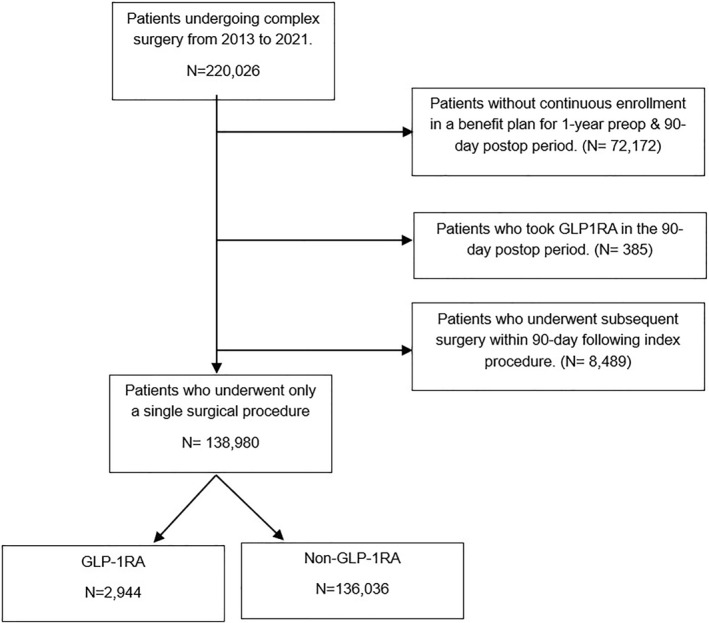
Patients who underwent a major surgical procedure between 2013 and 2021 were identified from the commercial IBM MarketScan database (Supplementary eMethods in Supporting Information S1) [15]. The International Classification of Diseases, ninth and tenth editions (ICD‐9/10) codes were utilized to identify patients under 65 years of age who underwent coronary artery bypass graft (CABG), pneumonectomy, abdominal aortic aneurysm repair (AAA), pancreatectomy, and colectomy. National drug codes were used to identify patients who had at least one claim for GLP‐1RA therapy (Semaglutide, Albiglutide, Liraglutide, Dulaglutide, Lixisenatide, or Exenatide) from 1 year up to 15 days before the index surgery (i.e., "exposed"); the remaining cohort was designated as the non‐GLP‐1RA group (i.e., "non‐exposed"). Patients who had noncontinuous enrollment in the benefit plan for 1 year before and 90 days after surgery, had de novo GLP‐1RA initiation within 2 weeks before surgery or who took GLP‐1RA within 90 days after surgery were excluded (Figure 1). Similarly, patients who underwent an additional surgical procedure unrelated to the index procedure of interest were excluded from the study [16]. The need for informed consent for deidentified data was waived by the institutional review board (IRB) of the Ohio State University. This study followed the Strengthening the Reporting of Observational Studies in Epidemiology (STROBE) reporting guidelines.

The flowchart depicting the number of patients included according to the study criteria.
Variables, Exposure, and Outcome
Variables of interest included patient age, sex, benefit plan type, employment status, Charlson Comorbidity Index (CCI), US census region (Northeast, Northcentral, South, and West), rurality (metropolitan vs. nonmetropolitan), claim‐based frailty index, and baseline concurrent medical conditions (Table 1). Patients were identified as residing in metropolitan or nonmetropolitan areas using the United States Department of Agriculture Rural‐Urban Continuum Codes [17, 18]. Patient sex was defined as male or female, based on sex assigned at birth [19]. Patient employment status was categorized as actively employed, retired, and "Other." The "Other" category included individuals with long‐term disabilities, COBRA continuers, and dependents. Similarly, using the claim‐based frailty index, patients were categorized as nonfrail, prefrail, and frail [20]. Additionally, the CCI classified patients based on the severity of their preoperative comorbidities using a cutoff value of 2 as described in earlier studies [21, 22]. Furthermore, the ICD 9/10 codes identified any baseline comorbid conditions related to the cardiovascular, central nervous, and gastrointestinal systems (Table 2) [1].
The primary outcome of interest was the development of complications within 30 days following surgery. The complications included sepsis, surgical site infections (SSIs), aspiration, hypoglycemia, pneumonia, ileus, venous thromboembolism (VTE), and acute respiratory, heart, or renal failure [7, 23, 24, 25, 26, 27]. Readmission occurring within the 30 days after the index surgery was a secondary outcome.
| Patient characteristics | Unmatched | Matched | |||||
|---|---|---|---|---|---|---|---|
| Total = 138,980N | GLP‐1RA = 2944N | Non GLP‐1RA = 136,036N | ‐valuep | GLP‐1RA = 2943N | Non GLP‐1RA = 5863N | ‐valuep | |
| Age, years | |||||||
| Mean (SD) | 54.9 ± 7.9 | 56.4 ± 6.2 | 53.4 ± 9.5 | < 0.001 | 56.4 ± 6.2 | 56.4 ± 6.6 | 0.808 |
| Median (IQR) | 58 (53–61) | 56 (49–60) | 58 (53–61) | < 0.001 | 58 (53–61) | 58 (53–61) | 0.808 |
| Sex | |||||||
| Male | 80,871 (58.2%) | 1792 (60.9) | 79,079 (58.1) | 0.003 | 1151 (39.1) | 2326 (39.7) | 0.61 |
| Female | 58,109 (41.8%) | 1152 (39.1) | 56,957 (41.9) | 0.003 | 1792 (60.9) | 3537 (60.3) | 0.61 |
| Region | |||||||
| Northeast | 23,463 (16.9%) | 373 (12.7) | 23,090 (17.0) | < 0.001 | 373 (12.7) | 727 (12.4) | 0.78 |
| North central | 30,586 (22.0%) | 574 (19.5) | 30,012 (22.1) | < 0.001 | 574 (19.5) | 1103 (18.8) | 0.78 |
| South | 66,000 (47.5%) | 1713 (58.2) | 64,287 (47.3) | < 0.001 | 1712 (58.2) | 3463 (59.1) | 0.78 |
| West | 17,518 (12.6%) | 271 (9.2) | 17,247 (12.7) | < 0.001 | 271 (9.2) | 535 (9.1) | 0.78 |
| Type of health insurance | |||||||
| PPO | 79,839 (57.4%) | 1695 (57.6) | 78,144 (57.4) | 0.075 | 1694 (57.6) | 3400 (58.0) | 0.961 |
| HMO | 15,318 (11.0%) | 280 (9.5) | 15,038 (11.1) | 0.075 | 280 (9.5) | 535 (9.1) | 0.961 |
| Comprehensive | 5694 (4.1%) | 120 (4.1) | 5574 (4.1) | 0.075 | 120 (4.1) | 228 (3.9) | 0.961 |
| POS | 9788 (7.0%) | 214 (7.3) | 9574 (7.0) | 0.075 | 214 (7.3) | 435 (7.4) | 0.961 |
| Other 12484 | 28,341 (20.4%) | 635 (21.6) | 27,706 (20.4) | 0.075 | 635 (21.6) | 1265 (21.6) | 0.961 |
| Employment status | |||||||
| Other | 73,736 (53.1%) | 1738 (59.0) | 71,998 (52.9) | < 0.001 | 1735 (59.0) | 3462 (59.0) | 0.999 |
| Full/part‐time | 16,358 (11.8%) | 389 (13.2) | 15,969 (11.7) | < 0.001 | 389 (13.2) | 775 (13.2) | 0.999 |
| Retired | 48,886 (35.2%) | 817 (27.8) | 48,069 (35.3) | < 0.001 | 817 (27.8) | 1626 (27.7) | 0.999 |
| CCI | |||||||
| ≤ 2 | 81,675 (58.8%) | 1278 (43.4) | 80,397 (59.1) | < 0.001 | 1278 (43.4) | 2557 (43.6) | 0.867 |
| > 2 | 57,305 (41.2%) | 1666 (56.6) | 55,639 (40.9) | < 0.001 | 1665 (56.6) | 3306 (56.4) | 0.867 |
| Claim‐based frailty index | |||||||
| Nonfrail | 90,213 (64.9%) | 1044 (35.5) | 89,169 (65.5) | < 0.001 | 1044 (35.5) | 2093 (35.7) | 0.925 |
| Prefrail | 47,284 (34.0%) | 1840 (62.5) | 45,444 (33.4) | < 0.001 | 1839 (62.5) | 3657 (62.4) | 0.925 |
| Frail | 1483 (1.1%) | 60 (2.0) | 1423 (1.0) | < 0.001 | 60 (2.0) | 113 (1.9) | 0.925 |
| Rurality | |||||||
| Metro | 118,016 (84.9%) | 2412 (81.9) | 115,604 (85.0) | < 0.001 | 2411 (81.9) | 4853 (82.8) | 0.322 |
| Nonmetro | 20,964 (15.1%) | 532 (18.1) | 20,432 (15.0) | < 0.001 | 532 (18.1) | 1010 (17.2) | 0.322 |
| Procedure | |||||||
| AAA | 4459 (3.3%) | 77 (2.6) | 4382 (3.2) | < 0.001 | 77 (2.6) | 141 (2.4) | 0.97 |
| CABG | 39,516 (28.4%) | 1627 (55.3) | 37,889 (27.9) | < 0.001 | 1627 (55.3) | 3247 (55.4) | 0.97 |
| Colectomy | 74,251 (53.4%) | 935 (31.8) | 73,316 (53.9) | < 0.001 | 935 (31.8) | 1875 (32.0) | 0.97 |
| Pneumonectomy | 4881 (3.5%) | 101 (3.4) | 4780 (3.5) | < 0.001 | 101 (3.4) | 192 (3.3) | 0.97 |
| Pancreatectomy | 15,873 (11.4%) | 204 (6.9) | 15,669 (11.5) | < 0.001 | 203 (6.9) | 408 (7.0) | 0.97 |
| Patient characteristics | Unmatched | Matched | |||||
|---|---|---|---|---|---|---|---|
| Total = 138,980N | GLP‐1RA = 2944N | Non GLP‐1RA = 136,036N | ‐valuep | GLP‐1RA = 2943N | Non GLP‐1RA = 5863N | ‐valuep | |
| Myocardial infarction | 17,223 (12.4%) | 584 (19.8) | 16,639 (12.2) | < 0.001 | 584 (19.8) | 1121 (19.1) | 0.418 |
| Congestive heart failure | 13,480 (9.7%) | 619 (21.0) | 12,861 (9.5) | < 0.001 | 619 (21.0) | 1232 (21.0) | 0.418 |
| Peripheral vascular disease | 4603 (3.3%) | 103 (3.5) | 4500 (3.3) | 0.567 | 103 (3.5) | 226 (3.9) | 0.408 |
| Cerebrovascular disease | 8169 (5.9%) | 319 (10.8) | 7850 (5.8) | < 0.001 | 319 (10.8) | 640 (10.9) | 0.913 |
| Dementia | 90 (0.1%) | 3 (0.1) | 87 (0.1) | 0.423 | 3 (0.1) | 3 (0.1) | 0.807 |
| Hemiplegia or paraplegia | 685 (0.5%) | 20 (0.7) | 665 (0.5) | 0.144 | 20 (0.7) | 44 (0.8) | 0.712 |
| Diabetes mellitus type 1 | 1087 (0.8%) | 43 (1.5) | 1044 (0.8) | < 0.001 | 43 (1.5) | 78 (1.3) | 0.619 |
| Diabetes mellitus type 2 | 35,997 (25.9%) | 2844 (96.6) | 33,153 (24.4) | < 0.001 | 2843 (96.6) | 5663 (96.6) | 0.974 |
| Hypertension | 62,736 (45.1%) | 1910 (64.9) | 60,826 (44.7) | < 0.001 | 1909 (64.9) | 3841 (65.5) | 0.548 |
| Obesity | 8744 (6.3%) | 497 (16.9) | 8247 (6.1) | < 0.001 | 496 (16.9) | 975 (16.6) | 0.79 |
| Dyslipidemia | 45,278 (32.6%) | 1576 (53.5) | 43,702 (32.1) | < 0.001 | 1575 (53.5) | 3082 (52.6) | 0.4 |
| Chronic renal disease | 5394 (3.9%) | 198 (6.7) | 5196 (3.8) | 0.005 | 198 (6.7) | 417 (7.1) | 0.504 |
| Chronic pulmonary disease | 19,955 (14.4%) | 348 (11.8) | 19,607 (14.4) | < 0.001 | 23 (0.8) | 50 (0.9) | 0.728 |
| Peptic ulcer disease | 927 (0.7%) | 18 (0.6) | 909 (0.7) | 0.708 | 18 (0.6) | 29 (0.5) | 0.477 |
| Rheumatic disease | 1929 (1.4%) | 23 (0.8) | 1906 (1.4) | 0.005 | 23 (0.8) | 50 (0.9) | 0.728 |
| AIDS/HIV | 285 (0.2%) | 4 (0.1) | 281 (0.2) | 0.402 | 4 (0.1) | 17 (0.3) | 0.162 |
| Any malignancy | 37,712 (27.1%) | 598 (20.3) | 37,114 (27.3) | < 0.001 | 597 (20.3) | 1199 (20.5) | 0.856 |
| Metastatic solid tumor | 13,515 (9.7%) | 193 (6.6) | 13,322 (9.8) | < 0.001 | 428 (7.3) | 193 (6.6) | 0.2 |
| Combination drugs | 1353 (1.0%) | 189 (6.4) | 1164 (0.9) | < 0.001 | 189 (6.4) | 364 (6.2) | 0.697 |
| Metformin | 1196 (0.9%) | 174 (5.9) | 1022 (0.8) | < 0.001 | 174 (5.9) | 353 (6.0) | 0.84 |
| SGLT‐2 | 904 (0.7%) | 272 (9.2) | 632 (0.5) | < 0.001 | 271 (9.2) | 471 (8.0) | 0.061 |
| DPP‐4 | 1984 (1.4%) | 200 (6.8) | 1784 (1.3) | < 0.001 | 200 (6.8) | 426 (7.3) | 0.418 |
| Sulphonylureas | 1090 (0.8%) | 115 (3.9) | 975 (0.7) | < 0.001 | 115 (3.9) | 212 (3.6) | 0.495 |
| Thiazolidinedione | 318 (0.2%) | 63 (2.1) | 255 (0.2) | < 0.001 | 63 (2.1) | 118 (2.0) | 0.69 |
| Statins | 3231 (2.3%) | 115 (3.9) | 3116 (2.3) | < 0.001 | 115 (3.9) | 228 (3.9) | 0.966 |
| Mild liver disease | 5957 (4.3%) | 151 (5.1) | 5806 (4.3) | 0.023 | 151 (5.1) | 315 (5.4) | 0.633 |
| Severe liver disease | 503 (0.4%) | 12 (0.4) | 491 (0.4) | 0.677 | 12 (0.4) | 21 (0.4) | 0.72 |
| NAFLD | 3329 (2.4%) | 113 (3.8) | 3216 (2.4) | < 0.001 | 113 (3.8) | 226 (3.9) | 0.972 |
| ALD | 2582 (1.9%) | 48 (1.6) | 2534 (1.9) | 0.356 | 48 (1.6) | 103 (1.8) | 0.668 |
Statistical Analyses
Continuous variables were presented as median values with interquartile ranges (IQR) and were analyzed using either the Wilcoxon rank sum test or Student's t‐test as appropriate. Similarly, categorical variables were summarized as frequencies and percentages and were compared using either the chi‐squared test or Fisher's exact test [28]. Propensity score matching (PSM) was employed to account for measured confounders and reduce selection bias when comparing outcomes of patients who did and did not receive GLP‐1RA preceding surgery (Supplementary eMethods in Supporting Information S1). The patients were matched across baseline characteristics such as age, sex, region of residence, benefit plan type, employment status, CCI, claim‐based frailty index, rurality, type of surgical procedure, and other clinical characteristics outlined in Table 2. Following PSM, multivariable logistic regression models were employed to assess the association of GLP‐1RA exposure with outcomes; odds ratio (OR) with 95% confidence intervals (CIs) were reported. All statistical analyses were conducted using SAS 9.4 (SAS Institute) with statistical significance set at a p‐value of less than 0.05.
Results
Baseline Characteristics
A total of 138,980 patients underwent CABG (n = 39,516, 28.4%), pneumonectomy (n = 4,881, 3.5%), AAA repair (n = 4,459, 3.3%), pancreatectomy (n = 15,873, 11.4%), and colectomy (n = 74,251, 53.4%). Median age was 58 years (IQR: 53–61), most patients were male (n = 80,871, 58.2%), had a CCI score of ≤ 2 (n = 81,675, 58.8%), and were retirees (n = 48,886, 35.2%). Most patients were enrolled in a preferred provider organization plan (n = 79,839, 57.4%), followed by health maintenance organizations (n = 15,318, 11.0%), point of service plans (n = 9,788, 7.0%), and comprehensive plans (n = 5,694, 4.1%); the remainder were enrolled in other benefit plans (n = 28,341, 20.4%). Moreover, patients were primarily categorized as nonfrail (n = 90,213, 64.9%) and prefrail (n = 47,284, 34.0%), with only a few individuals categorized as frail (n = 1,483, 1.1%). Among other baseline characteristics, 25.9% (n = 35,997) of patients had a history of type 2 DM, 45.1% (n = 62,736) had hypertension (HTN), 32.6% (n = 45,278) had an abnormal lipid profile, 6.3% (n = 8744) were obese, and 27.1% (37,712) of individuals had a malignancy. Furthermore, 12.4% (n = 17,223) had a history of myocardial infarction, 9.7% (n = 13,480) had congestive heart failure, 5.9% (n = 8169) had cerebrovascular disease, and 2.4% (n = 3329) had nonalcoholic fatty liver disease (NAFLD).
Overall, 2.2% (n = 2944) of the patients were exposed to GLP‐1RA prior to surgery. Compared with patients who had no GLP‐1RA exposure, individuals exposed to GLP‐1RA were more likely to be female (41.9% vs. 39.1%), older (58 vs. 56 years), and retirees (35.3% vs. 27.8%) (all p < 0.05). Patients exposed to GLP‐1RA had a higher baseline comorbidity burden (CCI: 56.6% vs. 40.9%) and a higher claim‐based frailty (2.0 vs. 1.0) (both p < 0.001). The patterns of GLP‐1RA exposure also varied depending on the type of surgery (CABG: 55.3% vs. 27.9%; pneumonectomy: 3.4% vs. 3.5%; AAA repair: 2.6% vs. 3.2%; pancreatectomy: 6.9% vs. 11.5%; colectomy: 31.8% vs. 53.9%; p < 0.001). Perhaps not surprisingly, individuals with type 2 DM (96.6% vs. 24.4%), HTN (64.9% vs. 44.7%), obesity (16.9% vs. 6.1%), dyslipidemia (53.5% vs. 32.1%), and NAFLD (3.8% vs. 2.4%) were more likely to take GLP‐1RA (all p < 0.001). Similarly, patients with myocardial infarction (19.8% vs. 12.2%), congestive heart failure (21.0% vs. 9.5%), and cerebrovascular disease (10.8% vs. 5.8%) were also more likely to take GLP‐1RA (p < 0.001). In contrast, patients with a baseline malignancy (20.3% vs. 27.3%; p < 0.001) were less likely to be on GLP‐1RA before surgery. Additionally, patients who took GLP‐1RA had higher concurrent use of other antiglycemic medications such as sodium‐glucose cotransporter‐2 inhibitors (9.2% vs. 0.5%), dipeptidyl peptidase‐4 inhibitors (6.8% vs. 1.3%), sulphonylureas drugs (3.9% vs. 0.7%), and metformin (5.9% vs. 0.8%) (all p < 0.001).
Overall, 36.5% (n = 50,724) of patients experienced some type of complication in the postoperative period. The most common complications included acute heart failure (n = 14,494, 10.4%), ileus (n = 13,478, 9.7%), respiratory failure (n = 12,167, 8.8%), renal failure (n = 9,017, 6.5%), SSI (n = 7,431, 5.3%), sepsis (n = 6,385, 4.6%), pneumonia (n = 4,783, 3.4%), and VTE (n = 3,609, 2.6%). Other less common complications were aspiration (n = 625, 0.4%) and hypoglycemia (n = 283, 0.2%). In addition, 9.8% (n = 13,583) of patients were readmitted within 30 days following surgery.
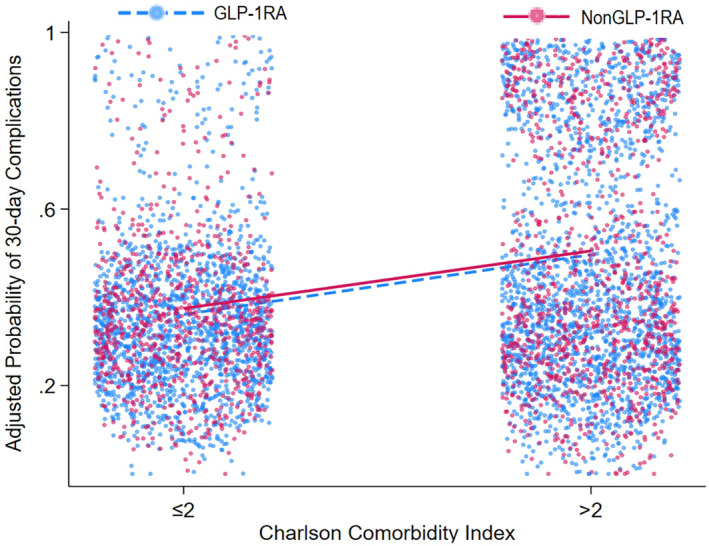
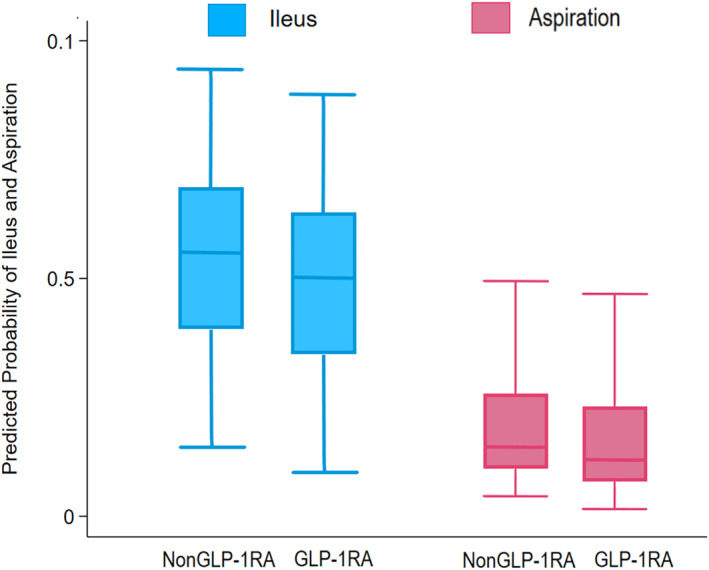
After adjusting for measured confounders using PSM, cases were effectively matched with controls, which mitigated variations in baseline clinicodemographic characteristics (all p > 0.05) (Table 1). Subsequently, no differences were noted in the incidence of overall complications among GLP‐1RA users and nonusers (GLP‐1RA: 44.5% vs. no GLP‐1RA: 44.8%; p = 0.841) (Figure 2). Specifically, the incidence of sepsis (3.9% vs. 4.6%), SSI (4.2% vs. 5.4%), and hypoglycemia (0.2% vs. 0.1%) as well as most other complications was similar among patients who did and did not receive GLP‐1RA before surgery (all p > 0.05) (Table 3). Although there was a slight difference in the incidence of ileus (GLP‐1RA: 5.3% vs. no GLP‐1RA: 6.7%; p = 0.012) and aspiration (GLP‐1RA: 0.3% vs. no GLP‐1RA: 0.6%; p = 0.039), the clinical significance of these small differences was likely minimal (Figure 3). On multivariable analysis, GLP‐1RA exposure was not associated with higher odds of complications (OR 0.99 95% CI 0.91–1.08; p = 0.841) (Supplementary Table S1). There was also no difference in the likelihood of a 30‐day readmission (GLP‐1RA: 11.9% vs. no GLP‐1RA: 11.8%; p = 0.865). Additionally, stratified analyses were performed outlined in Supplementary Table S2.

Adjusted risk of 30‐day complications following surgery relative to glucagon‐like peptide‐1 receptor agonist (GLP‐1RA) use.

Boxplot depicting the adjusted probability of ileus and aspiration following complex surgical procedure relative to glucagon‐like peptide‐1 receptor agonist (GLP‐1RA) use.
| Outcomes | Unmatched | Matched | |||||
|---|---|---|---|---|---|---|---|
| Total = 138,980N | GLP‐1RA = 2944N | Non GLP‐1RA = 136,036N | ‐valuep | GLP‐1RA | Non GLP‐1RA | ‐valuep | |
| Complications | 50,724 (36.5) | 1311 (44.5) | 49,413 (36.3) | < 0.001 | 1311 (44.6) | 2625 (11.8) | 0.865 |
| Sepsis | 6385 (4.6) | 114 (3.9) | 6281 (4.6) | 0.056 | 114 (3.9) | 268 (4.6) | 0.13 |
| SSI | 7431 (5.3) | 124 (4.2) | 7307 (5.4) | 0.006 | 124 (4.2) | 259 (4.4) | 0.658 |
| Aspiration | 625 (0.4) | 8 (0.3) | 617 (0.5) | 0.145 | 8 (0.3) | 35 (0.6) | 0.039 |
| Hypoglycemia | 283 (0.2) | 5 (0.2) | 278 (0.2) | 0.681 | 5 (0.2) | 8 (0.1) | 0.7 |
| Ileus | 13,478 (9.7) | 157 (5.3) | 13,321 (9.8) | < 0.001 | 157 (5.3) | 393 (6.7) | 0.012 |
| Respiratory failure | 12,167 (8.8) | 410 (13.9) | 11,757 (8.6) | < 0.001 | 410 (13.9) | 795 (13.6) | 0.632 |
| Pneumonia | 4783 (3.4) | 138 (4.7) | 4645 (3.4) | < 0.001 | 138 (4.7) | 301 (5.1) | 0.366 |
| Acute heart failure | 14,494 (10.4) | 506 (17.2) | 13,988 (10.3) | < 0.001 | 506 (17.2) | 998 (17.0) | 0.84 |
| Acute renal failure | 9017 (6.5) | 354 (12.0) | 8663 (6.4) | < 0.001 | 354 (12.0) | 637 (10.9) | 0.103 |
| Venous thromboembolism | 3609 (2.6) | 91 (3.1) | 3518 (2.6) | 0.088 | 91 (3.1) | 160 (2.7) | 0.933 |
| Readmission | 13,583 (9.8) | 350 (11.9) | 13,233 (9.7) | < 0.001 | 350 (11.9) | 690 (11.8) | 0.865 |
Discussion
Over the past decade, there has been an increased focus on improving the quality of surgical care and reducing postoperative complications [29, 30]. Consequently, there is a growing emphasis on understanding the preoperative and perioperative risk factors that may contribute to surgical morbidity [31]. Despite these efforts, complications particularly after major surgery continue to be a concern for both patients and clinicians [15, 31, 32]. In fact, roughly one in every four patient undergoing major surgery experiences a surgical complication [33]. Notably, medications used for comorbid conditions, such as DM, can differentially impact surgical outcomes [7, 34]. This is particularly true for newer drug classes that may be effective for one disorder but have complex interactions during transient nonhomeostatic states such as surgical episodes [35]. One such example is GLP‐1RA medications, which have recently gained popularity as a treatment of choice for multiple metabolic disorders [1, 2, 9]. Nonetheless, the association of GLP‐1RA with the incidence of postoperative complications remains a topic of debate [3, 6]. As such, the current study was important as it characterized the association of GLP‐1RA initiation status with outcomes following major surgical procedures. Notably, outcomes were comparable among the patients who did and did not receive GLP‐1RA before the surgical procedure. In fact, on stratified analysis, patients who received care compliant with American Society of Anesthesiologists guidelines and stopped GLP‐1RA before surgery had outcomes similar to individuals who continued using GLP‐1RA up until the time of surgery.
Previous studies have reported that GLP‐1RA drugs can slow down the gastrointestinal system either by directly binding to receptors or indirectly through modulation of insulin‐glucagon pathways [36, 37]. In fact, this is the primary mechanism behind increased satiety, which can decrease food consumption and consequently assist in both glycemic control improvement as well as weight reduction [37]. Nonetheless, there are concerns that this same mechanism of action can contribute to gastric content retention and increase complications related to anesthesia such as aspirations [38]. To this end, Yeo et al. reported that patients with GLP‐1RA usage had a 20% higher incidence of aspirations after endoscopic procedures [39]. In contrast, Dixit et al. demonstrated that among patients undergoing common emergency surgical procedures, 7.5% experienced short‐term respiratory complications, with no difference relative to GLP‐1RA utilization [39]. The current study noted that 10.9% of the patients experienced respiratory complications such as aspiration, pneumonia, or respiratory failure. Of note, there was no difference in the incidence of aspiration and pneumonia between the two groups, yet respiratory failure was slightly more common among patients taking GLP‐1RA. Nonetheless, after adjusting for measured confounders, this difference was almost completely mitigated. Similarly, the difference in the incidence of ileus following surgery relative to GLP‐1RA use was also clinically unremarkable. Odds of thromboembolism among patients with GLP‐1RA versus without GLP‐1RA exposure was also comparable (OR: 1.25 and 95% CI 0.87–1.79). In previous studies that used mice models, glucagon‐like peptide‐1 receptors had been demonstrated to cause inhibition of platelet aggregation in a nitric oxide‐dependent manner [40, 41]. Hence, some investigators had hypothesized that GLP‐1RA drugs may reduce thromboembolic events [40, 41].
Management of surgical patients can often be challenging, requiring optimization of metabolic profiles, particularly serum glucose levels [42, 43]. Blood sugar management is important among patients with or without DM because high glucose levels have been independently associated with higher mortality and morbidity [42, 43]. Among the morbidities attributed to poor glycemic control, sepsis and SSI are the most prominent [42, 44, 45]. To this point, one preclinical trial reported Semaglutide to be more effective in reducing bone or joint infections versus other therapies [46]. In another observational study, this association of GLP‐1RA use with infection risk was only noted among patients undergoing total hip replacement, while there was no benefit of GLP‐1RA in reducing SSI for total knee replacement [6]. In the current study, 30‐day risk of sepsis and SSI following a major surgical procedure was not associated with GLP‐1RA exposure. The lack of difference may be partly explained by the focus on major procedures in this study, for which more aggressive measures, such as close supervision and higher use of prophylactic antibiotics, are employed to prevent potentially severe infections [47].
According to ASA guidelines, it is recommended to discontinue GLP‐1RA before elective surgery [14]. For emergency procedures, in which timely discontinuation may not be possible, follow‐up with an abdominal ultrasound to check for gastric residual contents is advised [14]. In the current study, despite the vast majority of procedures being elective, one in every five patients continued taking GLP‐1RA until surgery. In addition, use of perioperative abdominal ultrasound was similar among both groups (Supplementary Table S2). These results highlight the variability in practices across different hospitals [48]. When weighing the achievement of optimal glycemic control along with potential multisystem benefits versus the risks of surgical complications that can or cannot occur, discontinuing the medication may not always be the preferred choice [12, 49]. To this end, some policymakers and healthcare associations have advocated liberalizing current guidelines to withhold GLP‐1RA prior to surgery [7].
The findings of the current studies should be interpreted in light of several limitations. Retrospective administrative datasets rely on ICD and national drug codes, which can be prone to inaccurate data input and missing values [50]. Therefore, there was a potential risk for misclassification bias and residual confounding. Additionally, the IBM MarketScan database is comprised of information on individuals and their dependents with employer‐sponsored benefit plans. In turn, the data may have limited generalizability to patients who are either uninsured or are enrolled in government‐sponsored health plans such as Medicare or Medicaid [19]. Additionally, as an observational study, the findings should be classified as associations rather than causations. However, the use of a robust statistical method of PSM did mitigate confounding by indication [51]. Data on granular patient‐level factors (e.g., race/ethnicity) or clinical characteristics (e.g., severity of comorbidities) that may influence the effects of GLP‐1RA could also not be assessed [52]. Despite these limitations, the study offers valuable insights into the association between GLP‐1RA and surgical outcomes, which would otherwise be difficult to investigate in clinical trials.
In conclusion, GLP‐1RA use was not associated with an increased risk of complications following major surgical procedures even among patients who continued the medication up until the time of surgery. There may be a need to reconsider the guidelines and liberalize the use of GLP‐1RA medications during the perioperative period.
Author Contributions
Zayed Rashid: conceptualization, formal analysis, investigation, methodology, validation, visualization, writing–original draft, writing–review and editing. Selamawit Woldesenbet: conceptualization, data curation, formal analysis, investigation, methodology, software, validation, visualization, writing–original draft, writing–review and editing. Mujtaba Khalil: conceptualization, data curation, formal analysis, investigation, methodology, validation, writing–original draft, writing–review and editing. Abdullah Altaf: conceptualization, data curation, formal analysis, methodology, visualization, writing–original draft, writing–review and editing. Jun Kawashima: conceptualization, investigation, methodology, writing–original draft, writing–review and editing. Khalid Mumtaz: conceptualization, project administration, supervision, writing–original draft, writing–review & editing. Timothy M. Pawlik: conceptualization, investigation, methodology, project administration, resources, supervision, validation, visualization, writing–original draft, writing–review and editing.
Ethics Statement
The need for informed consent for deidentified data was waived by the institutional review board of the Ohio State University.
Conflicts of Interest
The authors declare no conflicts of interest.