
What this is
- This systematic review evaluates the effects of resveratrol on in animal studies.
- Resveratrol, a natural polyphenol, shows potential in reducing fibrosis markers and improving liver function.
- The review synthesizes data from 46 preclinical studies, highlighting its anti-inflammatory and antioxidant mechanisms.
Essence
- Resveratrol significantly reduces markers in animal models, improving liver function through anti-inflammatory and antioxidant effects.
Key takeaways
- Resveratrol treatment led to a significant reduction in hepatic collagen deposition, with a standardized mean difference (SMD) of -5.49 (95% CI: −6.71, −4.27).
- The meta-analysis revealed resveratrol significantly decreased levels, indicating reduced fibrotic progression, with an SMD of -4.15 (95% CI: −5.17, −3.13).
- Resveratrol improved liver function by significantly lowering ALT levels (SMD: -4.61, 95% CI: −5.48, −3.74) and increasing albumin levels (SMD: 2.64, 95% CI: 1.43, 3.85).
Caveats
- Heterogeneity among studies was high, with I values reaching 87.8% for collagen deposition, complicating result interpretation.
- The clinical translation of these findings is uncertain due to significant interspecies differences and variability in study designs.
- The review noted a lack of standardized toxicity evaluations in the included studies, limiting safety assessments.
Definitions
- liver fibrosis: A pathological condition characterized by excessive collagen deposition in the liver, leading to impaired function.
- hydroxyproline: An amino acid used as a biomarker for collagen turnover and fibrotic progression.
Simplified
Introduction
Liver fibrosis (LF) represents a pathological state characterized by excessive extracellular matrix deposition, primarily collagen, secondary to chronic hepatic injury. This process disrupts hepatic architecture, progressively impairing function and potentially advancing to cirrhosis, liver failure, or hepatocellular carcinoma (1). Affecting 2–19% of the global population (2, 3), chronic liver diseases impact approximately 1.5 billion individuals (4). LF exacerbates complications including ascites, portal hypertension, hepatic encephalopathy, liver failure, and elevates the risk of carcinogenesis, imposes substantial burdens on healthcare systems and societies (5, 6). Primary etiologies encompass chronic viral hepatitis (hepatitis B/C), alcohol-related liver damage, non-alcoholic fatty liver disease (NAFLD), and autoimmune hepatic disorders (7, 8).
The pathogenesis of LF involves a complex interplay among inflammatory responses, activation of hepatic stellate cells (HSC), and dysregulated extracellular matrix (ECM) turnover, driven primarily by key signaling pathways including transforming growth factor-β (TGF-β)/Smad and Wnt/β-catenin (9, 10). Despite advances in understanding LF's molecular mechanisms, current therapeutic options remain limited. Antifibrotic drugs, such as pirfenidone and nintedanib, demonstrate limited antifibrotic efficacy, significant side effects, and variable effectiveness in heterogeneous disease presentations (11, 12). Liver transplantation, provides a curative approach, is constrained by donor shortages, high costs, and post-transplant complications (13). Therefore, there is an urgent need to identify novel therapeutic agents with improved safety and efficacy profiles that can prevent or reverse LF.
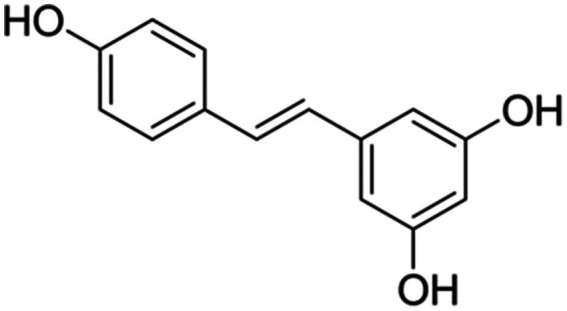
Resveratrol (3,5,4′-trihydroxystilbene, Figure 1), a natural polyphenolic compound derived from botanical sources including grapes, berries, and peanuts with particularly high concentrations in red wine (14). It has been consumed as part of the human diet for centuries and is generally recognized as safe (GRAS) by regulatory agencies, making it an attractive candidate for therapeutic applications (15). Beyond nutritional functions, resveratrol exhibits therapeutic promise for cardiovascular, metabolic, and oncological disorders via its antioxidant, anti-inflammatory, and anti-fibrotic actions (16, 17). In recent years, preclinical studies have highlighted the potential of resveratrol in attenuating LF in animal models. For instance, resveratrol has been shown to HSC activation, reduce oxidative stress, and modulate key fibrogenic pathways such as TGF-β/Smad and nuclear factor kappa-B (NF-Κb) (18, 19). Despite these promising findings, clinical translation faces significant bottlenecks. First, the bioavailability of resveratrol is extremely low (<1% following oral administration). Although nano-delivery systems (e.g., liposomes) or structural modifications (e.g., resveratrol derivatives) can enhance stability, the long-term toxicity and industrial-scale production feasibility still require verification (20, 21). Second, substantial heterogeneity exists in preclinical studies. Differences in modeling methods, dosage regimens, and efficacy evaluation criteria among various animal models compromise the comparability of results. Integrating data through meta-analysis is urgently needed to clarify the dose–response relationship. Finally, the discrepancy between animal models and human pathology limits predictive value. Existing models are primarily based on single causes, whereas human LF is often driven by the interaction of multiple factors. Interspecies differences may also overestimate resveratrol's in vivo effects. Although anatomical and physiological differences exist between animal models and humans, animal research remains crucial for exploring the pathophysiology of human diseases.

The chemical structure of resveratrol.
Methods
This study was conducted in accordance with the Preferred Reporting Items for Systematic Reviews and Meta-Analyses (PRISMA) guidelines (22). The protocol was registered in the PROSPERO International Prospective Register of Systematic Reviews (registration number: CRD42025633941).
Search strategy
A comprehensive literature search was performed to identify all relevant preclinical animal studies investigating the efficacy of resveratrol in preventing LF. The following electronic databases were searched: Web of Science, Embase, PubMed, China Biology Medicine (CBM), China National Knowledge Infrastructure (CNKI), Wanfang Database (WF), and China Science Journal Database (VIP). The search was limited to studies published before December 31, 2024, to ensure the inclusion of the most recent evidence. Additionally, manual searches of reference lists from included studies and relevant reviews were conducted to identify potentially eligible studies that might have been missed in the electronic database searches. The search strategy employed a combination of Medical Subject Headings (MeSH) terms and free-text words to maximize the sensitivity and specificity of the search (). Supplementary Table 1
Eligibility criteria
The inclusion criteria for this study were defined based on the PICO framework to ensure the selection of relevant and high-quality preclinical animal studies. Animal: Studies utilizing animal models of LF were included, regardless of the species, sex, age, or weight of the animals. Both induced (e.g., chemically induced, diet-induced) and genetic models of LF were considered eligible. Intervention: Studies in which animals were treated with resveratrol, regardless of the dose, duration, frequency, or route of administration, were included. Comparison: Studies must have included a control group receiving either an equivalent vehicle, physiological saline, or no treatment. Outcomes: Studies reporting outcomes related to the protective effects of resveratrol on LF were included. Primary outcomes of interest included histopathological changes in LF (e.g., collagen deposition, degree of tissue fibrosis), LF progression markers [e.g., hydroxyproline (HYP), α-smooth muscle actin (α-SMA)], TGF-β, and inflammatory cytokine levels [e.g., interleukin-6 (IL-6), tumor necrosis factor-α (TNF-α)]. Secondary outcomes such as liver function biomarkers (e.g., ALT, AST) and oxidative stress markers [e.g., malondialdehyde (MDA), superoxide dismutase (SOD), and glutathione (GSH)] were also considered.
Exclude the following studies: (1) Study Type: Clinical studies, in vitro experiments, and computer simulation studies were excluded. (2) Intervention: Studies without a control group or those in which the treatment group received a combination of resveratrol and other therapeutic interventions were excluded. (3) Duplicate Publications: In cases of duplicate publications, the most recent or comprehensive study was retained, and earlier versions were excluded.
Data extraction
Data extraction was conducted independently by two researchers (QH and JK) to ensure accuracy and minimize bias. The process involved the following steps: (1) Initial Screening: Titles and abstracts of all retrieved studies were screened to exclude irrelevant publications. Studies that did not meet the inclusion criteria were removed at this stage. (2) Full-Text Review: The remaining studies were subjected to a full-text review to assess their eligibility based on the predefined inclusion and exclusion criteria. (3) Data Collection: For studies meeting the inclusion criteria, the following information was extracted: Publication Details: Authors and year of publication. Animal Characteristics: Species, sex, age, weight, and sample size. LF Model: Method used to induce LF (e.g., chemical induction, diet-induced, genetic models). Intervention Details: Resveratrol administration parameters, including dose, duration, frequency, route of administration, and control group treatment. Outcome Measures: Data on histopathological changes, LF progression markers, inflammatory cytokine levels, liver function biomarkers, and oxidative stress markers. If outcome data were presented only in graphical form, attempts were made to contact the corresponding authors to obtain raw data. If raw data were unavailable, graphical data were digitized using WebPlotDigitizer 4.5,a validated tool for extracting numerical data from graphs. For studies reporting multiple data points due to varying doses or time points, data from the group receiving the maximum effective dose or the latest effective time point were extracted for meta-analysis. Any disagreements between the two researchers during data extraction were resolved through discussion and, if necessary, consultation with a third researcher (SX) to reach a consensus. 0001
Quality assessment
The methodological quality and risk of bias of the included studies were independently assessed by two reviewers (ZS and QX) using the Systematic Review Center for Laboratory Animal Experimentation (SYRCLE) risk of bias tool (23). This tool is specifically designed to evaluate the risk of bias in animal studies and includes the following domains: sequence generation, baseline characteristics, allocation concealment, random housing, blinding of experimentalists, random outcome assessment, blinding of outcome assessors, incomplete outcome data, selective outcome reporting, other sources of bias. Each domain was assessed and categorized as "yes" (low risk of bias), "no" (high risk of bias), or "unclear" (uncertain risk of bias) based on the information provided in the studies. Discrepancies between the two reviewers were resolved through discussion, and if consensus could not be reached, a third reviewer (SX) was consulted to make the final decision.
Statistical analysis
Statistical analyses were performed using STATA software (version 17.0). For continuous outcome measures, the overall effect size was expressed as the standardized mean difference (SMD) with 95% confidence intervals (CIs). A p-value of < 0.05 was considered statistically significant. Heterogeneity among studies was assessed using the I2 statistic, which quantifies the proportion of total variability in effect estimates attributable to heterogeneity rather than chance. The following thresholds were used to interpret the I2 values: I2 ≤ 50%: Low to moderate heterogeneity, indicating that a fixed-effects model was appropriate for meta-analysis. I2 > 50%: Substantial heterogeneity, prompting further investigation through sensitivity analysis and subgroup analysis to identify potential sources of heterogeneity. If significant heterogeneity persisted and could not be resolved, a random-effects model was applied to account for between-study variability. Sensitivity analysis was conducted by sequentially excluding individual studies to evaluate their impact on the overall effect size and heterogeneity. Subgroup analyses were performed based on predefined factors, such as animal species, LF induction method, resveratrol dosage, and treatment duration, to explore potential sources of heterogeneity. Publication bias was assessed using Egger's linear regression test and Begg's rank correlation test. If evidence of publication bias was detected (p < 0.05), the trim-and-fill method was employed to adjust for potential bias and estimate the corrected effect size.
Results
Study selection
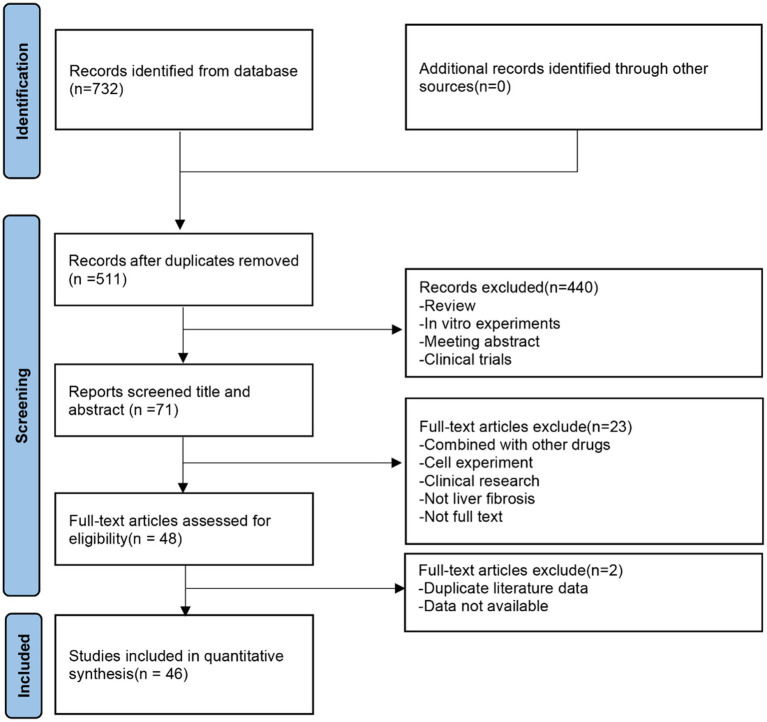
A total of 732 potentially relevant articles were retrieved from seven online databases, including PubMed (24), Embase (295), Web of Science (233), CNKI (25), CBM (26), Wanfang (27), and VIP (19). After removing duplicates, 511 articles remained. Subsequently, 440 articles were excluded based on the screening of titles and abstracts. Following a full-text review, an additional 25 articles were excluded, resulting in the final inclusion of 46 studies. The flow diagram of the study selection process is presented in Figure 2.

Flow diagram of the study selection process.
Characteristics of included studies
The 46 included studies involved a total of 751 animals, with 375 in the treatment groups and 376 in the control groups. Among these, 11 studies used 172 Sprague–Dawley (SD) rats (26, 28–37), 8 studies used 124 C57BL/6 J mice (25, 38–44), 11 studies used 229 Wistar rats (45–55), 5 studies used 46 Balb/c mice (27, 56–59), 3 study used 40 Kunming mice (60–62), 2 studies used 32 Swiss mice (24, 63), 1 study used CD-1 mice (64), and 1 study used 20 Japanese quails (65). Additionally, 4 studies involved 86 rats of unspecified strains (66–69). Regarding the sex of the animals, 39 studies used male animals, 1 study used female animals, 4 studies used both male and female animals, and 2 studies did not specify the sex. The age of the animals was reported in 26 studies, and the weight was described in 36 studies. In terms of resveratrol administration, 34 studies utilized oral gavage or intragastric administration, 11 studies employed intraperitoneal injection, and 1 study used tail vein injection. For LF assessment, 24 studies reported histopathological changes in LF, 18 studies measured TGF-β levels, 21 studies evaluated α-SMA expression, 19 studies assessed type I collagen, 18 studies measured HYP, 6 studies reported hyaluronic acid (HA), 5 studies evaluated type III procollagen N-terminal propeptide (PIINP), 3 studies measured collagen type IV (COL-IV), and 6 studies reported laminin (LN). Regarding liver function, 37 studies reported ALT levels, 31 studies reported AST levels, 11 studies measured albumin (ALB), and 12 studies evaluated alkaline phosphatase (ALP). For oxidative stress markers, 21 studies reported MDA levels, 10 studies measured GSH, and 15 studies evaluated SOD. In terms of inflammatory cytokine levels, 13 studies reported TNF-α, 6 studies measured IL-6, 5 studies assessed IL-1β, and 6 studies evaluated NF-κB. Detailed characteristics of the included studies are presented in Table 1.
| Study (year) | Species (sex, age, = treatment/model group, weight)n | Modeling method | Resveratrol intervention (administration drug dose, duration) | Outcomes |
|---|---|---|---|---|
| Li et al. () [60] | Kunming mice (/, /, 7/7, 22 ± 2 g) | Liver Fibrosis Induced by Long-Term Inorganic Mercury Exposure | The mice were given with aqueous solution containing 100 mg/L HgCl2 and gavage with 100 mg/kg body weight resveratrol once a day for 6 weeks | 1. HYP2. ALT3. AST4. TGF-β5. α-SMA6. Col1α17. MDA8. GSH9. SOD10. TNF-α |
| Mostafa et al. () [63] | Swiss albino mice (male, /, 12/12, 20–25 g) | -induced liver fibrosisSchistosoma mansoni | The mice were orally administered 20 or 100 mg/kg of resveratrol daily for 4 weeks | 1. ALT2. AST3. TGF-β4. α-SMA5. Col1α16. ALB7. ALP8. TNF-α |
| Kabir et al. () [25] | C57BL/6 J mice (male, 10 weeks, 8/8, 23 g) | High-fat choline-deficient diet-induced hepatic fibrosis | The mice were orally administered 150 mg/kg of resveratrol daily for 12 weeks | 1. Collagen deposition2. ALT3. AST4. α-SMA5. Col1α1 |
| Li et al. () [56] | Balb/c mice (male, 6–7 weeks, 5/5, /) | Liver fibrosis induced by CCl4 | The mice were treated with 30 mg/kg resveratrol daily by gavage, followed by intraperitoneal injection of 0.5 μL/g CCl4 twice a week for 4 weeks | 1. Collagen deposition2. HYP3. ALT4. AST5. α-SMA6. Col1α17. ALP |
| Ma et al. () [28] | Sprague–Dawley rats (male, 3–4 weeks, 6/6, 200-250 g) | Liver fibrosis induced by CCl4 | The rats were treated with 10, 20, 30 mg/kg resveratrol daily by gavage for 12 weeks | 1. Collagen deposition2. ALT3. AST4. TGF-β5. ALP6. TNF-α7. IL-6 |
| Wang et al. () [61] | Kunming mice (male, 6–7 weeks, 10/10, 20 ± 2 g) | Iron overload-induced liver fibrosis | The mice were treated with 25, 50, 100 mg/kg resveratrol daily by gavage for 12 weeks | 1. Collagen deposition2. HYP3. ALT4. AST5. α-SMA6. Col1α17. MDA8. GSH9. SOD10. TNF-α11. IL-6 |
| Ebrahim et al. () [66] | Albino rats (male, /, 6/6, 180–200 g) | Thioacetamide-induced liver fibrosis | Rats were treated with resveratrol suspension (20 mg/kg, orally) daily for 10 weeks | 1. Collagen deposition2. ALT3. AST4. α-SMA5. TNF-α |
| Lianget al (). [38] | C57BL/6 J mice (male, 8 weeks, 5/5, /) | Liver fibrosis induced by CCl4 | The mice in the Res group were injected intraperitoneally with 10% CCl4 and Res (100 mg/kg/d) daily for 4 weeks | 1. HYP2. ALT3. AST4. Col1α15. ALB |
| Hung et al. () [64] | CD-1 mice (male, 5 weeks, 10/10, /) | Liver fibrosis induced by CCl4 | The mice were treated with 30 mg/kg resveratrol daily by gavage for 8 weeks | 1. Collagen deposition2. ALT3. AST4. TGF-β5. α-SMA6. Col1α17. ALP |
| Li et al. () [65] | Japanese quails (male, 21 days, 10/10, 80 ± 15 g) | Liver fibrosis induced by deltamethrin | The quails were treated with 500 mg/kg resveratrol daily by gavage for 12 weeks | 1. Collagen deposition2. HYP3. ALT4. AST5. TGF-β6. α-SMA7. Col1α18. MDA9. GSH10. SOD11. TNF-α12. LN |
| Shams Eldeen () [45] | Wistar rats (male, /, 6/6, 150–200 g) | Cholestasis-induced liver fibrosis | The rats were orally administered 10,20,30 mg/kg of resveratrol daily for 3 weeks | 1. Collagen deposition2. ALT3. AST4. TGF-β5. MDA6. GSH |
| Zhu et al. () [29] | Sprague–Dawley rats (male, 6–8 weeks, 6/6, 250 ± 30 g) | Liver fibrosis induced by CCl4 | The rats were treated with 40, 120, 200 mg/kg resveratrol daily by gavage for 4 weeks | 1. Collagen deposition2. HYP3. ALT4. AST5. TGF-β6. α-SMA7. ALB8. MDA9. SOD10. HA11. PcIII12. LN |
| Chen et al. () [57] | Balb/c mice (male, 6–8 weeks, 5/5, /) | Schistosoma-induced liver fibrosis | Mice were treated with a resveratrol suspension (400 mg/kg/d) for 3 days by gastric gavage at 6 weeks after infection | 1. Collagen deposition2. α-SMA3. Col1α1 |
| Mohseni et al. () [46] | Wistar rats (male, 6 weeks, 5/5, 200 ± 15 g) | Liver fibrosis induced by CCl4 | Mice were treated with a resveratrol suspension (10 mg/kg/d) for 8 weeks by gastric gavage | 1. HYP2. ALT3. AST4. Col1α15. ALP6. MDA |
| Yu et al. () [58] | Balb/c mice (male, 6 weeks, 6/6, 18–20 g) | Liver fibrosis induced by CCl4 | Mice were injected intraperitoneally with resveratrol (400 mg/kg/d) | 1. Collagen deposition2. HYP3. ALT4. AST5. TNF-α |
| Hessin et al. () [47] | Albino Wistar rats (male, adult, 18/18, 200–250 g) | Thioacetamide-induced liver fibrosis | The rats were orally administered 30 mg/kg of resveratrol daily for 4 weeks | 1. HYP2. ALT3. AST4. ALB5. MDA6. GSH |
| Tanriverdi et al. () [48] | Albino Wistar rats (male, 5 weeks, 10/10, 200–250 g) | Liver fibrosis induced by CCl4 | Rats were injected intraperitoneally with resveratrol (1 mg/kg/d) for 6 weeks | 1. Collagen deposition2. TGF-β3. α-SMA4. GSH |
| Zhang et al () [39] | C57BL/6 J mice (male, 8 weeks, 5/5, /) | Liver fibrosis induced by CCl4 | The mice were treated with 20, 50 mg/kg resveratrol daily by gavage for 8 weeks | 1. ALT2. AST3. α-SMA4. Col1α15. TNF-α |
| Ahmad et al. () [49] | Albino Wistar rats (male, 6–8 weeks, 5/5, 160 ± 10 g) | N0-nitrosodimethylamine-induced liver fibrosis | Rats were given three consecutive intraperitoneal injections of resveratrol (10 mg/kg, three days a week) for 3 weeks | 1. Collagen deposition2. HYP3. ALT4. AST5. α-SMA6. ALP7. MDA8. SOD |
| Pascoli et al. () [50] | Wistar rats (male, /, 10/8, 50-75 g) | Liver fibrosis induced by CCl4 | Rats were treated with a resveratrol suspension (20 mg/kg/d) for 2 weeks by gastric gavage | 1. TGF-β2. α-SMA3. Col1α14. SOD |
| El-Agamy et al. () [24] | Swiss albino mice (male, /, 6/6, 18 ± 2 g) | -induced liver fibrosisSchistosoma mansoni | Mice began drug treatment daily on the 28th day after infection and continued for 2 weeks | 1. HYP2. ALT3. AST4. ALB |
| Chan et al. () [40] | C57BL/6 J mice (/, /, 6/6, /) | Cholestasis-induced liver fibrosis | Rats were injected intraperitoneally with resveratrol (40 mg/kg/d) for 7 days | 1. ALT2. AST3. TGF-β4. Col1α15. TNF-α6. IL-6 |
| Hong et al. () [30] | Sprague–Dawley rats (male, 6 weeks, 6/6, /) | Dimethylnitrosamine-induced liver fibrosis | The rats were orally administered 10 mg/kg of resveratrol daily for 7 days | 1. HYP2. ALT3. AST4. TGF-β5. α-SMA6. Col1α17. ALP8. MDA9. SOD10. TNF-α |
| Lee et al. () [31] | Sprague–Dawley rats (male, /, 6/6, 140-160 g) | Dimethylnitrosamine-induced liver fibrosis | Rats were treated with a resveratrol suspension (20 mg/kg/d) for 4 weeks by gastric gavage | 1. HYP2. ALT3. AST4. ALB5. ALP6. MDA |
| Chávez () [51] | Wistar rats (male, /, 15/15, 90–100 g) | Liver fibrosis induced by CCl4 | The rats were orally administered 10 mg/kg of resveratrol daily for 8 weeks | 1. Collagen deposition2. ALT3. TGF-β4. ALP5. MDA6. GSH |
| Ran et al. () [32] | Sprague–Dawley rats (male and female, /, 8/8, 80-120 g) | Arsenic Exposure-Induced Liver Fibrosis | Rats received daily treatment with resveratrol (20 mg/kg) for 36 weeks, 6 days a week | 1. Collagen deposition2. α-SMA3. Col1α14. IL-65. HA6. PcIII7. C-IV8. LN |
| Aykac et al. () [26] | Sprague–Dawley rats (male, 5–6 weeks, 8/8, 150-200 g) | Liver fibrosis induced by CCl4 | Rats were injected intraperitoneally with resveratrol (1 mg/kg/d) for 10 weeks | 1. Collagen deposition2. ALT3. AST4. α-SMA5. ALB6. ALP |
| Rashidi et al. () [52] | Wistar rats (male, /, 8/8, 180–200 g) | Liver fibrosis induced by high-fat diet | The rats were orally administered 100 mg/kg of resveratrol daily for 6 weeks | 1. ALT2. AST3. TGF-β4. TNF-α5. IL-6 |
| Dawood et al. () [67] | Albino rats (male, /, 8/8, 180–200 g) | Thioacetamide-induced liver fibrosis | The rats were orally administered 20 mg/kg of resveratrol daily for 10 weeks | 1. Collagen deposition2. ALT3. α-SMA4. MDA5. SOD |
| Yang et al. () [33] | Sprague–Dawley rats (male and female, 5–6 weeks, 3/3, 200–250 g) | Liver fibrosis induced by CCl4 | The rats were orally administered 300 mg/kg of resveratrol daily for 8 weeks | 1. Collagen deposition2. ALT3. AST4. TGF-β5. α-SMA6. MDA7. GSH8. SOD9. TNF-α |
| Abdu and Al-Bogami () [68] | Albino rats (male, /, 7/7, 90–116 g) | Dimethylnitrosamine -induced liver fibrosis | The rats were treated with 20 mg/kg resveratrol daily by gavage for 3 weeks | 1. HYP2. ALT3. AST4. ALB5. ALP6. MDA7. GSH8. SOD |
| Mukherjee and Ahmad () [69] | Albino rats (male, 6–8 weeks, 5/5, 150–160 g) | Nitrosodiethylamine-induced liver fibrosis | Rats were injected intraperitoneally with resveratrol (10 mg/kg/d) for 2 weeks | 1. MDA2. SOD |
| Kessoku et al. () [41] | C57BL/6 J mice (male, 8 weeks, 5/5, /) | Liver fibrosis induced by high-fat diet | Mice were orally administered 20 mg/kg of resveratrol daily for 4 weeks | 1. Collagen deposition2. ALT3. α-SMA4. Col1α15. TNF-α6. IL-6 |
| Zhang et al. () [39] | C57BL/6 J mice (male, 8 weeks, 5/5, /) | Schistosoma-induced liver fibrosis | The rats were treated with 20 mg/kg resveratrol daily by gavage for 6 weeks | 1. Collagen deposition2. TGF-β |
| Que () [43] | C57BL/6 J mice (male, adult, 10/10, /) | Liver fibrosis induced by CCl4 | Mice were injected intraperitoneally with resveratrol (30 mg/kg/d) for 4 weeks | 1. Collagen deposition2. ALT3. AST4. α-SMA5. Col1α16. MDA |
| Zou () [34] | Sprague–Dawley rats (male, /, 8/8, 200 ± 20 g) | Liver fibrosis induced by CCl4 | Resveratrol is injected into the tail vein of rats three times a week for 4 weeks | 1. HYP2. ALT3. AST4. ALB5. MDA6. SOD7. HA8. PcIII9. C-IV10. LN |
| Yan et al. () [62] | Balb/c mice (male, 6 -8 weeks, 6/4, 20–22 g) | Liver fibrosis induced by CCl4 | Mice were injected intraperitoneally with resveratrol (400 mg/kg/d) for 5 weeks | 1. Collagen deposition |
| Li () [27] | Balb/c mice (male, 6 weeks, 3/3, 18–22 g) | Liver fibrosis induced by CCl4 | Mice were injected intraperitoneally with resveratrol (400 mg/kg/d) for 5 weeks | 1. Collagen deposition |
| Feng () [44] | C57BL/6 J mice (male, 8 weeks, 8/8, /) | Liver fibrosis induced by CCl4 | Mice were intraperitoneally injected with resveratrol (30 mg/kg) twice a week for 8 weeks | 1. Collagen deposition2. ALT3. AST |
| Chen () [62] | Kunming mice (male, 6–7 weeks, 10/10, 20 ± 2 g) | Schistosoma-induced liver fibrosis | Mice were treated with 20 mg/kg resveratrol daily by gavage for 6 weeks | 1. Col1α12. MDA3. SOD |
| Wan () [35] | Sprague–Dawley rats (male, /, 16/22, 250 ± 50 g) | Liver fibrosis induced by CCl4 | Rats were treated with 200 mg/kg resveratrol daily by gavage for 13 weeks | 1. ALT2. TGF-β3. ALB4. HA5. PcIII |
| Liu () [36] | Wistar rats (male, /, 8/8, 130–160 g) | Dimethylnitrosamine -induced liver fibrosis | Rats were treated with 200 mg/kg resveratrol daily by gavage for 4 weeks | 1. ALT2. MDA3. GSH4. SOD5. HA6. LN |
| Lin () [54] | Wistar rats (female, /, 9/8, 80–100 g) | Porcine serum immune-induced liver fibrosis | Rats were treated with 30 mg/kg resveratrol daily by gavage for 8 weeks | 1. HYP2. ALT3. AST4. TGF-β5. ALP6. MDA7. SOD8. HA9. PcIII10. C-IV11. LN |
| Niu () [36] | Sprague–Dawley rats (male, /, 8/8, 250 ± 30 g) | Liver fibrosis induced by CCl4 | Rats were treated with 200 mg/kg resveratrol daily by gavage for 8 weeks | 1. HYP2. ALT3. α-SMA4. ALB5. MDA6. SOD7. HA8. PcIII |
| Lv () [55] | Wistar rats (male and female, /, 10/10, 120-160 g) | Liver fibrosis induced by CCl4 | Rats were treated with 100 mg/kg resveratrol daily by gavage for 6 weeks | 1. HYP2. ALT3. AST4. Col1α15. ALB6. MDA |
| Qi () [37] | Sprague–Dawley rats (male, /, 8/8, 180-200 g) | Dimethylnitrosamine -induced liver fibrosis | Rats were treated with 100 mg/kg resveratrol daily by gavage for 7 weeks | 1. Collagen deposition2. ALT3. AST4. TGF-β5. Col1α1 |
Study quality
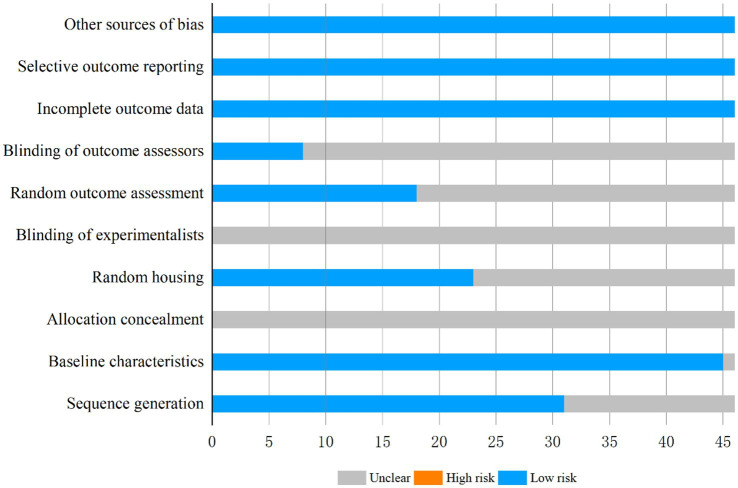
Quality assessment of the 46 included studies using the SYRCLE risk-of-bias tool revealed the following score distribution: 4 studies scored 4, 7, and 8 points each, with 14 and 17 studies attaining 5 and 6 points, respectively. Methodological quality analysis (Figure 3) demonstrated that baseline characteristics of experimental subjects were documented in 45 studies, among which 31 explicitly implemented animal randomization, 23 reported randomized housing, and 18 utilized randomized outcome assessment. Notably, while 8 studies declared blinded outcome evaluation, none provided specific details regarding allocation concealment or operator blinding. All included studies met low-risk criteria in three critical domains: data completeness, avoidance of selective reporting, and control of additional biases. Comprehensive evaluation data are compiled in Supplementary Table 2.

Risk of bias graph.
Effectiveness
Primary outcomes
The condition of liver fibrosis
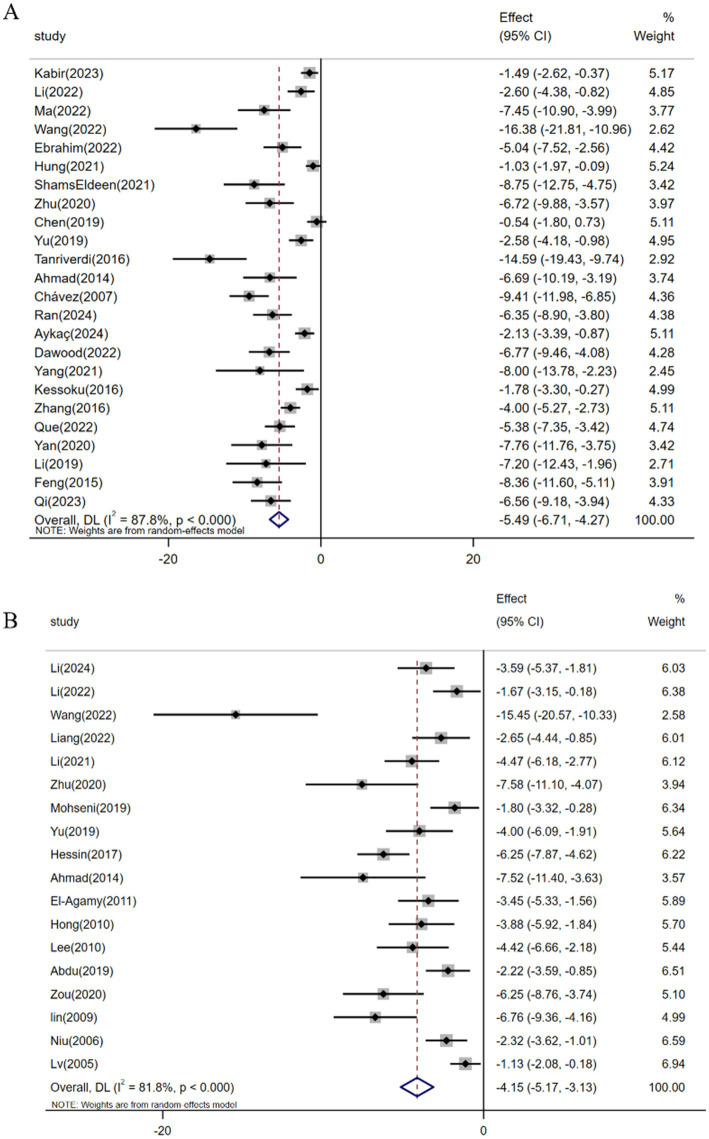
Among the 37 studies evaluating resveratrol's antifibrotic effects, a meta-analysis of 24 investigations (n = 358) demonstrated a significant reduction in hepatic collagen deposition under pathological conditions [SMD: -5.49 (95% CI: −6.71, −4.27), p < 0.001; heterogeneity: I2 = 87.8%, p < 0.001; Figure 4A]. Hyp, a non-essential amino acid serving as a collagen-specific biomarker, reflects hepatic collagen synthesis status (70). Pooled analysis of 18 studies (n = 273) revealed resveratrol's efficacy in reducing Hyp levels and ameliorating fibrotic progression in animal models [SMD: -4.15 (95% CI: −5.17, −3.13), p < 0.001; heterogeneity: I2 = 81.8%, p < 0.001; Figure 4B].

Forest plot: effect of resveratrol onHepatic collagen deposition andHYP. (A) (B)
Secondary outcomes
Liver fibrosis-related biomarkers
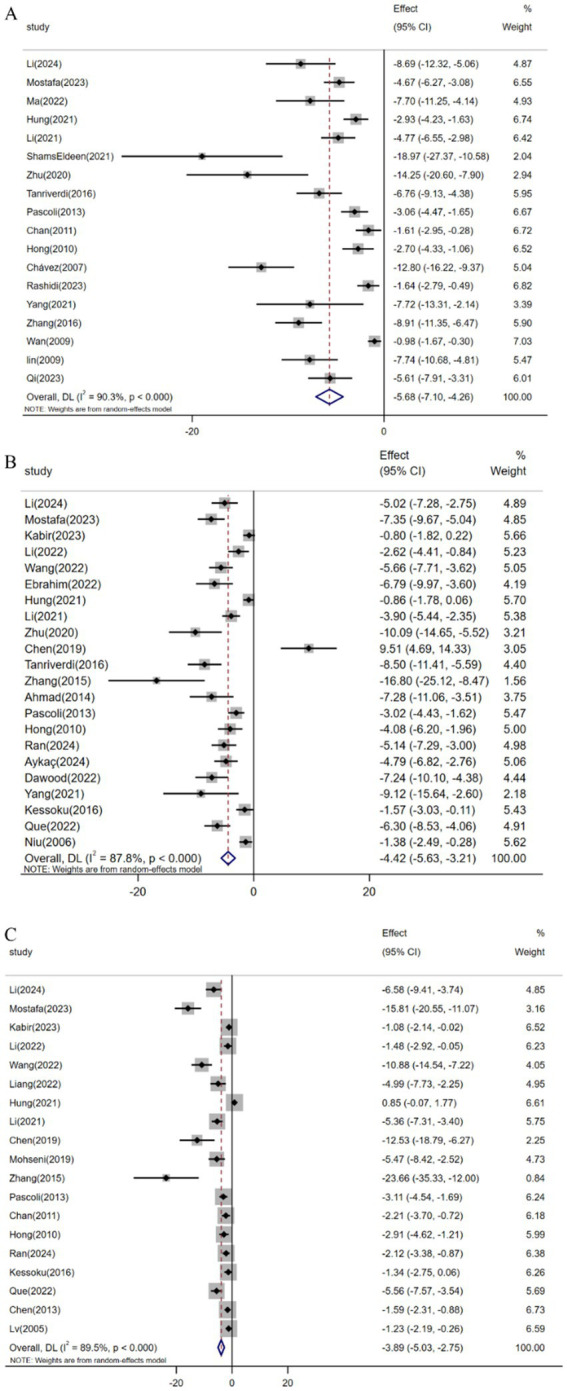
Pooled analysis of 18 studies (n = 329) demonstrated resveratrol significantly suppressed TGF-β expression versus controls [SMD: -5.68 (95% CI: −7.10, −4.26), p < 0.001; I2 = 90.3%, p < 0.001; Figure 5A]. Similarly, meta-analysis of 22 studies (n = 328) revealed reduced α-SMA levels in resveratrol-treated groups [SMD: -4.42 (95% CI: −5.63, −3.21), p < 0.001; I2 = 87.8%, p < 0.001; Figure 5B]. Furthermore, analysis of 19 trials (n = 312) confirmed attenuated Col1α1 expression following resveratrol intervention [SMD: -3.89 (95% CI: −5.03, −2.75), p < 0.001; I2 = 89.5%, p < 0.001; Figure 5C].

Forest plot: effect of resveratrol onTGF-,-SMA,Col1α1. (A) (B) (C) β α
Liver function
Meta-analysis of 36 studies (n = 555) demonstrated resveratrol significantly reduced ALT levels versus controls [SMD: -4.61 (95% CI: −5.48, −3.74), p < 0.001; I2 = 87.9%; Figure 6A]. Similarly, pooled data from 30 studies (n = 429) revealed suppressed AST expression [SMD: -5.13 (95% CI: −6.21, −4.04; Figure 6B), p < 0.001; I2 = 88.9%]. Conversely, analysis of 11 studies (n = 212) confirmed elevated ALB levels following resveratrol treatment [SMD: 2.64 (95% CI: 1.43, 3.85), p < 0.001; I2 = 89.8%; Figure 6C]. Additionally, 12 studies (n = 187) showed reduced ALP activity [SMD: -4.70 (95% CI: −6.17, −3.23), p < 0.001; I2 = 85.7%; Figure 6D].

Forest plot: effect of resveratrol onALT,AST,ALB,ALP. (A) (B) (C) (D)
Oxidative stress
Pooled analysis of 21 studies (n = 359) demonstrated resveratrol significantly reduced MDA levels versus controls [SMD: -4.95 (95% CI: −6.22, −3.68), p < 0.001; I2 = 90.8%; Figure 7A]. Similarly, meta-analysis of 10 studies (n = 188) revealed elevated GSH expression following resveratrol intervention [SMD: 5.88 (95% CI: 3.07, 8.69), p < 0.001; I2 = 95.5%; Figure 7B]. Furthermore, analysis of 15 trials (n = 243) confirmed increased SOD activity [SMD: 4.74 (95% CI: 3.43, 6.04), p < 0.001; I2 = 86.1%; Figure 7C].

Forest plot: effect of resveratrol onMDA,GSH,SOD. (A) (B) (C)
Inflammation
Meta-analysis of 13 studies (n = 180) demonstrated resveratrol significantly reduced TNF-α levels versus controls [SMD: -6.13 (95% CI: −8.20, −4.07), p < 0.001; I2 = 90.4%; Figure 8A]. Similarly, pooled analysis of 6 trials (n = 86) revealed attenuated IL-6 expression following resveratrol intervention [SMD: -3.27 (95% CI: −5.63, −0.90), p < 0.001; I2 = 91.0%; Figure 8B].

Forest plot: effect of resveratrol onTNF-α andIL-6. (A) (B)
Extracellular matrix
Serum biomarkers including HA, LN, PIINP, and COL-IV serve as critical indicators for assessing hepatic inflammatory activity and fibrotic progression, with elevated levels correlating with ECM deposition and hepatocyte injury (19782946). Meta-analysis of 7 studies (n = 131) demonstrated resveratrol significantly reduced HA expression versus controls [SMD: -5.11 (95% CI: −6.65, −3.56), p < 0.001; I2 = 76.7%; Figure 9A]. Similarly, pooled analysis of 6 trials (n = 97) revealed attenuated LN levels [SMD: -3.77 (95% CI: −4.98, −2.55), p < 0.001; I2 = 66.2%; Figure 9B], while 6 studies (n = 115) showed suppressed PIINP expression [SMD: -3.82 (95% CI: −5.35, −2.29), p < 0.001; I2 = 81.7%; Figure 9C]. Additionally, 3 studies (n = 49) confirmed reduced COL-IV levels following resveratrol intervention [SMD: -3.40 (95% CI: −5.97, −0.82), p < 0.001; I2 = 86.5%; Figure 9D].

Forest plot: effect of resveratrol onHA,LN,PIINP, andCOL-IV. (A) (B) (C) (D)
Sensitivity analysis
Sensitivity analysis excluded through sequential research indicates that despite high heterogeneity, the estimated effects of all outcome measures were stable. The exclusion of Chávez (51) and Hung et al. (64) yielded marginal variations in collagen deposition effect sizes (minimum: −3.04, 95% CI: −3.43 to −2.65; maximum: −3.64, 95% CI: −4.07 to −3.21). Similarly, removing Hessin et al. (47) and Lv (2005) revealed comparable HYP effect size ranges (minimum: −2.93, 95% CI: −3.36 to −2.51; maximum: −3.61, 95% CI: −4.07 to −3.16). The results of secondary outcomes still have robustness (Supplementary Table 4).
Subgroup analysis
To address substantial between-study heterogeneity, stratified subgroup analyses of collagen deposition and HYP levels were performed across four covariates: disease induction methods, animal species, administration routes, and dosing regimens. The analysis revealed disease modeling approaches, animal species selection, and treatment duration as key contributors to collagen deposition heterogeneity. For HYP variability, primary sources included disease induction protocols, administration methods, and dosage parameters. Comprehensive stratification data are presented in the attached. Supplementary Table 3
Publication bias
In the presence of sufficient data, Egger and Begg were used to assess publication bias, and the results showed that all outcome measures included in the analysis were at risk of publication bias (Supplementary Figure 1). To address potential missing research effects, sensitivity analysis conducted through the pruning and filling methods showed that unpublished data had no significant impact on the combined effect estimation of degree of liver fibrosis, HYP, α-SMA, ALT, AST, and SOD, and the research results were robust (Table 2; Figure 10). However, unpublished data had a significant impact on the combined effect estimation of TGF -β, Col1α1, ALB, ALP, MDA, GSH, and TNF-α, and the results obtained from the study were not robust.

Trim-and-fill analysis forHepatic collagen deposition,HYP,TGF-β,α-SMA,Col1α1,ALT,AST,ALB,ALP,MDA,GSH,SOD andTNF-α. (A) (B) (C) (D) (E) (F) (G) (H) (I) (J) (K) (L) (M)
| Before trim and fill | After trim and fill | |||||
|---|---|---|---|---|---|---|
| Parameter | valuep | SMD | No. studies | valueP | SMD | No. studies |
| Collagen deposition | < 0.05p | −5.49 | 24 | < 0.05p | −2.58 | 35 |
| HYP | < 0.05p | −4.15 | 18 | < 0.05p | −2.24 | 26 |
| TGF-β | < 0.05p | −5.68 | 18 | = 0.06p | −2.63 | 26 |
| α-SMA | < 0.05p | −4.42 | 22 | < 0.05p | −2.39 | 30 |
| Col1α1 | < 0.05p | −3.89 | 19 | = 0.29p | −1.54 | 27 |
| ALT | < 0.05p | −4.61 | 36 | < 0.05p | −2.39 | 30 |
| AST | < 0.05p | −5.13 | 30 | < 0.05p | −2.33 | 43 |
| ALB | < 0.05p | 2.64 | 11 | = 0.18p | 1.43 | 14 |
| ALP | < 0.05p | −4.70 | 12 | = 0.21p | −2.40 | 17 |
| MDA | < 0.05p | −4.95 | 21 | = 0.16p | −1.96 | 31 |
| GSH | < 0.05p | 5.88 | 10 | = 0.64p | 1.06 | 15 |
| SOD | < 0.05p | 4.74 | 15 | < 0.05p | 2.54 | 22 |
| TNF-α | < 0.05p | −6.13 | 13 | = 0.54p | −2.52 | 18 |
Discussion
Effectiveness and evidence summary
This meta-analysis synthesizing 46 preclinical studies demonstrates resveratrol's therapeutic potential against hepatic fibrosis by attenuating collagen deposition and HYP accumulation, suppressing fibrogenic markers (TGF-β, α-SMA, Col1α1), and modulating ECM components (HA, LN, PIIINP, COL-IV). Hepatoprotective effects were evidenced by reduced ALT/AST/ALP levels and elevated albumin expression. Notwithstanding substantial heterogeneity observed in primary outcomes (collagen deposition: I2 = 87.8%; HYP: I2 = 81.8%), sensitivity analyses confirmed result stability. Stratified subgroup analyses identified disease induction methods, animal species, administration routes, and dosage regimens as key heterogeneity contributors. Potential publication bias was identified in all results, the robustness of secondary outcome measures decreased after adjusting for pruning and padding, indicating that the bias may have been exaggerated.
Potential mechanism
The activation of HSC constitutes the central pathological mechanism underlying LF (71, 72). Activated HSCs generate excessive reactive oxygen species (ROS) (73), inducing persistent oxidative stress that compromises cellular membrane integrity and organelle architecture, ultimately driving hepatocyte injury, necrosis, and apoptosis (74). This cyclical process perpetuates HSC activation and fibrotic progression. Mechanistically, MDA, a terminal lipid peroxidation byproduct, serves as a dual biomarker of oxidative damage severity and hepatocyte injury (75, 76). SOD, the primary oxygen radical scavenger, becomes depleted under oxidative assault, while its restoration inhibits MDA-mediated free radical generation (77). GSH depletion exacerbates mitochondrial ROS leakage, triggering apoptotic cascades and profibrotic factor release (78). Resveratrol shows anti-fibrotic potential in preclinical studies via MDA reduction and enhanced SOD/GSH defenses, indicating oxidative stress mitigation.
Fibrogenesis critically depends on inflammatory dysregulation, where early repair-to-pathology transition follows pro−/anti-inflammatory imbalance (79). Chronic inflammation, whether driven by steatosis-induced lipotoxicity or ROS-mediated oxidative stress (80), activates proapoptotic pathways and inflammatory cascades, perpetuating HSC activation via phagocytosis of cellular debris (81–83). Interleukin is a key link in immune regulation. Among them, IL-6 plays a role in promoting fibrosis, and IL-22, IL-24 exerts anti-fibrotic effects (10). TNF-α can regulate the expression of matrix metalloproteinase (MMP) -9, thereby promoting LF (84). Oxidative stress can also activate NF-κB, promote the release of inflammatory factors such as TNF-α and IL-6, exacerbate inflammatory reactions, and lead to fibrosis (85). In addition, inflammation can induce epithelial-mesenchymal transition in liver cells which was associated with reduced TGF-β expression. TGF-β is the initial signal for activation and transformation of quiescent HSC and plays an important role in the occurrence and development of LF (86–88). Studies have shown that inhibiting the TGF-β/SMAD signaling pathway can alleviate the progression of LF (89). Resveratrol can downregulate the expression of TNF-α, IL-6, and TGF-β. Therefore, we speculate that resveratrol may delay the progression of LF by inhibiting inflammatory responses and the TGF-β/SMAD signaling pathway.
Heterogeneity of methodology and animal models
The substantial heterogeneity observed in this study primarily stems from differences in experimental design and limitations of animal models. Chemically induced models (e.g., CCl₄/TAA) induce rapid fibrosis through acute liver injury, whereas metabolic models (high-fat diet/choline deficiency) replicate the progressive mechanism of NAFLD. Consequently, resveratrol's inhibitory effect on TGF-β is markedly weaker in metabolic models compared to chemical models. Meanwhile, the essential differences between the CYP1B1 metabolism of resveratrol in rodents and the human CYP1A2 pathway, as well as the lack of core comorbidity features of human liver fibrosis in existing models (such as insulin resistance and gut microbiota disorders), further weaken the clinical extrapolation of the results.
Clinical translational disorders
The 46 preclinical studies included in this meta-analysis lacked dose-ranging toxicity evaluations and standardized documentation of organ-specific adverse reactions (e.g., weight loss, multi-organ injury, or abnormal mortality). Although doses varied significantly (10–500 mg/kg), only 17.4% (8/46) monitored biochemical parameters beyond baseline liver function (ALT/AST), and none provided histopathological assessment of extrahepatic organs (e.g., kidneys, heart). This precludes assessment of whether resveratrol's known pharmacological risks (e.g., CYP450 enzyme inhibition or estrogen receptor modulation) manifest at anti-fibrotic doses. Furthermore, the longest-duration study (36 weeks) evaluated efficacy endpoints exclusively, neglecting chronic exposure cumulative toxicity assessment. Consequently, neither the No Observed Adverse Effect Level (NOAEL) nor the safety margin required for regulatory dose translation could be established.
Optimization path for future research
Future research must mandate tiered dosing designs (encompassing 20–50 mg/kg human-equivalent and 2–5 therapeutic doses), pathological screening of core organs (liver/kidney/heart), and dynamic CYP450 activity monitoring to address critical gaps in systematic safety reporting. In the preclinical phase, humanized liver models (e.g., FRG mice) or organoid co-culture systems should integrate metabolic-inflammatory interactions, alongside establishing multi-etiological sequential injury models (e.g., HCV infection combined with high-fat diet). In addition, future research on the mechanism of action can focus on microRNAs to comprehensively elucidate the role of resveratrol in preventing and treating LF. Early clinical trials should prioritize liposomal formulations like ResVida®, conducting Phase I maximum tolerated dose studies focused on CYP450/hormonal disturbances while quantifying target engagement (e.g., p-Smad2/3 inhibition rates) via Phase IIa liver biopsies. Ultimately, a precision treatment framework should be developed using validated biomarkers (plasma miR-29a, CK-18) for cohort stratification, coupled with antioxidant-synergistic combination regimens such as obeticholic acid or selonsertib.
Conclusion
Preclinical evidence demonstrates resveratrol's capacity to attenuate hepatic fibrogenesis and restore hepatic functional markers in animal models. Mechanistically, the observed therapeutic effects coincide with concurrent improvements in both inflammatory markers and oxidative stress parameters. Despite resveratrol's anti-fibrotic potential in preclinical studies, clinical validation remains essential for therapeutic translation.