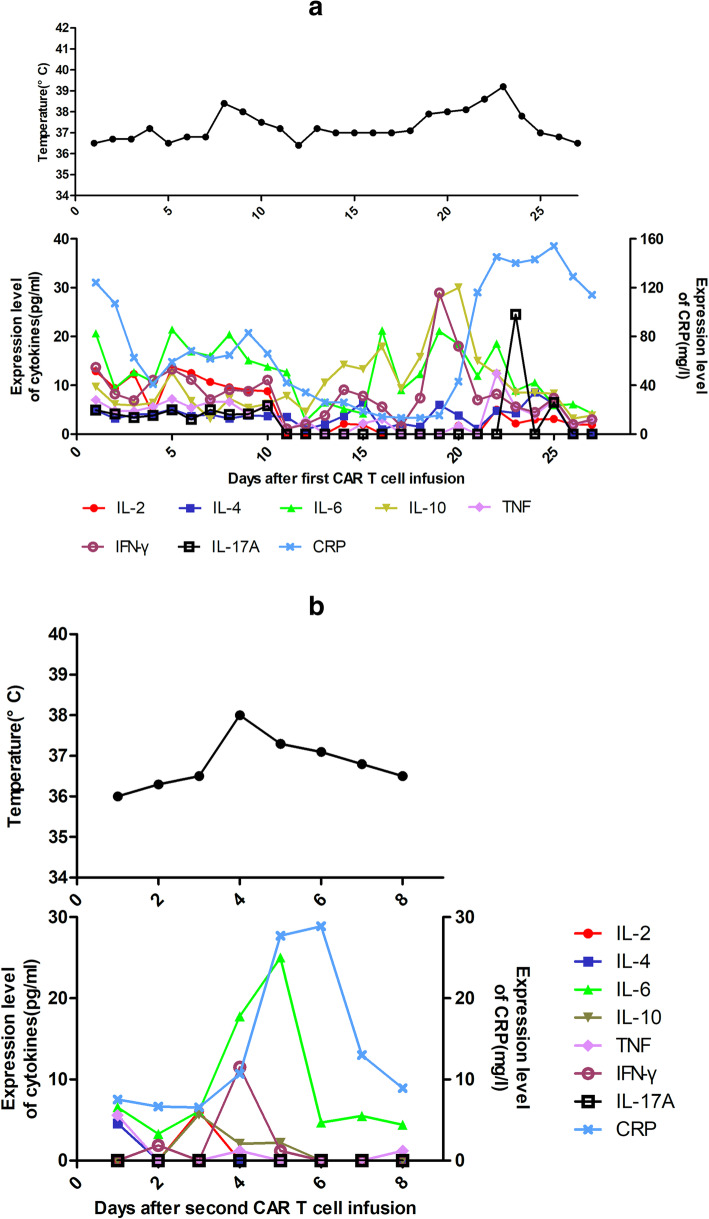
MPAL is considered a high-risk leukemia with a dismal prognosis, and patients should be considered candidates for post-remission consolidation with HSCT, in either CR1 or CR2, particularly patients who are consecutively positive for MRD [9 –12]. Patients with MPAL who are undergoing HSCT might achieve similar results compared with those with AML or ALL; however, a population of patients experience relapse after HSCT. Post-HSCT relapse is generally associated with a grave prognosis and is the primary cause of death for many of these patients. Promising clinical outcomes have been reported in refractory or relapsed B-cell malignancies, including patients with ALL and diffuse large B-cell lymphoma treated with CD19-targeted CAR-T cells [13 –17]. Compared with autologous CAR-T cell therapy, allogeneic CAR-T cells have more advantages. They are free of contamination from inadvertently transduced leukemic blasts, have a lower incidence of T cell dysfunction, are easier to harvest, and are more tolerated of ex vivo manipulation. Moreover, allogeneic CAR-T cells can be prepared in advance and kept in reserve for when they are needed, reducing the waiting time for relapsed patients. Donor-derived CD19-targeted CAR-T cell therapy might be a promising therapeutic option for relapsed or refractory MPAL after HSCT, as more than two-thirds of patients with MPAL express B-lineage antigens on blasts. However, durable remission after CD19-targeted immunotherapy remains a major challenge. A large proportion of CR patients relapse within 1 year [18, 19]. Several assumptions have been made regarding the causes of recurrence, including depletion of CAR-T cells, abnormal function of CAR-T cells induced by the microenvironment or other factors, and a loss or diminished expression of targeting antigens on the cell surface [20 –25].
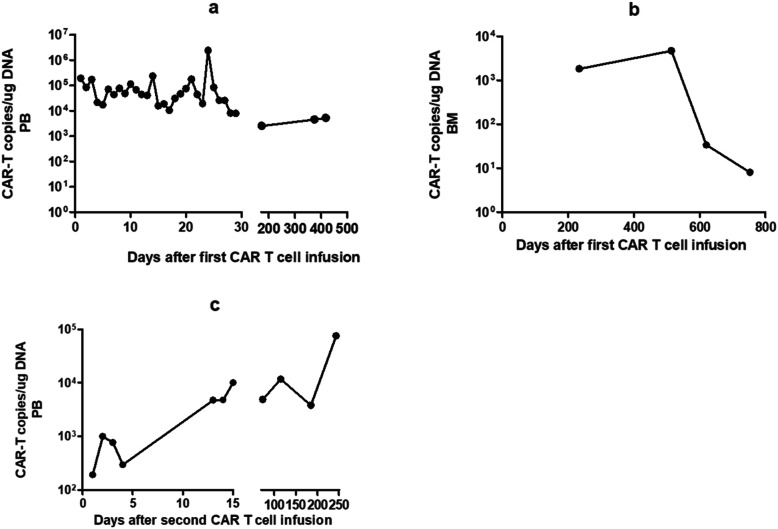
In our case, a patient with a consecutively positive MRD pre-HSCT quickly relapsed within 6 months after HSCT. He then successfully achieved CMR after CD19-targeted CAR-T cell therapy derived from the same donor. Unfortunately, he relapsed again when extremely low numbers of DNA copies of CD19-modified CAR-T cells were detected in his bone marrow 2 years after the first infusion, and the blasts remained CD19-positive. Obviously, although CAR-T cells persisted for a relatively long time in this case, CAR-T cell depletion eventually occurred. However, the question of how to extend CAR-T cell persistence in vivo has still not been answered satisfactorily, and there is no optimal treatment guideline for recurrence after CD19-modified CAR-T cell therapy. Recent studies have confirmed that the host's immune response can recognize epitopes of murine scFv domains of the previous CAR structure, resulting in invalidation of subsequent infusions [26]. Therefore, we chose to treat donor-derived humanized CD19 CAR-T cells and induced a second CMR without severe CRS and acute GvHD. Additionally, the patient maintained continuous CMR, and the persistence of CD19-directed CAR-T cells was detected during the 8 month follow-up period. To address the possible causes of recurrence after CAR-T cell treatment and to improve long-term outcome, a cohort of studies and clinical trials have been conducted. These involved dual-signaling CAR-T cell therapies and preventive infusion of a second CAR-T cell product targeting a different antigen when a significant and sustained decline of copies of previous CAR-T cells was detected before the possibility of relapse [27 –29].