
What this is
- This report presents two pediatric cases of () and ().
- Both conditions are rare genetic disorders leading to severe obesity and metabolic issues.
- Semaglutide, a glucagon-like peptide-1 receptor agonist, was administered to both patients.
- Significant metabolic improvements were observed, suggesting its potential a treatment option.
Essence
- Semaglutide treatment in two pediatric patients with and resulted in significant weight loss and metabolic improvements, indicating its potential utility in managing obesity associated with these syndromes.
Key takeaways
- A 7-year-old boy with experienced weight loss from 36.15 kg to 31.10 kg after 3 months of semaglutide treatment. This indicates effective appetite regulation and weight management.
- A 10-year-old boy with lost weight from 52.00 kg to 45.00 kg over approximately 7 months. This demonstrates semaglutide's potential for long-term weight management in pediatric patients with syndromic obesity.
- Both patients showed improvements in metabolic markers, including reductions in liver enzymes and HbA1c, suggesting broader metabolic benefits beyond weight loss.
Caveats
- The findings are based on only two case reports, limiting the generalizability of the results. Larger studies are needed to confirm the efficacy and safety of semaglutide in these populations.
- Long-term effects and durability of response to semaglutide in and remain unclear, necessitating further investigation.
Definitions
- Bardet-Biedl syndrome (BBS): A genetic disorder characterized by obesity, insulin resistance, and multisystemic involvement due to primary cilia dysfunction.
- Alström syndrome (AS): A rare genetic disorder leading to obesity, insulin resistance, and multisystemic complications, also caused by primary cilia dysfunction.
Simplified
Introduction
Bardet-Biedl syndrome (BBS) and Alström syndrome (AS) are rare ciliopathies caused by homozygous pathogenic variants in genes encoding proteins essential for primary cilia function [1]. These disorders share overlapping phenotypes, including early-onset obesity, insulin resistance, and sensory impairments such as retinal degeneration and hearing loss [2, 3].
BBS is genetically heterogeneous, involving pathogenic variants in at least 22 known genes encoding components of the BBSome complex, which regulates ciliary trafficking [4]. BBS presents with severe early-onset obesity, hyperphagia, insulin resistance, and a predisposition to type 2 diabetes mellitus (T2DM). Retinal dystrophy manifests as night blindness in childhood, progressing to complete vision loss, and hearing loss occurs less frequently. Renal anomalies, including cystic dysplasia and chronic kidney disease [5], are common. Neurological issues, including global developmental delay and autism spectrum disorder, are frequent, along with skeletal abnormalities such as polydactyly and scoliosis.
AS is caused by pathogenic variants in the ALMS1 gene, which encodes a protein essential for the structure and function of primary cilia. Its clinical presentation includes progressive multisystemic involvement, with early-onset obesity and insulin resistance being hallmarks, often progressing to T2DM during adolescence. Retinal dystrophy leads to early visual loss, typically in infancy, progressing to blindness, while sensorineural hearing loss is another common feature. Cardiac complications, particularly dilated cardiomyopathy, frequently develop early, contributing to considerable morbidity and mortality. Hepatic and renal fibrosis is characteristic, often culminating in organ dysfunction. Growth and developmental delay, short stature, and scoliosis are also frequently observed [3].
Setmelanotide, a melanocortin-4-receptor (MC4R) agonist, is the first US Food and Drug Administration–approved therapy for obesity in ciliopathies such as BBS and AS [6]. Activating the melanocortin pathway downstream of leptin receptor signaling restores appetite regulation and reduces hyperphagia. Clinical trials have demonstrated significant weight loss and improved metabolic outcomes, mostly in BBS patients [7, 8]. However, setmelanotide's prohibitive cost limits its accessibility and widespread use.
In contrast, semaglutide offers a widely available, cost-effective alternative. By directly activating glucagon-like peptide-1 (GLP-1) receptors, semaglutide bypasses ciliary dysfunction and may address the underlying metabolic derangements in BBS and AS.
Case Presentation
Case 1: Bardet-Biedl Syndrome
A 7-year-old boy was diagnosed with BBS based on characteristic clinical features, including global developmental delay, hyperphagia, progressive vision loss, and renal abnormalities. On physical examination, he was noted to have microcephaly, with a head circumference at the third percentile, weight above the 99th percentile, and height above the 85th percentile. Notably, acanthosis nigricans was present on the posterior neck and axillae.
Case 2: Alström Syndrome
A 10-year-old boy was diagnosed with AS based on clinical features, including early-onset obesity, hyperphagia, moderate to severe low vision, and hyperopia with astigmatism. He had bilateral sensorineural hearing loss and used hearing aids. He attended a specialized school due to developmental and sensory impairments. On physical examination, he had truncal obesity and acanthosis nigricans. Cardiac evaluation included electrocardiograms and echocardiogram findings within normal limits.
Diagnostic Assessment
Case 1: Bardet-Biedl Syndrome
Whole-exome sequencing identified a nonsense homozygous pathogenic variant c.555G>A, p.Trp185Ter in BBS21. This genetic finding confirmed the diagnosis of BBS. Baseline investigations showed elevated LDL, TAG, and TC. ALT was slightly increased, and HbA1c was within the normal range (Table 1).
Ultrasound scan of the kidneys showed a normal right kidney with normal interval renal growth with mild left hydronephrosis. Magnetic resonance imaging of the brain with magnetic resonance spectroscopy showed nonspecific corpus callosum morphological changes; the intracranial appearances were otherwise unremarkable.
| Baseline | 3 mo of treatment | 6 mo of treatment | 9 mo of treatment | Normal reference range | |
|---|---|---|---|---|---|
| Weight | 36.15 kg(SD +2.32) | 31.10 kg(SD +1.4) | 30.9 kg(SD +1.19) | 30.90 kg(SD +1.19) | |
| BMI | 22.1(SD +2.32) | 18.81(SD +1.47) | 18.75(SD +1.44) | 18.09(SD +1.14) | 5th-85th percentile (∼13.5-17.5) |
| HbA, %1c | 5.4%(36 mmol/mol) | 5.0%(31 mmol/mol) | 5.0%(31 mmol/mol) | Normal: <5.7% (<39 mmol/mol)Prediabetes: 5.7-6.4% (39-47 mmol/mol)Diabetes: ≥6.5% (≥48 mmol/mol) | |
| ALT | 31 IU/L | 20 IU/L | 25 IU/L | <25 IU/L | |
| AST | 31 IU/L | 29 IU/L | 27 IU/L | <40 IU/L | |
| TC | 5.0 mmol/L(193 mg/dL) | 4.4 mmol/L(170 mg/dL) | 4.3 mmol/L(166.3 mg/dL) | Acceptable: <4.4 mmol/L (<170 mg/dL)Borderline: 4.4-5.1 mmol/L (170-199 mg/dL)High: ≥5.2 mmol/L (≥200 mg/dL) | |
| TAG | 2.5 mmol/L(96.7 mg/dL) | 0.6 mmol/L(23.2 mg/dL) | 1.2 mmol/L(46.4 mg/dL) | Acceptable: <1.02 mmol/L (<90 mg/dL)Borderline: 1.02-1.46 mmol/L (90-129 mg/dL)High: ≥1.47 mmol/L (≥130 mg/dL) | |
| LDL-C | 3.6 mmol/L(139 mg/dL) | 2.8 mmol/L(108 mg/dL) | 2.7 mmol/L(104.4 mg/dL) | Acceptable: <2.85 mmol/L (<110 mg/dL)Borderline: 2.85-3.34 mmol/L (110-129 mg/dL)High: ≥3.36 mmol/L (≥130 mg/dL) | |
| HDL-C | 1.4 mmol/L(54.1 mg/dL) | 1.3 mmol/L(50.3 mg/dL) | 1.2 mmol/L(46.4 mg/dL) | Acceptable: >1.16 mmol/L (>45 mg/dL)Borderline: 1.03-1.16 mmol/L (40-45 mg/dL)Low: <1.03 mmol/L (<40 mg/dL) |
Case 2: Alström Syndrome
A novel homozygous frameshift pathogenic variant, c.2296_2299delTCAC (p.Ser766Lysfs*13), was identified in the ALMS1 gene. This variant is predicted to result in nonsense-mediated messenger RNA decay, leading to loss of functional protein.
The patient's kidney function tests and serum electrolytes were within normal limits. Liver enzymes were mildly elevated with alanine transaminase (ALT) 50 IU/L and aspartate transaminase (AST) 38 IU/L.
Glycated hemoglobin A1c (HbA1c) was 5.6% (38 mmol/mol) within the normal range. The liver ultrasound showed that the liver was at the upper limit of normal in size, measuring 12.5 cm in length, with normal echogenicity (Table 2).
| Baseline | After 7 mo of treatment | Normal reference range | |
|---|---|---|---|
| Weight | 52.00 kg, SD +2.18 | 45.00 kg, SD +0.95 | |
| BMI | 26.46, SD +2.09 | 20.27, SD +1.02 | 5th-85th percentile (∼14.0-19.0) |
| HbA,%1c | 5.6% (38 mmol/mol) | 5.3% (34 mmol/mol) | Normal: <5.7% (<39 mmol/mol)Prediabetes: 5.7-6.4% (39-47 mmol/mol)Diabetes: ≥6.5% (≥48 mmol/mol) |
| ALT | 50 IU/L | 24 IU/L | <26 IU/L |
| AST | 38 IU/L | 24 IU/L | <40 IU/L |
| TC | 5.2 mmol/L (201 mg/dL) | 4.7 mmol/L (182 mg/dL) | Acceptable: <4.4 mmol/L (<170 mg/dL)Borderline: 4.4-5.1 mmol/L (170-199 mg/dL)High: ≥5.2 mmol/L (≥200 mg/dL) |
| TAG | 2 mmol/L (177.1 mg/dL) | 1.2 mmol/L (106.3 mg/dL) | Acceptable: <1.02 mmol/L (<90 mg/dL)Borderline: 1.02-1.46 mmol/L (90-129 mg/dL)High: ≥1.47 mmol/L (≥130 mg/dL) |
| LDL-C | 3.8 mmol/L (147 mg/dL) | 3.4 mmol/L (131 mg/dL) | Acceptable: <2.85 mmol/L (<110 mg/dL)Borderline: 2.85-3.34 mmol/L (110-129 mg/dL)High: ≥3.36 mmol/L (≥130 mg/dL) |
| HDL-C | 1 mmol/L (38.7 mg/dL) | 1.3 mmol/L (50.3 mg/dL) | Acceptable: >1.16 mmol/L (>45 mg/dL)Borderline: 1.03-1.16 mmol/L (40-45 mg/dL)Low: <1.03 mmol/L (<40 mg/dL) |
Treatment
Case 1: Bardet-Biedl Syndrome
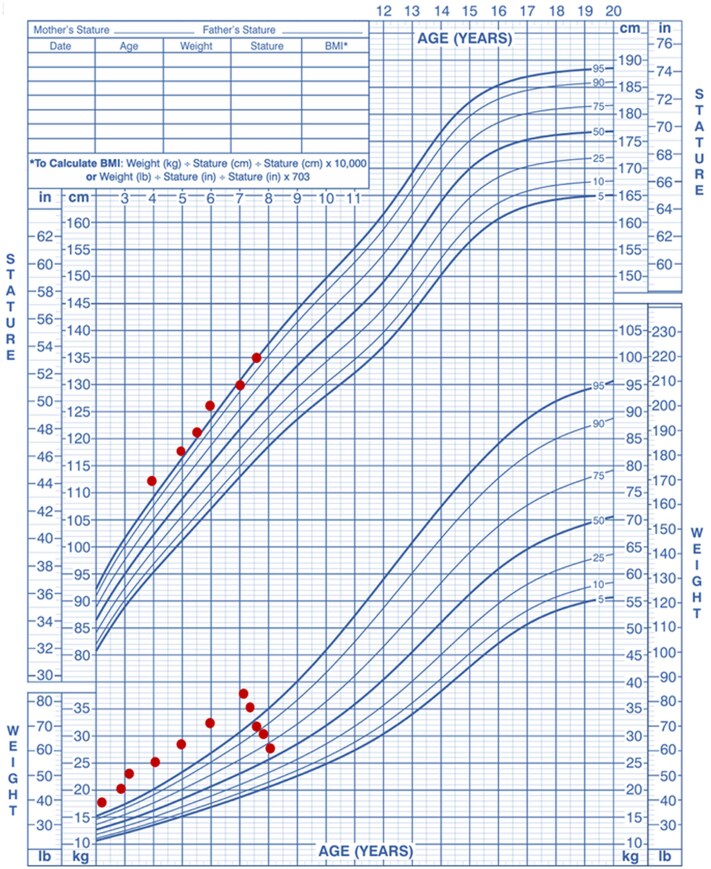
The patient had severe hyperphagia, leading to obesity. At age 7 years, he weighed 36.15 kg, with a body mass index (BMI) of 22.1 (SD +2.32; Fig. 1). Given the severity of his hyperphagia, a therapeutic trial was started with once-weekly subcutaneous semaglutide with a dose-escalation schedule (0.5 to 1 mg).

Weight trajectory before and after semaglutide treatment in a patient with Bardet-Biedl syndrome (BBS) and obesity.
Case 2: Alström Syndrome
The patient's obesity was managed with dietary modification and exercise, but due to inadequate response, once-weekly subcutaneous semaglutide with a dose-escalation schedule (0.5 to 1 mg) was implemented.
Outcome and Follow-up
Case 1: Bardet-Biedl Syndrome
Following this intervention, the patient showed significant weight loss and a reduction in appetite, with no reported adverse effects. On follow-up, 3 months later, his weight had decreased to 31.10 kg, with a BMI of 18.81 (SD +1.47; see Fig. 1). ALT dropped from 31 IU/L to 20 IU/L (normal reference range: <25 IU/L), AST dropped from 31 IU/L to 29 IU/L (normal reference range: <40 IU/L), HBA1c dropped from 5.4% (36 mmol/mol) to 5.0% (31 mmol/mol) (normal reference range: <5.7%), total cholesterol (TC) dropped from 5.0 mmol/L (193 mg/dL) to 4.4 mmol/L (170 mg/dL) (normal reference range: <4.4 mmol/L; <170 mg/dL), and low-density lipoprotein cholesterol (LDL-C) dropped from 3.6 mmol/L (139 mg/dL) to 2.8 mmol/L (108 mg/dL) (normal reference range: <2.85 mmol/L; <110 mg/dL; Table 1).
Case 2: Alström Syndrome
Since initiating semaglutide, the patient's appetite has markedly decreased. Before treatment, he consumed 3 large meals per day along with frequent high-calorie snacks, including sweets, fried foods, and sugary beverages. He often requested food multiple times between meals and displayed significant food-seeking behaviors. Following the start of semaglutide, he now consumes only one main meal per day, with minimal snacking, and no longer exhibits persistent hunger or food preoccupation. Treatment was well tolerated, without hypoglycemia or gastrointestinal adverse effects.
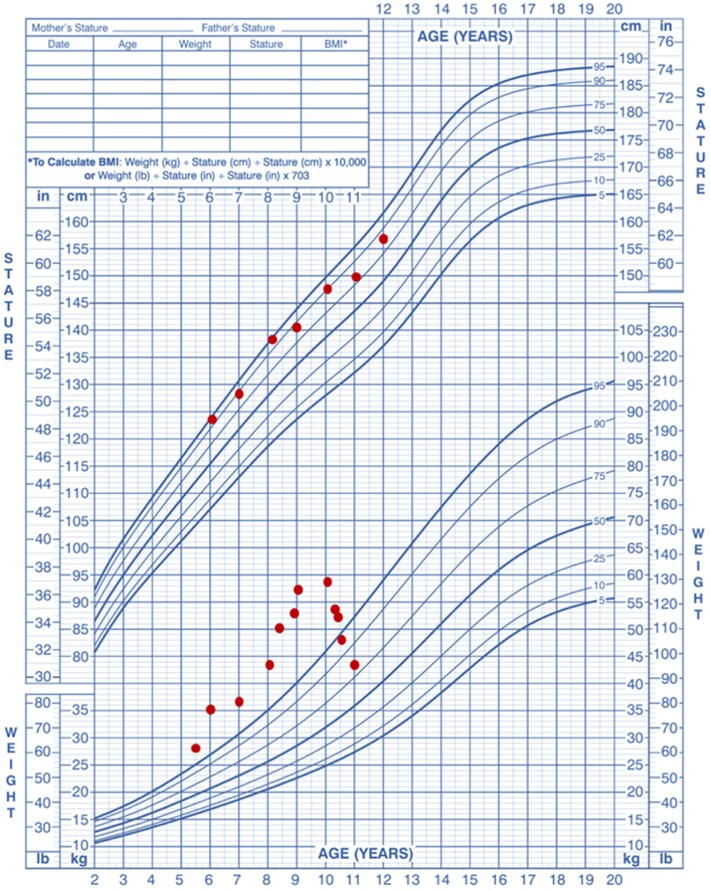
Regular follow-up assessments revealed significant weight loss, from 52.00 kg (SD +2.18, BMI 26.46, SD +2.09) to 45.00 kg (SD 0.95, BMI 20.27, SD 1.02; Fig. 2) over approximately 7 months. HbA1c dropped from 5.6% (38 mmol/mol) to 5.3% (34 mmol/mol) (normal reference range: <5.7%), and ALT dropped from 50 IU/L to 24 IU/L (normal reference range: <25 IU/L). LDL-C dropped from 3.8 mmol/L (147 mg/dL) to 3.4 mmol/L (131 mg/dL) (normal reference range: <2.85 mmol/L; <110 mg/dL; Table 2).

Weight trajectory before and after semaglutide treatment in a patient with Alström syndrome and obesity.
Discussion
Ciliopathies, such as BBS and AS, contribute to obesity through impaired primary cilia function, which disrupts central energy homeostasis. Primary cilia are essential for hypothalamic neuronal signaling, particularly in the melanocortin pathway involving MC4R, where defective ciliary trafficking leads to impaired leptin and satiety signaling, resulting in increased food intake and reduced energy expenditure [1, 9]. In BBS, mutations in BBS genes disrupt the BBSome complex, which is critical for trafficking receptors, including leptin and MC4R, to neuronal cilia [1]. In AS, ALMS1 mutations compromise ciliary structure and intracellular trafficking, similarly disturbing receptor signaling and insulin sensitivity [2]. Collectively, these defects predispose affected individuals to early-onset, severe obesity [1, 2, 9].
Setmelanotide and semaglutide represent distinct but complementary approaches to treating obesity in BBS and AS. Setmelanotide specifically targets MC4R pathways and restores leptin signaling [7]. It has demonstrated efficacy in reducing hyperphagia and body weight, with minimal off-target effects, as shown in pivotal clinical trials [8, 9]. However, its high cost remains a barrier to widespread use in both syndromes.
Recent evidence supports the therapeutic potential of glucagon-like peptide-1 receptor agonists (GLP-1RAs) in AS. In a real-world UK cohort, semaglutide or exenatide administered for at least 6 months in adults with genetically confirmed AS led to a mean weight reduction of approximately 6%, a 1.1% drop in HbA1c, and improvements in lipid profile and hepatic transaminases—comparable to responses seen in polygenic obesity [10]. Ferch et al [11] further reported two young adults with AS who showed enhanced metabolic response to tirzepatide, a dual glucose-dependent insulinotropic polypeptide/GLP-1RA, after a limited response to semaglutide. The patients achieved weight loss of 7.2% and 26.9%, reduced hepatic steatosis, and improved glycemic control, including an 83% reduction in insulin requirement in one case.
In contrast, data on GLP-1RA therapy in BBS are limited. Ganawa et al [12] reported the case of a 28-year-old woman with BBS who experienced a 33% weight reduction over 30 months on semaglutide. However, long-term metabolic effects and durability of response are yet to be studied in larger cohorts. To date, no randomized controlled trials of GLP-1RAs have been conducted in BBS.
Emerging preclinical data provide further rationale for GLP-1RA use in BBS. In a tamoxifen-inducible Bbs5−/− mouse model [12], semaglutide reversed obesity, improved glycemic control and energy expenditure, and normalized hypothalamic gliosis. The treatment also enhanced pro-opiomelanocortin (POMC) expression, indicating restoration of central satiety signaling. Similarly, in Bbs1M390R/M390R mice, Tomlinson [13] showed that semaglutide reduced visceral adiposity and improved insulin sensitivity, with upregulation of hypothalamic GLP-1R expression, suggesting both peripheral and central therapeutic effects.
Semaglutide's mechanism involves the modulation of several metabolic pathways. It enhances satiety through hypothalamic signaling, activating anorexigenic POMC/CART neurons and inhibiting orexigenic neuropeptide Y/agouti-related peptide neurons via the cyclic adenosine monophosphate (cAMP)–protein kinase A (PKA) and PI3K–protein kinase B pathways [9]. In pancreatic β cells, semaglutide increases intracellular cAMP, activating PKA and Epac2, promoting insulin secretion via PI3 K/mechanistic target of rapamycin pathways [14]. Additionally, it exerts anti-inflammatory and cardioprotective effects through adenosine monophosphate–activated protein kinase C and SIRT1 activation, which inhibit nuclear factor κB signaling and reduce oxidative stress [15].
While setmelanotide provides a targeted intervention for MC4R pathway defects, its mutation-specific nature and cost limit its real-world applicability. In contrast, semaglutide is more broadly effective, affordable, and accessible, making it a practical choice for syndromic obesity with multisystem involvement.
In this paper, we describe the first clinical experience using semaglutide in a child with BBS and AS, demonstrating favorable outcomes in weight, glycemic control, and hepatic steatosis. These early findings support consideration of GLP-1RA therapy in BBS and reinforce its established utility in AS. Further studies and clinical trials are warranted to evaluate its efficacy, safety, and long-term metabolic effect in both conditions.
Learning Points
Contributors
H.D. and K.H. managed the patients and prepared the manuscript. I.M. contributed to genetic assessment and interpretation. All authors reviewed and approved the final version.