
What this is
- This review discusses the role of cellular senescence in brain aging and neurodegenerative disorders (NDDs).
- Senescent cells accumulate in the brain, contributing to neuroinflammation and cognitive decline.
- , compounds that selectively eliminate senescent cells, show promise in mitigating these effects.
Essence
- Cellular senescence significantly contributes to brain aging and neurodegenerative diseases by promoting inflammation and dysfunction. Senolytic therapies that target and remove senescent cells may offer a novel approach to combat these age-related conditions.
Key takeaways
- Senescent cells accumulate in the brain with age, leading to increased neuroinflammation and cognitive decline. This accumulation is linked to the secretion of proinflammatory cytokines and other harmful substances.
- , such as dasatinib and quercetin, selectively target and eliminate senescent cells, potentially reversing aspects of brain aging and improving cognitive function. Preclinical studies indicate that these therapies can enhance neural plasticity and reduce inflammation.
- Challenges remain in translating senolytic therapies from preclinical studies to clinical applications due to issues with drug delivery and specificity. Further research is needed to optimize these therapies for effective treatment of neurodegenerative diseases.
Caveats
- The variability in cellular senescence and senescence-associated secretory phenotype () responses across different brain regions complicates treatment strategies. Individual differences in aging and disease progression may affect therapy outcomes.
- Current senolytic therapies face challenges with blood-brain barrier permeability, which limits their effectiveness. Developing methods to enhance drug delivery to the brain is crucial for clinical success.
Definitions
- senolytics: Compounds that selectively induce death in senescent cells, potentially alleviating age-related pathologies.
- SASP: Senescence-associated secretory phenotype; a collection of proinflammatory factors secreted by senescent cells that contribute to inflammation and tissue dysfunction.
Simplified
Introduction
Aging is a natural process associated with structural and functional deterioration, affecting the ability to respond to environmental stressors. Aging affects mainly the brain, causing its functional capability to decline over time. Impairments in learning and retention, time for decision-making, attention, perception of sensory information, and motor function constitute typical manifestations of age-associated cognitive decline. There are several hallmarks of aging, including senescence, proteotoxicity, oxidative stress, and decreased autophagy.
Cellular senescence is a state of cell cycle arrest used as a protective mechanism by which cells avert the spread of injured cells and the development of malignancies. However, it may also stimulate aging-related characteristics and diseases. Cells undergoing senescence exhibit decreased autophagy and increased accumulation of toxins inside the cells, which results in the progression of numerous neurodegenerative diseases (NDDs). NDDs are linked to multiple attributes, such as inflammation, increased levels of oxidative stress, dysfunctional mitochondria, and misfolded or damaged protein aggregation inside the cell. Another intriguing feature of senescent cells is that they can transfer these senescent characteristics to neighboring cells (paracrine senescence) through the secretion of molecules called senescence-associated secretory phenotypes (SASPs), which include chemokines, cytokines, and tumor necrosis factor (TNF). SASPs can activate the senescent cell antiapoptotic pathway (SCAP), leading to the inhibition of apoptosis in aged cells. As a result, the cells fail to clear out waste accumulation and develop neurotoxicity.
Senopathies impair the nervous system's ability to operate and maintain its structure. Some NDDs associated with aging are Alzheimer's disease (AD), Parkinson's disease (PD), and amyotrophic lateral sclerosis (ALS), the incidence of which has increased annually. The two most prevalent NDDs, AD and PD, usually tend to develop in the aged population, with an increase in risk with age. A tissue analysis of patients suffering from AD revealed deposits of senile plaques and abnormalities in tau proteins. Senile plaques are formed because of the deposition of amyloid β peptides, and the hyperphosphorylation of tau is responsible for their abnormal characteristics. Since neurons lack the tendency to undergo cell division like other cells of the body, this deposition increases over time and hinders the formation of a neuronal signaling network.
Hence, clearing senescent cells (SnCs) is a promising alternative for alleviating neurological disorders such as AD and PD. The group of compounds that selectively target and induce cell death in senescent cells is known as senolytics. As a result, they may encourage an extended lifespan and health span and postpone, stop, or even reverse senescence. Senolytics target different SCAPs to selectively kill senescent cells via autophagy. The activation of sirtuin, AMPK, and Nrf2-Keap1 and the inhibition of mTOR by senolytics are the major pathways associated with the induction of autophagy to clear SnC. In addition to inhibitors belonging to the Bcl-2 family, several other molecules categorized in different classes of senolytics selectively cause the death of SnC through a cascade of signaling pathways. Recently, mitoTAMs, which particularly target mitochondria with increased ΔΨm, were shown to exhibit characteristics of senolytics, suggesting another class of senolytics that can be categorized as senolytics with mitochondrial targeting ability. Research has shown that senolytic treatment led to improved spatial memory in 4-month-old male and female mice treated with a combination of quercetin and dasatinib or with fisetin [1].

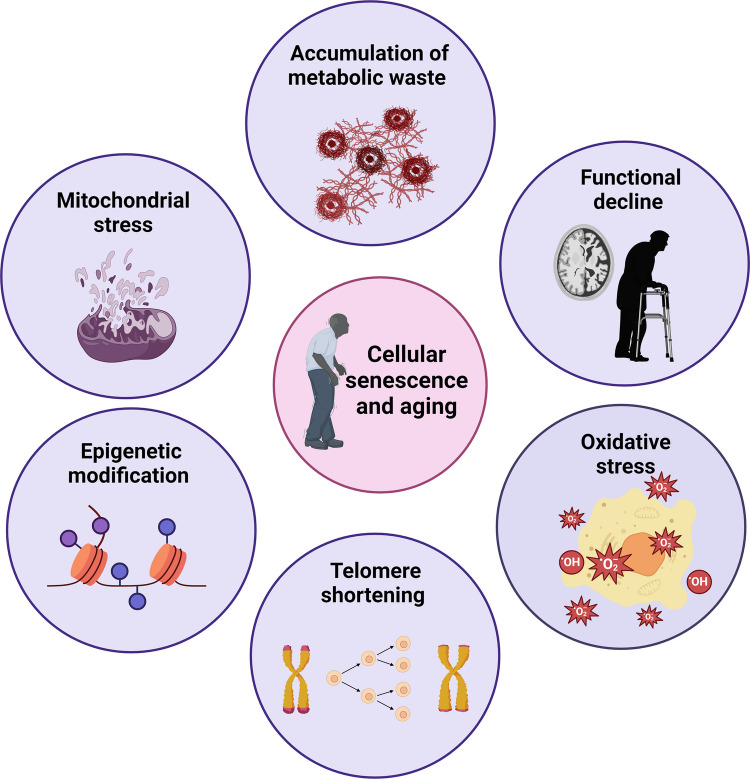
Cellular senescence is characterized by mitochondrial dysfunction, epigenetic modifications, telomere shortening, increased production of reactive oxygen species (ROS) and oxidative stress, accumulation of toxic waste due to autophagy inhibition, and functional decline, as observed in patients suffering from various neurodegenerative disorders
Cellular Senescence

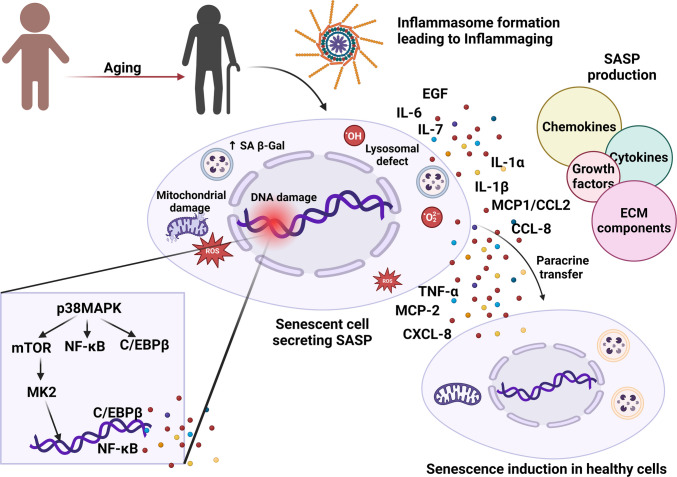
Senescence, inflammation, and SASP. Age-associated increases in inflammaging lead to increased incidences of age-associated neurodegenerative disorders via the upregulation of proinflammatory cytokines and other senescence-associated secretory phenotypes (SASPs), such as chemokines, growth factors, and extracellular matrix (ECM) components
DNA Damage
Double-stranded breaks in DNA are less common, with an average of 10–50/day. However, despite being less common, they contribute to the loss of genetic information and are thus highly mutagenic, leading to toxicity. The two prominent types of machinery responsible for repairing this damage are homologous recombination and nonhomologous end joining. Homologous recombination is mostly prevalent during the late G2 and S phases of the cell cycle, whereas nonhomologous end-joining repair is prevalent during all phases of the cell cycle, including G1 [11]. In mature neurons, the nonhomologous mechanism is the main DNA damage repair pathway; however, the homologous mechanism is highly active in other dividing cells of the nervous system [8].
ATM, a serine/threonine protein kinase, is highly upregulated during double-stranded DNA damage. Activated ATM kinase phosphorylates and activates checkpoint kinase 2 (CHK2) and p53, both of which play essential roles in the induction of senescence [12]. A cascade of cellular pathways, known as DNA damage responses (DDRs), is activated by DNA damage. Double-strand breaks are the major elicitors of such responses. Apart from their direct action to restore the integrity of the DNA, they also participate in the excitation of other cellular responses, including checkpoints in the cell cycle, protein turnover, and gene expression. The main regulatory molecules of such responses are p53/p21 and p16/p16INK4a-pRB. Appropriate regulation is crucial since decreased action of DDRs can lead to the activation of cellular senescence, whereas the overactivation of DDRs is detrimental and can be a consequence of age-related NDDs. Shortening of telomeres as a part of the repeated replication of cells is also a contributing factor to the activation of DDRs and initiation of the process of senescence in cells [13]. The brain is very sensitive to cellular senescence, as it comprises mostly non-proliferative cells, making them vulnerable to defective DNA repair. This can result in the aggregation of unrepaired DNA lesions. This largely contains non-proliferative neuronal cells and is therefore particularly vulnerable to defective DNA repair, which can lead to the accumulation of unrepaired DNA lesions. These DNA lesions have been proposed to be the cause of the neuropathology observed in several NDDs [14].
Mitochondrial Dysfunction
Cellular senescence is caused by dysfunctional mitochondria, which can be explained by a decrease in respiratory ability per mitochondrion as well as a decrease in the mitochondrial membrane potential, along with an increase in the concentration of reactive oxygen species (ROS) [9]. While a slight decrease in the mitochondrial membrane potential can lead to ROS production and drive the electron transport chain (ETC) toward a more oxidized state, a prolonged decrease in the MMP can result in the complete failure of the ETC. Apart from this decreased mitochondrial membrane potential, it can increase the likelihood of proton leakage.
The decline in respiratory capacity has diverse conclusions as far as the role of individual ETC complexes is concerned. For example, complexes III and IV prominently lose function with increasing age in the heart muscle, whereas complex I seems to be more sensitive to loss of function with age in the brain, skeletal muscle, and liver [15].
As the largest ETC complex, the functions of complex I and the production of ROS are attributed to assembly fidelity, which decreases with age, whereas knocking down only one complex I assembly factor is enough to trigger cellular senescence [16]. As this complex in the ETC is associated with the oxidation of the reduced state of nicotinamide adenine dinucleotide (NADH) to NAD+, the decline in respiratory ability may result in the disturbance of the NAD+/NADH balance observed during aging and cellular senescence. In contrast, during senescence induced by oncogenes, the NAD+ salvage pathway is positively regulated, thus contributing to increased SASP production through the suppression of the AMPK signaling pathway [17].
Mitochondrial dysfunction resulting from a decrease in either sirtuins, such as SIRT3 or SIRT5, the expansion of mtDNA, or the administration of an inhibitor of the ETC, such as rotenone or antimycin A, led to a reduction in the cytosolic NAD+/NADH ratio and led to the arrest of senescent cell growth. SIRT3 is a mitochondrial deacetylase that removes acetyl groups from enzymes and components of the ETC. On the other hand, SIRT5 plays a role in the succinylation and glutarylation of ETS components. A decrease in either SIRT3 or SIRT5 is associated with a reduction in functional enzymes of ETS, lower ATP production, and elevated production of ROS. Excessive production of ROS leads to oxidative damage, increased mitochondrial permeability, and structural and functional collapse of mitochondria [18]. Similarly, tissue samples collected from PolGD257A mice with major mtDNA mutations [19] exhibit extensive senescence as a consequence of reduced NAD+/NADH ratios. Excitingly, in each of these instances, the resulting senescence was quantified by an SASP in the absence of its proinflammatory arm, including the activation of NF-κB and overproduction of interleukins (ILs), such as IL1, IL6, and IL8 [20].
Oxidative Stress
Senescent cells are characterized by dysregulated metabolic functions, including deteriorated lysosomal function and accumulation of lipofuscin, an aggregate of intracellular catabolism that is not biodegradable [21]. The improper functioning of lysosomes decreases mitophagy, causing the aggregation of distorted mitochondria, which results in increased ROS. This leads to the targeting of lysosomes and aggravates macromolecular damage, leading to increased expression of senescence phenotypes [22].
Reactive oxygen species are prominent and major regulators of senescence in cells and trigger all the associated senescence phenotypes mentioned above. Free radicals, such as HO and RO, are highly reactive and short-lived because they usually target molecules in proximity to their generation site. Elevated levels of peroxides (oxidative stress), single- or double-strand breaks, and DNA base modifications are triggered by labile iron, and there is oxidative damage to proteins and lipid peroxidation. All these effects have the potential to initiate and elicit senescence in cells.
Senescence-Associated Secretory Phenotype
The extracellular environment of a cell comprises a variety of molecules that it secretes over its lifetime. However, the secretome of senescent cells varies drastically from that of their normal proliferating counterparts. SASPs can be categorized into cytokines, chemokines, growth factors, proteases, and insoluble extracellular matrix (ECM) factors.
The SASPs identified in neurons vary and differ based on the stage of senescence, cell type, model organism, and molecules that initiate senescence. One of the prominent cytokines that play a major role in SASPs is interleukin-6 (IL6). IL6 is a proinflammatory cytokine that is directly regulated by the DNA damage signaling pathways ATM (ataxia-telangiectasia mutated) and CHK2 (checkpoint kinase 2). Another notable cytokine is IL1 (α and β), which is overexpressed in senescent cells. Normal brain aging and age-associated NDs are linked with microglia-mediated increases in the levels of IL-1β and IL-6, which are proinflammatory cytokines [23]. Senescent cells also overexpress chemokines such as CXCL-8, along with GROα and GROβ. The components of the CCL family that are generally increased in senescent cells include MCP-1, 2, and −4 (CCL-2, −8, and −13); HCC-4 (CCL-16); eotaxin-3 (CCL-26); and macrophage inflammatory protein (MIP)−3α and −1α (CCL-3, −20) [24]. C–C motif chemokine ligand 2 (CCL2) is the prominent SASP molecule involved in neuronal senescence [25].
Brain aging is a natural and intricate process linked with an increased number of senescent cells that induce neuroinflammation and a decline in immunity. To acknowledge this crucial relationship between aging and inflammation, inflammaging was introduced as an emerging concept. The process of inflammaging refers to elevated levels of markers linked with inflammation, such as chemokines, cytokines, and growth factors, eventually leading to chronic damage. Given the prominent role of inflammation in aging, it has now been accepted as a prominent hallmark [26].
Even though the population of senescent cells is very low in tissue compared with that of healthy cells, senescent cells are still capable of generating age-associated NDDs [27]. The secretion of SASPs from senescent cells helps accelerate the aging process via the disruption of cellular homeostasis and the transmission of senescent phenotypes to neighboring healthy cells through the paracrine transfer of SASPs [28]. The SASPs include the production of diverse molecules, among which IL-1 α/β, IL-6, IL-8, TGF-β, and TNF-α are the most studied and are considered to be the major SASPs [29]. The secretion of these proinflammatory molecules facilitates the recruitment of immune system cells to the site of senescent cell accumulation, resulting in their degradation and leading to inflammation.

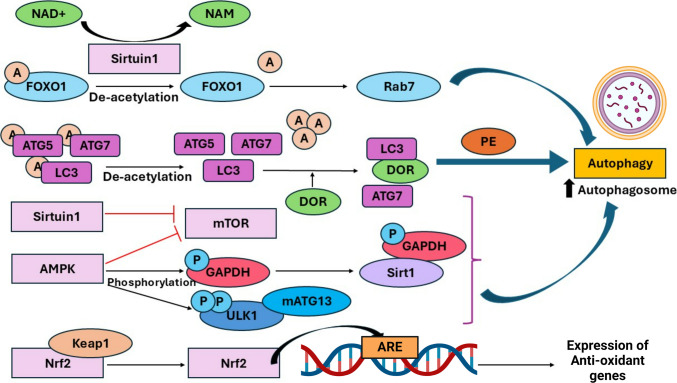
Pathways associated with autophagy regulation. Sirtuin 1, AMPK, mTOR, and Nrf2Keap1 are crucial metabolic pathways associated with the modulation of autophagy. Sirtuin 1 facilitates the deacetylation of FOXO1, which further leads to Rab7-mediated activation of autophagy. It also interacts with several autophagy genes (Atgs) and LC3, leading to their deacetylation and facilitating autophagosome formation. Sirtuin1 and AMPK also act as direct inhibitors of mTOR, thus activating autophagy. AMPK is also associated with GAPDH and ULK1, which are crucial for the development of autophagosomes. Nrf2 is released from Keap1 and migrates to the nucleus, where it binds to AREs, leading to the transcription of genes involved in autophagy
Senescence in Brain Aging and Neurodegenerative Diseases
Although brain aging is a prevailing and natural phenomenon associated with every individual, the extent of this process vastly varies among individuals, emphasizing heterogeneity in the process of brain aging. This heterogeneity is a result of intricate correlations among various factors, such as genetic factors, lifestyle habits, and diseases. These factors either lead to the aggravation of neuropathy or protection against age-associated neuropathic diseases [32]. Divergences in the predicted brain age from the chronological age are regarded as signs linked with changes in brain function and structure due to aging and are termed brain aging.
Brain atrophy (reduction in the volume of gray matter and thinning of the lining of the cortex) [33], a decline in the integrity and volume of white matter in the brain, a reduction in white matter integrity and volume, and dysregulation of information transfer across synapses are major changes that accompany brain aging [34, 35]. These phenotypes, when drastic, can be regarded as early signs of accelerated aging or an underlying cause of neurodegenerative disease. Although senescence associated with other tissues has recently been associated with aging and several disorders have developed due to aging, its intricacy in brain aging has just begun to be studied. However, increasing evidence indicates that senescence might also influence brain aging, as previously demonstrated for other organs.
Among the total cells in the brain, glial cells account for approximately 50% of all cells and play crucial roles in modulating the process of brain homeostasis in the context of health and disease [36]. When exposed to oxidative stress or inhibitors associated with the function of the proteasome, murine and human astrocytes display a decreased ability to proliferate as well as altered expression levels of several well-recognized markers of cellular senescence, such as the activity of SA-β-gal and the levels of the proteins p53, p21WAF1/CIP1, and p16INK4A [37]. Evans et al. reported that human astrocytes tend to undergo both telomere erosion-independent and p53-dependent senescence. In that group, the frontal cortex was observed to have elevated p16INK4A expression in aged and AD groups in comparison to that in younger subjects [38]. The process of senescence can also be triggered in astrocytes via the deposition of amyloid-β plaques, which initiates the activity of SA-β-gal, p16INK4A expression, and a SASP response linked with the kinase p38 MAP [39].
Senescent glial cells exhibit an increased presence of effectors associated with functional microglia. Elevated expression of proinflammatory cytokines, such as IL-1β, TNF-α, and IL-6, has been reported in aged microglia [40]. However, only studies based on flow cytometry analysis revealed an increase in the number of p16INK4a− and p21WAF1/CIP-positive microglia derived from the brains of aged mice. This inclination correlated with elevated autofluorescence (senescent cell characteristics because of lipofuscin aggregation) and increased γH2AX and Bcl-2 (antiapoptotic proteins) levels [41].
Once the neurons mature, they have the potential to last for the entirety of our lives and exhibit significant plasticity potential. This allows mature neurons to regulate complex networks of synapses and continuously adapt to changing environmental conditions. Although a drastic decline in neuronal function occurs with age, efforts to target neuronal senescence for the treatment of neurodegenerative diseases are still lacking [42]. Given that neurons exist as postmitotic, nonproliferating cells (arrested in the cell cycle G0 phase), during neuronal senescence, they must adhere to other mechanisms apart from the inhibition of proliferation, such as those adopted by other postmitotic cells. The most widely used marker of cellular senescence is the increased activity of SA-β-gal, although it is not very specific. Studies have revealed increased levels of SA-β-gal in the hippocampus region of the brains of aged rats [43], cultured cells for an extended duration [44], and neurons from cerebellar granules [45]. To ensure senescence, the neuronal cultures were also characterized by increased levels of SAPS markers in vitro. In long-term cultures of hippocampal neurons, several markers associated with cellular senescence were found to be upregulated in response to the Cdk inhibitor p16INK4A (Cdkn2a), which increased the stimulation of kinase p38 MAP and decreased lamin B1, resulting in changes in chromatin structure.
Alzheimer's Disease
Alzheimer's disease (AD) is the most prominent neurodegenerative disorder and was first described by Alois Alzheimer in 1906. It is regarded as the most common form of dementia in older adults, accounting for 60–70% of all dementia cases [46]. It is manifested by three prominent hallmarks: Aβ plaques, tau phosphorylation, disorientation, and memory impairment. Amyloid β (Aβ) plaques are deposited due to the cleavage of amyloid precursor protein (APP) by β- and γ-secretase, generating the Aβ peptide. This fragment leads to toxicity in neurons either directly by causing neuroinflammation or indirectly by inducing the production of free radicals. Another pathological hallmark of AD is the hyperphosphorylation of tau proteins, which are involved in microtubule formation and are primarily distributed in axons. AD progression is categorized into 3 phases: (1) presymptomatic, in which there is no cognitive decline; (2) mild cognitive impairment (MCI), associated with short-term memory decline due to the loss of neurons in the hippocampal region of the brain (lasting 2–7 years); and (3) AD, including both short- and long-term memory deterioration (lasting 3–8 years, leading to a more aggressive stage and death). Presently, there is no cure for AD, and the available medications provide relief from only the symptoms.
The most prominent risk factor for AD is aging and associated senescence. Previously, therapeutics used to combat AD have focused primarily on its pathological hallmarks. However, in recent years, research has shifted toward strategies for combating the effects of cellular senescence for the prevention and treatment of this disease. Astrocytes and microglia undergoing senescence are prominently observed in the brains of patients with AD, along with increased activity of SA-β-gal [47]. By inducing the NF-κB and p38/MAPK pathways, TNF-α and inflammatory cytokines such as IL-6 and IL-8 are secreted by these senescent cells, which also transfer these characteristics to neighboring cells via paracrine transfer [48]. Microglia have been shown to undergo senescence in patients with AD, which is attributed to the shortening of telomeres [49]. This senescence leads to the formation of SASPs in AD conditions and the aggregation of senescent cells, which is associated with the formation of reactive oxygen species and pro-inflammatory molecules. It also promotes the accumulation of amyloid plaques and the hyperphosphorylation of tau proteins [50]. A study conducted on mouse models of AD revealed that markers associated with cellular damage and cell cycle arrest, including p16, p21, and p53, as well as markers associated with inflammation, such as IL-6 and TNF-α, were found to be overexpressed [51].
Parkinson's Disease
PD is the most prominent ND after AD and is characterized by the loss of functional neurons in the pars compacta region of the substantia nigra, including the deposition of α-synuclein aggregates. The primary symptoms of PD include tremors, muscle stiffness, balance impairment, and a decreased ability to perform spontaneous and automatic actions. The Global Burden of Disease Study estimates that the number of PD cases will double from approximately 7 million in 2015 to approximately 13 million in 2040, suggesting a potential 'PD pandemic' [52]. Increased expression of SA-β-gal and an abundance of senescent cells in brain tissue from Parkinson's disease patients are linked to α-synuclein deposition. In PD brain tissues, markers associated with senescent cells, such as p16INK4a, and diverse SASP molecules, such as MMP-3, IL-6, 1α, and 8, increase. These findings imply that cellular senescence is involved in dopaminergic neurodegeneration [53].
Increased expression of SA-β-gal and an abundance of senescent cells in brain tissue from Parkinson's disease patients are linked to α-synuclein deposition. In PD brain tissues, the levels of p16INK4a and various SASP factors, such as MMP-3, IL-6, 1α, and 8, increase. These findings imply that senescence is involved in the degeneration of dopaminergic neurons [53]. Mitochondrial dysfunction is strongly implicated in the pathophysiology of PD. A mitochondrion-associated kinase protein, phosphatase, and tensin homolog (PTEN)-induced kinase 1 (PINK1), was identified in patients with early-onset PD. It has also been shown to be deposited in dysfunctional mitochondria [54].
Multiple Sclerosis
Multiple sclerosis (MS) is categorized as an autoimmune disorder in which the body's immune system starts attacking the myelin sheath, which covers the neurons, causing their degeneration and dysregulation of neurotransmission. The term MS refers to the specific regions deposited by scar tissue (plaques or lesions) because of an attack by immune cells. MS can be distinguished into two phases, where phase 1 is marked by relapses and remissions, and phase 2, wherein a more critical accumulation of disability occurs. Aging and age-associated senescence are common drivers of MS. The accumulation of SnC with aging and the secretion of SASPs, such as cytokines, are secreted by senescent microglia, resulting in NDs such as MS. Furthermore, demyelinated white matter lesions contain lipofuscin + aged glial cells and neurons derived from MS patients but not usually white matter. Finally, the remyelination ability of brain progenitor cells is limited by cell senescence, which accelerates the development of multiple sclerosis [55].
A study was conducted to evaluate the difference in the expression of p16INK4a, a gene associated with cellular senescence, in patients with MS and healthy volunteers. The study included 52 MS patients and 38 healthy individuals. Those authors reported that patients above the age of 50 and suffering from MS had higher median p16INK4a expression than did controls [56]. Another study revealed that senescence phenotypes are upregulated in microglia and macrophages post-demyelination and reduced during remyelination in young mice. However, senescent phenotypes are prevalent in demyelinated lesions, leading to ineffective remyelination. Markers of SASPs, such as CCL11, were found to be elevated in lesions of aged mice, suggesting that targeting SnCs can prove to be a beneficial therapeutic option for MS treatment [57].
Amyotrophic Lateral Sclerosis
Amyotrophic lateral sclerosis (ALS) is a progressive neurodegenerative disease that affects motor neurons. It is associated with muscular weakness, failure of respiration, and degeneration of motor neurons, eventually leading to death. To date, the cause of the disease is unknown; however, mechanisms such as oxidative stress, mitochondrial dysfunction, gene mutation, neuroinflammation, and dysfunction of synaptic transmission are considered contributing factors to ALS. The presence of two prominent variants, TDP-43 and FUS, in the cytoplasm, which are found in the nucleus under normal conditions, is thought to be responsible for neurodegeneration. Mutation of an important lncRNA, C9ORF72, which is responsible for autophagy, is another prominent contributing factor to ALS [58].
Age is a well-known causative factor for ALS, with close associations with cellular senescence. However, the exact mechanism by which senescence affects ALS is not well understood. A study was conducted to elucidate the expression of senescence markers during the loss of motor neurons and gliosis in the spinal cord and how they lead to the progression of paralysis in a SOD1G93A rat model of ALS. They observed that microglia, motor neurons, astrocytes, and the lumbar spinal cord all presented positive results for p16 staining [59]. Another study revealed that the expression of the p16 and p21 markers of senescence in the frontal cortex of the ALS brain is associated with the senescence of astrocytes and disruption of the normal cell cycle in the early phase of the disease. They reported that p16 and p21 are present in neurons, glial cells, and astrocytes in the brain tissues of patients collected post-mortem, suffering from ALS, compared with control tissues [60].
To date, how SnCs potentially contribute to the pathological symptoms of ALS is unclear, and this connection needs to be extensively studied. However, evidence suggests that the presence of SnCs and associated markers in ALS patients and disease models reflects an overlap in these two conditions. Further elucidation of the role of SnCs in ALS can help develop novel therapeutics to combat this disease.
Signaling Pathways Associated with Brain Aging and Diseases
mTOR Signaling
Mammalian target of rapamycin (mTOR) is the major pathway that links oxidative stress and autophagy. It plays a crucial role as an energy sensor molecule. mTOR is composed of two associated protein complexes, namely mTORC1 (comprising 5 subunits: mTOR, raptor, mLST8, PRAS40, and Deptor) and mTORC2 (comprising Deptor, Rictor, mLST8, mSIN1, and Protor-1). Studies have shown that mTORC1 is associated with autophagy and that its inhibition leads to increased longevity. Under normal conditions, when nutrients are available, mTOR is activated, and it phosphorylates the ULK1 complex, thus inactivating it and the process of autophagosome formation. However, during nutrient deprivation, mTOR is inhibited, which leads to autophosphorylation and activation of ULK1 and the formation of autophagosomes, which decrease toxic accumulation in the cell.
Rapamycin is a natural molecule produced by a soil bacterium, Streptomyces hygroscopicus, which was first identified as an antifungal antibiotic in 1975 on Easter Island (Rapa Nui), from which it was named. Rapamycin can act on mTORC1 by directly blocking the recruitment of substrate, thus inhibiting it and restricting access to active sites by binding the FRB domain of the immunophilin FKBP12 associated with TOR.
AMPK Signaling
Another sensor molecule is AMPK, which senses variations in cellular energy, such as deviations in the levels of ATP and AMP. This protein comprises β and γ, which are regulatory subunits, and α, which is a catalytic subunit. AMPK is activated when ATP levels decrease through the phosphorylation of threonine in the α subunit. It can regulate cell growth and proliferation as well as autophagy; hence, its signaling is thought to be associated with aging and lifespan [61].
AMPK directly or indirectly influences the autophagy process. It directly functions by binding to the mTORC1 receptor, thus rendering it incapable of phosphorylating ULK1 and inhibiting it. The direct pathway is capable of directly phosphorylating ULK1 to initiate the process of autophagosome formation. Moreover, AMPK signaling is involved in the activation of gene transcription associated with the regulation of oxidative stress via the phosphorylation and activation of FOXO at its regulatory sites.
Metformin also hinders the transfer of phosphate groups and aggregation of α-synuclein to safeguard against mitochondrial dysfunction, oxidative stress, and the regulation of autophagy, and decreases neurodegeneration and neuroinflammation through the activation of the AMPK signaling pathway [62].
Sirtuin 1 Signaling
Another molecule associated with delaying cellular senescence is sirtuin, which was discovered in the 1970s. From Sirtuin 1 (SIRT1) to SIRT7, there are seven isoforms of sirtuin, among which SIRT1 plays a crucial role as a deacetylase whose activity is regulated by NAD+ [63]. SIRT1 is activated in response to the presence of NAD+ and the deacetylase FOXO1, which helps Rab7-mediated increases in the transcription of genes associated with autophagy activation. Sirtuin 1 is associated with the deacetylation of genes (atg5 and atg7), which are involved in autophagy and crucial for the formation of autophagosomes. LC3 deacetylation is also facilitated by Sirtuin 1, which subsequently interacts with DOR, a nuclear protein, facilitating their migration from the nucleus to the autophagosome. Atg7 also interacts with deacetylated LC3, leading to its conjugation to phosphatidyl ethanolamine (PE) and further integration with the early membrane of the autophagosome.
Nrf2-Keap1 Signaling
The nuclear element factor is linked to erythroid 2, an essential factor for controlling oxidative stress in the Nrf2-Keap1 pathway, which is linked to Kelch-like ECH-associated protein 1 (Ji et al., 2015). Under normal circumstances, Nrf2 is linked to Keap1 in the cytoplasm, preventing its activation and mediating its destruction. However, in stressful situations, such as when there is an increase in reactive oxygen species (ROS), Nrf2 can separate from Keap1 and move into the nucleus. It interacts with autophagy response elements (AREs) present in the promoter area of the antioxidant gene transcriptional unit within the nucleus to aid in transcription [64].
Interplay Among the mTOR, AMPK, SIRT1, and Nrf2-Keap1 Signaling Pathways
Signaling pathways such as the mTOR, AMPK, SIRT1, and Nrf2-Keap1 pathways are responsible for the modulation of complex biological phenomena such as aging. They regulate processes such as senescence, autophagy, and neuroinflammation, which in turn contribute to age-associated neurodegenerative diseases. Various studies have revealed a close interconnection between these processes, leading to synergistic action in the context of protection from NDDs. Activation of the mTOR pathway is responsible for the growth of cells; however, its chronic activation can lead to senescence and declined autophagy in cells. Studies in neuronal and glial cell models have revealed that mTOR activation leads to overproduction of SASPs, such as IL-1β, IL-6, and MMPs, which are inflammatory markers, suggesting that long-term mTOR activation leads to neuroinflammation [65].
Another study on the effect of mTOR inhibition via rapamycin in an APP/PS1 mouse model of AD revealed that treatment with rapamycin inhibited mTOR, which consequently led to a decrease in the expression of SASP markers and increased expression of autophagy markers. The cognitive function of rapamycin-treated mice was also found to improve [66]. AMPK is another pathway that is closely linked with autophagy regulation and mTOR signaling. A study conducted on in vitro astrocyte cultures treated with 5-aminoimidazole-4-carboxamide riboside, an AMPK activator, revealed reduced p16 and β-galactosidase levels as well as improved mitochondrial function [67]. Similarly, another study demonstrated that the use of metformin results in activation of the AMPK pathway in aged and AD mouse models. They also revealed that activation of AMPK decreased microglial activation and facilitated neurogenesis in mice, highlighting that AMPK activation is closely related to neuroinflammation and brain aging [68]. The influence of SIRT1 on cognition has been studied, revealing that increased expression of SIRT1 leads to improved cognitive function and decreased expression of markers associated with neuroinflammation in a mouse model [69].
Moreover, the overexpression of SASP markers such as MMP-2 and IL-6 in Aβ-treated in vitro models, because of astrocyte senescence, also led to the loss of neuronal function and synaptic integrity. These findings suggest that a wide variety of cells are affected in the brain by senescence and that they transmit these characteristics to neighboring healthy cells [39]. In addition, various studies have reported that a decline in autophagic flux in neuronal and glial cells in both in vitro and in vivo models leads to oxidative stress and mitochondrial damage, which promotes the p53-p21 pathway, leading to neuroinflammation [70]. Studies have also shown that p62, an important autophagy component that binds cargos to the autophagosome, is linked with Nrf2 dissociation from Keap1. p62 binds to keap1, thus facilitating the dissociation of Nrf2. Once dissociated, Nrf2 enters the nucleus and promotes the transcription of AREs [71]. Hence, these mechanisms are interconnected, and disruption of one pathway closely affects the functions of other pathways. Therefore, therapeutic interventions such as senotherapeutics influencing multiple pathways could be potential alternatives for the treatment of NDDs.
Long Noncoding RNAs
Noncoding RNAs with nucleotide lengths greater than 200 are recognized as long noncoding RNAs (lncRNAs) and have been shown to play a significant role in neurodegenerative diseases. Earlier research highlighted the participation of lncRNAs in various pathways involved in the aging and growth of cells, both of which are closely linked to autophagy. Additionally, the negative regulation of these lncRNAs can contribute to the progression of many neurological diseases [71].
A previous study revealed that the level of LC3B, which is an important marker of autophagosome formation, was elevated in an Aβ-treated AD model in SH-SY5Y cells when lncRNA17A was knocked down compared with that in cells with elevated expression of lncRNA17A. This was associated with the up- and downregulation of the GABABR2 receptor, which plays a role in the inhibition of transmission across the synapse, with up- and downregulation of lncRNA 17A. This study revealed that decreased levels of lncRNA 17 A might help regulate autophagy via alternative splicing of GABABR2 and thus help in the elimination of senescent cells [72]. Another study conducted on an APP/PS1 mouse model of AD revealed that the expression of the lncRNA NEAT1 increases with age. The lncRNA NEAT1 leads to the ubiquitination of PINK1, PTEN-induced putative kinase 1 (PTEN-kinase 1), which is important for mitochondrial function. Hence, its ubiquitination and mitophagy can lead to mitochondrial dysfunction and toxic waste accumulation [73].
Like in AD, the lncRNA NEAT1 also plays a crucial role in PD via the regulation of PINK1 and LC3B [74]. Another study revealed that the negative regulation of the lncRNA SNHG1 is associated with mTOR inhibition and the activation of autophagy, which promotes the survival of dopaminergic neurons in patients with PD. However, another lncRNA, HAGLROS, has been shown to regulate the autophagic mechanism via regulation of the PI3K/AKT/mTOR pathway [75].
Another important lncRNA is NEAT1_2, which is overexpressed in neurons associated with motor activities in patients with ALS compared with healthy individuals. This highlights its potential for use as a disease marker in determining ALS [76]. Moreover, lncRNAs also play a significant role in the progression of HD. Various lncRNAs, such as MEG3, NEAT1, and XIST, are involved in HD development by associating with miRNAs and decreasing their ability to bind to their target mRNAs [77].
MicroRNAs and Their Association with Senescence
MicroRNAs (miRNAs) are small noncoding molecules with a length of approximately 22 bp and have recently gained attention for their role in regulating cell death via the modulation of pathways associated with cellular senescence at the transcriptional and posttranscriptional levels [78]. Recent studies have indicated the ability of miRNAs to modulate aging and senescence in cells either through the degradation of mRNAs or via translational downregulation [79]. This process is referred to as posttranscriptional gene silencing, wherein miRNAs form partial bonds with the 3'UTRs of target mRNAs, eventually hindering their translation into their respective proteins and leading to a decrease in mRNA stability [80].
Numerous miRNAs, such as miRNA-9, miR-22, miR-29, miR-34a, miR-210, miR-494, miR-106b, miR-125b, miR-126, miR-146a, miR-21, miR-449a, the miR-17–92 cluster, and the miR-200 family, are differentially expressed in senescent cells [81]. There is growing evidence that suggests the involvement of miRNAs in signaling cascades involved in crosstalk with the cell cycle and senescence through crucial p16 and p53 signaling pathways and SASP regulators [78].
Under stress conditions, activation of the p16 pathway can lead to the induction of senescence, consequently leading to CDK inhibition, thereby inhibiting the phosphorylation of retinoblastoma, deactivating E2F, and inducing senescence. Many miRNAs directly modulate the process of cell senescence through interaction with p16 mRNA and regulating its expression levels. For example, miRNA-24 (miR-24) suppresses the expression of p16 via a posttranscriptional approach by attaching to the 3′UTR of p16 mRNA in human diploid fibroblasts, thus inhibiting replicative senescence. In addition, various other miRNAs regulate the process of cellular senescence via the activation of the p16 signaling cascade without attaching directly to p16. For example, suppression of DNA methyltransferase 1 (DNMT1) expression directly by miR-217 leads to the upregulation of both p16 protein and mRNA expression, eventually resulting in human skin fibroblast senescence [78]. Like p16 signaling, various miRNAs, such as miR-25, miR-30d, and miR-125b, inhibit senescence by binding directly to p53 and inhibiting its transcription (Kumar et al., 2011). In contrast, other miRNAs are indirectly involved in the process of regulating senescence via the regulation of p53 [82].
A diverse group of miRNAs modulates the levels of SIRT1. Notably, miR-34a induced cellular senescence by targeting SIRT1 in various tissues. miR-217 was found to induce a premature senescence-like phenotype through direct targeting of SIRT1. miR-34a overexpression can induce senescence, and miR-34a is considered a promising target for treating inflammation and age-related diseases [83]. It has also been reported that targeting genes in antioxidant pathways other than SIRT1 contributes to oxidative stress-mediated cellular senescence. However, another study reported that increased expression of miR-34a can lead to increased levels of IL-6, a crucial SASP [84].
Deletion of another miRNA, miR-155, leads to decreased expression of IL-1β, a proinflammatory cytokine [85]. miR-9 is known to regulate the proinflammatory effect of IL-17A [86]. An increase in the expression of miR-335 significantly diminishes the expression of inflammatory molecules, including IL-1β, −6, and −8 [87].
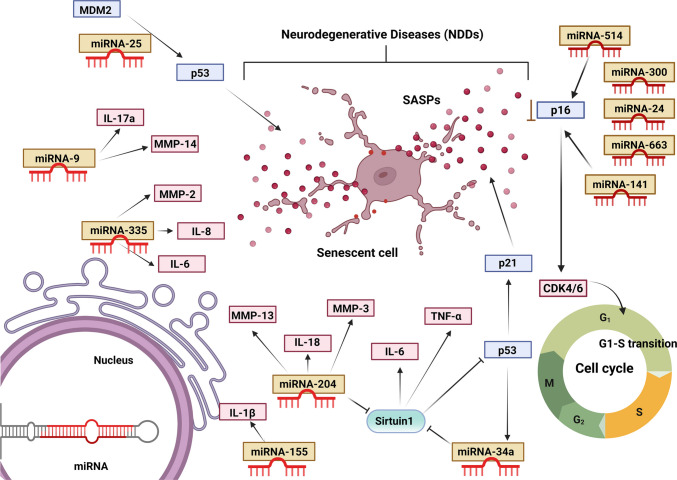
miRNAs are responsible for the regulation of an important cell cycle regulator, p16, a gene related to tumor suppression. p16 works by acting as an inhibitor of cyclin-dependent kinase (CDKs), especially CDK4 and CDK6. These CDKs are important for the cell transition from the G1 to S phase of the cell cycle. The presence of p16 inhibits this transition and leads to cell cycle arrest, contributing to senescence. miRNAs such as miRNA-24, miRNA-300, miRNA-514, miRNA-613 and miRNA-141 help the cell transition from G1 to S phase by inhibiting or suppressing p16 expression. miRNA-24 binds to p16 and causes a decrease in its translation, whereas the other miRNAs lead to suppression of p16 expression.

miRNAs and their associations with senescence. Various miRNAs, such as miRNA-25, miRNA-9, miRNA-335, miRNA-204, miRNA-155, and miRNA-34a, are known to modulate the levels of key cytokines and chemokines, also known as senescence-associated secretory phenotypes (SASPs). miRNAs are also involved in regulating the expression of p16, a CDK inhibitor. miRNAs such as miR-24, miR-300, miR-514, miR-663, and miR-141 can regulate the expression of p16. miR-24 directly binds to p16 to downregulate its translation, whereas the presence of miR-300, miR-514, miR-663 and miR-141 leads to p16 expression suppression
Strategies to Target Senescent Cells in the Brain
Given the crucial role SnCs play in the development of NDDs and the involvement of SASPs in disease progression through the transfer of senescent phenotypes to nearby healthy cells, strategies to clear SnCs or hinder the production of SASPs have become critical therapeutic interventions. Senotherapeutics are a class of drugs that are both synthetic and natural and encompass two broad categories: senomorphics and senolytics. The primary objective of this class of drugs is to either selectively eliminate or delay the harmful repercussions of cellular senescence and, as a result, aging and age-associated diseases.
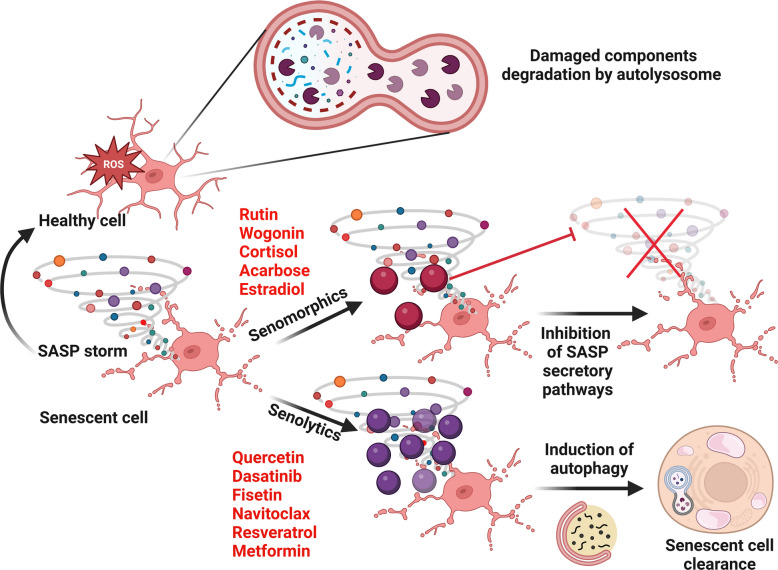
Senomorphics works by targeting the release and signaling of SASP molecules such as chemokines and cytokines. They are involved in blocking the transmission of senescence characteristics to nearby healthy cells, but do not cause the death of SnCs that secrete SASPs [88]. These senomorphics work primarily by targeting pathways such as the mTOR, p38MAPK, JAK/STAT, and PI3k/Akt pathways and transcription factors, including NF-κΒ, C/EBP β, and STAT3 [89]. Another approach adopted by senomorphics to target SASPs, such as IL-8 and IL-6, involves targeting them with associated antibodies. IL-8 is an important SASP that is overexpressed in senescent cells. Hence, there is an antibody, ABX-IL-8, that is designed to target the IL-8-secreting pathway, thus preventing its release [90]. Similarly, Mab-IL-6.8 is an antibody developed against the IL-6 SASP that prevents the secretion of this cytokine [91].

Senotherapeutics: senomorphics and senolytics. Senescent cells transmit senescent phenotypes to neighboring healthy cells via the secretion of SASPs. These senescent cells can be targeted via senotherapeutics such as senomorphics and senolytics. Senomorphics inhibit the production of SASPs from senescent cells, whereas senolytics specifically target and kill senescent cells via the induction of autophagy
Senolytics
Senolytics are molecules that target and specifically cause the death of aged cells expressing the SASP. The use of senolytics with SnCs can be adopted as one of the approaches to treat age-associated NDDs. The main challenge in clearing SnCs is the ability to resist apoptotic stimuli, thus making most cytotoxic drugs available on the market inefficient. On the basis of this evidence, the principle of senolytic therapy is to selectively target proteins associated with senescent cell antiapoptotic pathways (SCAPs) by inhibiting or activating them to regulate the resistance of SnCs to apoptosis [92].
| S. No | Senolytic agent | Source | Mechanism of action | References |
|---|---|---|---|---|
| 1 | Dasatinib | Synthetic drug, tyrosine kinase inhibitor | Inhibition of ephrins (EFNB-1/3) | [,,] [93] [95] [96] |
| 2 | Quercetin | Plant flavanol derived from onions, apples, grapes, berries, cherries, and citrus fruits | Inhibition of phosphatidylinositol 3-kinases (PI3K) | [,,] [95] [97] [98] |
| 3 | Fisetin | Plant flavonoid derived from strawberries, lotus root, and onions | Targets various pathways such as BCL-2, PI3K/AKT, p53, and NF-κB | [–] [99] [101] |
| 4 | Resveratrol | Plant polyphenols derived from grapes, berries, apples, and peanuts | Activation of SIRT1-mediated STAT3 signaling | [–] [102] [105] |
| 5 | Navitoclax (ABT-263) | Laboratory-developed synthetic drug | BCL2 family inhibitor | [–] [106] [108] |
| 6 | Piperlongumine (piplartine) | Amide alkaloid derived from long pepper ()Piper longum | Induces SnCs death by binding to oxidation resistance 1 (OXR1), leading to its proteasomal degradation | [] [109] |
| 7 | Curcumin | Lipophilic polyphenol derived from turmeric ()Curcuma longa | Downregulating the Nrf2 and NF-κB pathways | [–] [110] [113] |
| 8 | Rapamycin (sirolimus) | A macrolide derived from, a bacterium present in soilStreptomyces hygroscopicus | Inhibition of mTORC1 | [–] [114] [117] |
| 9 | Metformin | (French lilac)Galega officinalis | Suppresses SASPs by inhibiting the phosphorylation of IκB and IKKα/β to block the translocation of NF-κB to the nucleus | [–] [118] [121] |
| 10 | Geldanamycin | Macrocyclic polyketide derived from, a soil bacteriumStreptomyces hygroscopicus | HSP-90 inhibitor | [] [122] |
| 11 | Ouabain | Derived from seeds and barks of plants likeandAcokanthera schimperiStrophanthus gratus | Inhibits the Na/K-ATPase, leading to destabilization of the membrane potential of senescent cells and intracellular acidification++ | [–] [123] [125] |
| 12 | Digoxin (brand name Lanoxin) | Derivedfrom(Woolly foxglove)Digitalis lanata | Inhibits the Na/K-ATPase, leading to destabilization of the membrane potential of senescent cells and intracellular acidification++ | [,] [123] [126] |
| 13 | Panobinostat | Synthetic histone deacetylase inhibitor (nonselective) | Histone deacetylase inhibitor, decreased expression of BCL-X, and increased acetylated H3L | [,] [127] [128] |
| 14 | Alvespimycin (17-DMAG) | Synthetic derivative of natural senolytic geldanamycin | HSP-90 inhibitor disrupts the HSP90-AKT interaction to destabilize the active form of AKT | [,,,] [122] [130] [130] [130] |
| 15 | EF24 curcumin analog | Synthetic analog of curcumin designed for increased bioavailability | Proteasome degradation of the Bcl-2 anti-apoptotic protein family proteins | [] [130] |
| 16 | Luteolin | Plant flavonoid derived from mint, broccoli, artichoke, celery, and oranges | Regulates NF-κΒ, JAK/STAT, and toll-like receptors (TLRs) | [,,,] [130] [130] [130] [130] |
| 17 | Ruxolitinib | Synthetic drug | JAK1/2 inhibitor | [,,] [124] [130] [130] |
| 18 | FOXO-DRI | Synthetic peptide | Avoid the interaction between FOXO4 and p53 | [] [130] |
| 19 | MitoTam | Synthetic drug | Decreases mitochondrial membrane potential and inhibits mitochondrial oxidative phosphorylation (OXPHOS), consequently exacerbating mitochondrial integrity | [,,] [130] [130] [130] |
| 20 | Tanespimycin (17-AAG) | Synthetic derivative of geldanamycin | HSP-90 inhibitor | [,] [122] [130] |
Preclinical and Clinical Trial Reports
A study explored the neuroprotective effect of luteolin on brain aging via the administration of d-galactose. Male Wistar rats (n = 40; 2 months old, 160–190 g) were randomly categorized into four groups: the control group, the luteolin (80 mg/kg/day, i.p. in 1% DMSO for 1 month) group, the aging group (d-gal-induced) (150 mg/kg/day, 2.5 months), and the luteolin-treated aging group. All the abovementioned groups were subjected to behavioral analysis and assessment of cholinergic function and hippocampal mitochondrial respiration. In addition, oxidative stress in the hippocampus, senescence, neuroinflammation, and apoptotic marker expression have been observed. The expression levels of genes such as SIRT1, BDNF, and RAGE were analyzed. Histopathological analysis of the hippocampus, along with GFAP and Ki67 immunoreactivity, was also performed in this study. These results highlighted that luteolin is effective against d-gal-associated cognitive decline, resulting in the alleviation and reversal of cholinergic abnormalities. Furthermore, they concluded that the administration of luteolin alleviated oxidative stress in the hippocampus and mitigated the mitochondrial dysfunction, neuroinflammation, and senescence initiated by d-gal. Moreover, treatment with luteolin considerably decreased apoptosis in neurons and elevated the levels of SIRT1 mRNA expression in the hippocampus. This study revealed that the potential benefits of luteolin administration against d-gal-induced aging are associated with elevated expression of SIRT1 in the hippocampus, with subsequent modulation of the GLO1/AGE/RAGE signaling pathway [130].
Another study involving 0.5-year-old C57BL/6 J mice revealed that astrocytes and microglia present in the cerebral cortex, hippocampus, etc., colocalized with markers associated with cellular senescence, such as p16Ink4a or p21Cip1/Waf1, at 5 weeks postinjury and 4 months postinjury in a model of controlled cortical impact. They reported that after senolytic dasatinib and quercetin (D + Q) administration intermittently started 1 month after traumatic brain injury (TBI) for 13 weeks, p16Ink4a-positive and p21Cip1/Waf1- + ve cells in the brains of TBI mice were prominently decreased, and the expression levels of major SASP-related proinflammatory markers, such as interleukin-1β and interleukin-6, were significantly reduced. They also reported that senolytic treatment decreased neurodegeneration and significantly increased the number of neurons present in the hippocampus and other prominent brain regions 18 weeks after TBI. Behavioral analysis after TBI (18 weeks) further revealed that senolytic treatment reversed impairments in memory, such as recognition and spatial reference memory, and alleviated depressive behavior in rodents with TBI [130].
Given that the pathological hallmarks associated with senescence are found in ALS and that senescence leads to the progression of symptoms associated with ALS, such as elevated secretion of SASPs and decreased cellular functions, clearing senescent cells through the induction of autophagy can prove to be a useful strategy for alleviating ALS pathologies. Although there is a lack of research dealing with such therapeutic interventions to target ALS, the success of similar strategies in other NDs has focused on the fact that this approach can also be used for ALS [130].
| S. No | Neuro-degenerative disorder | Senolytics involved in treatment | Human/Animal model used | Dosage | Treatment duration | Inference | References |
|---|---|---|---|---|---|---|---|
| 1 | AD | Dasatinib + Quercetin | Human (mean age = 76 + 5 years; 40% female) and transgenic mouse model | Oral, 5 mg kgD−1 + 50 mg kgQ (in transgenic mouse model)−1100 mg D + 1000 mg Q (in humans) | Six repeating 2-week cycles of dose administration were conducted. Each cycle began with two consecutive days of study drug, followed by a 13- to 15-day study drug holiday | : Phase I clinical trial: CSF levels of interleukin-6 (IL-6) and glial fibrillary acidic protein (GFAP) increased ((4) = 3.913, = 0.008 and(4) = 3.354, = 0.028, respectively) with trending decreases in senescence-related cytokines and chemokines, and a trend toward higher Aβ42 levels ((4) = − 2.338, = 0.079)NCT04063124tPtPtPCNS penetrance of D, although Q was not detectable in CSF | SToMP-AD:(Phase 1/2)NCT04063124Status: Completed 2023Registration Date: 21 st August 2019SToMP-AD RCT: NCT04685590 (Phase 2)Status: ongoing (expected 2027)Registration Date: 2021[94]ALSENLITE: NCT04785300 (Phase 1/2)Status: OngoingRegistration Date: 4th March 2021STAMINA (MCI + Slow Gait): NCT05422885 (Phase 1/2)Status: OngoingRegistration Date: 21 st June 2022 |
| 2 | Cognitive Impairment | Metformin | Human (60–80 years old) total participants: 242 | 500–2000 mg nocte | Duration of the study: 3 years | NCT04511416: No results are public yet | MetMemory: NCT04511416 (Phase 3) Status: Ongoing Registration Date: 13th August 2020 |
| 3 | Amnestic MCI or Mild AD dementia | Metformin | Human total participants: 20 | Metformin 2000 mg/day | Duration of the study: 24 months | NCT05109169: Metformin was found to enhance memory and retention and was detected in CSF. No Significant change was observed in cerebral blood flow | METFINGER: NCT05109169 Status: Ongoing Registration Date: 2023 |
| 4 | Mild Cognitive Impairment and Alzheimer's Disease | Rapamycin | Human (55–85 years of age) total participants: 10 (60% female) | 1 mg/day, orally | The duration of the study was 8 weeks | No changes in CSF were observed, indicating that rapamycin was not able to actively cross the blood–brain barrier at detectable levels Biomarkers related to AD pathology were inconclusive | RAPA Pilot: NCT04200911 (Early Phase 1) Status: Completed Results Posted Registration Date: 6th December 2019 |
| 5 | Alzheimer's and Cognitive Health | Rapamycin | Human total participants: 40 | 1 mg/day, orally | The drug was administered for 12 months (+ 3 days) | Results are not published yet Primary outcomes: Safety and tolerability testing of Rapamycin Secondary outcomes: Evaluate for CNS permeation of the drug and improvement in cognition | REACH: NCT04629495 9Phase 2) Status: Ongoing Registration Date: 11th September 2020 |
| 6 | Alzheimer's Disease | Rapamycin (Sirolimus) | Human (50–80 years of age) total participants: 15 | 7 mg/week, orally | The duration of the study is 6 months | Study ongoing, no results published yet Primary outcomes: Evaluate cerebral glucose metabolism Secondary outcomes: effect of the drug on age-related tissue changes | ERAP (PET Biomarker): NCT06022068 (Phase 1/2) Status: Ongoing Registration Date: 1 st September 2023 |
| 7 | PD | Curcumin | Male C57BL/6 J mice (8 weeks old) | 50 mg/kg/day, intraperitoneally | The drug was administered daily for 21 days | Inhibits inflammation and oxidative stress, reducing monoamine oxidase B, and inhibiting the aggregation of alpha-synuclein | [] [130] |
| 8 | Epilepsy and cognitive impairment induced by seizures | Metformin | Male C57BL/6 mice (4–6 weeks old) | 200 mg/kg, intraperitoneally | Drug administration was performed on alternating days for 14 days | Metformin suppressed the progression of kindling, ameliorated the cognitive impairment, and decreased brain oxidative stress. It significantly decreased MDA level and increased GSH level relative to PTZ group. Therefore, it may be concluded that the antiepileptic effect of metformin is at least partly mediated through its antioxidant properties | [] [130] |
| 9 | PD | Resveratrol | Male A53T α-synuclein | Two dosages of resveratrol were compared: (1) 50 mg/kg body weight and (2) 10 mg/kg body weight | The drug was administered daily for 5 weeks | Protected against motor and cognitive deficits in A53T α-synuclein mice, lowered α-synuclein aggregate and oligomer levels, and reduced neuroinflammation and oxidative stress in the brains of A53T α-synuclein mice | [] [130] |
| 10 | MS | Navitoclax (ABT-263) | 6–8-week-old C57Bl6 mice | 1.5 mg/kg, intraperitoneally | The drug was administered daily for 18 days | Decreases disease severity, improves outcomes related to visual acuity and neuronal survival, and reduces white matter demyelination and inflammation | [] [130] |
| 11 | Spinal and bulbar muscular atrophy | 17-DMAG | 5-week-old male AR-24Q and AR-97Q mice | 0.2 ml oral administration of 1 or 10 mg/kg (3 times a week, every other day) | 11 weeks (starting from 5 to 16 weeks and 27 weeks for toxicity studies) | Ameliorated motor impairments in SBMA mice without detectable toxicity and reduced amounts of monomeric and nuclear-accumulated mutant androgen receptor (AR). Mutant AR was preferentially degraded in the presence of 17-DMAG in both SBMA cell and mouse models compared with wild-type AR. 17-DMAG also significantly induced Hsp70 and Hsp40 | [] [130] |
Nanocarrier-Based Senotherapeutics Delivery
Although there have been recent developments in targeting senescent cells in the brain, the present senotherapeutics face challenges in terms of bioavailability, nonspecific delivery, and metabolism in the gut, leading to ineffective therapeutic potential. This has led to the exploration of nanocarriers to deliver senotherapeutics efficiently to the brain. The health benefits of flavonoids, such as quercetin, resveratrol, and fisetin, have already been highlighted in this review; however, highlighting their poor pharmacokinetics when they are administered in their free form is also essential.
Various nanoformulations, such as liposomes, lipids, and polymeric nanoparticles, have been developed to address these issues. One study demonstrated the use of pegylated liposomes encapsulating rapamycin to study its anti-aging effect on aged human dermal fibroblasts induced by adriamycin. Compared with non-encapsulated rapamycin, they observed increased cell proliferation and migration as well as reduced expression of the senescence-associated markers SA-β-gal, p53, and p21 when compared to non-encapsulated rapamycin. Another study used poly lactic acid-glycolic acid (PLGA) nanoparticles to determine the effect of ABT263 on senescent cell clearance in a rat model. They concluded that nanoencapsulation enhanced the inhibition of inflammatory markers such as IL-6, the p16 senescence marker, and SASPs [130, 130].
In another study, navitoclax (2.5 mg/kg) encapsulated in mesoporous silica nanoparticles was administered in a palbociclib-induced aged mouse model. They reported that nanoencapsulation enhanced the apoptosis of senescent cells [130]. Mesoporous silica nanoparticles were also used for the anti-aging effect of RSV in the ApoE−/− mice model in vivo. They concluded that nanoencapsulation facilitated improved inhibition of ROS generation, oxidation of low-density lipoprotein, and production of proinflammatory cytokines (IL-6 and TNF-α) [130]. While these nanoformulations have shown significant results in pre-clinical evaluation and in vitro models, accelerated clinical trials are needed to validate their effectiveness as a therapeutic option, as well as to check their safety in humans.
Challenges and Future Perspective
Although the results from several animal models in which various senolytics have been administered have demonstrated their potential to improve brain-associated pathologies, their translation for use in clinical trials and eventually as therapeutic products still presents certain challenges. The nature of cellular senescence and the SASP is highly heterogeneous [130]. Although these senotherapeutics molecules have shown remarkable potential in the treatment of brain aging and associated NDDs, their variability in effectiveness across different brain regions and cell types is still a concern. For example, studies have shown that senescence in primary cortical astrocytes is associated with increased mTOR activation, autophagy suppression, and increased SASP production. Furthermore, treatment with the mTOR inhibitor rapamycin led to the suppression of SASP marker expression and restored homeostasis in cultured astrocytes. However, when microglia were subjected to the same intervention, variability in efficacy was observed compared with that in astrocytes. These findings suggest that different cell types can have different levels of reliance on senescence-associated pathways, which affects how different senotherapeutics act on them [130]. Apart from this, there is a difference in the activity of SIRT1 observed in the hippocampus and prefrontal cortex of the brain, which can lead to variation in the action of senotherapeutics such as resveratrol, which activate SIRT1. Therefore, it is essential to optimize senolytics for regional and cell-specific approaches to combat NDDs.
There is no single marker for characterizing either cellular senescence or SASPs, which makes assessing these diverse markers to identify phenotypes associated with senescence crucial and time-consuming. Therefore, when a senolytic agent is administered to treat disorders of the CNS, it is vital to understand the pathways that are targeted by specific senolytic molecules to understand the cascade of the response it elicits.
Another major hindrance associated with senolytics is that the survival pathways that they target are not necessarily exclusive to senescent cells. One prominent example of this is navitoclax. Bcl-XL inhibition at the desired site by navitoclax leads to the killing of platelets at other sites [130], with dose-limiting toxicity, primarily thrombocytopenia [130]. Absolute selectivity seems to be achievable only if a pro-survival mechanism that is utilized only by aged cells exists. However, this phenomenon has not yet been observed in vitro, as senolytics invariably cause the death of non-senescent healthy cells at excessive doses.
The brain is surrounded by the blood–brain barrier, which limits the entry of therapeutic agents. The development of senolytic compounds that can effectively cross the BBB at adequate concentrations without causing toxicity or damaging this protective barrier is a significant hurdle. Modifying drug properties or developing advanced delivery systems (e.g., nanoparticles) may be needed to ensure that senolytic therapies can reach target cells in the brain.
Several compounds with senolytic properties, such as dasatinib, quercetin, and navitoclax, are already FDA-approved for other conditions. Repurposing these drugs for treating neurodegenerative diseases and brain aging could accelerate the clinical application of senolytic therapies. While preclinical data have shown favorable results, large-scale clinical studies in humans are still in their infancy. Given the complexity of neurodegenerative conditions, patient selection, biomarkers, and outcome measures will require careful consideration in future trials.
Conclusion
With age, there is an aggregation of senescent cells in various human and mouse tissues, and their removal was recently shown to be a potential therapeutic for the prevention of certain age-related pathologies. Neurodegeneration associated with these conditions is closely associated with neuroinflammation. A potent source of neuroinflammation is pro-inflammatory SASP from aged cells in the brain.
This review highlights that cellular senescence is a prominent pathological characteristic of NDDs, such as AD, PD, MS, and ALS. These disorders also tend to involve common signaling pathways that facilitate the promotion of senescence and facilitate this state of permanent cell arrest to initiate or worsen the symptoms of NDDs. Thus, the phenomenon of senescence needs to be investigated further, given its common links to pathways associated with neurodegeneration.
In addition, cellular senescence leads to an alteration in proteostasis in certain diseases, causing the formation of misfolded proteins. DNA damage, telomere dysfunction, oxidative stress, and neuroinflammation all contribute to the pathogenesis of NDDs. Pathologically induced and age-associated senescence are possible starts of cellular senescence in the brains of people with AD and other NDDs. Thus, eliminating senescent cells can influence outcomes.
Currently, there are no efficient neurotherapeutic options that can avert or retard the progression of neurogenerative disorders. Thus, novel neuroprotective therapeutic approaches are needed. In response to these drawbacks, different approaches, e.g., senolytics and senomorphics, are under investigation.
Senolytic treatments, which selectively target and eliminate senescent cells, offer promising therapeutic strategies for alleviating neurodegenerative diseases (NDDs) and mitigating brain aging. Cellular senescence, a state in which cells permanently cease dividing and acquire a proinflammatory secretory phenotype, plays a significant role in age-related tissue dysfunction, including in the brain. The accumulation of senescent cells in the central nervous system (CNS) has been implicated in promoting chronic inflammation, disrupting neural function, and contributing to the pathogenesis of various neurodegenerative disorders, such as Alzheimer's disease and Parkinson's disease.
Senescent cells, through SASP, can propagate local inflammation and neuronal damage, thereby accelerating brain aging. This chronic inflammatory environment compromises neuronal function, affects blood‒brain barrier integrity, and disrupts the balance of neural stem cell renewal, all of which are critical for maintaining cognitive function.
By employing senolytic therapies to selectively clear senescent cells from the brain, it is possible to reduce the inflammatory burden (SASP), restore tissue homeostasis, and preserve neuronal function. Preclinical studies have shown that senolytics can enhance cognitive function and neural plasticity and decrease neuroinflammation in aged animals, thereby demonstrating the potential to slow or even reverse aspects of brain aging and neurodegeneration.
However, there are certain concerns associated with the current senotherapeutics that need to be addressed to make the transition from preclinical to clinical trials smoother. Most senolytics face problems with BBB permeation, which restricts their bioavailability in the brain. One approach to mitigate this problem would be to increase the dosing or concentration of the senolytics, but that is again associated with issues such as systemic toxicity. Therefore, maintaining a safe dosage of senotherapeutics while ensuring bioavailability in the brain is difficult. Furthermore, senotherapeutics derived from natural compounds such as plant-based flavonoids are easily metabolized in the gut before they can penetrate the brain. Hence, effectively delivering these drugs to the brain is challenging. For pre-clinical studies, strategies such as stereotaxic or intranasal approaches are being used to combat this problem, but clinical studies need more non-invasive, effective, and easy-to-administer solutions. To address this issue, nano-delivery systems are being explored. Encapsulating senolytic compounds in nanocarriers can help increase their stability and facilitate the controlled release of these compounds. Furthermore, decorating the nanoparticle with the BBB and senescent cell-specific ligands can facilitate specific penetration into the brain and target only senescent cells, thus overcoming the issues of bioavailability and off-target effects. Presently, most clinical trials involving senotherapeutics are focused on systemic aging or cancer, whereas trials involving neurodegeneration and associated diseases such as AD are in the early stages and still require robust studies to establish their efficacy.
In conclusion, senolytic treatments provide a novel and targeted approach to combat neurodegenerative diseases and brain aging by directly addressing the detrimental impact of cellular senescence. The development of senolytics with greater selectivity and efficiency in targeting senescent cells while diminishing off-target effects on healthy cells is an ongoing challenge. While further research and clinical trials are necessary to assess their efficacy and safety in humans, these therapies hold the promise of significantly improving brain health in aging populations and individuals with neurodegenerative conditions.