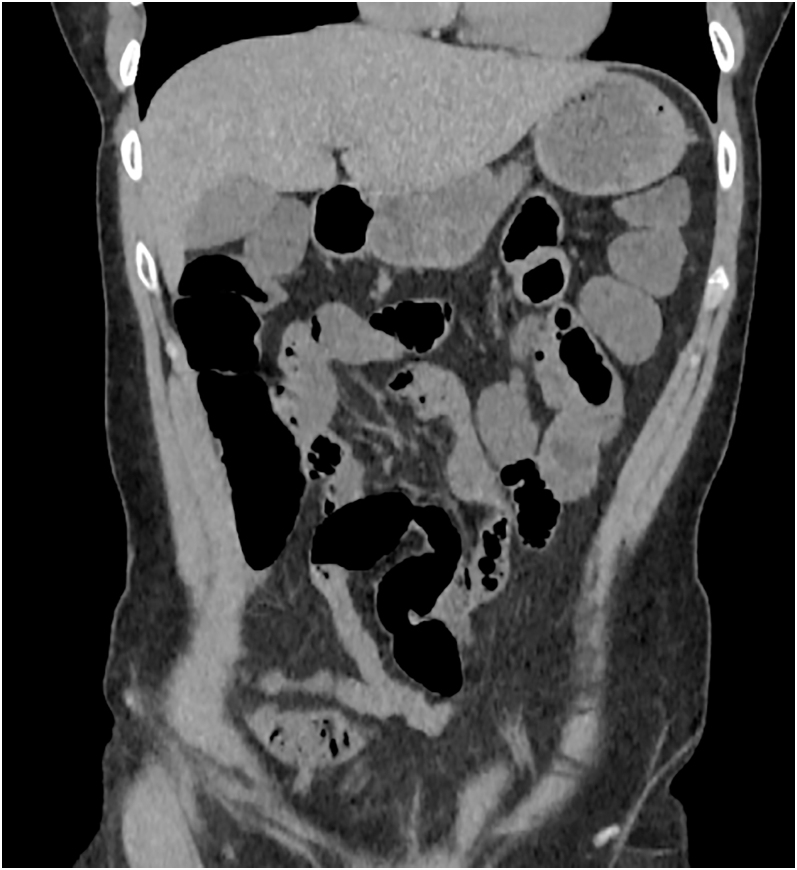
This case presents a rare but potentially serious gastrointestinal complication associated with semaglutide use in a patient without clinical indications at supratherapeutic doses. GLP-1 RAs are known to delay gastric emptying and slow intestinal transit (1). While these pharmacodynamic effects are beneficial in managing diabetes and obesity, they may predispose certain individuals to gastrointestinal motility disorders, particularly when used at high or inappropriate doses.
Although bowel obstruction has been reported with incretin therapies, most evidence involves liraglutide and, more recently, tirzepatide. In contrast, semaglutide has been less frequently implicated. This difference may partly reflect its shorter duration of clinical use and the fact that earlier studies typically involved doses up to 1 mg weekly for diabetes, rather than the higher 2.4 mg weekly regimen now approved and widely prescribed for obesity (2). Our case is particularly notable as the patient self-administered a supratherapeutic dose of 4.8 mg without the recommended dose titration. This excessive exposure likely contributed to the development of subocclusive ileus. Despite the growing use of GLP-1 RAs, long-term safety data, particularly regarding gastrointestinal motility, remain limited (3).
The risk of bowel obstruction caused by GLP-1 RAs is controversial. A large Nordic study using nationwide data from Sweden, Denmark, and Norway (2013–2021) compared over 120,000 GLP-1 RA users to 185,000 SGLT-2 inhibitor users, and no significant difference in bowel obstruction risk was found. Interestingly, a nonsignificant trend suggested a protective effect with GLP-1 RAs (4).
In contrast, recent large-scale studies reported opposing findings. A UK-based cohort study comparing over 25,000 patients treated with GLP-1 RAs to 67,000 patients on SGLT-2 inhibitors found that GLP-1 RA use was significantly associated with a higher risk of intestinal obstruction, observed around 1.6 years of treatment. Particularly, semaglutide was the only GLP-1 RA with no recorded obstruction events (5).
A pharmacovigilance review of over 500,000 adverse drug reactions found 698 cases of intestinal obstruction, with 64.8% linked to incretin-based therapies. While GLP-1 RAs accounted for nearly half of these cases and showed more than fourfold reporting odds ratio, semaglutide was only implicated once (6).
Finally, a PharMetrics Plus database study analyzed more than 5,000 patients with obesity treated for weight loss, mainly with liraglutide (76.6%), semaglutide (11.3%), and bupropion-naltrexone (12.1%). GLP-1 RA use was linked to a significantly increased risk of bowel obstruction. Notably, bowel obstruction events were reported in 8% of patients treated with liraglutide, whereas no such events were observed among those receiving semaglutide (7).
The potential mechanism of action of this effect is that GLP-1 RAs delay gastric emptying and slow small bowel transit by acting on the enteric nervous system, particularly via postganglionic neurons and muscarinic receptors, disturbing coordinated bowel motility (8, 9). These effects, although therapeutic in glycemic control, may lead to significant motility disturbances in susceptible individuals, as reflected in recent clinical observations and pharmacovigilance reports. The limited number of reported obstruction cases with semaglutide may reflect its more recent introduction, the lower doses used in early clinical trials, and the smaller proportion of exposed patients compared to other incretins.
To conclude, this case demonstrates that semaglutide itself may induce subocclusive ileus, despite prior studies suggesting a lower risk compared to other GLP-1 RAs. As off-label and unsupervised use of semaglutide increases, clinicians should be aware of this potential complication, even in healthy individuals without obesity or diabetes. Prevention through education and responsible prescribing remains relevant.