
What this is
- This research develops a thermostable Cas9-based genome editing system for the Thermoanaerobacter kivui.
- The system enables targeted gene knockout and integration, facilitating metabolic engineering and understanding of key enzyme functions.
- The study demonstrates high editing efficiency, with a 90% ratio of mutants from colonies obtained.
Essence
- A thermostable Cas9-based genome editing system was successfully established for T. kivui, enabling effective gene knockout and integration for metabolic engineering.
Key takeaways
- The developed system allowed for efficient gene knockout, achieving a ratio of 90% mutants from all colonies obtained, demonstrating its effectiveness.
- Integration of the adhE gene from T. ethanolicus into the T. kivui genome was confirmed, enabling the engineered strain to produce ethanol.
- This genetic tool expands the capabilities for metabolic engineering in thermophilic acetogens, potentially enhancing the production of valuable biochemicals.
Caveats
- The transformation efficiency for plasmid uptake was relatively low, approximately 200 CFU/μg of DNA, compared to 1,200 CFU/μg for a control vector.
- Further studies are needed to explore the mechanisms behind the observed growth differences and ethanol production levels in engineered strains.
Definitions
- thermophilic acetogenic bacterium: Bacteria that thrive at high temperatures and can convert organic substrates into acetate as a primary product.
- CRISPR/Cas9: A genome editing technology that uses a guide RNA and Cas9 protein to introduce targeted changes in DNA.
Simplified
INTRODUCTION
Thermoanaerobacter kivui, a thermophilic acetogenic bacterium, is capable of heterotrophic or autotrophic growth on a mineral medium without the need for additional vitamin supplements (1). The optimal temperature for growth of T. kivui is 66°C, with a pH optimum of 6.4. Organic substrates that support growth include glucose, mannose, fructose, pyruvate, and formate, with acetate being the primary product (1–3). It has a faster doubling time of about 2 hours on hydrogen (H2) plus carbon dioxide (CO2) compared to other thermophilic acetogens (1). Due to these advantages, T. kivui is a promising candidate for producing industrial chemicals at high temperatures (4, 5).
However, unlike other acetogens (such as Clostridium ljungdahlii [6] and Moorella thermoacetica [7]), T. kivui lacks the potential to produce ethanol due to the absence of aldehyde dehydrogenase or aldehyde:ferredoxin oxidoreductase (8). Acetate is the primary end product of T. kivui. Therefore, it is crucial to use genetic engineering technology to modify its metabolic pathway and shift its end products from acetate to a more valuable chemical. On the other hand, the physiological functions of certain crucial enzymes related to the Wood–Ljungdahl pathway, energy metabolism, and the Embden–Meyerhof–Parnas pathway remain unclear. While several key enzymes have been purified and characterized in vitro in T. kivui (9, 10), physiological functions of some key enzymes remain poorly understood (10–15). The functions of certain enzymes have been elucidated through the generation of markerless mutants utilizing the gene encoding orotate phosphoribosyltransferase (pyrE) as a selective marker (16).
Genetic manipulation of thermophiles remains a technical challenge (17, 18). Factors that may influence the development of genetic manipulation of a thermophile include marker selection, DNA uptake ability, and vector stability (19, 20). Several genetic systems have been developed for the genetic engineering of mesophilic acetogens (21) and methanogenic archaea (22). In particular, CRISPR/Cas-based genome editing technologies have been employed in mesophilic acetogens for the purpose of modifying the metabolic pathway (23–25).
Compared to the genetic systems available for mesophilic acetogens, those for thermophilic acetogens are still relatively scarce. In 2018, Basen et al. developed a markerless gene deletion and integration system for T. kivui based on nutritional selection (16). The basic genetic manipulation technology developed by the Muller and Basen groups is suitable for studying the physiological function of a number of enzymes, including 1-phosphofructosekinase (16), mannitol-1-phosphate dehydrogenase (2), hydrogen-dependent carbon dioxide reductase (HDCR) (26), monofunctional CO dehydrogenase (Coos) (27), and energy-converting hydrogenase (Ech2) (28).
However, CRISPR/Cas9-based genome editing systems have not been developed in thermophilic acetogens. The development of a CRISPR/Cas-based genetic system would represent an important expansion to the genetic tool box of the thermophilic acetogenic bacterium T. kivui. Cas9 from Streptococcus pyogenes has not been used for genome editing in an obligate thermophile because it is not active at an elevated temperature. Fortunately, several thermostable Cas9 proteins have been characterized (29, 30). CRISPR/Cas-based genetic systems have been successfully applied for genome editing in various thermophilic bacteria, including Bacillus smithii ET 13831 (29), Clostridium thermocellum (31), Thermus thermophilus (32), Thermoanaerobacter ethanolicus (33), and Thermoanaerobacterium aotearoense (34). However, editing efficiency varies among different thermophiles due to differences in DNA uptake capacity and homologous recombination (HR) performance.
This study aimed to establish a thermostable Cas9-based genome editing system in T. kivui. The system's efficacy was successfully demonstrated through carefully designed gene knockout and knock-in experiments.
RESULTS AND DISCUSSION
Uptake of plasmids containing the thermostable Cas9 gene into T. kivui
Heterologous expression of Cas9 in host cells is critical for establishing a Cas9-based genome editing system. A previous report indicated that the CRISPR/Cas9 system for Clostridium autoethanogenum exhibited poor efficiency, which was likely due to uncontrolled expression of Cas9 (25). In our previous study, the shuttle expression vector, designated pBlu10-Htk, was registered in public databases (GenBank: MN843970↗). A plasmid, designated pBlu10-Slay-Cas9 (33), has been constructed based on the shuttle expression vector pBlu10-Htk. The plasmid pBlu10-Slay-Cas9 harbors a thermostable Cas9 gene driven by the S-layer promoter (Pslay), a thermostable gram-positive origin of replication derived from plasmid pMU131, and a thermostable kanamycin resistance marker. The plasmid pBlu10-Slay-Cas9 was successfully introduced into T. ethanolicus JW200 cells via natural competence-mediated transformation (33).
In this experiment, T. kivui cells were transformed by natural transformation with the plasmid pBlu10-Slay-Cas9 containing a thermostable Cas9 gene under the control of a native constitutive promoter (Pslay) from T. ethanolicus JW200. The presence of the plasmid in the kanamycin-resistant isolates was verified by re-isolation of the plasmid followed by PCR using primers K1 and K2. The results demonstrated that T. kivui cells were capable of taking up the plasmid pBlu10-Slay-Cas9, although the transformation efficiency was relatively low, at approximately 200 CFU/μg of DNA. In comparison, the transformation efficiency of a control vector, pBlu10-Htk, which lacks Cas9 and gRNA, was approximately 1,200 CFU/μg of DNA. In addition, a vector pBlu10-S-P-gH with Cas9 and gRNA without homology arms was transformed into T. kivui cells. The transformation efficiency decreased further to about 50 CFU/μg of DNA.
T. kivui is a bacterial species belonging to the genus Thermoanaerobacter. However, it exhibits significant differences in physiological characteristics compared to other Thermoanaerobacter spp. (8). Previous reports have demonstrated that certain Thermoanaerobacter spp. possess the inherent ability to uptake DNA (35). Nevertheless, there is a significant difference in the natural DNA uptake ability between T. kivui and other Thermoanaerobacter spp., such as T. ethanolicus JW200 (35). It has been reported that the transformation efficiency of T. kivui was much lower than that of T. ethanolicus JW200 (16). Several factors may affect transformation efficiency. One possible explanation for the observed low efficiency is the instability of the pMU131 derivatives in T. kivui (36).
Gene knockout
This study aims to establish a CRISPR-based genome editing system within T. kivui. Certain genes are indispensable for the growth of this organism. For example, the HDCR-encoding gene in T. kivui was subjected to deletion. The resultant mutant was unable to grow on any other substrate (sugars, mannitol, or pyruvate), except when formate was added. For another example, all attempts to generate a CODH/ACS deletion mutant failed.
Previous reports have shown that the absence of the enzyme function of lactate dehydrogenase or alcohol dehydrogenase is not fatal for T. ethanolicus (37, 38). Thus, a gene encoding alcohol dehydrogenase (adh) and a gene encoding lactate dehydrogenase (ldh) from T. kivui were selected as target genes for deletion. Initially, a gene knockout experiment was performed to assess the validity and efficiency of the thermostable Cas9-based genome editing system in T. kivui. The T. kivui genome harbors two genes that code for alcohol dehydrogenase. The two genes encoding alcohol dehydrogenase are annotated as TKV_c02600 and TKV_c22260.
In this experimental design, the gene adh (TKV_c02600) was selected for gene knockout. A single plasmid approach using Cas9-mediated HR was developed for genome editing in T. kivui. Based on the PAM sequence of 5′-NNNNCGAA-3′, a PAM sequence in the adh gene was selected, and a 21 nt adh gene-targeting spacer was further designed (see Fig. S1 in the supplemental material). The tracrRNA and the crRNA were joined by using a GRAA tetraloop to generate a single-guide RNA (sgRNA) as described by Harrington et al. (30).
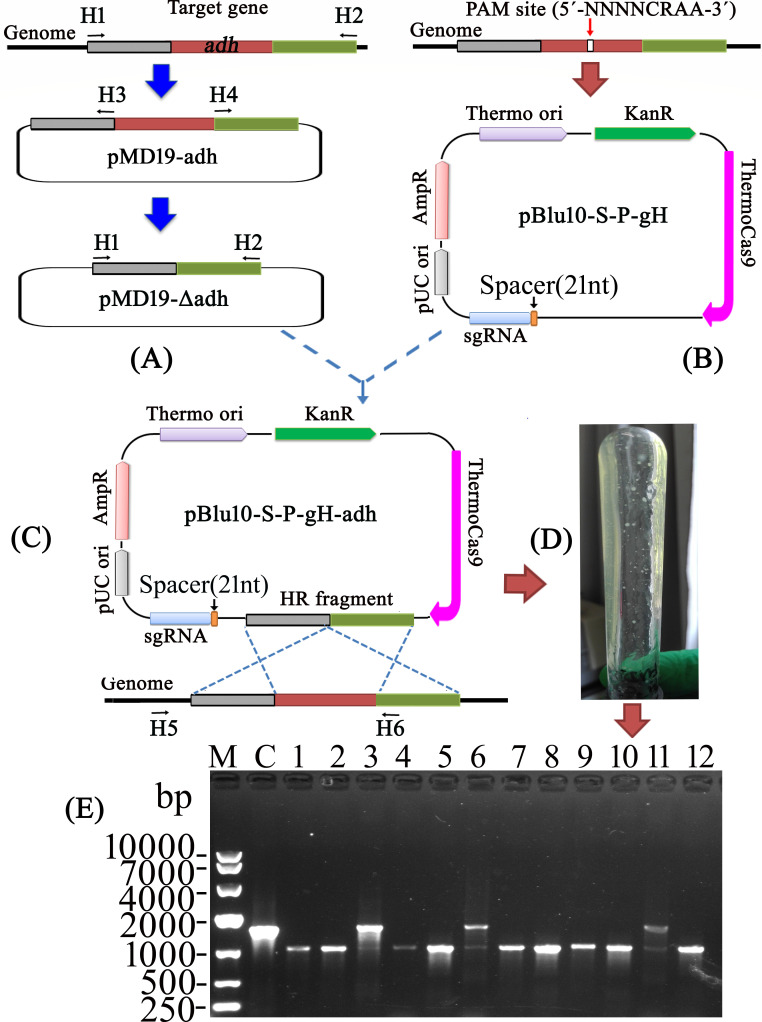
The plasmid named pBlu10-S-P-gH-adh was constructed to contain three essential elements: the adh donor DNA, sgRNA, and the thermostable Cas9 expression module. The plasmid pBlu10-S-P-gH-adh was then introduced into T. kivui through natural competence transformations to provide a DNA editing template for deleting approximately 550 bp of the partial adh gene (Fig. 1). Cultures mixed with plasmids were grown at 65°C without kanamycin sulfate for about 10 hours. Subsequently, approximately 300 µL of cultures were then plated onto solid medium containing 200 mg/L kanamycin sulfate. To confirm the partial deletion of the adh gene, 12 colonies were selected for analysis. Out of the 12 colonies, 9 run on the gel exhibited a knockout genotype rather than the wild-type genotype, and the other 3 displayed a mixed wild-type/Δadh genotype (Fig. 1E).
A further strategy has been implemented for the selection of mutants. The mixtures of cultures and plasmids were incubated at 65°C for about 10 hours. Subsequently, up to 300 µL of transformation cultures was injected into 5 mL liquid medium containing 200 mg/L kanamycin sulfate and incubated at 65°C for about 3 days. The editing mutant may have been undergoing plasmid curing during this process. Consequently, the cultures were plated on solid medium lacking kanamycin sulfate. Picked colonies were analyzed by PCR using the primer pairs H5 and H6. It was found that the ratio of positive mutants out of all colonies obtained could reach 90%.
pBlu10-S-adh, a plasmid containing homology arms and the Cas9 expression module but no gRNA, was constructed. The plasmid pBlu10-S-adh was introduced into T. kivui, and 10 colonies were selected for verification by PCR using the primer pairs H5 and H6. All 10 colonies were shown to retain the adh gene.
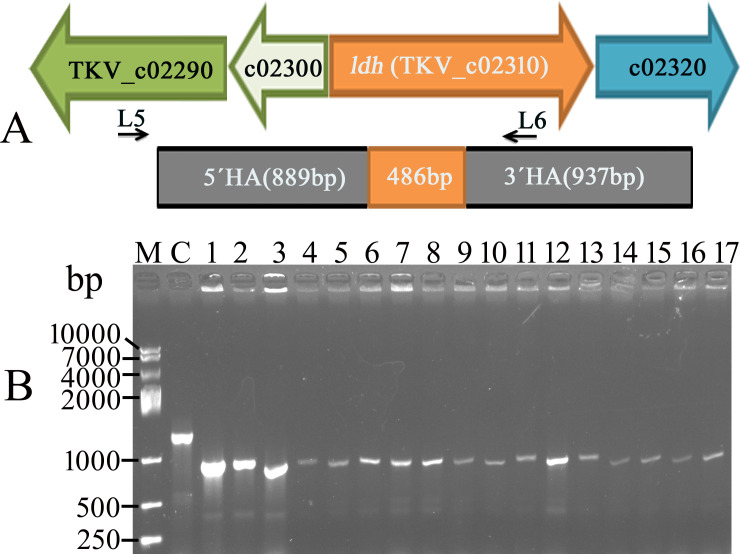
Furthermore, the ldh gene, which codes for lactate dehydrogenase, was chosen for gene deletion. Based on the PAM sequence of 5′-NNNNCAAA-3′, pBlu10-S-P-gL-ldh was constructed to contain elements: ldh donor DNA, sgRNA, and the thermostable Cas9 expression module. To verify the partial gene ldh deletion, 17 colonies were selected for PCR analysis. All 17 colonies obtained were confirmed as clean Δldh mutants. As shown in Fig. 2, a DNA fragment of approximately 950 bp was amplified using the Δldh mutant as a template, attributable to the deletion of a DNA fragment of approximately 486 bp. In contrast, a fragment of approximately 1,440 bp was amplified from wild-type T. kivui genomic DNA using primers L5 and L6. DNA sequencing results further confirmed the presence of a partial deletion, along with the insertion of Stu I and EcoR I restriction enzyme sites.
Meanwhile, T. kivui cells were transformed with the control plasmid pBlu10-sgL-ldh. The control plasmid pBlu10-sgL-ldh contained only two essential elements, a homologous recombination template for repair and a 21 nt ldh gene-targeting spacer followed by an sgRNA expression module. No homologous recombination colonies were detected using the control plasmid pBlu10-sgL-ldh, which lacked the Cas9 gene expression element.

Schematic overview of thermostable Cas9-based partialgene deletion. () Construction ofdonor DNA containing upstream and downstream regions flanking thegene. () Construction of plasmids containing 21 ntgene-targeting spacer. () Construction of editing plasmids containing donor DNA and Cas9, sgRNA expression module. () Transformation and screening, pBlu10-S-P-gH-adh was transformed intoby natural competence. Single colonies were picked up and analyzed by a bacterial colony PCR to confirm the desired mutation. () Agarose gel (1%) was used to check the PCR products. Primer H5 was designed for screening and located in the upstream of thedonor DNA. Thus, only the target DNA could be selectively amplified from genomic DNA but not from the plasmid pBlu10-S-P-gH-adh. The deletion of 550 bp of the partialgene permitted the amplification of an approximately 1,020 bp DNA fragment from Δgenomic DNA using primers H5 and H6. An approximately 1,560 bp fragment could be amplified from wild-typegenomic DNA using primers H5 and H6. Colonies (1, 2, 4, 5, 7, 8, 9, 10, and 12) were clean Δmutants. Colonies (3, 6, and 11) were mixed wild type/Δgenotype. Lanes: M, DNA marker; C, control; PCR amplification was carried out using wild type as the template. Lanes 1–12: PCR amplification was carried out using isolate as the template. adh adh adh adh T. kivui adh adh adh T. kivui RSP adh A B C D E

Partialgene deletion. () Schematic overview of the design for partialgene deletion. () Agarose gel electrophoresis showing the resulting products of genome-specific PCR on colonies from the thermostable Cas9-baseddeletion process from thegenome. Primer L5 was located ahead of the upstream flanking region of thedonor DNA. Primer L6 was located in the downstream flanking region. Thus, only the target DNA could be selectively amplified from genomic DNA but not from the plasmid pBlu10-S-P-gL-ldh using primers L5 and L6. Seventeen colonies were selected and verified by PCR. All colonies were identified as clean Δmutants. Lane C, control; PCR amplification was carried out by using wild-typeas the template. Lanes 1–17: PCR amplification was carried out using Δmutant as the template. ldh ldh ldh gene T. kivui ldh ldh T. kivui ldh A B
Gene knock-in
To further assess gene integration within T. kivui via this system, we selected the adhE gene, which encodes bifunctional aldehyde/alcohol dehydrogenase (AdhE) from T. ethanolicus JW200, for gene knock-in using this system.
Amino acid sequence alignment analysis (https://blast.ncbi.nlm.nih.gov/Blast.cgi↗) showed that the alcohol dehydrogenase (TKV_c22260) from T. kivui exhibited 99.43% sequence identity with the alcohol dehydrogenase adhB from T. ethanolicus JW200. Conversely, a second alcohol dehydrogenase (TKV_c02600) from T. kivui displayed only 31.43% sequence identity with the alcohol dehydrogenase adhA from T. ethanolicus JW200. Despite possessing two genes encoding alcohol dehydrogenase, T. kivui is the only Thermoanaerobacter sp. that lacks the capability to produce ethanol (8). Therefore, the adh (TKV_c02600) from T. kivui was employed as the integration locus for adhE gene.
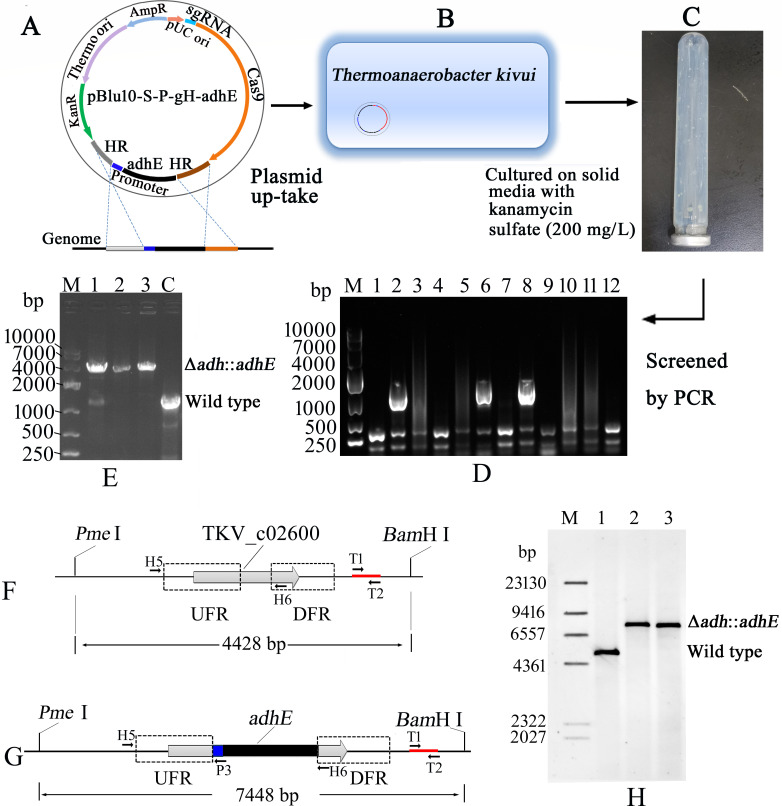
Firstly, we inserted the adhE gene into the shuttle expression vector pBlu10-Slay. The resulting plasmid, pBlu10-Slay-adhE, contained the Slay promoter from T. ethanolicus JW200, the adhE gene, and a terminator. Next, we fused the adhE gene expression element between the upstream and downstream regions flanking the adh gene. Subsequently, the resulting plasmid, pBlu10-S-P-gH-adhE, was introduced into T. kivui to serve as a DNA editing template for the integration of the adhE gene. PCR amplification using picked colonies as a template confirmed the correct DNA integration. To facilitate verification using colony PCR, primers (H5 and P3) have been designed for screening (Fig. 3). Primer H5 was located ahead of the upstream flanking region (UFR) of the adh donor DNA, and the wild-type genomic DNA lacks the sequence of primer P3. Thus, only the target DNA could be selectively amplified from mutant genomic DNA but not from wild-type genomic DNA or the plasmid pBlu10-S-P-gH-adhE. Twelve colonies were selected for verification by PCR, and the target fragment was amplified from isolates 2, 6, and 8.
The mixed wild type/Δadh::adhE genotype could also be amplified using primers H5 and P3. The genomes of isolates 2, 6, and 8 were extracted and used as templates for PCR with primers H5 and H6 for further verification. Since an approximately 3,000 bp fragment containing the adhE expression cassette was inserted, the UFR was approximately 1,000 bp. Consequently, a fragment of about 4,000 bp could be amplified from the mutant strain. As shown in Fig. 3E, isolate 2 was a mixed wild type/Δadh::adhE genotype. In contrast, isolates 6 and 8 displayed clean Δadh::adhE genotypes.
Gene integration was further verified by Southern blot analysis of Pme I and BamH I-digested genomic DNA from the wild type and isolates 6 and 8. As illustrated in Fig. 3F and G, the probe was designed to bind immediately downstream of the adh donor DNA flanking region. As shown in Fig. 3H, an expected fragment size of 7,448 bp was observed in the Δadh::adhE genotype, while an expected fragment size of 4,428 bp appeared in the wild-type strain.
Previous research has shown that three alcohol dehydrogenases, namely, AdhE, AdhA (primary alcohol dehydrogenase), and AdhB (secondary alcohol dehydrogenase), are the key enzymes in the ethanol metabolism of T. ethanolicus JW200 (38). Further studies have shown that adhE-adhB or adhE-adhA is essential for ethanol production in T. ethanolicus JW200 (38). As a bifunctional alcohol dehydrogenase, AdhE from T. ethanolicus has nearly little acetaldehyde reduction activity and largely acetyl-CoA reduction activity (38). However, an interesting result has shown that the allegedly bifunctional enzyme AdhE individually is able to produce ethanol from acetyl-CoA in vivo, though at a lower level than the wild-type (38). A possibility was provided that the acetaldehyde reduction activity of AdhE was activated in vivo (38).
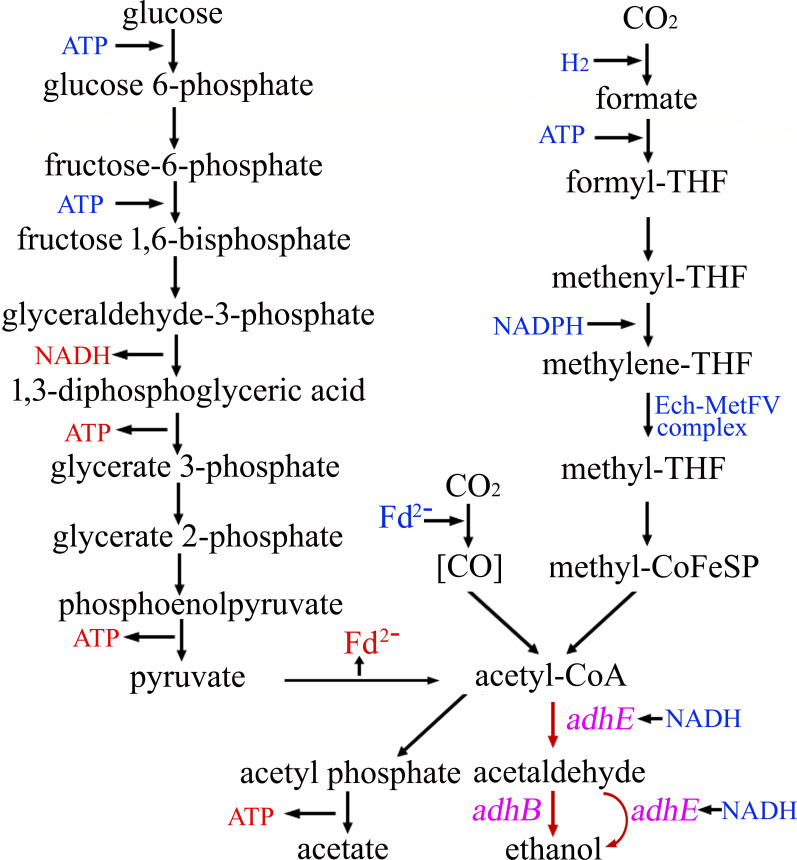
In our experimental design, the alcohol dehydrogenase (TKV_c22260) from T. kivui with 99.43% identity to the adhB from T. ethanolicus JW200 was reserved. Another alcohol dehydrogenase (TKV_c02600) from T. kivui was deleted and used as the integration locus for adhE. A schematic representation of the ethanol biosynthesis pathways in the Δadh::adhE strain has been summarized, based on the electron carriers involved in autotrophic and heterotrophic acetogenesis (13). Thus, as illustrated in Fig. 4, following the integration of the adhE gene into the T. kivui genome, ethanol biosynthesis in the M003 strain (Δadh::adhE) involves enzymes that may be either solely adhE or a combination of adhE and adhB.
The edited cells, which contain thermostable Cas9-based gene deletion plasmids, may potentially influence cell growth. Furthermore, it is essential to remove the gene deletion plasmids from the edited cells in order to allow for subsequent metabolic engineering steps. Therefore, the edited cells were cultivated in a fresh medium for multiple passages without kanamycin sulfate. Approximately 99% of the colonies after the seventh passages were found to be sensitive to kanamycin sulfate, and this was further verified by PCR.
Ethanol production was measured in M001 (Δadh), M002 (Δldh), and M003 (Δadh::adhE) mutants as well as the wild-type strain under anaerobic fermentation conditions using glucose as the substrate with carbonate supplementation. High-performance liquid chromatography (HPLC) was utilized for the quantification of fermentation products derived from both the engineered strains and the wild-type strain. Ethanol accumulation was detected in the M003 (Δadh::adhE) strain, while the wild-type strain, M001 (Δadh), and M002 (Δldh) did not demonstrate ethanol production (Table 1). Moreover, the acetate production of the M003 (Δadh::adhE) strain was significantly reduced compared to the wild-type T. kivui, M001 (Δadh), and M002 (Δldh).
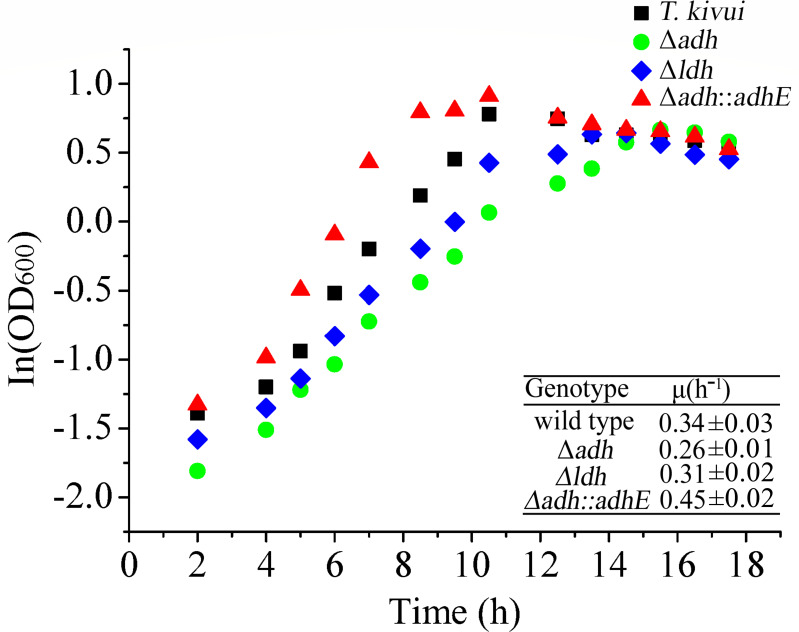
In addition, the growth curves of these strains were also assessed. Specific growth rates (μ) were determined using the slopes of the growth curves (semi-logarithmic plots) in the exponential phase. As shown in Fig. 5, specific growth rates (μ) of the wild-type strain, Δadh, Δldh, and Δadh::adhE were 0.34 ± 0.03 h−1 (R2 = 0.9959), 0.26 ± 0.01 h−1 (R2 = 0.9968), 0.31 ± 0.02 h−1 (R2 = 0.9944), and 0.45 ± 0.02 h−1 (R2 = 0.9974), respectively. It was observed that the growth of Δadh and Δldh remained markedly slower than that of wild-type T. kivui (Fig. 5). It is noteworthy that M003 (Δadh::adhE) exhibits superior growth compared to the wild type, M001 (Δadh), and M002 (Δldh), reaching higher cell densities (Fig. 5). One possible explanation for this alteration is the reduction in acetate concentrations, which could influence the media's pH. Alternatively, the faster growth rate observed in M003 (Δadh::adhE) may stem from more efficient electron recycling, even though ethanol production yields less ATP. Further investigation will be necessary to elucidate these mechanisms. Although the ethanol productivity of strain M003 (Δadh::adhE) remains low, the CRISPR/Cas9 system has successfully demonstrated the integration of genes into the T. kivui genome.
In general, the efficiency of CRISPR/Cas-based genome editing depends on several factors, including the expression levels of both gRNA and Cas9 and the efficiency of homologous recombination, among others (31, 39). Recently, a fluorescent reporter system was established, and plasmid instability was observed in T. kivui (36). A previous report suggested that pMU131 derivatives are not segregationally stable in T. kivui, with stability sharply decreasing with increasing temperatures (36). To enhance plasmid stability, antibiotic pressure was required (36). During our plasmid curing experiment, the mutants were transferred to a fresh medium without kanamycin sulfate and cultivated at 65°C. Our results have also shown that the editing plasmids could be cured conveniently from edited cells after several passages. This approach will facilitate the manipulation of multigene editing for T. kivui in future studies. To facilitate continuous genome editing, strategies for curing Cas9 and gRNA expression plasmids have been reported in the literature (40). For example, the editing Corynebacterium glutamicum cells were serially transferred into fresh medium without antibiotics with the objective of eliminating the Cas9 and gRNA expression plasmids from edited cells (41). In our experiment, a comparable methodology was employed to eliminate the editing plasmids.
In the previous genetic system using pyrE as a selective marker for markerless deletions on the T. kivui chromosome, two rounds of selection were usually required (16). After the second round of selection, two out of three isolates were clean and markerless deletion mutants (16). A novel genome editing tool, Hi-TARGET, has recently been developed based on the endogenous CRISPR Type I-B system from T. kivui. This system achieves perfect editing efficiency (100%) for both gene knockout and knock-in, and 49% efficiency for creating point mutations (42). In our experiment, the gene deletion efficiency for ldh was 100%, and the gene deletion efficiency for adh was 90%. Gene integration efficiency for a fragment of about 3,000 bp was approximately 17%. The Cas9-based genome editing system developed for T. kivui provides a simple and rapid method for mutant isolation, representing a significant expansion of its genetic toolbox.
In conclusion, a thermostable Cas9-based genome editing tool has been successfully developed for the thermophilic acetogen T. kivui. The efficacy of both gene knockout and knock-in has been demonstrated, establishing this genetic system as a powerful tool for elucidating the physiological functions of enzymes involved in T. kivui's energy and carbon metabolism. Furthermore, this technology enables the metabolic engineering of T. kivui for the production of diverse designer chemicals.

Schematic overview of thermostable Cas9-basedgene integration. () Integration plasmid pBlu10-S-P-gH-adhE containeddonor DNA,expression module, Cas9, and sgRNA expression module. () Transformation of plasmid pBlu10-S-P-gH-adhE. () Colonies appeared on solid media with kanamycin sulfate (200 mg/L). () The mutants were detected by PCR using primers H5 and P3. A fragment of about 1,200 bp was amplified from isolates 2, 6, and 8, respectively. () Lane C, control; PCR amplification was performed using wild-typegenomic DNA as template. Lanes 1–3: PCR amplification was carried out using genomic DNA derived from isolates 2, 6, and 8 as the template with primers H5 and H6. About 1,500 bp fragment was amplified from wild-typegenomic DNA (lane C). () Schematic overview of the restriction site in wild type. A DNA probe approximately 500 bp in length was amplified using primers T1 and T2. In the schematic, the binding site of the probe was indicated by a red line segment. () Schematic overview of the restriction site in Δ. The binding site of the probe was indicated by a red line segment. () Southern blot analysis of thelocus withI andH I-digested DNA from(wild type; expected fragment size: 4,482 bp) and the Δstrains isolate 6 and isolate 8 (expected fragment size: 7,448 bp). Lane M: DNA marker (labeled by digoxigenin); lane 1:(wild type); lane 2: Δstrain isolate 6; lane 3: Δstrain isolate 8. DFR, downstream flanking region; UFR, upstream flanking region. adhE adh adhE T. kivui T. kivui adh::adhE adh Pme Bam T. kivui adh::adhE T. kivui adh::adhE adh::adhE A B C D E F G H

Reconstruction of ethanol production pathways invia thermostable Cas9-basedgene integration. TheJW200-derivedgene was integrated into thegenome to engineer a metabolic pathway for ethanol production from acetyl-CoA. CoFeSP, corrinoid/FeS protein; Ech, energy-converting hydrogenase; MetFV, methylene-THF reductase; THF, tetrahydrofolic acid. T. kivui adhE T. ethanolicus adhE T. kivui

Growth of wild-type(filled squares), Δ(filled circles), Δ(filled diamonds), and Δ(filled triangles) on glucose in the presence of carbonate in medium at 65℃. Inset: specific growth rates (μ). Shown is one representative experiment out of three independent biological replicates. T. kivui adh ldh adh::adhE
| Strain | Genotype | Acetate(μmol/mL) | Ethanol(μmol/mL) | Maximal OD600 |
|---|---|---|---|---|
| T. kivui | Wild type | 51.4 ± 4.1 | 0 | 2.2 ± 0.2 |
| M001 | Δadh | 50.7 ± 2.1 | 0 | 2.1 ± 0.1 |
| M002 | Δldh | 50.2 ± 1.4 | 0 | 2.1 ± 0.1 |
| M003 | Δ::adhadhE | 23.8 ± 3.1 | 17.3 ± 3.3 | 2.5 ± 0.1 |
MATERIALS AND METHODS
Strain and cultivation
Escherichia coli JM109 was used for gene cloning and cultivated aerobically in Luria–Bertani medium at 37°C. The antibiotic ampicillin (100 mg/L) was added to the medium as required. T. kivui (DSM2030), obtained from Deutsche Sammlung von Mikroorganismen und Zellkulturen, Germany, was routinely cultivated under strict anaerobic conditions at 65°C. Complex medium was prepared as described previously (1), containing per liter 5.8 g KHCO3, 0.22 g KH2PO4, 0.22 g K2HPO4, 4.5 g NaH2PO4, 6.1 g Na2HPO4·12H2O, 0.31 g NH4Cl, 0.22 g (NH4)2SO4, 0.45 g NaCl, 0.09 g MgSO4·7H2O, 0.001 g CaCl2, 0.00013 g FeSO4·7H2O, 4.5 g yeast extract, 0.002 g resazurin, and 5 g glucose. The medium was flushed with N2 before autoclaving. Cultures were incubated at 65°C under anaerobic conditions. Agar medium was supplemented with 2% agar. The antibiotic kanamycin sulfate (200 mg/L) was added to the medium as required.
Molecular biology experiment
All general molecular biology procedures were carried out according to standard procedures (43). Genomic DNA extraction Kit (B518225) and Plasmid Extraction Kit (B518191) were purchased from Sangon Biotech (Shanghai, China). All primers used in this study are summarized in Table 2 and the plasmids used in this study are listed in Table 3.
| Primer | Sequence (5′−3′) |
|---|---|
| H1 | AAACTCGAGTAAATTCAACTGGCTTACGTC |
| H2 | GATGGATCCGCATTATTGCGATCATAAAATC |
| H3 | ATCGAAACCCTACTTTGAACCATC |
| H4 | TTTGATATCGCTCAAAGAAGCAGGCATTTC |
| PgH1 | AGGTCCACATATCTTAATTTTATCACTATAATATTG |
| PgH2 | ACCTTATGAAAGTCATAGTTCCCCTGAGAAATC |
| C1 | CTTTAATTTTATCACTATAATATTG |
| H5 | AATTGTCGGGATAGTATTTATC |
| H6 | TCAGAAATGCCTGCTTCTTTG |
| L1 | AAACTCGAGACGAGCATAAGTGATAATGTC |
| L2 | GATGGATCCTTTGACTCCATACTCTCAATG |
| L3 | GTTAGGCCTTCTTGCTCATAATATCTTCTC |
| L4 | TTTGAATTCACGGATATATAATTGGAGAAC |
| L5 | GCACAGTTTTAAACTGCATTG |
| L6 | CATGTTCTCCAATTATATATC |
| L7 | AACATTCTGTTCCAAGGGTATC |
| L8 | GTAGAGGTAGCGTATACTACTG |
| PgL1 | AAAATCATTGTATCTTAATTTTATCACTATAATATTG |
| PgL2 | TAAAGACATTGTCATAGTTCCCCTGAGAAATC |
| P1 | TTTAGGCCTCATATCACAGTCAATCCTCCTC |
| P2 | CAAGGTCTTTTTTTCTAGATAGTAC |
| P3 | TCAATCCTCCTCCTTGTATTTG |
| E1 | CCGAACTTATTACAAGAAAGAAGAG |
| E2 | GCGTCTAGATTATTCTCCATAGGCTTTTCTATAT |
| E3 | TCGTGAGATACCCTTGGAACAG |
| E4 | AAACGCCTGGTATCTTTATAG |
| T1 | GGTTGTGATGGATTGGAA |
| T2 | TAAATGTGATAGGGGTTG |
| K1 | CAAAACAACTTTGAAAAAGC |
| K2 | TATAGAACCT CCTGGATTAC |
| Plasmid | Features | Reference |
|---|---|---|
| pMD19-T | T-vector, TA-cloning | Takara-Bio, Dalian, China |
| pBlu10-S-P-sgT | Containing Cas9 gene expression elements, 21 ntgene-targeting spacer, and sgRNA expression module under the control of Pat promoterTdk | () [33] |
| pBlu10-Slay-Cas9 | Containing Cas9 gene expression elements | () [33] |
| pMD19-adh | Containing 5′ and 3′ flanking fragments and the full-lengthgeneadh | This work |
| pMD19-Δadh | Containing 5′ and 3′ flanking fragments and partialsegmentsadh | This work |
| pBlu10-S-P-gH | Containing Cas9 gene expression elements, 21 ntgene-targeting spacer, and sgRNA expression moduleadh | This work |
| pBlu10-S-adh | Containing Cas9 gene anddonor DNAadh | This work |
| pBlu10-S-P-gH-adh | Containing Cas9 gene, sgRNA expression elements, 21 ntgene-targeting spacer, anddonor DNAadhadh | This work |
| pMD19-ldh | Containing 5′ and 3′ flanking fragments and the full-lengthgeneldh | This work |
| pMD19-Δldh | Containing 5′ and 3′ flanking fragments and partialsegmentsldh | This work |
| pBlu10-S-P-gL | Containing Cas9 gene expression elements, 21 ntgene-targeting spacer, and sgRNA expression moduleldh | This work |
| pBlu10-S-P-gL-ldh | Containing Cas9 gene, sgRNA expression elements, 21 ntgene-targeting spacer, anddonor DNAldhldh | This work |
| pBlu10-sgL-ldh | Containing sgRNA expression elements, 21 ntgene-targeting spacer, anddonor DNAldhldh | This work |
| pBlu10-Slay | Shuttle expression vector containing Slay promoter, multicloning sites (I andІ) and a terminatorStuXba | This work |
| pBlu10-Slay-adhE | Expression vector containinggene expression elementsadhE | This work |
| pMD19-Δadh-adhE | Containing 5′ and 3′ flanking fragments andgene expression elementsadhE | This work |
| pBlu10-S-P-gH-adhE | Containing Cas9 gene expression element, 21 ntgene-targeting spacer, sgRNA expression module,donor DNA andgene expression elementsadhadhadhE | This work |
Transformation of T. kivui
DNA uptake by T. kivui was routinely performed by natural competence as described by Basen et al. (16). In brief, 300 µL subcultures were mixed with 1 µg plasmid DNA in a Hungate anaerobic culture tube and grown at 65°C under anaerobic conditions for several hours. In this experiment, approximately 5 mL of solid medium was encapsulated within a Hungate tube (18 mm in diameter and 150 mm in length). Following the sterilization process, the tube was cooled and then placed in a water bath at a temperature of 65°C. For the selection of mutants, up to 300 µL of the subcultures was injected into one tube containing solid media. Kanamycin was added, if necessary, at a concentration of 200 mg/L. A total of 10 tubes containing solid medium were used. Thereafter, the tubes were taken out and rolled on a tabletop to facilitate the adhesion of the culture medium to the tube wall and subsequently cultured at 65°C in an incubator.
Deletion of thegene adh
All primer sequences and plasmids used in this study are listed in Tables 2 and 3, respectively. Molecular manipulations, including DNA cloning and transformation in E. coli, were performed according to standard protocols. Initially, the 5′ and 3′ flanking fragments containing the adh gene (TKV_c02600) were amplified from T. kivui genomic DNA via PCR using Ex Taq DNA Polymerase (Takara-Bio, Dalian, China) with primers H1 and H2 (Table 2). The amplified fragments were inserted into a T-Vector (pMD19 T Vector Cloning Kit, Takara-Bio) to construct vector pMD19-adh. The resulting vector pMD19-adh was used as template with the primers H3 and H4 for PCR. The PCR products were phosphorylated with T4 Polynucleotide Kinase (Takara-Bio) and then ligated with T4 DNA ligase (Takara-Bio) to generate plasmid pMD19-Δadh.
In our previous study, plasmid pBlu10-S-P-sgT (33) contained Cas9 gene expression elements, sgRNA expression module, a thermostable gram-positive origin of replication from plasmid pMU131, and a thermostable kanamycin resistance gene (Htk). Based on the adh (TKV_c02600) sequence, the 21 nt adh gene-targeting spacer was amplified with primers pgH1 and pgH2 using pBlu10-S-P-sgT as template. The PCR products were phosphorylated with T4 Polynucleotide Kinase (Takara-Bio) and then ligated with T4 DNA ligase to generate plasmid pBlu10-S-P-gH (Table 3). The sequence of the plasmid pBlu10-S-P-gH, including a clear annotation of each element, has been provided in the supplemental material.
The adh donor DNA was amplified with PrimeSTAR HS DNA Polymerase (Takara-Bio) using primers H1 and H2 and pMD19-Δadh as template. The PCR fragments were digested with BamH І and Xho І and subcloned into the BamH І and Xho І sites of pBlu10-S-P-gH. The resulting gene deletion plasmid was referred to as pBlu10-S-P-gH-adh. The plasmid pBlu10-S-P-gH-adh was retrieved from E. coli JM109 and transformed into T. kivui. Colonies that appeared on the solid medium with 200 mg/L kanamycin sulfate were selected. The picked colonies were analyzed by PCR amplification, and the Δadh mutant strain was named M001. Multiple repeated experiments were performed to verify the reproducibility.
A control plasmid pBlu10-S-adh containing homology arms and Cas9 but lacking gRNA was constructed. The plasmid pBlu10-S-P-gH-adh was used as a template with primers PgH2 and C1. The PCR products were phosphorylated with T4 Polynucleotide Kinase (Takara-Bio) and then ligated with T4 DNA ligase to generate plasmid pBlu10-S-adh.
Deletion of thegene ldh
The 5′ and 3′ flanking fragments containing the ldh gene (TKV_c02310) were amplified from T. kivui genomic DNA via PCR with Ex Taq DNA Polymerase using primers L1 and L2 (Table 2). PCR products were inserted into the T-Vector (pMD19 T Vector Cloning Kit, Takara-Bio) to construct vector pMD19-ldh. Then pMD19-ldh was used as template with primers L3 and L4 for PCR. The PCR products were phosphorylated with T4 Polynucleotide Kinase (Takara-Bio) and then ligated with T4 DNA ligase to generate plasmid pMD19-Δldh.
Plasmid (pBlu10-S-P-sgT) was used as template with primers pgL1 and pgL2 for PCR. The PCR products were phosphorylated with T4 Polynucleotide Kinase (Takara-Bio) and then ligated with T4 DNA ligase to generate plasmid pBlu10-S-P-gL (Table 3). The ldh donor DNA was amplified using pMD19-Δldh as template with primers L1 and L2. The PCR products were digested with BamH І and Xho І and subcloned into the BamH І and Xho І sites of pBlu10-S-P-gL. The resulting gene deletion plasmid was referred to as pBlu10-S-P-gL-ldh. Plasmid pBlu10-S-P-gL-ldh was transformed into T. kivui. The picked colonies were analyzed by PCR amplification using primers L5 and L6 (Table 2). The Δldh mutant was named strain M002.
The plasmid pBlu10-S-P-gL-ldh was used as template with primers L7 and L8 for PCR. The PCR products were phosphorylated with T4 Polynucleotide Kinase (Takara-Bio) and then ligated with T4 DNA ligase to generate the control plasmid pBlu10-sgL-ldh.
Integration offrominto adhE T. ethanolicus T. kivui
PCR was performed with pBlu10-S-P-sgT (30) as templates and primers P1/P2. The PCR products were phosphorylated with T4 Polynucleotide Kinase (Takara-Bio) and then ligated with T4 DNA ligase (Takara-Bio) to generate plasmid pBlu10-Slay. The full-length adhE gene (GenBank: DQ836061.1↗) was amplified from T. ethanolicus genomic DNA via PCR with primers E1 and E2. The PCR fragments of the adhE gene were digested with Xba І and subcloned into the Stu І and Xba І sites of pBlu10-Slay. The resulting plasmid was referred to as pBlu10-Slay-adhE.
The sequences, including Slay promoter, adhE gene, and the terminator, were amplified from pBlu10-Slay-adhE using primers E3 and E4. The PCR products were then phosphorylated and ligated with the fragments amplified from pMD19-Δadh with the primers H3 and H4. The resulting vector was referred to as pMD19-Δadh-adhE.
The DNA fragment was amplified with PrimeSTAR HS DNA Polymerase (Takara-Bio) using primers H1 and H2 and plasmid pMD19-Δadh-adhE as template. The PCR products were digested with BamH І and Xho І and subcloned into the BamH І and Xho І sites of pBlu10-S-P-gH. The resulting plasmid was referred to as pBlu10-S-P-gH-adhE. Plasmid pBlu10-S-P-gH-adhE was transformed into T. kivui. The picked colonies were analyzed by PCR amplification using primers (H5 and P3). The mutant (Δadh::adhE) was named strain M003.
Plasmid curing
The method of plasmid curing was described by Liu et al. (41). In order to remove the plasmids from edited cells, the mutant was transferred into fresh medium without kanamycin sulfate and cultivated at 65°C. The culture was serially transferred into fresh medium several times without antibiotics. Colonies were confirmed as cured by determining their sensitivity to kanamycin sulfate and by means of PCR verification using primers K1 and K2.
Analytical techniques
Strains were grown at 65°C under anaerobic conditions using glucose as substrate with carbonate supplementation. HPLC was performed to analyze ethanol and acetate as described by Le et al. (33). The column was eluted at 50°C with 0.25 g/L H2SO4 at a flow rate of 0.4 mL/min. Ethanol and acetate were detected by a RID-10A refractive-index detector (Shimadzu, Kyoto, Japan).
Southern blot analysis
Southern blot analysis was performed by Nanjing Zoonbio Biotechnology Co., Ltd., China. The genotypes of wild type and mutants were analyzed by hybridization with digoxigenin (DIG)-labeled DNA according to standard procedures (42). Nucleic acid labeling (Roche) was used for the generation of the DIG-labeled DNA probe. The genomes were digested with restriction enzymes Pme I and BamH I. DNA fragments were separated on a 0.7% agarose gel and subsequently transferred to a charged nylon membrane (HyBond N+, Amersham Corporation). The membrane was hybridized with the probe at 37°C overnight. Detection was performed by incubating the membrane in CSPD substrate (Roche) for 5 min at 25°C.