
What this is
- This review examines the interplay between circadian rhythms and aging, termed .
- It discusses how circadian systems influence physiological processes and how their decline correlates with age-related diseases.
- The authors highlight potential interventions to restore circadian function and promote healthy aging.
Essence
- Circadian rhythms significantly influence aging processes, with their decline linked to various age-related health issues. Restoring circadian functionality may enhance healthspan and resilience against aging.
Key takeaways
- Circadian rhythms adapt throughout life, but their robustness declines with age, leading to metabolic dysfunction and cognitive decline. This decline is particularly pronounced after age 60, highlighting a critical period for circadian health.
- Long-lived species like naked mole-rats and cavefish maintain stable circadian rhythms, suggesting that circadian integrity may be a hallmark of healthy aging. Their unique adaptations provide insights into potential longevity mechanisms.
- Chronotherapy, which aligns medical interventions with circadian rhythms, shows promise in improving treatment efficacy and reducing side effects in older adults. This approach could mitigate age-related declines in drug metabolism and response.
Caveats
- The review relies on existing literature, which may not cover all aspects of . Further empirical studies are needed to validate proposed mechanisms and interventions.
- The relationship between circadian disruption and aging is complex and may be influenced by various environmental and genetic factors, complicating straightforward interpretations.
Definitions
- circadian aging: The convergence of linear aging processes and cyclical circadian rhythms, where disruptions in circadian function contribute to aging phenotypes.
- chrono-exposome: The cumulative impact of environmental stressors on circadian rhythms and physiological functions throughout an individual's life.
Simplified
1 Introduction
Time is a fundamental variable in life. Everything unfolds along a timeline, making biological processes either linear and irreversible, as in the case of aging, or repetitive and cyclical, as seen in virtually all biological functions regulated by the circadian system. Since the earliest stages of life on Earth, these two dimensions of time have coexisted in a finely tuned homeostasis, giving rise to what we now recognize as circadian aging.
Since the earliest prokaryotic life, the ability to sense external time has provided a biological advantage. Anticipating the day/night cycle by activating appropriate molecular pathways or behaviors improved adaptation and protection against the exposome, the full range of environmental factors that affect human health. As a result, an inner mechanism has appeared that regulates nearly all aspects of our biology, including behavior (sleepiness, hunger, and other physiological perceptions), hormone secretion, gene expression, molecular localization, metabolism, epigenetic marks, the immune system, cell proliferation, or, even more, the efficacy of therapy administration, according to time. This is the circadian system: a complex network that orchestrates that everything occurs cyclically, rhythmically, at the proper time to preserve our homeostasis.
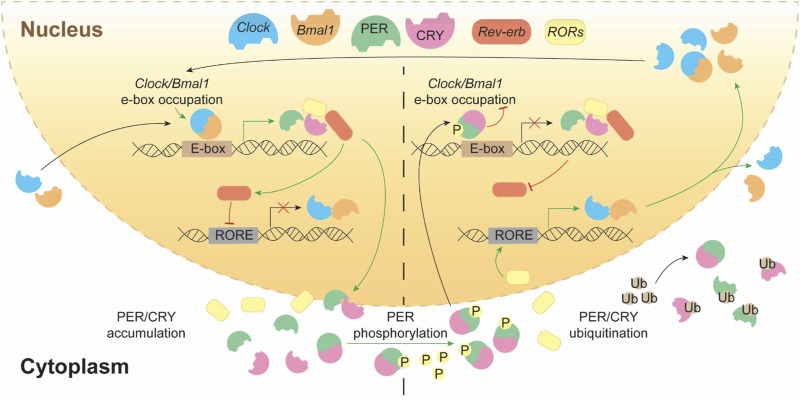
At the molecular level, in mammals, circadian rhythms are regulated by transcriptional, post-translational and methylation feedback loops generated by a set of interplaying clock proteins (Orozco-Solis and Aguilar-Arnal, 2020). At the core of the mammalian molecular circadian clock, the transcription factors CLOCK and BMAL1/NPAS form a heterodimer that activates the expression of clock-controlled genes by binding to E-box elements, initiating the cycle. Among these target genes are Per and Cry families. Period proteins PER1–3 and Cryptochrome ones CRY1–2 form complexes, and translocate to the nucleus to inhibit CLOCK-BMAL1 activity, thus closing the negative feedback loop. To start a new cycle, PER and CRY proteins must be degraded via proteasomal degradation (through phosphorylation by CK1δ/ε, AMPK, and other kinases) relieves their inhibition of CLOCK-BMAL1 activity to re-start again the cycle (Eide et al., 2005; Lamia et al., 2009; Yoo et al., 2013; Masuda et al., 2020). Moreover, BMAL1–CLOCK heterodimer also drives the expression of NR1D1-2 genes, that encode REV-ERBα-β proteins respectively, and DBP. DBP binds D-box motifs to drive expression of genes encoding the transcriptional activators RORα and RORβ which compete with REV-ERBα and REV-ERBβ for binding to RORE elements as those located in Bmal1. These regulatory loops not only induce the expression of their core components but also regulate many other genes involved in key homeostatic processes, including metabolism or DNA replication (Cox and Takahashi, 2019; Mortimer et al., 2024). They also coordinate with epigenetic regulators and tissue-specific transcription factors to drive rhythmic gene expression (Mortimer et al., 2025) (Figure 1).
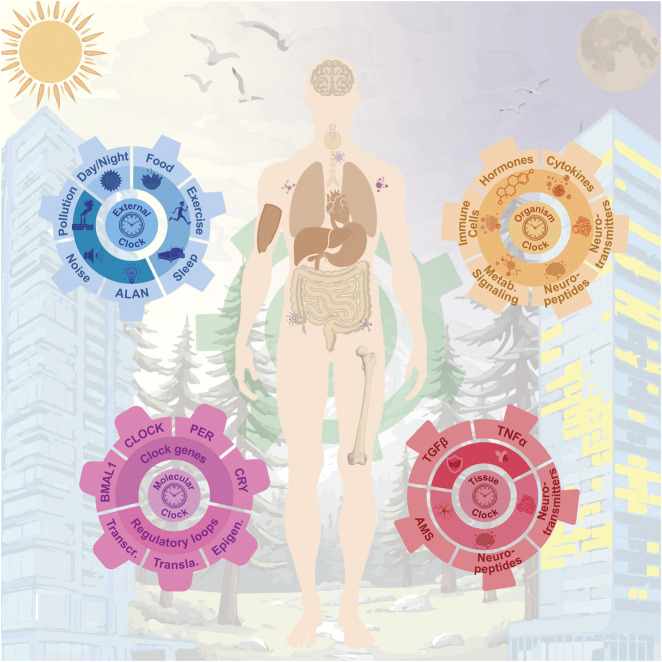
Beyond the molecular perspective, the circadian system encompasses additional layers of regulation (Figure 2). At the tissue level, paracrine signals are required to synchronize cell populations. In this regard, factors such as TGFβ, TNFα, and neurotransmitters including GABA, VIP, and AVP play crucial roles in coupling cell-autonomous circadian oscillators (Yoshida et al., 2018; Finger et al., 2021; Ono et al., 2021). At a higher level, organisms must also coordinate their rhythms to align physiology in a time-dependent manner. In this context, hormones such as melatonin and cortisol, as well as circulating elements in blood or lymphatic fluid, including immune cells, neuropeptides, and neurotransmitters like dopamine, noradrenaline, and serotonin, are key components of the circadian system (Linsell et al., 1985; Ciarleglio et al., 2011; Freyberg and McCarthy, 2017; Bonmati-Carrion and Tomas-Loba, 2021). Given the complexity of blood composition, the existence of yet undiscovered systemic circadian regulators cannot be ruled out. While both the organismal and tissue clocks act as endogenous entrainers, they operate at different scales and through distinct regulatory mechanisms: organismal clocks integrate and distribute systemic time cues, whereas tissue clocks require local synchronization, often via paracrine signaling, to ensure precise timing of specialized functions. Finally, ecosystem temporal cues, such as natural or artificial light and temperature, as well as behavioral inputs, including the social agenda and timing of nutrition, are also critical components of this complex system.
Time also occurs in a linear setting, very well represented by the irreversible process of aging. All living beings age, with the exception of a few organisms, including hydras (Hydra vulgaris) (Suknovic et al., 2021), jellyfishes (Turritopsis dohrnii) (Pascual-Torner et al., 2022) that escape this fate. Additionally, there are others in which aging progresses very slowly, like American lobsters (Homarus americanus) (Polinski et al., 2021), long-lived turtles (Testudines), cavefishes (including Phreatobius sanguijuela and Prietella phreatophila), and naked mole-rats (Heterocephalus glaber) (Montazid et al., 2023). Interestingly, species that exhibit delayed aging also tend to preserve solid circadian rhythms across their lifespan, suggesting that the maintenance of temporal homeostasis may be a hallmark of healthy aging (López-Otín and Kroemer, 2021). Notably, several aging-related signaling pathways are interconnected with the molecular clockwork. Among these, SIRT1, mTOR, AMPK, and insulin signaling present the strongest experimental support, with mechanistic studies across multiple species, including mammals. Others, such as FOXO and NRF2, are increasingly supported but still require deeper mechanistic resolution (Ramanathan et al., 2018; Acosta-Rodríguez et al., 2022; Das et al., 2023; Chhunchha et al., 2020).
In aging mammals, these rhythms tend to adapt to the age stage by modifying its period, phase, and amplitude until later life, when these rhythms fragment or dampen, contributing to metabolic dysfunction, cognitive decline, immunosenescence, and sleep disruption (Liu et al., 2024). However, long-lived span organisms maintain stable internal rhythms over decades, highlighting the possibility that resilience of circadian oscillations, at molecular, cellular, and systemic levels, might underlie their sustained homeostasis. Indeed, recent studies show that age-related circadian decline may not be inevitable, but modifiable by enhancing circadian amplitude via light, feeding schedules, or genetic interventions. These interventions improve metabolic and cognitive function in aged mice, reinforcing the idea that the preservation of biological timing could be as critical to longevity and suggesting that negligible aging may, in part, reflect the capacity to maintain circadian synchrony in the face of time (Welz and Benitah, 2020; Belancio et al., 2015; Acosta-Rodríguez et al., 2022; Altamirano et al., 2024; Whittaker et al., 2023; Acosta-Rodríguez et al., 2021).
Circadian aging describes the convergence of linear time, associated with aging, and cyclical time, governed by circadian rhythms. At this intersection, circadian robustness declines, and aging phenotypes emerge in a mutually reinforcing process. Evidence indicates that restoring circadian function can improve health span, offering opportunities for chrono-geroprotective strategies. This review explores how circadian and aging processes interact in mice, humans and long-lived species, aiming to uncover mechanisms of chrono-aging and their implications for healthy longevity.

The transcriptional–translational feedback loops of the mammalian circadian clock. This schematic represents the core molecular architecture of the circadian clock, highlighting the dynamic interplay between transcriptional activation and repression across the 24-hour cycle. The heterodimeric complex CLOCK:BMAL1 binds to E-box elements in the promoters of clock-controlled genes, promoting the transcription of Period () and Cryptochrome () genes, as well asand. The translated PER and CRY proteins accumulate in the cytoplasm and form complexes that eventually translocate into the nucleus. As its protein concentration progresses (right side), PER/CRY complexes translocate into the nucleus, where they inhibit CLOCK:BMAL1-mediated transcription, closing the negative feedback loop. PER proteins are phosphorylated by kinases (e.g., CK1δ/ε), which targets them for ubiquitination and proteasomal degradation, allowing the cycle to restart. Meanwhile, REV-ERBs and RORs form an auxiliary loop by rhythmically repressing or activatingtranscription through binding to RORE elements, thereby reinforcing the oscillatory robustness of the system. Per Cry Rev-erbα/β Rorα/β/γ Bmal1

Multilayered architecture of the circadian system and its interplay with environmental, physiological, and molecular rhythms across the human body. At the core (purple gear), the molecular circadian clock. These intrinsic oscillations are modulated by external cues (blue gear), including artificial light at night, all of which contribute to entrainment and synchronization. The intermediate layer (orange gear) consists of organismal signals such as hormones, cytokines, and neuropeptides, which coordinate systemic outputs. Finally, tissue-specific and cellular-level clocks (red gear) govern local physiology and niche-specific functions, including stem cell behavior, neuropeptide secretion, and intercellular signaling.
2 When the circadian system meets aging in the natural timeline
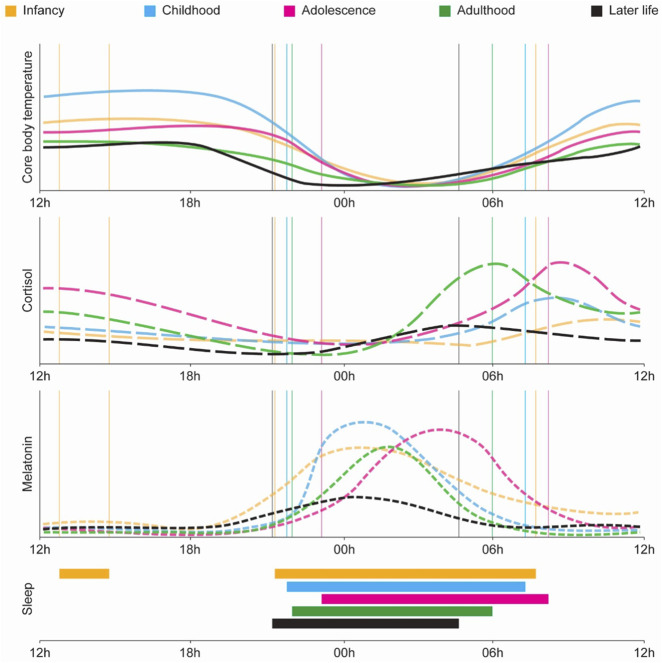
Most physiological and molecular processes in the organism are governed by the circadian system, which generates rhythmic oscillations throughout the lifespan. These rhythms adapt across different stages of life, fulfilling age-specific physiological requirements. At birth, neonates lack a fully matured central circadian clock, resulting in fragmented sleep-wake cycles. As the suprachiasmatic nuclei, in the brain, progressively synchronize with environmental cues, key circadian outputs, such as core body temperature, cortisol, and melatonin secretion, begin to exhibit defined periods, phases, and amplitudes. However, in advanced age, these rhythms often become dampened or desynchronized, leading to reduced circadian robustness and greater physiological variability (Figure 3).
Among the circadian changes across the lifespan described in Figure 3, there are several critical windows in which circadian control shifts and aging-associated phenotypes become more pronounced. Between the ages of 45–64, defined as middle age, disruptions in sleep architecture and circadian regulation begin to undergo significant transformations, with a remarkable change-point at the age of 60, that signals the early decline of the circadian system (Landolt et al., 1996; Carrier et al., 1997; Carrier et al., 2001; Carrier et al., 2005; Dijk and Duffy, 1999). Studies show that by their 40s and 50s, individuals already experience more fragmented sleep and reduced capacity to recover after extended wakefulness that drives a diminished ability to cope with stressors affecting sleep (Gaudreau et al., 2001). Comparative analyses reveal that middle-aged adults display a phase advance in both sleep timing and core body temperature rhythms, waking and sleeping earlier than younger adults, consistent with a reorientation of the circadian phase, even if the overall rhythmic amplitude remains stable (Carrier et al., 2002; Duffy et al., 2015). Moreover, melatonin rhythms also show early signs of decline. Starting around age 40, melatonin amplitude diminishes, down to about 60% of that seen in younger individuals, accompanied by lower daytime levels and prolonged nighttime peaks (Zhou et al., 2003). Notably, these changes occur independently of shifts in light exposure, indicating that the aging of the circadian system itself may drive this early erosion in temporal organization (Kawinska et al., 2005).
Studies in middle-aged female rats have shown that there are significant differences in the pattern of glucose utilization in the suprachiasmatic nucleus compared to young rats. The authors suggest that alterations in the synchronization and amplitude of luteinizing hormone peaks induced by estradiol during the transition to infertility in middle age could be triggering these changes (Wise et al., 1988). Menopause debut with a decline in estrogen levels, which has been linked to increased oxidative stress, an aging-driving agent (Rangel-Zuñiga et al., 2017). Moreover, postmenopausal women show reduced circadian robustness compared to premenopausal women, with lower amplitude in wrist temperature rhythms, lower average core body temperature during the sleep midopoint, earlier chronotype with a phase advance of approximately 1 hour, and blunted cortisol fluctuations (Gómez-Santos et al., 2016). In addition, they experienced greater sleep fragmentation and a higher frequency of sleep-related breathing abnormalities, such as apnea (Gómez-Santos et al., 2016). The loss of estrogen disrupts circadian rhythms, altering Per2 and Per3 gene expression in visceral and subcutaneous adipose tissue, respectively (Hernandez-Morante et al., 2012), which may contribute to fat redistribution and a higher risk of metabolic syndrome (Hernandez-Morante et al., 2012; Gómez-Santos et al., 2016; Verde et al., 2022), an aging-like phenotype. In fact, granulosa cells in women over 40 show a significant decrease in the expression of molecular clock genes, which negatively correlates with age (Jiang Z. et al., 2021). Additionally, apart from the Rev-erbα gene, all clock genes show also low expression levels in serum, which positively correlate with anti-Müllerian hormone levels (Jiang Z. et al., 2021). Overall, disrupted circadian rhythms in menopausal women are linked to increased multimorbidity and premature mortality (Ren et al., 2025) and coincide with other aging-like phenotypes that emerge profoundly, including bone demineralization, sarcopenia, skin and connective tissue decay or inflammaging.
At the peripheral level, in middle-aged individuals, and given the importance of circadian rhythms in lipid regulation and in their changing profile associated with metabolic problems (Dallmann et al., 2012; Gooley and Chua, 2014; Gooley, 2016; Rahman et al., 2023), it has been shown that the prevalence of endogenous circadian rhythms in the human plasma lipidome is maintained with healthy aging in middle age. Specifically, studies confirm that both young individuals and middle-aged individuals exhibit robust circadian regulation of the lipidome. However, in middle age, there is a reduction in the amplitude of lipid rhythmicity, a greater impact of factors such as sleep deprivation, a phase advance in the acrophase, and an alteration in the synchronization between central and lipid rhythms (Rahman et al., 2023).
Another step of time-fragility comes around age 70, when features such as sarcopenia rise steeply, causing accelerated loss of muscle mass and functionality, that are associated with an increased risk of falls, frailty, and mortality (Cruz-Jentoft and Sayer, 2019; Fernández-Martínez et al., 2023). Aging is one of the primary risk factors for the development of sarcopenia (López-Otín et al., 2023a), and age-related chronodisruption may initiate these pathways in skeletal muscle, preceding its onset (Fernández-Martínez et al., 2023). Notably, the core component of the circadian clock, Bmal1, regulates muscle homeostasis by controlling reactive oxygen species levels (ROS), so its decline with age promotes a pro-inflammatory environment (Kondratov et al., 2009). Over time, this situation leads to a chronic inflammatory state known as inflammaging (Franceschi and Campisi, 2014) characterized by the activation of the NF-κB pathway and an increase in the production of pro-inflammatory cytokines such as IL-6 and TNF-α (Fernández-Martínez et al., 2023). Sustained inflammation and the loss of circadian regulation interfere with muscle protein degradation and synthesis, also producing mitochondrial damage and thereby compromising energy production in muscle cells. These circadian metabolic changes contribute to the development and progression of sarcopenia. Indeed, Bmal1 deficiency in preclinical models impairs circadian behavior and accelerates aging, leading to muscle atrophy, reduced strength, disrupted sarcomere organization, and decreased mitochondrial content, all key features of sarcopenia (Kondratov et al., 2006; Christian and Benian, 2020; Gao et al., 2020). Consistent with these observations, Yang et al. (2016) reported that the absence of BMAL1 in mice not only disrupts circadian rhythms but also increases oxidative stress, impairs mitochondrial function, and perturbs metabolic pathways, pointing to a clock-independent role for BMAL1 in maintaining redox balance, proteostasis, and tissue integrity. Strikingly, brain-specific restoration of Bmal1 failed to rescue normal lifespan, underscoring the essential contribution of peripheral Bmal1 to longevity (Yang et al., 2016). While this finding was discussed in the context of peripheral clock function, we speculate that it may also suggest that the central pacemaker's role is less dominant than traditionally assumed, and that peripheral clocks can, under certain conditions, exert substantial autonomous control over specific physiological functions or even over organismal homeostasis.
This pronounced vulnerability around the seventh decade of life highlights the transition into a phase of systemic time-fragility, where the decline in circadian robustness intersects with the acceleration of aging phenotypes. As the circadian system becomes increasingly desynchronized, both centrally and peripherally, the organism's capacity to adapt to environmental and physiological stressors is diminished. This vulnerability is not merely the result of internal degeneration, but is also shaped by lifelong interactions with the external environment. Indeed, the aging circadian system becomes more susceptible to exogenous influences, suggesting that exposures accumulated across a lifetime may converge with intrinsic molecular changes to further destabilize temporal homeostasis. This interplay sets the stage for understanding aging not only as a biological process but also as an environmentally modulated trajectory, one that unfolds under the constant influence of time-bound cues and stressors. Within this framework, we propose a new concept called the chrono-exposome, in which external cues play a particularly relevant role in the biology of time.

Age-related changes in physiological circadian variables across the lifespan. Circadian rhythms in core physiological variables evolve dynamically from infancy through later life. From top to bottom: core body temperature, cortisol, melatonin, and sleep timing across five life stages: infancy (orange), childhood (blue), adolescence (magenta), adulthood (green), and later life (black). Core body temperature exhibits a progressive shift in phase and amplitude, with adolescence marked by a delayed nadir and later life showing a dampened rhythm. Cortisol peaks in the early morning across all stages, but its amplitude is highest during adolescence and adulthood, declining significantly in older age. Melatonin secretion also follows a robust circadian pattern that matures in childhood, peaks in adolescence with a delayed phase, and gradually loses amplitude and rhythmic precision in aging. Sleep timing (bottom panel) transitions from polyphasic and fragmented sleep in infancy to consolidated nocturnal sleep in adulthood, with delayed sleep onset in adolescence and a tendency for phase advance and fragmentation in later life (). [Logan and McClung, 2019]
3 Chrono-Exposome and aging
The concept of the chrono-exposome encompasses the cumulative impact of environmental stressors on homeostatic processes throughout an individual's life, particularly through their effects on the circadian system and, consequently, on the physiological functions it regulates. Across the entire lifespan, global exposures such as seasonal photoperiod changes, urbanicity, noise, social jetlag, sedentary indoor lifestyles, erratic feeding schedules, poor sleep routines, artificial light, psychosocial stress, and endocrine-disrupting chemicals pose chronic threats to circadian stability, potentially accelerating aging and disease Nahmod et al., 2019; Huang et al., 2024) (Table 1). It has been observed that the exposure to circadian entrainers, such as light, food, stress and exercise at the inappropriate time, i.e., during the rest phase, can shape the circadian system at the molecular level (Wolff and Esser, 2012; Bolsius et al., 2021), altering molecular clock expression in the suprachiasmatic nucleus and peripheral organs, and affecting metabolic processes. Among the different effects, it can increase oxidative stress and contribute to tissue damage (Li et al., 2023; Makris et al., 2023; Ruan et al., 2021). Through this interaction, circadian entrainers, although essential for life, have the potential to shape different signatures of aging depending on their timing and the life stage.
In modern human societies, irregular exposure to circadian entrainers, as happens in shift work, is a common practice. This practice has been linked to the disruption of internal circadian clocks with external time cues, leading to a phenomenon known as chronic jetlag (Makris et al., 2023). This misalignment affects nearly half of the population and is associated with increased risks of cardiovascular disease, obesity, diabetes, and cancer; conditions commonly linked to aging (Covassin et al., 2016; Laermans and Depoortere, 2016; Albrecht, 2017). The disruption of circadian rhythms can induce oxidative stress in cells via Clock and Bmal1, important regulators of cellular senescence in vivo, a state in which the balance between ROS and antioxidants is disturbed (Yuan et al., 2017; Makris et al., 2023). At baseline levels, ROS support normal cellular functions, but when in excess, they can damage macromolecules such as lipids, DNA, and proteins (Sies, 2018), triggering cellular senescence. In this state, cells cease to proliferate and adopt a senescence-associated secretory phenotype, releasing inflammatory factors, including IL-6, TNF-α, CCL2, CXCL1, and matrix metalloproteinases (Ahmed et al., 2022; Zhang et al., 2022; Basisty et al., 2020). This phenomenon, alongside cellular senescence, contributes to inflammaging, a broader concept referring to the chronic, low-grade inflammation that arises with aging. Inflammaging plays a causal role in the aging process by promoting immunosenescence, mitochondrial dysfunction, and microbiome alterations (Liguori et al., 2018). However, other mechanisms, such as the dampening of the rhythmic expression of circadian genes in immune cells, may also contribute to the aging-associated inflammation (Blacher et al., 2022).
Artificial light at night (ALAN) has become pervasive in modern societies disrupting natural circadian rhythms. One well-known mechanism is its suppression of melatonin production (Lewy et al., 1980). Melatonin suppression leads to increased oxidative stress and DNA damage, mediated by pathways involving the p53 tumor suppressor and the NF-kB signaling cascade, which are implicated in cancer and metabolic disorders (Stevens and Zhu, 2015; Wang et al., 2015; Jiang et al., 2016; Stephenson et al., 2021). However, melatonin plays additional roles, acting as a scavenger of free radicals and as a chelating agent for heavy metals (Limson et al., 1998). For example, in human placental mitochondria, melatonin suppresses iron-dependent production of ROS (Milczarek et al., 2010). In addition, in a recent study, melatonin has been found to exert protective effects against hepatic fibrosis through melatonin receptor 2 activation, leading to the upregulation of Bmal1 and antioxidant enzyme pathways (Kim and Cheon, 2024). The repetitive suppression of melatonin cycles by ALAN thus has the potential to accelerate aging through DNA damage, while melatonin supplementation has repeatedly been found to attenuate oxidative stress damage in age-related diseases like diabetes (Mohammadpour Fard et al., 2024). Interestingly, new avenues are emerging in our understanding of how ALAN contributes to other pathophysiological scenarios, including obesity, type 2 diabetes, and broader metabolic disturbances. These effects are likely mediated through alterations in appetite-regulating hormones, leading to increased food intake, a preference for energy-dense foods, and even gut dysbiosis (Vujović et al., 2022; Thaiss et al., 2014). When it comes to food preferences, eating behavior is orchestrated by metabolic, hedonic, and circadian pathways, which together regulate not only how much and what we eat, but also when we eat. Alterations in the expression of clock genes within these brain regions result in heightened dopamine release in response to high-calorie foods, thereby enhancing their rewarding properties and driving a preference for energy-dense foods during periods of circadian disruption (Bainier et al., 2017).
On the other hand, the timing of food intake is a critical factor influencing circadian rhythms. Research on time-restricted feeding (TRF) indicates that aligning eating patterns with natural circadian cycles can improve metabolic health and potentially slow age-related decline (Longo and Panda, 2016; Ezpeleta et al., 2024). In older humans (Lages et al., 2024; Ezzati et al., 2025) and rodents (Milan et al., 2024), restricting food intake to the active phase of the photoperiod improved markers of oxidative stress, suggesting that eating during the rest phase can result in increased oxidative stress damage compared to eating during the active phase. In a rodent model of liver ischemia-reperfusion, TRF for 8–10 h during the active phase, compared to 24 h food access, improved tissue regeneration, reduced pro-inflammatory (like IL-6) and augmented anti-inflammatory (like IL-10) markers, prevented ROS production and increased systemic β-hydroxybutyrate (BHB) (Ren et al., 2019). Fasting decreases glycogen stores in the liver, and cells shift from carbohydrate to lipid and ketone metabolism, increasing BHB levels and blocking the NLRP3 inflammasome (Youm et al., 2015), which is implicated in age-related functional decline (Youm et al., 2013). Conversely, TRF during the rest phase in rodents (Ye et al., 2024), and eating during the late active phase in humans (Allison et al., 2021) exacerbated systemic insulin resistance, a common feature in aged populations. Regarding the long-term effects, a study in a rodent model found that restricting feeding to the rest phase promoted hepatic lipid accumulation by suppressing hepatic miR-27b-3p, thereby enhancing PPARγ activity and upregulating CD36-mediated lipid transport into the liver (Tsurudome et al., 2022). These results suggest that lifelong exposure to misaligned eating patterns might potentially accelerate aging, but long-term experimental approaches are required to assess these changes.
Finally, the benefits of physical exercise in slowing the aging process have been extensively studied (Garatachea et al., 2015). However, exercise also elicits distinct effects depending on the time of the day, with morning exercise benefiting lipolysis, and evening exercise muscle mass (Gabriel and Zierath, 2019; Kim et al., 2023). At the molecular level in rodent models, exercise entrains the core clock by shifting expression patterns of Per2 (Kemler et al., 2020), and can prevent oxidative damage derived from melatonin deficit or circadian disruption (Jana et al., 2020; Gu et al., 2024). In humans, it is challenging to determine the effects of exercise during normal sleep time. Rodent models of exercise during the rest phase are also limited. It has been reported that exercise during the rest phase, compared to the active phase, increases systemic energy expenditure without enhancing lipid oxidation according to the muscle transcriptome, an effect mediated by the fed status (Sato et al., 2019; Sato et al., 2022; Pendergrast et al., 2024). However, the effects of exercise during the rest phase on oxidative stress and tissue damage require further exploration.
Lifelong environmental exposures, such as light pollution, nutrition timing, and shift work, play crucial roles in shaping circadian health. Understanding the circadian molecular and physiological impacts of these factors can offer valuable insights into the mechanisms of aging. While targeting lifestyle and chrono-exposome factors holds promise for promoting healthy aging, the bidirectional relationship between circadian disruption and aging remains incompletely understood. To bridge this gap, there is an urgent need for both preclinical and clinical studies that clarify how environmental timing influences age-related decline. Complementing this environmental perspective, insights from biological extremes, such as premature aging syndromes and exceptionally long-lived species, offer powerful models to dissect the resilience or vulnerability of the circadian system in aging.
The molecular architecture of the circadian clock is a deep-rooted legacy of life's earliest adaptation to Earth's rotation. Organisms began developing intrinsic timekeeping mechanisms over 2.5 billion years ago, with cyanobacteria evolving the KaiABC protein clock system, that regulated global gene expression in alignment with day/night cycles (Swan et al., 2018; Jabbur and Johnson, 2022). In animals, this ancestral timekeeping framework evolved into transcription–translation feedback loops involving core genes like Clock, Bmal1, Per, and Cry, which share homology with ancient microbial photoreceptors and transcription factors (Stanton et al., 2022). This remarkable evolutionary continuity underscores the fundamental role of circadian timing in coordinating whole body physiology including metabolic homeostasis, DNA repair, and protein quality control, key processes implicated in aging (López-Otín et al., 2023a). By situating premature aging syndromes and long-lived species within this evolutionary framework, we highlight how these extreme models can reveal whether circadian resilience or vulnerability meaningfully influences longevity. However, it is remarkable how little primary evidence exists regarding circadian system regulation in these species and, consequently, about its potential relationship with their long or short lifespan. In the following sections, we summarize the limited literature available on their circadian systems and propose possible correlations between circadian regulatory pathways and aging, with the aim of opening new avenues for future research.
| Life stage | Chrono-exposome factors | Circadian impact | Aging-like related outcome | References |
|---|---|---|---|---|
| Perinatal and Early Childhood | Maternal circadian disruption | Alters fetal clock developmentImpaired circadian gene expression rhythms | Reduced adult body massSocial avoidanceImpaired metabolic gene expression rhythms | [Smarr et al. (2017)] [Varcoe et al. (2013)] |
| Artificial lighting in neonatal units | Disruption of light-dark entrainment | Abnormal circadian behaviorIrregular sleep-wake patternsReduced weight gainNeurologic complications | [Kok et al. (2024)] [Miller et al. (1995)] [Van Gilst et al. (2023)] | |
| Feeding schedule misalignment | Impairs metabolic clock entrainment | Increase in body mass index and adiposity | [Cheng et al. (2016),] [Van Gilst et al. (2023)] | |
| Erratic sleep routines, screen exposure | Weakens circadian consolidation | [Staples et al. (2021)] | ||
| Inadequate temperature regulation | Disrupts core body temperature rhythm entrainment | Poor sleep qualityLess memory consolidation | [Berger et al. (2023)] | |
| Noise exposition | Circadian rhythm disruptionPoor sleep quality | Cognitive impairment | [Li et al. (2023)] | |
| Childhood & Adolescence | Early school start times | Induces chronic sleep deprivation and misalignment | Higher risk of risk of obesity and type 2 diabetesElevated blood pressure and weakened immune function | [Minges and Redeker (2016)] |
| Evening screen exposure | Delays melatonin secretionInconsistent sleep patterns | Brain development, potentially influencing cognitive aging later in life | [Telzer et al. (2015)] | |
| Social jetlag | Leads to circadian misalignment | Mood and sleep disordersIncreased body mass indexInsulin resistanceElevated triglyceride levels | [Magnusdottir et al. (2024)] [Pompeia et al. (2023)] | |
| Indoor lifestyle | Reduces exposure to synchronizing morning light (reduce melatonin) | [Westwood et al. (2023)] | ||
| Irregular dietary patterns | Disrupts peripheral clocks | Metabolic imbalancesDNA methylation of metabolic circadian genesInsulin resistance | [Asher and Sassone-Corsi (2015)] [Jansen et al. (2021)] [Garaulet et al. (2022)] | |
| Physical inactivity | Weakens activity-related circadian cuesImpaired muscle-Brain Crosstalk via Irisin and BDNF | Metabolic and hormonal imbalance | [Zsuga et al. (2018)] | |
| Adulthood | Night/rotating shift workJet lag (frequent travel) | Major disruption of central and peripheral clocksAttenuated Amplitude of RhythmsMelatonin suppression | Type 2 diabetes/metabolic syndromeCardiovascular DysfunctionDisrupted DNA repairDesynchronized cell-cycle clock genesDisrupted NADbiosynthesisCognitive declineImmune dysregulationCancer riskPremature cellular and organismal aging (+1.3 years biological age acceleration)Sleep disturbancesReproductive aging+ | [Shen et al. (2024)] [Caravia et al. (2022)] [Allada and Bass (2021)] [Yang et al. (2024)] [Ashimori et al. (2021)] |
| Chronic social jetlag | Recurrent misalignment of biological and social time | Type 2 diabetes/Obesity | [Roenneberg et al. (2012)] [Roenneberg (2023)] | |
| Artificial light at night | Suppresses melatonin and blunts circadian amplitude | Cancer risk (hormone-dependent) | [Palomar-Cros et al. (2024)] | |
| Nocturnal noise pollution | Disrupts sleep quality and circadian stabilityHigh cortisolCircadian clock genes dysregulation | Inflammation and oxidative stressDNA methylation changes | [Daiber et al. (2022)] [Arregi et al. (2024)] [Hahad et al. (2025)] [Thacher et al. (2024)] | |
| Alcohol/caffeine at late hours | Alters sleep timing (reduced REM)Circadian misalignmentCircadian hormone profilesMelatonin suppression | Hormonal imbalanceCognitive dysfunction | [Song and Walker (2023)] | |
| Older Adults/Aging | Reduced morning light exposure | Dampens SCN-driven rhythmsPhase-shiftImpact on hormone regulationDisrupted sleep-wake cycles | [Lok et al. (2023)] [Barroggi Constantino et al. (2025)] | |
| Increased sedentarism | Reduces physical Zeitgeber input | Short telomeresCardiometabolic risk | [Stenbäck et al. (2019)] [Leskinen et al. (2021)] | |
| Polypharmacy/medication timing | Alters rhythmic physiology and pharmacodynamics | Chronotherapy effects altered | [Pazan and Wehling (2021)] | |
| Social isolation/retirement | Loss of social Zeitgebers | Impact the regulation of the described 13 hallmarks of aging | [Kroemer et al. (2025)] |
4 Progeroid syndromes and circadian system interactions
Aging studies have explored the major regulatory pathways involved in this complex process. The Hallmarks of Aging, published in 2013 by López-Otín and colleagues, and subsequently updated into their "expanding universe" a decade later, has ended on 14 hallmarks of aging providing an overview of the key biological features that influence aging (López-Otín et al., 2013; López-Otín et al., 2023b; Kroemer et al., 2025). Further attempts to understand the intricate connections between aging and the circadian system were reviewed in Impact of the Circadian Clock on the Aging Process by Fonseca Costa and Ripperger in 2015 and later by Welz and Aznar-Benitah (Fonseca Costa and Ripperger, 2015; Welz and Benitah, 2020). Premature aging syndromes, such as Hutchinson-Gilford progeria syndrome (HGPS), or other progeroid syndromes including Werner syndrome or Néstor-Guillermo progeria syndrome, offer unique windows into the mechanisms of accelerated aging. They serve as valuable models for exploring the interplay between aging and circadian regulation, precisely at the moment when both times meets, out of time.
Hutchinson-Gilford progeria syndrome is a premature aging disorder caused by mutations in the LMNA gene, that produce a defective protein called progerin leading to a disorganized nuclear architecture (Eriksson et al., 2003). This syndrome is characterized by accelerated aging, with affected individuals displaying features such as hair loss, joint abnormalities and cardiovascular disease, with a reduced lifespan. Research into HGPS hallmarks could help explore the potential role of circadian dysfunction in its pathology and identify crosstalk between both biological time systems. Genomic instability, a hallmark of HGPS, may be worsened by circadian disruption of DNA repair pathways involving Sirt6 and Bmal1 through nicotinamide adenine dinucleotide (NAD+), a seminal metabolite in aging and circadian system regulation (Kolinjivadi et al., 2021; Toiber et al., 2013; Nakahata et al., 2009). Similarly, the epigenetic alterations observed in HGPS, including loss of heterochromatin and aberrant histone modifications, likely impair the circadian regulation of chromatin accessibility and gene expression (Oh et al., 2019). The disorganized nuclear architecture in HGPS, driven by progerin, may interfere with the spatial organization of circadian gene loci, compromising rhythmic transcription. Studies revealed that CLOCK formed complexes with nuclear lamina proteins and KAP1, thus maintaining heterochromatin architecture and stabilizing repetitive genomic sequences (Liang et al., 2021). Mitochondrial dysfunction and oxidative stress, common in HGPS cells, could be exacerbated by disruption of circadian control over mitochondrial dynamics and metabolism via NAD + -dependent pathways. Loss of proteostasis, due to impaired autophagy and accumulation of misfolded proteins, may also reflect a breakdown in circadian regulation of cellular quality control systems. Proteostasis, under the regulation of the circadian system (via mTOR, and proteasome activity) (Juste et al., 2021) reciprocally induces the degradation of core circadian proteins like BMAL1, contributing to age-associated circadian disruptions and accelerated aging phenotypes (Lipton et al., 2017; Khapre et al., 2014a). Additionally, stem cell exhaustion and premature cellular senescence in HGPS resemble age-associated decline in circadian coordination of stem cell renewal and senescence-associated gene expression. Vascular dysfunction, a critical cause of morbidity in HGPS, is linked to circadian regulation of endothelial tone and inflammation (Kunieda et al., 2008). Together, these features underscore a possible bidirectional relationship between nuclear envelope defects and circadian misalignment in the pathogenesis of HGPS.
Other progeroid syndromes, while mechanistically distinct from HGPS, may also involve circadian alterations. In Néstor–Guillermo Progeria Syndrome (NGPS), caused by mutations in BANF1 (encoding BAF1), loss of BAF disrupts nuclear architecture and chromatin organization without progerin accumulation (Cabanillas et al., 2011). Although circadian rhythms have not been directly studied in NGPS, BAF's interaction with MAN1, a nuclear envelope protein that binds the BMAL1 promoter, and its role in chromatin tethering suggest potential circadian disruption (Zhang et al., 2015; Brunet et al., 2019). Similar gaps exist in Werner syndrome, a segmental progeria caused by mutations in WRN, a gene involved in DNA repair, telomere maintenance, and epigenetic stability (Milosic et al., 2024). While direct links between WRN and core circadian genes remain elusive, overlapping pathways such as chromatin remodeling, metabolic regulation, and epigenetic modifications, all influenced by circadian clocks, indicate possible crosstalk (Bellet and Sassone-Corsi, 2010; Koike et al., 2012; Chang and Guarente, 2013; Pacheco-Bernal et al., 2019; Acosta-Rodríguez et al., 2022).
Collectively, these observations point to a potential bidirectional relationship among nuclear envelope defects, circadian misalignment, and the accelerated aging phenotypes observed in progeroid syndromes, highlighting the need for direct studies on circadian system integrity in these conditions.
5 Circadian rhythms and long-lived animals
The evolutionary strategies that long-lived species have developed to couple aging with circadian clock homeostasis could shed light on the interaction between biological processes. Although this remains a complex and somewhat controversial area of study, many aged animal tissues exhibit dampened rhythms characterized by reduced amplitude, increased fragmentation, and impaired stability. Consequently, the expression of genes under circadian control, including those involved in metabolism, is also affected (Nakamura et al., 2016; Wallace et al., 2020; Cai et al., 2023; Masuda et al., 2023; Wolff et al., 2023; Buijink et al., 2024). Understanding whether rhythms in long-lived animals maintain their amplitude and acrophase, and how they achieve this, could help unravel the relationship between aging and the temporal dynamics of various biological pathways. Also, species adapted to extreme photoperiods demonstrate a high degree of behavioral plasticity and not only reveal how circadian rhythms adjust to challenging environments but also provide insights into the resilience of the biological clock under environmental stress, identifying mechanisms that promote greater circadian stability and, consequently, help delay aging. Since the circadian system can be entrained and stabilized by external cues, this field offers a valuable opportunity to explore new avenues for understanding the aging process. In this section, we will explore the strategies and evolutionary insights of long-lived animals such as the naked mole-rat, cavefish, and whales, to open new perspectives in the chrono-aging process.
5.1 The naked mole-rat
The naked mole-rat (H. glaber), a small rodent that strictly inhabits subterranean life, is known for its exceptional lifespan of up to 37 years, making it the longest-lived rodent species (Jarvis, 1981; Bennett and Faulkes, 2000; Buffenstein, 2005). This extraordinary animal with no age-related increase in mortality risk and negligible senescence, exhibits high fertility while maintaining proteostasis, genomic stability, resistance to cancer, and good cardiovascular, neuronal, and metabolic health, even in old age (Buffenstein, 2008; Park et al., 2008; Liang et al., 2010; Edrey et al., 2011; Ruby et al., 2018; Seluanov et al., 2018; Shepard and Kissil, 2020; Hadi et al., 2021; Oka et al., 2023).
This rodent has developed several morphological and physiological adaptations to live in complete darkness, including insensible eyes to light, small pupils with no pupillary response, and a thin optic tract, making it independent of the external light (Peichl et al., 2004; Buffenstein, 2005; Crish et al., 2006). This fact is consistent with the low expression of the c-fos gene in the SCN, in contrast to what is observed in animals with light-sensitive eyes and well-developed retinas. In addition, the melatonin pathway is impaired due to pineal atrophy, low or undetectable expression of genes involved in melatonin synthesis, and the presence of non-functional melatonin receptors (Kim et al., 2011; Moqrich, 2014).
Nonetheless, due to the high evolutionary conservation of the molecular clock, comparative analyses between the naked mole-rat and mice revealed that all major clock genes (Bmal1, Clock, Per1/2, Cry1/2, Rev-Erbα/β, and Ror-s) are present in the naked mole-rat's reference genome (http://www.naked-mole-rat.org/↗), and are expressed in liver tissue, indicating that its circadian clock remains functional (Ghosh et al., 2021). However, although both species display rhythmic gene expression, their temporal patterns are not aligned, suggesting that the regulation of core clock genes may have evolved under distinct phase rules compared to mice, possibly due to internal factors or because the primary entrainer is something other than light.
Mitochondrial dysfunction and deregulated nutrient sensing are central to aging (López-Otín et al., 2013), with growing evidence of a bidirectional regulation between the circadian clock and metabolic pathways, particularly glucose metabolism and mTOR signaling (Khapre et al., 2014a; Khapre et al., 2014b). Bmal1 influences insulin signaling and glucose homeostasis (Mauvoisin et al., 2014) and has been identified among 12 key longevity-associated genes in long-lived species (Yu et al., 2021). mTOR, in turn, regulates Bmal1 expression, and disruption of this feedback loop during aging may impair metabolic control, weaken circadian robustness, and accelerate aging (Lipton et al., 2017; Cao, 2018; Ramanathan et al., 2018). Notably, these pathways are differentially expressed across aging in naked mole-rats. The expression of glycolytic and gluconeogenic enzymes is highly synchronized with the circadian molecular clock, whereas in mice, these rhythms are less coordinated. This supports the idea that naked mole-rats may have evolved more precise temporal regulation and more efficient metabolic control mechanisms adapted to their unique subterranean lifestyle (Ghosh et al., 2021). This robustness of glucose metabolism coincides with an increase in mTORC2 activity in naked mole-rats. Moreover, it has been shown a reduction in mTORC1 activity, combined with the enhanced synchronization of enzymes involved in glucose homeostasis. It has been proposed that the suppression of mTORC1 activity extends lifespan in multiple species, including mice, and that mTORC1 is one of the main drivers of aging and age-related diseases (Harrison et al., 2010; Miller et al., 2011; Ferrara-Romeo et al., 2020). In contrast, the role of mTORC2 in aging remains less defined, with studies showing that reduced mTORC2 activity shortens lifespan in mice (Nojima et al., 2013; Chellappa et al., 2019). When mTORC1 is suppressed, compensatory mTORC2 upregulation can maintain glucose homeostasis (Hagiwara et al., 2012) and may contribute to lifespan extension in rodents (Dominick et al., 2015). Notably, the elevated mTORC2 activity in naked mole-rats may support both tightly synchronized glucose metabolism and their exceptional longevity despite their small body size.
Thus, proper modulation of glucose and mTORC1-2 pathways suggests that it may enhance the robustness of circadian rhythms, as happens in the naked mole-rat and slow down the aging process by improving metabolic health and reducing cellular damage.
5.2 Cavefish
Subterranean environments are unique ecological systems characterized by the absence of light, high humidity, and constant temperature, resulting in a highly stable microclimate (Biswas, 2010; Culver, 2014; Lunghi et al., 2015; Culver and Pipan, 2019; Mammola, 2019). When surface-dwelling species colonize these environments, they often undergo phenotypic changes (Bilandžija et al., 2020; Lunghi and Zhao, 2020) such as loss of pigmentation and eye degeneration (Howarth and Moldovan, 2018), along with other adaptive traits like slower growth, reduced metabolic rate, and decreased investment in reproduction, all of which have been linked to increased lifespan, as in cavefish that live three times longer than surface fish populations (Poulson, 1963; Flatt and Schmidt, 2009).
The circadian system in cavefish also displays unique features that may be related to their increased lifespan (Voituron et al., 2011; Lunghi and Bilandžija, 2022). In these fishes, circadian rhythms are suppressed in their natural habitat due to the absence of light, but they can be restored under artificial light-dark cycles (Carlson and Gross, 2018) or through other environmental synchronizing factors (Yoshizawa et al., 2010; Moran et al., 2014; Blin et al., 2020; De Souza et al., 2024), taking advantage of the enhanced sensitivity of their mechanosensory and chemosensory systems (Bilandžija et al., 2012; Jeffery, 2009; Gonzalez et al., 2018). In these species, the synchronization of circadian rhythms may be influenced by other external zeitgebers, due to the interaction between the internal biological clock and associative memory through time–place learning (Mulder et al., 2013).
In A. mexicanus, one of the most widely used model species in cave biology, studies during the embryonic stage have shown that light-induced activation of the molecular clock genes Cry1 and Per2 is delayed in cave-dwelling populations compared to their surface counterparts (Frøland Steindal et al., 2018). In adults, these genes are still present but show significantly higher baseline expression levels than in surface fish, even without light exposure. This suggests that the core circadian clock mechanism in this species may be suppressed in response to an overactivation of the light input pathway and the systems responsible for clock synchronization, as part of the fish's adaptation to the absence of light (Beale et al., 2013). The elevated baseline expression levels of Per2 in cave-dwelling Astyanax mexicanus may also represent an adaptive advantage, as they trigger significantly higher expression of genes such as CPD/PHR and DDB2, which encode DNA repair proteins, helping to reduce the likelihood of harmful mutations induced by light. Interestingly, after UV exposure, cavefish show significantly less DNA damage and therefore greater repair activity compared to their surface-dwelling counterparts.
The elevated baseline expression of Per2 in cave-dwelling A. mexicanus may represent an adaptive advantage, as it drives significantly higher expression of genes such as CPD/PHR and DDB2, which encode DNA repair proteins (Tamai et al., 2004; Gavriouchkina et al., 2010; Weger et al., 2011; Beale et al., 2013), thereby reducing the likelihood of light-induced harmful mutations. Notably, after UV exposure, cavefish exhibit significantly less DNA damage and greater repair activity than their surface-dwelling counterparts (Beale et al., 2013), maintaining a higher genome stability, delaying one of the main hallmarks of aging (López-Otín et al., 2023a).
5.3 Whales
The bowhead whale (Balaena mysticetus) is notable for its exceptional longevity, with a lifespan exceeding 200 years (Seim et al., 2014; Keane et al., 2015). Among the molecular mechanisms underlying this remarkable lifespan, the circadian system emerges as a critical component. In fact, Bmal1 gene has been identified as one of the key genes associated with longevity (Yu et al., 2021). Its significance lies in its involvement in essential processes such as DNA repair, immune system regulation, and glucose signaling via the PI3K-AKT pathway, mechanisms implicated in cancer prevention and lifespan extension (Zeng et al., 2010; Beker et al., 2019; Zhang et al., 2023; Wang J. et al., 2025). Moreover, the evolutionary rate of Bmal1 has been shown to correlate with the maximum lifespan across species, suggesting that this gene is linked both to rapid evolutionary processes and to those that promote a longer life (Yu et al., 2021). In long-lived cetaceans such as the bowhead whale and the humpback whale, Yin et al. observed that approximately 50% of the circadian genes analyzed had undergone accelerated evolution, and more than 60% exhibited species-specific mutations within their functional domains. This suggests strong selective pressure on this regulatory network, potentially to support adaptations such as their characteristic sleep patterns (Yin et al., 2024).
An example of a circadian adaptation is the FBXL21 gene, which in cetaceans more efficiently promotes the degradation of the CRY1 protein. This facilitates whales' ability to maintain prolonged wakefulness in one cerebral hemisphere during unihemispheric sleep, providing them with behavioral flexibility and sustained alertness in the marine environment (Yin et al., 2024), factors that directly contribute to their survival and potential for longevity. Subsequent experiments in zebrafish have validated this regulation of daytime cytoplasmic accumulation of CRY proteins by the functional variant of FBXL21 found in cetaceans (Hirano et al., 2013). Another adaptation that allows for more flexible control of biological rhythms is a specific mutation identified in the NFIL3 gene. Although NFIL3 normally functions as a transcriptional repressor of key circadian rhythm genes, in cetaceans its efficiency in repressing target genes is reduced, and its likelihood of degradation is increased (Yin et al., 2024). The accumulation of mutations in other core clock genes such as Clock and DEC2 (Yin et al., 2024) further suggests an evolutionary convergence in the reconfiguration of the circadian system. This may reflect an adaptation toward slower or more controlled aging in these species by optimizing cellular, endocrine, and metabolic cycles involved in senescence.
Additionally, genes related to the insulin signaling pathway and immune response have been shown to be closely linked to longevity (Yu et al., 2021). In particular, the expression of the insulin receptor protein, which regulates energy metabolism, has been positively correlated with mammalian longevity (Ma S. et al., 2016). Furthermore, insulin pathway-dependent proteinss such as mTOR, AKT, and PI3K are associated with metabolic homeostasis, cell cycle regulation, proliferation, cancer, and longevity (Veilleux et al., 2010; Kenyon, 2011; Xie et al., 2019; Ramasubbu and Devi Rajeswari, 2023). Moreover, several genes undergoing accelerated evolution or positive selection in whales and other long-lived species are involved in the insulin/IGF-1 signaling pathway, reinforcing the idea that this pathway plays a key role in lifespan extension.
Behavioral plasticity resulting from these genetic modifications represents a key adaptive advantage that likely contributes to the longevity of these marine mammals by enabling more refined control of their metabolism, neuronal activity, and repair mechanisms. Thus, the modified circadian system of whales may function as a central regulator of the aging rate, integrating environmental, physiological, and behavioral signals.
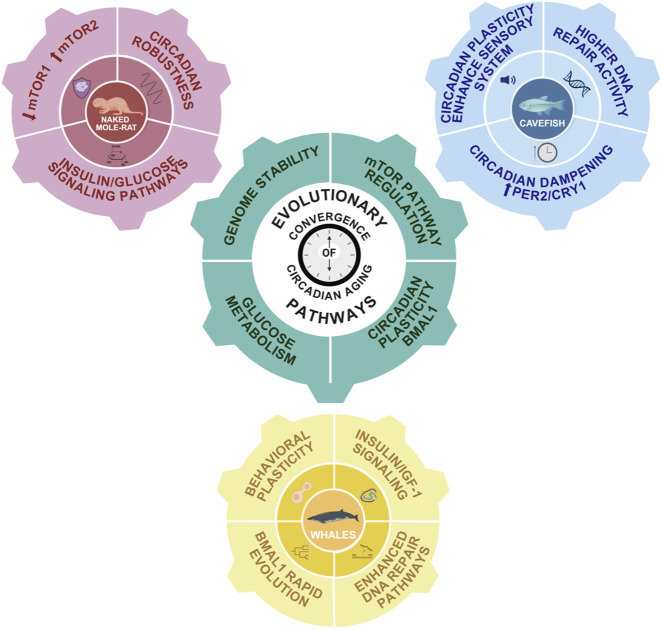
In summary, studies across highly divergent long-lived species such as whales, cavefish, and naked mole-rats, have revealed that a common molecular thread linking the circadian system to extended lifespan is the regulation of insulin/IGF-1 signaling and glucose metabolism. This pathway, tightly controlled by core clock components like Bmal1, appears to be consistently optimized to enhance metabolic efficiency, preserve energy homeostasis, and reduce age-related cellular damage. In whales, positive selection of insulin-related genes and circadian regulators supports metabolic balance and cancer resistance; in cavefish, adaptations to lightless environments result in altered circadian gene expression that may indirectly stabilize energy use and DNA repair; and in naked mole-rats, precise circadian coordination of glucose metabolism and distinct mTORC1/2 activity likely contribute to their exceptional longevity and negligible senescence. Together, these findings suggest that the evolutionary fine-tuning of circadian control over metabolic pathways, genome stability, and circadian plasticity by Bmal1 may be a unifying strategy for lifespan extension across distant taxa (Figure 4).

Evolutionary convergence of circadian-aging pathways. Schematic representation of the main interconnected pathways linking aging and the circadian system in long-lived species. In pink, the naked mole-rat exhibits a robust insulin/glucose signaling pathway, downregulated mTORC1 and upregulated mTORC2 pathways, and a strong circadian system. In blue, cavefish display enhanced DNA repair activity and dampened circadian rhythms due to constant external conditions. However, their circadian system remains highly plastic, likely due to an enhanced sensory system. In yellow, whales exhibit increased DNA repair capacity, robust PI3K/AKT and insulin/IGF-1 signaling pathways, and high behavioral plasticity associated with rapid Bmal1 evolution. The central gear symbolizes conserved mechanisms potentially involved in lifespan extension and regulated by the circadian system: insulin/IGF-1 signaling, glucose metabolism, and mTOR pathway modulation.
6 Chronodisruption and age-related diseases
Insights from long-lived species offer a valuable evolutionary perspective on how the circadian system may be optimized to promote resilience against aging and disease. A recurrent feature in these organisms is the enhanced coupling between the molecular clock and key metabolic pathways, including insulin/IGF-1 signaling, glucose metabolism, and mTOR regulation, which are centrally involved in human aging and its associated pathologies, as well as in maintaining DNA integrity. In contrast, humans exhibit a progressive erosion of circadian robustness with age, a decline that exacerbates the risk and severity of chronic diseases by disrupting metabolic, neuronal, and cardiovascular homeostasis. This reciprocal reinforcement between aging and chronodisruption establishes a maladaptive cycle. While circadian rhythms are not defined as a standalone hallmark of aging, their disruption intersects with multiple established hallmarks, such as chronic inflammation, mitochondrial dysfunction, epigenetic alterations, cellular senescence, and particularly psychosocial isolation, a newly proposed hallmark (Kroemer et al., 2025).
In this section, we analyze four major aging-related diseases—neurodegenerative, cardiovascular, metabolic disorders, and cancer—and explore how the interplay between linear time, represented by the aging process, and cyclical time, embodied by the circadian system, shapes their pathophysiology. Our main goal is to identify the common pathways shared by these two processes, which could then be studied in depth and targeted in future circadian aging therapies (Table 2).
| Age-related disease | Circadian disruption association | Aging-like related outcomes | Specie | References | |
|---|---|---|---|---|---|
| Neurodegenerative diseases | Physiological changes | Sleep fragmentation, reduced sleep quality and reduced activation of glymphatic systemSCN desynchronizationMelatonin disturbancesReduce of clock genes expression | Reduced cortical excitability and cognitive declineLoss of GABAergic neuronsIncreased Aβ production and decreased Aβ clearanceWhite matter reduced volume and myelin dysfunctionAxonal degeneration, astrocytic activation, functional disfunction | Mouse and humans | [Videnovic and Zee (2015)] [Kang et al. (2009)] [Ma Z. et al. (2016)] [Musiek and Holtzman (2016)] [Lananna and Musiek (2020)] [Saeed and Abbott (2017)] |
| Genetic alterations | BMAL ↓ mean expression in extra-SCN brain (hippocampus, cortex); age-dependent attenuation; loss/dampening of rhythmicity in some contextsPER1: epigenetic downregulation with age in hippocampus and altered expressionPER2: damped rhythms and increased fragilityin aged SCN in some studiesREV-ERBα: REV-ERBα deletion/perturbation modifies dailymicroglial functionex-vivo | BMAL1 KO, premature aging: reduced lifespan, sarcopenia, cataracts, organ atrophy; aged ↓Bmal1 in hippocampus linked to impaired neurogenesis and memory-related declineAltered PER1/2 linked to impaired memory and circadian rhythmicity; SCN PER2 fragility, reduced robustness of central clock outputs (behavioral and physiological rhythm dampening)REV-ERBα deletion, increased microglial phagocytosis and synaptic loss (hippocampus) and altered complement expression, links to synaptic loss/neuroinflammation relevant to neurodegeneration/aging | Mouse (KO and aged WT); hamster; rat; human (reduced with age reported)Mouse (SCN, hippocampus), rat, human post-mortem (prefrontal cortex)Mouse (hippocampus, microglia); human associations | [Kondratov et al. (2006)] [Nakamura et al. (2015)] [Kwapis et al. (2018)] [Griffin et al. (2020)] [Lee et al. (2023)] | |
| Cardiovascular diseases | Behavioral changes by shift work | Increased cardiovascular risk profileHigher prevalence of hypertensionDyslipidemiaCentral obesityAcute ischemic eventsElevated inflammatory markers (IL-6, C reactive protein, TNF-α)Elevated lood pressureShorten lifespan | Higher systolic pressureLower diastolic pressure and widened aortic pulse pressureIncreased collagen and decreased elastin in the aortic extracellular matrix | Humans, hamster, mice | [Hemmer et al. (2021)] [Wong et al. (2015)] [Torquati et al. (2018)] [Penev et al. (1998)] [Tsioufis et al. (2008)] [Morris et al. (2016)] [North and Sinclair (2012)] |
| Genetic alterations | BMAL1 disfunction: impaired angiogenesis, vascular remodeling, endothelial dysfunction, heightened thrombosis risk, and reduced eNOS–Akt signalingBmal polymorphisms are associated with hypertensionBMAL1 and REV-ERBα lost of rhythm: impaired mitochondrial biogenesis and reduced cardiac functional reserve, increased risk of heart failureClock gene disfunction impact on acute myocardial infarction incidence and extension | HypertensionEndothelial dysfunctionHigher risk of heart failure | Humans, hamster, mice | [Lecour et al. (2022)] [Takeda and Maemura (2016)] [Costello et al. (2023)] [Crnko et al. (2019)] [Lananna and Musiek (2020)] [Anea et al. (2009)] [Astone et al. (2023)] [Paschos and FitzGerald (2010)] [Alibhai et al. (2014)] [Thosar et al. (2018)] | |
| Metabolic diseases | Behavioral changes by food intake | Impaired glycemic control, as evidenced by elevated HbA1c levelsIncreased risk of T2DAccumulation of visceral fatAccelerated β cell failure and hyperglycemiaArhythmic secretion of insulin, incretins, and glucocorticoids | [Nakajima et al. (2017)] [Rae et al. (2021)] [Xu et al. (2023)] [Qian and Scheer (2016)] [Mason et al. (2020)] | ||
| Genetic alterations | CLOCK polymorphisms: associated with obesity, hyperglycemia and higher prevalence of T2DCLOCK mutation: Pancreatic β cell failure, leading to hypo-insulinemia and hyperglycemiaBmal1, PER1/2 mutation: Glucose intolerance and hyperglycemiaBMAL1 deficiency: β cell failure via oxidative stress-induced mitochondrial uncouplingBMAL1 disfunction: dyslipidemia | Increased glucose intoleranceAltered glucocorticoids secretionAltered plasma adipokine levels and consecutive insulin resistance, due to adipose tissue dysfunction | [Corella et al. (2016)] [Rakshit et al. (2014)] [Maury (2019)] [Shimba et al. (2011)] [Elahi et al. (2002)] [Lananna and Musiek (2020)] [Zhao and Yue (2024)] [Sen et al. (2023)] [Tran et al. (2024)] | ||
| Shared mechanisms across diseases | Reduced circadian amplitude and plasticity | Reduced mitochondrial functionReduced autophagyInflammagingIncreased ROS production | [Massudi et al. (2012)] [Imai and Guarente (2014)] [Yamaguchi and Otsu (2012)] [Palmer et al. (2025)] |
6.1 Neurodegenerative diseases
Aging is one of the main risk factors for neurodegenerative diseases, promoting their onset and progression through reduced hippocampal neurogenesis, loss of synaptic plasticity, and inflammaging (Kritsilis et al., 2018; Hou et al., 2019), which is intensified by age-related increases in astrogliosis and microglial activation (Iskusnykh et al., 2024). Postmitotic neurons accumulate signs of senescence, activating pathways that lead to progressive synaptic dysfunction and neuronal failure. The loss of the suprachiasmatic nuclei ability to resynchronize in response to environmental cues adds to these factors, reducing the amplitude and synchrony of clock genes expression in key regions such as the prefrontal cortex and hippocampus, which is associated with cognitive deficits and increased susceptibility to neurological insults (He et al., 2023).
Circadian misalignment, particularly of the sleep-wake cycle, has been implicated in the pathophysiology of neurodegenerative disorders such as Alzheimer's, Parkinson's, and Huntington's diseases, acting not only as a clinical manifestation but also as an active driver of disease progression (Videnovic and Zee, 2015; Shen et al., 2023), by disrupting blood-brain barrier integrity and inducing neuroinflammation (Lananna and Musiek, 2020; Schurhoff and Toborek, 2023; Cheng et al., 2024). In Alzheimer's disease, prolonged wakefulness promotes β-amyloid (Aβ) production and the fragmentation of 24 h activity rhythms has proven to be a strong predictor of Aβ deposition, stronger than total sleep duration (Kang et al., 2009; Ma Z. et al., 2016; Nguyen Ho et al., 2024), while deep sleep enhances its glymphatic clearance (Xie et al., 2013). In Parkinson's disease, circadian disturbances precede motor symptoms and are associated with dopaminergic loss and degeneration of the SCN (Joyce et al., 2018; Stewart et al., 2018), while in Huntington's disease, rhythm fragmentation and its experimental restoration directly modulate the functional and behavioral progression of the disease (Fitzgerald et al., 2023; Saade-Lemus and Videnovic, 2023).
Clock proteins have been directly implicated in neuronal homeostasis, and their dysfunction has been associated with synaptic alterations, accumulation of toxic proteins, inflammation, and neuronal death (Musiek and Holtzman, 2016; Carter et al., 2021). Aging is accompanied by marked alterations in the expression and rhythmicity of several core clock genes in the brain, with consequences that align closely with recognized hallmarks of brain aging. At the systems level, transcriptomic profiling in mouse and human brains reveals widespread loss, phase-shifting, or rewiring of diurnal gene expression programs with age, changes that correlate with impaired cognition, metabolic dysregulation, and decreased circadian robustness (Seney et al., 2019; Wolff et al., 2023; Archer et al., 2024; Ishikawa et al., 2025; Wang L. et al., 2025). In mice, Bmal1 promotes the expression of antioxidant enzymes and plays an autonomous role in maintaining neural integrity, such that its reduction induces oxidative stress, neuroinflammation, and synaptic dysfunction independently of behavioral rhythmic changes (Griffin et al., 2020; Barone et al., 2023; Iweka et al., 2023; Kanan et al., 2024). Its expression declines in extra-suprachiasmatic- nucleus regions such as the hippocampus and cortex in aged rodents and humans, a change linked to impaired neurogenesis, memory deficits, and, when genetically ablated, premature aging phenotypes including sarcopenia, cataracts, and reduced lifespan (Kondratov et al., 2006). Per2 rhythms in the SCN show dampened amplitude and greater fragility ex vivo in aged mice, while Per1 can be epigenetically downregulated in the aged hippocampus, both changes associated with reduced robustness of circadian outputs and cognitive decline (Nakamura et al., 2015; Kwapis et al., 2018). Rev-erbα has shown neuroprotective properties in Parkinson's disease, as the loss of its rhythmicity in the substantia nigra of affected patients is associated with exacerbated microglial activation and increased inflammatory markers, conditions that are attenuated following pharmacological reactivation of Rev-erbα (Kou et al., 2022). Its dysregulation in the aged hippocampus and microglia enhances synaptic loss and microglial phagocytosis through complement pathway upregulation, linking circadian disruption to neuroinflammation and neurodegeneration (Griffin et al., 2020; Lee et al., 2023). Rev-erbα In Alzheimer's disease, altered expression of clock genes is accompanied by increased Aβ deposition, tau hyperphosphorylation, and poorer performance in memory tests in animal models (Niu et al., 2022). Additionally, the circadian clock regulates the inflammatory and stress-response systems via the hormonal axis, promoting increased cortisol secretion, which, through feedback mechanisms, destabilizes the clock itself. This cycle has been associated with early phases of neurodegeneration, preceding overt cognitive symptoms.
Thus, a vicious cycle is established in which aging, while imposing neurological changes intrinsic to advanced age and increasing susceptibility to circadian disturbances, also contributes to the worsening of chronodisruption by impairing the SCN's ability to synchronize with environmental stimuli. Clock gene dysregulation, driven by both aging and circadian misalignment, exacerbates this scenario by compromising detoxification processes, immune control, synaptic stability, and the synchronization between central and peripheral brain structures.
6.2 Cardiovascular diseases
Aging promotes progressive structural and functional alterations in cardiovascular physiology, leading to increased arterial stiffness (De La Maza-Bustindui et al., 2025), endothelial dysfunction (Donato et al., 2018), reduced heart rate variability (Natarajan et al., 2020), and declining ventricular function (Westhoff et al., 2024), all of which are associated with the loss of cardiomyocytes, accumulation of fibrosis, and reduced sensitivity to hemodynamic stress, factors that compromise the heart's ability to adapt to physiological demands (North and Sinclair, 2012). As aforementioned, SCN exhibits a decline in rhythmic robustness with advancing age, characterized by reduced amplitude, consistency, and synchronization of biological rhythms, which impairs synchronization between central and peripheral clocks as well as between the organism and its environment (Crnko et al., 2019). Moreover, aging is associated with inflammaging, which chronically and systemically impairs endothelial function, promotes oxidative stress, and alters vascular responses to homeostatic stimuli, thereby increasing susceptibility to cardiovascular events.
The integrity of the cardiovascular system substantially depends on the proper temporal organization of its hemodynamic, metabolic, and autonomic processes. This dependence is particularly evident in the circadian nature of cardiovascular patterns, such as the blood pressure rhythm, which displays a nocturnal dip, and in the increased incidence of critical cardiovascular events during the early morning hours. Among the physiological alterations frequently described in this context, the non-dipping blood pressure pattern is associated with increased arterial stiffness, nocturnal sympathetic overactivity, and the activation of subclinical inflammatory pathways (Tsioufis et al., 2008). This pattern represents an independent prognostic marker that demonstrates potential reversibility through chronobiological realignment interventions, suggesting a possible causal link (Uzu et al., 2006).
Echoing these physiological patterns, individuals exposed to circadian misalignment, such as night-shift workers, exhibit a significantly increased cardiovascular risk profile, with a higher prevalence of hypertension, dyslipidemia, central obesity, and acute ischemic events (Wong et al., 2015; Torquati et al., 2018; Hemmer et al., 2021). Controlled laboratory studies show that transient circadian–behavior misalignment elevates inflammatory markers (IL-6, C reactive protein, TNF-α) and blood pressure, and impairs glucose regulation, changes linked to cardiovascular risk (Morris et al., 2016). In animal models, jetlag protocols induced a shortened lifespan by 11% in cardiomyopathic hamsters and impair post–myocardial infarction recovery in mice (Penev et al., 1998; Alibhai et al., 2014; Thosar et al., 2018).
Genetic association studies further suggest that variants in the Clock gene may modulate cardiovascular risk in elderly individuals through interactions with behavioral factors such as dietary patterns and chronotype, underscoring the clinical relevance of the interplay between aging, circadian rhythm, and cardiometabolic health (Corella et al., 2016). The circadian machinery rhythmically regulates the expression of genes involved in cardiovascular homeostasis, including endothelial, oxidative, and metabolic functions (Takeda and Maemura, 2015; Crnko et al., 2019). Bmal1 regulates anti-inflammatory and antioxidant pathways essential for maintaining vascular tone and preventing endothelial dysfunction. Its impairment leads to reduced expression of antioxidant enzymes, accumulation of reactive oxygen species, and disruption of nitric oxide regulation, thereby promoting atherogenesis, increasing coronary instability, and elevating the risk of acute myocardial infarction (Takeda and Maemura, 2015; Crnko et al., 2019; Costello et al., 2023). In mouse models, genetic disruption of the core clock gene Bmal1, global or endothelial-specific knockout, results in impaired angiogenesis, vascular remodeling, endothelial dysfunction, heightened thrombosis risk, and reduced eNOS–Akt signaling, hallmarks of vascular aging (Anea et al., 2009; Paschos and FitzGerald, 2010; Astone et al., 2023). Clock, Per2, and Cry1/Cry2 mutant mice lose normal blood pressure rhythms and develop arrhythmia, indicating the clock's central control over cardiac physiology (Costello et al., 2023). Simultaneously, the coordinated activity of BMAL1 and REV-ERBα also controls mitochondrial genes, supporting the myocardium energetic adaptation to environmental fluctuations. Disruption of this rhythmic regulation impairs mitochondrial biogenesis and reduces cardiac functional reserve, particularly under hemodynamic stress, thus increasing the risk of heart failure (Lecour et al., 2022; Murgo et al., 2023).
At the molecular level, in mice, microRNA-29 (miR-29), which has been implicated in both aging and the metabolic regulation of cardiac function (Caravia et al., 2017; Caravia et al., 2018), emerges as a crucial node linking these processes. Notably, miR-29 has been shown to regulate the core clock gene Per2 (Zhao et al., 2014), suggesting a bidirectional relationship between the circadian system and miR-mediated control of cardiovascular aging. This highlights an intricate regulatory triad in which circadian rhythms, cardiac metabolism, and aging processes converge through shared molecular mediators such as miR-29.
6.3 Metabolic diseases
Aging imposes progressive physiological changes that compromise metabolic homeostasis and increase susceptibility to the development of conditions such as insulin resistance, visceral obesity, and type 2 diabetes (T2D) (Cardinali and Hardeland, 2017; Poggiogalle et al., 2018). The reduction of metabolic flexibility, mitochondrial dysfunction, and accumulation of ectopic lipids, particularly in the liver and adipose tissue, promote a state of inflammaging, which is further aggravated by the diminished amplitude and robustness of endogenous rhythms in both the SCN and peripheral metabolic organs (Cardinali and Hardeland, 2017; Chan et al., 2022). The reduced rhythmicity of melatonin and cortisol production, combined with the fragmentation of rest-activity cycles and the decline in deep sleep among the elderly, is associated with a higher risk of metabolic dysfunction, even in individuals with protective genetic predispositions (Baron et al., 2018; Niu et al., 2022; Nguyen Ho et al., 2024).
Chronic exposure to conditions that promote circadian misalignment weakens the amplitude of circadian rhythms, disrupts the sleep-wake cycle, and facilitates the onset of the same conditions mentioned above (Zimmet et al., 2019; Makarem et al., 2021). Population-based studies conducted in diverse contexts consistently demonstrate that altered sleep patterns, both in quality and fragmentation, as well as nighttime light exposure, are independently associated with impaired glycemic control, as evidenced by elevated HbA1c levels, increased risk of T2D, and accumulation of visceral fat (Nakajima et al., 2017; Rae et al., 2021; Xu et al., 2023). Mechanistically, circadian misalignment impairs synchronization between the suprachiasmatic nucleus and peripheral clocks, thereby compromising the temporal secretion of insulin, incretins, and glucocorticoids, and negatively affecting both glycemic and lipid homeostasis (Qian and Scheer, 2016; Mason et al., 2020).
The CLOCK:BMAL1 complex activates the transcription of genes encoding proteins involved in glucose uptake and processing, mitochondrial metabolism, and lipolysis, thus linking the circadian clock to energy metabolism (Maury, 2019; Petrenko et al., 2023). In this context, BMAL1 deficiency induces desynchronized expression of gluconeogenic genes and suppresses transcriptional rhythms of mitochondrial biogenesis, resulting in fasting hyperglycemia and insulin resistance. This resistance is further exacerbated by reduced ATP production, accumulation of reactive oxygen species (ROS), and activation of subclinical inflammatory pathways (Rakshit et al., 2014; Qian and Scheer, 2016; Peek, 2020). In adipose tissue, alterations in PER2 impair the rhythmic secretion of leptin and adiponectin, while dysfunction of REV-ERBα compromises the repression of lipogenic and inflammatory genes, thereby intensifying visceral fat accumulation and promoting chronic low-grade inflammation (Szewczyk-Golec et al., 2015; Cardinali and Hardeland, 2017). Dietary lipids act as epigenetic modulators of core clock genes through microRNA regulation, altering the temporal regulation of glycolytic and lipogenic pathways (Altman et al., 2012). Additionally, hormonal factors such as incretin peptides interact with peripheral clock genes, modulating, among others, the expression of BMAL1 and PER2 in tissues such as the liver and pancreas, thus establishing a bidirectional link between postprandial metabolism and molecular rhythmicity (Petrenko et al., 2023; Zilstorff et al., 2024).
Thus, aging, by reducing rhythm robustness and metabolic flexibility, weakens the organism's temporal adaptation mechanisms and increases its vulnerability to external factors that induce circadian misalignment, while chronodisruption itself exacerbates this susceptibility, creating a self-reinforcing loop. In parallel, the dysregulation of clock genes compromises the temporal expression of metabolic genes, completing the chain of events leading to a collapse in the temporal organization of physiological processes and triggering a progressive dysfunctional metabolic state. Therefore, the integration of aging, chronodisruption, and molecular clock dysregulation constitutes a central pathogenic axis in the onset and perpetuation of metabolic diseases.
6.4 Cancer
Aging is one of the major risk factors for cancer development (Peterson and Kennedy, 1979; López-Otín et al., 2023b). Moreover, aging and cancer share features such as genomic instability, epigenetic alterations, chronic inflammation, and cellular senescence (López-Otín et al., 2023a; López-Otín et al., 2023b), which either directly impact circadian rhythm function or are themselves regulated by these rhythms.
Furthermore, disruption of circadian rhythms contributes to cancer development and progression, likely due to their regulatory role in sleep, immune function, metabolism or genome integrity (Savvidis and Koutsilieris, 2012). In this context, studies in rats have shown that circadian disruption caused by constant light exposure leads to accelerated aging, a significant reduction in lifespan, and the rapid development of spontaneous tumors, including carcinomas, hematologic malignancies, and tumors of the reproductive organs (Vinogradova et al., 2007; Vinogradova et al., 2009; Vinogradova et al., 2010; Anisimov et al., 2013). Also, rodents subjected to jetlag conditions exhibited accelerated tumor growth, increased metastasis, and impaired antitumor immune responses (Filipski and Lévi, 2009; Roberts et al., 2022). One proposed mechanism involves the decreased levels of two antioxidant enzymes, superoxide dismutase and catalase (Bartsch, 2010), which exposes cells to excessive oxidative stress, thereby accelerating aging and increasing cancer risk. Furthermore, alterations in feeding-fasting patterns induced by circadian disruption promote carcinogenic processes by abolishing the temporal expression of genes involved in metabolic and immune pathways and by amplifying a pro-inflammatory microenvironment conducive to tumor progression (Crespo et al., 2025). Mechanistically, irregular meals reprogram liver and adipose clocks and their output pathways (e.g., AMPK–SIRT1-dowregulated-, mTOR–SREBP-upregulated-, also important pathways in aging), uncoupling peripheral oscillators from the SCN and abolishing temporal segregation of anabolism, repair, and immune surveillance (Guan et al., 2020; Weger et al., 2021; Acosta-Rodríguez et al., 2024). These effects sit on the global, genome-scale architecture of the clock defined by Takahashi and colleagues, who showed pervasive circadian control of transcription factor occupancy, RNAPII recruitment, and chromatin state that links clock output to metabolism and cell growth (Koike et al., 2012). Time restricted feeding to the active phase restores rhythmic gene expression and metabolic flexibility and, in preclinical models, slows tumor growth and metastasis in breast cancer settings (Das et al., 2023).
In humans, chronic sleep deprivation, insomnia, and shift work have been associated with an elevated risk of breast (Salamanca-Fernández et al., 2018; Wei et al., 2022), prostate (Salamanca-Fernández et al., 2018), and colorectal cancer (Garcia-Saenz et al., 2020; Chiang et al., 2023). Moreover, in 2007 the International Agency for Research on Cancer (IARC) classified circadian disruption as a probable human carcinogen (Group 2A), based on the increased cancer susceptibility observed in shift workers (Straif et al., 2007). Accordingly, various studies have shown that alterations in genes such as Bmal1, Clock, Per1/2, or Cry1/2 (Hoffman et al., 2010; Yu et al., 2013; Gong et al., 2021; Jiang H. et al., 2021; Santoni et al., 2023; Zheng et al., 2024) can increase the likelihood of tumor initiation, proliferation, invasion, migration, and progression in multiple cancer types (Sulli et al., 2019; Sancar and Van Gelder, 2021), including breast cancer (Wang et al., 2019), colorectal cancer (Sakamoto and Takenoshita, 2015), hepatocellular carcinoma (Yang et al., 2022), melanoma (Zhang et al., 2024), and ovarian cancer (Sun et al., 2017). Often, these variations are limited to single nucleotide polymorphisms (SNPs) in core clock genes (Zienolddiny et al., 2013; Chen et al., 2019).
As we age, the synchronization between the central biological clock and peripheral clocks shifts (Patke et al., 2020), leading to impaired bodily functions and the onset of diseases, including tumors (Roenneberg and Merrow, 2016; Welz and Benitah, 2020). For instance, aging and its associated disruption of circadian rhythms can result in altered secretion patterns of hormones such as melatonin (Karasek, 2004), diminishing its antitumor effects due to its antioxidant and immunomodulatory properties (Bonmati-Carrion and Tomas-Loba, 2021), and potentially facilitating the growth and metastasis of cancer cells (Jung-Hynes et al., 2010).
At the molecular level, Bmal1 stands out as a central regulator of genomic surveillance, preventing the replication of DNA-damaged cells through its transcriptional modulation of repair genes, activation of p53, and the imposition of rhythmicity on checkpoint mechanisms (Kiessling et al., 2017; De Assis et al., 2018). Members of the Per gene family, in turn, negatively regulate the oncogene MYC and stabilize the checkpoint protein Chk2 (Collis and Boulton, 2007; Wang C. et al., 2025). Bmal1 deficiency can lead to genomic instability, increased oxidative stress, and cell cycle imbalance, thereby promoting cancer development and accelerating aging through its capacity to enhance mTORC1 activity (Khapre et al., 2014a). Similarly, loss of Per2 can result in increased cellular proliferation and reduced inhibitory regulation of the mTORC1 complex (Wu et al., 2019).
Furthermore, with age, the efficiency of the DNA Damage Response in eukaryotes, which is responsible for preventing the replication of damaged DNA, also declines (Zhu et al., 2024). This network includes numerous genes that exhibit circadian rhythms (Wang et al., 2017) or directly interact with components of the molecular clock, and their progressive loss of functionality contributes both to circadian disruptions and to increased accumulation of genomic damage in cells, thereby elevating the risk of cancer development (Miller et al., 2021).
Disrupted nutrient sensing is also a common feature of both aging (López-Otín et al., 2023a) and cancer (Hanahan, 2022), with its physiological regulation closely linked to circadian functionality (Cao and Wang, 2017; Verlande and Masri, 2019). This occurs through enzymes such as SIRT1, which can interact with molecular clock proteins like CLOCK and PER2, affecting their acetylation status (Asher et al., 2008; Nakahata et al., 2008), or through the protein kinase mTOR, whose activity exhibits rhythmicity (Khapre et al., 2014b) and plays a key role in both aging and tumorigenesis (Weichhart, 2018; López-Otín et al., 2023a; Mehta et al., 2024).
Circadian disruption emerges, based on current evidence, not merely as a risk factor, but as a causal agent in the initiation and progression of various cancers. Aging exacerbates this scenario by weakening circadian resilience mechanisms and antitumor defenses.
7 Chronotherapy and aging
Pharmacotherapy, traditionally based on standardized dosing protocols, presents considerable challenges when applied to the geriatric population. Older adults exhibit specific physiological changes that increase their vulnerability to adverse drug reactions and toxicity, forming the foundation of geriatric pharmacology for decades. However, emerging evidence highlights that circadian dysregulation with age adds a crucial, often overlooked dimension to this vulnerability. The progressive deterioration of the suprachiasmatic nucleus impairs responsiveness to environmental cues, contributing to internal desynchrony and promoting a breakdown in physiological homeostasis. This circadian misalignment impacts key processes, including sleep-wake cycles, metabolic regulation, immune responses, and cognitive resilience.
Notably, psychosocial isolation, which increases with age (Dahlberg et al., 2024), compounds circadian disruption by weakening social and environmental zeitgebers, activating neuroendocrine stress responses and sleep disturbances (Stafford et al., 2013; Meyer et al., 2024; Yeom et al., 2024; Liu and Jiang, 2025). This establishes a vicious cycle in which aging and chronodisruption reinforce each other, accelerating biological decline and disease susceptibility (Kroemer et al., 2025). Given that circadian rhythms modulate both pharmacokinetics and pharmacodynamics, governing drug absorption, distribution, metabolism, and elimination, understanding the chronobiological underpinnings of organ function becomes essential to optimize pharmacological interventions in aging individuals.
Integrating circadian biology into clinical practice thus adds a multidirectional perspective: the circadian system influences aging, is influenced by it, and critically modulates therapeutic efficacy and safety. As such, preserving circadian integrity emerges as a strategic target in precision geromedicine, not only to mitigate systemic aging but also to tailor pharmacological treatments.
On one hand, it is important to know the circadian physiological detoxification ratio to understand pharmacokinetics. In this regard, precision geromedicine should take into account that the expression of metabolizing enzymes (such as cytochrome P450 isoforms) and hepatic membrane transporters are regulated, like many other genes, by clock-dependent mechanisms, and influence intestinal absorption, hepatic uptake, and biliary and renal excretion of various drugs (Zhang et al., 2009; Ohdo, 2010; Dallmann et al., 2016; Kobuchi et al., 2018; Mukherji et al., 2019; Ayyar and Sukumaran, 2021; Geng et al., 2021; Ma et al., 2023). The alteration of these mechanisms generates distinct temporal windows of bioactivation, efficacy, and toxicity, even under physiological conditions. In addition to this molecular regulation, pharmacokinetics is also influenced by circadian variation in physiological processes such as hepatic blood flow, gastrointestinal motility, gastric pH, renal perfusion, and plasma concentration of binding proteins, which vary rhythmically and interfere with the absorption, availability, metabolism, and excretion of drugs.
However, during aging, a number of molecular, structural, especially in the suprachiasmatic nucleus, and physiological alterations occur (Hood and Amir, 2017; Buijink and Michel, 2021), leading to reduced clock gene expression, particularly in hepatic, intestinal, and renal tissues (Nakamura et al., 2011; Kobuchi et al., 2018; Xu et al., 2023). As a result, the circadian expression of metabolizing enzymes becomes erratic, such as carboxylesterase-1, essential for prodrug bioactivation and hepatic detoxification, affecting drug clearance (Dallmann et al., 2016; Ballesta et al., 2017; Ma et al., 2023). NAD+ metabolism is another molecular axis disrupted during aging, impairing hepatic circadian rhythms through three pathways: by reducing sirtuin activity, the function of the CLOCK:BMAL1 complex, and the acetylation of protein targets, not only in the liver, but also in the intestine and the central nervous system. In this way, changes in NAD+ metabolism also promote generalized peripheral desynchronization (Massudi et al., 2012; Gomes et al., 2013; Imai and Guarente, 2014).
In addition to these molecular and epigenetic changes, anatomical and functional alterations characteristic of older adults negatively influence pharmacokinetics in this population. A reduction in hepatic blood flow, renal function, and gastric pH, as previously mentioned, compromises drug excretion, while the loss of lean mass and increased body fat alter drug distribution, aggravating the effects of chronodisruption (Hämmerlein et al., 1998; Baraldo and Furlanut, 2006; ELDesoky, 2007).
All these alterations contribute not only to the weakening of the response to conventional therapy in this population, but also to chronotherapy, which presupposes a physiological rhythmicity that is not observed in these patients, particularly in the presence of comorbidities, polypharmacy, or sleep disorders (Lévi et al., 2010; Ohdo, 2010; Dallmann et al., 2016). A paradigmatic example is the nighttime administration of antihypertensives aimed at attenuating the morning blood pressure surge. In the elderly, this response may be paradoxical or even absent, due to the deterioration of blood pressure rhythms and age-related autonomic dysfunction (Albuquerque et al., 2021; Akyel et al., 2023). Oncology protocols based on chronotolerance and chronoefficacy often result in poorer outcomes in older adults, with high interindividual variability and an increased risk of hematologic, neurologic, and gastrointestinal toxicity (Ballesta et al., 2017; Puppala et al., 2021; Amiama-Roig et al., 2022).
This loss of chronobiological responsiveness stems both from the desynchronization between central and peripheral clocks, and from the chronotype heterogeneity observed with aging, as the geriatric tendency toward morning chronotypes may not align with dosing regimens designed for younger adults with evening chronotypes (Dallmann et al., 2014; Kara et al., 2023). Added to this is the pharmacodynamic remodeling associated with aging, with changes in receptors, ion channels, and signaling pathways linked to the circadian system (Ozturk et al., 2017; Zhao et al., 2020).
In light of this scenario, personalized medicine emerges as a promising strategy to counteract the deleterious effects of aging on biological rhythmicity and to enhance therapeutic responses in elderly patients. Devices capable of accurately estimating an individual's circadian phase have become increasingly valuable tools for aligning interventions not only with the disease but also with the residual rhythmicity of older individuals (Dose et al., 2023). Among these technologies, TimeTeller utilizes transcriptomic data from a single biological sample to analyze the coordinated expression of a multigenic panel composed of core elements of the molecular clock, enabling the inference of internal biological time with high precision. This approach is highly innovative and overcomes the limitations of traditional methods, which rely on indirect markers or behavioral measurements (Dose et al., 2023; Vlachou et al., 2024).
In this regard, as the circadian system is plastic and modifiable, chronomodulation, the strategic alignment of behaviors, treatments, and molecular interventions with the body's internal clock, offers a compelling and multifaceted strategy to counteract the circadian system decay. Beyond lifestyle-based approaches such as timed light exposure, structured sleep, and feeding-fasting cycles that enhance circadian amplitude and metabolic resilience, molecular chronotherapeutics are gaining traction. Central to this molecular axis are chrono-metabolites, endogenous compounds like NAD+, polyamines, and urolithins, whose rhythmic oscillations bridge circadian regulation with metabolic integrity. With aging, the decline in these oscillations compromises core clock function, disrupts mitochondrial homeostasis, and weakens stress responses. Targeted restoration of their rhythmicity, via supplements such as nicotinamide riboside, dietary polyamines, or urolithin A, has been shown to rejuvenate circadian gene expression, synchronize metabolic rhythms, and improve physical performance in aging models. Together, these interventions illustrate how chronomodulation, from behavior to metabolite, stands not only as a preventive strategy but as a foundational pillar of precision geroscience, where aging is rhythmically recalibrated to preserve physiological harmony (Sato et al., 2017; Mukherji et al., 2019; Dong et al., 2020; Verma et al., 2023; Xu et al., 2023). Moreover, circadian-aligned interventions, such as timed light exposure, structured physical activity, meal scheduling, and sleep optimization, hold promise for enhancing drug tolerability, improving therapeutic outcomes, and promoting healthspan in the elderly.
Moreover, understanding whether the target molecule for treating a specific disease is subject to circadian regulation could aid in optimizing the timing of drug administration. In this context, ALZ-801, which targets APOEε4 in Alzheimer's disease, is currently being evaluated in two clinical trials (NCT04693520, NCT06304883) (Kroemer et al., 2025). Notably, APOE−/− mice exhibit altered rhythms of peripheral and central clock genes in heart and liver tissues, characterized by increased amplitudes and phase shifts, effects that are further exacerbated by a high-fat diet (Xu et al., 2009). Additionally, disruption of the core clock gene Bmal1 in the brain leads to elevated Apoe expression and accelerated amyloid plaque accumulation (Hussain et al., 2024). Another example is Resmetirom, a thyroid hormone receptor-β agonist used to treat non-alcoholic fatty liver disease, a condition highly prevalent in aging, which reduces the expression of DBI, a gene classified as a gero-gene (Kroemer et al., 2025). DBI exhibits circadian oscillation in both the suprachiasmatic nucleus and the liver (Montégut et al., 2023). Thus, it would be of particular interest to further investigate the chronotherapeutic potential of ALZ-801 or Resmetirom to determine whether its efficacy or tolerability is influenced by the timing of administration, in alignment with the circadian nature of their targets.
In parallel, chronotimed drug delivery technologies and stimulus-responsive nanoparticles (e.g., to pH and temperature) represent other technological advances that have also shown the capacity to align drug administration with the patient's biological phase. These tools contrast with strategies that aim to reprogram hepatic rhythmicity, such as compounds that act on the molecular clock (e.g., RORα agonists and REV-ERB inhibitors).
Currently, several chronomodulated therapies have proven their efficacy. In this regard, in cardiovascular diseases, it has been evaluated that taking a low dose of acetylsalicylic acid (ASA) in the evening, rather than the morning, is more effective since it aligns better with the body's circadian rhythm, potentially reducing the risk of cardiovascular events. The limited 24-h efficacy of once-daily ASA is partly explained by its pharmacokinetics and the circadian physiology of platelets. ASA is rapidly absorbed and eliminated, so newly produced platelets, released at a rate of 10%–15% per day, escape COX-1 inhibition and can form clots. Effective platelet inhibition requires ∼95% COX-1 blockade, yet studies show that 24 h after morning intake, a quarter of cardiovascular patients have insufficient inhibition. Notably, platelet production follows a circadian rhythm, peaking in the late night and early morning, coinciding with the timing of adverse cardiovascular events (Buurma et al., 2019).
In epilepsy, administering a higher evening dose of clobazam has been shown to improve seizure control in patients whose seizures occur predominantly at night or in the early morning. Tailoring drug administration to individual seizure susceptibility patterns exemplifies how chronotherapy can optimize epilepsy management: differential dosing allows for delivering higher treatment levels at the times of greatest vulnerability, while minimizing side effects during periods of lower risk (Thome-Souza et al., 2016).
Chronomodulated treatment also shows promise in metabolic diseases, particularly via time-restricted eating and timed administration of antihypertensives or metformin (Hermida et al., 2011; Türk et al., 2023). Several clinical trials and modeling studies support the concept that aligning treatment with circadian rhythms can enhance efficacy and reduce risks.
8 Conclusion
The convergence of circadian biology and aging research reveals time not merely as a backdrop but as a dynamic biological force, where Kronos, that represents the linear progression of age, and Kairos, the opportune moment dictated by biological rhythms, co-determine the trajectory of health and disease.
The circadian system emerges as a central integrator of internal physiology and external temporal cues, shaping molecular pathways implicated in longevity, age-related diseases, and the systemic resilience observed in long-lived species. Disruptions to this temporal architecture, whether through genetic mutations, lifestyle factors, or social disconnection, can accelerate the hallmarks of aging and compromise physiological homeostasis, as seen in natural aging. It would be worthwhile to understand how the circadian system operates in contexts of accelerated aging, such as in progeroid syndromes, both in preclinical models and in humans, to uncover potential shared mechanisms.
This lesson is being learned from long-lived species such as the naked mole-rat, cavefish, and certain whales, which appear to age at a slower pace than other animals. The studies suggest that genome stability, modulation of the mTOR pathway, glucose metabolism, and circadian plasticity act in concert in these species to delay aging and extend lifespan. A key factor underlying this phenomenon is the stable environment in which these species live, coupled with their remarkable ability to adapt swiftly and with high plasticity to external changes when necessary. Conceptually, as with the stem cell pool, the less you exhaust it, the more reserve you retain later in life. In this light, living in a stable environment may reduce the need for constant circadian adjustments, thereby preserving the integrity of the circadian system over time.
The concept of the chrono-exposome, introduced in this review, broadens this perspective by situating circadian rhythms within the wider context of temporal environmental and behavioral exposures throughout life. From this viewpoint, lifelong exposure to various stressors can disrupt circadian homeostasis and accelerate aging. Such disruptions can begin early, for example, when neonates in intensive care units are exposed to inappropriate light cycles, continue through infancy and adolescence with irregular exposure to screens and erratic eating patterns, persist into adulthood where jetlag and shift work are common, and extend into older age with increased sedentarism and psychosocial isolation.
In this context, the interplay between circadian rhythms and pharmacological responses gains critical relevance in the aging population. As aging weakens both the amplitude and synchronization of circadian oscillations, the efficacy and safety of pharmacological interventions are increasingly compromised. This decline in circadian robustness affects drug metabolism, detoxification, and target engagement, while also contributing to the heterogeneity in therapeutic outcomes among older adults. Chronotherapeutic approaches, though promising, must account for the altered rhythmic landscape of the elderly, whose chronotypes, molecular clocks, and peripheral rhythms are no longer aligned with standard dosing paradigms. Innovations such as transcriptome-based circadian phase estimators, rhythmic biomarker profiling, and chrono-active compounds open new avenues for aligning treatments with residual circadian function. As such, circadian-informed precision geromedicine, where both the timing and the nature of interventions are tailored to the aging clock, emerges as a foundational strategy not only to enhance therapeutic efficacy and reduce toxicity, but also to recalibrate biological time itself, preserving physiological harmony across the aging trajectory.
As we advance toward precision geromedicine, recognizing the plasticity of the circadian system to recalibrate homeostasis, restoring circadian integrity through personalized, time-aligned interventions emerges as a promising strategy to mitigate age-related decline and improve therapeutic outcomes. Embracing time not merely as a measurable factor but as a modifiable variable may ultimately enable us to harmonize human aging with biological opportunity.
Future circadian aging research should integrate molecular, environmental, and therapeutic approaches, deciphering shared longevity pathways with those that keep a healthy circadian system, mitigating chrono-exposome insults, and tailoring chronotherapy to the changing clock across life. Protecting genome stability, metabolic balance, and circadian plasticity emerges as essential for the health of both the organism and its circadian system. Ultimately, preserving temporal harmony may prove as vital as preserving life itself.