
What this is
- This review examines the roles of cytochrome P450 () enzymes in various diseases, particularly cancer.
- It discusses how inhibitors, including FDA-approved drugs, can affect drug metabolism and therapeutic outcomes.
- The review also emphasizes the significance of understanding () involving enzymes to enhance treatment efficacy and safety.
Essence
- enzymes play a critical role in drug metabolism and disease pathogenesis. Understanding their interactions with FDA-approved inhibitors can inform therapeutic strategies and minimize adverse drug interactions.
Key takeaways
- enzymes are involved in the metabolism of many drugs and can contribute to both cancer progression and the treatment of non-neoplastic diseases. Their modulation through inhibitors is a promising strategy in drug development.
- The review highlights the importance of recognizing inhibitors in clinical settings, as they can significantly alter the metabolism of co-administered drugs, leading to potential that affect patient safety.
Caveats
- The review focuses primarily on established inhibitors and may not encompass all potential interactions, particularly those involving newer drugs or less-studied isoforms.
- While the review discusses various diseases, the complexity of interactions means that individual patient variability may influence outcomes significantly.
Definitions
- Cytochrome P450 (CYP) enzymes: A family of enzymes that metabolize various substances, including drugs, playing a crucial role in pharmacokinetics and toxicology.
- Drug-drug interactions (DDIs): Situations where one drug affects the metabolism or effectiveness of another, potentially leading to adverse effects or therapeutic failure.
Simplified
Introduction
Various types of enzymes orchestrate a broad range of metabolic processes in organisms, including humans. Enzyme inhibitors bind enzyme active sites to modulate their catalytic activity, offering potential treatments for diverse diseases (Copeland et al. 2007). The clinical use of numerous enzyme inhibitors underscores the importance of enzymes as viable drug targets (Copeland 2005). Several key enzymes involved in cellular and drug metabolism have emerged as promising therapeutic targets for diseases with limited effective treatment options (Robertson 2005; Orhan 2019; Zhao et al. 2021).
Translational cancer research has shifted from conventional cytotoxic chemotherapy toward targeted prodrug approaches to improve anticancer drug efficacy (Yang et al. 2020; Lee et al. 2024). This strategy exploits unique patterns of CYP expression and activity to enhance the precision and effectiveness of cancer treatments (Singh et al. 2023).
Additionally, CYPs are implicated in the pathogenesis of non-neoplastic diseases. In the liver, CYP-mediated drug metabolism generates toxic metabolites that cause hepatotoxicity (Wu et al. 2017; Shin et al. 2023). In cardiovascular tissues, including the heart, endothelium, and vascular smooth muscle, CYPs contribute to cardiovascular homeostasis by metabolizing endogenous compounds, such as epoxyeicosatrienoic acids (EETs), hydroxyeicosatetraenoic acids (HETEs), prostaglandins, aldosterone, and sex hormones. Their activity correlates with various cardiovascular diseases, including hypertension, stroke, and arrhythmia (Elbekai and El-Kadi 2006). Hence, targeting CYPs has emerged as a novel drug discovery approach, with ongoing investigations into CYP inhibition and induction by established drugs.
Drugs interact with the CYP system via inhibition or induction (Hakkola et al. 2020). Inhibitors reduce CYP metabolic activity, depending on dosage and enzyme-binding capacity (Lynch and Price 2007). Certain drugs are metabolized or inhibited by the same enzyme, while others are metabolized by one enzyme and inhibited by another (Kotlyar et al. 2005). Clinically, drug combinations may exploit CYP inhibition for therapeutic benefit (Ramanarayanan and Scarpace 2007; Guo et al. 2018). Modulating CYP activity leads to clinically relevant drug–drug interactions (DDIs), causing unexpected adverse reactions or altered therapeutic effects (Scott and Halpert 2005; Lynch and Price 2007; Hakkola et al. 2020).
Reversible CYP inhibitors disrupt the catalytic cycle before forming activated oxygen intermediates. Conversely, inhibitors acting during or after the formation of activated oxygen intermediates are classified as quasi-irreversible or irreversible (Kamel and Lamsabhi 2020). Reversible CYP inhibition is considered the primary mechanism underlying DDIs (Hollenberg 2002). Assessing the consequences of the interactions between CYP inhibitors and drugs metabolized by targeted CYPs has substantial clinical relevance (Kilford et al. 2022).
Therefore, this review aims to examine the roles of CYP isoforms in various diseases, including cancer, and their significance in drug development. Further, Food and Drug Administration (FDA)-approved CYP inhibitors and recent advancements in novel inhibitor research are discussed. The findings could provide a comprehensive understanding of CYP-targeted therapies and their clinical applications.

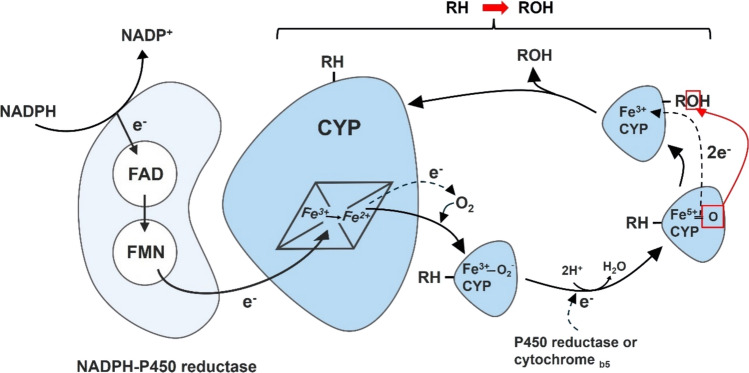
Role of human CYP enzymes and NADPH–P450 reductase in oxidative drug metabolism. CYPs serve as monooxygenases during drug oxidation, receiving electrons from NADPH–P450 reductase. Reduced NADPH transfers a hydride ion to the FAD domain of the reductase, initiating electron transfer through the FAD and FMN to the adjacent CYP heme iron (Fe), generating ferrous iron (Fe). This electron transfer enables CYP to catalyze drug oxidation, generating the hydroxylated product and water as a byproduct. RH represents the substrate. ROH denotes the product of CYP-mediated oxidation.flavin adenine dinucleotide,flavin mononucleotide,substrate,hydroxylated product 3+ 2+ FAD FMN RH ROH
| CYP family | Tissue expression | Substrates* | Major role and characteristics | References | |
|---|---|---|---|---|---|
| CYP1 | 1A1 | Brain, gastrointestinal tract, heart, liver, lung, lymphocytes | PAHs, caffeine, eicosanoids, arachidonic acid | Induced by smoking. Catalyzes benzo[α]pyrene 3-hydroxylation | (Burkina et al. 2021; Kwon et al.; Nakano et al. 2025) [2021] |
| 1A2 | Liver | Aromatic amines, PAHs, caffeine, phenacetin, eicosanoids, arachidonic acid | Induced by smoking, meat, cruciferous vegetables, β-naphthoflavone. Catalyzes caffeine N-demethylation, resorufin O-deethylation3 | (Miura et al. 2021; Kwon et al.; Vilčková et al. 2023) [2021] | |
| 1B1 | Adrenal gland, brain (cortex), breast, bone marrow, heart, kidney, lung, ocular tissues, ovary, placenta, prostate, skin/keratinocytes, small intestine, testis | PAHs, dioxins, aflatoxin B1, estradiol, arachidonic acid, vitamin A, melatonin | Induced by AhR agonists (e.g., dioxin). Involved in xenobiotic and steroid metabolism, including 17β-estradiol (E) 4-hydroxylation retinoic acid metabolism2 | (Zanger and Schwab; Song et al.,) [2013] [2022a] [b] | |
| CYP2 | 2A6 | Liver | Coumarin, 7-ethoxycoumarin, steroids, eicosanoids, arachidonic acid | Induced by barbiturates and dexamethasone. Catalyzes coumarin 7-hydroxylation | (Anzenbacher and Anzenbacherova; Jiang et al.) [2001] [2021] |
| 2B6 | Liver, brain, kidney, intestine, endometrium, bronchoalveolar macrophages, peripheral blood lymphocytes, skin | Nicotine, arachidonic acid, lauric acid, steroids (17β-estradiol, estrone, ethinylestradiol, testosterone), environmental chemicals and pollutants | Induced by rifampicin, phenytoin, barbiturates, fasting/ energy restriction. Catalyzes 7-ethoxy-4-(trifluoromethyl)coumarin-deethylation. 16α/16β-hydroxylation of steroidsO | (Chang et al.; Wang and Tompkins; Zanger and Klein) [2006] [2008] [2013] | |
| 2C8 | Liver, kidney, intestine, brain, adrenal gland, arteries, duodenum, heart, lung, mammary gland, ovary, prostate, retina, testis, uterus | Unsaturated fatty acids, retinoic acid, arachidonic acid, environmental toxins, glucuronide metabolites, natural compounds (e.g., flavonoids, terpenes, alkaloids) | Induced by PXR ligands (e.g., phenobarbital, rifampicin). Catalyzes various oxidative reactions (e.g., hydroxylation,-demethylation,-deethylation)NN | (Schoch et al.; Backman et al.) [2004] [2016] | |
| 2C9 (2C10) | Liver (predominant), intestine | Clinically important drugs (15–20%), including anticoagulants (warfarin), sulfonylurea antidiabetics (tolbutamide), NSAIDs | Induced by rifampicin, dexamethasone, carbamazepine, and aphenobartitone. Catalyzes tolbutamide 4′-hydroxylation | (Gómez-Tabales et al.; Fekete et al.) [2020] [2021] | |
| 2C18 | Liver (predominant), small intestine, brain, mammary gland | PAHs, retinoic acid, substrates of CYP2C8/2C9/2C19 (e.g., desomorphine, 4′-hydroxyphenytoin, naloxone) | Progesterone 16α-hydroxylation. 4′/5/6α/7-hydroxylation,-dealkylation/deallylation/demethylation of drugsN | (Yamazoe and Yoshinari) [2024] | |
| 2C19 | Liver (predominant), duodenum | Arachidonic acid, prescribed drugs (8–10%), including pesticides, carcinogens | Detoxifies/inactivates carcinogens and bioactivates procarcinogens to reactive DNA-binding metabolites. Catalyzes 4- and 5-methyl hydroxylation | (Yadav et al.; Sanford et al.; Takayama et al.; Vignaux et al.) [2008] [2013] [2021] [2023] | |
| 2D6 | Liver, brain, intestinal tissue, lymphoid cells | Tyramine, 5-hydroxyindoleacetic acid, common drugs (~ 20%) | Catalyzes α-, 2-, 4-, 5-hydroxylation;-dealkylation;-demethylationNO | (Taylor et al.; Dorne et al.) [2020] [2002] | |
| 20 | Liver, brain, heart (mitochondria), lung, kidney, skin, skeletal muscle | Acetone, fatty acids, ethanol, nicotine, nitrosamines, aspartame, pollutants, drugs (e.g., acetaminophen, anesthetics, phenobarbital) | Activation of microsomal ethanol oxidizing system. linked to progressive metabolic diseases (e.g., obesity, diabetes) | (García-Suástegui et al.; Ma et al.) [2017] [2025] | |
| 2F1 | Respiratory tract (predominant) | Pulmonary toxicants (naphthalene, styrene, benzene, 3-methylindole) | Bioactivates pulmonary toxicants; induces tissue-specific toxicity | (Li et al.) [2017] | |
| 2J2 | Heart (predominant), intestine, kidney, lung | n-6 and n-3 polyunsaturated fatty acids (arachidonic, linoleic, EPA, DHA), endocannabinoids, vitamin D analogs | Epoxidation of substrates | (Leow and Chan) [2024] | |
| 2R1 | Liver, testis, kidney; broadly expressed in various tissues | Vitamin D | Major 25-hydroxylase of vitamin D. Suppressed by fasting, obesity, diabetes | (Elkhwanky et al.) [2020] | |
| 2U1 | Thymus, brain | Eicosanoids, arachidonic acid | Hydroxylation of long-chain fatty acids | (Seliskar and Rozman) [2007] | |
| CYP3 | 3A4 | Liver and intestine (≈30% of total P450s in liver; ≈80% in intestine) | > 50% of clinical drugs (e.g., antiestrogens, nitrogen mustards, taxanes, TKIs) | Phase I metabolism (e.g., oxidation, hydrolysis, reduction) | (Wang et al.) [2023] |
| 3A5 3A7 | Liver, gastrointestinal tract, intestine Fetal liver (main isoform), placenta | Drugs, carcinogens, steroid hormones (e.g., testosterone, progesterone), fatty acids retinoic acid, testosterone, dehydroepiandrosterone, drugs | Bimodal metabolism due to genetic polymorphism Shows 88% homology with CYP3A4 but generates different metabolite than CYP3A4 (e.g., testosterone metabolites of CYP3A4 and CYP3A7 are 6β-hydroxytestosterone and 2α-hydroxytestosterone, respectively.) | (Jiang et al.; Matsumoto et al.) [2015] [2021] (Topletz et al.; Kabir et al.) [2019] [2022] | |
| CYP4 | 4A11 | Kidney, liver | Medium/long-chain fatty acids (e.g., arachidonic, palmitate, lauric acid), endobiotics | Induced by clofibrate. Catalyzes ω- and (ω-1)-hydroxylation of fatty acids and 12′-hydroxylation of lauric acid. Linked to NAFLD | (Gao et al.; Liu et al.) [2020] [2021] |
| 4B1 | Lung (predominant) | Fatty acids, hydrocarbons, xenobiotics (e.g., valproic acid) | Catalyzes ω-hydroxylation; oncogenic potential | (Liu et al.) [2021] | |
| 4F | Kidney, liver, small intestine, myeloid cells, seminal vesicles, epidermis, skin | Eicosanoids (arachidonic, leukotrienes, prostaglandin), vitamin K1, drugs (e.g., pafuramidine, fingolimod, ebastine, astemizole) | Catalyzes-demethylation, oxidation, ω-, ω-1-, ω-2-hydroxylationO | (Uehara et al.; Uno et al.) [2015] [2025] | |
| CYP5 | Platelet (primarily) | Prostaglandin H2 | Functions as a thromboxane-Asynthase and prostacyclin biosynthesis enzyme2 | (Das et al.) [2014] | |
| CYP7 | Brain, liver (most abundant), ovary, prostate, colon, kidney, testis, small intestine | Cholesterol, steroid precursors (e.g., pregnenolone, dehydroepiandrosterone, oxysterols) | Hydroxylates cholesterol (rate-limiting step in bile acid synthesis); catalyzes 7α-hydroxylation of 25- and 27-hydroxycholesterol | (Yantsevich et al.; Dzichenka et al.) [2014] [2025] | |
| CYP8 | Vascular endothelial and smooth muscle cells (CYP8A1); liver (CYP8B1) | Steroids, cholesterol, lipids, drugs | Prostaglandin Isynthase (CYP8A1, converts PGH → PGI). sterol 12α-hydroxylase (CYP8B1) in bile acid synthesis222 | (Beltran-Sarmiento et al.; Ding et al.; Fleishman and Kumar) [2016] [2023] [2024] | |
| CYP11 | Steroidogenic tissues, adrenal cortex, brain, gastrointestinal tract, immune system, skin (mitochondria) | Cholesterol, 11-deoxycortisol, 11-deoxycorticosterone | Catalyzes steroid hormone synthesis | (Omura; Slominski et al.) [2006] [2021] | |
| CYP17 | Adrenal cortex, testis, ovary | Pregnenolone, progesterone | Functions as steroid 17α-hydroxylase and 17/20-lyase | (Hakki and Bernhardt) [2006] | |
| CYP19 | Ovary, placenta, testis, prostate, brain, bone, adipose tissue, gonad | Androstenedione, testosterone, 16-hydroxytestosterone | Aromatase (P450 aromatase); catalyzes estrogen synthesis (estrone, estradiol, estriol) | (Stocco) [2012] | |
| CYP21 | Adrenal cortex | 17-Hydroxyprogesterone | Steroid 21-hydroxylase. CYP21 deficiency → congenital adrenal hyperplasia | (Honour) [2014] | |
| CYP24 | Kidney (mitochondria) | Catalyzes 24-hydroxylation of 1,25-dihydroxy vitamin Dregulates calcium homeostasis3; | (De Paolis et al.; Fuchs et al.) [2019] [2024] | ||
| CYP26 | Adult liver, heart, pituitary gland, adrenal gland, placenta, brain | Catalyzes hydroxylation | (Seliskar and Rozman; Manikandan and Nagini; Nebert and Russell) [2007] [2018] [2002] | ||
| CYP27 | Liver, kidney, skin (mitochondria) | Catalyzes 27-hydroxylation of cholesterol, 1α- and 25-hydroxylation of vitamin D, retinoid desaturation3 | (Child et al.; Omura) [2020] [2006] | ||
| CYP39 | Liver | 24-Hydroxycholesterol | Bile acid synthesis, 24-hydroxycholesterol 7α-hydroxylase | (Grabovec et al.) [2019] | |
| CYP46 | Brain | Cholesterol | Catalyzes 24-hydroxylation | (Cataldi et al.) [2023] | |
| CYP51 | Ovary, adrenal gland, prostate, liver, kidney, lung, testis | Lanosterol | Functions as lanosterol 14α-demethylase in cholesterol synthesis | (Seliskar and Rozman; Nebert and Russell) [2007] [2002] | |
Role of cytochrome P450-targeted inhibitors in cancer

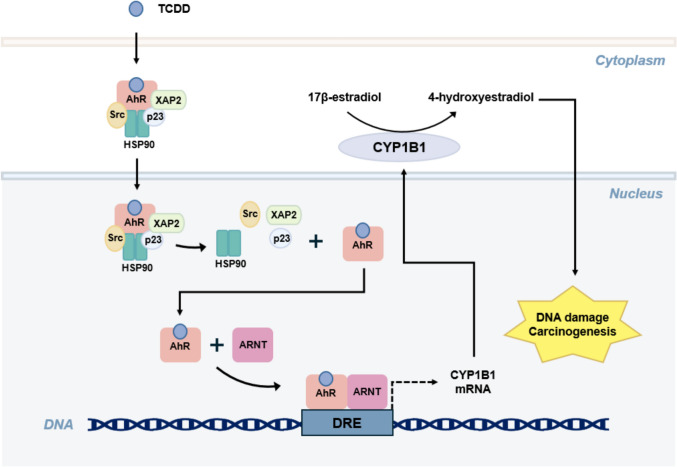
CYP1B1-mediated carcinogenesis via AhR activation by dioxin. In the cytoplasm, inactive AhR is bound to a chaperone complex that includes a HSP90 dimer and XAP2. Upon ligand binding, such as TCDD, AhR translocates into the nucleus where it dissociates from the chaperone complex and forms a heterodimer with ARNT. This heterodimer binds to the DRE, initiating CYP1B1 transcription. CYP1B1, localized at the endoplasmic reticulum membrane, catalyzes the hydroxylation of 17β-estradiol to form 4-hydroxyestradiol. This metabolite facilitates carcinogenesis by inducing DNA adduct formation in the nucleus.AhR nuclear translocator,dioxin-responsive element,endoplasmic reticulum,heat shock protein 90,2,3,7,8-tetrachlorodibenzo-p-dioxin,X-associated protein 2 ARNT DRE ER HSP90 TCDD XAP2
| Cancer type | Inhibitor | Cytochrome P450 isoforms | References |
|---|---|---|---|
| Breast | Anastrozole | CYP1A2, CYP2C9, CYP3A4 | (Eissa et al.) [2023] |
| Capecitabine | CYP2C9 | (Guengerich) [2022] | |
| Docetaxel | CYP1B1 | (Rodriguez-Antona and Ingelman-Sundberg; Rochat et al.) [2006] [2001] | |
| Doxorubicin | CYP1B1, CYP2C8, CYP2D6 | (Guengerich; Lai et al.; Rochat et al.) [2022] [2009] [2001] | |
| Exemestane | CYP2C8 | (Lai et al.) [2009] | |
| Letrozole | CYP2A6, CYP2B6, CYP2C19 | (Rodriguez-Antona and Ingelman-Sundberg; Jeong et al.; Buzdar et al.) [2006] [2009] [2002] | |
| Mitoxantrone | CYP1B1 | (Rodriguez-Antona and Ingelman-Sundberg; Rochat et al.) [2006] [2001] | |
| Ribociclib | CYP3A, CYP1A2 | (Guengerich; Bellet et al.) [2022] [2019] | |
| Paclitaxel | CYP1B1, CYP2C8 | (Rodriguez-Antona and Ingelman-Sundberg; Rochat et al.) [2006] [2001] | |
| Palbociclib | CYP3A | (Bellet et al.) [2019] | |
| Tamoxifen | CYP3A, CYP1B1, CYP2C8, CYP2C9 | (Rodriguez-Antona and Ingelman-Sundberg; Lai et al.; Rochat et al.; Zhao et al.; Boruban et al.) [2006] [2009] [2001] [2002] [2006] | |
| Thiotepa | CYP2B6 | (Rodriguez-Antona and Ingelman-Sundberg;; Rae et al.) [2006] [2002] | |
| Toremifene | CYP2C9 | (Turpeinen et al.) [2013] | |
| Prostate | Flutamide | CYP1B1 | (Rochat et al.) [2001] |
| Ovary | Rucaparib | CYP1A2, CYP2C9, CYP2D6, CYP2C19 | (Guengerich) [2022] |
| Non-small cell lung | Erlotinib | CYP3A | (Dong et al.) [2011] |
| Gefitinib | CYP3A, CYP2D6 | (Rodriguez-Antona and Ingelman-Sundberg; Wang et al.; Semba et al.) [2006] [2021] [2020] | |
| Vinorelbine | CYP3A | (Rodriguez-Antona and Ingelman-Sundberg; Kajita et al.) [2006] [2000] | |
| Colon | Regorafenib | CYP3A4 | (Guengerich) [2022] |
| Hematologic | Cytarabine | CYP3A | (Jain) [2005] |
| Daunomycin | CYP1B1 | (Rochat et al.) [2001] | |
| Enasidenib | CYP2C9, CYP2D6, CYP2C8, CYP2C19 | (Cheng et al.) [2022] | |
| Idarubicin | CYP2D6 | (Rodriguez-Antona and Ingelman-Sundberg; Jain) [2006] [2005] | |
| Idelalisib | CYP3A | (Guengerich) [2022] | |
| Imatinib | CYP3A | (Rodriguez-Antona and Ingelman-Sundberg; Wang et al.) [2006] [2021] | |
| Interferon | CYP1A2 | (Guengerich) [2022] | |
| Panobinostat | CYP2D6 | (Guengerich) [2022] | |
| Teniposide | CYP2C9 | (Guengerich) [2022] |
Hormone-induced cancers
Cytochrome P450 family 1 (CYP1) inhibitors
CYP1 family members, including cytochrome P450 1A1 (CYP1A1), cytochrome P450 1A2 (CYP1A2), and CYP1B1, are crucial for sex-hormone metabolism and are present in extrahepatic tissues, including breast, ovary, prostate, uterus, lung, muscle, and placenta (Go et al. 2015; Kwon et al. 2021). These enzymes participate in estrogen (E2, 17β-estradiol) metabolism, producing different major metabolites, which include: CYP1A1 and CYP1A2, which predominantly produce 2-hydroxyestradiol, while CYP1B1 produces 4-hydroxyestradiol. These catecholestrogen metabolites are key contributors to carcinogenesis (Kwon et al. 2021). CYP1 enzymes are regulated by the estrogen and aryl hydrocarbon receptors (AhR) (Go et al. 2015) and metabolize dioxins and polycyclic aromatic hydrocarbons (PAHs), including 2,3,7,8-tetrachlorodibenzo-p-dioxin (TCDD) (Shimada and Fujii-Kuriyama 2004). Additionally, these enzymes bioactivate carcinogens, particularly heterocyclic amines, aromatic amines, and nitropolycyclic hydrocarbons (Chun and Kim 2003). Consequently, CYP1 metabolizes hormone-induced cancer treatments and serves as a target for anticancer drugs (Go et al. 2015; Fabris et al. 2023).
The ethoxyresorufin O-deethylase (EROD) assay is commonly used to measure inhibition of CYP1B1 activity by anticancer drugs (Rochat et al. 2001). Competitive inhibitors include flutamide, mitoxantrone, docetaxel, and paclitaxel, with Ki values of 1.0 μM, 11.6 μM, 28.0 μM, and 31.6 μM, respectively. Noncompetitive or mixed inhibitors comprise daunomycin, doxorubicin, and tamoxifen, with Ki values of 2.1 μM, 2.6 μM, and 5.0 μM, respectively (Rochat et al. 2001).
Flutamide, an androgen-receptor antagonist used in prostate cancer therapy, inhibits CYP1A1, CYP1A2, and CYP1B1. CYP1B1 catalyzes 2-hydroxylation of flutamide, contributing to drug resistance, whereas flutamide competitively inhibits CYP1A1 (Ki = 10.3 ± 1.4 μM), CYP1A2 (Ki = 1.4 ± 0.3 μM), and CYP1B1 (Ki = 1.0 ± 0.1 μM) (Rochat et al. 2001; Singh et al. 2023).
Aromatase (CYP19) inhibitors; anastrozole, letrozole, exemestane
Estrogen plays a critical role in breast cancer development (Smith and Dowsett 2003). Aromatase, encoded by the CYP19 gene (Mallikarachchi et al. 2024), synthesizes estrone from androstenedione and 17β-estradiol from testosterone (Miller 2003). Aromatase inhibitors can significantly suppress plasma estrogen levels in postmenopausal women (Miller 2003; Smith and Dowsett 2003). Nonsteroidal aromatase inhibitors, including anastrozole, vorozole, letrozole, and fadrozole, were developed to address limitations of conventional steroidal aromatase inhibitors such as exemestane, improving oral bioavailability and favorable tolerability (Bhatia and Thareja 2024; Karaer et al. 2004). Anastrozole and letrozole are competitive, reversible third-generation inhibitors approved to treat progressive, postmenopausal, estrogen-responsive breast cancer; both exhibit high efficacy and selectivity for CYP19 (Geisler 2011). In vitro, anastrozole inhibits hepatic CYP1A2, cytochrome P450 2C9 (CYP2C9), and cytochrome P450 3A (CYP3A) activities, but this effect is much weaker than that on aromatase and does not occur at therapeutic concentrations (Linardi et al. 2017; Eissa et al. 2023).
CYP2A6, cytochrome P450 3A4 (CYP3A4), and cytochrome P450 3A5 (CYP3A5) metabolize letrozole to produce the human metabolite 4,4'-methanol-bisbenzonitrile (Jeong et al. 2009; Keating 2009). Letrozole strongly inhibits CYP2A6 and weakly inhibits cytochrome P450 2C19 (CYP2C19) (Burk and Wojnowski 2004; Jeong et al. 2009), while its metabolite inhibits cytochrome P450 2B6 (CYP2B6) and CYP2C19 (Jeong et al. 2009). Type II aromatase inhibitors (anastrozole and letrozole) reversibly bind and inhibit aromatase. Conversely, exemestane—a type I steroidal aromatase inhibitor—irreversibly inactivates aromatase as a structural analog of androstenedione (Sobral et al. 2016; Kim et al. 2024) and also functions as a reversible inhibitor of cytochrome P450 2C8 (CYP2C8) (Lai et al. 2009). In vitro, exemestane inhibits CYP2C8-catalyzed N-deethylation of amodiaquine, with an IC50 value of 13.5 μM (Lai et al. 2009).
Cyclin-dependent kinase 4 and 6 (CDK4/6) inhibitors: ribociclib, palbociclib
Endocrine therapy has traditionally been used to treat patients with hormone receptor (HR)-positive breast cancer. However, resistance to endocrine treatment has been observed in those treated with CDK4/6 inhibitors (Pandey et al. 2019). These inhibitors block CDK4/6 (Pernas et al. 2018) and inhibit retinoblastoma protein (Rb) phosphorylation, preventing cell cycle progression from the G1 to S phase. This ultimately results in cell cycle arrest and reduced proliferation (Pernas et al. 2018; Pandey et al. 2019). Three CDK4/6 inhibitors— palbociclib (PD0332991), ribociclib (LEE011), and abemaciclib (LY835219)—are Food and Drug Administration (FDA)-approved for ER-positive metastatic breast cancer and as first-line therapy in combination with nonsteroidal aromatase inhibitors for postmenopausal women (Murphy 2019).
CYP3A isozymes, such as CYP3A4, CYP3A5, cytochrome P450 3A7 (CYP3A7), and cytochrome P450 3A43 (CYP3A43), are clinically important owing to their broad substrate specificity and interindividual variability in expression levels (Burk and Wojnowski 2004; Klyushova et al. 2022). These enzymes metabolize both exogenous chemical drugs and endogenous compounds such as steroids. The CYP3A subfamily is also a major contributor to DDIs (Burk and Wojnowski 2004). Particularly, CYP3A4—expressed primarily in the liver and intestine—metabolizes approximately 50% of all clinically used drugs and several procarcinogens (Ashida et al. 2017). Accordingly, CYP3A4 is often involved in DDIs because it can be induced or inhibited by various anticancer drugs (Tian and Hu 2014). However, co-administration of CYP3A4 inhibitors with drugs metabolized by this isozyme often elevates plasma concentrations, thereby increasing the risk of drug-related toxicity (Tian and Hu 2014).
Among the CDK4/6 inhibitors, palbociclib and ribociclib function as both substrates and inhibitors of CYP3A4 (Bellet et al. 2019; Guengerich 2022). Palbociclib is a weak inhibitor of CYP3A4, while ribociclib acts as a moderate inhibitor at 400 mg/day and a strong inhibitor at 600 mg/day (Bellet et al. 2019). Owing to its inherent inhibitory effect on CYP3A4, ribociclib can elevate serum levels of CYP3A4 substrates (Bellet et al. 2019). Consequently, both palbociclib and ribociclib reduce CYP3A4metabolic capacity, leading to drug accumulate in the systemic circulation and potential toxicity (Bellet et al. 2019). Caution is therefore required when these inhibitors are co-administered with other CYP3A4-metabolized drugs.
Others: abiraterone, orteronel
Cytochrome P450 17A1 (CYP17A1), also known as 17α-monooxygenase or 17α-hydroxylase/17,20-lyase/17,20-desmolase, is essential in steroidogenesis, including androgen biosynthesis, and contributes significantly to prostate cancer pathogenesis (Aherrahrou et al. 2020; Cao et al. 2020). Abiraterone, administered as prodrug abiraterone acetate, is the sole FDA-approved CYP17A1 inhibitor and demonstrates synergistic efficacy when combined with androgen deprivation therapy (ADT) in patients with prostate cancer (Cheong et al. 2020; Wróbel et al. 2023). Despite the high affinity of abiraterone for CYP17A1, it has been associated with various adverse effects arising from off-target interactions with other CYPs such as cytochrome P450 21A2 (CYP21A2) (Udhane et al. 2016). To address these limitations, orteronel (TAK-700), a novel nonsteroidal, reversible inhibitor, has been developed with greater specificity for cytochrome P450 17,20-lyase (CYP17,20-lyase) than 17α-hydroxylase (IC50 = 19 nM). Orteronel selectively inhibits androgen synthesis in prostate cancer cells without inducing secondary mineralocorticoid excess syndrome as a side effect (Cao et al. 2020; Agarwal et al. 2022).
Lung cancer
The lungs are a primary site of exposure to inhaled toxicants from tobacco smoke, including mutagenic and carcinogenic compounds, which are metabolized by CYPs into carcinogenic intermediates (Chen et al. 2024a, b; Bellanca et al. 2025). The CYP3A subfamily, including CYP3A4, metabolizes PAHs and procarcinogens from tobacco. Specifically, CYP3A4 and CYP3A5 activate benzo[a]pyrene, and N9-nitrosonornicotine, and contribute to lung cancer through induction of genetic alteration (Islam MS et al. 2014).
Erlotinib
Erlotinib, a first-generation epidermal growth factor receptor (EGFR) tyrosine kinase inhibitor (TKI), is approved for the treatment of advanced or metastatic non-small-cell lung cancer (NSCLC) in the United States and Switzerland (Ling et al. 2006). It is primarily metabolized by CYP3A4 and CYP1A2, with additional contribution from extrahepatic CYP1A1 (Ling et al. 2006). CYP3A4 and CYP3A5 convert erlotinib into its active metabolite OSI-420, which inhibits EGFR tyrosine kinase activity (Fukudo et al. 2013).
Several DDI studies have characterized CYP3A4, a key drug-metabolizing enzyme. Research on erlotinib interactions with CYP3A4 inhibitors, including ketoconazole, clarithromycin, and voriconazole, suggests that these inhibitors can cause erlotinib toxicity by inhibiting CYP3A4 (Ramanarayanan and Scarpace 2007). Conversely, erlotinib also inhibits CYP3A4 by more than 50%, consistent with competitive inhibition (Ki = 14.1 ± 4.3 μM) (Dong et al. 2011). This inhibition is substrate-dependent, while time-dependent inhibition affects DDIs independently of substrate (Dong et al. 2011).
Gefitinib
TKIs are effective long-term oral treatments for cancer; however, their concurrent administration with other drugs increases the risk of DDIs (Shao et al. 2014). Clinical DDIs often occur owing to the inhibition or induction of CYP enzymes (Li et al. 2009). In vitro studies show that TKIs such as imatinib, sunitinib, and gefitinib may irreversibly inhibit CYP3A enzymes, potentially contributing to DDIs (Wang et al. 2021).
Gefitinib, a second-generation TKI, is used to treat advanced NSCLC with EGFR mutations (Dhillon 2015). CYP3A inhibition was evaluated using testosterone as the substrate, with 6β-OH-testosterone quantified as the metabolite. A minor initial inhibition increased after a 30-min incubation with NADPH, suggesting that gefitinib inhibits CYP3A in an NADPH-dependent manner (Wang et al. 2021).
Furthermore, Gefitinib inhibits CYP2D6 variants in vitro (Fang et al. 2017; Semba et al. 2020). CYP2D6 is a highly polymorphic metabolic enzyme, with over 100 genetic variants, including CYP2D6.2 (Arg296Cys, Ser486Thr), CYP2D6.10 (Pro34Ser, Ser486Thr), and CYP2D6.39 (Ser486Thr), which are associated with significant alterations in enzyme activity (Sakuyama et al. 2008). The inhibitory effect of gefitinib on CYP2D6 variants was quantified by evaluating the O-demethylation of dextromethorphan (Semba et al. 2020). Intrinsic clearance (Vmax/KM) values for CYP2D6.2 (Arg296Cys and Ser486Thr), CYP2D6.10 (Pro34Ser and Ser486Thr), and CYP2D6.39 (Ser486Thr) were 0.57-, 0.038-, and 0.47-folds higher than that of CYP2D6.1 (wild type), respectively (Semba et al. 2020). Using a mixed inhibition model, the inhibitory efficacy of gefitinib varied across CYP2D6 variants (Fang et al. 2017; Semba et al. 2020). The Ki values for CYP2D6.2, CYP2D6.10, and CYP2D6.39 were 40%, 150%, and 50% higher than that of the wild-type enzyme, respectively, indicating reduced susceptibility to inhibition by gefitinib (Semba et al. 2020). These findings suggest that CYP2D6 genetic diversity may contribute to variability in the potency of CYP2D6-mediated DDIs with gefitinib among individuals (Semba et al. 2020).
Hematologic cancer
CYPs are associated with the development of leukemia and lymphoma (Nagai et al. 2002; Sandoval et al. 2023). CYP1A1, CYP1B1, CYP2A6, CYP2A7, CYP2D6, and CYP2E1 are expressed in myeloid leukemia (U937, HL-60, and K562) and lymphoid (BALL-1, MOLT-4, and Jurkat) cell lines (Nagai et al. 2002). Additionally, the CYP2E1*5 allele, a variant associated with CYP2E1 gene polymorphisms, increases the risk of acute myeloid and lymphoblastic leukemia (Sandoval et al. 2023).
Enasidenib
Enasidenib, an oral inhibitor of mutant isocitrate dehydrogenase-2 (IDH2) protein, was approved in the United States in 2017 to treat adult patients with relapsed or refractory (R/R) acute myeloid leukemia (AML) with an IDH2 mutation (Pollyea et al. 2019; Cheng et al. 2022). Nonclinical studies demonstrate that enasidenib directly inhibits CYP2C8, CYP2C9, CYP2C19, and CYP2D6 at concentrations comparable to those observed in patients with AML at steady state (Cheng et al. 2022).
Imatinib
Imatinib is a first-generation small-molecule kinase inhibitor that targets the BCR-ABL protein tyrosine kinase and is primarily used to treat chronic myeloid leukemia (CML) by inhibiting its aberrant kinase activity (Peng et al. 2005; Wang et al. 2021). The effects of imatinib on DDIs and CYP3A enzyme activities are well-characterized (Peng et al. 2005; Haouala et al. 2011; Wang et al. 2021). Primarily metabolized by CYP3A4 and CYP3A5, imatinib competitively inhibits the metabolism of drugs that are substrates for CYP2C9, CYP2C19, CYP2D6, and CYP3A4/5, leading to increased plasma drug concentrations (Peng et al. 2005; Rodriguez-Antona and Ingelman-Sundberg 2006; Haouala et al. 2011). The interaction between imatinib and immunosuppressive cyclosporine, both metabolized by CYP3A and inhibitors of CYP3A4, may alter hepatic drug metabolism through competitive inhibition of CYP3A4 (Peng et al. 2005). Imatinib can inhibit drug transporters and CYP3A4, thereby increasing the intestinal absorption of cyclosporine—a substrate of CYP3A4 and the drug transporter P-glycoprotein—leading to enhanced pharmacological effects and potential toxicity (Haouala et al. 2011). Molecular docking analyses comparing imatinib, gefitinib, and sunitinib indicated that imatinib binds most strongly to the active site of CYP3A4 in its flattest conformation with the optimal binding mode. This property makes imatinib the most potent CYP3A4 inhibitor among TKIs, conferring the highest risk of DDIs (Wang et al. 2021).
Role of drugs targeting cytochrome P450 in non-neoplastic human diseases
| Disease class | Inhibitor | Cytochrome P450 isoforms | References |
|---|---|---|---|
| ADHD | Atomoxetine | CYP3A4 | (Guengerich) [2022] |
| Allergy | Cetirizine | CYP2B6 | (Walsky et al.) [2006] |
| Chlorpheniramine | CYP2D6, CYP2B6 | (Guengerich; He et al.; Walsky et al.) [2022] [2002] [2006] | |
| Clemastine | CYP2D6 | (Guengerich) [2022] | |
| Cyclizine | CYP2D6, CYP2C9 | (He et al.) [2002] | |
| Desloratadine | CYP2B6 | (Walsky et al.) [2006] | |
| Diphenhydramine | CYP2D6 | (Guengerich; He et al.) [2022] [2002] | |
| Fexofenadine | CYP2B6 | (Walsky et al.) [2006] | |
| Hydroxyzine | CYP2D6, CYP2B6 | (Guengerich; Walsky et al.) [2022] [2006] | |
| Loratadine | CYP2C8, CYP2B6 | (Lai et al.; Walsky et al.) [2009] [2006] | |
| Olopatadine | CYP2B6 | (Walsky et al.) [2006] | |
| Promethazine | CYP2D6, CYP2C9 | (Guengerich; He et al.) [2022] [2002] | |
| Terfenadine | CYP2C8, CYP2B6 | (Lai et al.; Walsky et al.) [2009] [2006] | |
| Tripelennamine | CYP2D6 | (Guengerich; He et al.) [2022] [2002] | |
| Arrhythmia | Amiodarone | CYP1A2, CYP2C8, CYP2C9, CYP2D6, CYP3A4 | (Guengerich; Lai et al.) [2022] [2009] |
| Quinidine | CYP2D6 | (Guengerich) [2022] | |
| Asthma | Furafylline | CYP1A2 | (Guengerich) [2022] |
| Montelukast | CYP2C8, CYP2C9 | (Lai et al.) [2009] | |
| Pranlukast | CYP2C9 | (Liu et al.,) [2004a] [b] | |
| Salmeterol | CYP2C8 | (Lai et al.) [2009] | |
| Zafirlukast | CYP1A2, CYP2C8, CYP2C9, CYP3A4, CYP2C19, CYP2D6 | (Guengerich; Lai et al.; Liu et al.,) [2022] [2009] [2004a] [b] | |
| Zileuton | CYP2C8 | (Lai et al.) [2009] | |
| Atopic eczema | Crisaborole | CYP1A2, CYP2C9 | (Guengerich) [2022] |
| Bacterial infection | Cefuroxime axetil | CYP2C8 | (Lai et al.) [2009] |
| Ciprofloxacin | CYP3A4, CYP1A2 | (Guengerich; Granfors et al.) [2022] [2004] | |
| Clarithromycin | CYP3A4 | (Guengerich; Tian and Hu) [2022] [2014] | |
| Erythromycin | CYP3A4 | (Guengerich; Tian and Hu; Zhou) [2022] [2014] [2008] | |
| Isoniazid | CYP3A4, CYP1A2, CYP2A6, CYP2C19, CYP2C8 | (Wen et al.; Desta et al.; Lai et al.) [2002] [2001] [2009] | |
| Metronidazole | CYP2C9 | (Guengerich) [2022] | |
| Norfloxacin | CYP3A4 | (Guengerich) [2022] | |
| Quinolones | CYP1A2 | (Guengerich; Zhou et al.) [2022] [2010] | |
| Sulfamethoxazole | CYP2C9 | (Guengerich) [2022] | |
| Sulfaphenazole | CYP2C9, CYP2C8 | (Guengerich; Lai et al.) [2022] [2009] | |
| Telithromycin | CYP3A4 | (Guengerich) [2022] | |
| Trimethoprim | CYP2C8 | (Lai et al.) [2009] | |
| Depression | Bupropion | CYP2D6 | (Kotlyar et al.) [2005] |
| Citalopram | CYP2D6, CYP1A2, CYP2C19 | (Guengerich) [2022] | |
| Clomipramine | CYP2D6 | (Guengerich) [2022] | |
| Desipramine | CYP2C8 | (Lai et al.) [2009] | |
| Doxepin | CYP2D6 | (Guengerich) [2022] | |
| Duloxetine | CYP2D6 | (Guengerich) [2022] | |
| Escitalopram | CYP2D6 | (Guengerich) [2022] | |
| Fluoxetine | CYP2D6, CYP2C19, CYP2C8 | (Guengerich; Lai et al.) [2022] [2009] | |
| Fluvoxamine | CYP3A4, CYP1A2, CYP2C9, CYP2C19 | (Guengerich) [2022] | |
| Moclobemide | CYP2C19, CYP2D6, CYP1A2 | (Borowicz-Reutt et al. 2021) | |
| Nefazodone | CYP3A4, CYP2C8 | (Guengerich; Lai et al.) [2022] [2009] | |
| Norfluoxetine | CYP3A4 | (Guengerich) [2022] | |
| Nortriptyline | CYP2C8 | (Lai et al.) [2009] | |
| Paroxetine | CYP2D6, CYP2C9 | (Guengerich) [2022] | |
| Phenelzine | CYP2C8 | (Lai et al.) [2009] | |
| Sertraline | CYP2D6, CYP2C9, CYP2C8 | (Guengerich; Lai et al.) [2022] [2009] | |
| Tranylcypromine | CYP2C8, CYP2C19, CYP2D6, CYP2C9, CYP2A6 | (Lai et al.; Salsali et al.; Tanner and Tyndale) [2009] [2004] [2017] | |
| Diabetes | Glyburide | CYP2C8 | (Lai et al.) [2009] |
| Pioglitazone | CYP2C8 | (Lai et al.) [2009] | |
| Rosiglitazone | CYP2C8 | (Lai et al.) [2009] | |
| Troglitazone | CYP2C8 | (Lai et al.) [2009] | |
| Drug intoxication | Disulfiram | CYP2E1 | (Xiong et al.) [2025] |
| Epilepsy | Carbamazepine | CYP2C19 | (Lakehal et al.) [2002] |
| Felbamate | CYP2C19 | (Guengerich) [2022] | |
| Oxcarbazepine | CYP2C19 | (Guengerich; Soskin et al.) [2022] [2010] | |
| Topiramate | CYP2C19 | (Soskin et al.; Bialer et al.) [2010] [2004] | |
| Gout | Benzbromarone | CYP2C9, CYP3A4 | (Locuson et al.; Tang et al.) [2003] [2021] |
| Lesinurad | CYP2C8, CYP2C9 | (Shen et al.) [2019] | |
| Probenicid | CYP2C9, CYP2C19 | (Guengerich) [2022] | |
| HCV | Boceprevir | CYP3A4 | (Guengerich) [2022] |
| Telaprevir | CYP3A4 | (Guengerich) [2022] | |
| Hypercholesterolemia | Fluvastatin | CYP2C8, CYP2C9 | (Guengerich; Lai et al.) [2022] [2009] |
| Hyperlipidemia | Atorvastatin | CYP2C8 | (Lai et al.) [2009] |
| Fenofibrate | CYP2C8, CYP2C9 | (Guengerich; Lai et al.) [2022] [2009] | |
| Gemfibrozil | CYP2C8, CYP2C9 | (Lai et al.; Tornio et al.; Wen et al.) [2009] [2017] [2001] | |
| Lovastatin | CYP2C8, CYP2C9 | (Guengerich; Lai et al.) [2022] [2009] | |
| Simvastatin | CYP2C8 | (Lai et al.) [2009] | |
| Hyperparathyroidism | Cinacalcet | CYP2D6 | (Guengerich) [2022] |
| Hypertension | Amlodipine | CYP2C8 | (Lai et al.) [2009] |
| Candesartan | CYP2C8 | (Lai et al.) [2009] | |
| Carvedilol | CYP2C8 | (Lai et al.) [2009] | |
| Diltiazem | CYP2C8, CYP3A4 | (Zisaki et al.; Guengerich; Lai et al.) [2015] [2022] [2009] | |
| Felodipine | CYP2C8 | (Lai et al.) [2009] | |
| Irbesartan | CYP2C8 | (Lai et al.) [2009] | |
| Losartan | CYP2C8 | (Lai et al.) [2009] | |
| Mibefradil | CYP1A2, CYP2C8 | (Guengerich) [2022] | |
| Nicardipine | CYP2C8 | (Lai et al.) [2009] | |
| Nifedipine | CYP2C8 | (Lai et al.) [2009] | |
| Verapamil | CYP3A4, CYP2C8 | (Guengerich) [2022] | |
| Hypotension | Midodrine | CYP2D6 | (Guengerich) [2022] |
| Hypothyroidism | Levothyroxine | CYP2C8 | (Lai et al.) [2009] |
| Inflammation | Celecoxib | CYP2D6, CYP2C8 | (Guengerich; Lai et al.) [2022] [2009] |
| Dexamethasone | CYP2C8 | (Lai et al.) [2009] | |
| Indomethacin | CYP2C19 | (Guengerich) [2022] | |
| Methylprednisolone | CYP2C8 | (Lai et al.) [2009] | |
| Mometasone furoate | CYP2C8 | (Lai et al.) [2009] | |
| Phenylbutazone | CYP2C9 | (Guengerich) [2022] | |
| Rofecoxib | CYP1A2 | (Karjalainen et al.) [2006] | |
| Triamcinolone | CYP2C8 | (Lai et al.) [2009] | |
| Valdecoxib | CYP2C8 | (Lai et al.) [2009] | |
| Malaria | Artemisinin | CYP1A2, CYP2C19, CYP2D6, CYP3A4 | (Chamboko et al.) [2023] |
| Chloroquine | CYP2D6 | (Chamboko et al.) [2023] | |
| Halofantrine | CYP2D6 | (Guengerich) [2022] | |
| Hydroxychloroquine | CYP3A4, CYP2D6 | (Paludetto et al.) [2023] | |
| Quinine | CYP2C8 | (Lai et al.) [2009] | |
| Mycosis | Caspofungin | CYP3A4 | (Jain) [2005] |
| Chloramphenicol | CYP3A4, CYP2C19 | (Guengerich) [2022] | |
| Clotrimazole | CYP2C8 | (Lai et al.) [2009] | |
| Fluconazole | CYP3A4, CYP2C9, CYP2C19 | (Guengerich; Akamatsu et al.) [2022] [2023] | |
| Itraconazole | CYP3A4 | (Guengerich; Tian and Hu) [2022] [2014] | |
| Ketoconazole | CYP3A4, CYP2C19, CYP2C8 | (Lai et al.; Tian and Hu; Boulenc et al.; Greenblatt et al.) [2009] [2014] [2016] [2011] | |
| Nystatin | CYP2C8 | (Lai et al.) [2009] | |
| Terbinafine | CYP2D6 | (Nahid et al.) [2025] | |
| Thiabendazole | CYP1A2 | (Bapiro et al.) [2005] | |
| Voriconazole | CYP3A4, CYP2B6, CYP2C9, CYP2C19 | (Guengerich; Shibata et al.) [2022] [2021] | |
| Nausea & vomiting | Aprepitant | CYP3A4 | (Guengerich) [2022] |
| Levomepromazine | CYP2D6 | (Guengerich) [2022] | |
| Metoclopramide | CYP2D6 | (Guengerich) [2022] | |
| Netupitant | CYP3A4 | (Guengerich) [2022] | |
| Palonosetron | CYP2D6 | (Guengerich) [2022] | |
| Rolapitant | CYP2D6 | (Guengerich) [2022] | |
| Osteoporosis | Raloxifene | CYP2C8 | (Lai et al.) [2009] |
| Overactive bladder | Oxybutynin | CYP2C8 | (Lai et al.) [2009] |
| Pain relief | Methadone | CYP2D6 | (Guengerich) [2022] |
| Peptic ulcers | Cimetidine | CYP1A2, CYP2C9, CYP2D6, CYP2C19, CYP3A4/5 | (Guengerich; Wendl et al.) [2022] [2022] |
| Esomeprazole | CYP2C19, CYP3A4/5 | (Guengerich) [2022] | |
| Lansoprazole | CYP2C19 | (Guengerich) [2022] | |
| Omeprazole | CYP2C19, CYP3A4/5 | (Guengerich) [2022] | |
| Pantoprazole | CYP2C19, CYP3A4/5 | (Guengerich) [2022] | |
| Rabeprazole | CYP2C8 | (Lai et al.) [2009] | |
| Psoriasis | Methoxsalen | CYP1A2, CYP2A6, CYP2A13 | (Palacharla et al.; Sharma et al.) [2019] [2024] |
| Schizophrenia | Chlorpromazine | CYP2D6 | (Guengerich) [2022] |
| Clozapine | CYP2D6 | (Edinoff et al.) [2021] | |
| Fluphenazine | CYP1A2, CYP2D6 | (Daniel et al.) [2001] | |
| Haloperidol | CYP2D6 | (Guengerich) [2022] | |
| Perphenazine | CYP1A2, CYP2D6 | (Guengerich; Daniel et al.) [2022] [2001] | |
| Thioridazine | CYP2D6 | (Basińska-Ziobroń et al.) [2025] | |
| Sleep disorder | Modafinil | CYP2C19 | (Guengerich) [2022] |
| Triazolam | CYP2C8 | (Lai et al.) [2009] | |
| Clopidogrel | CYP1A2, CYP2B6, CYP2C8, CYP2C9, CYP2C19 | (Guengerich; Lai et al.; Axelsen et al.; Richter et al.) [2022] [2009] [2021] [2004] | |
| Stroke | Ticlopidine | CYP1A2, CYP2B6, CYP2C19, CYP2D6, CYP2C9 | (Guengerich; Ko et al.; Richter et al.) [2022] [2000] [2004] |
| Viral infection | Atazanavir | CYP3A4 | (Gong et al.) [2019] |
| Cobicistat | CYP2D6, CYP3A4 | (Gong et al.) [2019] | |
| Darunavir | CYP3A4 | (Gong et al.) [2019] | |
| Delavirdine | CYP3A4 | (Guengerich) [2022] | |
| Efavirenz | CYP1A2, CYP2C9, CYP3A4 | (Guengerich; Gong et al.) [2022] [2019] | |
| Etravirine | CYP2C9, CYP2C19 | (Gong et al.) [2019] | |
| Fosamprenavir | CYP3A4 | (Gong et al.) [2019] | |
| Indinavir | CYP3A4 | (Guengerich; Gong et al.) [2022] [2019] | |
| Lopinavir | CYP3A4 | (Gong et al.) [2019] | |
| Nelfinavir | CYP3A4 | (Guengerich; Gong et al.) [2022] [2019] | |
| Ritonavir | CYP3A4, CYP2C8, CYP2D6 | (Guengerich; Lai et al.; Tian and Hu; Gong et al.) [2022] [2009] [2014] [2019] | |
| Saquinavir | CYP3A4 | (Guengerich; Gong et al.) [2022] [2019] | |
| Tipranavir | CYP2D6 | (Gong et al.) [2019] |
Allergy
Histamine is crucial in regulating numerous physiological processes, including cell proliferation, differentiation, hematopoiesis, embryonic development, tissue regeneration, and wound healing. It acts through multiple receptor subtypes, particularly the H1 receptor, which rapidly affects vascular endothelial, bronchial, and smooth muscle cells. Consequently, acute manifestations such as rhinitis, bronchoconstriction, spasms, diarrhea, and skin reactions can occur (Jutel et al. 2009).
H1-antihistamines, including promethazine, chlorpheniramine, tripelennamine, diphenhydramine, and cyclizine, mitigate histamine-induced responses through H1 receptor blockade. These drugs inhibit CYP2D6 or CYP2C9 (He et al. 2002). An in vitro assay using human liver microsomes demonstrated strong inhibition of the bufuralol 1'-hydroxylation activity of CYP2D6 by these H1-antihistamines. Promethazine and chlorpheniramine exhibit competitive inhibition at concentrations approximating therapeutic plasma levels. In contrast, only cyclizine and promethazine inhibited tolbutamide 4-methylhydroxylation activity mediated by CYP2C9 (He et al. 2002).
CYP2B6 is essential in the hydroxylation of the antidepressant bupropion. In vitro studies demonstrate that cetirizine, chlorpheniramine, desloratadine, fexofenadine, hydroxyzine, loratadine, olopatadine, and terfenadine inhibit CYP2B6-mediated bupropion hydroxylation (Walsky et al. 2006). Moreover, loratadine and terfenadine inhibit the N-deethylation of the antimalarial drug amodiaquine, a surrogate marker reaction commonly used to assess CYP2C8 activity in vitro (Lai et al. 2009). These findings underscore the potential for DDIs between antihistamines and the metabolism of bupropion or amodiaquine.
Asthma
CYP1A2 metabolizes caffeine into primary metabolites, including theophylline. Consequently, CYP1A2 polymorphisms can alter the metabolism and clearance of theophylline (Obase et al. 2003). Furafylline, a theophylline alternative, acts as a potent and selective inhibitor of CYP1A2 (Guo et al. 2021). Inhibition of CYP1A2 by furafylline reduces the oxidation of caffeine, leading to higher plasma caffeine levels (Wójcikowski and Daniel 2009). Similarly, concurrent administration of theophylline and furafylline suppresses the formation of theophylline metabolites, 1-methylxanthine and 1,3-dimethyl uric acid, which may affect the clinical efficacy of theophylline (Lee et al. 2014). These findings underscore the importance of considering potential DDIs in asthma therapy to optimize treatment efficacy and patient safety.
Zafirlukast, a leukotriene receptor antagonist used in asthma treatment, is primarily metabolized by CYP2C9 and CYP3A4. Consequently, genetic polymorphisms in CYP2C9 influence the biotransformation of zafirlukast (Lee et al. 2016). Zafirlukast inhibits tolbutamide 4-methylhydroxylation along with the 1-hydroxylation of midazolam, indicating its function as a CYP2C9 and CYP3A4 inhibitor, respectively (Liu et al. 2004a, b). Zafirlukast also acts as a minor inhibitor of S-mephenytoin 4'-hydroxylation catalyzed by CYP2C19, phenacetin O-deethylation (CYP1A2), and dextromethorphan O-demethylation (CYP2D6) (Liu et al. 2004a, b). Montelukast, another leukotriene receptor antagonist, serves as a potent competitive inhibitor of CYP2C9 and CYP2C8, suppressing CYP2C8-catalyzed amodiaquine N-deethylase activity (Lai et al. 2009). Pranlukast, a structural analog of zafirlukast, competitively inhibits CYP2C9 and moderately suppresses tolbutamide hydroxylation (Liu et al. 2004a, b).
Bacterial infection
Tuberculosis, a major global public health concern and leading cause of mortality from infectious diseases, is often associated with latent infections induced by Mycobacterium tuberculosis in humans. Antibiotics, particularly isoniazid, are vital in preventing and treating tuberculosis (Lobue and Moser 2003). In vitro studies examining the inhibitory effect of isoniazid on CYP activity in human liver microsomes demonstrated notable inhibition of CYP1A2, 2A6, 2C9, 2C19, 2D6, 2E1, and 3A4. Specifically, isoniazid exhibits reversible inhibition of CYP2C19 and CYP3A4 activity (Wen et al. 2002). Beyond reversible inhibition, in which enzyme activity is directly impeded, CYPs can also undergo metabolic or mechanism-based inhibition. In vitro, isoniazid exhibits differential inhibition of CYP enzymes depending on the presence of NADPH. In the absence of NADPH, isoniazid acts as a competitive inhibitor of CYP1A2, CYP2C9, and CYP2E1; a mixed-type inhibitor of CYP2A6, CYP2C19, and CYP2D6; and an uncompetitive inhibitor of CYP3A4. However, in the presence of NADPH, isoniazid exhibits mixed-type inhibition of CYP1A2 and CYP2C19, noncompetitive inhibition of CYP2A6, and uncompetitive inhibition of CYP3A4. Therefore, the concurrent administration of isoniazid with drugs primarily metabolized by CYP2C19 and CYP3A4 may lead to significant DDIs, with potentially serious clinical implications (Wen et al. 2002; Zhou and Zhou 2009).
Erythromycin, a widely used macrolide antibiotic, acts as a mechanism-based inhibitor of CYP enzymes, with specific activity against CYP3A4 (Zhou 2008). Following erythromycin binding, the flexible active site of CYP3A4 undergoes significant conformational changes that increase its volume. Given that CYP3A4 mediates the metabolism of most drugs, the investigation of DDIs involving erythromycin and its substrates is crucial. For example, palbociclib, a CDK4/6 inhibitor metabolized by CYP3A4, exhibits significant pharmacokinetic alterations when co-administered with erythromycin. These findings underscore the importance of clinical evaluation and appropriate dose adjustments (Molenaar-Kuijsten et al. 2022).
Quinolones inhibit CYP1A2, the enzyme responsible for catalyzing caffeine 3-demethylation. Certain quinolone antibiotics containing the 4-oxoquinoline-3-carboxylic acid as a core structure competitively inhibit caffeine 3-demethylation (Zhou et al. 2010). Additionally, ciprofloxacin exhibits weak inhibitory activity against CYP1A2 and CYP2C9, while levofloxacin only inhibits CYP2C9 (Zhang et al. 2008).
Cushing's syndrome
Cushing's syndrome (CS) is a rare disorder, with an annual incidence of approximately 1.8–3.2 cases per million individuals, but it can be life-threatening owing to prolonged exposure to glucocorticoids. This exposure leads to a wide range of comorbidities, including cardiovascular, metabolic, dermatological, neuropsychiatric, musculoskeletal, and reproductive symptoms (Fleseriu and Castinetti 2016; Hakami et al. 2021). Endogenous CS is classified into adrenocorticotropic hormone (ACTH)-dependent (70–80%) and ACTH-independent forms (Ma et al. 2016). Among ACTH-dependent CS cases, 80–90% arise from corticotroph pituitary adenomas (Cushing's disease or corticotropinoma), representing approximately 65% of all CS cases, while the remaining 10–20% result from ectopic ACTH-secreting tumors (Ma et al. 2016; Gadelha et al. 2023). Transsphenoidal surgery is the first-line treatment for CS, with appropriate biochemical control of hypercortisolism to prevent disease recurrence. Medical therapy is classified into three categories: adrenal steroidogenesis inhibitors (ketoconazole, levoketoconazole, metyrapone, osilodrostat, mitotane, and etomidate), pituitary tumor-directed agents (cabergoline and pasireotide), and glucocorticoid receptor antagonists (mifepristone) (Gadelha et al. 2023). Steroidogenesis inhibitors reduce cortisol production by targeting specific enzymes: CYP11A1 (ketoconazole and etomidate), CYP11B1 (ketoconazole, levoketoconazole, metyrapone, mitotane, etomidate, and osilodrostat), CYP11B2 (ketoconazole, metyrapone, mitotane, and osilodrostat), CYP17 (ketoconazole, metyrapone, and etomidate), and CYP19 (ketoconazole, levoketoconazole, and metyrapone) (Gadelha et al. 2023; Cai et al. 2022).
Depression
Fluvoxamine, a selective SSRI, is a potent inhibitor of CYP1A2, which is responsible for the N3-demethylation of caffein and theophylline, and phenacetin O-deethylation (Luong et al. 2022; Ma et al. 2025a, b). Consequently, fluvoxamine may alter the metabolism of CYP1A2 substrate drugs (Britz et al. 2019).
Most antidepressants are metabolized primarily by CYP2D6 (Haufroid and Hantson 2015). Paroxetine, a substrate of this enzyme, acts as a potent inhibitor of CYP2D6, hindering the metabolic clearance of desipramine, a tricyclic antidepressant generated from imipramine via CYP2C19. Consequently, co-administration of desipramine with paroxetine necessitates a substantial dosage reduction (Zakaraya et al. 2024). Furthermore, bupropion—a CYP2B6 substrate—and its metabolite hydroxybupropion inhibit CYP2D6, thereby reducing desipramine metabolism. Hence, caution is required when administering desipramine (Kotlyar et al. 2005).
| Antidepressant class | Mechanism of action | Drugs | Cytochrome P450 isoforms | References |
|---|---|---|---|---|
| MAOI | Inhibit monoamine oxidase, the enzyme that breaks down neurotransmitters, such as serotonin, norepinephrine, and dopamine | Moclobemide | CYP2C19 | (Cai; Borowicz-Reutt and Banach) [2014] [2021] |
| TCA | Block the reuptake transporters for norepinephrine and serotonin | Clomipramine | CYP2C19, CYP2D6 | (Mease; Yokono et al.; Rüdesheim et al.; Kirchheiner et al.; Jornil et al.; Wen et al.) [2009] [2001] [2025] [2002] [2011] [2008] |
| Desipramine | CYP2D6 | |||
| Doxepin | CYP2D6, CYP2C9, CYP2C19 | |||
| Nortriptyline | CYP1A2, CYP2C19, CYP2D6, CYP3A4/5 | |||
| SSRI | Selectively inhibit serotonin reuptake | Citalopram | CYP2C19, CYP2D6, CYP3A4 | (Hu et al.; Mrazek et al.; Owens and Rosenbaum; Charlier et al.; Zhang et al.; Chen et al.) [2016] [2011] [2002] [2003] [2024] [2020] |
| Escitalopram | CYP2C19, CYP2D6, CYP3A4 | |||
| Fluoxetine | CYP2D6 | |||
| Fluvoxamine | CYP2D6 | |||
| Paroxetine | CYP2D6 | |||
| Sertraline | CYP2B6, CYP2C9, CYP2C19, CYP2D6, CYP3A4 | |||
| SNRI* | Selectively inhibit reuptake of norepinephrine and serotonin | Duloxetine | CYP1A2, CYP2D6 | (Shelton; Dell'osso et al.; Lobo et al.; Hole et al.) [2019] [2010] [2008] [2024] |
| NDRI** | Inhibit reuptake of norepinephrine and dopamine | Bupropion | CYP2B6 | (Stahl et al.; Hesse et al.) [2004] [2000] |
Epilepsy
![Inhibition of phenytoin metabolism by CYP2C19 inhibitors and the resulting hepatotoxicity. Phenytoin is metabolized in the liver by CYP2C19 into the major metabolite 5-(4-hydroxyphenyl)-5-phenylhydantoin. Several antiepileptic agents, such as oxcarbazepine, carbamazepine, topiramate, ticlopidine, and felbamate, inhibit this pathway (Flaten et al.; Prentice et al.; Malavé et al.). Co-administration of these CYP2C19 inhibitors with phenytoin reduces its metabolism, leading to metabolite formation. This alteration in phenytoin pharmacokinetics increases plasma drug concentrations and elevates the risk of phenytoin-induced hepatotoxicity [2016] [2022] [2025]](https://europepmc.org/articles/PMC12680693/bin/12272_2025_1581_Fig3_HTML.jpg "Click to view full size")
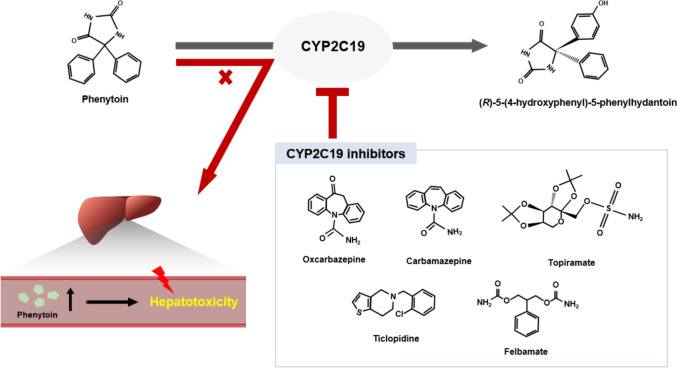
Inhibition of phenytoin metabolism by CYP2C19 inhibitors and the resulting hepatotoxicity. Phenytoin is metabolized in the liver by CYP2C19 into the major metabolite 5-(4-hydroxyphenyl)-5-phenylhydantoin. Several antiepileptic agents, such as oxcarbazepine, carbamazepine, topiramate, ticlopidine, and felbamate, inhibit this pathway (Flaten et al.; Prentice et al.; Malavé et al.). Co-administration of these CYP2C19 inhibitors with phenytoin reduces its metabolism, leading to metabolite formation. This alteration in phenytoin pharmacokinetics increases plasma drug concentrations and elevates the risk of phenytoin-induced hepatotoxicity [2016] [2022] [2025]
Gout
Lesinurad, a uricosuric drug used in the treatment of gout, is primarily metabolized by CYP2C9. Genetic polymorphisms in CYP2C9 can increase plasma concentrations of lesinurad. Therefore, caution is warranted when co-administering CYP2C9 inhibitors with lesinurad, as they may affect its metabolism and further elevate plasma drug levels (Dean 2012). Lesinurad may act as a weak inhibitor of CYP2C9 (Shen et al. 2019). However, this inhibitory effect is negligible, allowing the substrates of the CYP2C9 enzyme to be significantly affected during metabolic processes by benzbromarone, a potent inhibitor of CYP2C9 (Locuson et al. 2003).
Benzbromarone, a uricosuric agent, inhibits CYP2C9 and CYP3A4. In particular, it structurally inactivates CYP3A4 through irreversible covalent adduction. This can result in clinically significant DDIs and is linked to benzbromarone-induced fatal hepatotoxicity (Masubuchi and Kondo 2016; Tang et al. 2021).
Hyperlipidemia
In premenopausal women, estrogen plays a key role in increasing high-density lipoprotein levels while lowering low-density lipoprotein (LDL) and triglyceride levels, thereby reducing the risk of hyperlipidemia compared with men of the same age. CYP2C9 contributes to the metabolism of estrogens, including estradiol, estrone, and progesterone. Consequently, genetic polymorphisms in CYP2C9 may alter estrogen concentrations and contribute to the development of hyperlipidemia (Luo et al. 2005). Gemfibrozil, which is used to treat hyperlipidemia by lowering LDL and triglyceride levels, is a potent inhibitor of CYP2C8 and CYP2C9 (Wen et al. 2001; Davidson 2006). In vitro, gemfibrozil only weakly inhibits CYP2C8. However, once glucuronidated to form its metabolite, gemfibrozil 1-O-β-glucuronide, it becomes a significant CYP2C8 inhibitor in vivo (Tornio et al. 2017).
A study on using pooled human liver microsomes demonstrates that gemfibrozil is a potent, competitive inhibitor of CYP2C9. This suggests that gemfibrozil may interact with CYP2C9 substrate drugs such as warfarin or glyburide (Wen et al. 2001). Additionally, co-administration of cerivastatin, a cholesterol-lowering statin, with gemfibrozil, a CYP2C8 inhibitor, interferes with the production of the hydroxy metabolite of cerivastatin. These findings highlight the importance of considering potential DDIs when prescribing gemfibrozil with other CYP2C8-metabolized medications (Wang et al. 2002).
Hypertension
CYP enzymes metabolize arachidonic acid in the brain and blood vessels to generate metabolites such as EETs, dihydroxyeicosatrienoic acids (DiHETEs), and HETEs. These metabolites are crucial in cardiovascular diseases, including hypertension (Sarkis and Roman 2004). Meanwhile, increasing research efforts have focused on investigating CYP inhibition by existing antihypertensive drugs.
Diltiazem, a calcium channel blocker widely prescribed for hypertension and angina, is primarily metabolized by CYP3A4 (Zisaki et al. 2015). Diltiazem is a moderate CYP3A4 inhibitor, but its metabolites, N-desmethyldiltiazem and N,N-didesmethyldiltiazem, are very strong reversible inhibitors of CYP3A. Consequently, prolonged exposure to diltiazem in humans causes these metabolites to accumulate in the blood, which further inhibits CYP3A4 and reduces diltiazem clearance (Zhao 2008; Byeon et al. 2018). Given the central role of CYP3A4 in metabolizing numerous drugs, characterizing interactions between diltiazem and other CYP3A4 substrates is of considerable interest. For example, in a study involving 10 healthy volunteers, co-administering simvastatin—a cholesterol-lowering drug metabolized by CYP3A4—and diltiazem resulted in a significant interaction, underscoring the need for caution when prescribing simvastatin with diltiazem or other CYP3A4 inhibitors (Mousa et al. 2000).
Malaria
Antimalarial drugs, including hydroxychloroquine, are primarily metabolized in the liver by CYP2D6, CYP3A4, and CYP2C8 (Rendic and Guengerich 2020). Genetic polymorphisms in these enzymes can significantly influence drug metabolism (Elewa and Wilby 2017). Chloroquine has been reported to suppress CYP2D6 activity, potentially through autoinhibition of its own metabolism. Consistently, hydroxychloroquine, its less toxic derivative, has also been shown to significantly inhibit this enzyme, suggesting that both agents may impact the metabolism of CYP2D6 substrates (Chamboko et al. 2023; Paludetto et al. 2023). When co-administering CYP2D6 inhibitors with other therapies to treat malaria or other inflammatory diseases, evaluating potential DDIs is essential, as they may affect the metabolism of CYP2D6 substrates (Rendic and Guengerich 2020).
Mycosis
The antifungal drugs ketoconazole, fluconazole, voriconazole, and itraconazole are potent inhibitors of CYP3A4 (Guengerich 2022), as demonstrated in studies of testosterone metabolism. Ketoconazole, voriconazole, and fluconazole exhibit comparable inhibitory effects, while itraconazole produces distinct effects, potentially due to its larger molecular size, which enables tighter binding to the CYP3A4 catalytic site (Yamaguchi et al. 2021). Ketoconazole is a strong CYP3A inhibitor that effectively hinders the biotransformation of CYP3A substrates (Greenblatt et al. 2011; Yamaguchi et al. 2021), with its inhibitory potency varying in a substrate-dependent manner (Greenblatt et al. 2011). Fluconazole also inhibits CYP2C9 and CYP2C19, resulting in DDIs that enhance the anticoagulant effects of warfarin (Akamatsu et al. 2023).
The antifungal agent terbinafine acts as a CYP2D6 inhibitor and induces a discrepancy between the genotype and phenotype of the enzyme. Consequently, concomitant administration of terbinafine may significantly influence the biotransformation of CYP2D6 substrates (Nahid et al. 2025).
Peptic ulcers
Polymorphisms in CYP2C19 are associated with peptic ulcer disease (Sychev et al. 2015). The distribution of CYP2C19 genotypes varies among patients with gastrointestinal disease, and rapid metabolizer genotypes may increase susceptibility to peptic ulcer disease and gastrointestinal bleeding (Jainan and Vilaichone 2014). Helicobacter pylori (H. pylori) infection significantly increases the risk of peptic ulcers, gastritis, and gastric cancer (Liou et al. 2024). Therefore, eradicating H. pylori is a key component of treatment strategies for patients with peptic ulcer disease (Kurzawski et al. 2006). Proton pump inhibitors (PPIs) are commonly used in H. pylori eradication therapy, with CYP2C19 playing a crucial role in their metabolic processing. Thus, PPI metabolism is influenced by CYP2C19 polymorphisms, which influence treatment outcomes in patients with peptic ulcer disease (Klotz et al. 2004; Kurzawski et al. 2006).
Several PPIs that serve as CYP2C19 substrates also function as inhibitors of the same enzyme. For example, esomeprazole and omeprazole are clinically potent inhibitors of CYP2C19 (Zvyaga et al. 2012). In vitro, esomeprazole shows time-dependent inhibition of CYP2C19, with higher doses producing stronger inhibitory effects (Kaartinen et al. 2020). Additionally, omeprazole and its metabolites reversibly inhibit CYP2C19, and DDIs involving other CYP2C19 substrates are well documented (Malling et al. 2005).
Cimetidine is the first FDA-approved histamine H2-receptor antagonist that effectively inhibits gastric acid secretion (Khawaja et al. 2024). It is also a well-recognized inhibitor of CYP2C19 and other CYP enzymes, including CYP1A2, CYP2C9, CYP2D6, and CYP3A4/5 (Malling et al. 2005; Guengerich 2022). Patients undergoing treatment with drugs metabolized and deactivated by CYP3A4 may experience enhanced drug effects due to pharmacokinetic interactions when co-administered with cimetidine, a competitive inhibitor for CYP3A4 (Wendl et al. 2022).
Psoriasis
Psoriasis is recognized as a chronic autoimmune skin condition accompanied by systemic inflammation, exerting wide-ranging effects that extend beyond the skin and influence cardiometabolic, renal, malignant, and psychological health (Bu et al. 2022). CYPs play significant roles in the pathogenesis of various skin diseases (Chen et al. 2024a, b). CYP2S1 may contribute to psoriasis development by inhibiting keratinocyte proliferation and regulating immune response pathways (Sheng et al. 2021).
Methoxsalen, a natural coumarin which is a well-known medication for psoriasis, functions as a potent therapeutic agent for lung cancer through selective inhibition of CYP2A6 and CYP2A13 (Sharma et al. 2024). CYP2A6 metabolizes nicotine into cotinine, thereby influencing smoking behaviors and lung cancer risk. Methoxsalen can potentially reduce smoking behavior in vivo by inhibiting CYP2A6-mediated nicotine metabolism (Zhang et al. 2001; Zhu et al. 2013). Furthermore, methoxsalen is a potent inhibitor of CYP1A2, markedly reducing phenacetin O-deethylation activity (Palacharla et al. 2019).
Schizophrenia
The metabolism of most antipsychotic medications depends on various CYP isoforms, rendering them susceptible to alterations when subjected to antipsychotics capable of concurrently inhibiting CYPs (Basińska-Ziobroń et al. 2025). Olanzapine, commonly prescribed for schizophrenia and related conditions, is primarily metabolized by CYP1A2. Consequently, fluvoxamine—a CYP1A2 inhibitor—significantly increases the peak plasma concentrations and reduces the clearance of clozapine and olanzapine, indicating that lower doses of the second-generation antipsychotics may be required to maintain therapeutic levels when co-administered with fluvoxamine (Lenze et al. 2022; Mahgoub et al. 2023).
Several antipsychotic drugs––including chlorpromazine, fluphenazine, haloperidol, perphenazine, and thioridazine––have been identified as CYP2D6 inhibitors (DeBattista and Schatzberg 2024; Basińska-Ziobroń et al. 2025). Studies assessing the inhibition of bufuralol 1′-hydroxylation and codeine O-demethylation, a CYP2D6-mediated reaction, demonstrate competitive inhibition (Vevelstad et al. 2009; Wójcikowski et al. 2020). Among these, thioridazine and perphenazine exhibited the greatest potency with Ki values of 1.4 and 0.8 μM, respectively (Basińska-Ziobroń et al. 2025). Moreover, fluphenazine and perphenazine moderately inhibit CYP1A2-mediated phenacetin O-deethylation (Daniel et al. 2001).
Stroke
When CYP enzymes metabolize arachidonic acid, they produce eicosanoids that regulate cerebral blood flow. CYP-mediated eicosanoid-induced cerebrovascular dysfunction plays a significant role in stroke development and progression (Huang et al. 2016). Additionally, polymorphisms in the CYP promoter increase ischemic stroke risk. A clinical trial involving 121 patients with ischemic stroke reports associations between nucleotide polymorphisms in CYP11B2, CYP2E1, and CYP7A1 and the occurrence of ischemic stroke (Kim et al. 2012). Another trial involving patients with ischemic stroke and carotid stenosis shows that CYP polymorphisms alter plasma levels of CYP-derived metabolites, including EETs, DiHETEs, and HETEs, which increase the risk of carotid stenosis (Yi et al. 2016). These findings highlight the importance of considering CYP inhibition as a potential strategy in stroke treatment.
Ticlopidine, an antiplatelet drug commonly used in managing thrombotic stroke, inhibits CYPs. In vitro studies using human liver microsomes report ticlopidine as a potent competitive inhibitor of CYP2C19 and CYP2D6. It also inhibits CYP1A2 and CYP2C9 (Ko et al. 2000). Clopidogrel, another thienopyridine antiplatelet agent, inhibits CYP2C8, with significant implications for studies evaluating the effects of co-administering CYP2C8 substrates (Axelsen et al. 2021). Additionally, ticlopidine and clopidogrel exhibit mechanism-based inhibition of CYP2B6, characterized by time- and concentration-dependent, irreversible NADPH-dependent inhibition (Richter et al. 2004).
Viral infection
Several antiretroviral drugs used for managing HIV/AIDS are CYP inhibitors (Gong et al. 2019). These drugs are often administered in combination therapy to target different stages of the HIV life cycle and slow disease progression (De Clercq 2009). Ritonavir and cobicistat, potent CYP3A4 inhibitors, mitigate the need for higher doses and frequent administration of CYP3A4-metabolized antiretroviral drugs (Gong et al. 2019). Furthermore, ritonavir has more recently been repurposed to treat COVID-19 (Meini et al. 2020). Paxlovid, a combination of ritonavir and nirmatrelvir, was the first FDA-approved oral treatment for COVID-19 granted Emergency Use Authorization (Saheb Sharif-Askari et al. 2024). Nirmatrelvir inhibits the 3-chymotrypsin-like cysteine protease of SARS-CoV-2, while ritonavir enhances its antiviral effect by interfering with CYP3A4-induced metabolism of nirmatrelvir (Amani and Amani 2023). Clinical inhibition of CYP3A4 by ritonavir is characterized according to its nearly irreversible nature, requiring new enzyme synthesis for functional recovery (Loos et al. 2022). Additionally, ritonavir inhibits CYP2C8 and CYP2D6 (Lai et al. 2009; Guengerich 2022).
Antiretroviral medications exhibit complex interactions with CYP metabolic pathways. For instance, efavirenz is primarily metabolized by CYP2B6 and concurrently inhibits CYP1A2, CYP2C9, and CYP3A4. Similarly, etravirine is metabolized by CYP3A4, CYP2C9, and CYP2C19, while also inhibiting CYP2C9 and CYP2C19 (Stolbach et al. 2015; Gong et al. 2019). Moreover, retroviral protease inhibitors, such as atazanavir, darunavir, fosamprenavir, lopinavir, saquinavir, indinavir, and nelfinavir, generally exert intermediate to weak inhibitory effects on CYP3A4. Conversely, tipranavir specifically inhibits CYP2D6 (Gong et al. 2019).
Future perspectives
Recognizing the significance of disease-causing CYP metabolites has driven active research into developing drugs that target and inhibit CYP enzymes. Earlier studies primarily focused on evaluating the potency and mechanisms of action of existing CYP inhibitors. More recently, advances in structural analyses have offered comprehensive insights into why several current CYP inhibitors lack selectivity. This knowledge supports the rational design of highly selective CYP inhibitors with potential for targeted therapeutic interventions (Zhao et al. 2019). For example, studies show the efficacy of CYP1A inhibitors in cell-based assays, suggesting potential for developing selective inhibitors for other CYP isoforms (Dai et al. 2024).
| Target drug for DDI | Function of target drug | CYP enzymes as metabolizers | CYP inhibitor drugs for DDI | Related disease |
|---|---|---|---|---|
| Amodiaquine Bupropion Chloroquine Cyclosporin Erlotinib | Antimalarial agent Antidepressant Antimalarial agent Immunosuppressive drug First-generation TKI targeting EGFR | CYP2C8 CYP2B6 CYP2D6 CYP3A4 CYP3A4 | Loratadine, terfenadine Cetirizine, chlorpheniramine, Desloratadine, fexofenadine, Hydroxyzine, loratadine, olopatadine, terfenadine Halofantrine Imatinib Ketoconazole, clarithromycin, voriconazole | Allergy (antihistamine drugs) Allergy (antihistamine drugs) Malaria, inflammatory disease CML Advanced or metastatic NSCLC |
| Glyburide Nirmatrelvir Palbociclib PPIs Statins Theophylline Valproic acid/phenytoin Warfarin | Antidiabetic medication Antiviral SARS-CoV-2 protease inhibitor CDK4/6 inhibitor HMG-CoA reductase inhibitors for hypercholesteremia Asthma therapy Anticonvulsant drugs for epilepsy Anticoagulant agent | CYP2C9 CYP3A4 CYP3A4 CYP2C19 CYP2C8 CYP1A2 CYP2C19 CYP3A4, CYP2C9 | Gemfibrozil Ritonavir Erythromycin Esomeprazole, omeprazole gemfibrozil Furafylline Oxcarbazepine, topiramate, carbamazepine Fluconazole, gemfibrozil | Type 2 diabetes COVID-19 ER-positive metastatic breast cancer (postmenopausal) Peptic ulcer Hyperlipidemia Asthma Epilepsy Mycosis, hyperlipidemia |