
What this is
- This systematic review examines of in chronic diseases, utilizing wearable devices for measurement.
- It includes studies across 13 disease categories, highlighting the correlation between objective and self-reported .
- The review identifies key patterns in management and the potential for personalized interventions based on digital measures.
Essence
- , particularly physical activity metrics, are consistently associated with across various chronic diseases. This review emphasizes their potential in informing personalized management strategies.
Key takeaways
- like daily step count and moderate-to-vigorous physical activity (MVPA) are robust indicators of . These associations were observed across multiple chronic conditions, including MS, RA, and cancer.
- Sedentary behavior correlates positively with levels, indicating that increased sedentary time may exacerbate . This relationship was particularly noted in MS and cancer patients.
- Heart rate variability (HRV) metrics show consistent negative associations with , suggesting autonomic dysfunction plays a role in severity across chronic diseases.
Caveats
- The predominance of observational studies limits causal inferences between and . More randomized controlled trials are needed to clarify these relationships.
- Variability in measurement tools and assessment scales introduces heterogeneity, complicating comparisons across studies. Standardization is necessary for clearer insights.
- Longitudinal data is scarce, limiting understanding of how change over time in relation to . Future research should focus on tracking these changes.
Definitions
- digital biomarkers: Objective measurements collected through wearable devices that reflect physiological or behavioral states, such as physical activity or heart rate variability.
- fatigue: Extreme and persistent tiredness that can be mental, physical, or both, significantly impacting daily functioning and quality of life.
Simplified
Introduction
Fatigue is one of the most prevalent and debilitating symptoms reported by individuals with chronic diseases, profoundly affecting their quality of life and daily functioning1. It is defined as extreme and persistent tiredness and reduced energy, which could be mental, physical, or both2. Fatigue in chronic diseases is multifaceted and often difficult to quantify and measure due to its subjective nature3. It varies greatly between individuals and across different diseases and disease states. In addition to reducing overall functional capacity, abnormal fatigue limits physical activity, disrupts daily routines, and exacerbates other symptoms such as pain and cognitive impairment, creating a vicious cycle that worsens patient health4.
In several chronic conditions, including multiple sclerosis (MS)5, rheumatoid arthritis (RA)6, chronic obstructive pulmonary disease (COPD)7, fatigue is a prevalent and disabling symptom. For example, in MS, fatigue affects between 75 and 90% of patients and is often reported as one of the most disabling symptoms5,8. In RA and COPD, fatigue is similarly widespread and contributes to reduced engagement in daily activities and diminished physical function6,7.
They are increasingly utilized across diverse areas of healthcare, where they are being incorporated into digital health systems for managing chronic conditions, neurological disorders, and mental health12. For instance, they are used to detect early cognitive decline in Alzheimer's disease13. In mental health, speech and behavioral digital biomarkers are being explored to assess speech-based digital biomarkers, mood disorders and detect symptom changes over time14,15. These real-time, remote, and objective assessments allow for continuous monitoring, facilitate personalized care, and support timely clinical decisions.
Digital biomarkers thus offer an unprecedented opportunity to monitor fatigue in a way that complements self-reported fatigue measures. When combined, digital biomarkers and self-reported fatigue scores provide a holistic picture of how fatigue manifests and affects physical activity and physiology in chronic disease populations.
Recently, there has been growing interest in developing digital biomarkers of fatigue measured using smartphones and wearable devices in people with chronic diseases. This systematic review synthesizes current research examining the relationship between digital biomarkers and fatigue in individuals with chronic diseases. By focusing on studies that included wearable digital technologies, this review aims to provide insights into cross-disease fatigue patterns and explore how digital measures can inform personalized fatigue management strategies.

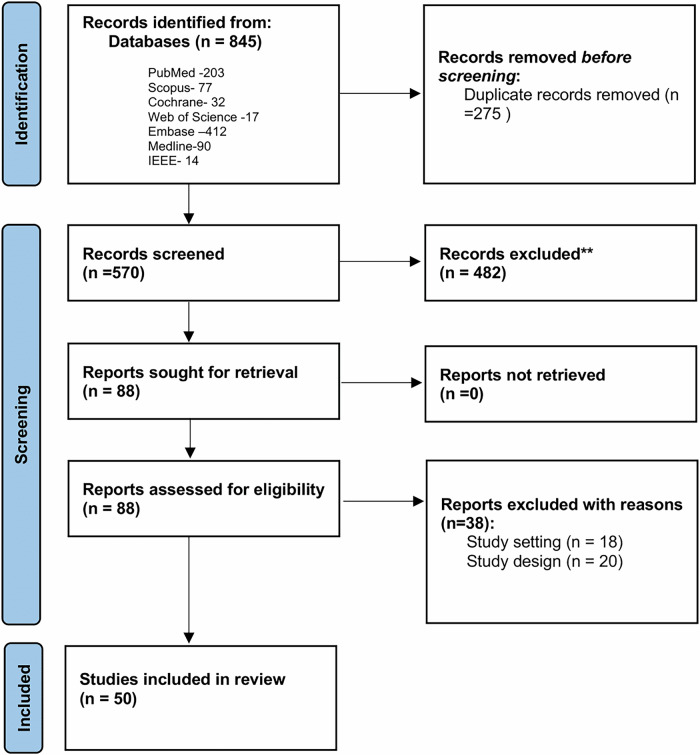
Prisma flowchart for the article selection process.

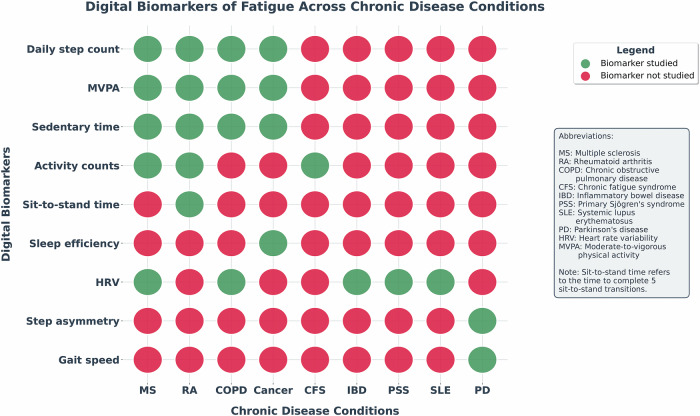
Summary of digital biomarkers across conditions. This figure offers a visual overview of the digital biomarkers examined in relation to fatigue across various chronic health conditions discussed in this review. Each row shows a specific digital biomarker (e.g., daily step count, HRV, sleep efficiency), while each column represents a different chronic condition. Green bubbles show that the biomarker has been studied in that condition, whereas red bubbles indicate it has not. This chart highlights both established research areas and gaps in current knowledge, providing insights into where future studies are needed to better understand the role of digital biomarkers in fatigue assessment and management.MS, multiple sclerosis; RA, rheumatoid arthritis; COPD, chronic obstructive pulmonary disease; CFS, chronic fatigue syndrome; IBD, inflammatory bowel disease; PSS, primary Sjogren's syndrome; SLE, systemic lupus erythematosus; PD, Parkinson's disease; HRV, heart rate variability; MVPA, moderate-to-vigorous physical activity. Abbreviations:
Results
The search yielded 845 papers; after removing duplicates, 570 papers were screened by title and abstract. leaving 88 papers that met the inclusion criteria and were reviewed in full. After exclusions based on study setting, design, and full-text availability, the final sample comprised 50 articles. The flowchart illustrating the study selection process is presented in Fig. 1.
Of the 50 articles, the quality review identified 7 studies that were rated excellent, 41 studies were rated as good, and 2 studies were rated as moderate; all articles were included in this review (Supplementary Table 1). The review captured a total of 5573 participants (Supplementary Table 1). Participants came from 15 different chronic disease domains (Supplementary Table 1): Multiple Sclerosis (n = 27 studies, 2750 participants)16–42 Cancer patients and survivors (n = 3 studies, 1164 participants)43–45, Long Covid (n = 3 studies, 197 participants)46–48, COPD (n = 2 studies, 440 participants)49,50, Chronic Fatigue Syndrome (n = 2 studies, 101 participants)51,52, Rheumatoid Arthritis and Juvenile idiopathic Arthritis (n = 6 studies, 315 participants)53–58, Parkinson's Disease (n = 2 studies, 60 participants)57,59, Chronic Stroke (n = 1 study, 57 participants)60, Chronic Inflammatory Rheumatic Disease (CIRD) (n = 1 study, 269 participants)61, Inflammatory Bowel Diseases (IBD) (n = 1 study, 18 participants)57, Primary Sjogren's Syndrome (PSS) (n = 1 study, 18 participants)57, Huntington's Disease (HD) (n = 1 study, 13 participants)57, Systemic Lupus Erythematosus (SLE) (n = 1 study, 16 participants)57, Pulmonary Sarcoidosis (n = 1 study, 15 participants)58,62.
Digital biomarkers consistently measured across studies included physical activity (PA), defined by time spent in various activity levels: vigorous physical activity (VPA), moderate physical activity (MPA), moderate-to-vigorous activity (MVPA), light physical activity (LPA), no physical activity (NPA), and sedentary activity (SA), based on pre-defined thresholds. Step count was the most reported measure (n = 9 studies), followed by time spent in MVPA, LPA, VPA, and MPA (n = 6 studies). For physiological measures, heart rate variability (HRV) and heart rate, typically derived from ECG or PPG sensors, were used in most studies (n = 8 studies). Sleep metrics, including total sleep time and Wake After Sleep Onset (WASO), were less commonly assessed (n = 3 studies), WASO, etc were measured in few studies (n = 3 studies).
Fourteen different fatigue scales were used in the included studies. The most common questionnaire used was the Fatigue Severity Scale (FSS), included in 13 studies16,18,22,24,25,27,28,30,31,37,39,40,60,63, followed by the Modified Fatigue Impact Scale (MFIS) (n = 6 studies)23,29,33–35,64 and Functional Assessment of Chronic Illness Therapy – Fatigue FACIT-F (n = 6 studies)43–45,47,53,61.
Torchio et al. found a significant negative correlation between time spent in MVPA and fatigue severity in 34 MS patients (r = −0.62, p < 0.001)16, while Blikman et al. observed that higher fatigue was linked to lower daily activity counts where fatigued MS patients had a higher percentage of their time sedentary and also spent less time in MVPA periods17. Other studies, such as that reported by Motl et al. identified a moderately predictive negative predictive relationship with physical activity, expressed as total movement counts, and fatigue18. Similarly, Grover et al. demonstrated a negative correlation between minutes spent in LPA and total fatigue. Moebus et al. reported using generalized additive models that increased heart rate and daily step counts related to fatigue in MS patients with a dysfunctional autonomic nervous system20. Gashi et al. confirmed significant correlations between step counts, HR, HRV, and fatigue scores21, while Jones et al. showed a link between fatigue symptoms and lower time spent in MVPA and daily steps22. Studies by Kratz et al., Eldemir et al., and Cederberg et al. also confirmed similar patterns of reduced activity in terms of activity counts per minute with higher fatigue23–25. Luostarinen et al. emphasized correlations between fatigue and physical activity metrics like steps per day and time spent in light to very vigorous activity42. Finally, Block et al. and Shema-Shiratzky et al. added further evidence on how physical activity metrics like daily step counts and time spent sedentary and fatigue are inversely related in MS patients29,30.
Hamy et al. found that RA patients with higher fatigue scores performed worse on functional tests, specifically taking longer to complete sit-to-stand time (the time to complete a set of 5 sit-to-stand transitions), with a significant correlation between sit-to-stand time and fatigue (p = 0.009)53. O'Brien et al. demonstrated that increased fatigue in RA patients was linked to more time spent sedentary and less time spent standing over six months54. Similarly, O'Leary et al. found a significant correlation between total time spent standing and fatigue in 76 RA patients55. Additionally, Armbrust et al. reported a negative correlation between fatigue and physical activity levels in the form of activity-related energy expenditure in children with juvenile idiopathic arthritis, with lower physical activity levels predicting higher fatigue (r = −0.30, p < 0.01)56.
Blondeel et al. reported that higher fatigue was significantly correlated with reduced levels of physical activity (amount and intensity), with average steps per day (as a measure of amount of PA) and average movement intensity during walking (as a measure of intensity of PA) (r = −0.21, p < 0.05)50.
Burton et al. found a weak correlation between time spent in physical activity measures such as LPA, MVPA, and VPA tracked by accelerometry, and fatigue in 82 long COVID patients, particularly in the afternoon and evening (−0.11 mean correlation)46. Haischer et al. observed that in 41 COVID-19 survivors, greater self-reported fatigue was significantly linked to less time in MVPA and fewer daily steps47.
Martin et al. found that in 87 cancer survivors, the fatigued group in the study, dichotomized based on a validated fatigue score cut-off point had a poorer sleep quality assessed by the amount of movement during the sleep period (mean sleep actigraphy and index of activity during sleep) compared to the non-fatigued group43. Sada et al. revealed that fatigued cancer survivors spent more time sitting or lying down, exhibited 52.2% less light activity and MVPA, and showed a significant positive correlation between fatigue scores and daily step count44. Vallance et al. demonstrated that, in 1049 breast cancer patients, more daily time spent in MVPA were linked to less fatigue, while more sedentary hours were associated with higher fatigue across multiple percentiles of fatigue scores45.
Vergauwen et al. found that CFS patients had significantly lower activity counts on weekdays compared to healthy controls, as revealed by a Mann–Whitney U test involving 66 CFS patients and 20 healthy controls51. Similarly, Evering et al. demonstrated that individuals with CFS were less physically active in the afternoon and evening, engaged in fewer high-intensity activities, and displayed more variability in their activity patterns expressed as mean acceleration per minute during the afternoon52.
Cho et al. found a significant negative correlation between fatigue scores and both time spent upright per day and time spent standing per day in a study involving 15 patients with pulmonary sarcoidosis62.
Pilotto et al. conducted a study of 42 Parkinson's patients (21 with fatigue and 21 without), where unsupervised gait analysis using a MOVE IV device revealed that those with fatigue had significantly higher step time (p = 0.005) and step time asymmetry (p = 0.01) compared to those without fatigue, particularly during longer walking bouts59.
Antikainen et al. found statistically significant correlations between HRV measures (e.g., Beat to Beat interval (RR mean), Beat to Beat interval (RR max)) and both physical and mental fatigue in 46 participants with IBD, PSS and SLE57.
Rao et al. used machine learning models on Fitbit data from 269 participants with CIRDs, predicting physical and mental fatigue with moderate accuracy, with physical activity and resting heart rate being key predictors61.
Sanchez-Sanchez et al. conducted a study with 57 participants, finding a small but statistically significant negative correlation between fatigue scores and the percentage of time spent in LPA, based on accelerometry data collected over seven days60.
Among the digital biomarkers evaluated, physical activity metrics—including daily step count and moderate-to-vigorous physical activity (MVPA)—emerged as the most robust and consistently associated with patient-reported fatigue. These associations were observed across multiple chronic conditions, such as multiple sclerosis (MS), rheumatoid arthritis (RA), COPD, long COVID, and cancer, and were supported by several high-quality studies, resulting in high certainty of evidence (see Supplementary Tablefor details). 3
Sedentary time also demonstrated a consistent positive association with fatigue across high-quality studies, achieving high certainty of evidence. Autonomic measures, particularly HRV, showed consistent negative associations with fatigue across multiple conditions, achieving high evidence certainty. In contrast, sleep-related measures and gait parameters were investigated in fewer studies and exhibited greater variability in both results and methodological quality. Sleep measures achieved low certainty of evidence due to inconsistent findings across only two studies, while gait parameters also received low certainty ratings as they were evaluated in only one study in Parkinson's disease (Fig. 2).
Discussion
This systematic review thoroughly explores the relationship between digital biomarkers, particularly physical activity, HRV, and fatigue across various chronic diseases. The results highlight several consistent patterns by which fatigue manifests and how digital biomarkers can offer objective insights into this subjective and often debilitating symptom. Although the disease context and specific biomarkers varied, common findings underscore the critical role digital measures could play in measuring, understanding, and managing fatigue.
The relationship between reduced physical activity and increased fatigue was consistent across most studies reviewed, regardless of disease type. In conditions such as multiple sclerosis (MS), rheumatoid arthritis (RA), COPD, cancer, and long COVID, lower levels of moderate-to-vigorous physical activity (MVPA), fewer daily steps, and prolonged sedentary behavior were strongly linked to higher fatigue levels. This trend was particularly evident in MS, as demonstrated by Torchio et al. and Blikman et al., where a higher burden of fatigue correlated with lower MVPA and fewer steps per day16,17. Blondeel et al. found a similar relationship in COPD patients, with those reporting higher fatigue showing significantly lower physical activity levels50. The role of physical activity in fatigue was also prominent in long COVID and cancer survivors. For example, Burton et al. found that long COVID patients who experienced greater fatigue exhibited reduced physical activity, especially in the afternoon and evening46. Similarly, in cancer survivors, Vallance et al. demonstrated that higher daily MVPA was associated with lower fatigue levels, suggesting that maintaining physical activity could mitigate the severity of fatigue in these populations45. These findings emphasize the value of digital biomarkers like MVPA and step count as objective, quantifiable indicators of fatigue. Wearable devices such as accelerometers and fitness trackers can provide continuous and real-time data on physical activity, offering a practical way to monitor fatigue and its fluctuations over time. Furthermore, the strong correlations between physical activity and fatigue across different conditions suggest that increasing physical activity may be a valuable intervention to alleviate fatigue as shown in a study conducted in women with primary Sjogren's disease65. However, this would require further longitudinal studies to confirm causality.
Sedentary behavior, characterized by prolonged periods of sitting or lying down, was another important biomarker of fatigue across multiple chronic diseases. Several studies reported that fatigued patients spent significantly more time in sedentary activities and less time engaging in physical movement. This was particularly pronounced in MS and cancer patients. For example, Cederberg et al. found that fatigued MS patients were more sedentary and took fewer steps compared to non-fatigued individuals25. Sada et al. observed a similar trend in cancer survivors, where higher fatigue scores were associated with more time spent sitting or lying down, along with less moderate-to-vigorous physical activity (MVPA)44. These findings are notable as they suggest a possible bidirectional relationship between fatigue and sedentary behavior: while fatigue may contribute to increased sedentary time, a sedentary lifestyle could, in turn, intensify fatigue. While this may be a logical interpretation, caution is necessary to avoid over-interpretation, as causality cannot be conclusively inferred from these data. This relationship further raises important considerations for designing interventions for patients with chronic diseases, simply encouraging increased physical activity may not be sufficient if prolonged sedentary behavior is left unaddressed. Interventions that break up sedentary time, such as promoting LPA throughout the day, could be more effective in reducing fatigue, likely known as "activity pacing", explored in some studies as a framework for managing chronic pain and fatigue66.
Gait parameters showed limited evidence as potential biomarkers of fatigue, with low certainty of evidence due to the restricted research base. Pilotto et al. demonstrated that Parkinson's patients with higher fatigue exhibited longer step times and greater step time asymmetry compared to non-fatigued individuals, especially during longer walking bouts59. However, this finding is based on a single study with a small sample size (42 participants), limiting our ability to draw broader conclusions about gait parameters as fatigue biomarkers.
Significant limitations must be considered when interpreting gait-based fatigue measures in neurodegenerative diseases. Parkinson's Disease is characterized by progressive gait impairment as the disease advances, making disease severity a potential confounding factor when applying gait analysis to assess fatigue67,68. The relationship between gait abnormalities and fatigue may be confounded by underlying motor dysfunction rather than representing a direct effect of fatigue on mobility. Additionally, the neurophysiological mechanisms of fatigue in progressive neurological disorders remain poorly characterized68, further complicating the interpretation of gait-fatigue relationships.
Given these limitations and the sparse evidence base consisting of only one study, more research is needed before gait measures can be reliably used as fatigue biomarkers in clinical practice. Future studies should include larger sample sizes, control for disease severity, and investigate gait-fatigue relationships across multiple neurodegenerative conditions to establish the generalizability of these findings.
In addition to physical activity, HRV emerged as a critical biomarker, particularly in diseases characterized by autonomic dysfunction, such as MS, immune-mediated inflammatory diseases (IMID), and neurodegenerative disorders. HRV metrics, such as the low-frequency to high-frequency (LF/HF) ratio and standard deviation of the normal-to-normal intervals (SDNN), have been shown to correlate with fatigue severity, suggesting that autonomic dysregulation plays a key role in fatigue. For example, Fei Yu et al. found that MS patients with higher fatigue exhibited an increased LF/HF ratio during the sit-to-stand test, indicating a disturbed balance between the sympathetic and parasympathetic components of the autonomic nervous system28. Similarly, Antikainen et al. reported significant correlations between some HRV metrics (e.g. beat to beat interval (RR) mean and maximum) and both physical and mental fatigue in IMID patients57. Lastly, Moebus et al. also reported that higher heart rate was associated with greater fatigue in MS patients with a dysfunctional autonomic nervous system20. These findings suggest that autonomic nervous system dysfunction may contribute to the experience of fatigue, making HRV a valuable digital biomarker for real-time monitoring of fatigue. Given the strong relationship between HRV and fatigue, HRV metrics could serve as a non-invasive and easily measurable indicator of fatigue severity. A study conducted in people with CFS who self-reported autonomic dysfunction using the Composite Autonomic Symptom Scale (COMPASS) revealed a similar pattern of symptoms of autonomic dysfunction strongly associated with reported fatigue69, with similar observations in Sjogren's disease70,71. Wearable devices capable of measuring HRV could provide valuable insights into how fluctuations in autonomic function relate to daily variations in fatigue. This opens new possibilities for using HRV to personalize interventions that target both physical and autonomic aspects of fatigue.
Sleep-related measures showed limited and inconsistent evidence as fatigue biomarkers, achieving low certainty of evidence due to the sparse research base and mixed findings. Martin et al. found that cancer survivors with higher fatigue scores had poorer sleep quality as measured by actigraphy43. At the same time, Stephens et al. reported associations between sleep efficiency and fatigue in pediatric multiple sclerosis patients26. However, these findings come from only two studies with different populations and measurement approaches, limiting our ability to draw definitive conclusions about sleep-fatigue relationships.
The relationship between sleep and fatigue is complex and likely bidirectional, with evidence from both general population studies72 and chronic disease research73 supporting this relationship. Poor sleep potentially contributes to increased fatigue, while fatigue itself may disrupt sleep patterns. Large-scale community studies have demonstrated that higher fatigue levels are significantly associated with increased likelihood of sleep disturbances72. In contrast, studies in chronic fatigue syndrome have shown that disrupted sleep architecture and altered sleep stage transitions are characteristic features in patients experiencing persistent fatigue symptoms73. This bidirectional relationship makes it challenging to establish sleep parameters as reliable fatigue biomarkers without controlling for the underlying disease processes that may independently affect both sleep and fatigue. Additionally, the heterogeneity in sleep measurement approaches (actigraphy vs. sleep efficiency calculations) and the limited number of studies investigating sleep-fatigue relationships across different chronic diseases further reduce confidence in sleep as a universal fatigue biomarker. More longitudinal research is needed to clarify the causal relationships between sleep disturbances and fatigue and establish consistent methodological approaches for measuring sleep-related digital biomarkers across different chronic disease populations.
Our synthesis revealed a number of significant gaps in the current literature surrounding digital biomarkers of fatigue. Despite fatigue being a multifactorial experience, majority of the studies in this review focused on single biomarker categories in isolation. This fragmented approach neglects the potential of combining multiple digital signals, which might more accurately capture the complexity of fatigue. Future research should explore integrative models that blend different biomarker types, potentially yielding more powerful predictors of fatigue across contexts. Another limitation lies in the relative scarcity of longitudinal research. Only a small proportion of studies have employed designs that track biomarker changes over time in relation to fatigue. Without such temporal data, it's difficult to fully understand how digital signals map onto the evolving experience of fatigue in daily life. More longitudinal studies are needed to capture this dynamic interplay. Furthermore, cross-condition validation remains notably underexplored. Very few studies have investigated the same biomarkers across multiple clinical populations using consistent protocols. This limits our ability to distinguish between general fatigue mechanisms and those specific to particular conditions. Studies designed for direct comparison across different pathologies could significantly advance this line of inquiry. While many investigations report correlations between digital biomarkers and fatigue, few go beyond that to assess diagnostic performance. Sensitivity, specificity, and clinically relevant cut-points are rarely discussed, limiting the practical utility of these tools in clinical decision-making. Establishing diagnostic thresholds and validating them in diverse populations will be a crucial next step. Another critical gap involves treatment response. There are not enough studies that have examined how digital biomarkers change in response to fatigue-targeted interventions. Understanding whether these markers are sensitive to treatment effects could position them as valuable outcome measures in clinical trials. Their ability to reflect change over time would enhance their role in evaluating intervention efficacy. The dominance of cross-sectional study designs also constrains our ability to infer causality. For example, while reduced physical activity is frequently associated with fatigue, it remains unclear whether it is a contributing factor, a consequence, or both. Experimental designs that manipulate contributing variables could help untangle such relationships and better establish causal pathways. Finally, methodological heterogeneity continues to be a major barrier to research synthesis. Studies vary widely regarding measurement tools, data processing algorithms, and outcome definitions. Without greater standardization in these areas, comparative analysis remains limited. A consensus on best practices would provide a solid foundation for future investigations and enhance the cumulative value of this growing body of work.
Despite the generally moderate-weak correlations observed between digital biomarkers and fatigue, these objective measures offer several compelling advantages for clinical practice. Rather than replacing self-reported outcomes, digital biomarkers are best positioned as complementary tools. Their objectivity may help identify discrepancies between patients' subjective reports and actual physiological or behavioral changes that can be clinically meaningful. Another advantage lies in the capacity for continuous monitoring. Traditional clinical assessments provide only brief snapshots in time, often missing fluctuations that occur outside of appointments. Digital biomarkers, in contrast, can track fatigue in real-world environments over extended periods, potentially alerting clinicians to early signs of deterioration even before a patient becomes consciously aware of changes. Moreover, patterns in digital biomarkers may support more personalized fatigue interventions. For instance, if a patient's data indicates consistently low physical activity levels, interventions might focus on gradual exercise programs. If sleep-related disruptions are prominent, the focus might shift to sleep hygiene and regulation strategies. Interestingly, studies using multivariate approaches have shown that combining multiple biomarkers can significantly improve the accuracy of fatigue prediction64. Where individual markers explain only modest proportions of variance, integrated models have demonstrated enhanced predictive power, suggesting that the future of fatigue monitoring lies in multi-dimensional digital phenotyping. Beyond the clinical and technical, patient engagement is another crucial consideration. Providing patients with visualizations of their own digital biomarker data, highlighting trends of improvement or decline, may empower them to take a more active role in managing their fatigue. This kind of biofeedback could enhance motivation, adherence, and overall self-efficacy. Nevertheless, several implementation challenges must be addressed before these tools can be widely adopted. These include ensuring cost-effectiveness, overcoming technical and usability barriers, safeguarding data privacy, and promoting acceptance among both patients and providers. These practical concerns should be addressed in tandem with continued validation efforts to ensure that digital biomarkers of fatigue are not only scientifically robust but also clinically and ethically sound.
One of the key strengths of this systematic review is its comprehensive coverage of multiple chronic diseases, including multiple sclerosis (MS), rheumatoid arthritis (RA), COPD, long COVID, cancer, Parkinson's disease, and more. This broad scope allows for a comparison of fatigue patterns across diverse conditions. It highlights commonalities in the relationship between fatigue and digital biomarkers, such as physical activity and HRV. Another strength is the focus on real-world, objective data collection through wearable devices, which provide continuous and non-invasive monitoring of patients' activity, HRV, and sleep. This overcomes the inherent limitations of self-reported fatigue assessments, which are often subjective and can vary due to recall bias. Wearable technologies, like accelerometers and fitness trackers, offer quantifiable data that can be collected over extended periods, providing a more holistic view of fatigue dynamics and give better insights into biomarkers with potential clinical utility compared to e.g., gait lab/laboratory measurements. The review also highlights the potential of digital biomarkers to facilitate personalized fatigue management. By integrating objective measures into routine clinical care, there is an opportunity to tailor interventions and monitor the effectiveness of treatments in real-time, improving patient outcomes. This is especially important for chronic diseases where fatigue is a pervasive and debilitating symptom.
Despite its strengths, this review has several limitations. The predominance of observational studies limits the ability to establish causality between digital biomarkers (e.g., physical activity, HRV) and fatigue. Without RCTs or intervention studies, it remains unclear whether increasing activity or improving sleep quality directly reduces fatigue or if these relationships are merely correlative. Another limitation is the variability in assessment tools and digital biomarkers. Fatigue was measured using different scales (e.g., FSS, FACIT-F), introducing heterogeneity that complicates comparisons. Similarly, variations in wearable devices (e.g., ActiGraph, Fitbit) may lead to inconsistencies in physical activity and HRV measurements. Additionally, most studies lacked long-term data, despite fatigue being a dynamic symptom that fluctuates over time. Longitudinal studies are needed to capture the full impact of fatigue and assess whether changes in activity, HRV, or sleep led to lasting improvements. Further considerations include the diversity of participants, limiting generalizability across ethnic and geographic groups, and potential seasonal variations, which might impact results, especially in regions further from the equator. In summary, this systematic review identified physical activity metrics (particularly step count and MVPA) as the most robust digital biomarkers of fatigue across chronic conditions, with moderate to strong correlations consistently observed across disease contexts. The certainty of evidence varied considerably across biomarker types, with physical activity metrics achieving the highest confidence ratings. As technology advances, digital biomarkers may play an increasingly important role in objectively capturing the multifaceted nature of fatigue, ultimately improving assessment and management of this debilitating symptom across chronic disease populations.
Methods
This systematic review was conducted in accordance with the Preferred Reporting Items for Systematic Reviews and Meta-Analyses (PRISMA) guidelines74. The protocol was prospectively registered with PROSPERO (registration number: CRD42024498838). The completed PRISMA checklist is provided in the Supplementary Table 4. Following the PICO framework, our research question was: In adults with chronic diseases (Population), which digital biomarkers measured through wearable and connected technologies (Intervention/Exposure) are associated with or can predict subjective fatigue measures (Outcome)?
Nine databases were searched from the earliest records to March 2024: PubMed, Scopus, Cochrane, Web of Science, CINAHL, PsycINFO, Embase, MEDLINE, and IEEE. The reporting of this systematic review was guided by the standards of the Preferred Reporting Items for Systematic Review and Meta-Analysis (PRISMA) guidelines (Supplementary Table 4)74. The search strategy was developed in PubMed using medical subject headings (MeSH) based on the key concepts of 'digital biomarkers', 'chronic diseases', and 'fatigue' (Supplementary Table 2). Duplicates were removed from the compiled articles, and the titles and abstracts were then reviewed independently by two reviewers.
Inclusion criteria ensured reviewed studies had participants with at least one chronic disease and used wearable sensors in a real-world environment to measure digital biomarkers. Studies were excluded if they monitored participants under controlled conditions (such as a laboratory or hospital), participants were healthy individuals, or if they explored physiological fatigue or fatigue induced by exercise. Articles were excluded if written in a language other than English, as well as conference abstracts, case reports, literature reviews, meta-analysis, grey literature, and study protocols.
Two reviewers (NA and CH) independently extracted data using a standardized form. Key data included the study setting, clinical population, type and model of sensor, fatigue questionnaire used, sensor measures derived, and study results. An independent reviewer (MB) resolved any discrepancies in screening or extraction.
Quality appraisal was performed using the Downs and Black Quality Appraisal form75. Two reviewers (NA and CH) completed assessments independently, and an average quality score was derived. Certainty of evidence for each biomarker-fatigue association was systematically determined through a multi-factorial approach that considered: (1) the methodological quality of supporting studies, (2) consistency of findings across studies, (3) the total number of studies investigating each biomarker, and (4) the heterogeneity of populations studied. Certainty was rated as "high" when a biomarker demonstrated consistent findings across three or more high-quality studies. "Moderate" certainty was assigned when consistency was present, but supporting studies were of moderate quality. "Low" certainty was assigned when fewer than three studies investigated the biomarker or when findings were inconsistent, regardless of individual study quality.
We acknowledge that the certainty of evidence ratings was not specified in the original PROSPERO protocol but were added during the review process to enhance the robustness of our evidence synthesis.
Supplementary information
Supplementary Materials
 Long Covid