
What this is
- This narrative review explores the gut microbiome's influence on aging and longevity.
- It synthesizes evidence showing how gut microbes interact with aging processes and health.
- The review discusses mechanisms linking gut microbiota to age-related changes and potential interventions.
Essence
- The gut microbiome significantly influences aging and longevity through various mechanisms. Its composition changes throughout life stages, impacting health and vitality in older adults.
Key takeaways
- Gut microbiome dysbiosis contributes to aging-related health issues, including frailty and cognitive decline. This dysbiosis is characterized by decreased microbial diversity and increased pro-inflammatory bacteria.
- Interventions such as dietary changes, exercise, and supplementation with prebiotics and probiotics can positively modulate the gut microbiome, potentially enhancing and longevity.
- Centenarians exhibit unique gut microbiome profiles, including increased microbial diversity and beneficial taxa, which may contribute to their exceptional health and longevity.
Caveats
- The review is narrative and does not provide original empirical data, limiting its conclusions to synthesized interpretations of existing literature.
- Findings from animal models may not fully translate to humans due to physiological differences, necessitating cautious interpretation of results.
Definitions
- inflammaging: Chronic, low-grade inflammation associated with aging that contributes to age-related diseases.
- healthspan: The period of life during which an individual is generally healthy and free from serious disease.
Simplified
Introduction
The global population is rapidly shifting to an older age demographic [1] due to declining fertility rate and rising life expectancy [2]. Aging is an unavoidable component of biological life, during which occurs a deterioration of physiological functions and an increase in fragility, leading to greater susceptibility to infections and diseases. Together, these contribute to elevated mortality rates within the aged cohorts. Understanding the processes of aging is therefore an important research direction with significant social and scientific impacts [3], underscoring the urgency of developing effective ways to promote healthy aging. Healthy aging refers to preserving optimal physical and mental function in later life so that one can engage in daily living activities independently and maintain social participation. Healthy aging also emphasizes not just extending lifespan but increasing healthspan, the period of life when one is free of limiting chronic injuries and maintain healthy functionality, while at the same time promoting dignity and vitality in the process of aging. Healthy aging is influenced by many factors. In addition to genetic influences, which are beyond our control, modifiable factors—such as exercise, a balanced and nutritious diet, and routine medical checkups—can all contribute to prolonged physical and mental components of aging, increasing both life- and healthspan.
Aging is a complex process marked by the progressive decline of systemic health. Central to this understanding are nine hallmarks of aging, reflecting diverse molecular and cellular mechanisms that drive the aging process [4]. Additionally, emerging evidence highlights a potential tenth hallmark, the disturbance of the gut microbiome [5, 6]. The gut microbiome is a complex microbial community that plays an essential role in human health [7, 8] and has been regarded as being equivalent to a forgotten organ [9]. However, the gut microbiome might not conform to the typical pattern of decline with aging in the human body [10]. Instead, it exhibits unique dynamics associated with aging processes and has been speculatively linked to age-related comorbidities [11]. This distinct behavior underscores its significance and highlights the need for a deeper understanding of its role in health and aging.
The vast body of literature makes it impossible to address all studies exploring the intricate connections between the gut microbes and aging within a single paper. As a result, we have focused on specific topics and selected representative studies for each section, while acknowledging that some related works may not be included. The gut microbiome and its relationship with aging, recognized as a critical public health issue, has previously been extensively reviewed from various angles [12 –14]. In this review, we examine key themes related to the gut microbiome and aging. These include evidence from animal models demonstrating the gut microbiome's role in the aging process, its progression across the lifespan from infancy to adulthood and old age, the mechanisms linking the gut microbiome to aging, and potential interventions targeting the microbiome to address aging-related changes.
Gut microbes modify the aging process in animal models
Aging is a multi-systemic process in which physiological functions progressively decline over time. Decreased gut barrier integrity and the development of chronic, low-grade inflammation, known as 'inflammaging', are prominent contributors to systemic aging-related health conditions [15, 16]. In this context, the gut–brain axis (associated with cognitive decline and neurodegeneration) and the gut–muscle axis (associated with frailty) are particularly relevant to host aging and, ultimately, longevity. In support of this, numerous experiments using model organisms have demonstrated a strong link between gut bacteria and host lifespan.
The influence of the gut microbiome on the aging process has been documented in vertebrate models. Using the naturally short-lived African turquoise killifish, transferring the gut microbiome from young to middle-aged killifish resulted in a prolonged lifespan and delayed behavioral decline when compared to those receiving a microbiome transplant from the same age-cohort middle-aged killifish [17]. Additionally, co-housing germ-free young mice with old, conventionally raised mice led to an increase in blood pro-inflammatory cytokines in the young mice. However, this effect was absent in germ-free mice deficient in TNF-α (tnfα−/−), providing evidence that age-related microbial dysbiosis exacerbates systemic inflammation via TNF-α signaling [18]. Fecal transplantation from wild-type mice into progeroid mice reduced disease phenotypes and increased lifespan, and supplementation with Akkermansia muciniphila independently also increased lifespan modestly compared to controls [19]. Metabolomic analysis of these mice suggested that the mechanism for lifespan extension was generally due to the restoration of secondary bile acid synthesis through the gut microbiome remodeling. Furthermore, another study transplanting the fecal microbiome from a long-lived individual (101 years old) to eleven-month-old mice resulted in more beneficial taxa, higher microbial diversity, less lipofuscin accumulation in the brain, and longer intestinal villi in the recipients compared to those receiving transplants from an elderly donor (70 years old) [20]. More recently, transplanting the microbiome from young mice restored gut barrier integrity and reduced intestinal inflammation in older mice, with results implying the beneficial effects were achieved by maintaining gut homeostasis [21]. A recent comprehensive metabolic modeling study combining tissue transcriptome, metagenome, and metabolome data to examine aging-related systemic dynamics across five age groups of mice (ranging from 2 to 30 months old) revealed increased systemic inflammation and downregulated cellular maintenance and tissue regeneration processes in aged mice [22]. Notably, nucleotide metabolism was predicted to depend on the microbiome and was reported to partly underlie aging-associated declines in gut barrier integrity.
Studies in invertebrate models have also provided insights into the role and function of the gut microbiome in the process of aging. In Caenorhabditis elegans, an isolated Escherichia coli mutant with disrupted folate synthesis was unexpectedly found to slow C. elegans aging [23]. Another large-scale screening of E. coli mutants identified 29 genes whose deletion extended the lifespan of C. elegans, among which five mutants increased E. coli colanic acid production, thereby promoting mitochondrial dynamics and regulating unfolded protein response in the host, a process that helps maintain proteostasis under stress [24]. In addition, nitric oxide produced by commensal bacteria was shown to enhance C. elegans longevity [25]. Recently, the 3-phenyllactic acid produced by the probiotic Lactiplantibacillus plantarum effectively prolonged C. elegans lifespan by enhancing energy metabolism and stress resilience [26]. Together, these findings suggest that microbial genetic and metabolic variation, particularly within E. coli, can modulate host aging by influencing mitochondrial function, stress response, and key metabolic pathways.
In Drosophila melanogaster, a pioneering study found that reintroducing bacteria to axenic embryos or early-adult flies by adding a homogenate of nonaxenic flies to the food could enhance lifespan [27]. However, an independent study reported no such effect, attributing the discrepancy to differences in culture conditions [28]. This was later clarified by showing that gut bacteria can both extend or shorten fly lifespan, depending on the nutritional environment [29]. Low-dose oxidant exposure during D. melanogaster development extended adult longevity by reducing Acetobacter proteobacteria [30], whose indigenous presence was associated with age-related gut dysfunction and reduced lifespan. Although driven by different mechanisms, commensal dysbiosis resulting from aging-related immune signaling deregulation [31] and compromised gut compartmentalization [32] in fruit flies reduced their lifespan. Through a comparison of gene expression profiles in conventionally and axenically reared D. melanogaster, stress response and innate immunity genes represented two of the nine hallmarks of aging with expression influenced by the microbiome rather than chronological age [33].
While invertebrate models have provided important insights into the biological role of the gut microbiome in aging, translating these findings to humans remains limited due to differences in anatomical, physiological, and immune complexity. Therefore, findings from these models should be interpreted in the context of complementary evidence from vertebrate and specifically mammalian systems.
| Model organism | Microbial factor or intervention | Observed effect/mechanisms | Corresponding modifications on aging hallmark(s) | References |
|---|---|---|---|---|
| Killifish | Fecal microbiota transplant from young to middle-aged fish | Extended lifespan and delayed behavioral decline/enhanced defense to bacteria, Tor pathway, and extracellular matrix by young microbiota | Reducing inflammaging and enhancing gut integrity | [] [17] |
| Mouse | FMT from wild-type into progeroid mice | Delayed aging phenotypes and extended lifespan/restoration of secondary bile acid synthesis | Remodeling age-associated gut dysbiosis | [] [19] |
| Mouse | FMT from young into aged mice | Improved gut barrier function and reduced intestinal inflammation/restoration of mesenteric lymph nodes associated immunity and gut homeostasis | Reducing inflammaging and enhancing gut integrity | [] [21] |
| C. elegans | mutants producing excess colanic acid (CA)E. coli | Extended longevity/promoted mitochondrial dynamics and activated unfolded protein response by CA | Rescuing mitochondrial dysfunction and restoring proteostasis | [] [24] |
| C. elegans | Nitric oxide-producing Bacilli | Extended longevity/promoted thermotolerance via HSF-1 and DAF-16 transcription factors | Rescuing decreased stress resistance | [] [25] |
| C. elegans | producing 3-phenyllactic acid (PLA)Lactiplantibacillus plantarum | Extended healthspan/enhanced energy metabolism and stress resilience by PLA via stress-related transcription factors SKN-1/NRF2 | Rescuing decreased stress resistance | [] [26] |
| D. melanogaster | Reducedvia early-life oxidants exposureAcetobacter | Extended lifespan/ameliorate gut dysfunction | Rescuing immune deficiency | [] [30] |
Maternal factors affect early-life microbiome
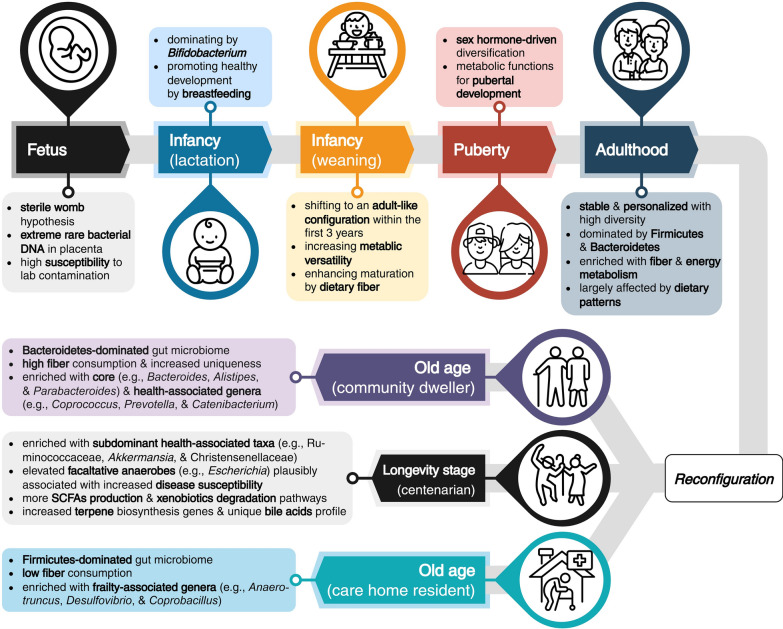
Although the question of when and through which interactions fetal microbiomes are acquired remains controversial, there is a general agreement that infants acquire their microbiome once they leave the womb. Delivery mode has been proven to affect the microbiome babies acquire, with vaginal delivery leading to an enrichment of vaginal species like Lactobacillus and Prevotella, and Caesarean section (C-section) favoring skin-associated species like Staphylococcus, Corynebacterium, and Propionibacterium [43]. As C-section infants were found to have an increased susceptibility to allergic diseases [44], the distinction in their initial microbiome has plausible long-term health effects. This is further supported by evidence showing that the early-life microbiome shapes gut mucosal immunity by modulating the accumulation and function of invariant natural killer T cells [45]. A subsequent study identified that a transient gut microbial dysbiosis within the first 100 days of life increased the risk of asthma, with the allergy-prone infant gut microbiome characterized by reduced level of Lachnospira, Veillonella, Faecalibacterium, and Rothia [46]. The gut microbiome of C-section and vaginal delivered babies were monitored and largely aligned after time, with differences observed between the groups at 1 week and one month after birth diminishing after one year. However, increased incidence of asthma was only found in those individuals that retained the C-section-associated microbiome at one year of age [47], reinforcing the relationship between the gut microbiome and health outcomes. Recently, the first-year gut microbiome has been proposed as a predictor of pediatric allergic disease by age five [48]. Therefore, appropriate maturation of the gut microbiome towards vaginal birth assemblages mitigates the increased asthma risk associated with C-sections, making the first year a critical period for nurturing the gut microbiome.
Human milk is another potential source of vertical microbial transmission, making it plausible source of or contributor to an infant's gut microbiome. Lactic acid bacteria has been isolated from human milk [49], overturning its traditionally believed assumption of sterility [50], with an estimated 8 × 10⁴ to 8 × 10⁶ bacteria ingested daily in breastfed infants [51]. At the same time, lactic acid bacteria in human milk has been found to inhibit the growth of pathogenic Staphylococcus aureus [51], suggesting protective benefits for breastfed infants. While the microbiome of human milk is very diverse, it appears to be dominated by Staphylococcus, Streptococcus, Bifidobacterium, and Lactobacillus bacterial genera [52]. There is variation among the human milk microbiome of different mothers; however, these unique assemblages were found to be stable in each mother over the sampling period of 4 weeks [53]. Over longer periods, studies have found that breast milk microbiomes change throughout entire lactation periods, with stratification based on the mother's weight, mode of delivery [54], and breastfeeding practices [55]. Notably, indirect breastfeeding (defined as at least one feeding of pumped milk in the preceding 2 weeks of sampling) was associated with the enrichment of potential pathogens and a depletion of the assumed positive Bifidobacterium [55]. In breast milk, the human milk oligosaccharides (HMOs) were recognized as prebiotics that promote the growth of beneficial bacteria [56], providing a potential modality for the observed higher abundance of Bifidobacterium and less Clostridium in the breastfed than formula-fed infants [57]. The benefits of Bifidobacterium to infants have been found to correlate with their ability to utilize HMOs and produce key metabolites like indole-3-lactic acid, leading to a healthier immune imprinting by reducing intestinal inflammation and thus lowering the risk of immune-related diseases later in life [58]. By clustering and trajectory modeling of the gut microbiome from nearly 1000 infants, breastfeeding, vaginal birth without antibiotic exposure, and having siblings were found to contribute to the most common trajectory associated with healthy development [59].
While differences have been observed in microbiomes related to delivery mode and milk source, the introduction of solid foods during weaning provides further influence on an infant's gut microbiome. Research has shown that the cessation of breast milk coincides with the maturation of the infant gut microbiome [60, 61], transitioning from an infant-like to an adult-like composition within the first three years of life [62]. This maturation is accompanied by the growth of bacteria with greater metabolic versatility, facilitating carbohydrate utilization, vitamin biosynthesis, and xenobiotic degradation [63]. During this transition, the previously Bifidobacterium-dominated gut microbiome shifts toward a more taxonomically diverse community, enriched with Bacteroidaceae, Lachnospiraceae, and Ruminococcaceae, and shows an increased microbial alpha diversity [60], which likely underlies the expanded functional capacity. In paired, longitudinal monitoring of maternal and infant microbiomes, the median first appearance of shared Bacteroidales, Oscillospiraceae, and Lachnospiraceae strains was significantly earlier in mothers than in their infants, indicating that infants acquired these strains postnatally through cohabitation rather than vertically transferred at birth or through breastfeeding [64]. The timing of weaning was also recently reported to influence the gut microbiome, and early complementary feeding was associated with a higher BMI at the age of five [65]. Dietary fiber incorporation during weaning supported the gradual microbiome maturation in the infant gut [66], suggesting that the weaning practice may have lasting health implications for infants.

The human gut microbiome characteristics at different life stages. The characteristics are presented with key terms in bold typeface, following the order of compositional features, factors for modulation, and enriched metabolic function or metabolite profiles. Reconfiguration denotes the transitional stage involving the substitution of butyrate-producing taxa, where its success steers the elderly gut microbiome towards healthy aging, or vice versa, towards unhealthy aging. The icons were sourced from Flaticon.com, with credit to the following icon artists: Metami septiana, dwiangga.icon, Freepik, Eucalyp, kliwir art, mia elysia, and anilofex
Puberty comes with gut microbiome transition
Puberty represents a transitional stage from childhood to adulthood, during which hormonal fluctuations, growth spurts, sexual maturation, and metabolic reprogramming occur simultaneously. There is evidence supporting each of these physiological changes as impacting the gut microbiome. In contrast to the earlier-assumed concept that an adult-like gut microbiome is established after the first three years of life and remains stable thereafter, the gut microbiomes of adolescent children exhibit some differences compared to those of adults. In addition to Ruminococcus, Faecalibacterium, and Roseburia being the core taxa shared with adults, Bifidobacterium and Clostridium were found also abundant in adolescents [67]. Furthermore, the adolescent gut microbiome showed higher Shannon diversity and functional enrichments that support pubertal development (e.g., synthesis of vitamin B12 and folate) compared to that of adults [68]. Given that sex hormones are critical drivers of sexual dimorphism during puberty, investigations into their effects on the gut microbiome have not surprisingly revealed that they are reciprocally influential. The highly similar gut microbiome in male and female mice at weaning showed gender-dependent diversification at puberty [69], which was eliminated by castration [70]. Transplanting the gut microbiome from adult male mice to immature female mice elevated blood testosterone levels in recipients and conferred protection against type 1 diabetes [69]. The androgen-driven gut microbiome was thus plausibly protective, with bacteria lineages contributing to macrophage imprinting [70], consequently playing a partial role in the gender bias observed in autoimmune diseases.
With the ability to metabolize sex hormones, the gut microbiome appears to influence the timing and progression of puberty. The gut microbiome has been shown to be indispensable for sexual maturation in mice, as germ-free males demonstrated defective spermatid differentiation and females showed disorganized follicle structures, compared to their conventionally raised counterparts [71]. In humans, although found only in girls, the relative abundance of estrogen-degrading Clostridia increased and Bacteroidia decreased with pubertal development [72]. Among Clostridia, members belonging to the Ruminococcaceae family are suspected to affect pubertal timing by regulating sex hormone levels in the host. The gut microbiome has also been reportedly associated with pubertal obesity [73] and behavioral changes [74], suggesting that microbiome manipulation during puberty could promote healthy adulthood maturation [75].
The gut microbiome in adulthood is stable and personalized
The adult gut microbiome has been investigated through several population-based cohorts worldwide, including American [76 –78], European [79, 80], Chinese [81 –83], British [84], Belgian [85], Dutch [86, 87], and Japanese [88, 89] adults. From these studies the adult gut microbiome was estimated to harbor 1000–1150 prevalent bacterial species collectively and at least 160 species per individual [79], dominated by Firmicutes and Bacteroidetes phyla, followed by Actinobacteria, Proteobacteria, and Verrucomicrobia [90]. At the genus level, Bacteroides, Faecalibacterium, Blautia, Roseburia, and Coprococcus emerged as the core genera defined by 95% prevalence with known taxonomy [85]. On a global scale, Bacteroides, Bifidobacterium, Shigella, Faecalibacterium, and Prevotella were recently identified as the top five abundant genera in the human gut microbiome [91]. Despite this, the relatively low number of unique genera compared to species in the human gut microbiome suggested that the underlying diversity was concentrated at the species and strain level [92].
The gut microbiome in healthy adults is more stable than that in early life [93], as evidenced by the greater interpersonal variation among infants compared to adults [62]. Consistent with the ecological theory that diversity is positively linked to ecosystem stability [94], the richness and diversity of the adult gut microbiome were found to gradually increase after infancy, plateau at adolescence, and remain stable throughout the lifetime [95]. One study extrapolated this by suggesting that most gut strains persist as residents for decades in the same individual [96]. Despite this plateau associated with the physiological development towards adulthood, the gut microbiomes in healthy individuals still remain diverse, and it is this diversity that confers microbial resilience, helping the host to withstand and recover from perturbations while maintaining its functionality and adaptability [97]. The adult gut microbiome also appears to be more robust compared to that of infants, showing a quicker recovery after a single antibiotic exposure [98], although the effects of antibiotic treatment lasted longer in adults than in infants [99] and depended on the type of antibiotic used [100]. Given the taxa-dependent ability for persistent colonization [101], the same perturbation can have differential impacts on gut strains. However, even in the absence of perturbation, age alone is sufficient to cause fluctuations in the gut microbiome [102, 103], and the smaller intra-individual variation compared to inter-individual variation indicates a highly personalized nature of the gut microbiome.
With respect to metabolic functions, the pathways with differential enrichments reflect developmental priorities across different life stages. In comparison to infants, the adult gut microbiome preferred different genes involved in vitamin, amino acid, and carbohydrate metabolisms [62]. Specifically, genes in vitamin B9 (folate) biosynthesis, cysteine metabolism, and lactic acid bacterial fermentation were more abundant in infants. In contrast, genes associated with vitamin B12 (cobalamin), B7 (biotin), and B1 (thiamine) biosynthesis, as well as arginine, glutamate, aspartate, and lysine metabolism, and methanogenesis were enriched in the adult gut microbiome. By correlating 104 bacterial species with age-dependent abundance with metabolic functions, the adult gut species were found to have more genes related to fiber metabolism than infants [95], correlating with the fiber content in diets. In addition, a greater abundance of pathway counts in energy metabolism and fewer in carbohydrate metabolism were among the top functional categories distinguishing the gut microbiomes of adults from those of infants [114]. These differences were also attributable to their dietary patterns, which in turn influenced the gut microbiome composition.
| Study/cohort | Population | Host genetics factor | Microbial trait affected | Key findings | References |
|---|---|---|---|---|---|
| TwinsUK | British adults | Twin zygosity | Taxon heritability | Monozygotic twins share more similar gut microbiota than dizygotic twins, and Christensenellaceae is the most heritable taxon | [] [104] |
| HMP, TwinsUK, and LifeLines-DEEP | American, British, and Dutch adults | SNPs in lactase (LCT) gene locus | abundanceBifidobacterium | LCT polymorphisms (lactase persistence) strongly associate withlevels in lactose-consuming adultsBifidobacterium | [–] [105] [107] |
| PopGen, LifeLines-DEEP, and FINRISK | German, Dutch, and Finnish adults | ABO genotypes | spp. abundanceBacteroides | species are enriched or depleted in individuals with different ABO genotypesBacteroides | [–] [108] [110] |
| PopGen and FoCus | German adults | SNPs | Beta diversity | A set of 42 human SNPs collectively accounts for over 10% of the variation in β diversity | [] [111] |
| 4D-SZ | Chinese adults | Genetic variants (including common variants, rare variants, and copy number variation) | Beta diversity and enterotypes | Genetic variants additively contribute 20% of the variation in β diversity, and the top two loci associated with enterotypes explain 11% of the variance in theversusenterotype dichotomyBacteroidesPrevotella | [] [112] |
| Israeli cohort | Israeli adults | SNPs | Beta diversity and taxon heritability | Non-genetic factors contribute over 20% of inter-person microbiome variation, and the average heritability of gut microbial taxa is only 1.9% (in TwinsUK data) | [] [113] |
The elderly and centenarian gut microbiomes exhibit both differences and similarities
The elderly age-class is conventionally defined as individuals aged 65 years or older, a period where individuals generally switch from working to retirement, experience a change in dietary patterns, undergo physiological decline, and increase medication use. These changes individually and in concert are expected to alter the gut microbiomes, making the elderly cohort not simply an age class but a biologically unique group.
An early study compared the gut microbiomes in Italian adults, elderly, and centenarians, finding that the elderly had more Clostridium leptum and Akkermansia than adults, and that centenarians had an increase in facultative anaerobes, primarily Proteobacteria, compared to the other two groups [115]. Shotgun metagenomic sequencing on a subset of the same cohort found Escherichia and Ruminococcus to be more abundant in the centenarian gut microbiome, whereas Faecalibacterium, Eubacterium, and Bifidobacterium were more abundant in the elderly [116]. The increased abundance of Escherichia, a pro-inflammatory proteobacterium, in centenarians draws attention to its potential role in aging. Among species in this genus, Escherichia coli is the most prevalent and well-studied, and although typically a harmless gut commensal, some E. coli strains have the potential to become pathogenic under susceptible host conditions, acting as pathobionts. Polyketide synthase (pks)-positive E. coli, which produces the genotoxin colibactin, have been shown to enhance sarcoma invasiveness in interleukin-10-deficient mice [117]. A later study in colorectal cancer mouse models found that pks+E. coli promoted tumor growth by inducing cellular senescence [118]. Invasive E. coli can also contribute to tumorigenesis by suppressing epithelial autophagy and promoting oxidative stress in chemically induced cancer models [119]. Moreover, colonization with a wild-type microbiome led to elevated Escherichia abundance and exacerbated colitis in transgenic mice with impaired gut barrier function [120]. Therefore, the increase of Escherichia and pro-inflammatory microbes in centenarians may not only reflect a unique, balanced gut ecosystem supported by higher immune tolerance in long-lived individuals but also imply an elevated susceptibility to pathological conditions if gut homeostasis is disrupted.
In an Irish cohort, the generic microbiome feature was approached based on sample prevalence. By focusing on taxa present in over 50% of individuals, Bacteroides, Alistipes, and Parabacteroides were found to be the core microbiome, together contributing 53% of the abundance in the elderly but only 8–27% in younger adults on average [121]. The same team subsequently discovered that the elderly had gut microbiome differences associated with their dietary pattern, which was initially explained by residence locations of individuals in the study [122]. Community-dwelling elders, who had better health parameters than care home residents, harbored a microbiome configuration dominated by phylum Bacteroidetes and enriched with genera Coprococcus and Roseburia which was similar to younger adults and indicative of healthy aging. On the other hand, the gut microbiome of care home residents, dominated by phylum Firmicutes and enriched with genera Parabacteroides, Eubacterium, Anaerotruncus, Lactonifactor, and Coprobacillus, differed from the adult cohort and was associated with frailty. Further investigation suggested that a high-fiber diet was a credible and rational determinant of the gut microbiome for healthy aging, as community dwellers consumed more fiber than care home residents [122]. Cluster analysis identified four modules associated with aging in the elderly gut microbiome [123], among which the core (Bacteroides, Alistipes, Parabacteroides, Faecalibacterium, and Ruminococcus) and diversity-associated modules (Coprococcus, Prevotella, and Catenibacterium) were linked to health and healthy food diversity, while the long-stay-associated module (Anaerotruncus, Desulfovibrio, and Coprobacillus) showed a positive correlation with frailty.
Centenarians form a unique group among the elderly due to their exceptional longevity and often healthier aging profiles, such as a lower incidence of chronic illness [124], thus providing a distinct viewpoint on factors associated with longer lifespans and healthy aging. An Italian study found that centenarians had a distinct gut microbiome configuration compared to that of adults and elderly, characterized by a slight reduction in the predominant families Bacteroidaceae and Lachnospiraceae and increases in the subdominant taxa [125], among which the health-associated members, such as Akkermansia, Bifidobacterium, and Christensenellaceae, appeared to increase gradually from centenarians to semi-supercentenarians (aged 105–110 years). Concordantly, when compared to younger elders and adults, Chinese long-lived individuals (aged 90 years or older) shared several gut microbial features with Italian centenarians, including significant increases in health-associated taxa (e.g., Clostridium cluster XIVa, Ruminococcaceae, Akkermansia, and Christensenellaceae) and microbial richness [126]. The increase of Ruminococcaceae in Chinese centenarians was associated with a high-fiber diet, suggesting the potential of fiber consumption to modulate the centenarian gut microbiome for healthy aging [127]. Among Japanese individuals, increases in Akkermansia, Christensenellaceae, Ruminococcaceae, and Clostridium, along with decreases in Bacteroidaceae and Lachnospiraceae, were also reported among nonagenarians and centenarians compared to younger elders [128], while Bifidobacterium diminished after the age of 90. Beyond taxonomy composition, centenarians were generally recognized to have a gut microbiome with elevated richness and diversity [129].
The gut microbiome markers of healthy aging have recently been extensively studied using large population cohorts. Among Chinese individuals, the centenarian gut microbiome exhibited features similar to those of young adults (20–44 years) compared to old adults (66–85 years), manifested by elevated species evenness, more prevalent Bacteroides-dominated enterotypes, enriched beneficial Bacteroides species, and reduced opportunistic pathogens [130]. Meanwhile, a 1.5-year follow-up among a subset of these Chinese centenarians reported an enhanced evenness, a stable Bacteroides abundance, and reduced intraindividual variation, suggesting potential microbiome indicators for healthy aging. Based on three US-based population cohorts, the degree of uniqueness—defined as the minimum Bray–Curtis distance between an individual's gut microbiome and all others in the cohort—was found to increase with age [131] and was predictive of better survival outcomes among healthy elderly individuals aged over 85. The association between age and microbiome uniqueness was attributed to the reduced core Bacteroides species. In contrast, individuals in poorer health demonstrated declines in other core taxa, such as the genera Lachnoclostridium and UBA1819 (within the family Ruminococcaceae). A later thorough investigation analyzing over 20,000 fecal metagenomes identified that different uniqueness measures (i.e., Bray–Curtis, Jaccard, Aitchison, and Kendall dissimilarity) positively correlated with age, but primarily in European and North American individuals [132]. Among all tested measures, only Kendall uniqueness was proposed as indicative of unhealthy aging, rather than healthy aging, reflected by the reduction of the core microbiome, loss of diversity, and increase in disease-associated taxa. Overall, these findings indicate that choices of uniqueness metrics meaningfully affect interpretations of microbiome aging patterns, and that population-level variation may also impact their interpretability.
Plasma samples collected in the Framingham Offspring Study were analyzed to identify metabolic markers associated with longevity, finding that lower concentrations of circulating isocitrate and taurocholate were associated with higher odds of living to age 80 [133]. Fecal metagenomic analysis revealed a higher metabolic diversity, more glycolysis and short-chain fatty acid (SCFA) production genes, but lower fiber and galactose degrading enzymes in Sardinian centenarians compared to the elderly and younger adults [134]. Moreover, an enrichment of xenobiotics degradation and metabolism pathways, oxidoreductases, and multiple health-promoting species were found in Chinese centenarians [135], likely due to their longer history of xenobiotics exposure than those in the adult age groups. Japanese centenarians had a unique gut microbiome reportedly capable of generating various isomers of lithocholic acid (LCA), which decrease the risk of pathogenic infection [136], implying that intestinal homeostasis maintained by secondary bile acids contributes to the health of centenarians. By integrating six cohorts from Japan, Italy, and China, biosynthetic gene clusters for terpene and type I polyketide synthases were consistently found to be enriched in nonagenarians and centenarians [137]. Terpene biosynthesis supports healthy aging largely through its role in producing tetraterpenoids, the precursors of vitamin A and antioxidants, thereby mitigating age-related cellular and systemic damage.
Studies have demonstrated that elderly enterotypes were predictable by their historical variables [138], suggesting that long-term lifestyle practices cooperatively shape the current gut microbiome. Thus, the centenarian gut microbiome may reflect their lifelong healthy lifestyles, with its unique features not only serving as important biomarkers of healthy aging but also helping to understand the biological mechanisms for longevity.
The gut microbiome mechanistically links to the aging process
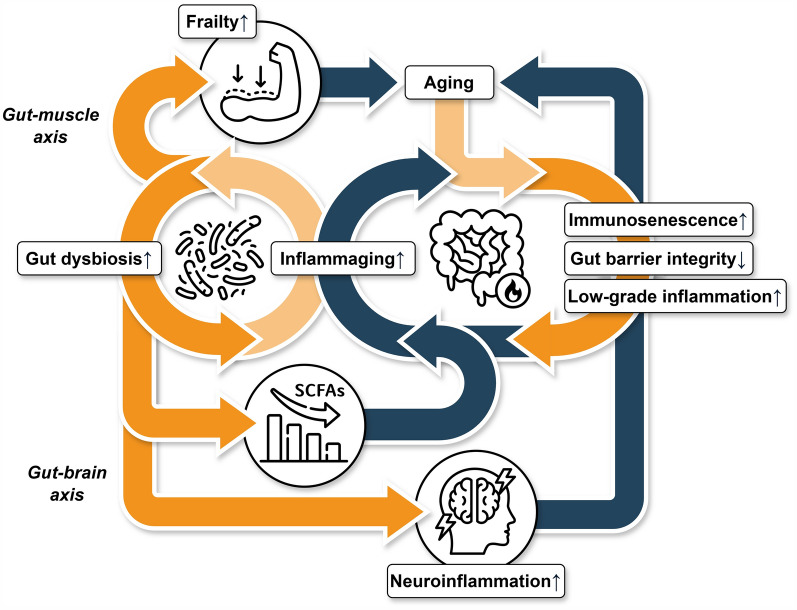
The gut-brain axis is an important pathway by which the gut microbiome mediates aging since its metabolites, including SCFAs, neurotransmitters, and their precursors, are involved in regulating brain functions and cognition [145]. As a result of inflammaging, disruption of the intestinal barrier and gut dysbiosis increase pro-inflammatory components and metabolites that enter circulation, eliciting neuroinflammation that eventually leads to brain aging associated with neurodegenerative diseases [146]. For example, microbial metabolites derived from dietary tryptophan have been shown to act as ligands that trigger gene expression in microglia cells, reducing the central nervous system inflammation [147]. In parallel, SCFAs released by the gut microbiome control microglial maturation and function [148]. Among these SCFAs, acetate was later identified as the major molecule responsible for microglial homeostasis [149]. Additionally, propionate enhances immune cell balance, leading to improvements in immunological and neurodegenerative parameters in patients with multiple sclerosis [150]. Supplementation with a mix of acetate and propionate was found to restore cognitive and social behavioral deficits in mice induced by maternal obesity [151]. These studies suggest that gut dysbiosis may accelerate neuroinflammation by altering gut microbiome metabolism along the aging process.
The physical decline and loss of body resilience during aging are linked to frailty, a clinical syndrome characterized by increased vulnerability to stressors and negative health outcomes. Frailty has been associated with age-related gut dysbiosis, exemplified by losing diversity and beneficial bacteria like Faecalibacterium prausnitzii, and acquiring disease-associated species like Eubacterium dolichum and Eggerthella lenta [157]. A meta-analysis similarly revealed more pathogenic and fewer commensal species in frail compared to non-frail older adults [158]. Despite these observations illuminating an association, the mechanisms connecting the gut microbiome to frailty are relatively unexplored.
It is known that the gut microbiome influences skeletal muscle mass and function [159], forming the gut-muscle axis, which is intricately connected through various microbial metabolites, such as SCFAs [160]. A reduced level of fecal butyrate has been associated with low muscle mass in elderly Taiwanese individuals [161] and a longitudinal analysis revealed positive associations between SCFA intake and muscle strength among community-dwelling older Japanese adults [162]. The beneficial effects of SCFAs have been also recently linked to the activation of mTOR signaling pathways, which improve mitochondrial biogenesis and protein synthesis of atrophic muscle [163]. Thus, gut dysbiosis induced by inflammaging contributes to frailty by impairing muscle functionality. Since there is still a lack of effective treatment for frailty, the gut microbiome may present a promising avenue for intervention, potentially promoting healthy aging by enhancing muscle functionality to mitigate frailty.

Mechanistical contributions of the gut microbiome to the aging process. As people age, immunosenescence occurs with a concomitant decline in gut barrier integrity and an onset of low-grade inflammation, leading to inflammaging, which contributes to gut dysbiosis then a decrease in SCFA production, further exacerbating inflammaging. The dysbiotic gut microbiome accelerates the aging process, contributing to muscle loss via the gut-muscle axis, leading to frailty, and inducing neuroinflammation through the gut-brain axis, resulting in cognitive decline. The icons were sourced from Flaticon.com, with credit to the following icon artists: Culmbio, C-mo Box, Freepik, Hat Tech, and Dewi Sari
| Aspect | Beneficial roles of SCFAs | Detrimental roles of SCFAs |
|---|---|---|
| Neuroinflammation and immunity | ●Regulate microglial maturation and function (majorly acetate) [,] [148] [149] ●Improve immune balance in patients with multiple sclerosis (propionate) [] [150] | ●Induce neuroinflammation in PD models [] [154] |
| Cognitive and behavioral effects | ●Restore cognitive and social behavior in offspring of obese mice (acetate and propionate) [] [151] | ●Associate with worsened motor performance in PD models [] [154] |
| Neurodegenerative pathology | ●Support microglial homeostasis (acetate) [] [149] | ●Increase gliosis and tau pathology in AD models [] [152] ●Exacerbate amyloid-β plaque deposition in AD models [] [153] ●Promote α-synuclein aggregation in PD models [] [154] |
| Clinical correlation | ●Provide potential benefits under balanced immune and microbial states | ●Elevate in plasma of PD patients and correlate positively with disease severity [,] [155] [156] |
The gut microbiome emerges as a modifiable therapeutic target for healthy aging
Dietary restriction has recently been found to significantly increase lifespan in mice, with a 40% caloric restriction resulting in the longest extension [172]. While much attention has been given to the relationship between caloric intake and body mass or obesity, there exists strong evidence to support that caloric restriction also imparts a positive influence on the gut microbiome. Interestingly, studies have found that different dietary restriction regimens (i.e., fasting and caloric restriction) induced similar modifications in the gut microbiome composition and metabolic potential in mice [173]. These microbiome changes were correlated with physical parameters and health phenotypes in aged mice but did not directly contribute to longevity, clearly suggesting that the benefits of microbial modulation on lifespan are mediated through improvements in physical conditions. Evidence in humans also supports the beneficial effects of caloric restriction on the gut microbiome, as demonstrated by a one-year intervention in obese adolescents that increased the abundance of butyrate-producing bacteria [174]. A three-month trial for the Mediterranean diet reduced body weight and fat mass, together with losing obesity-associated taxa in obese adults [175]. However, the effects of caloric restriction in the elderly remain to be explored. Although there are potential benefits, such as slow cellular aging, caloric restriction in the elderly also increases mortality from reduced body mass index and impaired muscle mass and strength. Other complementary strategies (e.g., resistance exercise and an increased protein intake) are also important during caloric restriction to balance its benefits and risks and optimize the health gains [176].
Regular exercise is widely known as being beneficial to human health. During exercise, the contraction of skeletal muscles releases myokines [177], which sustain the hallmarks of health by facilitating muscle-organ crosstalk [178], including interactions with the gut. Exercise-induced alterations in the gut microbiome have demonstrated positive effects on human health [179], and exercise has therefore been recommended as a therapeutic intervention for disease prevention [180]. In mouse models, exercise at different intensity levels enhanced the growth of beneficial gut bacteria [181] and exercise in combination with a shift to a healthy diet was found to effectively reshape the gut microbiome, providing metabolic benefits to recipient mice following microbiome transplantation [182].
In humans, studies looking at the gut microbiome of professional athletes revealed higher alpha diversity, lower inflammatory markers, a greater abundance of Akkermansia [183], and elevated fecal SCFA levels [184] compared to sedentary controls. Among non-athlete adults, although increased alpha diversity was not observed, Akkermansia was consistently responsive to moderate physical activity in premenopausal women [185] and endurance exercise in overweight women [186]. Recently, the gut microbiome from endurance athletes was found to improve insulin sensitivity when transplanted into mice [187]. In older adults, a six-month exercise intervention increased the abundance of gut health-associated taxa (e.g., Bifidobacterium, Oscillospira, and Anaerostipes) and raised fecal butyrate levels compared to their sedentary baseline [188]. Furthermore, daily or regular exercise in the elderly (over 60 years of age) was associated with a gut microbiome configuration similar to that of younger adults (aged 18 − 60 years old) and increased alpha diversity in overweight elderly individuals compared to those who rarely or never exercised [189]. Of note, the heat and ischemia induced by intense exercise can lead to the thinning of gut mucus [190] and increased microbial contact to the gut mucosal immune system [179], consistent with findings that prolonged, high-intensity exercise causes temporary gut dysfunction [191] and increased gut permeability and inflammation [192] in healthy adults. Although these detrimental effects are transient and generally benign, in the absence of evidence proving the health benefits of high-intensity exercise for the elderly, regular low- to medium-intensity exercise or endurance training is recommended as a safer approach to improving the gut microbiome and healthy aging.
Probiotic supplementation has arisen as an additional intervention option for healthy aging by modulating the gut microbiome. Several clinical trials have reported benefits in the elderly, but the overall evidence remains modest [193, 194]. Regarding age-related conditions, supplementing probiotics demonstrated improved gastrointestinal symptoms from Parkinson's disease [195], enhanced muscle mass and function in participants with sarcopenia [196], reduced infection in care home residents, and accelerated recovery from fractures [197], but limited improvements in inflammation markers [198] and cognition [199]. For clinical trials targeting immune function, prebiotics and/or probiotic supplementation demonstrated high safety in the elderly, except in severely ill patients with pancreatitis, and two-thirds of these trials reported improved immune function in participants [141]. If effective probiotic supplementation is defined as successful colonization (or retention) in the gut, it depends highly on the host and gut microbiome features; only 60% of healthy individuals were permissive to probiotics during supplementation, and there was no significant difference from the placebo group after supplementation ceased [200]. Recently, a cohousing study in mice found that the elderly gut microbiomes were less modifiable compared to young gut microbiomes, with young mice acquiring gut microbiomes similar to that of the elderly group, but not vice versa [173]. Although the plasticity of the elderly gut microbiome remains unclear, it is likely to be more resistant to adopting new microbes than that of younger adults. Therefore, probiotic-based interventions in the elderly are expected to have limited efficacy in achieving colonization unless accompanied by prolonged supplementation, which may mimic the effects of consistent dietary practices.
Beyond these conventional approaches, the use of prebiotics (i.e., food for probiotics) and postbiotics (i.e., beneficial microbial-derived metabolites or inactivated microbes [201]) is gaining recognition for their potential to modulate the gut microbiome and promote healthy aging. In aged mice, supplementation with the prebiotic galacto-oligosaccharide restored gut homeostasis by strengthening intestinal epithelial integrity and promoting mucus production [202]. Resistant starches derived from beans and pulses positively modulated the gut microbiome composition, reinforced intestinal epithelial barrier integrity, and attenuated inflammation in the aging mouse model [203], and in particular lentils and chickpeas showed more favorable outcomes in postprandial glycemic control. Incorporating the soluble fiber inulin into a high-fat diet also improved gut and metabolic health in aged mice humanized with the pooled microbiome from healthy older adults, as indicated by increases in beneficial bacterial taxa and metabolites linked to a healthy metabolic state [204]. Furthermore, a clinical trial in elderly women demonstrated that consuming a synbiotic drink (probiotics + dietary fibers) resulted in improvements in fasting blood glucose, creatinine, and alkaline phosphatase levels during the intervention period [205], indicative of enhanced glycemic control, kidney function, and systemic metabolic health.
Studies exploring the efficacy of postbiotics have identified a range of mechanisms through which these compounds promote healthy aging. In elderly mice, heat-killed Lactobacillus paracasei D3-5 was shown to improve gut health, as well as physical and cognitive functions. Further investigation revealed that lipoteichoic acid, a cell wall component of the bacterium, was the key effector sufficient to reduce gut inflammation via NF-κB inhibition and enhance gut barrier integrity by promoting mucin production through the TLR2–p38 MAPK signaling pathway [206]. Commensal-derived indole-3-carboxaldehyde was shown to support gut homeostasis by promoting intestinal cell turnover and goblet cell differentiation via the aryl hydrocarbon receptor and IL-10 axis [207], which are critical for maintaining the gut barrier and immune balance in an aging intestine. Similarly, urolithin B, another microbial metabolite, was found to reduce inflammation by enhancing anti-oxidation capability and improve barrier function through the HMGB1–TLR4–NF-κB pathway in aging mice [208]. More recently, the heat-killed Bifidobacterium longum and Lactobacillus acidophilus, when combined with exercise, attenuated NF-kB-associated inflammation and improved mitochondrial homeostasis and Alzheimer's pathology in the transgenic AD mouse model [209]. Together, these preclinical studies provide a strong foundation describing prebiotics and postbiotics as promising microbiome-targeted interventions to support healthy aging by restoring gut homeostasis, strengthening barrier function, reducing inflammation, and lowering age-associated neurodegeneration. Unlike live probiotics, these represent potentially safer, more stable, and mechanism-driven strategies.
Finally, bacteriophage (or phage) therapy—using viruses that infect bacteria to treat infections—is gaining renewed attention due to the growing crisis of antibiotic resistance and is emerging as another microbiome-based therapeutic approach [210, 211]. The high specificity of phages to their bacterial host allows them to be used to target and eliminate specific bacteria without disrupting the entire microbiome. Leveraging this host specificity, phages targeting cytolytic Enterococcus faecalis decreased liver cytolysin and abolished ethanol-induced liver disease in humanized mice colonized with the microbiome from patients with alcoholic hepatitis [212]. Other preclinical studies have shown that phage therapy effectively attenuates disease severity and suppresses corresponding Klebsiella pneumoniae strains associated with inflammatory bowel disease [213], primary sclerosing cholangitis [214], and non-alcoholic fatty liver disease [215], while also demonstrating safety in a human trial [213]. However, the limited efficacy of phage therapy targeting E. coli has been reported in clinical trials in individuals with self-reported gastrointestinal distress [216, 217], suggesting potential limitations in its applicability across different bacterial targets and disease conditions. However, phage therapy presents a uniquely targeted strategy to alter the gut microbiome, promoting healthy aging through removing harmful species associated with chronic inflammation and age-related diseases. Future applications may include personalized phage cocktails to restore eubiosis and promote gut health in older adults. More clinical validations are, of course, required to translate these findings into preventative practices.

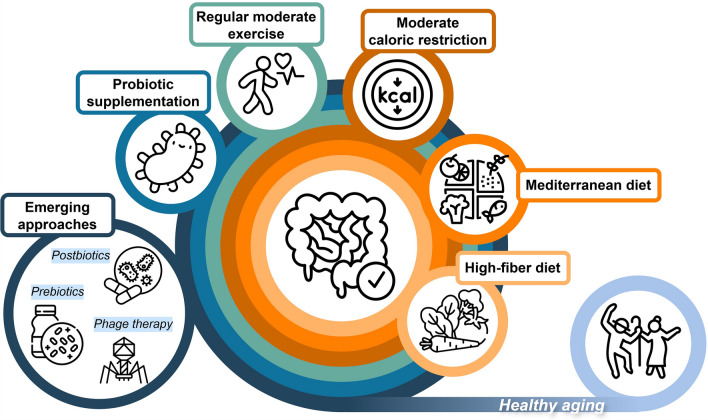
Potential interventions to modify the gut microbiome for healthy aging. The gut microbiome is largely modulated by dietary patterns, with high-fiber and Mediterranean diets showing benefits in promoting healthy aging. Moderate caloric restriction should be practiced cautiously due to the risk of muscle loss. Regular exercise with moderate intensity is also recommended. Probiotics supplementation offers beneficial effects that vary depending on heterogenous trial designs. Lastly, emerging approaches, including prebiotic and postbiotic supplementation and phage therapy, require further clinical trials to validate their safety and efficacy. The icons were sourced from Flaticon.com, with credit to the following icon artists: Culmbio, Icongeek26, Becris, Freepik, Iconjam, bsd, spacepixel, and anilofex
Conclusion
The gut microbiome is a salient contributor to human health, with considerable evidence also supporting it as a marker and mediator of healthy aging. The gut microbiome undergoes compositional and functional changes throughout the human lifespan, showing life stage-dependent characteristics, such as a milk-oriented composition in infancy, a solid food- and hormone-driven diversification during puberty, a steady and complex homeostasis in adulthood, and finally a reconfigured composition with increased uniqueness in the elderly, which is associated with healthy aging. Studies in model organisms have demonstrated that the gut microbiome affects aging and longevity through metabolic activities that modulate host immunity. This modulation is also present in the centenarian gut microbiomes, with unique characteristics that plausibly contribute to longevity, including increased microbial and metabolic diversity, enriched beneficial taxa like Akkermansia and Christensenellaceae, and enhanced gut homeostasis.
Mechanistically, the gut microbiome orchestrates the aging process through various pathways. These pathways change with age, with age-related gut dysbiosis reciprocally promoting inflammaging through the decreased production of anti-inflammatory SCFAs and declined gut barrier integrity. The worsened inflammation amplifies neuroinflammatory responses, triggering cognitive decline through the gut-brain axis. Furthermore, gut dysbiosis also negatively affect muscle mass and function, which in turn exacerbate frailty in the elderly.
Targeting the gut microbiome to promote health (and healthy aging) is not a new concept, but has yet to receive enough attention to clearly identify relationships and pathways within the human body. However, the results clearly indicate that diets high in fiber or those following a Mediterranean style are effective in remodeling gut microbiomes that are associated with improved health in older adults. While caloric restriction shows potential benefits in extending lifespan, the practice in the elderly should also consider the risk of frailty caused by muscle loss before being implemented. Regular exercise benefits human health by enhancing muscle-organ crosstalk and improving the gut microbiome across all ages; however, in older adults, regular moderate exercise is recommended to avoid the temporary disruptions to gut homeostasis caused by high-intensity exercise while supporting the optimization of the gut microbiome. Given the heterogeneity in probiotic strains, dosages, durations, symptoms, and endpoints of clinical trials, the beneficial effects of probiotic supplementation in the elderly remain context-dependent. One potential constraint in the host contributing to this variability is the reduced plasticity of the aged gut microbiome, suggesting that sustained intervention in the elderly may be necessary to achieve meaningful outcomes. Lastly, prebiotics, postbiotics, and phage therapy are rising microbiome-targeted approaches to support gut health in aging, with most findings currently based on preclinical models; thus, further clinical trials are needed to validate their safety and efficacy for precision interventions in older populations.
Some intriguing questions remain open for investigation. First, the human aging process is composed of nonlinear waves in molecular changes, with approximately 44 and 60 years of age being the two critical periods characterized by the highest number of dysregulated molecules and microbes [218]. These two chronological ages are therefore of research interest, warranting further investigation into strategies based on gut microbiome modulation that could mitigate dysregulation to slow down or, at the very least, alleviate the aging process and reduce disease risk in later life. Second, some microbially derived metabolites, such as phenylacetylglutamine [219], accelerate host cellular senescence. Identifying gut microbes driving these metabolic processes and targeting them through dietary interventions to reduce the substrates fueling these pathways could provide internal benefits to the aging process. Third, while SCFAs produced by gut bacteria have neuroprotective effects, their detrimental properties have also been observed in neurodegenerative models. Therefore, SCFAs may support brain health under healthy or pre-disease conditions but accelerate disease progression if neurodegeneration is underway. The dualistic nature of SCFAs in aging-related neurodegenerative diseases not only exemplifies the saying "prevention is better than cure," but also emphasizes the need to further investigate the timing and context of SCFA-mediated interventions for healthy aging. Finally, considering the trending interest in live biotherapeutic products [220], identifying novel strains associated with long-lived populations (e.g., centenarians) may expand the conventional list of probiotics, such as Bifidobacterium and Lactobacillus species, thereby enabling more targeted probiotic interventions to promote healthy aging and ultimately longevity.
The relationships between alterations of the gut microbiome and the aging process exhibit a classic "chicken-and-egg" problem, where the gut microbiome and aging may determine the other in a complicated manner and thus make it challenging to establish causal roles. However, if they are inherently and continuously interwoven and constantly affecting each other, understanding changes in the aging-related gut microbiome provides a framework for modifying the aging process itself. By modulating the gut microbiome, we may be able to adjust the pace or trajectory of aging, representing a promising area of inquiry.
 Gut-Brain Axis