
What this is
- This research investigates () and biomarkers in patients with post-COVID-19 syndrome (PCS) and Myalgic Encephalomyelitis/Chronic Fatigue Syndrome (ME/CFS).
- The study includes 30 PCS patients and 15 healthy controls, assessing peripheral endothelial function and several biomarkers.
- Findings indicate a subset of PCS patients exhibit and altered biomarker levels compared to healthy individuals.
Essence
- A subset of post-COVID syndrome patients shows and altered biomarker profiles, suggesting distinct pathomechanisms.
Key takeaways
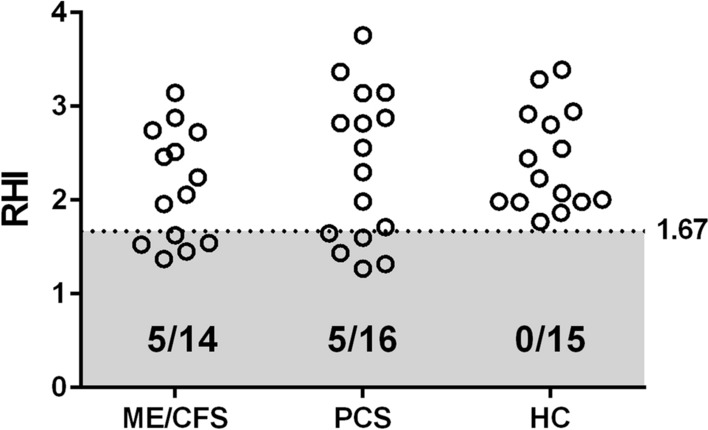
- was identified in 5 of 14 ME/CFS patients and 5 of 16 PCS patients, but none of the healthy controls showed this finding.
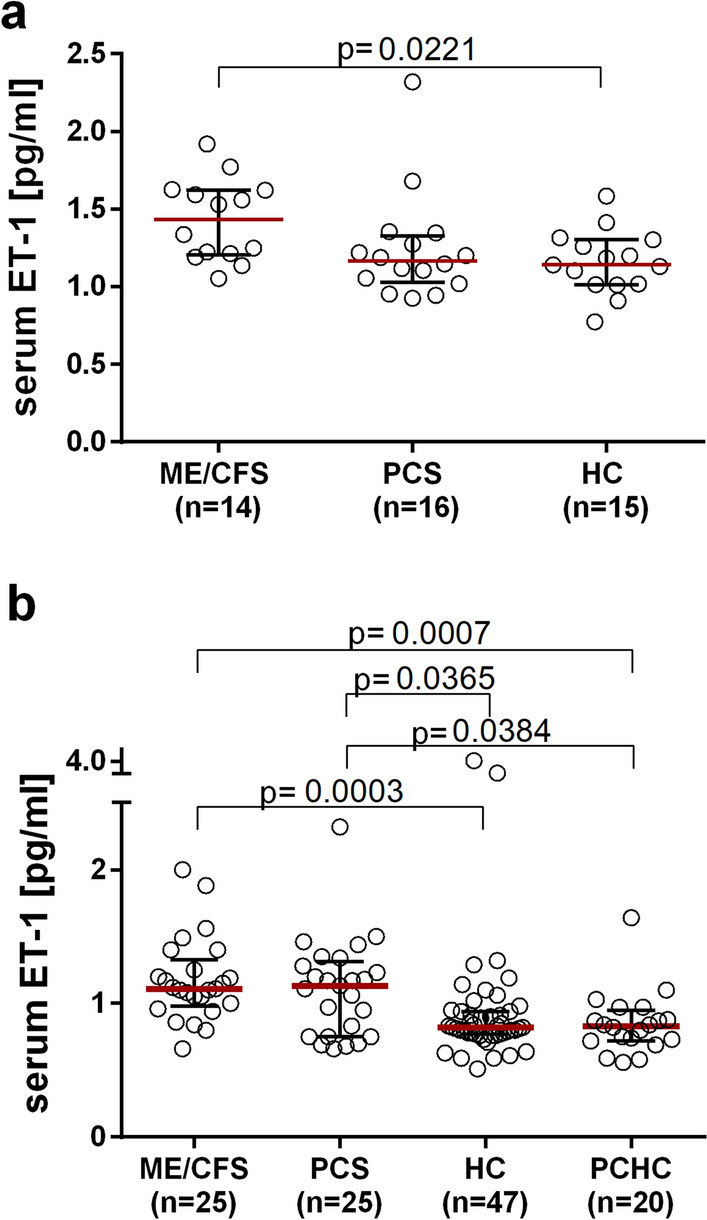
- Elevated endothelin-1 (ET-1) levels were observed in both ME/CFS and PCS patients compared to healthy controls, indicating potential vascular issues.
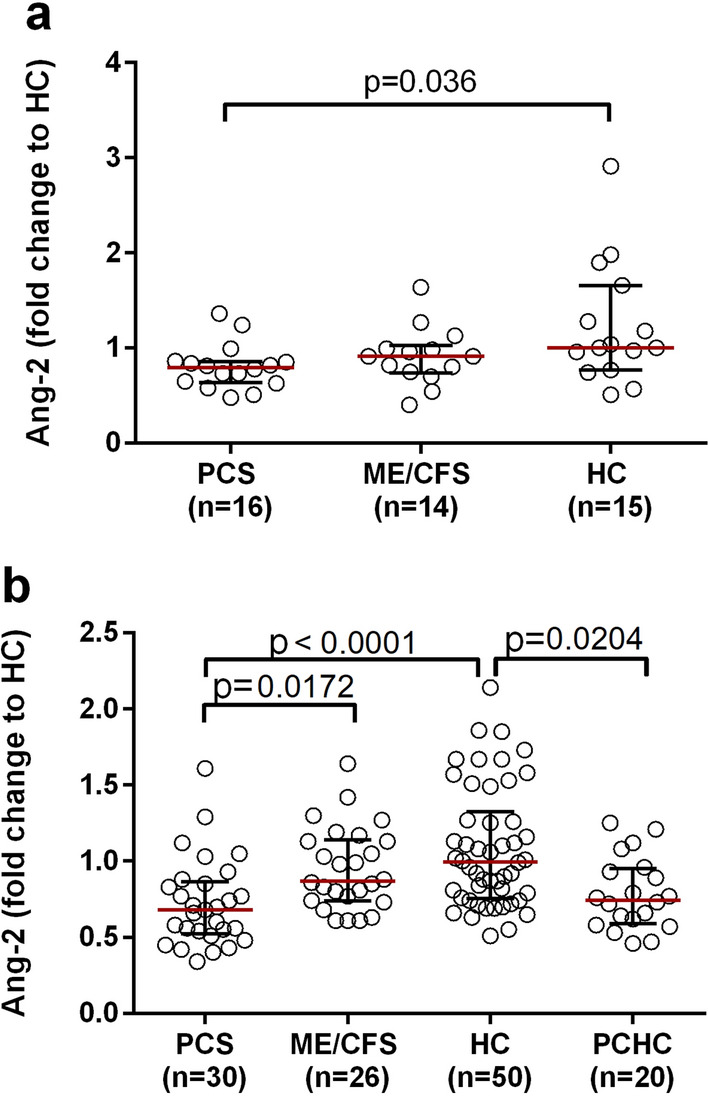
- Lower serum angiopoietin-2 (Ang-2) levels were found in PCS patients compared to healthy controls, suggesting altered endothelial homeostasis.
Caveats
- The study lacks a reconvalescent cohort for assessment, limiting conclusions about the association of diminished with PCS symptoms.
- Findings are based on a relatively small sample size, which may affect the generalizability of the results.
Definitions
- Endothelial dysfunction (ED): Impaired function of the endothelium, characterized by reduced vasodilator bioavailability and increased vasoconstrictors.
- Reactive hyperemia index (RHI): A measure of endothelial function derived from blood flow changes following temporary occlusion of an artery.
Simplified
Background
Persistent symptoms for more than six months following mild to moderate coronavirus disease-2019 (COVID-19) are reported in 10–30% of patients [1 –3]. The WHO recently defined the post-COVID-19 condition as a state persisting at least three months from the onset of COVID-19 with common symptoms such as fatigue, post-exertional malaise and cognitive dysfunction impacting everyday functioning.
In our observational longitudinal PA-COVID Fatigue study of PCS patients with persistent moderate to severe fatigue and exertion intolerance for more than six months after mild to moderate COVID-19, we found that approximately 50% of patients fulfilled the diagnostic criteria of Myalgic Encephalomyelitis/Chronic Fatigue Syndrome (ME/CFS), but many PCS patients not fulfilling these criteria were equally impaired [4]. ME/CFS is a complex disease frequently triggered by an infection with Epstein-Barr virus (EBV) or parvovirus B19, but several other viral and nonviral triggers have been described [5 –7]. Postexertional malaise (PEM), which describes a disproportional aggravation of symptoms typically lasting for more than 14 h up to several days following a mild mental or physical exertion is a key symptom of ME/CFS [8].
The pathomechanism of ME/CFS is not well understood, but there is ample evidence for impaired perfusion and endothelial dysfunction (ED) [7, 9 –12]. ED is characterised by a diminished bioavailability of vasodilators, while on the other hand, endothelium-derived vasoconstrictors are increased, leading to impaired endothelium-dependent vasodilation [13, 14]. In the context of infection with SARS-CoV-2, the potential role of ED is of particular interest, as the virus can directly infect the endothelium by engaging the Angiotensin-Converting Enzyme (ACE) 2 receptor [15]. In acute COVID-19, there is evidence for vascular endothelial cell infection, endotheliitis and microthrombosis across multiple vascularized tissues [16, 17].
In this study, we aimed to characterise peripheral endothelial function using postocclusive reactive hyperaemia peripheral arterial tonometry (RH-PAT) in PCS patients following mild to moderate COVID-19. In addition, we analysed several endothelial biomarkers including Endothelin-1 (ET-1), Angiopoietin-2 (Ang-2) and Endocan (ESM-1) which play an important role in inflammatory and noninflammatory diseases associated with ED [18 –22]. Furthermore, we assessed Interleukin 8 (IL-8), Angiotensin-Converting Enzyme (ACE) and ACE2. IL-8 is secreted not only by monocytes/macrophages but also by endothelial cells and vascular smooth muscle cells. This chemokine plays an important role in (endothelial) inflammation and regulation of leukocyte rolling as well as vascular permeability [23]. ACE and ACE2 are crucial actors in the maintenance of blood pressure and vascular homeostasis [2]. ACE converts angiotensin I into the vasoconstrictive angiotensin II, which activates angiotensin II receptors. Counterregulatory ACE2 cleaves angiotensin I into angiotensin 1–9 and metabolises angiotensin II to angiotensin 1–7. Peptides generated by ACE2 are ligands of the receptor Mas, which triggers protective, vasodilative signalling [24].
Methods
Participants
| (A) PAT study group | ME/CFS( = 14)n | PCS( = 16)n | HC( = 15)n | value*p |
|---|---|---|---|---|
| Age, median (range) [years] | 44.5 (24–59) | 42 (27–66) | 43 (23–58) | 0.9491 |
| Female sex,(%)n | 12 (86) | 15 (94) | 13 (87) | 0.7539 |
| Months after COVID infection, median (range) | 9 (8–11) | 9 (4–12) | NA | 0.3602 |
| Heart rate, median (range) [bpm] | 68.5 (51–78) | 69.5 (53–89) | 69 (46–84) | 0.7381 |
| Systolic blood pressure, median (range) [mmHg] | 120 (99–148) | 124.5 (100–169) | 126 (105–147) | 0.6693 |
| Diastolic blood pressure, median (range) [mmHg] | 88.5 (64–106) | 87.5 (64–114) | 91 (77–116) | 0.7095 |
| Body Mass Index (BMI), median (range) | 23.78 (20.24–31.83 | 23.64 (19.36–32.18) | NA | 0.6116 |
| PEM score median (range) | 33.5 (17–46) | 22 (16–34) | NA | 0.0065 |
| Chalder Fatigue Scale median (range) | 26.5 (20–33) | 25.5 (15–32) | NA | 0.4509 |
| Bell Disability Scale median (range) | 40 (30–80) | 50 (40–80) | NA | 0.3123 |
Assessment of endothelial function
Peripheral endothelial function was assessed using postocclusive reactive hyperaemia peripheral arterial tonometry (RH-PAT) (endoPAT2000 device; Itamar Medical Ltd.; Caesarea, Israel) as previously described [10]. Endothelium-mediated changes in peripheral arterial tone were recorded using plethysmographic probes on the index finger of each hand during reactive hyperaemia. Hyperaemia was induced by occlusion of the left brachial artery over 5 minutes using an inflatable blood pressure cuff. The RHI was calculated from the change in the pulse wave amplitude (PWA) relative to baseline in the occluded arm and was corrected for corresponding changes in PWA relative to baseline in the contra-lateral, nonoccluded arm in order to minimise the influence of nonendothelial dependent systemic effects, using the equation: RHI = (A/B) ÷ (C/D). Based on previous studies and the manufacturer's analytical instructions, ED was defined as RHI ≤ 1.67 [27 –30]. The automatic batch analysis of individual measurements was performed using the manufacturer's analysis version 3.1.2 (2.0).
Measurements of peripheral endothelial function were performed under standardised conditions between 8:30 am and 12:30 pm after 15 min of supine rest in a quiet, dimly lit, air-conditioned room ensuring temperatures of 21–24 °C. Blood pressure was measured using a digital blood pressure monitor on the right upper arm in order to provide orientation for the individual supra-systolic pressure of 60 mmHg that was necessary for sufficient occlusion in the later procedure. The average heart rate was determined during the five-minute preocclusion period by the endoPAT2000 device. Venous blood samples were collected 10 min following the assessment of endothelial function from the participants' control arm where no occlusion was performed.
Assessment of biomarkers
The serum ESM-1 concentration was measured by ELISA kits purchased from Aviscera Bioscience, Inc., serum Ang-2 was measured by Quantikine Human Angiopoietin-2 Immunoassay kits purchased from R&D Systems, Inc., and the serum ET-1 concentration was determined by QuantiGlo™ ELISA kits purchased from R&D Systems, Inc., according to the manufacturers' protocols. ACE and IL-8 (post erythrocyte lysis [31]) were determined at the Charité diagnostics laboratory (Labor Berlin GmbH, Berlin, Germany). Serum ACE2 levels were determined by ELISA kits purchased from R&D Systems.
Biomarkers were assessed in the RH-PAT study participants (Table 1A). In addition, the biomarker analysis was validated in a second cohort including post-COVID ME/CFS, PCS, HC and PCHC subjects (Table 1B).
Assessment of symptom severity
As part of their initial consultation at the Institute of Medical Immunology at Charité Berlin, all patients completed the modified Symptom Questionnaire for PEM (DSQ-PEM) [26], the Chalder Fatigue Scale [32] and the Bell Disability Scale [33]. The DSQ-PEM uses five different 5-point Likert scales each to assess the frequency or severity of PEM symptoms and one 7-point Likert scale to assess the duration of PEM [26] with a resulting maximum score of 46. The Chalder Fatigue Scale uses eleven different 4-point Likert scales to measure the severity of fatigue [32] with a resulting maximum score of 33. The Bell Disability Scale comprises eleven statements regarding the level of physical function. The scale is scored from 0 (very severe, bedridden constantly) – 100 (healthy) in steps of ten [33].
Statistical analysis
For comparative analysis, Kruskal–Wallis test with Dunn´s post-hoc multiple comparisons or the Mann–Whitney-U rank-sum-test for quantitative parameters were used. The ED distribution was analysed in a 2 × 2 contingency table and tested for significance by Fisher´s exact test. Correlation analysis was performed using the nonparametric Spearman coefficient. Statistical tests were performed using GraphPad Prism software (Version 6.07). A two-tailed p value ≤ 0.05 was considered statistically significant.
Results
Study population
The characteristics of the participants in the PAT study group are provided in Table 1A. Fatigue assessed by the Chalder Fatigue Scale and severity of the patient's disability assessed by the Bell Disability Scale were comparable between the two patient groups. The PEM score was higher in ME/CFS patients (median of 33.5) than in PCS patients (median 22.0). The patient groups did not differ in heart rate, blood pressure or BMI. The median time interval since COVID-19 infection was nine months in both patient groups. Endothelial biomarkers were validated in a second study cohort. The characteristics of the validation cohort are provided in Table 1B. Here, the PEM score again was higher in ME/CFS patients (median of 36) than in PCS patients (median 24.5). Fatigue assessed by the Chalder Fatigue Scale was more severe in ME/CFS patients (median of 29) than in PCS patients (median of 24), and physical function assessed by the Bell Disability Scale was worse in ME/CFS patients (median of 30) than in PCS patients (median of 50). The median time interval since COVID-19 infection was eight months in patients and six months in PCHCs.
Evidence for peripheral ED in patients
![Endothelial dysfunction (ED) assessed by RH-PAT. ED was found in five of 14 ME/CFS patients and in five of 16 PCS patients but not in healthy controls (HCs). The RHI value for each patient is plotted. The dotted line indicates the RHI cut-off value of ≤ 1.67 defining ED. [RHI = reactive hyperaemia index; RH-PAT = reactive hyperaemia peripheral arterial tonometry]](https://europepmc.org/articles/PMC8938726/bin/12967_2022_3346_Fig1_HTML.jpg "Click to view full size")
Endothelial dysfunction (ED) assessed by RH-PAT. ED was found in five of 14 ME/CFS patients and in five of 16 PCS patients but not in healthy controls (HCs). The RHI value for each patient is plotted. The dotted line indicates the RHI cut-off value of ≤ 1.67 defining ED. [RHI = reactive hyperaemia index; RH-PAT = reactive hyperaemia peripheral arterial tonometry]
Paradoxical associations of clinical parameters with the RHI

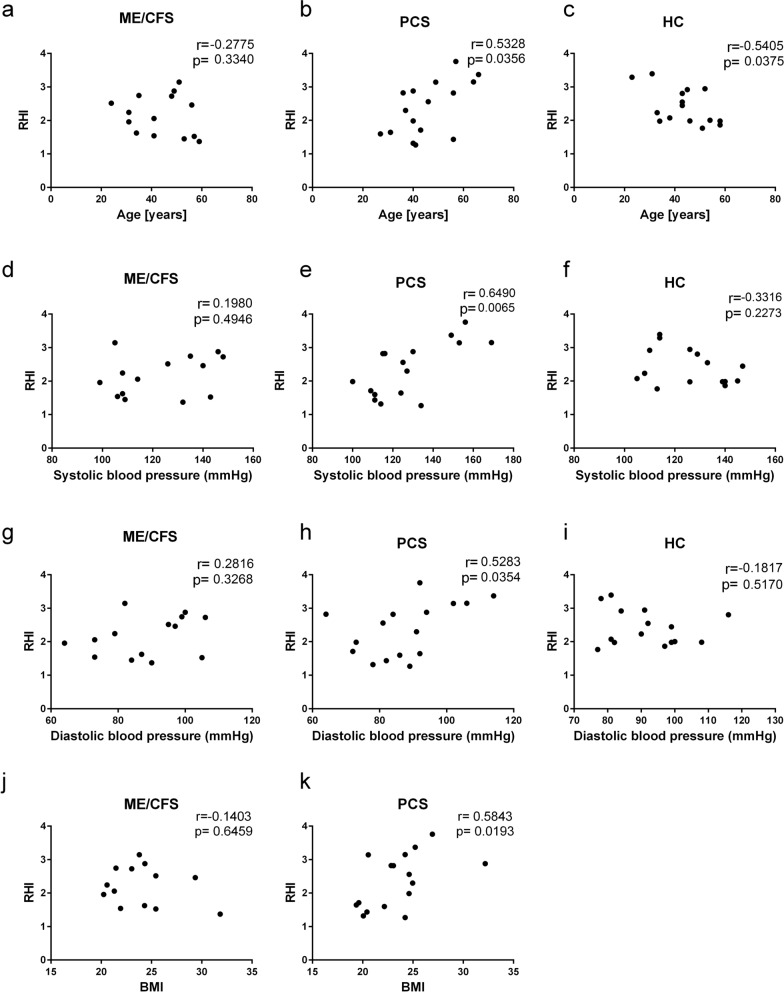
Correlation of age, blood pressure and BMI with the reactive hyperaemia index (RHI). Correlations of the RHI with age (), systolic blood pressure (), diastolic blood pressure () and BMI (,) for ME/CFS patients (n = 14;,,,), PCS patients (n = 16;,,,) and healthy controls (HC) (n = 15;,,). Correlation analysis was performed using the nonparametric Spearman coefficient. A two-tailed p value ≤ 0.05 was considered statistically significant a–c d–f g–i j k a d g j b e h k c f i
Alterations in endothelial biomarkers in post-COVID cohorts
Serum ACE and IL-8 (measured following erythrocyte lysis) were determined in the diagnostic laboratory in patients and soluble ACE2 was analysed by ELISA (Table 2). The median levels of ACE did not differ between the two cohorts, but were below the normal reference value in five of the 14 ME/CFS patients and in two of the 16 PCS patients (< 20 U/l) as well as in eight of the 23 ME/CFS patients and five of the 30 PCS patients of the validation cohort. ACE2 levels did not differ between the two patient cohorts. The median IL-8 concentrations did not differ between patient cohorts but were above the normal reference value (> 150 pg/ml) in 12 of the 16 PCS patients and seven of the 14 ME/CFS patients in the PAT cohort as well as in 17 of the 25 ME/CFS patients and 15 of the 29 PCS patients in the validation cohort.

Serum ET-1 concentrations. The serum ET-1 concentrations were measured in the PAT study cohort () and in a second validation cohort (). The median (IQR) serum ET-1 concentration is shown. For statistical analysis, the Kruskal–Wallis with Dunn´s post-hoc multiple comparisons test was used. P values ≤ 0.05 were considered statistically significant. Endothelin-1; interquartile range; reactive hyperaemia peripheral arterial tonometry a b ET-1 IQR RH-PAT
![Serum Ang-2 levels. Serum Ang-2 levels were measured in the PAT study cohort () and in a second validation cohort (). Levels are depicted as the median (IQR) of the fold change (FC) compared to that in HCs, as the standard was 1.5-fold higher in the ELISA of thevalidation cohort compared to the PAT study cohort. For statistical analysis, the Kruskal–Wallis with Dunn´s post-hoc multiple comparisons test was used. P values ≤ 0.05 were considered statistically significant. [Ang-2 = Angiopoietin-2; IQR = interquartile range; RH-PAT = reactive hyperaemia peripheral arterial tonometry] a b nd](https://europepmc.org/articles/PMC8938726/bin/12967_2022_3346_Fig4_HTML.jpg "Click to view full size")
Serum Ang-2 levels. Serum Ang-2 levels were measured in the PAT study cohort () and in a second validation cohort (). Levels are depicted as the median (IQR) of the fold change (FC) compared to that in HCs, as the standard was 1.5-fold higher in the ELISA of thevalidation cohort compared to the PAT study cohort. For statistical analysis, the Kruskal–Wallis with Dunn´s post-hoc multiple comparisons test was used. P values ≤ 0.05 were considered statistically significant. [Ang-2 = Angiopoietin-2; IQR = interquartile range; RH-PAT = reactive hyperaemia peripheral arterial tonometry] a b nd
| (A) PAT study group | ME/CFS | PCS | HC | value*p | |||
|---|---|---|---|---|---|---|---|
| Median (IQR) | n | Median (IQR) | n | Median (IQR) | n | ||
| Serum ET-1 (pg/ml) | 1.434 (1.208–1.622) | 14 | 1.168 (1.019–1.328) | 16 | 1.141 (1.014–1.302) | 15 | p = 0.08041p = 0.02212p > 0.99993 |
| Serum Esm-1 (ng/ml) | 2.013 (1.199–4.890) | 14 | 2.013 (1.366–6.223) | 16 | 1.782 (0.984–3.399) | 15 | p > 0.99991p > 0.99992p > 0.99993 |
| Serum Ang-2 (pg/ml) | 1866 (1502–2108) | 14 | 1621 (1283–1762) | 16 | 2058 (1566–3459) | 15 | p = 0.93411p = 0.47152p = 0.03793 |
| Serum ACE (U/l) | 25.20 (17.70–32.35) | 14 | 27.50 (23.65–32.65) | 16 | Normal range**: 20–70 | p = 0.40431 | |
| Serum ACE2 (U/ml) | 5.099 (4.192–6.162) | 14 | 4.476 (3.946–6.476) | 16 | 4.971 (4.23–6.792) | 15 | p > 0.99991p > 0.99992p = 0.57153 |
| IL-8 post-erythrocyte lysis (pg/ml) | 139.9 (116.7–197.6) | 14 | 188.2 (150.2–217.0) | 16 | Normal range**: < 150 | p = 0.05921 | |
| > 150 | 7 | > 150 | 12 | ||||
| RHI | ||
|---|---|---|
| r, p value* | n | |
| ME/CFS | ||
| ET-1 (pg/ml) | − 0.108, p = 0.716 | 14 |
| Ang-2 (pg/ml) | − 0.174, p = 0.553 | 14 |
| ACE activity (U/l) | − 0.083, p = 0.788 | 13 |
| ACE2 (U/ml) | 0.503, p = 0.069 | 14 |
| IL-8 post-erythrocyte lysis (pg/ml) | − 0.130, p = 0.659 | 14 |
| PCS | ||
| ET-1 (pg/ml) | 0.162, p = 0.549 | 16 |
| Ang-2 (pg/ml) | − 0.165, p = 0.541 | 16 |
| ACE activity (U/l) | − 0.041, p = 0.882 | 16 |
| ACE2 (U/ml) | − 0.359, p = 0.173 | 16 |
| IL-8 post-erythrocyte lysis (pg/ml) | − 0.057, p = 0.833 | 16 |
| HC | ||
| ET-1 (pg/ml) | − 0.179, p = 0.524 | 15 |
| Ang-2 (pg/ml) | 0.125, p = 0.657 | 15 |
| ACE2 (U/ml) | 0.386, p = 0.157 | 15 |
Discussion
Long COVID is a poorly understood condition with multiple features and a broad range of symptoms. Endothelial infection in COVID-19 may have long-term consequences for vascular function. In our present study, we found ED and dysregulated levels of the endothelial markers ET-1 and Ang-2 in a subset of PCS patients eight months, on average, after mild to moderate COVID-19.
In acute COVID-19, there is ample evidence for ED and impaired microcirculation [16, 34]. SARS-CoV-2 alters vascular homeostasis by directly infecting endothelial cells via ACE2 [16]. ACE2 is expressed in arterial and venous endothelial cells [35] and is internalized and downregulated after binding of the virus. The local angiotensin II hyperreactivity that is triggered by this action leads to the progression of inflammation and fibrosis [36]. In addition to direct injury to the vascular endothelium by endothelial cell infection, inflammatory mediators can also contribute to endotheliitis and endothelial cell injury [37]. There is also evidence for endothelial damage, especially in pulmonary microvascular cells, by apoptosis or autophagy in postacute COVID-19 [16, 38].
Furthermore, there is evidence of ED occurring in patients following infection with SARS-CoV-2. A recent study analysed endothelial function using EndoPAT technology in patients during the acute infection as well as a median of 100 days post-COVID-19; the study reported impaired RHI in the postinfection stage only [39]. However, in this study, no information about the severity of acute COVID-19 or symptom persistence was reported. Another study of patients after severe acute COVID-19 found impaired ED in half of them, which was associated with fatigue, chest pain, neurocognitive difficulties and severity of the acute COVID-19 [40]. The patients included in our study all had mild to moderate COVID-19. Thus, from our rather homogeneous patient cohort, we cannot draw conclusions regarding the impact of acute COVID-19 severity on endothelial function. A recent study reported elevated levels of circulating endothelial cells in COVID-19 convalescents on average 34 days post-symptom onset as a biomarker for ED associated with levels of several cytokines [41].
ED has been described in non-COVID-19 postinfectious ME/CFS [9 –12]. In our previous study of 35 ME/CFS patients, peripheral ED assessed by RH-PAT was observed in half of the patients and was associated with disease severity [9]. A recent study of postinfectious ME/CFS confirmed these findings by demonstrating ED through both RH assessment and flow-mediated dilatation [11]. ED resulting in muscle and cerebral hypoperfusion are considered key pathomechanisms in ME/CFS [7, 12, 42].
The RHI in healthy individuals is usually inversely associated with age, blood pressure, BMI and further known cardiovascular risk factors [43], which we also observed for RHI and age in our HC group. Surprisingly, we found a paradoxical positive correlation of the RHI with age, blood pressure and BMI in PCS which may suggest that ED develops independently of classical cardiovascular risk factors in these patients and that vascular stiffness may even help to stabilise the vascular diameter. Further comparative studies of patients with PCS and of post-COVID reconvalescents are required to provide evidence whether a diminished RHI might be associated with PCS.
Remarkably, PCS patients with and without ME/CFS showed elevated levels of the endothelial biomarker ET-1, while reconvalescents had normal levels. Endothelins are the most important, potent vasoconstrictors and are produced by endothelial cells [18, 19]. ET-1 mediates vasoconstriction via the ETA receptor, which is mainly located on vascular smooth muscle cells. Thus, our findings may indicate hypoperfusion in PCS, which is in line with a recent study in PCS patients with exertion intolerance. Data from cardiopulmonary exercise testing (CPET) provide evidence for a marked reduction in oxygen consumption during exercise, which is attributed primarily to reduced oxygen diffusion in the peripheral microcirculation [44]. Targeting the ETA and ETB receptors via an antagonist improved the peripheral endothelial function defined by RHI in patients with type 2 diabetes [45]. Thus, ET-1 may be both a biomarker of endothelial involvement and a therapeutic target in PCS.
Ang-2 belongs to the angiopoietin/tie-2 pathway that regulates endothelial homeostasis and angiogenesis. In the present study, non-ME/CFS PCS patients unexpectedly showed reduced serum Ang-2 levels compared to those in HCs. Ang-2 expression is increased during COVID-19 infection presumably due to endothelial inflammation [20]. Endothelial cells were shown to downregulate Ang-2 expression under high flow and shear stress [46]. Thus, a possible explanation may be the occurrence of high shear stress in PCS due to chronic inflammation or endothelial damage [47]. Remarkably, Ang-2 was also diminished in reconvalescent PCHC, which may also indicate a longer lasting change in vascular perfusion in asymptomatic individuals. With increased levels of ET-1 in both patient groups, the finding of decreased Ang-2 levels exclusively in PCS could provide a starting point for differentiation between PCS and ME/CFS in terms of biomarker profiles.
As reported in our previous study [4], we found elevated levels of the pro-inflammatory mediator IL-8 in approximately 60% of PCS patients. As IL-8 is rapidly degraded in serum, its concentration was determined in lysed erythrocytes, which bind IL-8 via a Duffy antigen receptor [48, 49]. Endothelial cells and monocytes are the main producers of IL-8 [23, 49]. IL-8 promotes endothelial cell migration and proliferation as well as survival and endothelial permeability [23, 50]. Elevated IL-8 levels were described in patients with severe as well as mild COVID-19 and correlated with disease prognosis [51]. Therefore, IL-8 might indicate ongoing endothelial inflammation in our PCS patients.
Conclusion
In conclusion, our study found that a subset of PCS patients had a diminished RHI, indicating peripheral ED. A limitation of our study is the lack of a reconvalescent cohort for RHI assessment; thus, we do not know whether a diminished RHI is associated with PCS symptoms. Elevated ET-1 levels were, however, found in PCS patients only, indicating that endothelial hypoperfusion plays a role in PCS and providing a rationale for therapeutic targeting. The paradoxical association of RHI with age, blood pressure and BMI as well as diminished Ang-2 may indicate a distinct pathomechanism in the non-ME/CFS PCS subgroup.
Supplementary Information
Additional file 1: Table S1. Clinical parameters investigated for correlation with the reactive hyperemia index (RHI).