
What this is
- technology offers precision in cancer gene therapy, targeting oncogenes and correcting mutations.
- This review discusses advancements in applications, including overcoming drug resistance and enhancing immunotherapy.
- Despite its potential, challenges such as off-target effects and delivery limitations persist.
Essence
- systems are transforming cancer therapy by enabling precise genetic modifications to overcome drug resistance and improve treatment efficacy. However, challenges remain in ensuring safe and effective delivery.
Key takeaways
- technology allows for targeted gene editing, enhancing the precision of cancer therapies. Techniques like and can correct oncogenic mutations, potentially reversing cancer progression.
- -mediated strategies can address drug resistance in cancer treatment. For instance, correcting mutations associated with resistance can restore sensitivity to therapies like gefitinib.
- Innovative delivery methods, such as adenoviral vectors and non-viral systems, are being developed to improve the effectiveness of therapies. These methods aim to enhance tumor targeting and minimize off-target effects.
Caveats
- Off-target effects remain a significant concern in applications, potentially leading to unintended mutations in healthy cells. Ongoing research aims to develop high-fidelity variants to mitigate these risks.
- Tumor heterogeneity poses challenges for effective targeting, as variations among cancer cells can result in incomplete treatment responses. Multiplexed genome editing strategies may help address this issue.
- The long-term safety of therapies is still under investigation, with concerns about delayed genotoxicity and the potential for secondary malignancies.
Definitions
- CRISPR: A genome editing technology that allows for precise modifications of DNA sequences.
- Base Editing: A method that enables the conversion of one DNA base pair to another without causing double-strand breaks.
- Prime Editing: A versatile genome editing technique that allows for precise insertions and deletions of DNA sequences.
Simplified
Introduction
Conventional chemotherapy has long been the cornerstone of cancer treatment, employing a systemic approach to target rapidly dividing cancer cells. Despite its widespread application, chemotherapy is associated with significant limitations that undermine its efficacy and safety. A primary drawback is its inability to distinguish between cancer cells and rapidly dividing normal cells, such as those in the gastrointestinal tract, hair follicles, and bone marrow. This non-selectivity results in severe off-target effects, including anemia, nausea, hair loss, and immunosuppression, significantly compromising patient quality of life and limiting treatment tolerability [1]. Additionally, conventional chemotherapeutic agents primarily aim to temporarily suppress tumor growth without addressing the underlying genetic mutations or dysregulated pathways that drive oncogenesis. This limitation necessitates continuous or repeated treatment cycles, which exacerbate cumulative side effects and further promote drug resistance mechanisms. Prolonged drug exposure often induces secondary mutations in drug targets, leading to therapeutic failure and exacerbating cancer progression [2 –5]. To address these challenges, innovative therapeutic modalities such as targeted therapies, immunotherapies, and personalized medicine have been developed. These approaches strive to enhance selectivity, minimize adverse effects, and improve clinical outcomes. Among these advancements, clustered regularly interspaced short palindromic repeat (CRISPR)/CRISPR-associated protein (Cas) technologies have emerged as a therapeutic platform, offering unprecedented precision in genome editing for cancer therapy.
| Technology | Type | Gene | Mutation | Cancer | Reference |
|---|---|---|---|---|---|
| Cas | Oncogene | KRAS | G12S, G12D | NSCLC | (,) [23] [69] |
| Oncogene | EGFR | - | NSCLC | () [24] | |
| Tumor suppressor | DEPCD5 | DUF5803 domain | Hepatocellular carcinoma | () [26] | |
| MDR | ABCB1 | - | Colorectal cancer | () [39] | |
| Oncogene | MCL-1 | - | Breast cancer | () [61] | |
| Immune-related | CD274 | - | Colorectal cancer | () [64] | |
| Tumor suppressor | TGFBR2 | Pancreatic carcinoma | () [62] | ||
| Oncogene | SOX2 | - | head and neck squamous cell carcinoma | () [67] | |
| Base editor | Oncogene | EGFR | T790M | NSCLC | () [17] |
| Tumor suppressor | TP53 | R273H | NSCLC | () [17] | |
| Oncogene | KRAS | G12D | Sarcoma | () [28] | |
| Tumor suppressor | TP53 | R175H | Colorectal cancer | () [28] | |
| Tumor suppressor | TERT | -124C>T | Hepatocellular carcinoma | () [29] | |
| Immune-related | ,TRAC,CD7CD52,PDCD1 | - | T-ALL | () [56] | |
| Immune-related | TRBC, CD52,CD7 | - | T-ALL | () [57] | |
| Prime editor | Oncogene | KRAS | G13D | Colon cancer, pancreatic cancer | () [33] |
Comparative analysis of CRISPR nucleases, base editing, and prime editing tools in cancer therapy
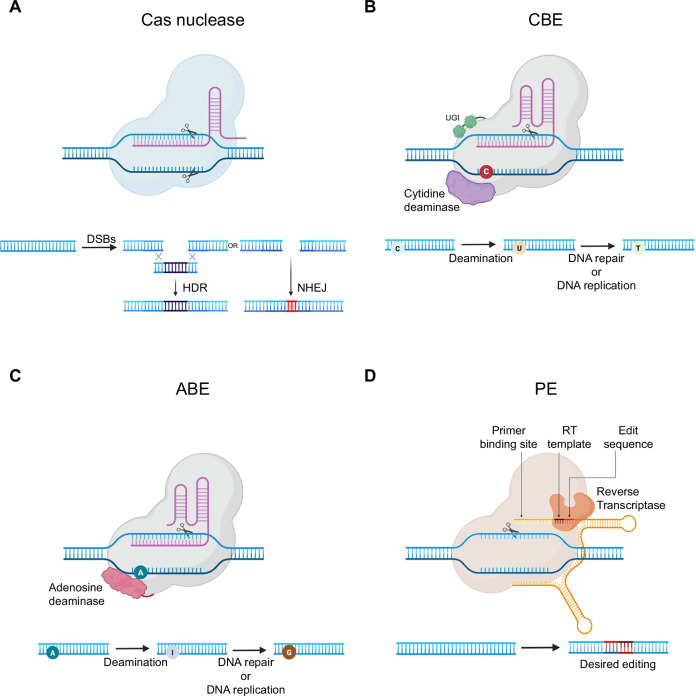
To address these limitations, CRISPR technology has evolved to include base editors (BEs) and prime editors (PEs), offering alternative strategies for more precise and safer genome modifications. BEs, including cytosine base editors (CBEs) and adenine base editors (ABEs) enable the conversion of cytosine-guanine (C:G) to thymine-adenine (T:A) and A:T to G:C base pairs, respectively, without DSBs [15, 16] (Fig. 1B, C). These systems allow precise base editing at targeted mutant alleles with reduced risk of indel formation, making them especially suitable for correcting oncogenic point mutations [17 –20]. However, BEs are restricted to specific base conversions within a limited editing window and are not capable of performing transversions, insertions, or deletions [14].
PEs represent a more versatile genome editing technology that combines a modified Cas9 nickase with a reverse transcriptase and a prime editing guide RNA (pegRNA). This system enables the introduction of all types of point mutations, as well as insertions and deletions, without the need for DSBs or donor DNA templates (Fig. 1D) [14]. PEs expand the therapeutic scope of genome editing, particularly for complex genetic alterations. Nevertheless, PEs suffer from relatively low efficiency, delivery challenges due to its large component size, and a less mature development pipeline compared with Cas9 or BE platforms [21]. Although still undergoing optimization, engineering PE systems have significantly improved their efficiency. These cutting-edge CRISPR-based approaches hold significant potential in treating cancers at the molecular level. Despite recent improvements in CRISPR systems for gene editing in cancer therapies, their overall efficiency remains limited by factors such as the accessibility of the target site and the delivery method. Research aimed at engineering Cas variants, optimizing guide RNA structure, and developing high-throughput screening tools has improved editing performance while minimizing off-target effects.

The CRISPR/Cas tools. Cas nucleases introduce double-strand breaks (DSBs) in the genome, which are repaired via homology-directed repair (HDR) or non-homologous end joining (NHEJ).Cytidine base editors (CBEs), composed of cytidine deaminase and uracil glycosylase inhibitor (UGI), deaminate cytosine (C), ultimately converting it into thymine (T).Adenine base editors (ABEs) utilize adenosine deaminase to convert adenine (A) into inosine (I), which is interpreted as guanine (G) during DNA repair or replication.Prime editors (PEs) consist of reverse transcriptase, nCas9, and a prime editing guide RNA (pegRNA) containing a primer binding site, reverse transcriptase template, and edit sequence. The pegRNA binds to the target DNA strand, enabling the precise modifications. A B C D
Gene knockout to inactivate oncogenes
Beyond direct therapeutic application, CRISPR knockout strategies are also valuable for functional validation of potential therapeutic targets [25]. For example, CRISPR-Cas9-mediated knockout of DEPDC5 revealed its critical role in regulating oxidative stress responses in hepatocellular carcinoma (HCC) cells. DEPDC5-deficient HCC cells exhibited increased viability under leucine-starvation conditions due to enhanced resistance to reactive oxygen species mediated by autophagy deficiency, as evidenced by decreased LC3-II levels and p62 accumulation. Clinically, low DEPDC5 expression in HCC patient samples correlated with elevated p62 accumulation and was associated with worse progression-free and overall survival, which were significantly worse in DEPDC5-negative cases compared to DEPDC5-positive cases, suggesting that DEPDC5 functions as a tumor suppressor under nutrient-deprived conditions [26].

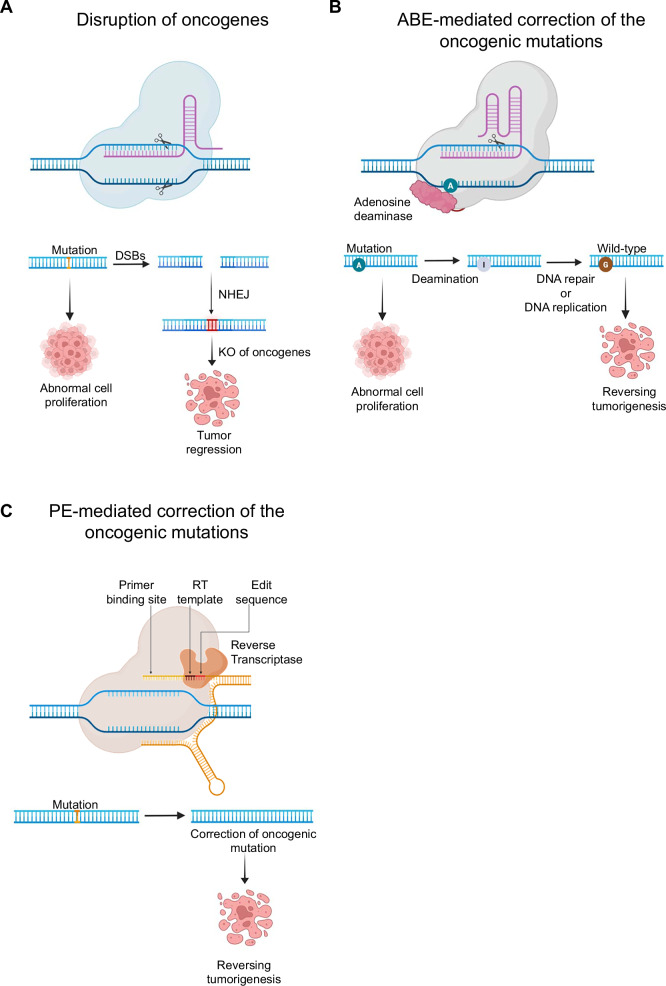
Applications of CRISPR technology in cancer therapy. The Cas nucleases enable the precise knockout of mutated oncogenes that drive abnormal cell proliferation in cancer cells, leading to tumor regression.ABEs andPEs offer enhanced precision in correcting oncogenic mutations in cancers, enabling targeted therapeutic interventions to reverse tumorigenesis. A B C
Genome editing for precise mutation correction using BEs and PEs
Genome instability and SNVs are critical drivers of cancer development, contributing to tumor initiation and progression [27]. Recent advancements in CRISPR technologies offer unprecedented precision in correcting oncogenic SNVs, potentially reversing tumorigenesis and restoring normal gene function. BEs have emerged as a promising platform for targeting critical oncogenic mutations (Fig. 2B). For instance, BEs have been successfully applied in patient-derived organoid (PDO) models targeting mutations in KRAS and TP53. In PDOs of pancreatic ductal adenocarcinoma, efficient correction of the KRAS G12D was achieved, with an editing frequency of 30%. Similarly, in PDOs of colorectal carcinoma, the TP53 R175H mutation was corrected with an editing frequency of 70%. These precise corrections led to a marked depletion of mutant cells and significant suppression of abnormal growth in cancer organoids. These findings underscore the potential of the BE system to correct oncogenic mutations and support the development of personalized, highly effective cancer treatment [28]. In another study, the dead Campylobacter jejuni Cas9 fused with an ABE achieved nearly 100% correction of −124C>T mutation in the TERT promoter, a genetic alteration found in various cancers, including human HCC. This precise correction suppressed abnormal TERT promoter activity, inhibited telomerase function, and significantly reduced tumor growth in the liver [29].
While these studies highlight the therapeutic potential of CRISPR-mediated base editing approaches, a key limitation lies in the editing accessibility of oncogenic mutations. A comprehensive study assessed 31,555 SNV mutations across 20 cancer driver genes to evaluate their suitability for editing using three commonly used nucleases: SpCas9, SaCas9, and LbCpf1. The results showed that approximately half of these mutations could be targeted by at least one nuclease, with editing rates ranging from 20.7 to 70.7% depending on the genes [23]. Despite the encouraging coverage, this also underscores a major limitation in clinical cancer gene editing. Many pathogenic mutations remain untargetable due to the absence of compatible PAMs. This bottleneck underscores the need for continued innovation. To address this limitation, significant efforts have focused on expanding the targetable genomic landscape by engineering Cas variants with relaxed or alternative PAM specificities [9, 10, 30 –32]. These advances have broadened the range of genomic loci accessible for editing, thereby increasing the potential to target a wider spectrum of oncogenic mutations in clinical applications.
Emerging genome editing tools such as PEs have shown potential to overcome some of these targeting limitations. For instance, PE corrected 12 KRAS mutations, encompassing 94% of all characterized KRAS variants, with editing efficiencies of up to 54.8% in HEK293T/17 cells (Fig. 2C). Notably, the PE corrected the KRAS G13D mutation to its wild-type sequence with editing efficiency of 36.1% in HCT116 human colon cancer cells and 18.7% in ASPC-1 pancreatic cancer cells, while minimizing the occurrence of unintended indel formations [33]. These advancements in CRISPR-based genome editing highlight the transformative potential of correcting oncogenic SNVs, paving the way for precise and personalized cancer therapies that address the underlying genetic drivers of malignancy.
Overcoming drug resistance with CRISPR system
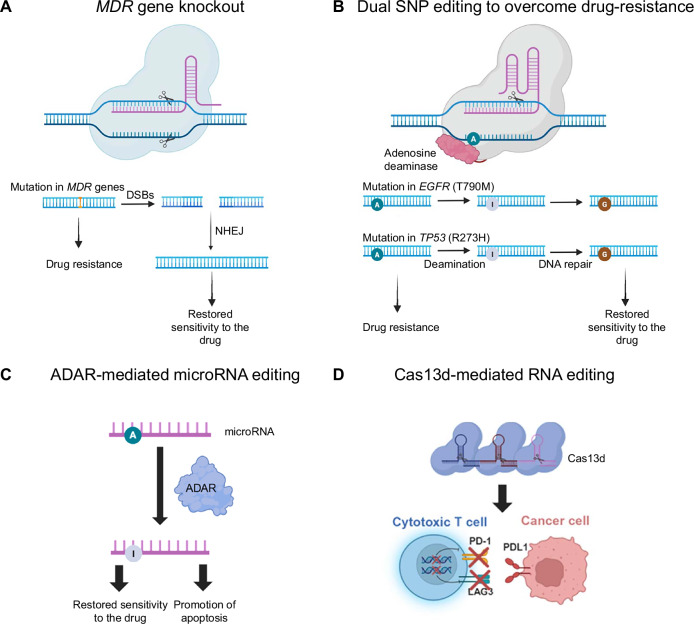
Despite significant advances in chemotherapy, both intrinsic and acquired drug resistance remains a major obstacle to successful cancer treatment. A wide range of mechanisms contributing to drug resistance include tumor heterogeneity, drug inactivation, targeted protein alteration, activation of the DNA repair system, and inhibition of cell death [34, 35]. Multidrug resistance (MDR) is a major challenge in cancer therapy, often caused by the overexpression of ATP-binding cassette (ABC) transporters, which actively efflux chemotherapeutic drugs out of cancer cells, reducing intracellular drug accumulation and diminishing treatment efficacy. For example, the overexpression of P-glycoprotein encoded by the ABCB1, a transmembrane transporter, has been shown to prevent the accumulation of chemotherapeutic agents such as doxorubicin and vincristine in cancer cells. This mechanism ultimately contributes to chemotherapy failure in colorectal cancer [36, 37]. Although P-glycoprotein inhibitors have been developed, their clinical application remains limited due to unfavorable pharmacokinetics and adverse side effects [38].
Another innovative strategy to overcome drug resistance involves correcting drug resistance-inducing mutations using an ABE system. Pathogenic SNPs, such as EGFR T790M and TP53 R273H mutations, are key contributors to gefitinib resistance. Targeting these SNPs for correction to the wild-type sequence presents a promising therapeutic avenue (Fig. 3B). This study demonstrated the efficacy of co-delivering an adenoviral vector encoding an ABE and guide RNAs targeting EGFR T790M and TP53 R273H in gefitinib-resistant H1975 non-small cell lung cancer (NSCLC) harboring these mutations. This dual base editing approach achieved editing frequencies of 6.1% in TP53 and 27.1% in EGFR in a xenograft mouse model of NSCLC, enhancing sensitivity to gefitinib and leading to successful tumor regression. These findings highlight the potential of ABE-mediated dual oncogenic SNP correction as a promising strategy for overcoming drug resistance in cancers [17].

Schematic diagram of strategies to overcome the limitations of conventional cancer treatments. Knocking out() genes using Cas nucleases to combat drug resistance in cancer therapy.The ABE offers a targeted approach for correcting oncogenic single nucleotide polymorphisms (SNPs), such asT790M andR273H mutations, by converting adenine (A) to guanine (G) at specific loci, thereby restoring drug sensitivity and improving therapeutic outcomes.Adenosine Deaminases Acting on RNA (ADAR)-mediated adenosine (A)-to-inosine (I) RNA editing enables transient suppression of oncogenic transcripts without permanent genomic modification.Cas13d was utilized for multiplexed RNA knockdown to enhance CAR-T cell efficacy by suppressing the inhibitory immune checkpoint receptors PD-1 and LAG-3. A B C D multidrug resistance MDR EGFR TP53
RNA editing in cancer therapy
The future of genome editing in cancer therapy may involve RNA editing systems [40]. RNA editing system provides a transient, reversible approach for suppressing oncogenic transcripts without altering the genome. Among these tools, adenosine deaminases acting on RNA (ADAR) enzymes catalyze the conversion of adenosine (A) to inosine (I) in RNA molecules, a process known as A-to-I RNA editing (Fig. 3C) [41, 42]. Leveraging this mechanism, the study was designed to overcome tyrosine kinase inhibitor (TKI) resistance in NSCLC by targeting miR-411–5p [42]. Indeed, A-to-I edited miR-411–5p directly suppressed MET and the ERK/MAPK pathway, leading to enhanced sensitivity to gefitinib and osimertinib in TKI-resistant NSCLC cell lines. In addition, intratumoral administration of RNA edited miR-411–5p reduced MET levels, suppressed tumor growth, and promoted apoptosis in NSCLC xenografts. These findings highlight ADAR-mediated RNA editing as a promising therapeutic strategy for modulating drug resistance dynamically, offering a non-permanent, precision oncology approach that avoids the risks associated with permanent genomic alterations.
Furthermore, CRISPR-Cas13 has been extensively utilized for RNA editing [43]. Building on this system, Cas13d was employed to enhance CAR-T cell therapy by multiplexed RNA knockdown of key genes regulating T-cell exhaustion, metabolism, and immune suppression (Fig. 3D) [44]. By using multiplexed effector guide arrays, a system for programmable RNA knockdown, the researchers achieved precise, reversible gene silencing without DNA modifications, addressing key limitations of conventional CRISPR-Cas9 editing. These findings highlight Cas13d-based transcriptomic engineering as a promising, non-permanent, precision approach for optimizing CAR-T cell therapy.
Identifying critical target genes through CRISPR-based functional screening
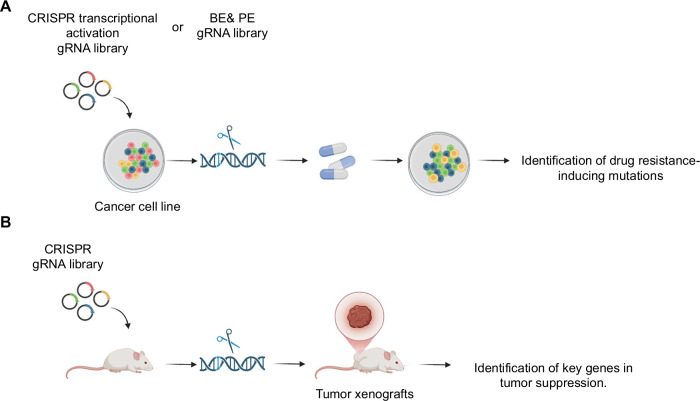
To better mimic human cancer progression, in vivo CRISPR screening models have been developed. Using a 67,405 gRNA library, genome-wide screening in a mouse model identified genes associated with lung cancer growth and metastasis (Fig. 4B). The top-scoring pro-apoptotic genes, BID, PTEN, and CDKN2A, were identified as critical players in tumor suppression [48].

CRISPR-based genome-wide screening. CRISPR gRNA libraries were employed toidentify key mutations driving drug resistance and todiscover critical tumor suppressor genes. A B
Clinical CRISPR trials in cancer therapy
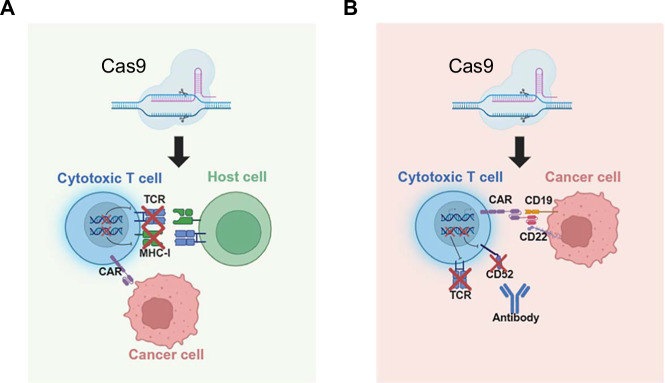
In addition to conventional CRISPR-Cas9-based editing, base editing has recently emerged as a next-generation therapy to improve the precision and safety of allogenic CAR-T therapies. BEAM-201 (NCT05885464) is an allogeneic, CD7-directed CAR-T cell therapy developed for treating CD7-positive T-cell malignancies such as T-cell acute lymphoblastic leukemia (T-ALL). Using CBE, this therapy introduces four targeted edits in TRAC, CD7, CD52, and PDCD1, thereby preventing GvHD, fratricide, immune rejection, and PD-L1-mediated immune evasion. In an initial clinical study (n = 3), no GvHD or neurotoxicity was observed. One patient experienced disease progression unrelated to treatment, while the remaining two achieved incomplete and complete responses, respectively, and proceeded to hematopoietic stem cell transplantation (HSCT) [58]. Similarly, BE-CAR7 (NCT05397184) is a base-edited CD7-targeted CAR-T cell therapy developed for T-ALL. By inactivating CD52, CD7, and the TRBC using CBE, this approach prevents fratricide, avoids GvHD, and eliminates the need for lymphodepleting serotherapy. In a Phase 1 trial involving three pediatric patients, one patient achieved complete remission and successfully underwent a second HSCT, another also proceeded to HSCT in remission, and one patient succumbed to a fungal infection. These results indicate the clinical potential of base-edited CAR-T therapies, while highlighting the importance of vigilant infection [59].

The CRISPR-engineered CAR-T therapy. CRISPR-based strategies to prevent GvHD include suppressing TCR and MHC-I expression to eliminate the alloreactive potential of donor T-cells.CRISPR-mediated silencing of CD52 and TCR in CAR-T cells confers resistance to HvGR and prevents GvHD, respectively. A B
| Clinical Trial | Target Antigen | Cancer Type | Target Gene | Outcome |
|---|---|---|---|---|
| NCT04502446 | CD70 | T-cell lymphoma | andknockoutTRACB2M | 47% ORR, 20% CR |
| NCT04227015 | CD19,CD22 | B-ALL | andknockoutCD52TRAC | Enhanced activation, reduced relapse rates |
| NCT03399448 | NY-ESO-1 | Sarcoma, myeloma | andknockoutTRAC, TRBC,PDCD1 | Improved persistence and tumor targeting |
| NCT04037566 | CD19 | ALL, lymphoma | knockoutMAP4K1 | Increased response rate and T cell durability |
| NCT04171843 | BCMA | Multiple myeloma | knockoutTRAC | Favorable response in early-phase trials |
| NCT05885464 | CD7 | T-ALL | , andbase editingTRAC,CD52,CD7PDCD1 | Incomplete and complete remission |
| NCT05397184 | CD7 | T-ALL | , andbase editingCD52, CD7TRBC | CR |
Overcoming barriers in CAR-T cell therapy for solid tumors
CAR-T cell therapies have shown remarkable success in treating hematological malignancies. However, their efficacy in solid tumors remains limited due to challenges posed by the TME. To enhance CAR-T function under these hostile conditions, integration with CRISPR-based gene editing strategies has opened new possibilities for improving persistence, potency, and specificity [60]. One promising approach involves dual-targeting CAR-T cells recognizing both cancer cells and cancer-associated fibroblasts (CAFs). By simultaneously targeting CAFs, key mediators of ECM deposition and immunosuppression, this strategy improves T cell infiltration and antitumor activity in solid cancers. For example, CRISPR-Cas9-mediated knockout of MCL-1 in breast cancer cells (T47D) significantly reduced CAF populations, supporting the potential of genome editing to modulate the TME and enhance therapeutic outcomes [61]. Similarly, targeting immunosuppressive pathways such as TGF-β signaling has demonstrated potential in enhancing CAR-T cell efficiency against solid tumors. CRISPR-Cas9-mediated knockout of TGFBR2 in CAR-T cells reduced Treg induction and cellular exhaustion. Notably, TGFBR2-deficient CAR-T cells completely eradicated tumors in NPG xenograft models, highlighting the therapeutic potential of this strategy for improving CAR-T cell performance in solid tumor settings [62].
Delivery of CRISPR components in cancer therapy: adenoviral vector-mediated CRISPR delivery
The integration of adenoviral vectors (Ad) with CRISPR technology represents a novel strategy for achieving cancer-specific gene therapy. Particularly, oncolytic Ad (oAd) selectively replicates within and lyses cancer cells while sparing normal tissues, making them an attractive vehicle for precise gene editing. Since the approval of Imlygic, the first oAd, in 2015, the number of clinical trials utilizing oAd has increased rapidly, underscoring their potential as a promising cancer treatment strategy [63]. By leveraging the tumor-specific replication properties of oAd, CRISPR can be effectively delivered into cancer cells, enabling targeted gene disruption with minimal off-target effects.
Recent studies have demonstrated the cancer-specific potential of CRISPR-Cas12a mediated by oAd to disrupt oncogenic signaling pathways. For instance, a single injection of oAd/Cas12a targeting EGFR led to an 88.6% reduction in tumor volume in A549 xenograft mice, highlighting the high efficacy of oAd combined with CRISPR-Cas12a in tumor suppression [24]. Similarly, an engineered an oAd to knockout CD274 using the CRISPR-Cas9 and cloaked it with cell membranes displaying T cell-specific antigens, generating an oncolytic virus-T cell chimera. In a melanoma mouse model, this strategy led to significant tumor-specific accumulation of oAd, a 50% reduction in PD-L1 expression, and an 80% survival over 70 days following a single-dose administration [64]. These findings underscore the potential of combining oAd with the CRISPR system for precise, tumor-targeted therapy.
Although oAds have demonstrated promising outcomes in delivering CRISPR components for cancer therapy, several limitations hinder their full therapeutic potential. One key issue is the limited intratumoral retention of viral particles, which reduces sustained genome editing efficacy. Additionally, heterogeneity among tumor cells contributes to variable infection efficiency, resulting in inconsistent therapeutic effects [65]. Furthermore, oAds are susceptible to rapid clearance by the host immune responses. oAds that fail to internalize into tumor cells may be released into the bloodstream, where they are sequestered nonspecifically in normal tissues. This systemic exposure increases the likelihood of recognition by immune surveillance mechanisms, triggering strong antiviral immune responses that accelerate viral clearance and diminish therapeutic efficacy. These challenges underscore the need for enhanced targeting strategies, such as the use of tumor-specific promoters (e.g., hTERT) that are transcriptionally active predominantly in malignant cells, thereby confining Cas expression to cancerous tissues. In addition, the adaptation of microRNA-responsive regulatory elements enables selective activation of the CRISPR system, while capsid-modified Ad can enhance tumor tropism through targeted binding to cancer-specific surface markers, thereby improving the precision of CRISPR delivery in cancer therapy [66].
Non-viral vector-mediated CRISPR delivery
Non-viral delivery, such as lipid nanoparticles (LNPs) and exosomes, offers alternatives to viral vectors due to their lower immunogenicity. In a preclinical study utilizing a xenograft mouse model of head and neck squamous cell carcinoma, co-encapsulation of Cas9 mRNA and sgRNA targeting SOX2 within LNPs enabled efficient intratumoral delivery of a CRISPR system, achieving a 90% reduction in tumor growth and prolonged survival by 90% over a period of 84 days. Furthermore, complete tumor regression was observed in 50% of the treated mice, demonstrating the therapeutic potential of a tumor-specific CRISPR delivery platform [67]. However, the clinical efficacy of LNPs remains limited by rapid degradation of CRISPR components in circulation and suboptimal targeting efficiency, underscoring the need for further innovation in delivery technologies [68].
Exosomes, nanosized extracellular vesicles secreted by cells, have also been explored as natural carriers of CRISPR components. Exosome-mediated delivery of CRISPR-Cas9 plasmids targeting KRAS-G12D in pancreatic cancer cells achieved 58% gene knockdown. This was accompanied by significant inhibition of tumor proliferation both in vitro and in xenograft models [69]. However, to fully realize the therapeutic potential of this approach, further research is needed to improve CRISPR-Cas9 delivery efficiency and overcome barriers such as cellular uptake and nuclear entry [70].
Challenges and future directions
CRISPR-based therapies hold tremendous potential for gene therapy, offering the potential to precisely manipulate genomes. A noble milestone in the field is the FDA approval of Casgevy, the first CRISPR-based cell therapy, which employs CRISPR-Cas9 to edit BCL11A in hematopoietic stem cells for treating hematologic disorders. This approval highlights the growing clinical relevance of CRISPR technologies. Emerging CRISPR-CAR-T therapies and utilization of oncolytic viruses are reshaping the immunotherapeutic landscape, enhancing tumor-specific targeting while reducing immune evasion. Despite its promise, several critical challenges must be addressed for successful clinical translation. One major challenge is the risk of off-target effects, which can lead to unintended mutations in non-cancerous cells. To address this risk, tumor-specific delivery platforms, engineered high-fidelity CRISPR variants, and real-time off-target detection technologies have been developed.
Another major hurdle is the tumor heterogeneity frequently observed in cancers. Variability in genetic and epigenetic landscapes across tumor cells can result in incomplete targeting, thereby compromising therapeutic efficacy. Emerging approaches such as multiplexed genome editing may provide solutions to overcome this complexity [17, 71]. Immune reactions to CRISPR components and delivery vectors also limit therapeutic efficacy and raise safety risks, particularly in immunocompromised patients. Pre-existing antibodies to Cas proteins or viral capsids can trigger inflammation and rapid clearance [72]. To address this, non-immunogenic Cas protein and viral capsid engineering are under development [71, 73, 74]. In addition, the long-term safety concern of CRISPR therapies remains under investigation. Risks such as delayed genotoxicity, chromosomal rearrangements, sustained expression of CRISPR molecules, and the development of resistance require long-term monitoring in clinical trials.
The complexity and high cost of producing CRISPR drugs also limit their clinical scalability, highlighting the need for efficient, scalable manufacturing platforms. Emerging strategies include Cas-expressing cell lines and stem cell-based systems, which offer advantages such as self-renewal and differentiation capacity. Another innovative strategy involves the in situ delivery of CRISPR components directly into the TME, which may bypass the need to produce and administer large numbers of edited cells [75].
While CRISPR-based cancer therapies primarily involve somatic cell editing, ethical concerns remain. There is limited longitudinal data on how edited genes behave over the course of patients' lifetime. This raises concerns regarding the durability, long-term safety, and potential late-onset consequences, such as secondary malignancies or organ dysfunction. Given these uncertainties, ensuring truly informed consent before CRISPR therapy remains a challenge.
Conclusion
CRISPR-based genome editing offers unprecedented advancement in targeted cancer therapy. With continued technological innovation and regulatory progress, the CRISPR system is poised to revolutionize personalized cancer therapy. Emerging promising developments, such as improved off-target detection, tumor-specific delivery systems, AI-optimized guide RNAs, non-immunogenic CRISPR variants, and novel delivery, hold great promise. Key challenges, such as off-target effects, delivery inefficiency, tumor heterogeneity, immunogenicity, and ethical concerns, must be addressed, particularly for clinical applications. Ongoing efforts to develop high-fidelity CRISPR tools, RNA-based systems, and innovative delivery platforms (e.g., Ads, LNPs, exosomes) represent promising strategies to improve safety and efficacy. Continued optimization of CRISPR technologies will be critical to transforming the future of cancer treatment.