
What this is
- This systematic review and meta-analysis evaluates the effectiveness of in patients with or after bariatric surgery.
- It includes 19 studies assessing weight loss, BMI changes, and metabolic improvements associated with GLP-1 agonist treatment.
- Findings indicate that GLP-1 agonists, particularly tirzepatide, significantly aid weight loss and improve cardiometabolic health.
Essence
- , especially tirzepatide, significantly enhance weight loss and metabolic outcomes in patients post-bariatric surgery. This treatment serves as a viable alternative to revisional surgery for those not achieving desired weight loss.
Key takeaways
- Tirzepatide led to greater weight loss compared to semaglutide and liraglutide, achieving up to 22% weight loss. This positions tirzepatide as the most effective GLP-1 agonist for managing inadequate weight loss and after bariatric surgery.
- GLP-1 agonists consistently resulted in significant improvements in metabolic parameters, including glycemic control and blood pressure. These benefits contribute to enhanced overall health for patients struggling with obesity-related comorbidities.
Caveats
- The variability in study designs and quality limits the robustness of the findings. Many studies lacked uniformity in reporting, complicating the analysis of secondary outcomes and adverse effects.
- The meta-analysis was constrained by the limited number of randomized controlled trials available, particularly for newer agents like tirzepatide, necessitating further research for confirmation of these results.
Definitions
- GLP-1 receptor agonists: Medications that mimic the action of glucagon-like peptide-1, enhancing insulin secretion and reducing appetite.
- Insufficient weight loss (IWL): Defined as an excess weight loss percentage of less than 50% within 18 months post-bariatric surgery.
- Weight regain (WR): Progressive weight gain following initial successful weight loss after bariatric surgery.
Simplified
Introduction
Glucagon-Like Peptide-1 receptor agonists (GLP-1 RA) have emerged as a promising treatment for obesity and related comorbidities [1]. These agonists have been used in the management of diabetes mellitus and obesity, as well as to slow the progression of chronic kidney disease in diabetic patients and improve cardiovascular risk profiles [2, 3]. GLP-1 stimulates glucose-dependent insulin release from the pancreatic islets while reducing plasma glucagon levels, aiding in glucose homeostasis [4]. Additionally, GLP-1 delays gastric emptying, therefore increasing satiety and reducing food intake [4].
A limitation of the natural GLP-1 hormone is its short half-life due to rapid degradation by dipeptidyl peptidase-4 (DPP-4) and high renal clearance. To overcome this, GLP-1 receptor agonists such as liraglutide, semaglutide, and tirzepatide act by reducing DPP-4 binding and minimizing renal clearance, thereby maximizing their effects on weight loss and glycaemic control [5].
While bariatric surgery is the most effective treatment for obesity, some patients experience inadequate weight loss or regain weight post-surgery, often leading to the recurrence of obesity-related comorbidities. GLP-1 analogues have been used as adjunct therapies to bariatric surgery, either preoperatively or postoperatively. Liraglutide and semaglutide have demonstrated 15–17% weight loss, along with cardiometabolic protective properties [6]. Additionally, newer dual GLP-1/GIP receptor agonists, such as tirzepatide, have shown up to 22% weight loss in recent phase 3 trials [7].
The aim of this meta-analysis and systematic review is to evaluate the efficacy of GLP-1 receptor agonists used as adjuncts to bariatric surgery in patients with inadequate weight loss or weight regain, and their effects on obesity-related comorbidities.
Methodology

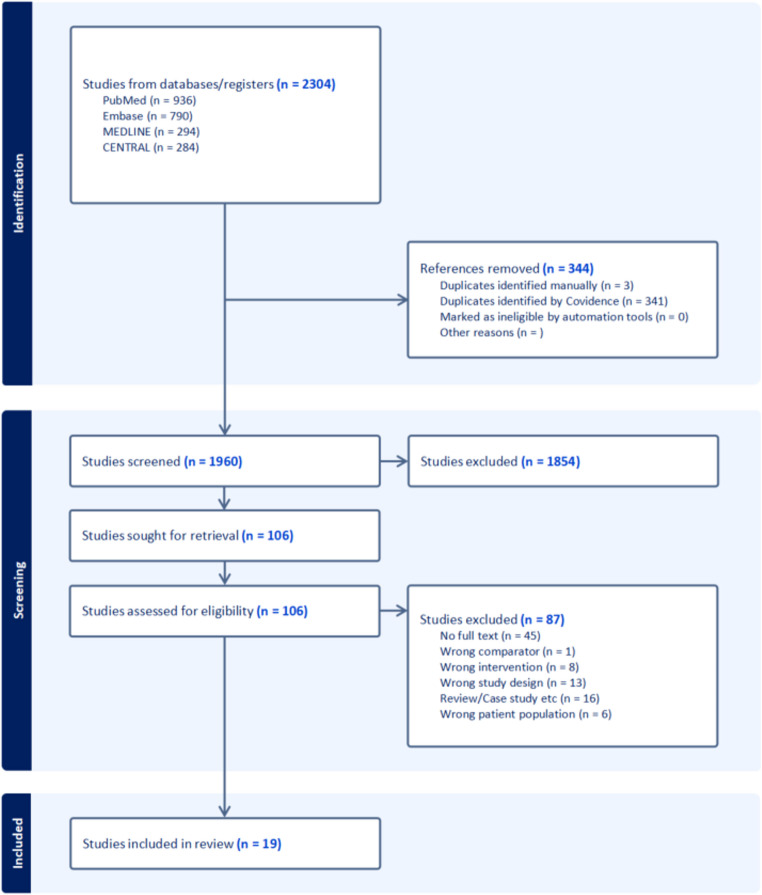
PRISMA Flowchart
Literature search strategy
A comprehensive electronic literature search of medical and health science databases was conducted from November 2023 to February 2025 including Ovid MEDLINE, PubMed, EMBASE, and the Cochrane Library. A grey literature search was also performed using Google Scholar. In addition, a manual search of relevant journals and bibliographies of potential articles was conducted to identify additional references. The search was restricted to articles in English and studies involving humans.
The following Boolean search terms were used:
(Bariatric Surgery) OR (Biliopancreatic Diversion) OR (Roux-en-Y gastric bypass) OR (Gastric banding) OR (weight loss surgery) OR (Biliopancreatic diversion with duodenal switch) OR (Sleeve gastrectomy). AND (Glucagon-Like Peptide 1 Agonists) OR (Glucagon-Like Peptide 1 Analog) OR (Semaglutide) OR (Exenatide) OR (Liraglutide) OR (Albiglutide) OR (Lixisenatide) OR (Dulaglutide) OR (Tirzepatide).
Inclusion and exclusion criteria
Due to the limited number of studies available on the topic, we included not only randomized controlled trials (RCTs) but also case-control, cohort, and demographic studies that met the selection criteria. The inclusion criteria involved studies of adult patients (aged 18 years or older) who received a GLP-1 RA either before or after bariatric surgery. We also included the dual GLP-1RA/GIP agonist. Studies not published in English or containing only abstracts were excluded. Additionally, studies on conversional bariatric surgery or endoscopic bariatric procedures were excluded.
Data extraction
Two authors (YWT and MS) independently selected studies based on the inclusion and exclusion criteria. In cases of disagreement, a third author (SD) resolved the issue. Screening was performed using Covidence (Covidence systematic review software, Veritas Health Innovation, Melbourne, Australia) and data were extracted into a pre-formed Excel file (Microsoft Corporation, Redmond, Washington, USA). The extracted data included the first author, publication year, country, study design, patient demographics, type of GLP-1 RA, dosage, duration of intervention, and various postoperative outcome measures (outlined below).
Quality assessment of retrieved articles
Quality assessment was performed by two authors (YWT and MS) using Cochrane Collaboration's tool for assessing risk of bias in randomized trials (RoB 2), which categorizes each RCT as low, some concerns, or high risk for bias in 5 domains: selection, performance, detection, attrition, and reporting biases [8]. For non-randomized studies, the Risk Of Bias In Non-randomized Studies of Interventions (ROBINS-I) was used which evaluated key points such as selection of participants, baseline differences between groups, and incomplete data outcome [9]. [Refer to supplementary material]
Outcome measures
The primary outcomes included total weight loss, excess weight loss, and BMI reduction with adjunct GLP-1 treatment either before or after bariatric surgery. Secondary outcomes included metabolic changes including blood pressure, HbA1c, and cholesterol levels. Another secondary outcome measure is the adverse reactions related to GLP-1 RA.
Statistical analysis
All statistical analysis was performed using Review Manager [RevMan], Version 5.4.1 (The Cochrane Collaboration,2020). Odds ratios (OR) were used to summarise dichotomous data, and mean difference (MD) were used for continuous data. If means and standard deviations were not reported, they were calculated from the data available using methods described by Hozo et al. [10] Pooled analysis was performed comparing GLP-1 RA to baseline as well individual GLP-1 RA to calculate Odds Ratios (OR) and 95% confidence intervals (CI). I2 statistics with p-value set to p < 0.10 for significance, were utilised to assess heterogeneity. I2 scores > 50% denoted significant heterogeneity. When the heterogeneity test was statistically significant, a random effects model was used which assumes variation in treatment effects between studies and estimates a more conservative overall treatment effect with wider confidence intervals. Where heterogeneity was not significant, a fixed effects model was used.
Results
Our initial literature search yielded 2,304 studies, of which 344 were identified as duplicates and subsequently removed, leaving 1,960 articles for screening. After an initial review of titles and abstracts, 1,854 studies were deemed irrelevant and excluded. The remaining 106 studies were further analysed in detail. Ultimately, 19 studies that included the use of GLP-1 agonist either before or after bariatric surgery, focusing on outcomes related to weight or BMI changes and metabolic changes, were included in the final review [7, 11 –26].
| Study | Study type | Total patients | Time of initiation of GLP-1 agonist | Inclusion | GLP-1 RA | Duration of GLP-1 RA treatment | Number | BMI *(Kg/m2) | Weight* (Kg) | Number | BMI *(Kg/m2) | Weight*(Kg) | Total % weight loss | Follow up(months) | Number | BMI *(Kg/m2) | Weight*(Kg) | Total % weight loss | Follow up(months) |
|---|---|---|---|---|---|---|---|---|---|---|---|---|---|---|---|---|---|---|---|
| Jensen 2023 | R Obs | 50 | 72 months | WR | Liraglutide 3mg daily | 6 months | 29 | 7.3 (1.8) | 6 | ||||||||||
| Semaglutide 1mg weekly | 6 months | 21 | 9.8 (1.2) | 6 | |||||||||||||||
| Total group | 50 | 34 (1.75) | 90.5 (6.12) | 50 | 31.5 (1.92) | 83.1 (5.45) | 8.8 (1.55) | 6 | |||||||||||
| Murvelashvili 2023 | R Obs | 207 | 8.24 years | WR | Liraglutide 3mg daily | >3 months 12 months | 92 | 114.4 (27.56) | 92 | 8.77 (6.04) | 12 | ||||||||
| 7.8 years | Semaglutide 1mg weekly | >3 months 12 months | 115 | 110.7 (24.5) | 115 | 12.92 (6.4) | 12 | ||||||||||||
| 8 years | Total group | 207 | 112.31 (25.88) | 12 | |||||||||||||||
| Jamal 2024 | R Cohort | 115 | 71.8 (51.1) months * | WR | Semaglutide Increasing dose | >3 months 12 months | 70 | 33.9 (6) | 90.1 (19.4) | 70 | 31.9 (6) | 84.9 (19.3) | 3 | 70 | 30.4 (6) | 81 (19) | 6 | ||
| Tirzepetide Increasing dose | >3 months 12 months | 45 | 36.9 (7.1) | 100.2 (28.5) | 45 | 33.5 (6.8) | 91.2 (27.3) | 3 | 45 | 32.1 (6.9) | 87.6 (28.3) | 6 | |||||||
| Total group | 115 | 35.1 (6.0) | 94 (23.8) | 115 | 32.5 (6.4) | 87.3 (22.9) | 3 | 115 | 31.1 (6.4) | 83.2 (22.7) | 6 | ||||||||
| Lautenbach 2022 | R Cohort | 44 | 64.7 (6.4) months* | WR, IWL | Semaglutide Increasing dose | 3–6 months | 44 | 38.3 (6.4) | 113.5 (25.2) | 38 | 36 (6.1) | 106.5 (24.5) | 6 (4.3) | 3 | 20 | 36.2 (6.7) | 105.7 (25.1) | 10.3 (5.5) | 6 |
| Lautenbach 2023 | R Cohort | 29 | 64.5 (51.9) months* | WR, IWL | Semaglutide increasing dose | 12 months | 29 | 38.3 (6.1) | 110.8 (22.2) | 29 | 34.5 (6.3) | 99.2 (22.9) | 11.2 (5.6) | 6 | 29 | 33.0(7.2) | 95.4 (24.0) | 14.7 (8.9) | 12 |
| Elhag 2022 | R Cohort | 119 | 56.47 (32.39) months* | WR, IWL | Liraglutide increasing dose | 6–12 months | 107 | 37.61 (6.42) | 96.75 (18.65) | 107 | 35.37 (5.89) | 91.01 (17.30) | 5.97 (5.71) | 6 | 110 | 34.42 (4.82) | 88.44 (15.47) | 6.93 (7-21) | 12 |
| 26 | 42.54 (26.05) months* | 25 | 38.36(9.77) | 101.76 (31.1) | 25 | 36 (10.29) | 95.68 (33.29) | 6.41 (7.11) | 6 | 25 | 36.71 (9.39) | 97.65 (32.13) | 4.99 (8.15) | 12 | |||||
| 145 | 54.1 (31.75) months* | 145 | |||||||||||||||||
| Colbourne 2023 | P Cohort | 68 | >12 months | WR, IWL | Liraglutide increasing dose | >3 months | 68 | 35.2 (2.42) | 95.8 (6.05) | 68 | 32.3 (2.47) | 90.3 (8.66) | 5.30 (1.53) | 16 | |||||
| Jamal 2023 | R Cohort | 57 | WR, IWL | Liraglutide increasing dose | 3 months | 57 | 96.12 (29.26) | 57 | 90.19 (26.82) | 6.2 (6.0) | 3 | ||||||||
| Muratori 2022 | R Cohort | 62 | 70.7 (43.7) months | WR, IWL | Liraglutide increasing dose | 3–18 months | 62 | 34.2 (4.8) | 62 | 28.04 (3.66) | 10.44 | ||||||||
| Rubio 2021 | R Cohort | 23 | WR,IWL | Liraglutide daily | 12 months | 12 | 30.5 (4.7) | 12 | |||||||||||
| Liraglutide alternate days | 6 + 6 months | 11 | 29.7 (3.3) | 12 | |||||||||||||||
| Liraglutide total | 23 | 36.6 (4.6) | 30.1 (4) | 12 | |||||||||||||||
| Rye 2018 | R Cohort | 20 | 73.3 (72.9) months | WR,IWL | Liraglutide increasing dose | 7 months | 20 | 117.91 (27.95) | 20 | 108.87 (28.10) | 4 | 20 | 105.59 (27.49) | 7 | |||||
| Gorgojo-Martinez 2016 | R cohort | 15 | 5.2 years | WR, IWL, DM | Liraglutide increasing dose | 24 months | 15 | 106 (27.88) | 15 | 102.6 (26.72) | 24 | ||||||||
| Pajecki 2016 | R cohort | 15 | 5.6 years | WR, IWL | Liraglutide increasing dose | 2–7 months | 15 | 100.9 (18.3) | 15 | 93.5 (17.4) | 4.2 | ||||||||
| Wharton 2019 | R Cohort | 117 | 8 years | WR, IWL | Liraglutide increasing dose | variable- mo minimum | 117 | 42.5 (9.6) | 117 | 5.5 (6.2) | 7.6 (7.1) | ||||||||
| Vinciguerra 2024 | R Cohort | 119 | Wr,IWL | Liraglutide increasing dose | 3–6 months | 119 | 37.6 (5.3) | 100.9 (17.2) | 119 | 35.6 (5.3) | 95.3 (16.8) | 3 | 119 | 34.2 (5.2) | 91.5 (16.49) | 6 | |||
| Horber 2021 | R Cohort | 34 | 6 years | WR, IWL | Liraglutide increasing dose | 24 months | 34 | 31.2 (4) | 84 (13) | 34 | 26.4 (3.5) | 72 (9) | 24 | ||||||
| Thakur 2021 | RCT | 23 | 6 weeks | Liraglutide increasing dose | 6 months | 12 | 36.5 (5.2) | 103.5 (20.3) | 12 | 34 (4.4) | 94.2 (17.6) | 20.6 (6.3) | 12 | 12 | 30.9 (4) | 85.1 (13.5) | 28.2 (5.7) | 24 | |
| Placebo | 11 | 37 (3.9) | 92 (32.4) | 11 | 34.5 (3.5) | 84.8 (11.4) | 17.7 (6.1) | 12 | 11 | 32.1 (3) | 79.2 (10.6) | 23.2 (6.2) | 24 | ||||||
| Miras 2019 | RCT | 3.8 years | Liraglutide increasing dose | 6 months | 53 | 36.1 (7.8) | 100.7 (20.7) | 6.5 | |||||||||||
| 3.8 years | Placebo | 27 | 37 (7.7) | 103.5 (27) | 6.5 | ||||||||||||||
| Mok 2023 | RCT | 35 | 55.1 months | Liraglutide increasing dose | 6 months | 35 | 41.6 (6.9) | 116. (23.6) | |||||||||||
| 35 | 49.1 months | Placebo | 35 | 44.6 (8.3) | 123.5 (24.8) |
Effect of GLP-1 RA on primary outcomes

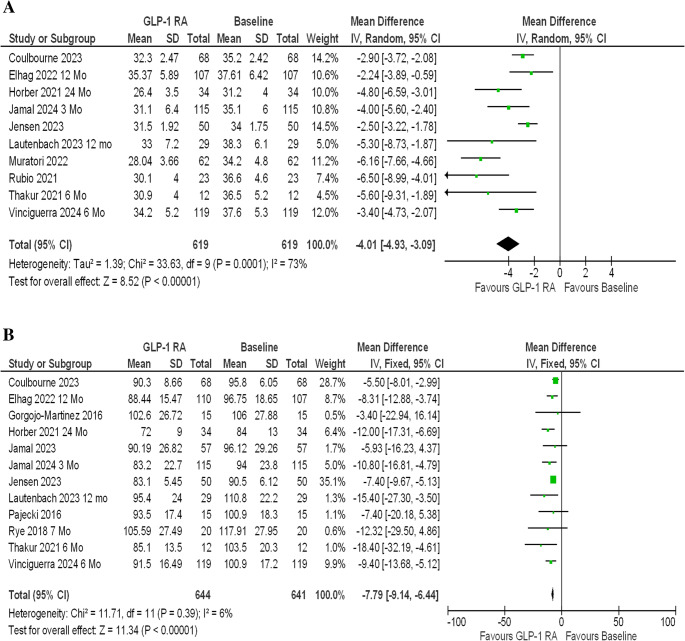
() Any GLP-1 RA- longest follow up- BMI Change. () Any GLP-1 RA- longest follow up- Weight Change A B

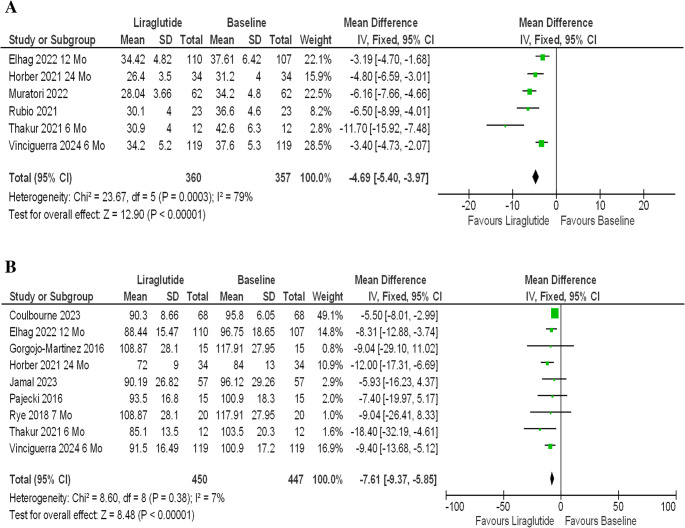
() Liraglutide - longest follow up- BMI Change. () Liraglutide - longest follow up- Weight Change A B

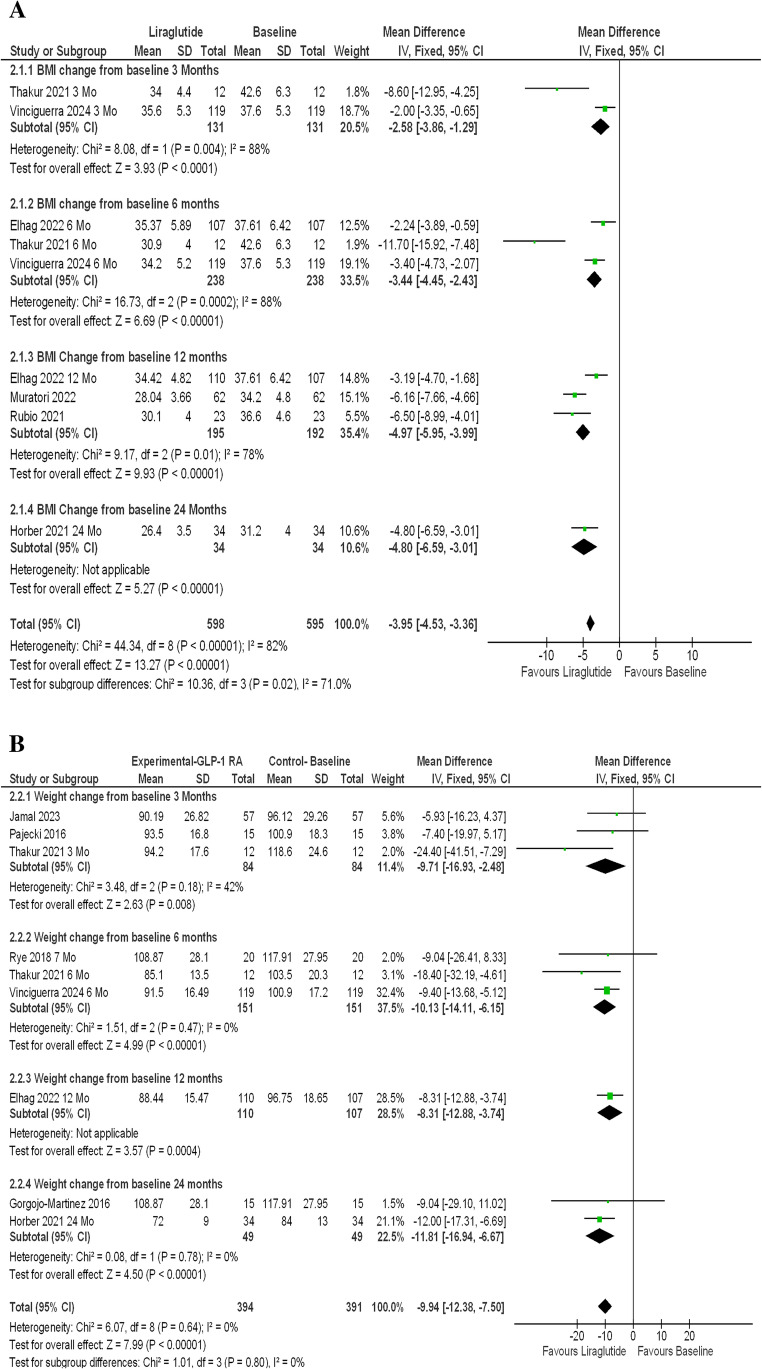
() Liraglutide- BMI change from baseline subgroup analysis. () Liraglutide- Weight change from baseline subgroup analysis A B

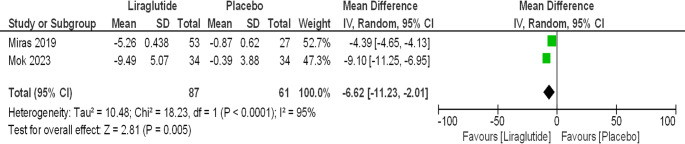
A Liraglutide vs. placebo. Total weight loss
Semaglutide

Semaglutide vs. Liraglutide. Percentage weight loss
Tirzepartide
Tirzepartide was found to be the most effective among all agents however there was only one study available with adequate data for meta-analysis. The only study involving Tirzepartide was done by Jamal et al. [27] with total 115 participants received either S/C semaglutide starting at 0.25 mg weekly or S/C Tirzepartide 2.5 mg weekly at 71.8 (51.1) months after sleeve gastrectomy for 6 months. Weight loss from Tirzepartide group was evidently greater than semaglutide group at both 3rd and 6th months, [6.0 (3.6)% and 10.3 (5.9)%, p < 0.05 for semaglutide group vs. 9.3 (4.3)% and 15.5 (6.3)%, p < 0.05 for Tirzepatide group]
Non responders
| Study | Number | Duration | GLA-1 RA | Non responders |
|---|---|---|---|---|
| (%)n | ||||
| Colbourne et al. 2023 | 68 | 3 months | Liraglutide | 7/68 (10.3) |
| Elhag et al. 2022 | 110 | 12 months | Liraglutide | 44/110 (46) |
| Vinciguerra et al. 2024 | 107 | 6 months | Liraglutide | 7/107 (6) |
| Jamal et al. 2023 | 57 | 3 months | Liraglutide | 26/57 (45.6) |
| Rye et al. 2018 | 20 | 7 months | Liraglutide | 2/20 (10) |
| Pajecki et al. 2012 | 15 | 3 months | Liraglutide | 3/15 (20) |
| Horber et al. 2021 | 34 | 24 months | Liraglutide | 3/34 (9) |
| Miras et al. 2019 | 48 | 6 months | Liraglutide | 26/48 (54) |
| Mok et al. 2023 | 32 | 6 months | Liraglutide | 9/32 (28.1) |
| Jensen et al. 2023 | 29 | 6 months | Liraglutide | 9/29 (31) |
| Murvelashvili et al. 2022 | 92 | 12 months | Liraglutide | 30/92 (32.6) |
| 166/612 (27.12%) | ||||
| Lautenbach et al. 2023 | 29 | 12 months | Semaglutide | 2/29 (10.3) |
| Jensen et al. 2023 | 21 | 6 months | Semaglutide | 3/21 (14.2) |
| Murvelashvili et al. 2022 | 115 | 12 months | Semaglutide | 26/115 (22.6) |
| Jamal et al. 2024 | 70 | 6 months | Semaglutide | 14/70 (20) |
| 45/235 (19.1%) | ||||
| Jamal et al. 2024 | 35 | 6 months | Tirzepatide | 1/35 (2.9) |
Secondary outcomes
Due to the heterogeneity and non-uniform reporting of secondary outcomes, a meta-analysis was not feasible. Therefore, a systematic review was conducted to synthesize findings on changes in metabolic outcomes of glycaemic control, blood pressure, and cholesterol levels with introduction of GLP-1 agonists.
A study by Lautenbach et al. demonstrated significant reductions in HbA1c levels (from 5.4% ± 0.4 to 5.1% ± 0.4, p < 0.001) and complete resolution of pre-diabetes in all patients (p < 0.05) treated with semaglutide post-bariatric surgery. Triglyceride levels also showed a significant decrease (p = 0.016), while reductions in total cholesterol and LDL levels were observed, though they were not statistically significant (p = 0.52, p = 0.727, respectively) [11].
| Study | Lautenbach 2022 | Elhag 2022 | Mok 2023 | Jensen 2023 | Thakur 2021 | Miras 2019 |
|---|---|---|---|---|---|---|
| Intervention | Semaglutide Increasing dose | Liraglutide increasing dose | Liraglutide increasing dose | Liraglutide 3 mg daily | Liraglutide increasing dose | Liraglutide increasing dose |
| Semaglutide 1 mg weekly | ||||||
| Duration of intervention | 3 to 6 months | 6 to 12 months | 6 months | 6 months | 6 months | 6 months |
| Hba1c Pre-treatment (%) | 5.3 (0.4) | 5.95 (1.00) | 5.8 (0.7) | 7.2 (6.6, 8.0) | 6.0 ± 1.5 | 7.9 (1.39) |
| Hba1c Post treatment (%) | 5.2 (0.2) | 5.95 (1.62) | 5.53 (0.79) | 6.4 (6.3, 6.6) | 7·6 (1·65) | 7.6 (1.44) |
| FBG Pre-treatment (mmol/L) | 5.63 (1.66) | 5.92 +/- 2.13 | ||||
| FBG post treatment (mmol/L) | 5.47 (1.25) | 5.47 +/- 1.89 | ||||
| SBP Pre-treatment (mmHg) | 125.9 (10.8) | 121.11(16.23) | 131.3 (15.0) | |||
| SBP post treatment (mmHg) | 119.2 (7.6) | 117.5 (15.17) | 125.0 (22.2) | |||
| DBP Pre-treatment (mmHg) | 80.5 (7.6) | 73.58 (9.99) | 75.9 (10.4) | |||
| DBP post treatment (mmHg) | 75.6 (5.2) | 72.51 (10.78) | 75.5(16.8) | |||
| Total Cholesterol Pre-treatment (mmol/L) | 4.72 (0.92) | 4.78 (0.89) | 5.3 (1.2) | |||
| HDL Pre-treatment (mmol/L) | 1.43 (0.39 | 1.61 (0.42) | 1.4 (0.4) | |||
| LDL Pre-treatment (mmol/L) | 2.47 (0.80) | 2.69 (0.86) | 3.3 (0.9) | |||
| Total Cholesterol Post treatment (mmol/L) | 4.4(0.74) | 4.79 (0.99) | 4.83 (1.33) | |||
| HDL Post treatment (mmol/L) | 1.30(0.43) | 1.53 (0.33) | 1.30 (0.44) | |||
| LDL Post treatment (mmol/L) | 2.31 (0.72) | 2.82 (0.86) | 3.04(1.07) |
Adverse effect
Although the overall incidence of adverse effects was relatively high (ranging from 36% to 80%, they were not the primary reason for participant dropout in any of the studies [14, 15, 23, 26]. The dropout rate averages between 11.25 and 63%. Highest dropout rate of 63% was observed in studies done by Wharton et al. [23] studying 117 patients who had liraglutide post bariatric surgery for inadequate weight loss. Surprisingly the most common reported reason for dropout was lack of effectiveness for weight management, however the duration of intervention of this group of patients was uncertain. Colbourne et al. [18] reported that only 19.5% of the 60.2% dropout rate was due to adverse effects, whereas cost of treatment remains the main reason for drop out. Mok et al. [15] found that liraglutide was potentially better tolerated in patients who had undergone bariatric surgery, with fewer gastrointestinal side effects compared to non-surgical obese populations studied elsewhere.
| Total patients = 516 | |
|---|---|
| Adverse event | n (%) |
| Decreased appetite | 15 (2.91) |
| Dizziness | 8 (1.55) |
| Taste dysgeusia | 9 (1.74) |
| Dry Mouth | 6 (1.16) |
| Fatigue | 9 (1.74) |
| Headache | 21 (4.07) |
| Peripheral oedema | 1 (0.19) |
| Hypogylcemia | 3 (0.58) |
| Injection-site bruising | 5 (0.97) |
| Rash | 5 (0.97) |
| Sweating | 2 (0.39) |
| Back pain | 2 (0.39) |
| Depression | 1 (0.19) |
| Hot flushes | 1 (0.19) |
| Flu-like symptoms | 4 (0.78) |
| Palpitation | 3 (0.58) |
| Urinary tract infection | 1 (0.19) |
| Respiratory infection | 7 (1.36) |
| Cellulitis | 1 (0.19) |
| Progression of chronic kidney disease | 2 (0.39) |
| Lymphoma | 1 (0.19) |
| Gastrointestinal | |
| Nausea | 114 (22.09) |
| Vomiting | 19 (3.68) |
| Diarrhoea | 22 (4.26) |
| Constipation | 41 (7.95) |
| Indigestion/dyspepsia | 7 (1.36) |
| Abdominal discomfort/pain | 6 (1.16) |
| Bloating | 5 (0.97) |
| Gastro-oesophageal reflux | 12 (2.33) |
| Dysphagia | 1 (0.19) |
| Gastroenteritis | 1 (0.19) |
| Pancreatitis | 2 (0.39) |
| Death | Nil |
Discussion
This meta-analysis and systematic review examined the effectiveness of GLP-1 agonists in managing weight regain (WR) or inadequate weight loss (IWL) following bariatric surgery. The findings suggest that GLP-1 receptor agonists (RAs) are an effective treatment option for patients experiencing IWL or WR post-surgery. Significant weight loss was observed across all three GLP-1 RAs- liraglutide, semaglutide, and tirzepatide. Among these, the dual GLP-1 RA/GIP agonist, tirzepatide, led to the greatest weight loss, followed by semaglutide, and then liraglutide. In terms of inadequate weight loss (defined as less than 5% of total body weight lost), liraglutide had the highest rate of non-responders at 27.1%, followed by semaglutide at 19.1%, and tirzepatide, which was evaluated in only one study, had the lowest rate at 2.7%. 6
Insufficient weight loss (IWL) was defined as an excess weight loss percentage (EWL%) of less than 50% within 18 months post-bariatric surgery. Weight regain (WR), on the other hand, refers to progressive weight gain following initial weight loss success. However, there are no standardized definitions of WR or IWL, and the definitions used in various studies vary widely [29].
Various factors contribute to insufficient weight loss (IWL) and weight regain (WR), including dietary nonadherence, lack of physical activity compliance, mental health disorders, and anatomical issues following surgery. Historically, revisional surgery has been the primary treatment for WR and IWL. However, pharmacotherapy, particularly GLP-1 agonists, has gained increasing attention in recent years due to their beneficial hormonal effects on satiety and hunger regulation [30, 31].
GLP-1 agonists, originally developed as anti-diabetic agents, have shown significant benefits beyond glycemic control, including substantial weight loss, metabolic improvements, and cardiovascular protection. Liraglutide, semaglutide, and tirzepatide have become effective alternatives to revisional surgery for patients experiencing weight regain (WR) or insufficient weight loss (IWL), with weight loss ranging from 5.3 to 29.1% [32]. Liraglutide, introduced in 2010, demonstrating significant weight reduction compared to placebo [13 –15]. Semaglutide, FDA-approved in 2021 for weight management in patients with type 2 diabetes, has shown superior weight loss outcomes compared to liraglutide [33]. To date, four retrospective studies have demonstrated semaglutide's superior weight loss effects over liraglutide [11, 12, 26, 28]. Tirzepatide, the newest GLP-1 agonist approved in 2023, has demonstrated even greater efficacy in weight reduction, as seen in several studies comparing it to semaglutide [27]. It is administered as a subcutaneous injection, starting at 2.5 mg every four weeks, with dose increases of 2.5 mg every four weeks, up to a maximum of 15 mg [34].
Studies [26, 28] comparing the weight loss effects of liraglutide vs. semaglutide have shown superior results for the semaglutide group. In the Murvelashvili study, the adjusted odds of losing ≥ 10% and ≥ 15% of body weight were more than two times higher in the semaglutide group compared to the liraglutide group: adjusted odds ratios (aOR) = 2.34 (95% CI: 1.28 to 4.29) for ≥ 10% weight loss, and 2.55 (95% CI: 1.22 to 5.36) for ≥ 15% weight loss. However, these differences were not statistically significant for weight loss ≥ 5% or ≥ 20% [28].
The study by Jamal et al. reported clinically significant weight loss in both the tirzepatide and semaglutide groups, with superior results in the tirzepatide group. After 6 months, 97.1% of patients on tirzepatide achieved > 5% weight loss (vs. 80% in the semaglutide group), 74% achieved > 10% weight loss (vs. 48.6% in the semaglutide group), and 57.1% achieved > 15% weight loss (vs. 26% in the semaglutide group) (p < 0.001). However, none of the patients in the semaglutide group received a dose higher than 2 mg, the maximum recommended dose for weight loss, which could introduce some bias in the results [13].
In contrast, the study by Le Roux et al. demonstrated greater reductions in body weight% in patients on tirzepatide (10 mg and 15 mg) compared to those on semaglutide 2.4 mg. The mean differences in body weight reduction were as follows: tirzepatide 10 mg, −4.67% (95% CI: −5.91% to −3.43%); tirzepatide 15 mg, −5.92% (95% CI: −7.16% to −4.68%)—both with p < 0.001 [34].
The metabolic benefits of GLP-1 agonists extend beyond weight loss. These drugs enhance insulin secretion, delay gastric emptying, and improve satiety, which contributes to better glycemic control without causing hypoglycemia [12 –18, 25, 26, 28]. The incretin effect of GLP-1 agonists reduces endothelial dysfunction caused by non-enzymatic glycation of proteins in a hyperglycemic state. It also affects calcium transport and lipid metabolism, which contributes to the pathophysiology of diabetic cardiomyopathy [35].
GLP-1 agonists also exhibit cardioprotective properties, as highlighted by the SELECT trial. This large-scale trial (n = 17,604), conducted in the United States, investigated the cardioprotective effects of semaglutide 2.4 mg compared to placebo. The results showed a significant 20% reduction in the risk of three-point major cardiovascular events (MACEs)—including cardiovascular death, non-fatal myocardial infarction, and non-fatal stroke (hazard ratio [HR] 0.80, 95% CI: 0.72–0.90; p < 0.001) [36]. Additionally, GLP-1 agonists have demonstrated positive effects on blood pressure, lipid profiles, and endothelial function [12, 15, 17].
Gastrointestinal adverse effects, such as nausea, vomiting, gastroparesis, and pancreatitis, were among the most reported side effects of GLP-1 agonists [37]. Nausea was the most frequent adverse effect, and it was found to be dose-dependent, improving with continued treatment. Other reported side effects include non-specific systemic reactions such as allergy, angioedema, rash, injection site reactions, and headaches. Renal injuries have been attributed to acute tubular necrosis resulting from volume depletion secondary to nausea and vomiting, though no direct link to GLP-1 agonists has been demonstrated [37].
Animal model studies suggest that GLP-1 may increase pancreatic amylase release, potentially contributing to hyperplastic or neoplastic changes in pancreatic duct glands over time. This was hypothesized to cause obstruction of small pancreatic ductules, leading to delayed-onset acute pancreatitis or even pancreatic cancer. However, multiple meta-analyses have found no significant association between GLP-1 agonists and acute pancreatitis [38, 39].
When examining the adverse effect profiles of different GLP-1 agonists, a study by Rubino et al. reported a higher incidence of adverse events in patients on semaglutide compared to liraglutide (84.1% vs. 82.7%), with the highest incidence occurring during or shortly after dose increments [40]. The adverse effect profiles of tirzepatide and semaglutide were found to be similar at lower doses, but the dropout rates increased at higher doses of tirzepatide (10 mg and 15 mg) compared to 5 mg [41]. Munoz et al. also reported that gastrointestinal side effects were more prevalent during the first month of GLP-1 agonist initiation or during dose titration of liraglutide [42].
One of the strengths of this review is its inclusion of the most recent studies including those on tirzepatide, which were not featured in previous systematic reviews. Additionally, the focus on the cardiometabolic benefits of GLP-1 agonists offers a broader perspective on their role, extending beyond weight loss. However, the heterogeneity of the included studies and the lack of consistent data limited the ability to perform a meta-analysis. Furthermore, there is a notable scarcity of randomized controlled trials, particularly for semaglutide and tirzepatide, which would provide more accurate and robust comparisons between different GLP-1 agonists.
Several limitations were identified in this study. Notably, there is significant variability in the study designs and the quality of the studies included. Missing data and differences in the methods used to measure central tendency pose additional challenges for conducting a meta-analysis. As a result, fewer articles qualified for data extraction in the meta-analysis, particularly in the analysis of secondary outcomes. Furthermore, the lack of uniformity in reporting styles complicates any meaningful analysis of secondary outcomes and side effects.
Conclusions
GLP-1 agonists have emerged as a promising alternative to revisional surgery for patients experiencing insufficient weight loss (IWL) or weight regain (WR) after bariatric surgery. Tirzepatide, the newest GLP-1 agonist has shown superior results compared to liraglutide and semaglutide. However, more long-term randomized controlled trials are needed to confirm these findings and further assess its effectiveness. Despite this, GLP-1 agonists consistently demonstrate significant weight loss and cardiometabolic improvements when compared to placebo or lifestyle modifications, making them a valuable treatment option for post-bariatric surgery patients, especially those with type 2 diabetes.
Supplementary Information
Below is the link to the electronic supplementary material.
Supplementary Material 1
Supplementary Material 2