
What this is
- This systematic review evaluates the impact of glucagon-like peptide-1 receptor agonists (GLP-1 RAs) on mitochondrial function in skeletal muscle.
- It focuses on individuals with obesity and type 2 diabetes mellitus (T2DM), as well as relevant animal and cell models.
- The review assesses various outcomes related to mitochondrial health, including mass, number, and respiratory function.
Essence
- GLP-1 RAs appear to improve mitochondrial area, number, and morphology in skeletal muscle, but their effects on other mitochondrial functions remain unclear.
Key takeaways
- GLP-1 RAs increase mitochondrial area and number, with one study showing a +113% increase in area and +441% increase in number in treated mice vs. control.
- Data on mitochondrial mass and respiration are inconsistent, with some studies reporting no significant changes in respiration despite improvements in morphology.
- All included studies were preclinical, highlighting the need for human trials to better understand the effects of GLP-1 RAs on mitochondrial function.
Caveats
- The lack of human studies limits the ability to draw firm conclusions about the effects of GLP-1 RAs on mitochondrial function.
- Many studies had a high risk of bias due to issues like lack of randomization and blinding.
- Differences in drug therapies, dosages, and methodologies across studies complicate the ability to determine a clear overall effect.
Definitions
- Mitochondrial dysfunction: Impairment in the function or number of mitochondria, often leading to reduced energy production and increased oxidative stress.
Simplified
Introduction
Obesity is recognized as a chronic, progressive and relapsing disease process, which can lead to multiple comorbidities including type 2 diabetes mellitus (T2DM), obstructive sleep apnoea, metabolic dysfunction‐associated steatosis liver disease, hypertension, cardiovascular disease, and certain cancers [1]. T2DM affects 6.3% of the world population and is the ninth largest cause of mortality around the world [2]. Obesity plays a major role in T2DM development as it causes insulin resistance, a key pathophysiological process for T2DM. Considering the close relationship between obesity and T2DM, weight loss can result in beneficial effects on glycaemia, insulin resistance and cardiometabolic complications [3]. Treatment usually constitutes lifestyle interventions, bariatric surgery and pharmacotherapy [4].
The recent advances in glucagon‐like peptide‐1 (GLP‐1) receptor agonists (RAs) have transformed the care of obesity and T2DM. Exenatide was the first GLP‐1 RA approved by the food and drug administration (FDA) in 2005 [5] for the treatment of T2DM. Since then, the field has developed rapidly with many GLP‐1 RA approved for T2DM management and obesity. Recent years have seen a sharp rise in the prescription of weight loss drugs in general with prescription rates increasing by 114% between 2016 and 2021 [6].
More specifically, the efficacy of the injectable GLP‐1 RAs semaglutide 1 mg once weekly and liraglutide 1.8 mg once daily in inducing weight loss (WL) and weight maintenance in people with T2DM has led to clinical trials assessing higher doses of these molecules as treatments for obesity. Both semaglutide 2.4 mg once weekly and liraglutide 3 mg once daily have now received approval for chronic weight management. In clinical trials, liraglutide 3 mg in combination with a moderate intensity lifestyle intervention led to mean weight loss 6%–8% weight loss at 56 weeks compared with 2%–2.6% weight loss with placebo [7, 8]. On the other hand, the use of semaglutide 2.4 mg once weekly in combination with a moderate intensity lifestyle intervention resulted in 9.6%–14.9% mean weight loss after 68 weeks compared with 2.4%–3.4% weight loss in the placebo group [9, 10].
In recent years, the combination of GLP‐1 with other entero‐pancreatic hormones such as glucose‐dependent insulinotropic polypeptide (GIP), glucagon and amylin has been trialled (as dual and triple receptor agonists), holding the potential for even greater weight loss and glucose‐lowering effect than GLP‐1 RAs alone [11]. Tirzepatide, the first dual agonist approved for T2D and obesity management, acts on both GLP‐1 and GIP receptors and can lead to 15.6%–20.9% mean weight loss after 72 weeks of treatment [12, 13].
GLP‐1 RAs and dual GLP‐1/GIP agonists offer also many health benefits beyond weight loss and improved glycaemia. In people with T2DM and established (or high risk for) cardiovascular disease, multiple large cardiovascular outcome trials have shown that GLP‐1 RAs reduce the risk of major cardiovascular events (a composite outcome of cardiovascular death, non‐fatal stroke and non‐fatal myocardial infarction) [14]. In T2DM with chronic kidney disease, the FLOW trial demonstrated that semaglutide 1 mg lowers the risk of clinically important kidney outcomes and death from cardiovascular causes [15]. Moreover, in people with obesity (without diabetes) and established cardiovascular disease, the SELECT trial demonstrated that semaglutide 2.4 mg reduces by 20% the risk of major cardiovascular events compared with placebo [16]. Both GLP‐1 RAs and tirzepatide improve multiple cardiometabolic risk factors (waist circumference, systolic blood pressure, lipid profile) and quality of life parameters in people with obesity and/or diabetes [17]. Semaglutide 2.4 mg have also shown improvements in quality of life, physical limitations and exercise function in people with obesity and heart failure with preserved ejection fraction (HFpEF) [18, 19]. Additionally, tirzepatide significantly improves obstructive sleep apnoea (OSA) severity in people with moderate to severe OSA [19], liver inflammation and fibrosis in those with metabolic‐dysfunction–associated steatohepatitis and moderate to severe liver fibrosis [20] as well as heart failure outcomes in people with obesity and HFpEF. Early‐phase clinical trials as well as observational studies also suggest potential benefits of GLP‐1 RAs in people with Alzheimer's disease and those with Parkinson's disease (due to potential neuroprotective effects of GLP‐1 RAs) [21, 22, 23], when retrospective observational data suggest that GLP‐1 RAs may also reduce the risk for certain obesity‐related cancers such as colorectal, pancreatic and breast cancer [24].
Despite the marked weight loss and the important health benefits with GLP‐1 based therapies, the overall weight loss during these trials does not solely consist of fat mass. Emerging evidence shows that up to 40% of overall weight loss with semaglutide 2.4 mg, and up to 25% with tirzepatide, is lean body mass, which raises concerns that the drug therapy may hold a negative effect upon skeletal muscle mass and function, especially in populations at high risk of sarcopenia [25]. These losses could potentially have a negative impact people's day‐to‐day life, increase the risk of falls and decrease engagement in activities of daily living [26], whilst further exacerbating metabolic dysfunction [27]. Moreover, weight loss is also associated with bone loss, and concerns also lie with the effect of GLP‐1 therapy upon bone health. A randomized controlled trial showed that in people with obesity (without diabetes), 1 year of liraglutide 3 mg led to reduced hip and spine bone mineral density, an affect that could be offset by exercise [28]. On the other hand, a recent systematic review concluded a neutral impact of GLP‐1 RAs on bone mineral density [29]. Although outside the scope of the current review, this is an area requiring further attention.
Mitochondria are key organelles involved in energy production. Impairments in skeletal muscle mitochondrial function and content are common in obesity [30] and T2DM [31]. Dysfunctional mitochondria are important sources of reactive oxygen species (ROS) implicated in pathophysiological conditions including ageing and cardiovascular disease. Declines in mitochondrial function/abundance also appear to have direct effects on muscle wasting and are thought to be a principal driver of muscle wasting with age and in chronic disease [32, 33]. It has been demonstrated that mitochondrial dysfunction (including reductions in mitochondria size and citrate synthase activity) within skeletal muscle is already present in people with T2DM and obesity compared with lean controls [34]. With this in mind, investigating the effects of GLP‐1 RA–based therapies on mitochondrial function is important to fully understand the effect of this class of drugs upon skeletal muscle and for the potential design of adjunct therapies to offset any negative effects.
The aim of this systematic review was to systematically analyse existing literature on the effect of GLP‐1 RA–based therapies on skeletal muscle mitochondrial function within people with obesity or T2DM or relevant disease animal or cell models of obesity or T2DM.
Methods
The protocol has been registered on International Prospective Register of Systematic Reviews (PROSPERO) with the identifier CRD42024514415.
Search Strategy
Searches were conducted to identify any relevant studies using the following databases: MEDLINE, Scopus, CINAHL and clinicaltrials.gov. Databases were searched from inception to 22nd of February 2024. Because of the difficulty in translation, only studies in English were included. In addition, these searches were supplemented with internet searches (e.g., Google Scholar) and further screening of reference lists of accepted papers.
Search Criteria
Inclusion criteria were as follows: (1) either randomized controlled trials, randomized crossover trials, cluster randomized control trials and basic science experimental trials; (2) studies using rodent animal model, in vitro models or human samples within the context of obesity with or without diabetes; (3) studies that investigated the use of GLP‐1 RA therapy with or without the combination of GIP as a pharmacological intervention with a comparison model of either no GLP‐1 RA therapy, use of a placebo or usual care; (4) primary outcome was skeletal muscle mitochondrial function either in the form of mitochondrial mass (measured by citrate synthase activity, polymerase chain reaction [PCR], western blotting or transmission electron microscopy [TEM]), oxidative capacity/mitochondrial function (by respirometry, western blotting or PCR), mitochondrial dynamics (by western blotting, PCR or TEM), mitochondrial biogenesis (by western blotting or PCR) and mitophagy (by western blotting or PCR); (5) full‐text published in English.
Exclusion criteria were as follows: (1) non‐English papers; (2) not skeletal muscle focused; (3) not mitochondrial related; (4) review articles.
Selection of Studies
Two independent reviewers conducted the study selection (VO, EW), based on the inclusion and exclusion criteria. The initial screening excluded duplicate papers and irrelevant papers. The remaining studies were reviewed with full texts screened against the inclusion/exclusion criteria. Any conflicts were resolved via discussion. The Cochrane flow diagram displays the selection process [35].
Data Extraction and Quality Appraisal
Data were extracted by VO using a standardized form and cross‐checked by EW. The following data were extracted: general study information, type of model used, cell line, GLP‐1 RA drug tested and comparator intervention, length of time of the intervention and outcome data. Studies were assessed for quality, eligibility and bias by one investigator (VO) using the Cochrane Risk of Bias Tool across five domains.
Data Analysis
The studies included in this review involved different methodologies and animal models. A meta‐analysis was not suitable because of the wide differences between outcome measures recorded and techniques used to assess. A qualitative review was performed.
Results
Characteristics of Included Papers
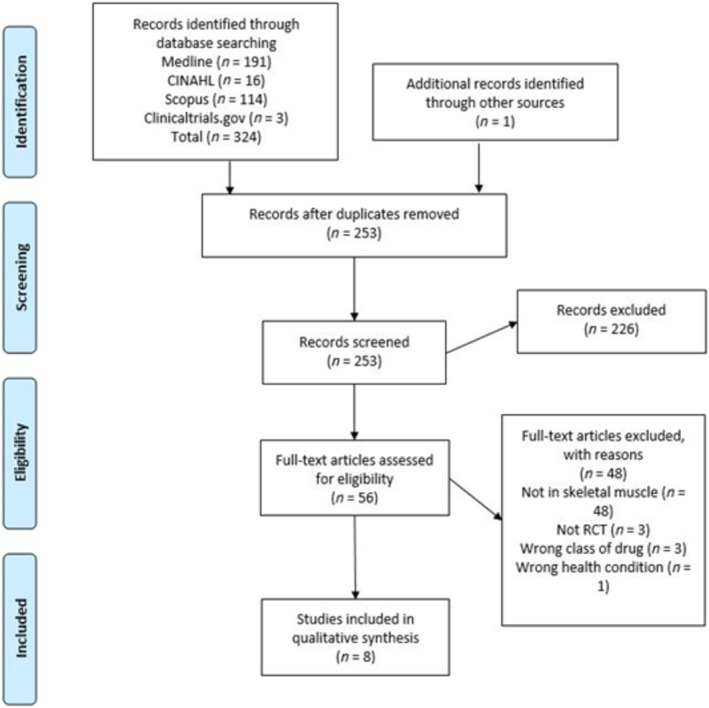
This review encompassed a total of eight studies; the study selection flow diagram can be found in Figure 1. Only one study used semaglutide [36], three used liraglutide [37, 38, 39], two used exenatide [40, 41] and two used Exendin‐4 [42, 43]. No studies using GLP‐1 RA GIP were found. All studies included were preclinical trials; no human studies were found. Of these, two trials were conducted using rat models, spontaneously diabetic torii rats (SDT‐rats) [37] or Sprague Dawley rats [40]; five trials used mice, including the C57BL/6J mouse line [36, 39, 42], KKAy mice (a cross breed between diabetic KK mice and lethal yellow Ay mice that carry a mutation of the agouti gene) and C57BL/6J mice were used by [38] and C57bL/6JOlaHSD mice (a subline of mice carrying a deletion of the alpha synuclein locus gene) were used by [41]. One in vitro study investigated GLP‐1 RA therapy using the C2C12 cell line [43]. In terms of our primary outcome, three studies reported the effect of GLP‐1 RA on mitochondrial density, area or morphology [36, 38, 40]; one study examined mitochondrial content, focusing on citrate synthase activity [37]; oxygen consumption rate was explored in two studies following different GLP‐1 RA therapy [41, 43]; two studies explored effects of GLP‐1 RA on mitochondrial biogenesis [37, 39] and two on metabolism [42, 43]. Study characteristics details can be found in Table 1.

Prisma flow diagram of trial selection. Abbreviation: RCT, randomized controlled trial.
| Trial | Type of Trial | Model | Sample size/experiment repeats | Drug therapy | Duration + dosage | Comparator | Mito‐related outcomes and direction of change |
|---|---|---|---|---|---|---|---|
| [] [36] | Preclinical | C57BL/6J mice | Control = 6nHFD = 6nHFD + Semaglutide = 6n | Semaglutide | 12 weeks, 30 nmol/kg/day | Untreated HFD + untreated normal | Number ↑ + area ↑ HFD + semaglutide vs. untreated HFD |
| [] [37] | Preclinical | SDT rats | SD‐control = 7nSDT‐control = 7nSDT + liraglutide = 6n | Liraglutide | 8 weeks of increased daily doses: Week 1—0.2 mg/kg, week 2—0.4 mg/kg, week 3–8—0.6 mg/kg | SD untreated + SDT untreated | Citrate synthase ↔ soleus* & EDL, Cox5B ↑ soleus & EDL PGC‐1α ↔ soleus, ↑ EDL |
| [] [40] | Preclinical | SD rats | T2DM‐control = 5nT2DM + exenatide = 5nNon‐T2DM‐control = 6nNon‐T2DM + exenatide = 6n | Exenatide | 8 weeks, daily dose of 5 μg | Untreated T2DM + untreated non‐T2DM | Swelling ↓in T2DM + exenatide vs. untreated T2DM |
| [] [42] | Preclinical | C57BL/6J mice | EGLP = 4nExendin‐4 = 4nControl = 4n | Exendin‐4, EGLP‐1 | 10 weeks of twice daily dose. 30 nmol/kg | Untreated C57BL/6J | UCP3 ↑ in EGLP‐1 vs. Exendin‐4 & untreated, UCP1 ↔ |
| [] [43] | Preclinical | C2C12 cell line | Repeats ‐ NA | Exendin‐4 | 20 nM changed every 24 h for 48 h total | Untreated C2C12 | Basal OCR ↑ LEAK state ↑ maximum respiration ↑ uncoupling efficiency ↑ UCP1 mRNA↑ UCP2 mRNA ↔ UCP3 mRNA ↔ CPT‐1 mRNA ↔ PGC‐1α protein ↑ |
| [] [41] | Preclinical | C57BL/6JOlaHSD mice | NCD = 10nHFD + exenatide = 10nHFD = 10n | Exenatide | 8 weeks of 10 μg/kg/day | Normal diet untreated + HFD untreated | Mitochondrial respiration ↔ overall (LEAK state ↔ OXPHOS state ↔ electron transfer system capacity ↔) |
| [] [38] | Preclinical | KKAy and C57BL/6J mice | KKAy‐control = 6nKKAy + liraglutide = 6nC57 control = 6n | Liraglutide | 6 weeks of 250 μg/kg/day | KKAy untreated + C57BL/6J untreated | Number ↑ in KKAy + liraglutide vs. KKAy untreated, area ↑ in KKAy + liraglutide vs. KKAy untreated |
| [] [39] | Preclinical | C57BL/6J mice | Normal diet control = NRnHFHS control = NRnNormal diet + liraglutide = NRnHFHS + liraglutide = NRn | Liraglutide | 4 weeks of 0.1 mg/kg/day | Chow untreated + HFHS untreated | PGC‐1α ↑ in normal diet + liraglutide vs. normal diet control & ↑ in HFHS + liraglutide vs. HFHS control |
Risk of Bias
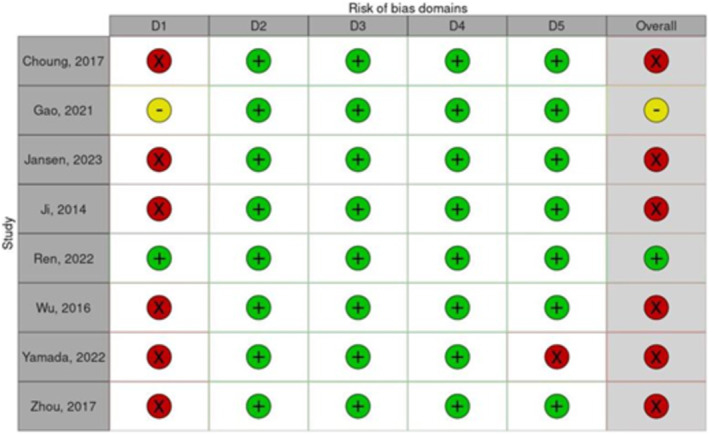
Summaries of the studies' risk of bias are provided in Figure 2. Only one trial was rated as low risk of bias, with the remaining eight seen as either high risk or some concerns.

Cochrane Risk of bias tool used to assess the risk of bias in included trials. Judgements indicated as high risk of bias 'X', some concerns '‐', low risk of bias '+'. Domains are as follows: bias arising from the randominization process (D1), bias due to deviations from intended intervention (D2), bias due to missing outcome data (D3), bias in measurement of the outcome (D4), bias in the selection of the reported result (D5).
Analysis of Extracted Data
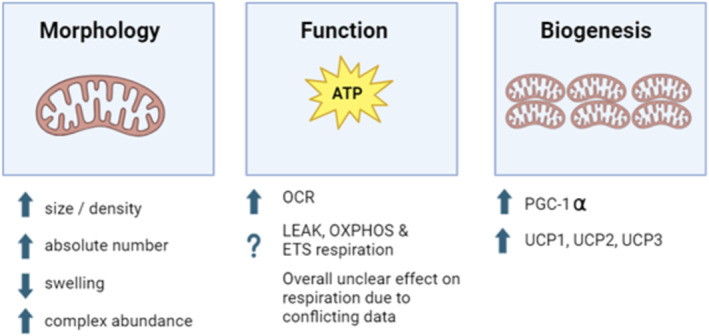
A summary of the results generated by this review can be found in Figure 3. Details can be found in the subsections below.

Schematic diagram of the effect of GLP‐1 RA on mitochondria function. Abbreviations: ATP, adenosine triphosphate; ETC, electron transport chain; OCR, oxygen consumption rate; OXPHOS, oxidative phosphorylation; PGC‐1alpha, peroxisome proliferator‐activated receptor gamma coactivator 1‐alpha; UCP, uncoupling protein.
Mitochondrial Density/Area/Morphology
Ji and colleagues treated KKAy mice with 250 μg/kg/day of liraglutide compared with a saline control. They investigated mitochondrial area and density using transmission electron microscopy (mitochondrial area/100 μm2 and mitochondrial number/10 μm2 were determined by analysing 10 images taken at 20 000× magnification using image J). They reported a significant increase in mitochondrial area (+113%) and number (+441%) in the liraglutide treated animals compared with the control group [38]. The authors also reported improvements in morphology; The KKAy mouse model (a rodent model of T2DM) presented with disarranged, swollen mitochondria clusters which visually improved following the 6‐week liraglutide treatment. Ren and colleagues treated C57BL/6 mice with semaglutide or a placebo following a high‐fat diet, which resulted in weight gain compared with a group on a normal diet. They used TEM to investigate effects of semaglutide upon mitochondrial number and area. They reported the high fat diet reduced mitochondrial number and area determined by TEM, which was then reversed following semaglutide treatment together with improvements in morphology, that is, reductions in swelling [36]. They also investigated the effect of the drug upon sarcoplasmic reticulum area, but found no difference [36]. Wu and colleagues investigated the effect of exenatide treatment in mice with T2DM upon mitochondria morphology [40]. Using TEM, they found T2DM caused severe disruption to mitochondria morphology, which included swelling and disordered cristae. This was largely reversed after treatment with exenatide leading to the conclusion that the drug was able to reduce mitochondrial damage induced by T2DM.
The effect of liraglutide on mitochondrial mass and complex abundance was investigated in SDT fatty rats (an obese T2DM model) by Yamada and colleagues [37]. They found that increasing doses of liraglutide over 6 weeks increased protein expression of Cox5B (subunit of Complex V) when compared with the control SDT fatty rats [37]. There was also a strong trend for an increase in citrate synthase activity (SDT untreated vs. SDT + liraglutide p = 0.05) in the soleus muscle, but no effect was seen in the EDL. CS activity is commonly used as a marker of mitochondrial mass and COX5B was used by the authors to determine mitochondrial preservation.
Mitochondrial Respiration
Mitochondrial respiration was explored in three studies following different GLP‐1 RA therapies. The first study utilized a Seahorse XF24 Extracellular Flux Analyzer to assess oxygen consumption rates (OCR) in C2C12 cells (cells were incubated ± oleate and palmitate acid to mimic obesity) following incubation with 20‐nM Exendin‐4/day for 2 days [43]. Exendin‐4 treatment increased basal and maximal respiration, increased uncoupling efficiency and proton leak compared with untreated cells. The authors commented that this suggested Exendin‐4 promoted an increase in fatty acid oxidation. They also reported an upregulation of UCP1 mRNA after 24 h of 20 nM of Exendin‐4 in differentiated C2C12 cells, which interestingly was not replicated in the animal arm of the study [43]. No effect was seen of exendin treatment on UPC2 or UPC3 mRNA expression. Gao and colleagues noted an increased protein and RNA expression of UCP3 in the EGLP‐1 analogue group when compared with a control and a group treated with Exendin‐4 [42]. Mitochondrial uncoupling proteins are a family of transmembrane proteins localized in the inner mitochondrial membrane that are involved in the transport of protons across the mitochondrial membrane and thereby inducing mitochondrial uncoupling [44]. They are not direct measures of respiratory function but can provide information on thermogenesis and energy expenditure.
Ex vivo mitochondrial respiration using a high‐resolution respirometry via oxygraphy‐2k system (OROBOROS) in C57BL/6Jola HSD mouse models was performed by Jansen and colleagues. High‐fat diet (HFD‐fed) mice were administered 10 μg/kg/day exenatide for 8 weeks. The protocols used specifically probed LEAK and OXPHOS states and electron transfer system capacity [41]. Overall, the authors concluded that mitochondrial respiration was not influenced by exenatide treatment. They did however report that the flux control efficiency showed a significant decrease as well as the maximum complex I activity in HFD‐fed mice supplemented with Exenatide. However, the majority of the LEAK respiration (O2 compensating for the lack of ATP synthesis), OXPHOS respiration (the NADH pathway) and electron transfer system (ETS) respiration were not significantly different when compared with the HFD.
Mitochondrial Biogenesis
C57BL/6J mice given 0.1 mg/kg per day liraglutide for 4 weeks showed an upregulation of PGC‐1α protein expression by 85% in mice on a normal diet and by 204% in those on a high‐fat‐high‐sucrose (HFHS) diet. This effect was independent of effects upon AMPK and SIRT‐1, key proteins within the canonical pathway for increased PGC‐1α expression [39]. However, Yamada and colleagues found no significance in PGC‐1α protein expression following liraglutide in the soleus muscle between the control SD mice and the SDT mice treated with liraglutide, but there was a significantly higher expression of PGC‐1α in the extensor digitorum longus (EDL) muscle [37]. Choung and colleagues [43] reported an increase in PCG‐1α protein expression following incubation of C2C12 cells with 20‐nM Exendin‐4 for 12 h.
Discussion
This systematic review assessed the current available evidence for the effects of GLP‐1 RA therapy on skeletal muscle respiratory function in people or animal models living with T2DM or obesity. The majority of emerging evidence suggests that, using animal or in vitro models, the administration of GLP‐1 RA has a positive effect upon certain indices of skeletal muscle mitochondrial health. However, this was not a consistent finding, and we do present some unclear and conflicting evidence on mitochondrial mass and PGC‐1α, effects upon which appear to be sensitive to the particular muscle measured [37]. In addition, Jansen and colleagues [41] demonstrated no beneficial effect, that is, a neutral effect on mitochondrial respiration following exenatide administration. Importantly, this study was the only study to measure mitochondrial respiration using high‐resolution respirometry (oxygraphy‐2k system), the gold standard method for this investigation. We also report a complete absence of human studies in this area, making the ability to draw firm conclusions difficult. The majority of trials within this review were deemed as high risk of bias, mainly due to lack of randomization and blinding to outcome measures.
GLP‐1 RA therapy improves glucose levels in people with T2DM by increasing insulin secretion and inhibiting glucagon release. Moreover, GLP‐1 RAs promote satiety and slow gastric emptying, which support weight loss and further improve insulin resistance [45]. Over 4.4 million prescriptions were filled in the United States alone for GLP‐1 RA as of 2023 [46], which reflects the sharp rise in their usage likely due to their efficacy in inducing weight loss and their cardio‐protective effects [47]. Findings from a systematic review and meta‐analyses that assessed weight loss whilst taking liraglutide or exenatide GLP‐1 RA found the range of weight loss from 21 trials ranged from −7.2 to 0.2 kg [48]. However, the authors noted the overall weight loss does not solely consist of fat mass, the growing concern lies on whether there is a negative effect of skeletal muscle loss following GLP‐1 RA therapy [25]. Harder and colleagues found that administration of liraglutide for 8 weeks resulted in a nonsignificant increase in lean body mass in their participants [49], whereas Xaing and colleagues found no significant change in skeletal muscle index but an overall muscle mass loss of 4.8 ± 4.4% in Chinese people with obesity following semaglutide treatment for 6 months [50]. Importantly, data from clinical populations suggest that GLP‐1 RA therapy may actually result in muscle atrophy as dulaglutide was reported to have a significantly negative effect on skeletal muscle mass in people with T2DM on haemodialysis. The authors concluded, therefore, that in haemodialysis patients, an already very frail population, GLP‐1 RA may actually promote sarcopenia [51]. This suggests that the effect of GLP‐1 RA on skeletal muscle may vary between populations, which is critical to understand. The clinical relevance of these negative effects on muscle is still up for debate as similar losses in muscle have been found from general weight loss making the need for further research vital in understanding the overall effect [52].
With data being limited, and no consensus on the overall effect upon skeletal muscle mass, a clear understanding of the mechanisms at play is yet to be determined. Exercise plays a key role in the preservation of skeletal muscle in age and chronic disease, but not all individuals can meet the daily exercise recommendations [53]. There are some suggestions that GLP‐1 RA therapy itself may support improvements in physical function [54]. Weight loss interventions usually involve a combination of dietetic interventions and physical activity, with the inclusion of pharmacological therapies as a recent addition to weight management strategies. Therefore, more data are needed here to fully understand the interaction of this drug and lifestyle modifications on skeletal muscle mass in different populations. Exercise is well known for improving mitochondrial health [55], and improvements in mitochondria are vital in maintaining skeletal muscle function due to their role in energy homeostasis and metabolism [56]. By understanding what effect GLP‐1 RA has on mitochondria, we can then begin to understand the overall effect it may have on skeletal muscle mass. It is possible that these effects are conflicting in that GLP‐1s have a positive impact upon mitochondrial content or structure, but a negative effect upon muscle mass.
Studies show that stopping GLP‐1 RA treatment often leads to significant weight regain, with up to two thirds of lost weight regained within a year, along with reversals in some cardiometabolic improvements [57]. These findings emphasize the need for ongoing GLP‐1 RAs treatment to maintain weight loss and sustain cardiometabolic benefits, but it is also important to understand the impact of weight regain on mitochondrial content/function, particularly because most regained weight may be fat mass rather than muscle mass [58, 59]. Notably, none of the studies reviewed included a follow‐up period post treatment, highlighting an area for future research.
Mitochondrial Morphology
Overall, the studies analysed showed a beneficial effect of GLP‐1 RA therapy upon mitochondria morphology. This included increased size and density [38] [36], [40] increased absolute numbers/content [36, 37, 38], reduction in signs of mitochondrial swelling [40] and complex abundance [37]. Such improvements are vital for efficient mitochondrial function. An increase in mitochondrial size and density improves skeletal muscle oxidative capacity, which has been linked to increasing levels of resting metabolic rate (BMR) [60] supporting an overall increase in BMR. This increase in BMR could help support people who are prescribed GLP‐1 RA with their overall weight loss effect due to the natural decrease in BMR as people lose weight [61]. Ren and colleagues noticed increased mitochondrial content following 12 weeks of semaglutide treatment [36]—increased mitochondria content is correlated to improvements in skeletal muscle function and health [62]. Similarly, Ji and colleagues also saw increases in mitochondria number/content and area along with improvements within the myofibrils structure following liraglutide treatment (clearer cross striation and less atrophic myofibril compared with the mice with diabetes) [38]. These improvements show potential for liraglutide to protect and repair damaged mitochondria through decreasing oxidative stress, which is generated by dysfunctional mitochondria [63]. Exenatide was also shown to improve mitochondrial morphology after 8 weeks in rats with T2DM, with a smaller number of swollen mitochondria found when compared with the control T2DM rat without exenatide treatment [40]. This decrease allows for better ATP production and utilization within the muscle, which can support in the maintenance of skeletal muscle structure and integrity [64].
Mitochondria content improvements were noted by increased CS and upregulated Cox5B in the soleus muscle of SDT rats following liraglutide treatment for 8 weeks [37]. This study demonstrates the possible role of liraglutide in upregulation of fatty acid oxidation by preserving mitochondria content in type I muscle fibres [65]. This preservation can reduce the risk of mitochondrial dysfunction and cell death, helping to maintain the skeletal muscle integrity in patients.
It is important that researchers combine measures of mitochondrial content and function, as one does not always follow the other (i.e., increased content does not always lead to increased function), and careful consideration should be made to the different types of mitochondria function beyond ATP synthesis.
Mitochondrial Respiration
There is no clear overall effect of GLP‐1 RA on mitochondrial respiration. Choung and colleagues used the Seahorse XF24 extracellular Flux analyser to explore the effects of Exendin‐4 on C2C12 cells, which were given palmitate to induce obesity‐like properties [43]. OCR, basal respiration rate, and proton leak where all seen to increase following the Exendin‐4 treatment; there was also an increase in UCP1 expression, which can correlate with the increased energy metabolism [66]. A similar upregulation of UCP2 or UCP3 though was not reported [43], whereas Gao and colleagues did report upregulation of UCP2 and UCP3 following EGLP‐1 analogue treatment when compared with Exendin‐4 treatment in C2C12 cells [42]. UCP2 regulation has been noted to support ATP/ADP ratio, whereas UCP3 is involved in regulation of ROS and the handling of fatty acids [67]. These changes following GLP‐1 therapy may protect the mitochondria from overaccumulation of fatty acids, which may play a part in reducing skeletal muscle insulin resistance [68].
High‐resolution respirometry was used to understand the effects of exenatide on mitochondrial respiration in HFD‐fed mice [41]. There was deemed no significant overall effect as there was no difference reported in LEAK, OXPHOS or ETS respiration in the treatment mice compared with the control HFD mice. They did however report a decrease in both flux control efficiency and maximum complex I activity [41], which have been noted to improve glucose homeostasis [69]. This is the only known study to date that has investigated mitochondrial respiration using high‐resolution respirometry in skeletal muscle following GLP‐1 RA therapy. It is, therefore, still unclear if there is any benefit of GLP‐1 RA's on mitochondrial respiration health.
Mitochondria Biogenesis
Two papers focused on the expression of PGC‐1α [37, 39]. Yamanda and colleagues noted an upregulation of PGC‐1α expression in SDT rats EDL muscle following liraglutide treatment, but not in the soleus muscle [37], which is interesting given the predominance of type I fibres within the soleus muscle [70]. Protein expression of PGC‐1α was also shown to be upregulated in HFHS mice given liraglutide over 4 weeks by Zhou and colleagues; however, clear indication of which muscle was used to find this expression was not given. This upregulation was not mediated through the AMPK‐SIRT‐1 cell signalling pathway, although it shows signs of supporting mitochondria capacity through other pathways, which need further investigation [39]. The authors also reported an increase in PGC‐1α protein expression in the control + liraglutide compared with the control group alone [39]. Zhou and colleagues did not report on the relationship between PGC‐1α and mitochondrial content present, which would have been beneficial in showing a clearer understanding of the effects of GLP‐1 RA. PGC‐1α is a critical regulator in mitochondria biogenesis, and its expression is often used as an indicator of the activation of this process. In addition to this, it supports quality control mechanisms within mitochondria through fission, mitophagy and fusion [71]. Therefore, determining the effects of GLP‐1 therapy on PGC‐1α are a vital component to help us understand the effects this class of drugs might be having upon on key aspects of mitochondria health [71].
Limitations
The biggest limitation to the current available data is the lack of human studies that have been performed to investigate skeletal muscle respiratory function following GLP‐1 RA–based therapies. This is a major gap within the current research that is vital in understanding the effects of GLP‐1 RA–based therapies on skeletal muscle. The effect of weight loss drugs in general upon skeletal muscle is an emerging area of research clearly at an early stage, which likely accounts for the absence of human data. Future studies should include assessments of respiratory function, which can be made by magnetic resonance spectroscopy (MRS) to avoid the necessity for muscle biopsies in this population. This need for human research is also emphasized by the poor translation of drug trials from animal to human models [72]. In addition, different weight management therapies may influence mitochondria in different ways; a meta‐analysis on the mitochondrial effects comparing caloric restriction (CR) and bariatric surgery found a reduction of complex IV in CR group but not in the bariatric group [73]. There is no clear understanding on whether the effects of GLP‐1 RA on mitochondria are caused by the drug or due to weight‐independent mechanisms, which will need further evaluation. Furthermore, this review only found data on the effect of single GLP‐1 RA's on mitochondrial respiration. As multiple novel pharmacotherapies combine GLP‐1 with other enteropancreatic hormones with diverse actions as dual or triple agonists, it is important to understand over the next years the effect of the different treatment combinations with GLP‐1 on mitochondria.
There is a lack of studies looking at the impact of exercise alongside GLP‐1 RA administration on skeletal muscle, which is vital because of the key role exercise plays in weight management as well as the role mitochondria plays in exercise. A study by Yates and colleagues found a decrease in physical activity following GLP‐1 RA therapy despite the overall decline in weight loss [74], yet there is a positive effect on physical function [54]. Reasoning for this is conflicting relation is limited and warrants further attention towards the involvement of exercise during administration. It is also important to understand what effects persist when individuals stop using GLP‐1 RAs. For example, it is not known how long improvements in physical function or mitochondrial content will persist after stopping GLP‐1 RAs and whether potential changes in these parameters will be linked to weight regain after stopping GLP‐1 RAs.
Because of differences in the drug therapy, dosages, outcome measures, duration of application and model used, a meta‐analysis could not be completed and so an overall effect cannot be determined based on current data available. Only one trial was considered as low risk of bias, as majority of papers did not blind the outcome reporter to the groups or failed to report their randomization/blinding procedure if applicable. None of the studies included have reported direct number statistics in their results, leaving interpretation difficult due to the only values given being through bar graphs or their own interpretation of the results. A standardization of dosage levels could help to untangle the relative effect as the studies assessed here did not present a rationale for their dosage levels or their prior optimization. Furthermore, how the dosages used within preclinical trials were selected or how they relate to those administered to humans was not discussed in any study we evaluated. This is a limitation as it puts into question the degree of translation in the effects seen in these animal models and what might be expected to be seen in humans.
Conclusion
The current data presented through this systematic review demonstrates the potential beneficial effects of GLP‐1 RA therapy on mitochondrial content with an unclear effect upon function and mass. However, data are very limited and solely presented in animal models. Future studies should be conducted in human populations in order to begin to understand the effect of GLP‐1 RAs on human skeletal muscle mitochondria. Finally, skeletal muscle responds to stressors in a fibre type specific manner. Therefore, future investigations should seek to determine the effects of GLP‐1 RAs on the different muscle fibre types. Treating muscle as a homogenous tissue may mean that important differences are missed.
Ethics Statement
We certify that we comply with the ethical guidelines for authorship and publishing.
Conflicts of Interest
The authors declare no conflicts of interest.