
What this is
- This systematic review evaluates glucagon-like peptide-1 receptor agonists (GLP-1 RAs) in patients with obesity-related heart failure with preserved ejection fraction (HFpEF).
- It examines their efficacy in addressing the , where higher BMI may correlate with better outcomes in HFpEF.
- The review includes data from 18 studies involving over 22,000 participants, focusing on outcomes like heart failure hospitalizations, mortality, and quality of life.
Essence
- GLP-1 RAs, particularly semaglutide and tirzepatide, reduce weight and inflammation while improving heart failure symptoms in obese patients with HFpEF. They effectively counter the by preserving hemodynamic benefits while promoting weight loss.
Key takeaways
- GLP-1 RAs consistently reduced C-reactive protein levels by 36–42%, indicating decreased systemic inflammation. This reduction correlates with improved functional outcomes and quality of life.
- Semaglutide reduced N-terminal pro B-type natriuretic peptide levels by 18–23%, reflecting lower myocardial stress. Tirzepatide demonstrated similar efficacy with a 20.9% reduction.
- Both GLP-1 RAs improved exercise capacity, with semaglutide showing an average increase of +17.1 m in the 6-minute walk distance. Tirzepatide achieved an average increase of +18.3 m.
Caveats
- Heterogeneity in study designs and participant characteristics may affect the generalizability of findings. Variations in sample sizes and definitions of HFpEF were noted.
- Not all studies consistently reproduced the , suggesting methodological biases may influence results. The relationship between weight loss and improved outcomes remains complex.
Definitions
- obesity paradox: A phenomenon where higher body mass index (BMI) is associated with better outcomes in certain cardiovascular conditions, including heart failure.
Simplified
Introduction
Heart failure with preserved ejection fraction (HFpEF) accounts for nearly half of all heart failure cases and involves preserved left ventricular systolic function with impaired diastolic relaxation, which increases filling pressures []. Systemic inflammation, endothelial dysfunction, oxidative stress, and cardiac remodeling drive its multifactorial pathophysiology [–]. Aging, hypertension, diabetes, and obesity significantly increase the risk of HFpEF [,]. The global rise in these conditions and aging populations continues to escalate HFpEF prevalence, surpassing heart failure with reduced ejection fraction (HFrEF) and straining healthcare systems []. 1 2 4 5 6 7
Clinicians have identified a few effective therapies for HFpEF. Sodium–glucose cotransporter 2 inhibitors, such as empagliflozin and dapagliflozin, reduce cardiovascular mortality and hospitalizations [,]. Unlike HFrEF therapies targeting neurohormonal pathways, HFpEF therapies face challenges because of their heterogeneous pathophysiology []. Researchers have studied glucagon-like peptide-1 receptor agonists (GLP-1 RAs), including liraglutide, semaglutide, and tirzepatide, which improve glycemic control, promote weight loss, reduce inflammation, and enhance endothelial function in patients with type 2 diabetes [,]. Trials like semaglutide treatment effect in people with obesity and HFpEF (STEP-HFpEF) and Study of Tirzepatide Effects on Patients with HFpEF (SUMMIT) demonstrate their benefits in improving symptoms and functional capacity in obesity-associated HFpEF [,]. 8 9 10 11 12 13 14
Obesity drives HFpEF through systemic inflammation, epicardial fat deposition, and altered myocardial metabolism []; however, studies describe an 'obesity paradox', where patients with obese HFpEF experience better outcomes than their normal-weight counterparts [,]. Researchers attribute this phenomenon to earlier disease onset, protective adipose tissue properties, and favorable hemodynamic profiles []. Weight loss, while reducing obesity-related comorbidities, may negate these survival advantages, particularly if it occurs rapidly or excessively, as shown in studies linking it to worse cardiac outcomes [,]. 15 16 17 18 13 19
GLP-1 RAs reduce weight selectively while preserving mechanisms associated with potential protection in obese HFpEF subjects. Indeed, they have anti-inflammatory and cardiometabolic effects, which in principle target HFpEF drivers, such as endothelial dysfunction and systemic inflammation [–]. This study aimed to summarize the current evidence on the therapeutic actions of GLP-1 RAs in HFpEF, with specific objectives to: (a) evaluate their mechanisms of action and complementary effects to other therapies, (b) assess their impact on clinical outcomes in HFpEF, and (c) examine their interaction with the obesity paradox. By integrating findings from recent mechanistic studies and clinical trials, the study seeks to clarify the role of GLP-1 RAs in managing HFpEF, particularly in obesity-related phenotypes. 20 22
Methodology
We performed this systematic review to assess the efficacy and safety of GLP-1 RAs in the management of the obesity paradox in HFpEF and followed the Preferred Reporting Items for Systematic review and Meta-analysis (PRISMA) guidelines. Eligible studies for inclusion in this review were limited to adults (≥18 years) with a diagnosis of HFpEF (ejection fraction ≥45%) and obesity (BMI ≥ 30 kg/m²) in whom GLP-1 RAs (e.g. semaglutide or liraglutide) were administered. These interventions were compared with placebo, usual care, or alternative treatment options. Main outcomes of interest were major adverse cardiovascular events (MACE), heart failure hospitalizations, and all-cause mortality while secondary outcomes were changes in body weight, BMI, left ventricular ejection fraction, exercise capacity [i.e. 6-min walk distance (6MWD)], quality of life (i.e. Kansas City Cardiomyopathy Questionnaire) and inflammatory bIomarkers; C-reactive protein (CRP) and N-terminal pro B-type natriuretic peptide (NT-proBNP).
Search of major databases, including PubMed, Embase, Cochrane Central Register of Controlled Trials (CENTRAL), and Web of Science were performed to identify relevant studies. Clinical trial registries, such as ClinicalTrials.gov and WHO International Clinical Trials Registry Platform were also searched to identify ongoing or unpublished studies. The search was conducted using a mixture of medical subject headings terms and a variety of free text terms related to HFpEF, GLP-1 RAs, and obesity to ensure a comprehensive and inclusive scope. The search included the period between January 2015 and December 2024, allowing a review of the past 10 years of relevant literature. We included studies published in English from all points of the databases' inception.
These included randomized controlled trials (RCTs), prospective cohort studies, and case-control studies with predefined eligibility criteria. We excluded narrative reviews, editorials, and retrospective observational studies. Narrative reviews were excluded for the lack of methodological rigor and potential for bias, while retrospective studies were excluded for limitations in causality assessment and susceptibility to bias. All identified studies were screened for eligibility by two independent reviewers after reviewing titles and abstracts. We then assessed full-text articles of possibly in-scope studies for inclusion. A PRISMA flow diagram was used to document the entire selection process.
We extracted data through a standardized, piloted form. Extracted data included study characteristics (author, year, country, design, and degree of funding/economic disclosure); participant demographics (age, sex, race/ethnicity, and baseline BMI and comorbidities); baseline characteristics [HFpEF etiology, New York Heart Association (NYHA) classification, ejection fraction, CRP levels, and NT-proBNP levels]; intervention characteristics (type of GLP-1 RA, dose, duration, and associated medication), comparator details, and reported outcomes. Adverse events and safety data were extracted as well.
Two reviewers independently assessed the risk of bias of the included studies. If the study is an RCT, the Cochrane Risk of Bias 2.0 tool is used, and the Newcastle–Ottawa Scale is used for observational studies. Any disagreements in the risk of bias assessments were resolved by discussion or by consulting a third reviewer.
A narrative synthesis was performed to outline study characteristics, participant characteristics, interventions, and key findings. Measures were summary risk ratios and mean differences with 95% confidence intervals (CIs). Statistical heterogeneity was evaluated by the² statistic and Cochran'stest. We subsequently performed subgroup analyses based on type of GLP-1 RA, the presence of diabetes, categories of BMI (30–34.9, 35–39.9, and ≥40 kg/m²), and duration of follow-up (2 years). Sensitivity analyses were carried out to explore the robustness of findings and the influence of study quality and possible sources of bias. I Q
Results
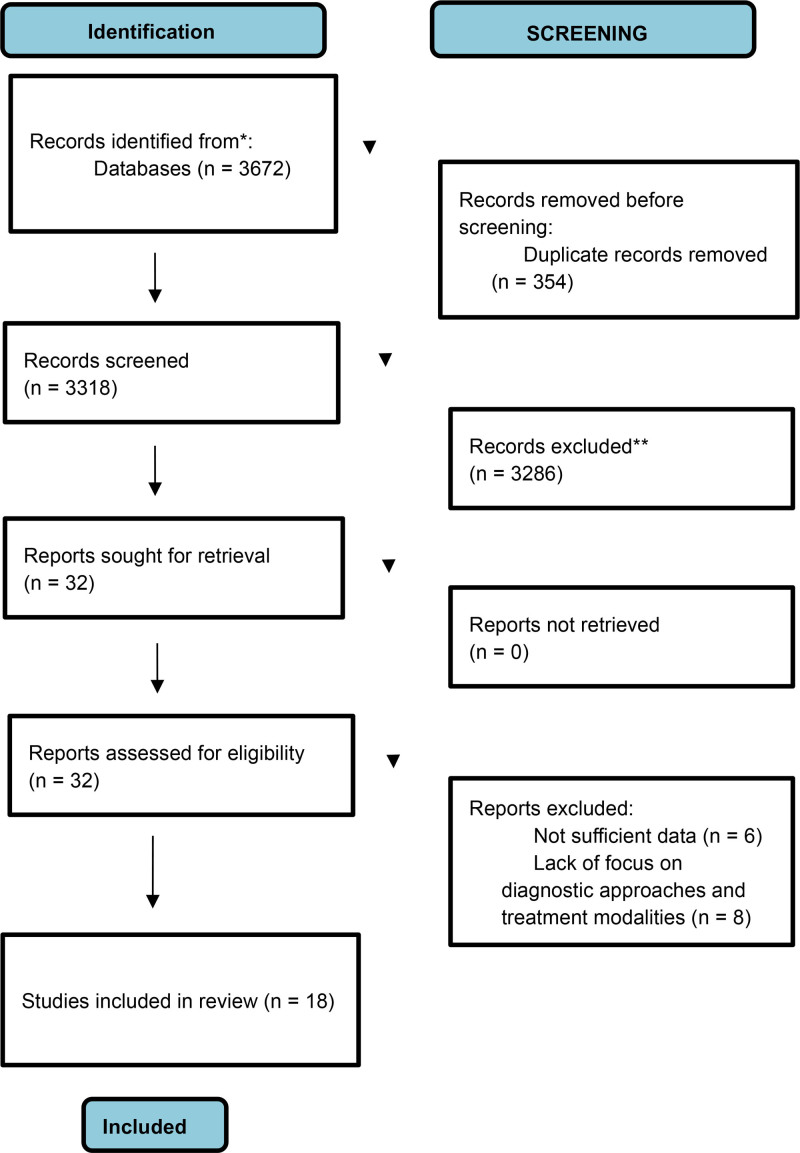
A total of 3672 studies were identified through the systematic search of electronic databases. After the removal of 354 duplicates, 3318 unique records were screened by title and abstract. Following this initial screening, 32 studies were assessed for eligibility through full-text review. Ultimately, 18 studies met the inclusion criteria and were included in the systematic review. The PRISMA 2020 flow diagram illustrating the study selection process is provided in Fig.. 1

PRISMA 2020 flow diagram.
Study characteristics
This systematic review focused on 18 studies evaluating the implementation of GLP-1 RAs in obesity-related HFpEF, including semaglutide (2.4 mg weekly) and tirzepatide (up to 15 mg weekly). The studies included pooled analysis of RCTs, multinational RCTs, and imaging substudies (ranging from 175 to 22 282) The participants were mostly older adults (median 68–70 years) with BMI greater than or equal to 30 kg/m² and comorbidities like hypertension (73–85%), diabetes (up to 54%), and atrial fibrillation (26–46%). The intervention was administered for 52–104 weeks, and standard HFpEF therapies were provided between groups. The primary outcomes were the composite of Kansas City Cardiomyopathy Questionnaire Clinical Summary Score (KCCQ-CSS), weight loss, decreased heart failure hospitalizations, and decreased mortality. Secondary end points included biomarkers (e.g. NT-proBNP, CRP), exercise capacity (6MWD), and cardiac structural remodeling (e.g. left atrial volume and left ventricular mass). These findings highlight the therapeutic prospects of GLP-1 RAs for the multicomponent pathophysiology of HFpEF. Tableshows the study characteristics in detail. n 1
| References | Design | Population | Intervention | Duration | Primary outcomes | Secondary outcome | Risk of bias |
|---|---|---|---|---|---|---|---|
| Verma. []. et al [23] | Pooled analysis of STEP-HFpEF and DM trials | 1145 (570 women, 575 men) | Semaglutide, 2.4 mg weekly | 52 weeks | KCCQ-CSS (+7.6 points), weight loss (−9.6%) | Improvement in 6MWD, reduction in CRP | Low |
| Butler. []. et al [24] | Pooled analysis of two RCTs | 1145 | Semaglutide, 2.4 mg weekly | 52 weeks | KCCQ-CSS (+7.5 points), weight loss (−8.4%), HF hospitalization (HR: 0.27) | Increased 6MWD (+17.1 m), reduced CRP (−36%), NT-proBNP (−18%), | Low |
| Petrie. []. et al [25] | Pooled analysis of two RCTs | 1145 | Semaglutide, 2.4 mg weekly | 52 weeks | NT-proBNP reduction (−22%), KCCQ-CSS (+7.5 points), weight loss (−8.4%) | Improvement in 6MWD (+17.1 m), reduction in CRP | Low |
| Schou. []. et al [14] | Pooled analysis of two RCTs | 1145 | Semaglutide, 2.4 mg weekly | 52 weeks | NYHA improvement (32.6%), KCCQ-CSS (+7.5 points), HF hospitalizations (HR: 0.36) | Improved 6MWD (+17.1 m overall), NT-proBNP (−18%), CRP (−36%) | Low |
| Solomon. []. et al [8] | Echocardiographic substudy | 491 | Semaglutide, 2.4 mg weekly | 52 weeks | LA volume reduction (−6.13 ml), improved diastolic function | Improved diastolic function (E/e′ reduced by −0.79; = 0.05), better E/A ratio (−0.14; = 0.0075).PP | Low |
| Verma. []. et al [26] | Pooled analysis of STEP-HFpEF trials | 1145 (518 with AF and 627 without AF) | Semaglutide, 2.4 mg weekly | 52 weeks | KCCQ-CSS improvement (+11.5 points in AF), NT-proBNP reduction (−22%) | 6MWD (+17.1 m), CRP reduction (−36%) | Low |
| Verma. []. et al [27] | Pooled analysis of two RCTs | 1145 | Semaglutide, 2.4 mg weekly | 52 weeks | KCCQ-CSS improvement (+7.5 points overall), weight loss (−8.4%) | 6MWD (+17.1 m), CRP reduction (−36%), NT-proBNP reduction (−22%) | Low |
| Kosiborod. []. et al [28] | Pooled analysis of STEP-HFpEF and DM trials | 1146 | Semaglutide, 2.4 mg weekly | 52 weeks | KCCQ-CSS improvement (+7.5 points overall), weight loss (−8.4%) | 6MWD (+17.1 m), NT-proBNP (-22%), CRP (−36%) | Low |
| Shah. []. et al [29] | Pooled analysis of two RCTs | 1145 | Semaglutide, 2.4 mg weekly | 52 weeks | KCCQ-CSS (+7.5 points), weight loss (−8.4%), loop diuretic reduction (−17%) | 6MWD (+17.1 m), CRP reduction (−36%), NT-proBNP (−22%) | Low |
| Kosiborod. []. et al [19] | Multinational RCT | 529 | Semaglutide, 2.4 mg weekly | 52 weeks | KCCQ-CSS (+7.8 points), weight loss (−10.7%), NT-proBNP (−20.9%) | 6MWD improvement (+20.3 m; < 0.001), CRP reduction (−43.5%; < 0.001)PP | Low |
| Kosiborod. []. et al [30] | Multinational RCT (STEP-HFpEF DM) | 616 | Semaglutide, 2.4 mg weekly | 52 weeks | KCCQ-CSS (+7.3 points), weight loss (−9.8%), NT-proBNP reduction (−23.2%) | 6MWD (+14.3 m, = 0.008), CRP reduction (−42%, < 0.001)PP | Low |
| Kosiborod. []. et al [31] | Randomized, double-blind, placebo-controlled trial (STEP-HFpEF) | 529 | Semaglutide, 2.4 mg weekly | 52 weeks | KCCQ-CSS (+7.8 points), weight loss (−11%) | 6MWD (+20 m), CRP reduction, and NT-proBNP levels | Low |
| Deanfield. []. et al [32] | Multinational RCT | 17 604 (4286 with HF) | Semaglutide, 2.4 mg weekly | ~40 months | MACE (HR: 0.72), HF hospitalization (HR: 0.79), CV death (HR: 0.76) | Reductions in HF hospitalizations and symptom improvement in HFpEF subgroup | Low |
| Kosiborod. []. et al [33] | Pooled analysis of RCTs | 22 282 (3743 with HFpEF) | Semaglutide, 2.4 mg weekly | 52 weeks | CV death or HF hospitalization (HR: 0.69) | Worsening HF events (HR: 0.59), serious adverse events (29.9%) | Low |
| Borlaug. []. et al [13] | Multinational RCT (SUMMIT) | 731 | Tirzepatide, up to 15 mg weekly | 52 weeks | Reduction in systolic BP (−5 mmHg), weight loss (−11.6%), CRP (−37.2%) | Improved 6MWD (+18.3 m), decreased troponin T (−10.4%), reduced NT-proBNP (−10.5%) | Low |
| Zile. []. et al [34] | Multinational RCT | 731 | Tirzepatide, up to 15 mg weekly | ~104 weeks | CV death or worsening HF (HR: 0.62), KCCQ-CSS improvement (+6.9 points) | Weight loss: (−11.6%), exercise capacity: 6MWD improvement (+18.3 m), CRP reduction (−37.2%) | Low |
| Packer. []. et al [35] | Multinational RCT | 731 | Tirzepatide, up to 15 mg weekly | ~104 weeks | CV death or worsening HF (HR: 0.62), weight loss (−11.6%), KCCQ-CSS improvement: (+6.9 points) | Improved 6MWD (+18.3 m), CRP reduction (−34.9%) | Low |
| Kramer. []. et al [36] | CMR substudy of SUMMIT | 175 | Tirzepatide, up to 15 mg weekly | 52 weeks | LV mass (−11 g), paracardiac adipose (−45 ml) | LV end-diastolic volume reduction: (−7 ml) | Low |
Mechanisms of action
Anti-inflammatory effects
GLP-1 RAs had a consistent effect on lowering systemic inflammation, with each of the studies reporting a significant decrease in CRP levels. CRP was reduced by 36–42% following semaglutide ( < 0.001), including a 36% reduction in the STEP-HFpEF program and a greater 42% reduction in pooled analyses of the STEP-HFpEF studies [,]. Similar reductions of 34.9–37.2% were observed in the SUMMIT and other trials with tirzepatide [,,]. These reductions were correlated with better functional and quality-of-life measures (e.g. KCCQ-CSS, exercise capacity) (Table). P 27 33 13 34 35 2
| Study title | Intervention | CRP reduction (%) | valueP | References |
|---|---|---|---|---|
| STEP-HFpEF program | Semaglutide, 2.4 mg weekly | 36 | <0.001 | Verma. [,] et al [26] [27] |
| STEP-HFpEF DM trial | Semaglutide, 2.4 mg weekly | 42 | <0.001 | Kosiborod. [] et al [30] |
| SUMMIT trial | Tirzepatide, up to 15 mg | 37.2 | <0.001 | Borlaug. [] et al [13] |
| SUMMIT CMR substudy | Tirzepatide, up to 15 mg | 34.9 | <0.001 | Packer. [] et al [35] |
Endothelial function and myocardial remodeling
N-terminal pro B-type natriuretic peptide reductions
Semaglutide reduced NT-proBNP by 18–23% across studies, indicating reduced myocardial wall stress. The STEP-HFpEF trial demonstrated a 22% NT-proBNP reduction with semaglutide compared to placebo, highlighting significant improvements in myocardial stress markers []. Pooled analyses of RCTs, including STEP-HFpEF, reported NT-proBNP reductions averaging 20% with semaglutide treatment []. Tirzepatide also significantly reduced NT-proBNP by 20.9%, as shown in the SUMMIT trial, indicating similar efficacy in reducing myocardial stress [] (Table). 25 24 13 3
| Study title | Intervention | NT-proBNP reduction (%) | valueP | References |
|---|---|---|---|---|
| STEP-HFpEF | Semaglutide, 2.4 mg weekly | 18 | <0.001 | Butler. []. et al [24] |
| NT-proBNP insights | Semaglutide, 2.4 mg weekly | 22 | <0.001 | Petrie. []. et al [25] |
| SUMMIT trial | Tirzepatide, up to 15 mg | 20.9 | <0.001 | Borlaug. []. et al [13] |
Cardiac structural and functional changes
Semaglutide reduced left atrial volume by 6.13 ml in an echocardiographic substudy of the STEP-HFpEF trial [] ( = 0.0013). In addition, diastolic function improved significantly, as measured by E/e′ ratios ( = 0.05). Tirzepatide demonstrated structural benefits, reducing left ventricular mass by 11 g and paracardiac adipose tissue by 45 ml in the SUMMIT CMR substudy [] ( < 0.004). These structural changes directly reflect improvements in myocardial remodeling (Table). 8 36 4 P P P
| Study title | Intervention | LA volume change (ml) | LV mass change (g) | valueP | References |
|---|---|---|---|---|---|
| Echocardiographic substudy (STEP-HFpEF) | Semaglutide, 2.4 mg weekly | −6.13 | N/A | 0.0013 | Solomon. []. et al [8] |
| SUMMIT CMR substudy | Tirzepatide, up to 15 mg | N/A | −11 | 0.004 | Kramer. []. et al [36] |
Clinical outcomes
Cardiovascular mortality and hospitalizations
GLP-1 RAs, including semaglutide and tirzepatide, consistently demonstrated reductions in heart failure hospitalizations and cardiovascular mortality across trials. In the STEP-HFpEF trial [], semaglutide reduced heart failure hospitalization risk with a hazard ratio of 0.27 over 52 weeks. Similarly, the SELECT trial [] reported significant reductions in heart failure hospitalization rates (hazard ratio: 0.79) and MACE with semaglutide (hazard ratio: 0.72, 95% CI: 0.60–0.87) over approximately 40 months. In the SUMMIT trial [], tirzepatide significantly reduced the risk of cardiovascular death or worsening heart failure with an hazard ratio of 0.62 (95% CI: 0.41–0.95, = 0.026). A pooled analysis of the STEP trials [] further confirmed significant reductions in heart failure hospitalizations, reporting an hazard ratio of 0.36 (Table). 24 31 13 14 5 P
| Outcome | Semaglutide (STEP-HFpEF) | Tirzepatide (SUMMIT) | Comments |
|---|---|---|---|
| HF hospitalization | HR: 0.27–0.36 | HR: 0.62 (95% CI: 0.41–0.95) | Both drugs showed significant reductions in HF hospitalization risk |
| Cardiovascular death or MACE | HR: 0.72 (95% CI: 0.60–0.87) | HR: 0.62 | Semaglutide and tirzepatide reduced MACE and CV deaths consistently |
| 6MWD improvement | +17.1 to +20.3 m | +18.3 m (95% CI: 9.9–26.7) | Improvements in exercise capacity were clinically meaningful across all trials |
| KCCQ-CSS | +7.5 to +11.9 points | +6.9 points | Consistent symptom relief exceeding clinical thresholds |
| Weight loss | −8.4 to −10.7% | −11.6% | Weight loss correlated with reductions in cardiac remodeling and symptoms |
Exercise capacity and symptoms
Both semaglutide and tirzepatide demonstrated substantial improvements in exercise capacity and heart failure–related symptoms. Improvements in the 6MWD were consistently observed across trials. The STEP-HFpEF trials reported an average improvement of +17.1 m []. Similarly, the SUMMIT trial [] showed an improvement of +18.3 m (95% CI: 9.9–26.7, < 0.001) with tirzepatide. Kosiborod. [,,,] highlighted greater gains in patients with elevated NT-proBNP tertiles, with improvements reaching +20.3 m (Table). 25 13 19 30 31 33 5 P et al
Symptom relief, measured by the Kansas City Cardiomyopathy Questionnaire Clinical Summary Score (KCCQ-CSS), consistently exceeded thresholds for clinical significance across trials. Mean improvements ranged from +6.9 to +11.9 points. In the STEP-HFpEF trial [], semaglutide improved KCCQ-CSS by +7.5 points overall, with a more pronounced improvement of +11.5 points in patients with atrial fibrillation. The SUMMIT trial reported a KCCQ-CSS improvement of +6.9 points (95% CI: 3.3–10.6, < 0.001) with tirzepatide. 25 P
Quality of life and weight loss
GLP-1 RAs significantly improved quality of life and induced meaningful weight loss, which correlated with better cardiovascular outcomes. In the SUMMIT trial, tirzepatide achieved a weight reduction of −11.6% (95% CI: −12.9 to −10.4%, < 0.001), alongside reductions in paracardiac adipose tissue and improvements in diastolic function. In the pooled analysis of the STEP-HFpEF trials, semaglutide resulted in a weight loss ranging from −8.4 to −10.7%, with these reductions correlating with improved exercise capacity and significant decreases in left atrial volume (Table). P 5
Improvements in cardiac function were also observed. The STEP-HFpEF echocardiographic substudy [] reported a reduction in left atrial volume by −6.13 ml ( = 0.0013) with semaglutide, alongside enhanced diastolic function as indicated by a reduction in E/e′ by −0.79. 8 P
Obesity paradox interaction
GLP-1 RAs, such as semaglutide and tirzepatide, demonstrated consistent benefits across both obese and nonobese populations while addressing concerns about rapid or excessive weight loss, which could undermine the hemodynamic and survival advantages linked to obesity. Subgroup analyses confirmed the efficacy of GLP-1 RAs across different BMI categories, with improvements in cardiovascular outcomes, quality of life, and exercise capacity being comparable in patients with obese and nonobese HFpEF. For instance, the STEP-HFpEF trials reported a significant improvement of +7.5 points in KCCQ-CSS (quality-of-life scores), with no interaction between BMI subgroups. Weight loss ranged from 8.4 to 11.6%, yielding proportionate benefits for all participants (Table). Despite inducing weight reduction, GLP-1 RAs preserved the hemodynamic advantages of obesity by mitigating related comorbidities like hypertension and diabetes without compromising survival benefits. Reductions in NT-proBNP and CRP biomarkers across all BMI groups highlighted sustained improvements in myocardial and endothelial function. In addition, trials ensured gradual weight loss through dose titration protocols, with an average reduction of 8.4–10.7% over 52 weeks, preserving the favorable hemodynamic profiles of obesity-associated HFpEF. Improvements in exercise capacity, as measured by a 6MWD increase of up to +20.3 m, and in NYHA functional class were consistent across BMI subgroups, with obese patients retaining their functional advantage in exercise tolerance. These findings underscore the uniform efficacy of GLP-1 RAs in addressing HFpEF's complex pathophysiology while maintaining the benefits of the obesity paradox (Table). 6 7
| Study | Population (BMI) | KCCQ-CSS improvement | Weight loss (%) |
|---|---|---|---|
| STEP-HFpEF [] [25] | BMI ≥ 30 kg/m² (obese) | 7.6 | −9.6 |
| STEP-HFpEF [] [23] | BMI < 30 kg/m² (nonobese) | 7.5 | −8.4 |
| SUMMIT [] [36] | Mean BMI 38.3 kg/m² | 6.9 | −11.6 |
| Study | BMI subgroup | CRP reduction (%) | NT-proBNP reduction (%) | HF hospitalization HR |
|---|---|---|---|---|
| STEP-HFpEF [] [24] | BMI ≥ 30 kg/m² | −36 | −22 | 0.27 |
| STEP-HFpEF [] [14] | BMI < 30 kg/m² | −36 | −22 | 0.36 |
| SUMMIT [] [13] | All BMI | −37.2 | −23 | 0.62 |
Heterogeneity in glucagon-like peptide-1 receptor agonists
Heterogeneity across studies stemmed from variations in sample sizes, comorbidities, and HFpEF definitions (Table). Sample sizes ranged from 175 to 22 282 participants, with differing prevalences of hypertension (73–85%), diabetes (up to 54%), and atrial fibrillation (26–46%). HFpEF definitions varied, using either LVEF thresholds (≥45%) or NT-proBNP levels. Subgroup analyses showed consistent NT-proBNP reductions (18–23%) and quality-of-life improvements (KCCQ-CSS + 7 points) across BMI and NT-proBNP tertiles. 8
Tirzepatide trials reported larger weight loss (up to 11.6%) and greater cardiac improvements (e.g. left ventricular mass reduction: −11 g) compared with semaglutide, likely because of its dual GLP-1/GIP mechanism. Despite heterogeneity, GLP-1 RAs demonstrated uniform efficacy across populations, supporting their broad applicability in HFpEF management.
| Aspect | Semaglutide | Tirzepatide |
|---|---|---|
| Sample size | 491–17 604 participants | 175–731 participants |
| Weight loss (%) | 8.4–10.7% | 11.6% (95% CI: 10.4–12.9%) |
| Cardiac structure | Limited improvements in LA volume | Significant LV mass reduction (−11g) |
| Biomarker changes | NT-proBNP reduction: ~22% | NT-proBNP reduction: ~23% |
| Trial duration | 52 weeks to ~40 months | 52 to ~104 weeks |
Discussion
The obesity paradox: the U-shaped relationship
The 'obesity paradox' is an observable trend in patients with heart failure, where those with higher BMI often experience improved survival benefits [,]. There are multiple published studies cognizant of a U-shaped relationship between BMI and mortality, in which the risk of mortality is increased at both extremes of BMI (low and high), while mid-range BMI appears to be cardioprotective [,]. This finding contrasts with the classic notion of obesity as a risk factor for cardiovascular diseases because obesity contributes to systemic inflammation, epicardial fat accumulation, and changes in myocardial metabolism, all promoters of HFpEF [,]. This paradoxical observation has sparked extensive discussion in the medical community. 16 37 38 39 37 40
Evidence supporting the obesity paradox in heart failure with preserved ejection fraction
The supporting evidence for the obesity paradox in HFpEF includes TOPCAT and ARISTOTLE. In these two large cohort studies, patients with obese HFpEF had mortality and hospitalization rates lower than their normal-weight counterparts [,]. The observation of these findings suggested obesity may impart a protective effect in specific cardiovascular disease rather being a risk factor. Additional observational studies reported improved cardiac output, more favorable hemodynamic profiles, and greater metabolic reserves in higher patients with BMI []. 16 41 16
The beneficial effects in patients with obese HFpEF may be mechanistically related to multiple factors. For instance, adipose tissue serves as an endocrine organ that secretes factors, including anti-inflammatory adipokines, which attenuate systemic inflammation [,]. This effect could counteract inflammation processes typical of HFpEF. In addition, obese patients may present with elevated circulating lipoproteins, which may afford some buffering against cardiovascular insults []. In addition, increased energy storage in the form of fat tissue in obese patients can be especially beneficial in these acute decompensating episodes, creating essentially a metabolic buffer that improves survival rates []. 42 43 16 37
Despite these findings of higher BMI and better outcomes, they have not been consistently reproduced in all studies. This lack of reproducibility may suggest methodological bias underlying this paradox []. 44
Counter evidence to the obesity paradox
The obesity paradox suggests increased weight is associated with improved survival with an adage that decreasing weight may increase mortality according to the U-shaped relationship. Recent evidence counters this paradox in the context of HFpEF when treated with GLP-1 RAs. In the SELECT trial, weight loss improves cardiovascular outcomes, in particular decreasing cardiovascular mortality []. This finding argues against that lower BMI may increase mortality. 45
In addition, the STEP-HfpEF trial challenged the paradigm that weight loss impairs physiological reserve. This trial showed hardware gains in functional capacity with improved exercise tolerance as seen in 5 min walk test and a significant reduction in CRP and NT-proBNP []. These findings underscore the promise of weight loss strategies to treat the underlying pathophysiology of HfpEF rather than worsening. 46
Another challenge to the obesity paradox is biological plausibility. Although high BMI is correlated with certain compensatory mechanisms, it often conceals the detriment of central adiposity and ectopic fat deposition, contributing to heightened cardiovascular risk. Studies, such as advanced imaging studies, have established an eminent role of visceral fat accumulation in driving myocardial dysfunction and systemic inflammation and thus compromising the observed benefits of obesity []. Finally, the use of BMI as a measure of obesity ignores fat distribution, muscle mass, and other important determinants of health outcomes [] 47 48
Overall, these results suggest that the obesity paradox is more of a statistical artifact than a true physiological phenomenon. There are also methodological biases, such as reverse causality and collider stratification bias, that question its validity as they generate false associations between obesity and survival [,]. 16 49
Future directions of research
A multidimensional research strategy is needed to address the debate over the obesity paradox since heterogeneity exists. First, there is an urgent need for large-scale meta-analyses combining data from GLP-1 RA assays and other weight loss interventions carried out in patients with HFpEF. A recent meta-analysis of nine RCTs, including 8920 patients with heart failure and type 2 diabetes, reported a 13% reduction in MACEs with GLP-1 RA treatment compared with placebo []; however, this analysis did not differentiate between heart failure phenotypes, highlighting the need for more nuanced investigations specifically focused on HFpEF. To ensure the robustness of findings, advanced statistical techniques should be employed to account for potential confounders and biases. 50
Second, the body roundness index (BRI) and a body shape index (ABSI) have shown promise in assessing obesity-related health risks. A study by Christakoudi. [] found that ABSI was a better predictor of metabolic syndrome than traditional measures like BMI in some populations; however, conflicting results have been reported, with some studies suggesting that ABSI and BRI are poor predictors of metabolic syndrome risk factors in overweight and obese individuals []. This inconsistency underscores the need for further research to clarify the utility of these indices in HFpEF populations. et al 51 52
Third, future and ongoing clinical trials may further clarify the relationship between weight loss and HFpEF events. Such trials, NCT05878912 and NCT05942287 [,], will generate important data on the benefit of GLP-1 RAs (and potentially) other interventions in obesity-related outputs unique to HFpEF populations. Such studies should also explore the effects of these interventions on relevant subgroups, including those defined according to sex, age, or baseline metabolic status, to identify those populations that might derive maximal benefit from individual therapies. 53 54
Last, mechanistic studies are needed to investigate the molecular signaling pathways by which obesity and weight loss modulate HFpEF progression. Research into the molecular pathways linking obesity, weight loss, and HFpEF progression is ongoing. Studies have shown that GLP-1 RAs may exert cardioprotective effects through multiple mechanisms, including reducing epicardial fat tissue thickness, improving myocardial energy metabolism, and reducing systemic inflammation [,]. Furthermore, investigations into the role of epicardial adipose tissue in HFpEF have revealed its potential as a therapeutic target. A study by Jalil. [] demonstrated that liraglutide treatment significantly reduced epicardial fat thickness in patients with type 2 diabetes. The implications of these findings would benefit from further multidisciplinary partnerships across academia and the Ministry of Health. 20 21 55 et al
Conclusion
GLP-1 RAs utilize a multimechanistic approach to target not only hyperglycemia but also obesity and cardiovascular risk factors, which is contradictory to the rationale of the obesity paradox. These findings further direct that this observational paradox fails to be a true physiological phenomenon and possibly a statistical and methodological artifact. In this context, these agents represent a paradigm not only for a different class of drugs for the management of HFpEF, but also highlight the importance of investigating obesity as a modifiable risk factor for HFpEF. Ultimately, such debate and determining the appropriate therapeutic paradigm for patients with HFpEF will be most conclusively settled by emerging evidence driven by next-generation metrics and clinical trial designs.
Acknowledgements
The authors thank the contributors of the referenced studies and the teams responsible for trial designs and publications that made this systematic review possible.
Conceptualized the study, supervised the study, and provided critical revisions: D.H. Conducted the literature search, performed risk of bias assessments, reviewed statistical methodologies, and performed data analysis: A.T., Y.V., and R.M. Contributed to result interpretation, drafted the manuscript, and contributed to manuscript editing: D.H., K.J., and V.F. All authors read and approved the final manuscript.
The datasets generated and/or analyzed during the current study are derived from published articles and publicly available clinical trial databases. Specific references and sources are cited within the manuscript.
Conflicts of interest
There are no conflicts of interest.