
What this is
- This research evaluates an 8-week group intervention for in Johannesburg, South Africa.
- The intervention aimed to improve physical and psychological well-being through group sessions and self-management tasks.
- Participants included patients and hospital staff who experienced symptoms for over two months.
- Findings indicate high acceptability and feasibility, with positive impacts on participants' health and self-confidence.
Essence
- Participants found the 8-week group intervention for in Johannesburg to be acceptable and beneficial, improving their health and self-confidence.
Key takeaways
- The intervention was well-received, with nearly 98.3% of participants reporting it as supportive and helpful. Participants appreciated the group format and the involvement of rehabilitation specialists.
- Barriers included infrastructure issues, time constraints, and language challenges. Participants suggested expanding the program to community settings and increasing its duration for better support.
- The intervention improved participants' knowledge of and enhanced their self-confidence, addressing both physical and mental health needs.
Caveats
- The study was limited to an 8-week duration, and participants expressed a desire for a longer program with follow-up sessions.
- The intervention's location may have restricted access; community-based delivery could enhance participation.
- Translation of interviews from isiZulu to English may have resulted in loss of nuanced meanings.
Definitions
- long COVID: Chronic symptoms persisting for at least two months after initial COVID-19 infection, affecting physical and mental health.
Simplified
Introduction
COVID-19, a highly transmissible acute respiratory infection, affected 777 million people and caused 7.1 million deaths worldwide (1, 2). In the WHO African region, 9.6 million cases and 176,000 deaths have been reported (1, 2). The pandemic also had profound social as well as economic impacts on the society (3). The social distancing, cancellation of social events, shutting down of enterprises and businesses and border closures affecting tourism and rise in food insecurity due to market disruptions contributed to significant hardships and challenges (3). A significant and lasting consequence of COVID-19 is long COVID or post-acute sequelae of COVID-19 (PASC). According to WHO, long COVID is defined as "continuation or development of new symptoms 3 months after the initial SARS-CoV-2 infection, with these symptoms lasting for at least 2 months with no other explanation" (4). It is considered that 10%–20% of people infected by SARS-CoV-2 can have chronic symptoms that can be diagnosed as long COVID (4). Chen et al. published the global pooled prevalence of long COVID to be 0.43 (95% CI: 0.39, 0.46 (5). Almost 20 symptoms were linked to long COVID (4), with fatigue, cognitive dysfunction, dyspnoea, sleep problems and joint pain being the most prevalent symptoms (5).
The impacts of long COVID in low- and middle-income countries (LMICs), especially in Africa, has been understudied. A meta-analysis study in Africa found that nearly 50% of the patients with previous history of COVID-19 infection exhibited long COVID symptoms and fatigue was the most reported symptom (6). A study by Dryden et al. reported a prevalence of post COVID in South Africa at 82.1% among hospitalised patients one month after hospital discharge (7). Concerning the severity of COVID-19 infection, it was found that 60% of the patients with mild COVID-19 infection experienced more than one long COVID symptom and 35% of them experienced more than 3 long COVID symptoms for a period of two months (8). In addition, a quarter of the patients reported non-recovery from COVID-19 (8).
Interventions ranging from pharmaceutical or herbal supplements to physical rehabilitations have been implemented in various countries to address specific symptoms of long COVID (9). For instance, in Italy, a clinical trial that included olfactory rehabilitation along with supplements for a period of 30 days resulted in significant improvement in patients with anosmia/hyposmia (10). Another intervention in Spain offered personalised tele-physiotherapy for a duration of 20–30 min per session with a frequency of 3–5 times per week. The study showed that there was an improvement in the functional capacity of the patients and proved to be an effective intervention with an added advantage of home-based rehabilitation for long COVID symptoms (11). In LMICs, the burden of long COVID combined with the absence or the uneven distribution of rehabilitation services, and limited health infrastructure further exacerbates healthcare disparities and limits the access to essential care (12). Despite the high burden of long COVID in South Africa, there is lack of evidence on multidisciplinary interventions for long COVID in this setting (13). Clinical intervention such as dual antiplatelet therapy (DAPT) for the treatment of fibrin amyloid microclots to improve the platelet pathology post COVID-19 (14) are found in the literature, but patient-centred rehabilitation and support interventions focusing on symptom management are limited.
To fill this gap, we conducted a situational analysis and implemented group rehabilitation and self-management program in Johannesburg, South Africa (15). The implemented intervention was based on the HOPE digital peer-supported self-management intervention for long COVID in the UK (16). The concept of the intervention depended on two important themes of positive psychology—Hope and Gratitude (16). The duration of the intervention was 8 weeks and consisted of weekly in-person group sessions complimented by home-tasks and self-management exercises, with the option to adapt tasks to each person's abilities. The core of the sessions involved research staff facilitating discussion around participants' post-COVID-19 experiences, challenges and self-management strategies whilst encouraging group support and education on post-COVID-19 complications. Selected sessions invited rehabilitation specialists (e.g., psychologist, physiotherapist, dietician) for additional expertise (15). The main aim of the current study is to evaluate the acceptability and feasibility of this intervention.
Materials and methods
This study employed a mixed methods design to assess the feasibility and acceptability of the group intervention for long COVID.
Participants
Participants aged 18 years and over, self-reported or diagnosed with COVID-19 with at least one symptom lasting for more than two months, and willing to provide consent for the study were included in the intervention. The participant pool included both the patients as well as hospital staff who were affected by COVID-19. Participants with severe medical or psychiatric conditions affecting their ability to consent for the study and those requiring higher level of care were excluded from the study.
Method of recruitment
The participants were recruited from the healthcare facility, specifically from the general, medical, and rehabilitation out-patient departments. Recruitment was done in-person by research staff, as well as through referrals from the healthcare workers. Further participants were recruited by snowball strategy based on patient or healthcare worker referral. The recruitment was from July to October 2023.
Recruitment setting
The study was conducted within the Ekurhuleni District in Gauteng, South Africa. The study site was Tembisa Provincial Tertiary Hospital (Tembisa), a government-funded hospital catering to the general public.
Sample size
The initial recruitment was planned up to 60 participants who meet the eligibility criteria into 6–7 groups. Due to intervention being a pilot, it was decided that all the participants would be receiving the intervention. A target sample size was deemed adequate for this study, informed by evidence that sample sizes of 24–50 were sufficient to estimate the key parameters of an efficacy and feasibility trial (17).
Intervention
Description
The goal of the intervention was to improve the physical and psychological well-being of those affected by post-COVID-19 complications. The intervention consisted of both group sessions and home-based tasks. Participants were divided into seven groups, with six to ten participants per group. A baseline assessment was conducted prior to the intervention, and the post-intervention assessment was scheduled within two weeks after the 8-week intervention.
Development
The group sessions of the intervention were based on WHO brochure: Support for rehabilitation: self-management after COVID-19-related illness (18), as well as guidance from the intervention study conducted by Wright, H., et al. (16) on digital peer-supported self-management intervention co-designed by people with long COVID and the situation analysis (15). Each week had a specific theme to guide group facilitation and home tasks. The home tasks were designed based on recommendations from rehabilitation specialists as well as from the WHO self-management brochure (18). Home-tasks focused on self-management and self-moderation, breathing and physical exercises with the participants having the option to adapt the tasks according to their abilities.
Delivery
The group sessions took place on the Tembisa Hospital premises. The research staff facilitated discussion around participants' post-COVID experience, challenges, and management strategies. The sessions encouraged group support, education around long-COVID complications, self-management strategies and goal setting. The sessions and home material were mostly given in English, with some interaction in isiZulu or sePedi as required by participants. At selected weekly sessions, a rehabilitation specialist (physiotherapist, occupational therapist and/or psychologist) guided the group discussions. If participants were unable to attend the group session, they were given a summary of the session and an explanation of the weekly home-tasks telephonically by the team. The home-tasks were regularly monitored through the participants documentation and their subjective views of progress. To increase compliance, participants were reimbursed for their time and travel costs.
Data collection
The acceptability and feasibility were determined using a 20-item questionnaire, consisting of both close-ended and open-ended questions applied at the end of the intervention. Questions 1–7 utilised Likert scale, ranging from 1 being "I don't agree at all" to 5 being "totally agree", to assess the participants' overall perception of the intervention. The questionnaire also included questions related to breathing and physical exercises, materials used during the sessions, duration of the sessions, what the participant liked or disliked about the sessions and their recommendations. In addition to the questionnaire, semi-structured interviews using an interview guide with at least one participant per group were conducted, a total of nine interviews.
Data analysis
We conducted the descriptive analysis in Excel spreadsheets. The socio-demographic variables were represented using frequency tables. The responses for acceptability and feasibility questionnaire were analysed and presented using frequency tables.
The interviews with the participants were recorded and transcribed in Microsoft Word by the research staff. Two researchers reviewed the transcripts for consistency and accuracy. The anonymity of the interviewers was safeguarded by using the assigned ID numbers. Since the themes for the interviews were pre-determined, a deductive thematic analysis was used. An online software Taguette was used to code the transcripts. A table with the pre-determined themes, and codes are attached in the. Supplementary Material S1
Results
Baseline characteristics of the participants
A total of 67 participants were initially recruited for the intervention. Of the 67 participants, five left the study after baseline evaluation, one missed endline visit due to work commitments, one attended only one week of intervention and then dropped out of the study, and one missed endline visit due to illness resulting in a total of 59 participants who completed the sessions and both pre- and post-intervention evaluation. Majority of the participants were aged less than or equal to 40 years (57.6%), females (74.6%), and single (69.5%). Fewer than 50% of the participants were formally employed. Most of participants had never received any rehabilitation for alleviating the symptoms (88.1%). Only 6.8% of the participants were smokers but 52.5% consumed alcohol. Table 1 shows the baseline characteristics of the participants.
| Variable | % (/)nN |
|---|---|
| Age | |
| Mean (SD): 39.7 years (12.7) | |
| </= 40 years | 57.6% (34/59) |
| >40 years | 42.4% (25/59) |
| Sex | |
| Male | 25.4% (15/59) |
| Female | 74.6% (44/59) |
| Marital status | |
| Single | 69.5% (41/59) |
| Married/living with a partner | 25.4% (15/59) |
| Divorced/separated | 1.7% (1/59) |
| Widowed | 3.4% (2/59) |
| Educational status | |
| Primary school | 1.7% (1/59) |
| High school | 33.9% (20/59) |
| Vocational training | 33.9% (20/59) |
| University or higher | 30.5% (18/59) |
| Employment status | |
| Self-employed | 3.4% (2/59) |
| Formally employed | 44.1% (26/59) |
| Unemployed | 50.8% (30/59) |
| Retired | 1.7% (1/59) |
| Industry employed | |
| Hospital staff 1 | 71.2% (42/59) |
| Others | 28.8% (17/59) |
| Did you have to leave work or reduce workload since the infection 2 | |
| Yes | 47.5% (28/59) |
| No | 32.2% (19/59) |
| Received rehabilitation | |
| Yes | 11.9% (7/59) |
| No | 88.1% (52/59) |
| Type of rehabilitation received | |
| Physiotherapy (chest, movement, strength) | 6.8% (4/59) |
| Psychology/counselling/debriefing | 0 |
| Occupational therapy | 0 |
| Speech therapy | 0 |
| Dietician | 0 |
| Others | 1.7% (1/59) |
| Currently smoke | |
| Yes | 6.8% (4/59) |
| No | 93.2% (55/59) |
| Currently consume alcohol | |
| Yes | 52.5% (31/59) |
| No | 47.5% (28/59) |
| Frequency of alcohol consumption | |
| Daily | 0 |
| Once or twice a week | 19.4% (6/31) |
| Two or three times a month | 25.8% (8/31) |
| Once a month or less | 54.8% (17/31) |
| Never | 0 |
Acceptability and feasibility of the intervention
General perception of the intervention
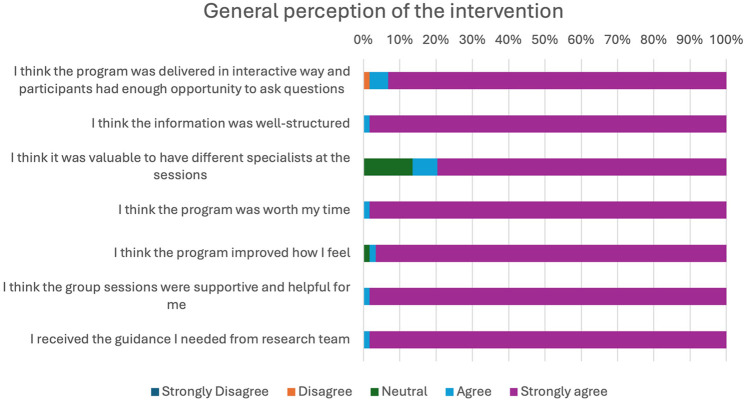
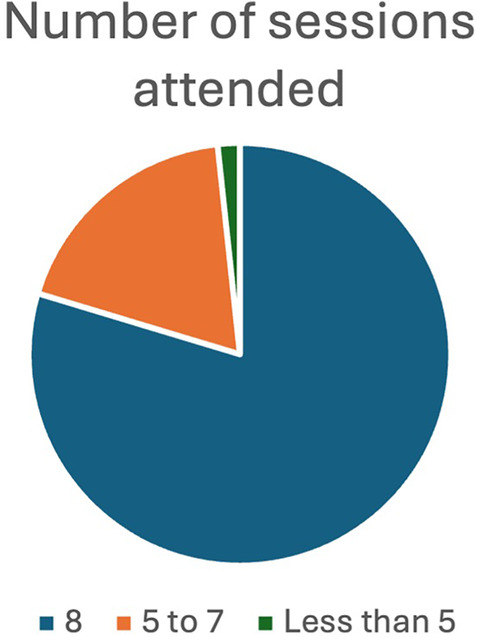
A high proportion of the participants expressed a positive opinion about the intervention structure, information conveyed and its impact on their health. Nearly 98.3% of the participants stated that the group sessions were supportive as well as helpful for them and that they received enough guidance from the team members. Of the 59 participants, 58 attended more than half of the planned sessions emphasizing the participant's enthusiasm in attending the program, see Figure 1.

General perception of the intervention assessed through Likert scale.
Delivery of the intervention
The perception about the delivery methods used in the intervention was gathered through an open-ended question in the questionnaire. All the participants had a positive response towards the delivery method of the intervention. The responses were coded the following: useful and helpful, satisfactory, interesting, productive, well-structured, progress monitored and provided guidance and encouragement.
One of the participants complimented that the proposed intervention was executed according to the plan.
Facilitators as well as the participants refrained from making judgements, thereby providing a space for open communication and interaction.
Duration of the intervention
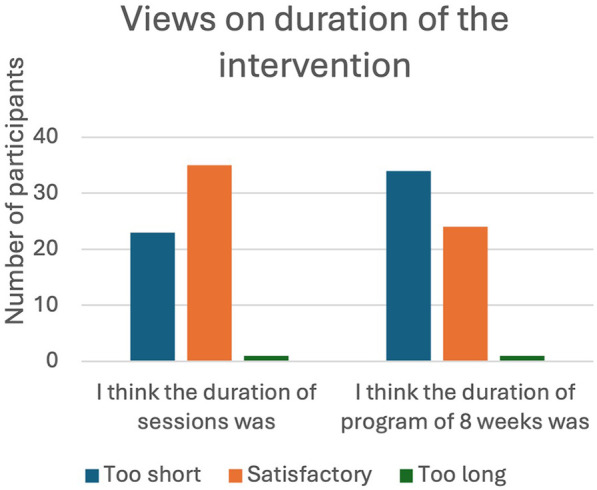
A total of 34 (57.6%) of the participants felt that the duration of the 8-week intervention was too short but the duration of each session, which took place for an hour, was satisfactory (59.3%). Almost 80% attended all the eight sessions and only one participant (1.7%) attended only two sessions (Figures 2, 3).
A similar standpoint on the duration of the intervention was reiterated during the interviews.
Some participants mentioned that few of them were late which affected the duration of the sessions.
One of them noted that it took time for some of the participants to express their feelings, and by the time they were comfortable, the sessions had already concluded.


Materials used for the intervention
In the questionnaire, majority of the participants (93.2%) claimed that the educational materials were interesting and 52.5% stated that they were personally relevant. None of them mentioned that the materials were either confusing or too long (Table 2).
During the interviews, the participants also stated that materials were useful and guided them during the home-based tasks. The participants also mentioned that the materials were helping them to recall a certain component or method, that they had forgotten.
However, one of the participants mentioned that some of the goals listed in the material were difficult to achieve and that it required more time and practice.
| Statement | Answer | % (/)nN |
|---|---|---|
| I think the education material was | Interesting | 93.2% (55/59) |
| Credible | 3.4% (2/59) | |
| Logical | 20.3% (12/59) | |
| Comprehensible | 37.3% (22/59) | |
| Personally relevant | 52.5% (31/59) | |
| Confusing | 0 | |
| Complete | 25.4% (15/59) | |
| Too long | 0 |
Perceptions about the facilitators and external consultants
The facilitators played a major role in the implementation of the intervention. The participants recognised the empathetic nature of the facilitators and specialists and praised them for their work and involvement during the sessions.
One of the participants commended the emotional support rendered by dieticians and that they enjoyed the physical exercises.
Another participant recounted their struggle with sleeping difficulty and noted that the advice from facilitators provided them necessary comfort and helped them overcome the issue.
The participant further mentioned that the facilitators were easily accessible and rendered support whenever possible.
Barriers or difficulties perceived by the participants
Infrastructure, time and language were the main barriers perceived by the participants which was captured during the qualitative interviews. Concerning infrastructure, absence of a permanent room with adequate space, and insufficient number of speakers for optimal acoustics were the main issues faced by the participants.
The sessions took place at different times depending on group availability, in general between 08:00–10:00 and 11:00–13:00. Some participants felt that the sessions could be organised a bit earlier. The heat and exhaustion from the travel made the participants tired before the start of the session.
There were mixed feelings expressed regarding languages used. The sessions were conducted mainly in English with some isiZulu and sePedi. One participant mentioned that they weren't familiar with Zulu language and had difficulty understanding certain words during the session.
At the same time, two respondents claimed that the facilitators explained the contents in different local languages and in English, so that the information was well-conveyed and understood by all the participants.
Perceived benefits of the intervention
In the questionnaire, 27.1% (16/59) felt that the intervention provided them with a positive experience, 16.9% (10/59) claimed that the intervention provided guidance and education and 59.3% (35/59) stated that components of the sessions such as dietary advice (8/59), grief sessions (5/59), and physical and breathing exercises (21/59) as well as external visits from health care consultants (1/59) contributed to their well-being.
Participants renumerated the impacts of the intervention in the interviews, highlighting its positive influence on their health. The most common narrative emphasised an improvement in self-confidence and self-reliance. Long COVID symptoms had previously left them feeling helpless and hopeless. The intervention helped them gain both physical and mental strength, that significantly improved their quality of life.
In addition to improving health, the intervention also helped create awareness and improve knowledge on long COVID symptoms and overall health.
Participants' recommendations
The first recommendation was to expand the intervention to other locations such as schools, churches, and hospitals, so that others who have been affected by long COVID can benefit from the rehabilitation.
Concerning infrastructure, one of the respondents suggested the need for more space, especially for physical exercises. Few of the respondents had recommended some changes in the materials used for the intervention. One said that there needs to be visuals on the pamphlets, benefitting people who can't read or write the language.
Another suggested that the content must also include sensitive topics such as sexual well-being.
The most common suggestion was to increase the duration of the intervention. The participants felt that a long-term program can immensely help them manage their symptoms and provide them with a support system.
Final recommendation was a request to follow-up after six months from the team for a wellness check and to receive feedback from the participants.
Discussion
The study demonstrated that the group intervention for managing long COVID symptoms was both acceptable and feasible in the South African context. Participants reported a range of positive impacts and offered constructive suggestions for further improvement and scale-up. Dropouts were primarily attributed to personal factors—such as employment demands, physical illness, or travel constraints—rather than group-related issues like discomfort with group dynamics or disinterest in intervention content.
The current study emphasized the importance of rehabilitation after COVID-19. Patients observed improvements in well-being, for instance sleep and physical capacity, and in self-confidence. Similar outcomes were seen in Berentschot et al's study, wherein significant improvements were recorded post rehabilitation for COVID-19 hospitalised patients compared to those without rehabilitation (19). A systematic review of long COVID interventions had also found that a combination of physical and mental health rehabilitation accelerates patient's recovery and enhances the quality-of-life indices (20).
One of the major highlights of the implemented intervention was the format of group sessions. A systematic review on facilitated group work among patients with chronic conditions has demonstrated statistically significant improvements in patients' health outcomes (21). Specific symptoms such as pain and fatigue seem to improve after rehabilitation (21). Albeit the effect being not long-standing, the study highlighted the need for integration of rehabilitation with standard care routine (21). In the present study, 98.3% agreed that the group sessions were supportive and helpful, highlighting that the group sessions were a success. However, some of the participants mentioned that few were shy and initially hesitated to share during the group sessions, especially during the grief session. A study that evaluated a group empowerment and training session for diabetes management in South Africa also stated that the some of the patients were reluctant and not motivated to engage in group activities (22). Research states that factors such as social anxiety, fear of shame and humiliation by the peers, and fear of instigating anger within peers could be the reason for hesitation to disclose personal experiences during group sessions (23).
Participants expressed appreciation for the facilitators of the intervention, specifically commending the professionalism, approachability, and competencies of the research staff. A qualitative study on stakeholder's perspective of South Africa's rehabilitation infrastructure found that facilitator's professional expertise had an impact on the quality of rehabilitation, which in turn affected patient's health outcomes (21). Similar opinion regarding the skillset of the facilitators were obtained in Selohilwe et al's study (24). Lack of judgement from peers as well as the facilitators in the present study helped the participants to come forward and share their health distress openly. This could be attributed as one of the success factors of the intervention.
Maart et al's study (25) found that financial constrains present in the public healthcare system led to inadequate availability of infrastructure and assistive devices for rehabilitation. Another study which investigated the challenges and opportunities for implementing task-sharing counselling intervention for depression at the primary healthcare setting in South Africa also highlighted infrastructure challenges, particularly, lack of physical space (24). This barrier was reemphasized by the participants in the current study. The participants stated that there was a lack of adequate infrastructure such as permanent room for the sessions and enough space for physical exercise, which impacted the delivery of the intervention. Maart et al's study (25) also pointed out the lack of transportation for patients to access rehabilitation services due to shortage of healthcare facilities. To negate this, the study participants were incentivized through reimbursement of their transportation costs, which motivated them to participate in the intervention. Similar incentives must be incorporated in the healthcare system to attract patients who need rehabilitation, alternatively, embedding these interventions within communities may make them more accessible.
Strengths of the study
The long COVID group intervention implemented in Johannesburg, South Africa was the first of its kind. The aftereffects of COVID-19 in Africa have been underestimated and absence of rehabilitation along with standard post-COVID-19 care might affect the quality of life of patients. The implemented intervention not only was perceived as effective but was feasible as well as acceptable by the participants. The current rehabilitation program, which focused not only on patients but also on hospital staff who were affected by COVID-19, was another key highlight of the study. The consistent attendance of participants reflected their enthusiasm and commitment to the program.
Study limitations
The intervention was conducted over a limited period of eight weeks, during which participants expressed a preference for a longer program with appropriate follow-up sessions. The intervention's location emerged as another key limitation, with participants noting that community-based delivery would have facilitated easier access. Interviews with selected participants were conducted in the regional language (isiZulu) and subsequently translated into English for analysis; however, nuances or culturally specific expressions may have been lost in translation.
Conclusion
Rehabilitation post-COVID has a potential to improve quality of life, and this study shows that a focused intervention for supportive care was well-accepted by the participants. The analysis showed good feasibility factors such as a low loss-to-follow-up rate and high overall session attendance. The interviews, along with the quantitative questionnaire, highlighted a positive perception and impact of the intervention, emphasizing its acceptability. Similar long standing rehabilitation programs should be considered as part of the standard care package for chronic respiratory illnesses and long COVID.