
What this is
- Chronic COVID involves ongoing symptoms after initial SARS-CoV-2 infection, often linked to immune dysregulation and cytokine storms.
- This review examines immunomodulatory strategies to manage cytokine storms, including corticosteroids, biologics, and emerging therapies.
- It discusses the importance of personalized treatment approaches guided by biomarkers to optimize outcomes for patients with chronic COVID.
Essence
- Chronic COVID is characterized by persistent cytokine storms that drive ongoing inflammation and multi-organ complications. Effective management requires tailored immunomodulatory therapies aimed at restoring immune balance.
Key takeaways
- Cytokine storms in chronic COVID result from a sustained immune response that leads to ongoing inflammation and tissue damage. This condition necessitates targeted immunomodulatory treatments that can adapt to individual patient profiles.
- Therapies such as corticosteroids and targeted biologics show promise in managing cytokine dysregulation. However, careful monitoring is essential to mitigate risks associated with prolonged immunosuppression.
- is crucial for personalizing treatment strategies, allowing for dynamic adjustments based on individual inflammatory profiles.
Caveats
- The heterogeneity of chronic COVID symptoms complicates the establishment of uniform treatment protocols. Variability in immune responses may affect the efficacy of immunomodulatory therapies.
- Limited clinical trial data specifically addressing chronic COVID immunomodulatory interventions hampers confidence in treatment efficacy and safety.
- Potential risks of immunosuppression, including increased susceptibility to infections, necessitate careful patient monitoring and therapy adjustments.
Definitions
- Cytokine storm: An excessive and uncontrolled release of pro-inflammatory cytokines that can lead to severe inflammation and tissue damage.
- Immunomodulatory therapy: Treatment strategies aimed at modifying the immune response to restore balance and reduce inflammation.
- Biomarker-guided precision medicine: An approach that uses measurable indicators of disease to tailor treatment regimens to individual patients.
Simplified
Introduction
The global COVID-19 pandemic, caused by the severe acute respiratory syndrome coronavirus 2 (SARS-CoV-2), has resulted in unprecedented morbidity and mortality worldwide. While the acute phase of COVID-19 has been the focus of intense clinical and scientific investigation, attention has increasingly turned to the long-term consequences of the infection. A significant subset of individuals who recover from the initial illness continue to experience a constellation of persistent symptoms, collectively termed chronic COVID or post-acute sequelae of SARS-CoV-2 infection. These symptoms can affect multiple organ systems and persist for weeks to months, substantially impairing quality of life and posing ongoing challenges to healthcare systems. A hallmark of chronic COVID is the presence of chronic inflammation, often driven by persistent immune activation and cytokine dysregulation. The phenomenon of a cytokine storm – originally characterized in acute severe COVID-19 – refers to an excessive and uncontrolled release of pro-inflammatory cytokines, including interleukin-6 (IL-6), tumor necrosis factor-alpha (TNF-α), and interleukin-1 beta (IL-1β). While in the acute phase, cytokine storms can precipitate rapid clinical deterioration and organ failure, in chronic COVID, a more insidious, sustained cytokine imbalance contributes to ongoing tissue damage, fibrosis, and functional impairments across multiple organ systems. [,] 1 2 [–] 3 5
HIGHLIGHTS Long COVID involves persistent immune dysregulation and cytokine overproduction. Immunomodulators target key inflammatory pathways to restore immune balance. Therapies include corticosteroids, Janus kinase inhibitors, and biologics. Precision approaches improve patient-specific outcomes. Ongoing trials highlight promising clinical efficacy and safety profiles.
The pathophysiology of cytokine dysregulation in chronic COVID is complex and multifactorial. Potential mechanisms include residual viral antigens that persistently stimulate the immune system, failure of immune regulatory mechanisms such as regulatory T cells, and the development of autoimmune phenomena triggered by the infection. These processes lead to an amplified and prolonged inflammatory response, which manifests clinically as fatigue, dyspnea, cognitive dysfunction, and cardiovascular complications, among other symptoms. Immunomodulatory therapies have become a cornerstone in managing cytokine storms in acute COVID-19, with agents such as corticosteroids and cytokine inhibitors demonstrating clinical benefit. However, the application of these therapies in chronic COVID presents unique challenges, including the need for long-term management strategies that balance efficacy with safety. Moreover, the heterogeneous nature of chronic COVID symptoms and immune profiles necessitates individualized treatment approaches that can be tailored to patient-specific inflammatory pathways and disease severity. Recent advances have expanded the therapeutic landscape beyond conventional anti-inflammatory drugs. Targeted biologics, such as IL-6 and IL-1 receptor antagonists, offer more precise modulation of key cytokines involved in the inflammatory cascade. Janus kinase (JAK) inhibitors provide broad suppression of multiple cytokine signaling pathways, and emerging cell-based therapies like mesenchymal stem cells (MSCs) show promise for both immunomodulation and tissue repair. These novel approaches, combined with the growing field of biomarker-guided precision medicine, hold potential to improve outcomes by enabling tailored therapeutic regimens that address individual patient needs. [,] 6 7 [,] 8 9 [,] 10 11
Aim
This review aims to comprehensively examine the immunomodulatory strategies currently employed and emerging for the management of cytokine storms in chronic COVID. It seeks to elucidate the underlying pathophysiology of chronic cytokine dysregulation, evaluate therapeutic interventions targeting immune imbalance, and explore the role of biomarker-guided precision medicine. Additionally, this article highlights the challenges faced in clinical practice and discusses future perspectives to optimize treatment outcomes for chronic COVID patients experiencing persistent inflammatory complications.
Methods
This narrative review was developed using a structured and transparent approach to ensure comprehensive coverage of the evolving evidence on immunomodulatory strategies for managing cytokine storms in chronic COVID. A systematic search of the literature was conducted across PubMed, Scopus, Web of Science, and Google Scholar from January 2020 to December 2025. Search terms included combinations of "chronic COVID," "post-acute COVID," "cytokine storm," "immunomodulation," "immune dysregulation," "nanoparticle therapy," "immune checkpoint modulation," and "precision immunology." Reference lists of relevant articles and recent reviews were also screened to capture additional sources not retrieved during the primary search.
Eligible publications included peer-reviewed original research, clinical trials, meta-analyses, and high-quality narrative or systematic reviews focusing on mechanisms of immune dysregulation, therapeutic targets, or emerging treatment approaches for chronic or post-acute COVID inflammatory syndromes. Studies that addressed acute COVID without relevance to persistent immune activation were excluded. No restrictions were placed on study design or geographic region, although priority was given to studies presenting mechanistic insights or clinical implications.
Data extraction focused on recurring themes including cytokine network alterations, persistent innate–adaptive immune imbalance, targeted biologic therapies, advanced drug delivery systems, and precision medicine tools. The narrative synthesis approach allowed integration of mechanistic evidence with translational and clinical findings, emphasizing therapeutic relevance and emerging innovations. Discrepancies or overlapping concepts across studies were resolved through iterative comparison and refinement to ensure internal consistency throughout the manuscript.
Pathophysiology of cytokine storms in long COVID
The cytokine storm in chronic COVID represents a sustained and dysregulated immune response that extends beyond the resolution of acute SARS-CoV-2 infection. Unlike the acute cytokine storm characterized by an overwhelming and rapid release of pro-inflammatory cytokines leading to severe respiratory distress and multi-organ failure, the cytokine dysregulation in Long COVID is more prolonged and insidious. This persistent inflammation contributes to chronic symptoms and ongoing tissue damage in various organ systems. Several interconnected mechanisms underlie the pathophysiology of cytokine storms in chronic COVID. First, viral persistence or the presence of residual viral antigens in tissues can continuously stimulate innate immune receptors, such as toll-like receptors, maintaining a state of immune activation. This chronic antigenic stimulation prevents the normal resolution of inflammation and perpetuates the release of pro-inflammatory cytokines, including IL-6, tumor necrosis factor-alpha (TNF-α), and IL-1β. [,] 12 13 [,] 14 15
| Pathophysiologic domain | Key mechanisms | Long COVID implications |
|---|---|---|
| Persistent innate immune activation | Sustained activation of monocytes, macrophages, and dendritic cells; chronic NF-κB signaling; dysregulated pattern-recognition receptor responses | Ongoing release of IL-6, TNF-α, IL-1β contributes to fatigue, musculoskeletal pain, neuroinflammation, and vascular dysfunction |
| Aberrant adaptive immune responses | Delayed recovery of T cell subsets, exhausted CD4/CD8 profiles, impaired regulatory T cell activity, persistent B cell hyperactivity | Prolonged inflammation, autoantibody formation, and reduced control of viral reservoirs |
| Viral persistence or residual antigen | Presence of viral RNA/proteins in tissue reservoirs (gut, CNS, endothelial tissue); impaired viral clearance | Continual immune stimulation leading to fluctuating or relapsing inflammatory symptoms |
| Endothelial dysfunction and microvascular injury | Endothelial apoptosis, glycocalyx degradation, microthrombi formation, complement overactivation (C3a, C5a) | Cardiovascular instability, POTS-like symptoms, cognitive impairment due to reduced tissue perfusion |
| Dysregulated cytokine networks | Imbalanced pro-inflammatory vs. anti-inflammatory cytokines; elevated IL-6, IL-8, IFN-γ, GM-CSF; impaired IL-10 responses | Multisystem inflammation, persistent fever, autonomic dysregulation, and organ-specific symptoms |
| Mitochondrial dysfunction and metabolic dysregulation | Impaired oxidative phosphorylation, increased ROS, metabolic reprogramming of immune cells | Fatigue, exercise intolerance, and chronic inflammatory milieu |
| Neuroimmune crosstalk abnormalities | Overactivation of microglia and astrocytes, blood–brain barrier disruption, neuroinflammatory cytokine spillover | "Brain fog," headaches, sleep disturbances, mood alterations |
| Genetic and epigenetic susceptibility | Polymorphisms affecting cytokine expression, epigenetic modifications from acute infection, altered chromatin accessibility in immune cells | Heightened vulnerability to prolonged inflammatory states and poor recovery trajectory |
Immunomodulatory therapeutic strategies
The management of cytokine storms in chronic COVID necessitates a multifaceted immunomodulatory approach aimed at restoring immune balance, reducing inflammation, and preventing progressive tissue damage. Given the heterogeneous nature of the syndrome and the complex immune dysregulation involved, therapeutic strategies must be both targeted and adaptable to individual patient profiles. Current and emerging therapies can be broadly categorized into conventional anti-inflammatory agents, targeted biologics, small molecule inhibitors, and novel cell-based therapies. Corticosteroids remain a cornerstone of immunomodulation due to their potent anti-inflammatory effects. They suppress multiple pro-inflammatory pathways by inhibiting the transcription of cytokines such as IL-6, TNF-α, and IL-1β. While corticosteroids have proven effective in reducing mortality in acute COVID-19 cytokine storms, their long-term use in Long COVID requires careful consideration of dosing and duration to minimize adverse effects such as immunosuppression, hyperglycemia, and osteoporosis. [,] 20 21 [] 22
Cytokine-specific biologics have emerged as promising agents to precisely target key mediators of inflammation. Monoclonal antibodies against IL-6 receptor (e.g. tocilizumab), IL-1 receptor antagonists (e.g. anakinra), and TNF-α inhibitors are currently being explored in clinical trials for chronic COVID. These agents offer the advantage of selectively dampening the cytokine cascade without broadly suppressing the immune system, potentially reducing the risk of secondary infections. JAK inhibitors represent another class of targeted immunomodulators that interfere with intracellular signaling pathways essential for cytokine receptor signaling. By inhibiting JAK enzymes, these drugs modulate multiple cytokines simultaneously, offering a broad-spectrum anti-inflammatory effect. Early evidence from acute COVID-19 suggests potential benefits of JAK inhibitors such as baricitinib, but their safety and efficacy in chronic inflammatory states like chronic COVID warrant further investigation. [] 22 [] 23 [,] 24 25
| Strategy | Mechanism of action | Clinical evidence | Considerations/limitations |
|---|---|---|---|
| Corticosteroids | Broad immunosuppression | Some symptom reduction in post-acute COVID | Risk of secondary infections, metabolic side effects |
| Cytokine-specific biologics | IL-6 (tocilizumab), IL-1 (anakinra), TNF-α inhibitors | Clinical trials ongoing | High cost, infection risk, limited long-term data |
| Mesenchymal stem cells (MSCs) | Promote anti-inflammatory cytokines, inhibit pro-inflammatory pathways, facilitate tissue repair | Early-phase trials suggest improved lung function | Cell source variability, regulatory hurdles |
| Targeted nanoparticle delivery systems | Deliver anti-inflammatory agents directly to immune or tissue targets | Preclinical models promising | Translational research ongoing, bioavailability concerns |
| Immune checkpoint modulation | Modulates T cell exhaustion and restores immune homeostasis | Preclinical studies; emerging clinical trials | Potential risk of immune overactivation, requires precise monitoring |
| AI-driven therapy personalization | Uses immune profiling and predictive modeling to tailor therapy | Pilot studies in other inflammatory diseases | Requires integration of robust datasets and clinical validation |
Biomarker-guided precision medicine
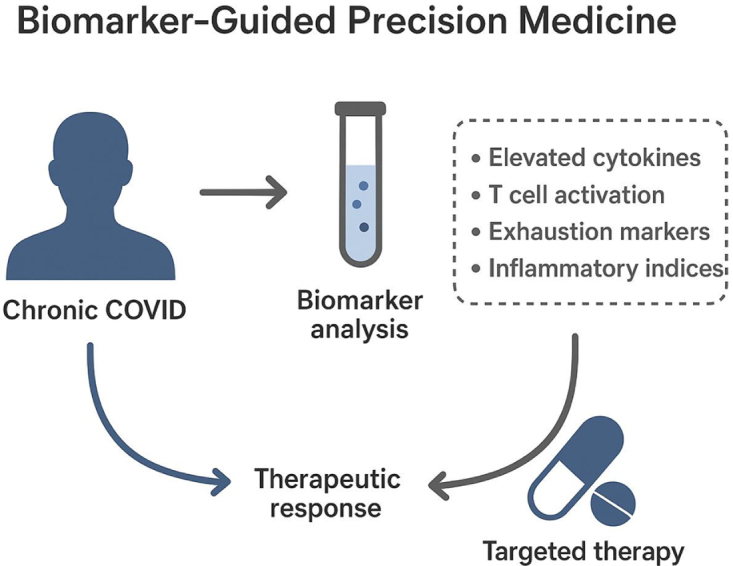
The heterogeneity of immune responses and clinical presentations in chronic COVID necessitates a precision medicine approach to immunomodulatory therapy. Biomarker-guided strategies leverage measurable indicators of immune activation and inflammation to tailor treatment regimens, optimize therapeutic efficacy, and minimize adverse effects. This approach moves beyond the traditional "one-size-fits-all" paradigm, enabling clinicians to identify patients who would benefit most from specific immunomodulatory interventions and to monitor treatment response dynamically. Key biomarkers implicated in cytokine storm pathophysiology include circulating levels of pro-inflammatory cytokines such as IL-6, TNF-α, and IL-1β, as well as acute phase reactants like C-reactive protein and ferritin. Elevated cytokine profiles may help stratify patients with ongoing immune dysregulation and guide initiation or escalation of targeted therapies. For example, high IL-6 levels may indicate potential responsiveness to IL-6 receptor antagonists, whereas elevated IL-1β might suggest benefit from IL-1 blockade. [,] 29 30 [,] 31 32

Biomarker-guided precision medicine.
Emerging therapeutic directions in immunomodulation for chronic COVID
Recent advances in immunology and biomedical engineering have opened new avenues for managing persistent cytokine dysregulation in chronic COVID. Beyond conventional anti-inflammatory agents and biologics, several innovative therapeutic strategies are being explored to achieve more precise, durable, and individualized immune modulation.
Targeted nanoparticle delivery systems
Nanotechnology is increasingly being leveraged to deliver anti-inflammatory and immunomodulatory molecules with enhanced precision. Nanoparticle carriers, including lipid-based, polymeric, and biomimetic platforms, allow targeted delivery of therapeutic agents directly to inflamed tissues or specific immune cell populations. This targeted approach reduces systemic toxicity and enhances therapeutic efficacy. In preclinical models, nanoparticles engineered to transport corticosteroids, siRNA targeting pro-inflammatory cytokines, or small-molecule inhibitors have demonstrated the ability to suppress cytokine release while preserving essential immune function. Early-stage research in chronic COVID is examining nanoparticles capable of modulating macrophage activation, inhibiting inflammasome signaling, or stabilizing endothelial function, offering the potential for more refined control of hyperinflammation. [,] 39 40
Immune checkpoint modulation
Immune checkpoint pathways that regulate T cell activation and exhaustion are emerging as potential therapeutic targets in chronic COVID, where prolonged immune activation coexists with dysfunctional antiviral immunity. Agents that modulate programmed death-1, cytotoxic T lymphocyte–associated antigen 4, and other checkpoint molecules may help restore immune balance by reducing aberrant cytokine release while improving T cell function. Although checkpoint inhibitors are primarily used in oncology, interest is growing in their ability to reset dysregulated immune networks in chronic infectious and inflammatory conditions. Preclinical studies and small pilot investigations have suggested that selective checkpoint modulation could alleviate persistent immune exhaustion and improve cytokine regulation, though safety considerations remain paramount given the risk of triggering excessive immune activation. [,] 41 42
AI-assisted precision immunotherapy
Artificial intelligence and machine learning tools are increasingly being integrated into chronic COVID research to improve patient stratification and personalize treatment. AI-driven profiling can analyze complex datasets spanning cytokine signatures, genomic markers, metabolic profiles, and clinical phenotypes to identify patient-specific drivers of inflammation. This level of precision enables more targeted selection of immunomodulatory therapies, such as choosing between IL-6 blockade, JAK inhibition, or Treg-enhancing interventions based on individualized immune patterns. Emerging predictive models are also being developed to forecast treatment response and identify subgroups at risk for refractory inflammation. As these technologies mature, AI-guided immunotherapy has the potential to shift chronic COVID management from broad empirical treatment toward a more tailored, mechanism-based approach. [,] 43 44
Challenges
The management of cytokine storms in chronic COVID presents several significant challenges that complicate therapeutic decision-making and clinical outcomes. A foremost challenge is the inherent heterogeneity of chronic COVID itself, encompassing a broad spectrum of symptoms, severities, and organ system involvement. This variability makes it difficult to establish uniform treatment protocols and to identify which patients will benefit most from immunomodulatory therapies. Another critical issue is the incomplete understanding of the precise immunopathological mechanisms driving chronic cytokine dysregulation in chronic COVID. Although emerging evidence implicates persistent viral antigens, immune regulatory failure, and autoimmunity, the relative contribution of each mechanism likely varies between individuals. This complexity hinders the identification of definitive therapeutic targets and complicates the timing and selection of immunomodulatory agents. [,] 39 40 [,] 41 42
The risk-benefit balance of immunosuppression also poses a significant challenge. Prolonged or inappropriate use of immunomodulatory drugs, such as corticosteroids or biologics, can increase susceptibility to opportunistic infections, reactivation of latent pathogens, and other adverse events. This is particularly relevant in chronic COVID patients, who may have underlying comorbidities or immune dysfunctions that amplify such risks. Careful patient monitoring and judicious therapy adjustment are therefore essential but can be resource-intensive. Biomarker limitations further impede optimal management. While numerous inflammatory markers have been proposed, standardized, widely accessible, and validated assays for guiding therapy remain limited. Variability in laboratory methods and lack of consensus on threshold values reduce the clinical applicability of biomarker-guided treatment strategies. Additionally, many biomarkers reflect systemic inflammation but may not fully capture tissue-specific immune dysregulation that drives localized symptoms. [] 43 [] 44
Another challenge is the scarcity of robust clinical trial data specifically addressing immunomodulatory interventions in chronic COVID. Most current evidence is extrapolated from acute COVID-19 or other chronic inflammatory diseases, limiting confidence in treatment efficacy and safety. The diverse and evolving nature of chronic COVID complicates trial design, recruitment, and outcome measurement, further delaying evidence generation. Socioeconomic and healthcare disparities influence access to advanced immunomodulatory therapies and biomarker testing, particularly in low-resource settings. This inequity risks widening the gap in chronic COVID management and outcomes globally. Addressing these challenges requires concerted efforts in research, clinical innovation, and health policy to ensure equitable and effective care. [] 45 [] 46
Future perspectives
The evolving understanding of cytokine dysregulation in chronic COVID opens promising avenues for the development of more effective and personalized immunomodulatory therapies. Future research is expected to focus on elucidating the molecular and cellular mechanisms that sustain chronic inflammation, with the aim of identifying novel therapeutic targets that can precisely modulate pathogenic immune responses without compromising host defense. Advancements in multi-omics technologies – integrating genomics, transcriptomics, proteomics, and metabolomics – will be instrumental in unraveling the complex immune networks involved in chronic COVID. These comprehensive datasets will facilitate the discovery of new biomarkers and immune signatures that can guide patient stratification, prognosis, and individualized treatment plans, ultimately improving clinical outcomes. The development of next-generation biologics and small-molecule inhibitors with improved specificity and safety profiles holds significant potential. Innovations such as bispecific antibodies, engineered cytokine traps, and selective JAK inhibitors tailored to chronic COVID pathophysiology may offer more effective control of cytokine storms while minimizing systemic immunosuppression and adverse effects. [] 47 [] 48 [] 49
Cell-based therapies, including MSCs and regulatory T cell (Treg) adoptive transfer, represent a frontier for immunomodulation and tissue repair. Ongoing and future clinical trials will clarify their role and optimize protocols for their safe and efficacious use in chronic COVID patients with refractory inflammation and organ damage. Digital health technologies, such as wearable devices and remote monitoring platforms, can facilitate real-time assessment of inflammatory biomarkers and clinical parameters, enabling dynamic treatment adjustments and early detection of disease flares. Integrating artificial intelligence and machine learning algorithms may further enhance predictive modeling and decision support in personalized immunotherapy. Addressing disparities in access to advanced diagnostics and therapeutics will be critical for ensuring equitable care. Strengthening healthcare infrastructure, fostering global collaborations, and implementing cost-effective strategies will be essential to translate scientific advances into broad clinical benefit. [] 50 [] 51
Conclusion
Cytokine storms represent a critical pathogenic feature in chronic COVID, driving persistent inflammation and multi-organ dysfunction. Effective management requires a comprehensive understanding of the complex immune dysregulation underlying this syndrome. Immunomodulatory therapies, including corticosteroids, cytokine-specific biologics, JAK inhibitors, and cell-based treatments, offer promising avenues to restore immune balance and mitigate long-term sequelae. Biomarker-guided precision medicine is pivotal for tailoring interventions to individual patient profiles, optimizing therapeutic efficacy, and minimizing adverse effects. However, challenges such as heterogeneity of disease manifestations, incomplete mechanistic insights, and limited clinical trial data continue to impede standardized treatment approaches.