
What this is
- This evaluation explores the ongoing symptoms, functional impacts, and care needs of patients with () across three clinics in England and Wales.
- A total of 269 participants shared their experiences through an online survey from 2020 to 2024.
- Findings reveal that most patients have not fully recovered and face significant ongoing symptoms and unmet care needs.
Essence
- Most participants with continue to experience significant symptoms and functional limitations, with 44.3% reporting unmet care needs. The study underscores the gap between ongoing patient needs and available healthcare support.
Key takeaways
- 94.1% of participants reported not fully recovering from , indicating persistent symptoms and functional limitations. Common symptoms included fatigue (83.0%), cognitive dysfunction (58.5%), and breathlessness (43.9%).
- Only 20.8% of participants were working at their pre-infection capacity, with 25.5% unable to work at all. This highlights the significant vocational impact of on daily life.
- 62.7% of participants indicated unmet care needs, with 44.3% no longer receiving care despite ongoing symptoms. This points to a critical need for improved healthcare support for patients.
Caveats
- The study's cross-sectional design limits the ability to track changes in patient experiences over time. It primarily reflects the perspectives of patients with a longer duration of .
- The survey used is not a validated measure, which may affect the generalizability of the findings. The heterogeneity in service delivery across clinics also complicates interpretation.
- Participants who chose to complete the online survey may represent a more engaged population, potentially skewing results to reflect more positive experiences than those of the broader patient population.
Definitions
- Long Covid (LC): Symptoms persisting beyond 12 weeks after SARS-CoV-2 infection, affecting multiple systems and daily functioning.
- Post-Covid Functional Status (PCFS): A scale measuring the severity of functional limitations and symptoms in individuals recovering from Covid-19.
Simplified
Introduction
Long Covid (LC) refers to the symptoms beyond 12 weeks following SARS‐CoV‐2 infection, with no alternative explanation [1, 2]. This multi‐system condition can manifest as a wide range of physical symptoms, including fatigue, breathlessness, palpitations, joint/muscle pain, gastric symptoms, neurocognitive and psychological symptoms including attention and memory alterations, anxiety and depression [3, 4]. The clinical presentation and impact of symptoms can vary and fluctuate or relapse over time [5].
True prevalence is unknown; estimates in the United Kingdom vary between 3% and 6% of the population [6]. As of April 2024, the UK Office for National Statistics reported 3.3% (2 million) people in England and Scotland were living with LC, of which 19.2% report a negative impact on their ability to undertake daily activities [6, 7]. At a similar time, the United States reported approximately 5%–6% of adults report living with LC, with a quarter experiencing significant functional limitation [8]. These ongoing symptoms and impact present a national and global healthcare demand.
In response, to support the diagnosis and management of those living with LC, the UK National Health Service (NHS) invested over £100 million between 2020 and 2022 and developed a network of 90 specialist clinics across England [9, 10]. The development of services was carried out at a pace with limited national guidance or research, and adapting to local contexts resulted in heterogeneous delivery, and no standardised best practice model was identified [11, 12, 13].
Care for this complex condition took on a treatable traits approach [14], with self‐management as the longer‐term strategy after discharge from rehabilitation services [9]. Recent studies advocate for a standard of care to include a multidisciplinary approach to the assessment and management of LC and suggest that these should be both contextually appropriate and tailored to the symptoms [15, 16, 17, 18].
For some, accessing LC services and navigating the healthcare system has been reported as challenging [19, 20, 21]. Qualitative evaluation recommends better coordination of care across multiple pathways with care delivered as a person‐centred, holistic approach, incorporating listening and validation [21, 22, 23, 24, 25]. Quantitative monitoring of LC clinics provides insights into their clinical effectiveness. This has highlighted that, for many, symptoms persist for many years [26]; therefore, services need to support the long‐term impacts of LC and associated complexities [20, 25].
In 2024/5 the commissioning of LC services was transitioned to integrated care boards (ICBs). While this saw a reduction in funding it also provides an opportunity for LC service providers to consider alternative care models and amplify the voices of those with lived experience in re‐design [17, 18, 27, 28].
As identified by Kennelley et al. 2023 [29], 'As the world begins to recover from the COVID‐19 pandemic, we must promote the voices and prioritise the needs of those who continue to experience long‐term impacts of the virus in research, clinical, and personal practice'. This emphasises the need to include views of patients still symptomatic after many years and to explore their changing care needs [20]. Therefore, this study considers the longer‐term perspectives of patients attending three heterogeneous LC clinics.
Objectives
This study aimed to explore individuals' perspectives following attendance at an LC service to explore: 1 Ongoing symptoms, functional limitations and current vocational status. 2 Understanding of recovery trajectory and facilitators. 3 Patients' perceptions of the LC care pathway and identify unmet care needs.
Methods
Methodology
We utilised a cross‐sectional online survey, using a convenience non‐probability sampling method to explore LC patients' perspectives and experiences of LC clinics. Three LC clinics from the LOCOMOTION consortium each independently completed a service evaluation survey to inform local ongoing care needs. The study protocol for LOCOMOTION, with details of management, governance and patient involvement, has been published elsewhere [30]. Ethical approval and subsequent amendments were granted by Yorkshire and The Humber—Bradford Leeds, Research Ethics Committee (REC ref: 21/YH/0276).
Patient and Public Involvement
The service evaluation survey was co‐produced with Experts by Experience who had previously attended an LC service, some of whom were members of the LOCOMOTION Patient Advisory Group. Collaboration and involvement continued throughout the study including analysis, interpretation and writing processes.
Participant
Setting
LC services varied in set‐up and delivery. See Table 1 for summaries of clinics.
| Site | Description |
|---|---|
| Site A | Tier 3 clinic led by a respiratory consultant with a small multidisciplinary team (MDT) (psychologist, occupational therapist and physiotherapist). Primarily assessment service with referral for specialist input. Links with community‐based rehabilitation service. |
| Site B | Hospital‐based tier 3 clinic run by a respiratory physician and clinical research fellow. No formal MDT support, but can refer to the community rehabilitation team. |
| Site C | Entirely virtual community‐based tier 2 clinic jointly led by a general practitioner (GP) and an occupational therapist, and with a large MDT of allied professionals. Complex patients are reviewed by the GP and referred on to secondary care specialties as needed. |
Sampling and Recruitment
An invitation to take part in the service evaluation was sent to patients who had attended the clinic between August 2020 and May 2024. This represents approximately between 15% and 30% of each site's clinic attendance (data not shown). Invites were sent via email or text, including a link to the online survey (see Supporting File and —Additional survey details and Online Survey). The survey was available online in Microsoft Forms and was available to complete between November 2023 and May 2024. The survey was only available in English. 1 2
Survey Components
Development of Survey
The self‐report survey was designed by the multidisciplinary LC team at Site A. Patients were involved in survey design, including question development, survey content, structure and language. The survey was tested on 30 patients over the telephone and amended according to patient and clinician feedback. The survey included the following key areas: Functional impact and symptoms; Recovery and trajectory; Local healthcare support and unmet needs; and Vocational status and additional comments. It included a 3‐point Global Rate of Change (GRoC) scale [32] and the Post‐Covid Functional Status (PCFS) [33]. The PCFS scale includes a Likert scale (0–4) measuring symptom severity and functional limitations, where 0 is no symptoms, 1 negligible limitations (can perform all usual duties/activities, but with some symptoms), 2 slight limitations (occasionally needing to avoid or reduce usual duties), 3 moderate limitations (unable to perform all usual duties or activities including work) and 4 severe limitations, (being dependent on nursing care or assistance from another). See Supporting Files 1 and 2—Additional survey details and online survey, for further information.
Data Collection
Participants were given a pseudonymised ID number to use when completing the survey; no personal identifiable data was requested or recorded. Health‐related data were captured from local trust databases and/or clinical notes. Demographic data were taken directly from available data stored on Trust databases. Information was stored at each local site in accordance with the trusts' information governance policies.
Data Management
Survey responses were stored locally to permit analysis, and de‐identified data were shared between the three sites using secure online SharePoint. All sites adhered to local governance procedures and were compliant with the study's ethical approval.
Analysis
The survey recorded all data digitally on the Microsoft (MS) Forms platform. All data were exported to MS Excel and additional demographics data were added by each site to create the full dataset. Quantitative data were analysed using MS Excel to synthesise descriptive analysis, frequency distribution, percentages and measures of dispersion. Questionnaire and demographics data were cross‐tabulated to investigate relationships between multiple variables in line with our aims.
Qualitative data from the free‐text sections of the questionnaire consisted of short sentences and paragraphs, which were analysed using thematic analysis following Braun and Clarkes approach [34] adapted for brief written responses [35]. Researchers from each site (P.W., C.L., and S.J.) conducted line‐by‐line inductive coding independently to ensure codes were grounded in the data. Coding was informed by the research objectives—to explore the impact LC continues to have on patients, their perceptions of their recovery, the LC care pathway, care provided, and ongoing care needs. The local evaluators discussed and compared initial codes to develop an agreed‐upon coding framework. Codes were grouped into higher‐order conceptual concepts from which themes and sub‐themes were subsequently identified. This process was iterative and reflexive, where discrepancies were resolved through discussion with the wider team to enhance rigour. Themes were identified through an active interpretive process that allowed the team to recognise common and recurrent patterns in the data, while remaining attentive to variations across sites. This supported a rich and contextualised understanding of patients' experiences and perceptions of their LC service (see Supporting File 3—Qualitative Analysis) [36].
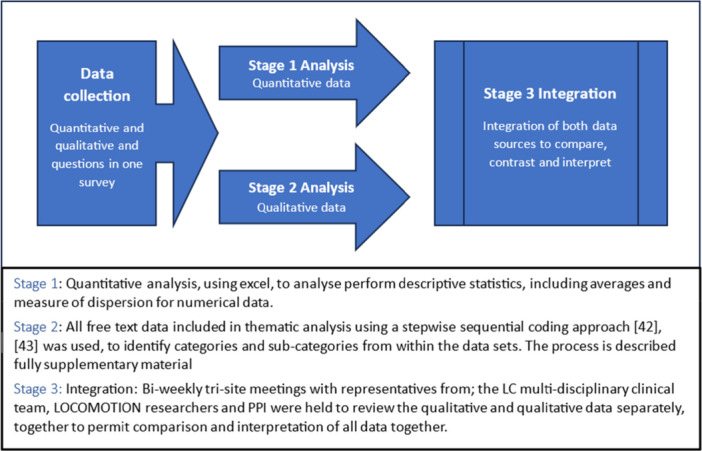
Data from the three sites were combined and analysed in conjunction with a mixed‐methods convergent parallel design principle permitting numerical data to be situated in the context of qualitative data [37], see Figure 1 for details.

Illustration demonstrating the mixed‐methods convergent parallel design approach employed for analysis.
Results
Participants
Of the 513 patients who were invited, 269 (52%) responded, of which 30 (11%) completed it via telephone with a healthcare professional. Similar participant characteristics, response rate and survey results were observed across all three sites. Response rates for each site were A = 52.4%, B = 61.5% and C = 47.3%, with a mean of 52.4%. Data were combined and analysed as one dataset with no between‐site analysis.
Demographic data for both responders and non‐responders are listed in Table 2. Responders had a mean age of 52.7 (± 12.0); it was noted that under 40‐year‐olds responded less frequently (n = 38, 14.1% vs. n = 61, 25.0%). The sample was predominantly female 69.1% (n = 186) and white‐British 55.0% (n = 148). Indices of multiple deprivation (IMDs) saw some differences between responders and non‐responders. While similar in the lower two quintiles (1 and 2), IMD groups 3 and 4 saw more non‐responders, compared to an elevated response rate in those least deprived (IMD 5) (n = 79, 29.9% vs. n = 47, 19.3%). This may reflect access to clinics, as the service evaluation was not designed to explore predictions of participation. We did not analyse this further.
Duration of LC was on average ≥ 3 years (mean 1204.4 days, ± 275.7). Duration between survey completion and first contact with the LC specialist team was largely within the previous 1 (39.0%, n = 105) or 2 (32.3%, n = 87) years. The initial infection variant period for responders was mainly pre‐Alpha (42.0%) or Alpha (24.5%), and most acute infections were managed in the non‐hospital setting (84.2%, n = 144 out of 301 for two sites). We had a high rate of missing data regarding infection details, and one site did not provide the severity of infection, so it was omitted from this category.
| Responders | Non‐responder | All | ||||
|---|---|---|---|---|---|---|
| = 269N | % or SD | = 244n | % or SD | = 513n | % or SD | |
| Age | ||||||
| < 30 | 10 | 3.7% | 20 | 8.2% | 30 | 5.8% |
| 30–39 | 28 | 10.4% | 41 | 16.8% | 69 | 13.5% |
| 40–49 | 61 | 22.7% | 63 | 25.8% | 124 | 24.2% |
| 50–59 | 93 | 34.6% | 64 | 26.2% | 157 | 30.6% |
| 60–69 | 52 | 19.3% | 37 | 15.2% | 89 | 17.3% |
| > 70 | 22 | 8.2% | 19 | 7.8% | 41 | 8.0% |
| Missing | 3 | 1.1% | 0 | 0.0% | 3 | 0.6% |
| Mean age | 52.7 | 12.0 (SD) | 49.4 | 13.6 (SD) | 51.1 | 12.9 (SD) |
| Sex | ||||||
| Sex (female) | 186 | 69.1% | 178 | 73.0% | 364 | 71.0% |
| Sex (male) | 80 | 29.7% | 66 | 27.0% | 146 | 28.5% |
| Missing | 3 | 1.1% | 0 | 0.0% | 3 | 0.6% |
| Ethnicity | ||||||
| White—British | 148 | 55.0% | 128 | 52.5% | 276 | 53.8% |
| White—Any other White background | 34 | 12.6% | 29 | 11.9% | 63 | 12.3% |
| Asian—Asian British (including British Indian/Pakistani) | 3 | 1.1% | 7 | 2.9% | 10 | 1.9% |
| Asian—Any Other Asian Background | 19 | 7.1% | 17 | 7.0% | 36 | 7.0% |
| Black or Black British—African/Caribbean | 9 | 3.3% | 12 | 4.9% | 21 | 4.1% |
| Mixed—Any other mixed background | 4 | 1.5% | 4 | 1.6% | 8 | 1.6% |
| Other Ethnic Groups—Any other ethnic group | 37 | 13.8% | 34 | 13.9% | 71 | 13.0% |
| Missing | 15 | 5.6% | 13 | 5.3% | 28 | 5.5% |
| Total | 269 | 100.0% | 244 | 100.0% | 513 | 100.0% |
| Index of multiple deprivation—(Quintiles) | ||||||
| 1 | 24 | 8.9% | 27 | 11.1% | 51 | 9.9% |
| 2 | 42 | 15.6% | 34 | 13.9% | 76 | 14.8% |
| 3 | 48 | 17.8% | 63 | 25.8% | 111 | 21.6% |
| 4 | 54 | 20.1% | 60 | 24.6% | 114 | 22.2% |
| 5 | 79 | 29.4% | 47 | 19.3% | 126 | 24.6% |
| Missing | 22 | 8.2% | 13 | 5.3% | 35 | 6.8% |
| Total | 269 | 100.0% | 244 | 100.0% | 513 | 100.0% |
| Predominant UK variant at time of infection | ||||||
| Pre‐Alpha | 113 | 42.0% | 111 | 45.5% | 224 | 43.7% |
| Alpha | 66 | 24.5% | 46 | 18.9% | 112 | 21.8% |
| Delta | 25 | 9.3% | 21 | 8.6% | 46 | 9.0% |
| Omicron | 25 | 9.3% | 10 | 4.1% | 35 | 6.8% |
| Missing | 40 | 14.9% | 56 | 23.0% | 96 | 18.7% |
| Total | 269 | 100.0% | 244 | 100.0% | 513 | 100.0% |
| Mean duration of LC (known only) | 1204.4 | 275.7 (SD) | 1262.1 | 252.6 (SD) | 1230.5 | 266.8 (SD) |
| Severity of initial infection ( = 306) only available for two sites ** n | ||||||
| Community | 144 | 84.2% | 118 | 87.4% | 262 | 85.6% |
| Hospital‐Ward | 18 | 10.5% | 13 | 9.6% | 31 | 10.1% |
| Hospital‐ITU | 4 | 2.3% | 2 | 1.5% | 6 | 2.0% |
| Vaccine triggered | 1 | 0.6% | 1 | 0.7% | 2 | 0.7% |
| Missing | 4 | 2.3% | 1 | 0.7% | 5 | 1.6% |
| Total | 171 | 100.0% | 135 | 100.0% | 306 | 100.0% |
| Duration of long Covid | ||||||
| < 1 year | 1 | 0.4% | 0 | 0.0% | 1 | 0.2% |
| 1–2 years | 16 | 5.9% | 8 | 3.3% | 24 | 4.7% |
| 2–3 years | 49 | 18.2% | 34 | 13.9% | 83 | 16.2% |
| 3–4 years | 106 | 39.4% | 89 | 36.5% | 195 | 38.0% |
| > 4 years | 59 | 21.9% | 60 | 24.6% | 119 | 23.2% |
| Missing | 38 | 14.1% | 53 | 21.7% | 91 | 17.7% |
| Total | 269 | 100.00% | 244 | 100.00% | 513 | 100.0% |
| Interval since first assessment at the LC clinic | ||||||
| < 1 year | 105 | 39.0% | 108 | 44.3% | 213 | 41.5% |
| 1–2 years | 87 | 32.3% | 54 | 22.1% | 141 | 27.5% |
| 2–3 years | 32 | 11.9% | 22 | 9.0% | 54 | 10.5% |
| > 3 years | 7 | 2.6% | 7 | 2.9% | 14 | 2.7% |
| Missing | 38 | 14.1% | 53 | 21.7% | 91 | 17.7% |
| Total | 269 | 100.0% | 244 | 100.0% | 513 | 100.0% |
| Long Covid service | ||||||
| Site A | 99 | 36.8% | 90 | 36.9% | 189 | 36.8% |
| Site B | 72 | 26.8% | 45 | 18.4% | 117 | 22.8% |
| Site C | 98 | 36.4% | 109 | 44.7% | 207 | 40.4% |
| Total | 269 | 100.0% | 244 | 100.0% | 513 | 100.0% |
Stage 1: Quantitative Analysis
Data are presented as counts, percentages, and measures of dispersion. Responders answered questions based on the response to the previous question; therefore, the denominator value varies between questions. For survey results, the denominator includes pre‐defined category responses and excludes 'other—free text' or unanswered 'missing' data. The exception is where free text, via explicit wording or content, strongly aligned with the categories. Where there was agreement by two researchers, it was re‐coded as quantitative count data. The free‐text data remained available for qualitative analysis and coded into themes in Stage 2 of the analyses.
Current Functional Impact and Symptoms (Questions 2, 3, 4, 17 Functional Impact, Symptoms and Vocational Status)
Functional Status
The PCFS scale identified that most participants had not fully recovered (253 out of 269, 94.1%) with differing levels of functional impact: negligible (10.0%), mild (28.3%), moderate (42.0%) or severe (13.8%) (see Supporting File 4 Table A1). Note, when comparing demographics across the PCFS levels, some counts are small (n ≤ 5), particularly ethnicity and IMD, and therefore should be interpreted with caution.
Symptoms
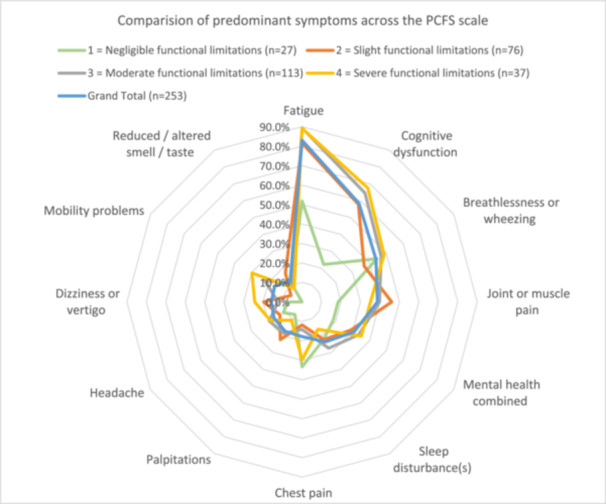
The 253 responders, indicating they had not fully recovered, reported their top five most frequently experienced symptoms as fatigue 83.0% (n = 210); cognitive dysfunction 58.5% (n = 148); breathlessness or wheezing 43.9% (n = 111); joint/muscle pain 38.7% (n = 98) and mental health impact 30.8% (n = 78). For mental health, we combined anxiety (n = 44) and depression (n = 46) into one category, where 12 participants indicated both, and therefore, were only counted once. Figure 2 shows the percentage of reported symptoms by PCFS (see Supporting File 4—Figure A4 for bar chart presentation). This highlights that symptom groups are comparable across the PCFS mild/moderate/severe scale.

Radar chart comparing the most frequently reported predominant symptoms across different PCFS levels.
Vocational Impact
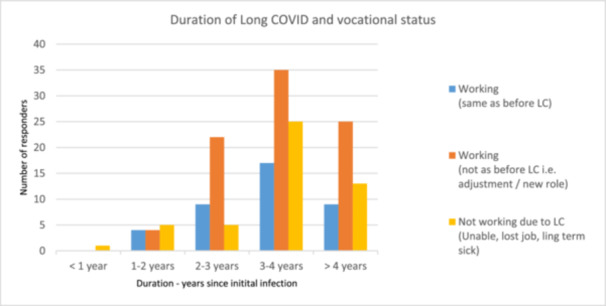
Vocational status was provided by 85.9% (n = 231). Data were analysed and grouped into four categories: (1) 'working—but not the same as before LC', that is, with adjustment, reduced hours, change in duties or role, or lost job but since found a new role, 42.0% (n = 97); (2) 'unable to work' either on long‐term sick, lost job or unable to work, 25.5% (n = 59); (3) 'Working—as prior to their initial LC infection', 20.8% (n = 48); and (4) 'N/A—not working prior to LC', 11.7% (n = 27). Duration of LC was cross‐tabulated with vocational status, see Figure 3. The majority with LC beyond 2 years reported 'working—but not the same as before LC' as the most frequent, and beyond 3 years 'working as prior' was the least reported status.

Duration of LC symptoms according to vocational status.
Trajectory of Recovery and Faciliatory Factors (Questions 5, 6 and 7)
Using a GRoC scale with a simple 3‐point scale [32], it was possible to capture participants' previous 6‐month recovery. There were 246 who responded, 47% (n = 100) were at a plateau, 39.0% (n = 96) were making progress, and 20.3% (n = 50) were worse. Those with a more limited PCFS score (moderate and severe) reported a worse trajectory, but recovery was relatively consistent regardless of initial assessment date (see Supporting Information 4—Additional tables and figures). Further insight from those reporting recovery identified provision of information and advice from the LC clinic (40.6%, n = 41), medication (22.8%, n = 23) and onward referrals (16.8%, n = 17) as aiding recovery.
LC Healthcare Provision and Ongoing Care Needs (Questions 13, 14, 15 and 16)
Current Provision of Care/Support
Current access to care/support was reported by 245 participants. Over half, 56.7% (n = 139), reported they were not receiving care despite being symptomatic, 33.0% (n = 81) were currently receiving care/support and 10.2% (n = 25) identified ongoing care as not necessary. On a follow‐up question, 95.0% (n = 77) provided further details about the provision of care (they could select more than one option). Healthcare support was provided by the NHS (56.6%, n = 73), private/alternative (29.5%, n = 38) and others (4.5%, n = 7), such as the ENO breathe programme [38] or participating in LC research (8.5%, n = 11).
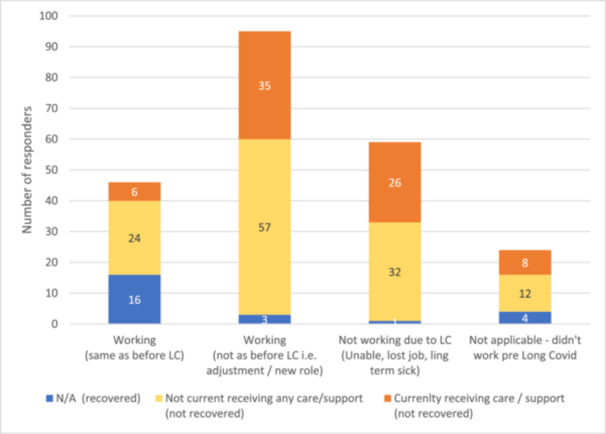
For those who had not recovered, vocational status was cross tabulated with current care provision. Out of 200, 150 reported they were not working in the same capacity as before Covid‐19 infection (either not working or working with adjustments). Of these 150, 40.7% (n = 61) were receiving care/support, and over half, 59.3% (n = 89), were not (see Figure 4).

Self‐reported identification of current care provision by vocational status category.
Perceived Ongoing Care/Support Needs
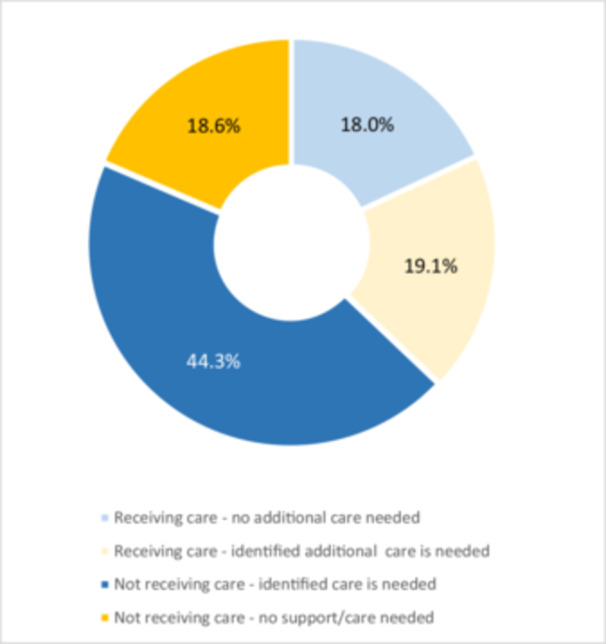
All who had 'not fully recovered' were asked about additional care/support needs. There were 201 who responded, 62.7% (n = 126) additional care (including 36 who were receiving some care/support). 194 answered both questions (receiving care and additional care needs), which revealed four groups: (1) Receiving care—no additional care needed, (2) Receiving care—identified additional care is needed, (3) Not receiving care—identified care is needed and (4) Not receiving care—no support/care needed.
44.3% (n = 86) had not fully recovered and had unmet care needs, while the other groups ranged between 18.1% and 19.2% (see Figure 5. Participants' current and perceived ongoing care needs). Furthermore, those who were 'no longer working' (n = 26 out of 36) or 'working with adjustments' (n = 42 out of 68) reported a high frequency of unmet care needs, compared to those working in the same capacity (n = 14 out of 30) (see Figure 6).
Overall, perceived unmet care needs were noted to be slightly greater in those who were younger (mean age 50.4 ± 11.6, vs. 54.6 ± 11.6), had a longer duration of LC (mean 1223 ± 263 vs. 1196 ± 263), and had their initial infection treated in the community. Low numbers in ethnicity and IMD categories with missing data make extrapolation of findings for diversity and inclusion difficult. Further analysis to explore the statistical difference was not performed, as we did not design the study to explore this.


Stage 2: Qualitative Thematic Analysis
Thematic analysis of the qualitative data identified five overarching domains. Contained within the domains were themes and sub‐themes identified by the similarity and recurring nature of text supplied by participants (see Figure 7). The five domains were as follows: LC Interventions and recovery (5 themes; 17 sub‐themes).Approach to the delivery of care (3 themes, 10 sub‐themes).Insufficient support (2 themes, 12 sub‐themes).Living with LC (4 themes, 15 sub‐themes).Suggestions and improvements (4 themes, 14 sub‐themes).
The overarching domain, 'LC Interventions & Recovery', encompassed all themes related to patients' perceptions about the support provided by LC clinics, including the care pathway and subsequent clinic referrals. Unlike the domain 'LC Interventions & Recovery', the overarching domain 'Approach to the Delivery of Care' captures participants' perceptions relating to the way in which care pathways and referrals were delivered. Participants indicated they experienced a level of 'Insufficient support'. This domain was constituted by two themes relating to navigating the care pathway and those related to the provision of care. The domain 'Living With Long COVID' involved both the immediate impact of LC (i.e., symptoms and coping with such symptoms) and the wider impact (i.e., on family life, activities for daily living, ability to work and financial implications). Finally, 'Suggestions & Improvements' focused on participants' suggestions for service improvement.

Qualitative analysis: Emergent domains, themes and sub‐themes.
Stage 3: Integrated Findings
The mixed‐methods approach enabled quantitative data to be enriched by adding the patients' experiences captured by the qualitative component. 1 What impact does LC continue to have on patients who have attended the LC Clinic, including symptoms, functional limitation and vocational status? Fatigue, breathlessness, cognitive dysfunction, chest pain and a negative impact on mental health were the prevalent ongoing symptoms of LC as demonstrated by the quantitative data. The domain 'Living with Long COVID' involved aspects of participants' experiences in relation to LC symptoms, such as fluctuation and unpredictability, as well as the ongoing nature of the condition, which is difficult to understand. Further, nearly all (94.1%) responders identified ongoing symptoms as having an impact on daily function. This was expressed in the domain 'wider impact of LC', where it was reported that LC impacted personal life, activities for daily living such as housework, and difficulties with family life due to fatigue. From the quantitative analysis, it was evident that LC was experienced as having a significant impact on work and vocation status, for example, only 20.8% of participants were currently working in the capacity they had held before LC. This was echoed in the participant narratives, with accounts of making concessions for work or stopping work altogether due to LC. Finally, the culmination of reducing or stopping work had inevitable financial and psychological implications for some. 2 What is the trajectory of patient recovery, to what extent do patients believe they have recovered from LC, and what aspect of care facilitated recovery? Quantitative analysis indicated aspects of LC services and healthcare support that aided recovery, such as the provision of information and advice (40.6%), medication (22.8%) and onward referrals (16.8%). The domain, 'LC Interventions & Recovery', encompassed participants' experiences of support provided by LC clinics. Noteworthy aspects that patients reported as aiding recovery included LC group programmes, energy management principles, breathing exercises and psychological support, as well as support found outside the healthcare system, such as non‐NHS services and medication and supplements (Table ). 3 Quantitative analyses indicated that participants reported LC recovery as a non‐linear process, 39.0% identifying an upward trajectory within the 6 months before completing the survey and 20.3% indicating worsening symptoms. The domain 'Living with LC' indicated that participants perceived LC clinics as providing a general role in recovery as well as bespoke interventions provided by LC clinic specialists. The way in which such services were perceived was, in part, related to the knowledge and competence of clinical staff and practitioners. This was reflected in the emphasis placed upon receiving an accurate diagnosis of LC. Non‐clinic themes (e.g., non‐NHS services) were also indicated as playing an important role in aiding recovery. The domain 'Coping' involved important perceptions related to the role of support networks such as family, friends and peers. The importance of being self‐resolving in identifying and employing strategies to manage living with LC was also a strong theme. Some illustrated an acceptance that it had become their 'new normal'. However, there were many participants who indicated the condition had a negative impact on their mental health and expressed challenges in relation to living with a condition that is unpredictable, leading to fears about the future. Some also reported that LC had an impact on their self‐perception and that they had experienced an overall loss of purpose. 3 How do patients perceive the LC care pathway, care received and ongoing care needs? The domain 'Approach to the Delivery of Care' captured participants' perceptions relating to the way in which the care pathway and referrals were delivered. The theme 'style of delivery' encompassed participants' perceptions of the way in which care was delivered by clinical staff. Participants indicated the importance of care being delivered in a professional and supportive manner, being listened to and validated, being patient‐centred and the importance of shared decision‐making. The mode by which care was delivered, or the 'medium of delivery', also emerged as an important theme. The medium by which care was delivered was clinic‐dependent, where some participants did not receive face‐to‐face (FtF) appointments. Participants expressed both positive and negative perceptions of online and FtF methods. 'Clinic logistics' related to the way in which LC clinics were run. Some participants perceived clinics to be effective from the initial point of contact, and the notion that patients could have some flexibility around their appointments was indicated as important with respect to being able to attend appointments. Some participants experienced waiting times positively; that is, waiting times were considered acceptable under the circumstances of a pandemic. However, for others, waiting times for clinic appointments were perceived as lengthy and unacceptable, and some reported having to seek help elsewhere. The notion of insufficient and a lack of ongoing care was apparent in both the qualitative and quantitative data. Only 33.0% reported they were currently receiving care, despite 84.1% describing mild, moderate or severe ongoing daily functional limitations. The qualitative analysis included the domain 'Insufficient support'. Some participants, for example, found it difficult to access GP appointments, and whilst others felt their initial assessment was beneficial, they did not feel the same about onward referrals, which were reported as poor or having a lack of continuity. A small number of participants indicated they felt they had been discharged against their wishes, and some felt they had been treated badly. The domain 'Suggestions and Improvements' included themes and sub‐themes relating to participants' perceptions relating to ongoing care and what the LC service might look like going forward. Suggestions included that LC clinics include some method of 'checking in' with patients as they experienced long periods of time managing the condition without feedback. Similarly, making clinics easier to contact was indicated as being beneficial. Participants' perceptions of what additional services could look like as well as what emphasis could be placed on providing future comprehensive LC care included more mental health support as well as support for everyday activities. The theme 'Further Support & Exploration' included participants' desires for the service to be continued for guidance and investigations, as well as opportunities for involvement in future research.
Discussion
We conducted a mixed‐methods evaluation of three LC services across England and Wales. This involved a total of 269 participants who had attended one of the LC services within the previous 4 years. Participants completed an online survey that focused on current LC symptoms, recovery from LC and the role LC services play in recovery. Participants were predominantly female (69.1%) and white British (55.0%), with a mean age of 52.7 ± 12.0.
Quantitative data indicated that most participants had not fully recovered from LC, reporting ongoing mild (28.3%), moderate (42.0%) or severe (13.8%) limitations. Similar to previous research [3, 4], this study reports that the most frequently reported symptoms are fatigue (83.0%), cognitive dysfunction (58.5%), breathlessness or wheezing (43.9%), joint/muscle pain (38.7%), and anxiety and depression (30.8%). According to previous research, the clinical presentation of LC symptoms involves fluctuation and relapses over time [39, 40]. Similarly, participants who took part in this study indicated that LC recovery was a non‐linear process, with 20.3% indicating worsening or symptoms that had plateaued (40.7%) over the 6 months before completing the survey. Symptoms were reported as variable, unpredictable and difficult to understand.
It has previously been reported that approximately 25% of those suffering from LC have significant functional limitations [8]. In our study, 28.3% of participants reported limitations which were mild, 42.0% moderate and 13.8% severe. In relation to vocational impact, only 20.8% indicated they were working as they were before the initial Covid‐19 infection, with just under half (42.0%) not able to work in the same capacity as before LC. A quarter of participants who completed the survey indicated they were currently unable to work for reasons such as losing their job or long‐term sickness. Over half of the participants reported they were symptomatic but not receiving care. Supporting those with LC to maintain, or return to work, is an essential role for LC services from a clinical [41] and economic perspective [42]. We acknowledge this is a relatively small snapshot; nonetheless, it identifies the need for longer‐term vocational support.
The picture that emerges from these results is that participants who still experience symptoms, −61.5% (n = 150/244), describe ongoing recovery needs (e.g., report their condition as ongoing or worsening) and a negative impact on their ability to work, with almost half report they are not receiving care. This evaluation demonstrates the ongoing need for LC clinics to support patients with their recovery and the necessity for the provision of interventions to reduce symptoms with a view to reducing the wider negative impacts of LC, for example, family life and work.
In relation to LC services, research has previously indicated that patients experience barriers to accessing and navigating the healthcare system [19, 20, 22, 23, 43, 44]. It has also been recommended that the coordination of LC care needs to be improved [21]. It was evident from our data that barriers experienced by participants included a lack of information in relation to referrals, a lack of continuity and integration of health care services across the care pathway, and insufficient follow‐up appointments. Furthermore, participants reported waiting times as being too long and expressed frustration at the difficulty contacting their GP and booking appointments.
Previous studies have suggested that a person‐centred approach is necessary to support those with LC [21]. Participants included in this study reflected positively on a patient‐centred approach as well as shared decision‐making as being beneficial to recovery. Some participants also indicated they felt their concerns were not always taken into consideration, some had unanswered questions, and some believed they were treated, or discharged against their wishes.
This study had several limitations. It was cross‐sectional by design and therefore not able to draw on perceptions that may change over time. However, it adds value to previous literature, which has primarily focused on exploring the recovery experience of post‐hospital patients with shorter durations of LC [27, 28]. We explored the perspectives of patients with an average disease duration of over 3 years, where 21.9% had a duration of 4 years or more and 84.2% were treated in a community setting.
The survey utilised for the study is not a validated measure, limiting its generalisability; however [17, 18], public involvement was embedded in the design to ensure its development was guided by patient experience. Additionally, the data is presented as one cohort, and we recognise that services were heterogeneous, that is, the delivery of care, care pathways, staff and geography. We did not explore contextual nuances between sites [12, 21, 43].
Lastly, research has shown that those who decide to participate in online surveys are more likely to adhere to measures that can minimise the risk of being infected with SARS‐CoV‐2 [45]. Therefore, the relevance of these findings to the general population is limited, as it is likely that those who took part were more likely to adhere to treatments and interventions designed to improve LC, therefore, presenting a more positive picture than what perhaps exists in the general population. Despite this tendency for positivity, a significant number of respondents still felt their needs were not met by their LC service.
Conclusion
This evaluation adds to the body of LC literature through the exploration of patient perspectives from community‐based healthcare settings, including participants living with LC for extended durations. It examined the ongoing impact that LC has on patients' lives, the trajectory of their recovery and ongoing care needs, and patients' perspectives of the LC care pathway. Positive perceptions of the role LC services play in recovery, centred on the interventions for LC itself and the way in which care was delivered.
The findings highlight that LC services need to extend beyond the immediate recovery stage to address and support the long‐term complexities and impactof the condition. A significant proportion of participants (44.3%) identified unmet care needs, reinforcing the necessity for ongoing LC service provision that is underscored by the importance of holistic, patient‐centred approaches to care, acknowledging the non‐linear recovery and uncertain trajectory of this complex condition.
The persistent clinical and socio‐economic burden of LC is clear, with only 20.8% of participants working at pre‐infection capacity. Policymakers and service leaders should act to close the gap between LC service provision and patient need. There is a critical window of opportunity for ICBs to redesign services in collaboration with and informed by the patients' voice, learning from local contexts and ensuring care models are equitable, responsive and integrated. Without this, the burden of LC will continue to fall on individuals and families alone.
Author Contributions
Cassie Lee: conceptualisation, investigation, writing – original draft, writing – review and editing, project administration, data curation, methodology, visualisation, formal analysis, validation, resources. Paul Williams: investigation, writing – original draft, writing – review and editing, methodology, formal analysis, data curation, visualisation, validation, project administration, resources. Amiad Abrahams: conceptualisation, investigation, methodology, writing – review and editing, writing – original draft, formal analysis, visualisation, validation, resources. Julie Darbyshire: conceptualisation, methodology, writing – review and editing, formal analysis, visualisation, validation, resources. Helen E. Davies: investigation, writing – review and editing, data curation, validation, visualisation, formal analysis. Johannes De Kock: writing – review and editing, writing – original draft, validation, visualisation. Umut Esmer: conceptualisation, writing – review and editing, methodology, formal analysis, visualisation, validation, resources. Samantha A. Jones: investigation, data curation, validation, visualisation. Vicky Newey: conceptualisation, visualisation, formal analysis, methodology, validation, resources. Janet Scott: writing – review and editing, formal analysis. Nikki Smith: writing – review and editing, validation, visualisation. Darren Winch: writing – review and editing, validation, visualisation. Harsha Master: validation, visualisation, writing – review and editing, investigation, supervision, writing – original draft. Sarah Elkin: conceptualisation, funding acquisition, supervision, formal analysis, methodology, validation, investigation, writing – review and editing, methodology, resources.
LOCOMOTION Consortium Group
Nawar Bakerly, Principal Investigator; Kumaran Balasundaram, NHS Clinical Research Fellow; Megan Ball, NHS Clinical Research Fellow; Mauricio Barahona, Co‐Investigator; Alexander Casson, Co‐Investigator; Jonathan Clarke, HEI Researcher; Karen Cook, Patient Advisory Group Member; Rowena Cooper, NHS Clinical Research Fellow; Vasa Curcin, Co‐Investigator; Julie Darbyshire, Co‐Investigator; Helen Davies, Principal Investigator; Helen Dawes, Co‐Investigator; Simon de Lusignan, Co‐Investigator; Brendan Delaney, Chief Investigator; Carlos Echevarria, Principal Investigator; Sarah Elkin, Principal Investigator; Ana Belen Espinosa Gonzalez, HEI Researcher; Rachael Evans, Principal Investigator; Sophie Evans, Patient Advisory Group Member; Zacchaeus Falope, Principal Investigator; Ben Glampson, HEI Researcher; Madeline Goodwin, Research Assistant; Trish Greenhalgh, Co‐Investigator; Darren C. Greenwood, Co‐Investigator; Stephen Halpin, Principal Investigator; Juliet Harris, NHS Research Assistant; Will Hinton, HEI Researcher; Mike Horton, Co‐Investigator; Samantha Jones, NHS Clinical Research Fellow; Joseph Kwon, HEI Researcher; Cassie Lee, NHS Clinical Research Fellow; Ashliegh Lovett, NHS Clinical Research Fellow; Mae Mansoubi, HEI Researcher; Victoria Masey, NHS Clinical Research Fellow; Harsha Master, Principal Investigator; Erik Mayer, HEI Researcher; Bernardo Meza‐Torres, HEI Researcher; Ruairidh Milne, Patient Advisory Group Member; Ghazala Mir, Co‐Investigator; Jacqui Morris, Principal Investigator; Adam Mosley, NHS Research Assistant; Jordan Mullard, HEI Researcher; Daryl O'Connor, Co‐Investigator; Rory O'Connor, Co‐Investigator; Thomas Osborne, Project Manager; Amy Parkin, NHS Clinical Research Fellow; Stavros Petrou, Co‐Investigator; Anton Pick, Principal Investigator; Denys Prociuk, HEI Researcher; Clare Rayner, Patient Advisory Group Member; Amy Rebane, Patient and Public Involvement Manager; Natalie Rogers, Patient Advisory Group Member; Janet Scott, Principal Investigator; Manoj Sivan, Chief Investigator; Nikki Smith, Patient Advisory Group Member; Adam Smith, Statistician; Emma Tucker, Principal Investigator; Ian Tucker‐Bell, Patient Advisory Group Member; Paul Williams, NHS Clinical Research Fellow; Darren Winch, Patient Advisory Group Member; and Conor Wood, NHS Research Assistant.
Disclosure
The views expressed in this publication are those of the author(s) and not necessarily those of NIHR or the Department of Health and Social Care.
Ethics Statement
The LOCOMOTION study was approved by the Health Research Authority (HRA), which protects the interests of patients in health research, and the Yorkshire and Humber Leeds Bradford Research Ethics Committee (REC ref: 21/YH/0276).
Consent
Explicit patient consent was not sought for the specific work; implied consent was assumed by completing the survey.
Conflicts of Interest
All authors have completed the ICMJE uniform disclosure form at www.icmje.org/coi_disclosure.pdf↗ and declare the following: C.L., P.L., J.S., and H.M. received financial support from the Locomotion Study. C.L. was granted travel expenses by the Locomotion study to present at an international conference. H.M. holds a Service Lead Position within the Covid Clinical Society with payment via host institution, has received honorarium for an article in Guidelines in Practice for Primary Care and has delivered various study days and presentations with either travel expenses paid and/or honorarium.
Permission to Reproduce Material From Other Sources
The authors have nothing to report.