
What this is
- This study assessed persistent symptoms in SARS-CoV-2-infected and non-infected household members.
- Participants included 297 individuals from Dutch households, with 201 testing positive for SARS-CoV-2.
- The research focused on the prevalence and impact of symptoms 6 and 12 months post-infection.
Essence
- SARS-CoV-2-positive adults reported more persistent respiratory symptoms, fatigue, and exertion-related symptoms compared to non-infected adults. Children rarely experienced persistent symptoms.
Key takeaways
- SARS-CoV-2-positive adults reported 15.2% persistent respiratory symptoms vs. 3.4% in non-infected adults. This difference was statistically significant.
- At 6 months, 16.8% of SARS-CoV-2-positive adults reported any persistent symptoms, compared to 10.3% of negative adults, though this difference was not statistically significant.
- Persistent symptoms in adults were associated with decreased () and increased anxiety and depressive symptoms.
Caveats
- The small sample size may limit the detection of significant differences in persistent symptoms between groups.
- Recall and selection bias could affect the reporting of persistent symptoms.
Definitions
- Health-related quality of life (HRQoL): A measure of how well individuals perceive their physical and mental health in relation to their overall quality of life.
Simplified
Introduction
Persistent symptoms are frequently reported after a SARS‐CoV‐2 infection. Estimates range from 7.5% to 35% in nonhospitalized and 53% to 72.5% in hospitalized adults [1, 2, 3]. In nonhospitalized children, estimates range from 0% to 40.0% [4, 5, 6]. An array of persistent symptoms has been reported; however, these symptoms are common in the general population, and many studies lack a control group. This may lead to an overestimation of persistent symptoms attributed to a SARS‐CoV‐2 infection. A recent systematic review reporting on persistent symptoms in children and adults after a SARS‐CoV‐2 infection only included studies with a control group [7]. It showed that the majority of reported symptoms were equally prevalent in SARS‐CoV‐2 patients compared to negative controls [7]. However, as noted in the article, the limited number of studies that could be included in the analysis necessitates a cautious interpretation of these findings, which underscores the need for additional comparative studies. Furthermore, this limited number of available studies included heterogeneous control groups [7]. This heterogeneity introduces variability in lifestyle factors, including differences in approaches to managing and addressing symptoms among cases and controls, which limits comparability. These confounders may undermine the ability to distill the true effect of SARS‐CoV‐2 infection on the prevalence of persistent symptoms. Studies conducted in household settings mitigate these challenges by leveraging shared genetics, environmental exposures, and lifestyle factors, resulting in more homogeneous control groups and enabling clear comparisons.
Therefore, this study analyzed the prevalence of persistent symptoms 6 and 12 months after a SARS‐CoV‐2 infection in nonhospitalized children and adults of Dutch households compared to uninfected household members. Moreover, this study aims to evaluate health‐related quality of life (HRQoL), anxiety, and depressive symptoms in participants with and without persistent symptoms, and to evaluate possible associations between patient characteristics and persistent symptoms.
Methods
This prospective questionnaire study is a 12‐month follow‐up of the SARSLIVA 1.0 (SL1) and SARSLIVA 2.0 cohort (SL2). These studies, with similar study designs, investigated SARS‐CoV‐2 household transmission during different stages of the COVID‐19 pandemic [8, 9]. These cohorts consist of participants aged 0–65 years from Dutch households. Participants from the SL1 cohort were included between October and December 2020, when the wild‐type variant was dominant in an immune naïve population. Participants from the SL2 cohort were included between March and April 2022, during the dominance of the Omicron BA.2 variant of concern (VOC), with varying population immune status through vaccinations and prior infections.
The households included at least one member with a laboratory‐confirmed SARS‐CoV‐2 infection and at least two additional household members willing to participate. Recent (< 8 weeks) SARS‐CoV‐2 infection was an exclusion criterion for SL2. Participant characteristics were collected at baseline. All participants, regardless of symptoms, were tested for a SARS‐CoV‐2 infection via (1) reverse transcription polymerase chain reaction (RT‐PCR) on 10 consecutive saliva samples over 6 weeks and (2) IgG antibody titer increase in serum over the same period. For a more detailed description of SARS‐CoV‐2 test methods, see original papers and Supporting Information Materials [8, 9].
All participants included in the two studies were invited to participate in the follow‐up study, completing questionnaires at 6 and 12 months post‐inclusion. Adults completed a persistent symptom questionnaire that was adapted by University Medical Centre (UMC) Groningen (Supporting Information S1: Appendix 1) [10], while children (0–17 years) received a questionnaire developed by Amsterdam UMC and Spaarne Gasthuis (Supporting Information S1: Appendix 2). These questionnaires assessed the presence of symptoms not present before study onset, perceived to be related to SARS‐CoV‐2. Participants who reported persistent symptoms at 6 months were reassessed on persistent symptoms at 12 months.
Additionally, HRQoL and anxiety and depressive symptoms in adults were assessed by the validated 36‐Item Short Form Health Survey (SF‐36) and hospital anxiety and depression scale (HADS), respectively. These questionnaires were administered at 6 and 12 months, regardless of the presence of persistent symptoms [11, 12].
Only participants who completed the 6‐month follow‐up questionnaire were included in our analyses. Participants who reported a SARS‐CoV‐2 (re‐)infection during the 12‐month follow‐up period were excluded from the subsequent follow‐up measurement. Participants who tested negative for SARS‐CoV‐2 during the initial study period were included as control group. Comparison between SARS‐CoV‐2‐positive and ‐negative participants was performed using Fisher's exact test for parametric data and Wilcoxon rank‐sum test for nonparametric data. Finally, possible associations between patient characteristics and persistent symptoms at 6 months were assessed in adults, using univariable logistic regression. A p value of less than 0.05 was considered statistically significant. All statistical analyses were conducted using R (version 2023.09.1 + 494). For a more detailed description of the study methods, see Supporting Information.
Results
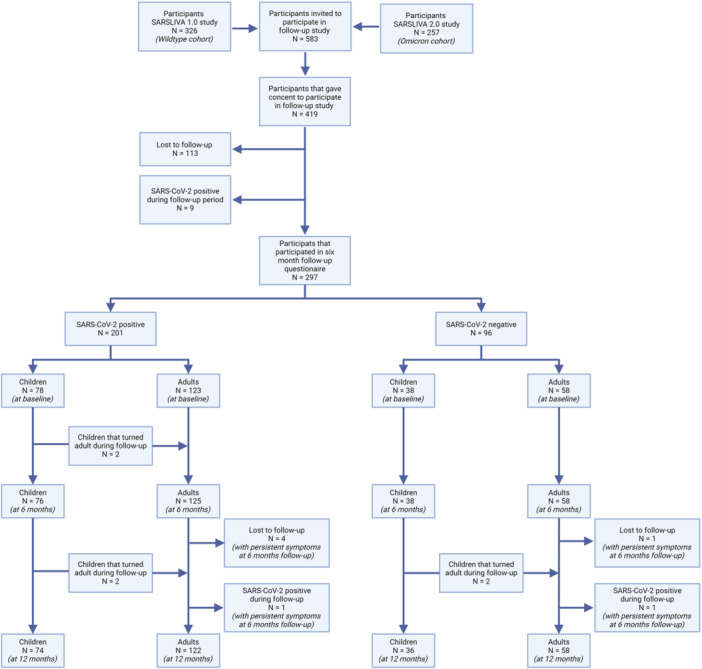
Two hundred and ninety‐seven participants were included, of whom 141 originated from SL1 (50 households) and 156 from SL2 (49 households) (Figure 1). Of the 116 included children, 78 (67.2%) tested positive for SARS‐CoV‐2 (Table 1). Of the 181 included adults, 123 (68.0%) tested positive for SARS‐CoV‐2. Acute symptoms were more frequently reported by SARS‐CoV‐2‐positive participants, such as dyspnea, cough, myalgia, and headache (Table 1). No participants were hospitalized.
From baseline to month 6, two participants reached adult age, resulting in 114 children and 183 adults at 6 months (Figure 1). Of the 114 children, only one reported persistent symptoms at 6 months follow‐up, which were resolved at 12 months follow‐up.
In adults, a larger, though statistically nonsignificant portion of adults of the SARS‐CoV‐2‐positive participants experienced reported persistent symptoms at 6 months follow‐up, compared to the negative participants (16.8% [21/125] vs. 10.3% [6/58]; p = 0.370, Table 2). SARS‐CoV‐2‐positive participants reported significantly more persistent respiratory symptoms compared to negative participants (15.2% vs. 3.4%, p = 0.023). The most common persistent symptom was dyspnea, which was reported by 10.4% of SARS‐CoV‐2‐positive adults, compared to 3.4% in the negative group (p = 0.150). Additionally, a nonsignificant trend for higher prevalence of fatigue was found in the positive group (12.8% vs. 3.4%, p 0.061), as for exertion‐related symptoms (8.8% vs. 1.7%, p = 0.107).
At 12 months follow‐up, five participants were lost to follow‐up, and two participants were excluded due to a SARS‐CoV‐2 (re‐)infection during the 12‐month follow‐up period (Figure 1). Of the 122 SARS‐CoV‐2‐positive adults included in the analysis, 9.0% (11/122) reported persistent symptoms at 12 months compared to 5.2% (3/58) of negative participants (p = 0.553; Supporting Information S1: Table 1). Respiratory symptoms (7.4% vs. 1.7%), neurocognitive symptoms (7.4% vs. 3.4%), and fatigue (5.7% vs. 1.7%) were most commonly reported, although no statistically significant differences were found in the prevalence of specific persistent symptoms at 12 months follow‐up.
Several factors were found to be statistically significantly associated with the presence of at least one persistent symptom in adults at 6 months (Table 3). The identified factors include obesity (OR 3.82; CI 1.14–12.15), moderate acute disease severity (OR 3.45; CI: 1.07–12.32), a history of eczema (OR 9.25; CI 3.17–27.72), and smoking (OR 26.96; CI 3.79–539.93). Of the acute symptoms, nasal congestion (OR 3.20; CI 1.38–7.90) and dyspnea (OR 3.05; CI 1.18–7.53) were statistically significantly associated with persistent symptoms, as well as a moderately severe acute disease course (OR 3.45; CI 1.07–12.32). The number of symptomatic cases was insufficient to perform risk factor analysis through multivariable analysis (n = 27).
In adults, HRQoL, anxiety, and depressive symptom scores did not differ statistically significantly between SARS‐CoV‐2‐positive and ‐negative participants at 6‐ and 12‐month follow‐up (Supporting Information S1: Tables and ). However, when comparing adults with and without persistent symptoms at 6 months follow‐up, participants with persistent symptoms reported lower HRQoL on most SF‐36 domains, including the physical and mental component scores (PCS and MCS, respectively) and reported a clinically relevant increase in anxiety and depressive symptoms at 6 months follow‐up (Supporting Information S1: Table ). At 12 months follow‐up, adults with persistent symptoms scored lower, particularly on the physical domains of the SF‐36 and the PCS score (Supporting Information S1: Table ). The same observations were made in a subgroup analysis comparing SARS‐CoV‐2‐positive adults with and without persistent symptoms (Supporting Information S1: Tables and ). 2 3 4 5 6 7

Flowchart of participant selection and consent.
| SARS‐CoV‐2 infection | ||||
|---|---|---|---|---|
| Overall | Positive | Negative (controls) | value, p a * | |
| = 297N | = 201N | = 96N | ||
| Cohort | 0.174 | |||
| SL1 (wild‐type cohort) | 141 (47.5%) | 101 (50.2%) | 40 (41.7%) | |
| SL2 (Omicron cohort) | 156 (52.5%) | 100 (49.8%) | 56 (58.3%) | |
| Sex | 0.322 | |||
| Male | 136 (45.8%) | 88 (43.8%) | 48 (50.0%) | |
| Female | 161 (54.2%) | 113 (56.2%) | 48 (50.0%) | |
| Age, years | 34 (12–48, 0–64) | 34 (12–47, 0–61) | 28 (12–48, 0–64) | 0.863 |
| Age group | 0.886 | |||
| 0–11 years old | 67 (22.6%) | 47 (23.4%) | 20 (20.8%) | |
| 12–17 years old | 49 (16.5%) | 31 (15.4%) | 18 (18.8%) | |
| 18–39 years old | 56 (18.9%) | 40 (19.9%) | 16 (16.7%) | |
| 40–49 years old | 78 (26.3%) | 51 (25.4%) | 27 (28.1%) | |
| 50 years and older | 47 (15.8%) | 32 (15.9%) | 15 (15.6%) | |
| Acute disease severity b | < 0.001 * | |||
| Asymptomatic | 84 (28.3%) | 33 (16.4%) | 51 (53.1%) | |
| Mild | 158 (53.2%) | 127 (63.2%) | 31 (32.3%) | |
| Moderately severe | 55 (18.5%) | 41 (20.4%) | 14 (15.6%) | |
| Immunity children c | 0.052 | |||
| Naïve | 75 (64.7%) | 56 (71.8%) | 19 (50.0%) | |
| Previous infection | 21 (18.1%) | 13 (16.7%) | 8 (21.1%) | |
| Vaccination | 11 (9.5%) | 6 (7.7%) | 5 (13.2%) | |
| Hybrid immunity | 9 (7.8%) | 3 (3.8%) | 6 (15.8%) | |
| Immunity adults | 0.006 * | |||
| Naïve | 87 (48.1%) | 63 (51.2%) | 24 (41.4%) | |
| Previous infection | 1 (0.6%) | 1 (0.8%) | 0 (0.0%) | |
| Vaccination | 69 (38.1%) | 50 (40.7%) | 19 (32.8%) | |
| Hybrid immunity | 24 (13.3%) | 9 (7.3%) | 15 (25.9%) | |
| BMI class d | 0.085 | |||
| Underweight | 15 (5.1%) | 11 (5.5%) | 4 (4.2%) | |
| Normal weight | 186 (62.6%) | 117 (58.2%) | 69 (71.9%) | |
| Overweight | 74 (24.9%) | 54 (26.9%) | 20 (20.8%) | |
| Obesity | 22 (7.4%) | 19 (9.5%) | 3 (3.1%) | |
| Comorbidities | ||||
| Any | 108 (36.4%) | 75 (37.3%) | 33 (34.4%) | 0.699 |
| Atopy | 80 (26.9%) | 55 (27.4%) | 25 (26.0%) | 0.889 |
| Asthma | 17 (5.7%) | 12 (6.0%) | 5 (5.2%) | 1 |
| Eczema | 26 (8.8%) | 20 (10.0%) | 6 (6.3%) | 0.382 |
| Hay fever | 46 (15.5%) | 30 (14.9%) | 16 (16.7%) | 0.733 |
| Dust mite allergy | 26 (8.8%) | 18 (9.0%) | 8 (8.3%) | 1 |
| Other allergy | 14 (4.7%) | 11 (5.5%) | 3 (3.1%) | 0.56 |
| Cardiac | 10 (3.4%) | 5 (2.5%) | 5 (5.2%) | 0.302 |
| Pulmonary | 2 (0.7%) | 2 (1.0%) | 0 (0.0%) | 1 |
| Immunological | 2 (0.7%) | 2 (1.0%) | 0 (0.0%) | 1 |
| Diabetes mellitus | 2 (0.7%) | 0 (0.0%) | 2 (2.1%) | 0.104 |
| Rheumatologic | 1 (0.3%) | 1 (0.5%) | 0 (0.0%) | 1 |
| Other | 25 (8.4%) | 20 (10.0%) | 5 (5.2%) | 0.188 |
| Smoking | 7 (2.4%) | 5 (2.5%) | 2 (2.1%) | 1 |
| Education (adults) e | 0.482 | |||
| Low to normal | 60 (37.5%) | 40 (35.7%) | 20 (41.7%) | |
| High | 100 (62.5%) | 72 (64.3%) | 28 (58.3%) | |
| Unknown | 21 | 11 | 10 | |
| Acute symptoms | ||||
| Any | 140 (47.1%) | 117 (58.2%) | 23 (24.0%) | < 0.001 * |
| Cough | 93 (31.3%) | 76 (37.8%) | 17 (17.7%) | < 0.001 * |
| Nasal congestion | 117 (39.4%) | 97 (48.3%) | 20 (20.8%) | < 0.001 * |
| Wheezing | 17 (5.7%) | 15 (7.5%) | 2 (2.1%) | 0.067 |
| Dyspnea | 36 (12.1%) | 31 (15.4%) | 5 (5.2%) | 0.013 * |
| Painful breathing | 9 (3.0%) | 8 (4.0%) | 1 (1.0%) | 0.28 |
| Sore throat | 62 (20.9%) | 52 (25.9%) | 10 (10.4%) | 0.002 * |
| Anosmia/ageusia | 24 (8.5%) | 23 (11.4%) | 1 (1.1%) | 0.001 * |
| Apnea | 2 (0.7%) | 2 (1.0%) | 0 (0.0%) | 1 |
| Loss appetite | 23 (7.7%) | 19 (9.5%) | 4 (4.2%) | 0.162 |
| Fever | 8 (2.7%) | 8 (4.0%) | 0 (0.0%) | 0.058 |
| Vomiting | 2 (0.7%) | 1 (0.5%) | 1 (1.0%) | 0.543 |
| Diarrhea | 6 (2.0%) | 6 (3.0%) | 0 (0.0%) | 0.182 |
| Headache | 81 (27.3%) | 67 (33.3%) | 14 (14.6%) | < 0.001 * |
| Myalgia | 55 (18.5%) | 50 (24.9%) | 5 (5.2%) | < 0.001 * |
| Other f | 29 (9.8%) | 27 (13.4%) | 2 (2.1%) | 0.001 * |
| SARS‐CoV‐2 infection | value, p a * | ||
|---|---|---|---|
| Positive ( = 125)N | Negative ( = 58) (controls)N | ||
| Any persistent symptoms | 21 (16.8%) | 6 (10.3%) | 0.37 |
| Respiratory symptoms | 19 (15.2%) | 2 (3.4%) | 0.023 * |
| Dyspnea | 13 (10.4%) | 2 (3.4%) | 0.15 |
| Coughing | 5 (4.0%) | 1 (1.7%) | 0.666 |
| Painful breathing | 3 (2.4%) | 0 (0%) | 0.553 |
| Throat pain | 2 (1.6%) | 1 (1.7%) | 1 |
| Running nose | 4 (3.2%) | 1 (1.7%) | 1 |
| Anosmia | 8 (6.4%) | 1 (1.7%) | 0.276 |
| Ageusia | 9 (7.2%) | 1 (1.7%) | 0.174 |
| Cardiac symptoms | 8 (6.4%) | 3 (5.2%) | 1 |
| Palpitations | 3 (2.4%) | 1 (1.7%) | 1 |
| Chest pain | 7 (5.6%) | 2 (3.4%) | 0.721 |
| Gastrointestinal symptoms | 6 (4.8%) | 0 (0%) | 0.179 |
| Stomach ache | 3 (2.4%) | 0 (0%) | 0.553 |
| Nausea/vomiting | 2 (1.6%) | 0 (0%) | 1 |
| Change in stool | 3 (2.4%) | 0 (0%) | 0.553 |
| Loss of appetite | 1 (0.8%) | 0 (0%) | 1 |
| Weight loss | 1 (0.8%) | 0 (0%) | 1 |
| Neurocognitive symptoms | 12 (9.6%) | 3 (5.2%) | 0.395 |
| Headache | 5 (4.0%) | 1 (1.7%) | 0.666 |
| Hypersensitivity to light and sound | 5 (4.0%) | 0 (0%) | 0.18 |
| Concentration difficulties | 8 (6.4%) | 1 (1.7%) | 0.276 |
| Memory loss | 7 (5.6%) | 0 (0%) | 0.099 |
| Dizziness | 4 (3.2%) | 1 (1.7%) | 1 |
| Balance/coordination problems | 5 (4.0%) | 2 (3.4%) | 1 |
| Cognitive impairment | 8 (6.4%) | 2 (3.4%) | 0.508 |
| Double vision | 3 (2.4%) | 0 (0%) | 0.553 |
| Tingling sensation | 2 (1.6%) | 1 (1.7%) | 1 |
| Musculoskeletal symptoms | 11 (8.8%) | 2 (3.4%) | 0.232 |
| Muscle complaints | 10 (8.0%) | 2 (3.4%) | 0.344 |
| Joint complaints | 6 (4.8%) | 1 (1.7%) | 0.434 |
| Dermatological symptoms | 2 (1.6%) | 0 (0%) | 1 |
| Fever/cold shivers | 0 (0%) | 0 (0%) | — |
| Fatigue | 16 (12.8%) | 2 (3.4%) | 0.061 |
| Sleep disturbances | 9 (7.2%) | 3 (5.2%) | 0.755 |
| Exertion‐related symptoms | 11 (8.8%) | 1 (1.7%) | 0.107 |
| Other symptoms | 8 (6.4%) | 2 (3.4%) | 0.508 |
| Persistent symptoms | Univariate logistic regression | |||
|---|---|---|---|---|
| Yes ( = 27)n | No ( = 156)n | OR (95% CI) | value, p a * | |
| Sex | ||||
| Male | 13 (48.1%) | 71 (45.5%) | Ref. | |
| Female | 14 (51.9%) | 85 (54.5%) | 0.90 (0.40–2.06) | 0.8 |
| Age (median, IQR) | 48 (43–52, 17–60) | 45 (36–49, 17–64) | 1.04 (1.00–1.09) | 0.081 |
| SARS‐CoV‐2 test | ||||
| Negative (controls) | 6 (22.2%) | 52 (33.3%) | Ref. | |
| Positive | 21 (77.8%) | 104 (66.7%) | 1.75 (0.70–5.00) | 0.256 |
| SARS‐CoV‐2 variant | ||||
| Wildtype | 12 (44.4%) | 52 (33.3%) | Ref. | |
| Omicron | 9 (33.3%) | 52 (33.3%) | 0.75 (0.28–1.92) | 0.551 |
| Acute disease severity b | ||||
| Asymptomatic | 5 (18.5%) | 46 (29.5%) | Ref. | |
| Mild | 13 (48.1%) | 86 (55.1%) | 1.39 (0.49–4.55) | 0.554 |
| Moderate | 9 (33.3%) | 24 (15.4%) | 3.45 (1.07–12.32) | 0.043 * |
| Immunity status c | ||||
| None | 15 (55.6%) | 73 (46.8%) | Ref. | |
| Infection | 1 (3.7%) | 0 (0.0%) | NA | NA |
| Vaccination | 6 (22.2%) | 63 (40.4%) | 0.46 (0.16–1.21) | 0.134 |
| Hybrid | 5 (18.5%) | 20 (12.8%) | 1.22 (0.36–3.58) | 0.733 |
| BMI class d | ||||
| Underweight | 0 (0.0%) | 5 (3.2%) | 0 | 0.989 |
| Normal | 11 (40.7%) | 84 (53.8%) | Ref. | |
| Overweight | 10 (37.0%) | 55 (35.3%) | 1.39 (0.54–3.51) | 0.485 |
| Obese | 6 (22.2%) | 12 (7.8%) | 3.82 (1.14–12.15) | 0.024 * |
| Comorbidities | ||||
| Any | 15 (55.6%) | 52 (33.3%) | 1.90 (0.83–4.39) | 0.128 |
| Any atopy | 12 (44.4%) | 43 (27.6%) | 2.10 (0.90–4.85) | 0.082 |
| Asthma | 4 (14.8%) | 10 (6.4%) | 2.54 (0.65–8.32) | 0.141 |
| Eczema | 9 (33.3%) | 8 (5.1%) | 9.25 (3.17–27.72) | < 0.001 * |
| Hay fever | 8 (29.6%) | 27 (17.3%) | 2.01 (0.76–4.95) | 0.138 |
| Dust mite allergy | 4 (14.8%) | 14 (9.0%) | 1.76 (0.47–5.43) | 0.352 |
| Other allergy | 3 (11.1%) | 6 (3.8%) | 3.13 (0.63–12.71) | 0.124 |
| Cardiovascular disease | 0 (0.0%) | 10 (6.4%) | 0 | 0.99 |
| Pulmonary disease | 2 (7.4%) | 0 (0.0%) | NA | NA |
| Immune disorder | 1 (3.7%) | 1 (0.6%) | 5.96 (0.23–153.93) | 0.212 |
| Diabetes mellitus | 0 (0.0%) | 2 (1.3%) | 0 | 0.989 |
| Rheumatoid disease | 0 (0.0%) | 0 (0.0%) | NA | NA |
| Other | 2 (7.4%) | 15 (9.6%) | 0.75 (0.11–2.89) | 0.716 |
| Smoking | 4 (14.8%) | 1 (0.6%) | 26.96 (3.79–540) | 0.004 * |
| Education e | ||||
| Low/normal | 11 (40.7%) | 49 (31.4%) | Ref. | |
| High | 14 (51.9%) | 86 (55.1%) | 0.73 (0.31–1.75) | 0.466 |
| Acute symptoms | ||||
| Any | 19 (70.4%) | 79 (50.6%) | 2.31 (0.99–5.90) | 0.063 |
| Cough | 13 (48.1%) | 54 (34.6%) | 1.75 (0.76–4.02) | 0.181 |
| Nasal congestion | 18 (66.7%) | 60 (38.5%) | 3.20 (1.38–7.90) | 0.008 * |
| Wheezing | 3 (11.1%) | 9 (5.7%) | 2.04 (0.43–7.42) | 0.309 |
| Dyspnea | 9 (33.3%) | 22 (14.1%) | 3.05 (1.18–7.53) | 0.017 * |
| Painful breathing | 3 (11.1%) | 5 (3.2%) | 3.78 (0.74–16.42) | 0.082 |
| Throat pain | 9 (33.3%) | 35 (22.4%) | 1.73 (0.69–4.11) | 0.225 |
| Anosmia/ageusia | 4 (14.8%) | 16 (10.3%) | 1.61 (0.43–4.94) | 0.432 |
| Apnea | 0 (0.0%) | 1 (0.6%) | 0 | 0.992 |
| Loss appetite | 3 (11.1%) | 9 (5.8%) | 2.04 (0.43–7.42) | 0.309 |
| Fever | 1 (3.7%) | 4 (2.6%) | 1.46 (0.07–10.37) | 0.739 |
| Vomiting | 0 (0.0%) | 1 (0.6%) | 0 | 0.992 |
| Diarrhea | 2 (7.4%) | 3 (1.9%) | 4.08 (0.52–25.82) | 0.134 |
| Headache | 13 (48.1%) | 48 (30.8%) | 2.09 (0.90–4.81) | 0.081 |
| Muscle ache | 11 (40.7%) | 35 (22.4%) | 2.38 (0.99–5.56) | 0.047 * |
| Other f | 5 (18.5%) | 15 (9.6%) | 2.14 (0.64–6.16) | 0.179 |
Discussion
This prospective questionnaire study reports on the occurrence of self‐reported persistent symptoms in nonhospitalized children and adults after a SARS‐CoV‐2 infection. By including noninfected household members as a control group, this study ensured a well‐matched comparison, enhancing the reliability and accuracy of the findings through minimized confounding factors. It demonstrates that both infected and noninfected children have a very low prevalence of persistent symptoms. Among adults, the occurrence of at least one symptom was not significantly different between infected and noninfected individuals. However, persistent respiratory symptoms were statistically significantly more often reported among SARS‐CoV‐2‐positive adults than negatively tested adults. Moreover, fatigue and exertion‐related symptoms tend to be more prevalent in SARS‐CoV‐2‐infected adults. Finally, we found that persistent symptoms lead to an impaired HRQoL and increased complaints of anxiety and depression.
The persistence of symptoms for at least 3 months postinfection is commonly used to define post‐acute sequelae of COVID‐19 (PASC), derived from the World Health Association (WHO)‐definition [13], often referred to as long‐COVID. However, the term "long‐COVID" is increasingly viewed as a broad, nonspecific label that encompasses a wide variety of symptoms, potentially oversimplifying the complexity of the condition [14]. Literature highlights that PASC manifests in multiple organ systems, such as respiratory, neurological, and cardiovascular, each with distinct underlying pathophysiological mechanisms [15]. Recent literature therefore emphasizes the importance of focusing on specific symptoms or symptom clusters rather than treating the condition as a singular entity, as this approach may improve understanding and treatment by acknowledging the multifaceted nature of the syndrome [14, 16]. Our findings on differences in specific symptoms align closely with existing literature, which reports a higher prevalence of fatigue, dyspnea, brain fog, and anosmia in nonhospitalized COVID‐19 adults [17]. Notably, our study reinforced these findings within a highly controlled cohort. Not all observed differences in specific symptoms reached statistical significance in this study, possibly due to the limited sample size and associated reduction in statistical power.
This study observed persistent symptoms in the SARS‐CoV‐2‐negative participants, indicating that long‐term symptoms are not exclusively related to SARS‐CoV‐2 infections. Previous research has identified other infectious diseases, including rhinovirus, influenza, respiratory syncytial virus, Epstein−Barr virus, and Lyme disease, as being associated with long‐term symptoms [18, 19, 20, 21, 22, 23]. A recent study further highlighted that individuals with acute respiratory infections (other than SARS‐CoV‐2) had a significantly higher prevalence of persistent symptoms compared to those without respiratory infections, across all COVID‐19 pandemic phases [24]. The current study did not test for viral pathogens other than SARS‐CoV‐2. Yet, the acute symptoms observed in the negative participants suggest that other infections may have contributed to the high prevalence of persistent symptoms in the negative participants, supporting the need for further research into the role of persistent symptoms after (respiratory) infections in general.
The results of the current study demonstrate that adults with persistent symptoms experience a significantly decreased physical and mental HRQoL, alongside a clinically relevant increase in anxiety and depressive symptoms. Recent evidence in over 10 000 adult patients reinforces the profound impact of persistent symptoms. In individuals with post‐COVID symptoms ≥ 3 months after the initial infection, HRQoL remained "poor" up to 24 months after infection, with 22%–32% of participants reporting validated questionnaire scores indicative of anxiety or depressive disorder [25].
Moreover, various studies reported reduced work ability in individuals with persistent symptoms, underscoring the long‐term consequences on functionality and productivity [26, 27], which also contribute to a significant societal burden alongside the increased healthcare utilization and costs associated with these patients [28, 29, 30]. Studies suggest that the type of persistent symptoms strongly influences the degree of individual impairment and societal burden [31, 32], again highlighting the need for a symptom‐specific or symptom‐cluster approach to understand and manage this condition. These findings underscore the substantial disease burden of persistent symptoms after SARS‐CoV‐2 infections at both individual and societal levels, emphasizing the urgent need for comprehensive research to better understand and mitigate these effects.
A key strength of this study lies in its prospective design and comprehensive SARS‐CoV‐2 testing methodology. Another strength is the inclusion of SARS‐CoV‐2‐negative household members as the control group. Limitations include the small sample size, which may have resulted in (1) underdetection of differences in the occurrence of persistent symptoms between the SARS‐CoV‐2‐positive and ‐negative participants, and (2) constraints in our (multivariate) statistical analysis to study risk factors, including pandemic phase. Additionally, recall and selection bias toward participants with persistent symptoms are possible. The lack of a 3‐month follow‐up also prevents reporting the prevalence of post‐COVID condition as defined by the WHO [13]. However, in line with this definition, we specifically inquired about persistent symptoms perceived to be related to the SARS‐CoV‐2 infection. Moreover, despite excluding participants who reported a SARS‐CoV‐2 (re)infection during the follow‐up period, asymptomatic SARS‐CoV‐2 infections cannot be ruled out. We recommend including serological testing at multiple time points in future studies.
In conclusion, this study found that SARS‐CoV‐2‐positive adults tend to have a higher prevalence of persistent fatigue, respiratory, and exertion‐related symptoms as compared to negative household members. Persistent symptoms were associated with a reduced HRQoL and increased anxiety and depression. Furthermore, the prevalence of persistent symptoms after a SARS‐CoV‐2 infection in children in this study was very low. These results underline the importance of incorporating a well‐matched control group in future studies and emphasize the necessity of heightened attention to recovery following infectious diseases in general.
Author Contributions
Steven F. L. v. Lelyveld, Marianne A. v. Houten, Mildred E. Haverkort, Judith G. C. Sluiter‐Post, Angelique M. A. M. Winkel, Coen R. Lap, and Adriana Tami contributed to the conception and design of the study. Angelique M. A. M. Winkel, Coen R. Lap, and Judith G. C. Sluiter‐Post. participated in the acquisition of data. Dirk Eggink coordinated the laboratory analyses. Angelique M. A. M. Winkel, Bastienne A. d. Jonghe, Steven F. L. v. Lelyveld, and Marianne A. v. Houten were responsible for data analyses and interpretation. Bastienne A. v. Jonghe, Angelique M. A. M. Winkel, Coen R. Lap, Steven F. L. v. Lelyveld, Judith G. C. Sluiter‐Post, Sjoerd M. Euser, Dirk Eggink, and Marianne A. v. Houten, Menno D. d. Jong verified the underlying data. Angelique M. A. M. Winkel, Bastienne A. d. Jonghe, Steven F. L. v. Lelyveld, and Marianne A. Houten wrote the manuscript. All authors had full access to all the data and reviewed and approved the final version of the manuscript.
Ethics Statement
Written informed consent was obtained from all participants. This study was reviewed and approved by the Medical Ethical Committee of the Amsterdam University Medical Centre, The Netherlands (Reference Numbers 2020.436 [SARSLIVA 1] and 2022.0073 [SARSLIVA 2.0]).
Conflicts of Interest
The authors declare no conflicts of interest.
 Long Covid