
What this is
- This protocol outlines a for -assisted Existential, Attachment, and RelationaL (PEARL) therapy.
- PEARL therapy integrates -assisted psychotherapy with existential, attachment, and relational approaches.
- The trial will assess acceptability, feasibility, and safety among 15 patients with advanced cancer.
Essence
- PEARL therapy aims to improve the psychological well-being of patients with advanced cancer by combining use with tailored psychotherapy. The trial will evaluate its feasibility and safety in a clinical setting.
Key takeaways
- PEARL therapy includes eight psychotherapy sessions over seven weeks, integrating administration. This structured approach aims to address existential and relational concerns in patients facing advanced cancer.
- The trial will measure recruitment, retention, and adherence rates to assess feasibility, alongside safety evaluations based on adverse events. These metrics will guide future research and potential larger-scale trials.
Caveats
- The study is limited by its small sample size of 15 participants, which may affect the generalizability of the findings. Additionally, the open-label design may introduce bias in participant responses.
Definitions
- Psilocybin: A naturally occurring psychedelic compound found in certain mushrooms, known for altering perception and mood.
- Feasibility trial: A preliminary study assessing the practicality and acceptability of an intervention before larger trials.
Simplified
Background
Advanced and life-threatening cancer brings multiple challenges, including progressive disability and physical burden of disease, complex treatment decisions, changes in social roles and relationships, and re-evaluation of sources of personal meaning and values. Additionally, the threat of mortality may evoke anticipatory fears related to the possibility of future dependency, isolation, physical suffering, dying, and death. The distress associated with advanced disease may be experienced as psychiatric symptoms of depression, anxiety, posttraumatic stress [,], or as other forms of distress, such as demoralization, hopelessness, death anxiety, existential distress, spiritual suffering, the desire for hastened death, or loss of a sense of dignity []. The recent shift to earlier introduction of palliative care for those with advanced disease has been shown to improve quality of life and survival [,], and yet, compared to management of physical symptoms, there remain relatively few standardized treatment approaches for psychological, social, and existential suffering [].
A breadth of unique issues should be considered in the psychotherapeutic treatment of those with advanced or life-threatening disease. These include varying physical status, fluctuations in ability to engage in psychotherapy, practical and resource needs, relational changes imposed by the illness, needs of family and wider support systems, and differences in mortality salience and readiness to explore death-related concerns. A psychotherapeutic framework informed by existential, attachment, and relational theories may address this range of challenges while allowing for an individualized approach. An example of a psychotherapy informed by these theories is CALM (Managing Cancer And Living Meaningfully) therapy [,], developed and researched previously by members of our team. CALM is a brief, semi-structured, manualized, individual psychotherapy for patients with advanced cancer and their loved ones. Within CALM, the general therapeutic strategy is to facilitate mentalization, which is the capacity to reflect on feeling states, to distinguish them from literal facts, and to accept the possibility of multiple perspectives on events in order to support "double awareness," which is the ability to prepare for end of life while continuing to live in and enjoy the present [,]. This approach has been shown to reduce psychological distress and improve end-of-life preparation in the advanced cancer population [] and is a recommended standard for early psychological palliative care [].
Preliminary research has demonstrated the potential of psilocybin-assisted psychotherapy in treating psychological distress experienced by patients with cancer [,]. Psilocybin is a psychedelic compound that occurs naturally in thegenus of mushrooms and exerts its primary effects via agonism at the serotonin 5-hydroxytryptamine type 2A (5-HT2A) receptor. At adequate doses, psilocybin induces profound alterations in thought, perception, and emotion, together with experiences of ego dissolution or mystical-type experiences []. Contemporary therapeutic use of psilocybin is usually paired with psychotherapy or a psychological support paradigm, whereby participants undergo one or a small number of guided, high-dose psilocybin treatment sessions preceded by preparatory sessions and followed by integration sessions []. Recent research has demonstrated, with large effect sizes, the benefits of psilocybin-assisted psychotherapy for reducing end-of-life distress in patients with advanced disease. Ross et al. [] conducted a systematic review of clinical trials using psychedelic treatment in patients with serious or terminal illnesses and associated psychiatric issues. Ten studies with a total of 445 participants met the inclusion criteria. Combined data from the six open-label trials included suggested that psychedelic-assisted psychotherapy is associated with reduced cancer-related depression, anxiety, and fear of death. Furthermore, the four randomized controlled trials (RCTs), which predominantly used psilocybin, showed that psychedelic-assisted psychotherapy produced rapid and sustained improvements in cancer-related psychological and existential distress with large effect sizes [–]. Reiche et al. [] conducted a similar systematic review, concluding that patients with life-threatening diseases, and associated depression and anxiety, can benefit from the antidepressant and anxiolytic properties of serotonergic hallucinogens, with some studies also reporting reduced fear of death and enhanced quality of life. These effects appear to be rapid and may be sustained for months to years following a single high-dose drug session [–].
A more recent systematic review [] included an additional contemporary RCT exploring MDMA (3,4-methylenedioxymethamphetamine)-assisted psychotherapy for the treatment of anxiety and other psychological distress associated with life-threatening illness [], along with a non-controlled trial of psilocybin-assisted therapy, delivered in a group setting, for the treatment of demoralization among long-term AIDS survivor men []; this review reached the same conclusions as Ross et al. [] and Reiche et al. [], while noting that most of the included studies lacked detailed information about the psychotherapeutic approaches employed, as well as other nonpharmacologic or contextual factors such as music playlists used []. Finally, two recent trials have demonstrated the feasibility, safety, and possible efficacy of psilocybin-assisted group therapy for patients with cancer [,]. Beaussant et al. [] conducted qualitative exit interviews among 28 participants in the Agarwal et al. [] clinical trial and found that participants held positive attitudes toward the acceptability of group-based psilocybin-assisted therapy.
Combining psilocybin-assisted psychotherapy protocols [,], with an existential, attachment, and relationally informed psychotherapeutic approach, we have developed a novel psilocybin-assisted psychotherapy intervention for patients with advanced cancer. This new intervention is called Psilocybin-assisted Existential, Attachment, and RelationaL (PEARL) therapy. The rationale for this feasibility trial is three-fold. Firstly, while it is well understood that the psychological effects of psilocybin are highly context-dependent [], the psychotherapeutic components of existing psilocybin-assisted psychotherapy interventions have received little attention [] and have not been informed by contemporary research regarding effective psychotherapeutic care of this population. Thus, defining potential therapeutic protocols, including the amount and type of psychotherapy, has been identified as a research priority [,]. Second, patient preferences and expectancies may influence outcomes with psychedelics, and in most studies to date, patients have been motivated to engage, have self-referred, and in some cases have qualified for participation, despite having cancer in remission [,]. It is unclear how feasible or acceptable PEARL might be for patients living with advanced cancer recruited within a comprehensive cancer center. Finally, the most relevant clinical outcomes remain unclear, with studies to date focusing on a variety of distress outcomes []. This protocol describes a feasibility and acceptability trial, the results of which will inform further intervention refinement and a randomized controlled trial (RCT) examining the efficacy of PEARL therapy.
Objectives
1.a. To assess the feasibility of PEARL therapy with attention to recruitment, retention, and adherence. 1.b. To assess the acceptability of PEARL therapy from the perspective of patients. 1.c. To assess the safety of PEARL therapy. 2.a. To explore the preliminary efficacy of PEARL regarding outcomes including death-related distress, depressive symptoms, anxiety, demoralization, spiritual wellbeing, quality of life, and desire for hastened death. 2.b. To explore patient perspectives on the clinical relevance of these measurable outcomes. bullet Par48
Methods
Study design and setting
This is a single-center, open-label, one-arm, clinical trial using both qualitative and quantitative methodologies. Participants will be recruited from Princess Margaret Cancer Centre (PM), Canada's largest comprehensive cancer treatment and research center, which includes a large Department of Supportive Care that provides outpatient psychosocial oncology and palliative care services.
Participants
Participant inclusion criteria are as follows: (i) > 18 years of age, (ii) ability to speak and read English, (iii) no cognitive impairment, (iv) confirmed diagnosis of stage IV solid tumor/sarcoma/melanoma/lymphoma/endocrine cancer with expected survival of greater than 6 months, (v) at least mild depressive symptoms (PHQ-9 > 8), (vi) normal hepatic and renal function (INR < 1.5, AST/ALT < 2 × ULN, normal range bilirubin, PLT ≥ 150, eGFR > 45), and (vii) interest and ability to participate in the PEARL intervention as outlined. Furthermore, if sexually active and able to become pregnant, participants must be using effective birth control and cannot be pregnant or nursing for the duration of the study. Regarding medications and substances, for 1 week prior to the psilocybin session, participants must agree to refrain from (i) using any prescription medications not approved by the team and (ii) using any non-prescription medication, nutritional, or herbal supplement not approved by the team (exceptions include acetaminophen, non-steroidal anti-inflammatories, and common doses of vitamins and minerals). Additionally, participants must refrain from (i) taking any as needed medication on the morning of the psilocybin session (with the exception of daily and as needed opioid medication); (ii) using nicotine for at least 2 h prior to, and 7 h after, psilocybin administration; and (iii) using any psychoactive drugs, including alcohol, within 24 h of psilocybin administration.
Participant exclusion criteria include (i) cancer of, or metastasis to, the brain; (ii) symptoms consistent with delirium, psychosis, or other symptoms judged to be incompatible with establishment of rapport or safe exposure to psilocybin; (iii) history of past intolerability to psychedelics; (iv) past/present psychiatric diagnoses of bipolar disorder, psychotic disorder, active substance use disorder, or suicidality (as distinguished from desire for hastened death or readiness for death, per the discretion of the study team); (v) first degree relative with primary psychotic disorder if participant is under age 30; (vi) severe hypertension (SBP > 140 or DBP > 90) based on two readings on the same day; (vii) known paraneoplastic syndrome or "ectopic" hormone production by the primary tumor if incompatible with psilocybin, determined in consultation with the study palliative care physician; (viii) cardiovascular conditions including uncontrolled hypertension, angina, clinically significant ECG abnormality, transient ischemic attack in the last six months, stroke, peripheral or pulmonary vascular disease; (ix) uncontrolled epilepsy or history of seizures in the past 6 months; (x) gastrointestinal bleed in the past 6 months; (xi) participants with diabetes who are unable to skip a meal, require medication administration more than twice daily, or who have had symptomatic hypoglycemia within the prior 30 days; (xii) use of other investigational agents, psychoactive prescription medications (e.g., benzodiazepines, lithium, SSRIs), medications with primary pharmacological effect on 5-HT2A receptors (e.g., olanzapine), monoamine oxidase inhibitors, potent metabolic inducers (e.g., rifamycin, rifampin, rifabutin, rifapentine, carbamazepine, phenytoin, phenobarbital, nevirapine, efavirenz, paclitaxel, dexamethasone, St John's wort), or inhibitors (e.g., HIV protease inhibitors, itraconazole, ketoconazole, erythromycin, clarithromycin, troleandomycin). In suitable patients, if safe to do so, contraindicated medications may be tapered prior to the start of the intervention.
PEARL intervention
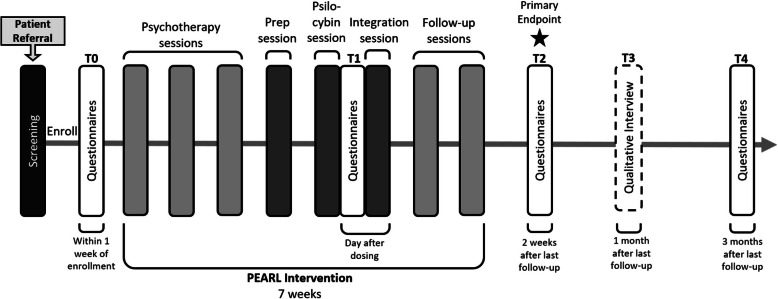
All participants will receive the PEARL therapy intervention, which consists of eight psychotherapy sessions delivered over a 7-week period. Each participant will be assigned a primary therapist for all sessions, and a secondary therapist will be present at the first psychotherapy session as well as the final preparatory, psilocybin, and first integration sessions. The PEARL foundations include existential, attachment, and relational theories, and the process is semi-structured, guided by the patient's concerns, with a focus on joint creation of meaning between therapist(s) and patient, and facilitation of mentalization. PEARL therapists are PEARL-trained psychiatrists, psychologists, and spiritual care providers with expertise in treating patients with advanced cancer. Each therapy dyad will include at least one psychiatrist.
Initial psychotherapy sessions
Three initial sessions, 75 min in length, are aimed to develop a therapeutic alliance and explore the determinants of the patient's distress considering four broad domains: (1) the physical experience (disease, symptoms, and management), (2) the relational context (changes in self-concept and relationships with close others), (3) spirituality and sources of meaning and purpose, and (4) their orientation to the future, hope, and mortality. A family caregiver will be invited to participate in one or more of these sessions to explore and support family functioning in the context of cancer and to prepare them for the psilocybin session, answer questions, and help them understand how to support the participant after the session.
Preparatory session
This 90-min session will be conducted 1 week before the psilocybin session within the treatment setting (a relaxed, calming space with controllable lighting and temperature, with availability of pre-selected recorded music via headphones and a surround sound speaker system) and will focus on preparation for the psilocybin session.
Psilocybin session
This session will last an average of 6–8 h. The patient will ingest a 25-mg psilocybin capsule administered by the study physician(s) within the treatment setting. Both therapists will act as supports or guides according to principles of psychedelic-assisted psychotherapy (the use of eye shades, music, inner-directed with therapists providing support as needed and facilitating a sense of safety) [].
Integration session
This 90-min session occurring the day after the psilocybin session will support reflection on the experiences of and insights from the psilocybin session, understanding these in the context of the patient's individual psychology, and considering their impact on the four content domains: (1) the physical experience (disease, symptoms, and management); (2) the relational context (changes in self-concept and relationships with close others); (3) spirituality and sources of meaning and purpose; and (4) their orientation to the future, hope, and mortality). Some attention will be paid to helping the participant continue their integration process on their own. A family caregiver will be invited to attend a portion of this session.
Follow-up sessions
Two further psychotherapy sessions, similar in nature and duration to the initial integration session, with the primary therapist will take place weekly to continue to explore and integrate the experience.
Investigational agent
Participants will ingest one 25-mg capsule of synthetic psilocybin at the beginning of the dosing session. Oral psilocybin, 25 mg capsules, are within the dosing range previously shown to be safe and well-tolerated in other clinical trials in this population [,,,]. Psilocybin capsules are manufactured by Usona Institute under a collaborative agreement from their Investigational Drug and Material Supply Program.
Discontinuation criteria
Participants can withdraw from treatment or withdraw from the study at any time for any reason. The investigator may withdraw a participant if (a) the participant develops any conditions listed within the exclusion criteria (e.g., medical or psychiatric diagnosis/symptoms) that affect the safety of the participant, (b) the participant cannot comply with elements of the protocol that are critical for safety, or (c) in their clinical judgment, it is in the best interest of the participant. If the clinical team decides to terminate a participant from the study, they will explain to the participant, document the reason for removal, and ensure the participant has an appropriate follow-up support plan.
Study procedures
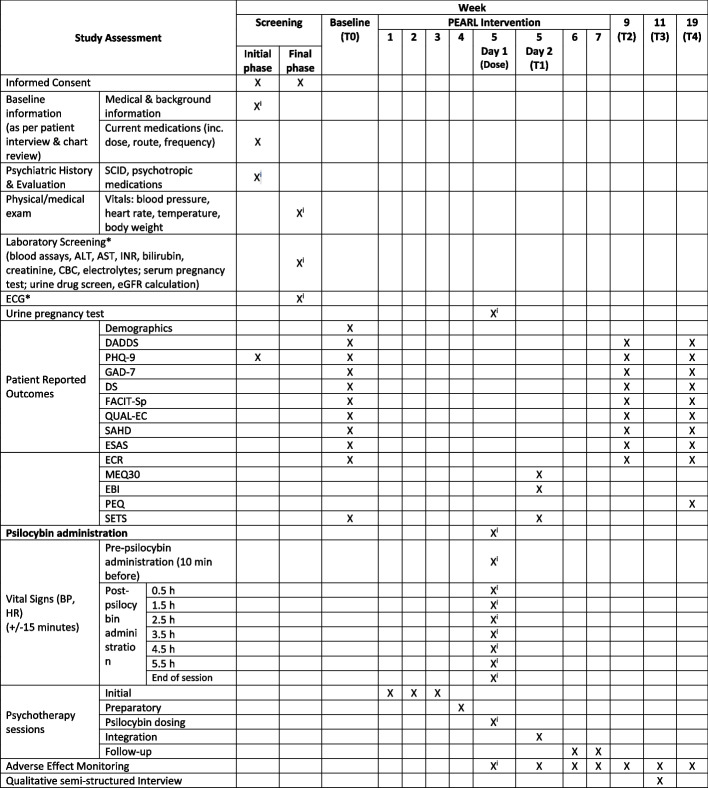
The study schedule is organized as follows (see Fig. ). Potentially eligible participants will be referred from outpatient clinics at PM. Research staff will contact potential participants to obtain consent for initial screening, which involves medical chart review, laboratory investigations, and psychiatric assessment. Participants assessed as potentially eligible will continue to the final screening procedures once informed consent for the main study is obtained. If participants meet all inclusion/exclusion criteria, they will be enrolled in the trial and complete baseline questionnaires (T0) within 1 week. Participants will begin the PEARL intervention within 1 to 2 weeks of T0. On the day following the psilocybin session, participants will complete questionnaires to assess the quality of the experience (T1). Participants will complete follow-up questionnaires 2 weeks (T2) following PEARL completion, a qualitative interview 1 month following PEARL completion (T3), and follow-up questionnaires 3 months following PEARL completion (T4). The assessments, intervention components, and questionnaires completed at each time point are outlined in the study calendar (Fig. ).


Sample size
We have chosen a target sample size of 15 participants. There is little consensus in the literature regarding sample sizes required for single-arm feasibility and acceptability studies, and guidance varies depending on study design and goals, as well as pragmatic issues such as the value of information, study cost, and other constraints []. In terms of human resources, time, and the price of psilocybin (a controlled substance that is expensive to purchase and import into Canada), this is a costly complex intervention to deliver, and therefore, the smallest meaningful sample size was preferred. The likely sample size of any future definitive RCT also informed our decision. While this is not a pilot RCT, it has been suggested that the size of a pilot trial should be informed by the size of the future definitive RCT with possible sample sizes of 10 to 75 depending on the potential effect size (from large to very small) []. Given the large effect sizes reported following previous psilocybin-assisted psychotherapy RCTs in this population (treatment arms in these trials ranged from 16 [] to 29 []), a sample size of 15 for this single-arm study was deemed reasonable. Finally, our primary objectives include examination of both quantitative and qualitative indicators of feasibility and acceptability. Considering quantitative indicators, with a sample size of 15, we will be able to estimate, with 95% confidence, the anticipated recruitment rate of 40% with 25% absolute precision and the anticipated retention rate of 75% with 20% absolute precision. Considering qualitative indicators, samples of less than 20 have been deemed suitable for qualitative feasibility research [].
Treatment integrity
The treatment integrity of the PEARL intervention will be ensured by means of (1) reference to the PEARL Treatment Manual, which defines the characteristics and sequencing of the intervention and provides examples of approaches to respond to disruptions or deviations and (2) regular supervision of PEARL therapists by PEARL developers, which will include review of selected video-recorded sessions. Evaluation will be conducted by PEARL developers, using the PEARL Treatment Integrity Scale (see Additional file 1) adapted from CALM treatment integrity tools [].
Outcomes
Feasibility
Feasibility will be evaluated in terms of recruitment, retention, and adherence. Recruitment will be assessed by capturing the number of patients who consent to participate after referral and screening. Retention will be assessed by tracking completion of study measures across all time points. Adherence will be assessed by tracking the number of PEARL sessions completed.
Acceptability
Participants will be interviewed regarding their experiences with PEARL, including acceptability, and perceived positive and negative effects of the intervention, with a semi-structured interview guide (see Additional file 2). Interviews will be video recorded and professionally transcribed.
Safety
This study will utilize the Common Terminology Criteria for Adverse Events (CTCAE) version 5.0 [] for toxicity and adverse event (AE) reporting. AEs attributed to psilocybin will be monitored for and recorded after the psilocybin session. During the psilocybin session, the Monitor Rating Questionnaire, adapted from the measure used by Griffiths et al. [], will be completed by therapists to capture AEs including elevated heart rate and blood pressure, confusion, headache, nausea/vomiting, anxiety, and paranoia. Cardiovascular variables (heart rate and blood pressure) will be measured during the dosing session at the following time points: baseline, 30, 90, 150, 210, 270, and 330 min post-dose administration and at the end of the session with a ± 15 min window. Vital signs will be measured more frequently if there are abnormal readings of heart rate and blood pressure, or if there is chest pain, shortness of breath, neurological symptoms, or any other signs or symptoms that may be indicative of a medical complication.
Serious adverse events (SAEs) will be tracked until study completion and will be defined as any adverse drug experience that results in death, is life-threatening, requires hospital admission, results in persistent or significant disability, or may jeopardize the participant or necessitate medical intervention to prevent one of the aforementioned events.
Additional data collection
The following demographic information will be collected via self-report: age, gender, sexual orientation, ethnicity, level of education, marital status, household income, and living arrangements. Medical and background information including cancer type and stage, length of illness, previous psychiatric and medical diagnoses, current medications, and past use of psychedelic medicines will be gathered via medical interview, physical examination, laboratory screening, and chart review. The Structured Clinical Interview for DSM Disorders (SCID) depression module will be administered to accurately assess for the current diagnosis of depression during screening.
Data analysis
Feasibility (Objective 1.a)
Based on guidance for conducting feasibility trials [,], we have established clear progression criteria (green/proceed, amber/amend, red/stop), informed by previous research on similar interventions in similar populations, to determine if the study findings indicate that it would be feasible to examine the efficacy of PEARL therapy in a larger RCT. All progression criteria will be summarized using descriptive statistics.
criteria are based on the percentage of interested and eligible patients who consent to participate. Green (progression to RCT) will be supported at or above 40%, amber (minor protocol amendment before progression) at 10–40%, and red (significant protocol amendment before progression) at or below 10%. We are aiming for consent rates as high as Griffiths et al. [] documented in their psilocybin-assisted psychotherapy trial among cancer patients (41%). Given that the PEARL protocol is more demanding and time-consuming for patients, we will allow for a slightly lower consent rate.
criteria are based on the percentage of participants completing primary endpoint (T3) measures. Green will be supported at or above 75%, amber at 40–75%, and red at or below 40%. Criteria are based on 18–26% loss to follow-up rates in similar studies [,,], and we will allow for loss on the higher end given the time commitment and demands of the PEARL protocol.
criteria are based on the percentage of participants completing all eight PEARL intervention sessions. Green will be supported at or above 70%, amber at 40–70%, and red at or below 40%. Criteria are based on the CALM RCT at PM, which achieved 77.5% adherence (completion of at least 3 sessions) among a similar target population []. We have chosen a lower threshold given that we are planning more sessions within a shorter time frame.
Acceptability (Objective 1.b)
Transcripts from qualitative interviews will be systematically coded using thematic analysis []. An initial set of themes regarding acceptability will be coded to form a tentative coding scheme. This scheme will be applied to new transcripts and revised to adjust for new information. Analysis will be conducted in an iterative process. An audit trail consisting of a detailed chronology of data collection and analytical decisions will be maintained, and regular team meetings will be conducted to discuss all phases of the analysis to resolve discrepancies and reach consensus.
Safety (Objective 1.c)
Safety criteria are based on the number of participants experiencing no SAEs throughout the course of the trial. Green will be supported at 100%, amber at 85–100%, and red at or below 85%. Similar trials using psilocybin-assisted psychotherapy [,] reported no SAEs. While we anticipate the same, we will allow for a slightly lower threshold given that our patient population may be more ill than the population recruited in previous studies.
Efficacy outcomes (Objective 2.a)
The following outcome measures will be collected pre- and post-intervention at the time points indicated in the study calendar: death-related distress (Death and Dying Distress Scale (DADDS) [,,]), depressive symptoms (Patient Health Questionnaire-9 (PHQ-9) []), anxiety symptoms (Generalized Anxiety Disorder scale (GAD-7) []), physical symptoms (Edmonton Symptom Assessment Scale (ESAS) []), demoralization symptoms (Demoralization Scale (DS) []), attachment style (the Experiences in Close Relationships Inventory (ECR) []), spiritual wellbeing (Functional Assessment of Chronic Illness Therapy-Spiritual Well-Being Scale (FACIT-Sp) []), quality of life (Quality of Life at the End of Life-Cancer Scale (QUAL-EC) []), attitudes toward hastened death (Schedule of Attitudes Toward Hastened Death (SAHD) []), and treatment expectancy (Stanford Expectation of Treatment Scale (SETS) []). Outcome measure packages will take an average of 25 min to complete. In our previous intervention studies in this population, measure packages of similar length were found acceptable to participants.
The following measures will only be completed post-dosing session to capture phenomena related to the psilocybin experience: quality of acute drug experience (Mystical Experience Questionnaire (MEQ30) []), persisting effects (three questions from the Persisting Effect Questionnaire (PEQ) []: (1) how personally meaningful was the experience, (2) how spiritually significant was the experience, and (3) did the experience change your sense of well-being or life satisfaction and emotional breakthrough (Emotional Breakthrough Inventory (EBI) []).
As a feasibility study, we consider all efficacy analyses to be exploratory and therefore will not be interpreting or disseminating the study outcome results as definitive and will not rely on any imputation methods. Outcome measures will be summarized with descriptive statistics, and dependent-tests will be used to examine change over time, comparing each endpoint assessment to baseline with an intention-to-treat (ITT) analysis.
Relevance of outcomes (Objective 2.b)
To explore patient perspectives on the clinical relevance of potential therapy outcomes, questions about the outcome measures have been included in the semi-structured qualitative interview guide (Additional file 2). Transcripts will be systematically coded and analyzed using thematic analysis as described in Objective 1.b.
Data management and trial oversight
All data obtained in the clinical trial will be reported on electronic case report forms (eCRFs). All data will be source verified prior to publication; the investigator will review the data and electronically sign the eCRFs to acknowledge agreement with the data entered.
Data collected from all enrolled participants will be included in the analysis. If a participant withdraws or is terminated from the study, data collected up to that point will be included in analyses unless the participant specifically requests their data not be included. Any planned or unplanned deviation(s) from the original statistical plan will be described in the final report. Study termination and follow-up will be performed in compliance with the conditions set forth in the International Conference on Harmonisation (ICH) sixth efficacy publication on Good Clinical Practice. As per Health Canada regulations, all original records will be maintained for 15 years after study completion.
A trial steering committee composed of the principal investigators and external experts in clinical trials will provide oversight of study progress and procedures, ensure adherence to protocols and standards, and advise on ethical issues. Data safety monitoring will be performed by the PM Drug Development Program Central Office. Trial data in eCRFs will be monitored on an ongoing basis for unexpected or adverse events, and quality assurance measures will be performed.
Discussion
Psilocybin remains a controlled substance not approved for clinical use in Canada in any population, while interest in clinical uses of psilocybin and other psychedelics is growing both inside and outside health care. There is thus an urgent need for rigorous research to inform policy, training, and clinical guidelines. At the same time, there is growing awareness of the numerous clinically important components of psychedelic-assisted psychotherapy that require attention [,]. These include the sourcing, importing, and administration of the psychedelic medicine, and then the careful monitoring of its effects. Additionally, there are issues related to the selection and standardization of the psychotherapy component, therapist selection, training and supervision, and evaluation of treatment integrity. Finally, providing this type of intervention, and conducting this research, in a population living with advanced cancer, which may be physically and psychologically vulnerable, could create significant challenges to recruitment, retention, adherence, and acceptability. Together, these issues emphasize the importance of this feasibility and acceptability study prior to attempting further research in a larger randomized controlled trial.
There is increasing recognition that qualitative and quantitative methods are useful at this stage of trial development [], and this trial draws on both methodologies. Qualitative feasibility studies are growing in number, and there are clearer guidelines around conducting qualitative research of this type [,]. This approach is particularly suited to interventions such as PEARL that include a non-pharmacological component, which is modifiable based on participant feedback.
Recent reviews of trials in psychedelic medicine have highlighted a variety of issues including the lack of published protocols and lack of attention to the psychotherapeutic component of the intervention and psychotherapy fidelity [,]. The design of this feasibility and acceptability trial, and publishing the protocol ahead of trial completion, represents an attempt to respond to these suggestions and increase the trust in, and value of, the associated evidence.
Supplementary Information
Additional file 1: PEARL Treatment Integrity Scale. 40814_2025_1706_MOESM1_ESM.pdf local-data MOESM1 Additional file 2. Interview Guide: PEARL Semi-structured Interview Guide V1.0. 40814_2025_1706_MOESM2_ESM.pdf local-data MOESM2 Additional file 3. PEARL Study Consent Form V3.0. 40814_2025_1706_MOESM3_ESM.pdf local-data MOESM3 Additional file 4. SPIRIT 2013 Checklist: Recommended items to address in a clinical trial protocol and related documents. 40814_2025_1706_MOESM4_ESM.pdf local-data MOESM4
 Psychedelic Science