
What this is
- This study examines the socioeconomic and demographic characteristics of individuals using glucagon-like peptide-1 (GLP-1) receptor agonists in Sweden.
- It focuses on both on-label and off-label prescriptions, particularly for obesity treatment.
- Findings reveal significant disparities in prescription patterns based on sex, income, and education.
Essence
- High family disposable income and male sex are common among off-label GLP-1 receptor agonist users in Sweden. Significant variations in prescription rates exist across counties.
Key takeaways
- Off-label GLP-1 receptor agonist prescriptions are more common among men (69.0%) compared to women (50.8%). This pattern suggests gender disparities in access to these medications.
- Individuals with higher education (82.8%) and disposable income are more likely to use GLP-1 receptor agonists. This indicates a link between socioeconomic status and medication access.
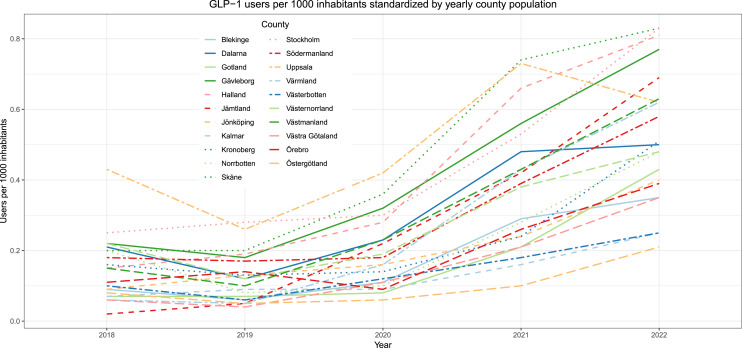
- Prescription rates per 1,000 inhabitants show a four-fold variation across Swedish counties, reflecting differing clinical practices and guideline interpretations.
Caveats
- The study's observational nature limits causal inferences about the relationship between socioeconomic factors and prescription patterns.
- Data is based on filled prescriptions, which may not reflect actual medication adherence or effectiveness among users.
Definitions
- Off-label prescription: Prescribing a medication for unapproved indications or populations, or outside the recommended dosage range.
Simplified
Introduction
In 2023, Science designated the development of glucagon-like peptide-1 (GLP-1) receptor agonists, also known as GLP-1 analogs, as it is "Breakthrough of the Year". This recognition underscores the fact that these drugs, which were originally developed for the treatment of type 2 diabetes, not only promote weight loss, but also contribute to broader health-related benefits [1] and improved quality of life [2], advancing treatment of persons with type 2 diabetes and obesity.
Liraglutide, a once-daily GLP-1 receptor agonist, was initially introduced in 2009 for persons with type 2 diabetes and subsequently for obesity. Dulaglutide is prescribed once a week for the treatment of type 2 diabetes. Semaglutide is also a once-weekly GLP-1 receptor agonist which was approved by the US Food and Drug Administration for chronic weight management in June 2021. In many countries, semaglutide is approved for obesity treatment, but only available for diabetes treatment. Growing evidence showing weight reduction linked to the use of these medications led to an increased demand which resulted in a global shortage [3].
Physicians around the world have now turned to off-label use, prescribing GLP-1 receptor agonists indicated for diabetes, to care for their increasing number of patients with obesity. Off-label prescription is not illegal, and it includes prescribing a drug for unapproved indications or populations, or outside the recommended dosage range. Off-label prescribing of GLP-1 receptor agonist is slightly different, since their treatment for obesity management is well studied [4] and approved. However, in Sweden and in other countries, prescriptions of diabetes medications are subsidized by the state, while for obesity treatment they are paid out of pocket by the patients. Thus, shortage has coupled with potential differential off-label prescribing of GLP-1 receptor agonists for obesity treatment due to health literacy, socioeconomic and demographic factors [5].
Understanding the pattern of on- and off-label prescription of medications and adherence to prescription guidelines is important in a health care system based on the principle that health care should be offered anyone independently of personal characteristics. Unregulated off-label prescription of GLP-1 receptor agonists for obesity treatment may raise concerns about potential inequalities for both patient groups. Patients with the greatest need should be prioritized, and the use of limited health care resources should be planned in light of a cost-effectiveness assessment. Therefore, this study aimed to describe the socioeconomic and demographic characteristics of patients which were prescribed on- and off-label GLP-1 receptor agonists for weight reduction.
Methods
Study Design and Population
This is a Swedish descriptive register-based cohort study using the personal national identification number [6] to identify individuals included in the study population. Data from the Swedish Prescribed Drug Register (PDR) [7] were used to select individuals who filled at least one prescription of a GLP-1 receptor agonist, coded according to the Anatomical Therapeutic Chemical (ATC) code system (ATC code A10BJ). The source population of GLP-1 receptor agonist users was selected from January 1, 2018, the year when semaglutide was introduced in the European Union and thereby also in the Swedish market, until September 30, 2022 (administrative end of the data). For each individual, the first prescription of a GLP-1 receptor agonist within the study period was included in the study and the date of the prescription was defined as the index date. The source population was then linked to the National Diabetes Register, which was launched in 1996 [8], to exclude individuals with a recorded diagnosis of any type of diabetes at any time prior to the prescription filling date of the index GLP-1 receptor agonist. Additionally, individuals with filled prescriptions of insulins and analogs (ATC code A10A) at any time prior to the index date of the prescribed GLP-1 receptor agonist (from the launch of PDR in July 2005) were excluded from the final study population.
Characteristics of GLP-1 Receptor Agonist Users Included in the Study Population
The Total Population Register [9], the Longitudinal Integrated Database for Health Insurance and Labour Market Studies (LISA) [10], and the Swedish PDR were used to retrieve the individuals' characteristics of interest. Socioeconomic and demographic variables were identified for the calendar year prior to the index date of the prescribed GLP-1 receptor agonist. Specifically, variables were defined as follows: dispensation year of the index GLP-1 receptor agonist (2018–2022); sex; age (≤19, 20–29, 30–39, 40–49, 50–59, 60–69, 70–79, ≥90); country of origin (according to the EU27 classification which includes the 27 member countries [10]): Africa, Asia, European Union [EU] 27 except Nordic countries, Europe except EU27 and Nordic countries, Nordic countries except Sweden; North America, Oceania, South America, Soviet Union, Sweden, unknown, missing; civil status (divorced or separated partner, married or registered partner, unmarried, widow/widower or surviving partner, missing); educational level (not completed compulsory education of 9 years, completed compulsory education of 9 years, education longer than 9 years, missing); annual individual disposable income and joint disposable income in the family measured as total income minus taxes and presented in multiples of 100 SEK (mean and standard deviation). Additionally, the type of the first GLP-1 receptor agonist filled within the study period was identified (exenatide, lixisenatide, semaglutide, liraglutide, dulaglutide). On-label use in this study was defined by filled prescriptions of liraglutide with indication for obesity, while off-label use was defined by filled prescriptions of exenatide, lixisenatide, semaglutide, dulaglutide, and liraglutide with indication for diabetes treatment. Additionally, for the index GLP-1 receptor agonist semaglutide and liraglutide prescribed off-label, the concentration of the active substance (mg, mg/mL) and package size (dose[s], milliliter[s], tablet[s]) were identified. Other medications of interest at any time prior to index GLP-1 receptor agonist were also identified: biguanides (identified via the ATC code A10BA) which modestly reduces weight when used as monotherapy, and anti-obesity medications excluding diet products (ATC code A08A). Finally, filled prescriptions of medications for which weight gain is a commonly reported side effect were also included: any antipsychotics treatments (ATC code N05A), quetiapine (ATC code N05AH04), olanzapine (ATC code N05AH03), clozapine (ATC code N05AH02), and mirtazapine (ATC code N06AX11).
Descriptive Analyses
Characteristics of GLP-1 receptor agonist users in the study population were described overall and stratified by sex and use of anti-obesity medications prior to index date of the first prescribed GLP-1 receptor agonist. The variables sex, education, individual disposable income, and joint family disposable income for individuals in the study population were also presented stratified by first GLP-1 receptor agonist prescribed within the study period. Additionally, the concentration of the active substance and the package size were presented stratified by off-label use of semaglutide and liraglutide. For each Swedish county, trends of number of users per 1,000 inhabitants of the first of GLP-1 receptor agonist prescribed within the study period, and standardized to the county population in each year (2018–2022), were also presented. For categorical variables, absolute numbers and proportions (n, %) were reported, and for continuous variables mean and standard deviations. Missing data for some of the variables were reported as missing values (n, %) in the descriptive analyses.
Results
The study population included 16,436 persons with at least one filled prescription of a GLP-1 receptor agonist between 2018 and 2022 and with no recorded diagnoses of diabetes at any time prior to index GLP-1 receptor agonist. Out of 16,436 individuals, 70.1% were women, 30.7% had used anti-obesity medications prior to their index GLP-1 receptor agonist, and 65.3% had Sweden as country of origin and 17.2% an Asian country. The proportions of users dispensed in 2018 and 2022 were 10.4% and 38.4%, respectively. Overall, 82.8% of users had an education longer than 9 years and higher family disposable income when compared to the average family disposable income over the study period in Sweden (5,778.4 vs. 5,533.6 in 100 SEK, source www.statistikdatabasen.scb.se↗). Women compared to men were more likely to have an education longer than 9 years (84.8% vs. 78.3%), lower annual individual (2,891.3 vs. 4,004.9 in 100 SEK), and family disposable income (5,645.5 vs. 6,092.5 in 100 SEK), and were more likely to be divorced or separated (20.1% vs. 15.6%). Among GLP-1 users who had a prescription for an anti-obesity medication prior to the index GLP-1 receptor agonist, 78.8% were women (Table 1).
On-label prescription (liraglutide indicated for obesity) was higher in women (49.2% vs. 30.9% in men), while off-label prescription identified by all GLP-1 receptor agonists indicated for diabetes treatment was more common among men (69.0% vs. 50.8% in women) (Table 2). The highest proportion of women (78.9%) is found for the only on-label GLP-1 receptor agonist for obesity treatment (liraglutide) available in Sweden during the study period. Users in this group have annual mean individual disposable income lower than the one of users of other GLP-1 receptor agonists, with the exception of exenatide (Table 3).
The majority of those who filled a prescription of semaglutide in injectable form started with the recommended starting dose of 0.25 mg (82.7%), while 11.4% received 0.5 mg and 5.8% received 1 mg active substance. The standard package with 4 doses, i.e., treatment for 1 month, was used. Of those who were prescribed oral semaglutide off-label, 86.8% were prescribed 3 mg tablets, while 10.2% received 7 mg tablets and a few were prescribed 14 mg tablets. Most of the packages of off-label semaglutide contained 30 tablets (96.5%), i.e., a 1-month supply. Liraglutide, on the other hand, is only available in a concentration of 6 mg/mL, with each prefilled pen containing 3 mL. Most off-label prescriptions of liraglutide included three prefilled pens (95.8%), which is the standard package (Table 4). For the majority of the counties, the standardized proportion of users grew from 2020 to 2022 (data until the end of September) with four-fold variation between counties in prescriptions per 1,000 inhabitants (Stockholm and Skåne [0.85] vs. Östergötland [0.21], and Kalmar and Västerbotten [0.25]) (shown in Fig. 1).

Trends of GLP-1 users per 1,000 inhabitants standardized to the county population for each year (2018–2022).
| Socioeconomic and demographic characteristics | Study population | Men | Women | No use of anti-obesity medications prior to index GLP-1 | Use of anti-obesity medications prior to index GLP-1 |
|---|---|---|---|---|---|
| (%)n | 16,436 (100) | 4,908 (29.86) | 11,528 (70.14) | 11,387 (69.28) | 5,049 (30.72) |
| Dispensation year,(%)n | |||||
| 2018 | 1,707 (10.4) | 501 (10.2) | 1,206 (10.5) | 1,023 (9.0) | 684 (13.5) |
| 2019 | 1,591 (9.7) | 482 (9.8) | 1,109 (9.6) | 1,036 (9.1) | 555 (11.0) |
| 2020 | 2,319 (14.1) | 687 (14.0) | 1,632 (14.2) | 1,621 (14.2) | 698 (13.8) |
| 2021 | 4,515 (27.5) | 1,363 (27.8) | 3,152 (27.3) | 3,182 (27.9) | 1,333 (26.4) |
| 2022 | 6,304 (38.4) | 1,875 (38.2) | 4,429 (38.4) | 4,525 (39.7) | 1,779 (35.2) |
| Sex(women),(%)n | 11,528 (70.1) | – | – | 7,548 (66.3) | 3,980 (78.8) |
| Age group,(%)n | |||||
| ≤19 | 176 (1.1) | 69 (1.4) | 107 (0.9) | 171 (1.5) | 5 (0.1) |
| 20–29 | 1,198 (7.3) | 238 (4.8) | 960 (8.3) | 964 (8.5) | 234 (4.6) |
| 30–39 | 2,949 (17.9) | 665 (13.5) | 2,284 (19.8) | 2,073 (18.2) | 876 (17.3) |
| 40–49 | 4,188 (25.5) | 1,105 (22.5) | 3,083 (26.7) | 2,791 (24.5) | 1,397 (27.7) |
| 50–59 | 4,419 (26.9) | 1,390 (28.3) | 3,029 (26.3) | 2,939 (25.8) | 1,480 (29.3) |
| 60–69 | 2,357 (14.3) | 896 (18.3) | 1,461 (12.7) | 1,599 (14.0) | 758 (15.0) |
| 70–79 | 982 (6.0) | 463 (9.4) | 519 (4.5) | 711 (6.2) | 271 (5.4) |
| ≥80 | 167 (1.0) | 82 (1.7) | 85 (0.7) | 139 (1.2) | 28 (0.6) |
| Country of origin,(%)n | |||||
| Africa | 276 (1.7) | 72 (1.5) | 204 (1.8) | 164 (1.4) | 112 (2.2) |
| Asia | 2,827 (17.2) | 750 (15.3) | 2,077 (18.0) | 1,601 (14.1) | 1,226 (24.3) |
| EU27 except Nordic countries | 923 (5.6) | 287 (5.8) | 636 (5.5) | 621 (5.5) | 302 (6.0) |
| Europe except EU27 and Nordic countries | 705 (4.3) | 178 (3.6) | 527 (4.6) | 450 (4.0) | 255 (5.1) |
| Nordic countries except Sweden | 453 (2.8) | 152 (3.1) | 301 (2.6) | 344 (3.0) | 109 (2.2) |
| North America | 114 (0.7) | 28 (0.6) | 86 (0.7) | 76 (0.7) | 38 (0.8) |
| Oceania | 12 (0.1) | 5 (0.1) | 7 (0.1) | 11 (0.1) | ≤3 (0.0) |
| South America | 336 (2.0) | 74 (1.5) | 262 (2.3) | 197 (1.7) | 139 (2.8) |
| Soviet Union | 30 (0.2) | 6 (0.1) | 24 (0.2) | 18 (0.2) | 12 (0.2) |
| Sweden | 10,728 (65.3) | 3,346 (68.2) | 7,382 (64.0) | 7,877 (69.2) | 2,851 (56.5) |
| Unknown | ≤3 (0.0) | ≤3 (0.0) | ≤3 (0.0) | ≤3 (0.0) | ≤3 (0.0) |
| Missing | 30 (0.2) | 8 (0.2) | 22 (0.2) | 28 (0.2) | ≤3 (0.0) |
| Civil status,(%)n | |||||
| Divorced or separated partner | 3,083 (18.8) | 768 (15.6) | 2,315 (20.1) | 1,872 (16.4) | 1,211 (24.0) |
| Married or registered partner | 7,785 (47.4) | 2,362 (48.1) | 5,423 (47.0) | 5,249 (46.1) | 2,536 (50.2) |
| Unmarried | 5,134 (31.2) | 1,650 (33.6) | 3,484 (30.2) | 3,922 (34.4) | 1,212 (24.0) |
| Widow/widower or surviving partner | 296 (1.8) | 64 (1.3) | 232 (2.0) | 221 (1.9) | 75 (1.5) |
| Missing | 138 (0.8) | 64 (1.3) | 74 (0.6) | 123 (1.1) | 15 (0.3) |
| Education,(%)n | |||||
| Not completed compulsory education of 9 years | 662 (4.0) | 220 (4.5) | 442 (3.8) | 390 (3.4) | 272 (5.4) |
| Completed compulsory education of 9 years | 1,668 (10.1) | 634 (12.9) | 1,034 (9.0) | 1,130 (9.9) | 538 (10.7) |
| Education longer than 9 years | 13,615 (82.8) | 3,845 (78.3) | 9,770 (84.8) | 9,440 (82.9) | 4,175 (82.7) |
| Missing | 491 (3.0) | 209 (4.3) | 282 (2.4) | 427 (3.7) | 64 (1.3) |
| Annual individual disposable income in 100 SEK(mean and SD) | 3,222.45 (5,404.14) | 4,004.97 (8,560.10) | 2,891.36 (3,193.24) | 3,184.29 (4,813.54) | 3,301.68 (6,460.40) |
| Annual family disposable income in 100 SEK (mean and SD) | 5,778.44 (9,654.06) | 6,092.51 (9,398.16) | 5,645.55 (9,757.93) | 5,720.47 (8,877.23) | 5,898.80 (11,095.25) |
| GLP-1 receptor agonist and other medications used | Study population | Men | Women | No use of anti-obesity medications prior to index GLP-1 | Use of anti-obesity medications prior to index GLP-1 |
|---|---|---|---|---|---|
| (%)n | 16,436 (100) | 4,908 (29.86) | 11,528 (70.14) | 11,387 (69.28) | 5,049 (30.72) |
| Index GLP-1 receptor agonist used within the study period,(%)n | |||||
| Exenatide (suspension for injection, indication: diabetes) | 27 (0.2) | 10 (0.2) | 17 (0.1) | 21 (0.2) | 6 (0.1) |
| Exenatide (solution for injection, indication: diabetes) | 10 (0.1) | 6 (0.1) | 4 (0.0) | 6 (0.1) | 4 (0.1) |
| Lixisenatide (solution for injection, indication: diabetes) | 7 (0.0) | 5 (0.1) | ≤3 (0.0) | ≤3 (0.0) | 4 (0.1) |
| Semaglutide (solution for injection, indication: diabetes) | 5,349 (32.5) | 1,896 (38.6) | 3,453 (30.0) | 4,185 (36.8) | 1,164 (23.1) |
| Semaglutide (oral tablet, indication: diabetes) | 950 (5.8) | 443 (9.0) | 507 (4.4) | 720 (6.3) | 230 (4.6) |
| Dulaglutide (solution for injection, indication: diabetes) | 477 (2.9) | 232 (4.7) | 245 (2.1) | 371 (3.3) | 106 (2.1) |
| Liraglutide (solution for injection, indication: diabetes) | 2,430 (14.8) | 798 (16.3) | 1,632 (14.2) | 1,586 (13.9) | 844 (16.7) |
| Liraglutide (solution for injection, indication: obesity) | 7,186 (43.7) | 1,518 (30.9) | 5,668 (49.2) | 4,495 (39.5) | 2,691 (53.3) |
| Other medications used prior to index GLP-1 receptor agonist,(%)n | |||||
| Biguanides | 3,341 (20.3) | 1,407 (28.7) | 1,934 (16.8) | 2,459 (21.6) | 882 (17.5) |
| Anti-obesity medications | 5,049 (30.7) | 1,069 (21.8) | 3,980 (34.5) | – | – |
| Any antipsychotics | 1,612 (9.8) | 420 (8.6) | 1,192 (10.3) | 1,007 (8.8) | 605 (12.0) |
| Quetiapine | 903 (5.5) | 218 (4.4) | 685 (5.9) | 558 (4.9) | 345 (6.8) |
| Olanzapine | 529 (3.2) | 157 (3.2) | 372 (3.2) | 348 (3.1) | 181 (3.6) |
| Clozapine | 35 (0.2) | 10 (0.2) | 25 (0.2) | 27 (0.2) | 8 (0.2) |
| Mirtazapine | 2,322 (14.1) | 593 (12.1) | 1,729 (15.0) | 1,483 (13.0) | 839 (16.6) |
| Definition of GLP-1 receptor agonist use | Off-label use (indication: diabetes) | On-label use (indication: obesity) | ||||||
|---|---|---|---|---|---|---|---|---|
| socioeconomic and demographic characteristics | exenatide (suspension for injection) | exenatide (solution for injection) | lixisenatide (solution for injection) | semaglutide (solution for injection) | semaglutide (oral tablet) | dulaglutide (solution for injection) | liraglutide (solution for injection) | liraglutide (solution for injection) |
| n | 27 | 10 | 7 | 5,349 | 950 | 477 | 2,430 | 7,186 |
| Sex (women),(%)n | 17 (63.0) | 4 (40.0) | ≤3 (28.6) | 3,453 (64.6) | 507 (53.4) | 245 (51.4) | 1,632 (67.2) | 5,668 (78.9) |
| Education,(%)n | ||||||||
| Not completed compulsory education of 9 years | ≤3 (0.0) | ≤3 (0.0) | ≤3 (14.3) | 211 (3.9) | 44 (4.6) | 39 (8.2) | 103 (4.2) | 264 (3.7) |
| Completed compulsory education of 9 years | ≤3 (3.7) | ≤3 (0.0) | ≤3 (42.9) | 554 (10.4) | 91 (9.6) | 70 (14.7) | 267 (11.0) | 682 (9.5) |
| Education longer than 9 years | 25 (92.6) | 8 (80.0) | ≤3 (28.6) | 4,404 (82.3) | 781 (82.2) | 337 (70.6) | 1,966 (80.9) | 6,092 (84.8) |
| Missing | ≤3 (3.7) | ≤ 3 (20.0) | ≤3 (14.3) | 180 (3.4) | 34 (3.6) | 31 (6.5) | 94 (3.9) | 148 (2.1) |
| Annual individual disposable income in 100 SEK (mean and SD) | 2,646.92 (1,847.80) | 4,066.25 (1,206.38) | 3,925.67 (3,947.56) | 3,223.50 (3,299.92) | 3,504.28 (5,172.91) | 3,821.87 (12,414.47) | 3,362.86 (8,692.67) | 3,092.72 (3,323.34) |
| Annual family disposable income in 100 SEK (mean and SD) | 4,320.25 (3,131.49) | 7,238.75 (4,388.37) | 7,634.00 (9,224.97) | 5,642.12 (4,960.64) | 6,067.75 (6,819.88) | 6,876.27 (28,408.09) | 5,524.22 (9,753.02) | 5,868.87 (9,349.86) |
| Off-label GLP-1 receptor agonist (indication for diabetes) | Semaglutide (solution for injection) | Semaglutide (oral tablet) | Liraglutide (solution for injection) |
|---|---|---|---|
| n | 5,349 | 950 | 2,430 |
| Concentration of active substance,(%)n | |||
| 0.25 mg | 4,425 (82.7) | 0 (0.0) | 0 (0.0) |
| 0.5 mg | 612 (11.4) | 0 (0.0) | 0 (0.0) |
| 1 mg | 312 (5.8) | 0 (0.0) | 0 (0.0) |
| 14 mg | 0 (0.0) | 28 (2.9) | 0 (0.0) |
| 3 mg | 0 (0.0) | 825 (86.8) | 0 (0.0) |
| 6 mg/mL | 0 (0.0) | 0 (0.0) | 2,430 (100.0) |
| 7 mg | 0 (0.0) | 97 (10.2) | 0 (0.0) |
| Package size,(%)n | |||
| 1 × 4 dose(s) | 5,348 (100.0) | 0 (0.0) | 0 (0.0) |
| 2 × 3 mL(s) | 0 (0.0) | 0 (0.0) | 102 (4.2) |
| 3 × 3 mL(s) | 0 (0.0) | 0 (0.0) | 2,328 (95.8) |
| 3 × 4 dose(s) | ≤3 (0.0) | 0 (0.0) | 0 (0.0) |
| 30 tablet(s) | 0 (0.0) | 917 (96.5) | 0 (0.0) |
| 90 tablet(s) | 0 (0.0) | 33 (3.5) | 0 (0.0) |
Discussion
In this register-based real-world study of on- and off-label prescribing of GLP-1 receptor agonists in Sweden, off-label use was more common in men, in individuals with high educational attainment, and a family disposable income above the average in the country over the study period. Furthermore, the proportion of users per 1,000 inhabitants differed four-fold between different counties of the country.
The results are in line with the results from a systematic literature review showing that high income, high level of education, and belonging to the majority ethnicity of the country were predictors of being prescribed a new drug earlier than others [11]. As an example, a Swedish study found that it was more common to prescribe non-recommended and more expensive drugs to patients with high income [12]. In another Swedish study, factors related to the early prescription of the cholesterol-lowering drug rosuvastatin were investigated. Results showed that high income was associated with being prescribed the new drug [13], regardless of that the drug was incorporated in the Swedish health reimbursement system, i.e., did not entail out-of-pocket payment for the patient. The same study also showed that male sex was associated with being prescribed the new drug, which is in line with our results. Aligned with this, in our study men were more likely to get the latest GLP-1 receptor agonist off-label (semaglutide), while women, despite having a lower income than men, were more likely to be prescribed the older generation of anti-obesity medications (liraglutide with the indication obesity), which is not covered by the reimbursement system.
When digital primary care became nationally available in Sweden, early adopters of digital physician consultations were living in urban areas, were more educated, and had higher income than nonusers [14], which mirrors the prescriptions of GLP-1 receptor agonists in this study. A number of private digital health care providers targeting obesity treatment using off-label prescriptions have emerged on the Swedish market lately [15], and this could relate to the findings from this study.
Prescription of GLP-1 receptor agonist varied considerable between different geographical areas. The top prescribing counties, Stockholm and Skåne, have a history of being early adopters when tumor necrosis factor (TNF)-alpha inhibitors became available [16]. Physician density could also be a possible explanation; however, Västerbotten, one of the counties prescribing the least GLP-1 receptor agonists, has the highest density of physicians in the country [17]. In addition, in this county the prevalence of obesity in the period 2018–2021 was 16.7%, compared to 12.7% in Stockholm and 15.2% in Skåne according to Statistics Sweden. Differences between counties are thus not due to availability of physicians, nor obesity prevalence, but potentially to distance from the health care facilities, local clinical practices, and more or less strict interpretation of policies and guidelines.
It has been shown that culture, leadership engagement, influence from the pharmaceutical industry, and previous participation in clinical trials, together with the patients' own will, attitudes, and preferences, also affect prescribing according to a qualitative study about factors influencing rheumatologists' prescription of biological treatments [18]. Although there is no direct-to-consumer advertising in Sweden, semaglutide has rendered enormous attention, both in social media and in regular mass media. This may have resulted in well-informed patients requesting off-label prescriptions of semaglutide for weight reduction. Nonetheless, 1.3 million persons in Sweden have obesity, and according to this study, only a fraction received GLP-1 receptor agonists during the recent years.
Conclusions
This study showed that high family disposable income and male sex are common among off-label GLP-1 receptor agonist users compared to users of the only on-label GLP-1 receptor agonist available in Sweden during the study period. Large variation between counties indicates different clinical practices and guideline interpretations. The findings underscore challenges related to off-label prescribing of GLP-1 receptor agonists for obesity treatment due to socioeconomic and demographic factors and emphasize the need for a more equitable approach.
Statement of Ethics
The study was approved by the Swedish Ethical Review Authority (dnr 2021-03957, 2023-03824-02). Informed consent for inclusion in the Swedish national registers, and hence participation in register-based research studies, is not required according to national guidelines.
Conflict of Interest Statement
L.P. declares no conflict of interest. Y.T.L. is a local principal investigator in a global phase III study of GLP-1/glucagon dual agonist from Boehringer Ingelheim (part of clinical work).
Funding Sources
L.P. and this project were supported by a grant from FORTE Swedish Research Council for Health, Working Life, and Welfare during the conduct of the study (project No. 2021-01080). The project is also supported by the Strategic Research Programme in Diabetes at Karolinska Institutet (L.P.) and funding from the regional agreement between Stockholm County Council and Karolinska Institutet, clinical research appointment (Y.T.L.). The funders had no role in the study design, data collection, analyses, interpretation of data, decision to publish, or preparation of the manuscript. Open-access funding was provided by Karolinska Institutet.
Author Contributions
L.P. and Y.T.L. contributed to the conception and design of the work, drafted the work, reviewed it critically for important intellectual content, and approved the final version to be published. L.P. contributed to the acquisition and analysis of the data, and is accountable for all aspects of the work in ensuring that questions related to the accuracy or integrity of any part of the work are appropriately investigated and resolved. L.P. and Y.T.L. contributed to the interpretation of results.