
What this is
- () affects a significant proportion of stroke survivors, leading to severe quality of life issues.
- This review explores the potential of combining Traditional Chinese Medicine (TCM) with gut microbiota modulation to enhance cognitive recovery post-stroke.
- It focuses on how microbial metabolites influence neuroinflammation and cognitive function through the .
- The findings aim to provide a theoretical basis for future clinical applications and research in treatment.
Essence
- Combining Traditional Chinese Medicine and gut microbiota modulation may improve cognitive recovery in post-stroke patients by addressing neuroinflammation and metabolic dysregulation.
Key takeaways
- () affects 4.4–73% of stroke survivors, causing significant cognitive and functional decline.
- Microbial metabolites, such as (), play a crucial role in modulating neuroinflammation and cognitive recovery after stroke.
- Integrating TCM with microbiota-targeted therapies could provide a multifaceted approach to treating , enhancing therapeutic outcomes.
Caveats
- The review's hypotheses and proposed mechanisms require further empirical validation to establish their clinical applicability.
- Potential adverse reactions and interactions from combined therapies are not well documented and need thorough investigation.
Definitions
- Post-stroke cognitive impairment (PSCI): Cognitive deficits occurring after a stroke, affecting memory, attention, and executive function.
- Gut-brain axis: The bidirectional communication network linking the gut microbiota and the central nervous system.
- Short-chain fatty acids (SCFAs): Fatty acids produced by gut bacteria from dietary fiber, influencing gut health and neuroinflammation.
Simplified
Introduction
Post-stroke cognitive impairment (PSCI), affecting 4.4–73% of stroke survivors, poses a significant global public health challenge due to its high prevalence and debilitating consequences (Rost et al., 2022; Gallucci et al., 2024). Despite advancements in stroke management, over one-third of survivors continue to experience progressive cognitive decline, predominantly manifesting as executive dysfunction, attention deficits, and memory impairment (Aam et al., 2020). The pathogenesis of PSCI is now recognized to involve disrupted neural networks from cerebrovascular injury, β-amyloid deposition, microglial activation-driven neuroinflammation, and cholinergic system dysregulation (Wang et al., 2016; Cho et al., 2021; Park et al., 2021). Current therapeutic strategies, such as acetylcholinesterase inhibitors, N-methyl-D-aspartate receptor (NMDA) antagonists, and calcium channel blockers, demonstrate only transient symptomatic efficacy, thereby underscoring the urgent demand for novel multi-targeted interventions addressing the complex pathophysiology of PSCI (Quinn et al., 2021).
The gut microbiota has been shown to play a role in regulating the central nervous system (CNS) regulation via the gut-brain axis. Gut microbial ecosystems actively produce bioactive metabolites such as short-chain fatty acids (SCFAs) and serotonin (5-HT), which communicate with the brain through neural, endocrine, and immune pathways (Romano et al., 2015; Zheng et al., 2020). Sympathetic hyperactivity after stroke and hypothalamic-pituitary-adrenal (HPA) axis dysfunction disrupt gut barrier integrity, exacerbating dysbiosis and dysbiosis-derived metabolites, such as lipopolysaccharides (LPS) and Trimethylamine n-oxide (TMAO), in turn aggravate neuroinflammation and blood-brain barrier (BBB) leakage, thereby forming a vicious cycle (Keller et al., 2017; O'Riordan et al., 2022). These mechanisms collectively underpin the therapeutic rationale for microbiota-targeted interventions in PSCI.
Traditional Chinese Medicine (TCM) demonstrates unique advantages in PSCI treatment. Imbalanced Qi (vital energy) and blood flow, or phlegm-stasis obstruction, may impair the function of Yuan Shen (Primordial Spirit), and cause neurological damage manifesting as cognitive impairment. For instance, It was discovered that Wen Fei Jiang Zhuo formula evidently reduced vascular dementia symptoms via microbiota-gut-brain axis modulation, based on the theory of Wen Fei Jiang Zhuo (warming the lungs to dispel turbidity) (Zhan et al., 2023). Notably, medicinal herbs, such as Pueraria lobata (Willd.) Ohwi, Scutellaria baicalensis Georgi, Lycium barbarum L., contain microbiota-modulating fibers and neuroprotective compounds, such as puerarin, baicalin, Lycium barbarum polysaccharide, which enhance synaptic plasticity and suppress inflammation (Chen et al., 2019a; Liu et al., 2020b). Concurrently Probiotics, prebiotics, synbiotics, and postbiotics (PPSP) directly modulate gut microbiota, mitigating neuronal damage and cognitive deficits (MAO et al., 2024). Recent studies have revealed that gut microbiota metabolites, such as SCFAs and TPH (TPH) derivatives, regulate microglial polarization and synaptic plasticity via the neuro-immune-metabolic axis, mediating post-stroke cognitive recovery. Combined with microbial therapies, these natural compounds may synergistically regulate the "microbiota metabolite-neuroimmune" axis, overcoming limitations of single-target pharmacological approaches.
Therefore, we reviewed the current research advancements and proposes a hypothesis: combining TCM with microbiota-targeted interventions may regulate core inflammatory mechanisms and improve neuronal energy supply through metabolites, thereby coherently integrating localized anti-inflammatory effects with systemic metabolic repair. This article comprehensively analyzed the progress of clinical observations and animal experiments.
Immunoinflammation and PSCI
Neuroinflammation and oxidative stress critically impair neuronal function and synaptic plasticity, underpinning spatial disorientation and memory deficits in PSCI (Zhang et al., 2021b). Activated microglia, as brain-resident immune cells, may release chemokines in response to surrounding cytokine signaling, and recruit polarized lymphocytes across the BBB, amplifying post-stroke neurotoxicity (Rutsch et al., 2020). Pathogenic damage-associated molecular patterns (DAMPs) from necrotic cells may trigger microglial and astrocytic activation, perpetuating neurotoxic cascades (Iadecola et al., 2020). A study has found that microglial pro-inflammatory mediators in ischemic stroke, such as tumor necrosis factor-alpha (TNF-α), interleukin-1 beta (IL-1β), interleukin-6 (IL-6), high mobility group box 1 (HMGB1), induce NADPH oxidase-mediated superoxide production, compromising BBB integrity and perpetuating nerve damage (Yang et al., 2022). Gut dysbiosis exacerbates further central inflammation via LPS produced by Gram-negative bacteria (Escherichia coli, Bacteroides fragilis), which penetrate the compromised BBB to activate toll-like receptor 4 (TLR4) signal (Martin et al., 2018; Xu et al., 2020a). Notably, Poly (ADP-ribose) polymerase 9 (PARP9), an ADP-ribosyl transferase regulating apoptosis and inflammation, emerges in secondary brain injury. Following cerebral cortical infarction, PARP9 expression was upregulated in the non-ischemic thalamus and hippocampus of hypertensive rats. PARP9 knockdown alleviated neuronal apoptosis and neuroinflammation via PI3K pathway activation, promoting cognitive recovery (Xu et al., 2020a; Liao et al., 2025). A systematic review and meta-analysis revealed that significant biomarkers of PSCI were identified in peripheral blood. PSCI patients exhibited markedly elevated levels of inflammatory markers (e.g., IL-6, C-reactive protein CRP), which showed a negative correlation with cognitive scores (standardized mean difference SMD = 0.46, correlation coefficient r = −0.25) (Tack et al., 2025). In essence, stroke is a vascular injury at its core. Chronic inflammation in microvessels and increased endothelial activation elevate BBB permeability, facilitating the infiltration of inflammatory factors such as interleukins (ILs), matrix metalloproteinases (MMPs), TNF-α, TLR4, and CRP. These processes may exacerbate white matter disruption and amplify neuroglial inflammation (Cipollini et al., 2019). Consequently, heightened intravascular inflammation and oxidative stress levels may indicate an elevated risk of developing PSCI.
Microbial metabolites and the gut-brain axis
Recent studies have revealed that PSCI patients frequently exhibit gastrointestinal dysfunction alongside classical neurocognitive deficits. Concurrently, advancements in the gut-brain axis framework highlight multidimensional interactions involving neuroendocrine, immune, and microbial metabolic processes. This raises the critical question of how gut microbiota-derived neuroactive metabolites (e.g., SCFAs and TPH derivatives) exert regulatory effects on PSCI progression. Specifically, what roles do these metabolites play in modulating post-stroke cognitive decline through neuroimmune pathways and BBB permeability mechanisms?
SCFAs
PSCI patients exhibit reduced gut microbiota α-diversity, Fusobacterium enrichment, and diminished SCFA production, compared to non-PSCI controls. An increase in Fusobacterium and a deficiency in microbial-derived short-chain fatty acids (SCFAs) were significantly associated with PSCI. Models based on gut microbiota and SCFA profiles could accurately predict PSCI at 3 months or beyond post-stroke early after stroke onset (). Studies revealed that SCFAs (acetate, propionate, butyrate) from dietary fiber fermentation modulated microglial activation, neurotrophic factors, BBB integrity, and apoptosis via the immune and circulatory systems, and thus affected post-stroke cognitive impairment (;;). Butyrate is a key neuromodulator, inhibiting microglia overactivity through Akt phosphorylation by oral sodium butyrate, reducing neuronal apoptosis and cerebral infarct size, decreasing the degree of cerebral edema, and improving cognitive performance after stroke (). Moreover, Dynamic post-stroke SCFA fluctuations (early acetate/propionate decline, sustained butyrate/valerate reduction, and transient isobutyrate/isovalerate increase) is identifed to be correlated with cognitive trajectories (). Mechanistically, acetate activate GPR41 and inhibite MAPKs phosphorylation, thereby suppressing the activation of p38, JNK, ERK, and NF-κB signaling pathways. This cascade downregulate P65 expression and reduce pro-inflammatory cytokine release (). Additionally, acetate preserves gut barrier integrity and inhibits IL-1β/IL-6 production, while Bacteroides abundance is inversely correlated with systemic inflammation. Notably, butyrate may promote oligodendrocyte differentiation and remyelination in multiple sclerosis models, whereas chronic IL-1β/IL-18 elevation in an ischaemic model predicte long-term cognitive deficits (,). [Wang et al., 2022] [Liu et al., 2020c] [Agus et al., 2021] [Zhou et al., 2021] [Liu et al., 2022a] [Chen et al., 2019b] [Liu et al., 2020a] [Chen et al., 2019c] [d]
TMAO
TMAO is derived from gut microbiota and generated from dietary choline via hepatic flavin monooxygenase (FMO3), represents a novel predictive and therapeutic target for PSCI. A study showed after adjusting for potential confounders, multivariate logistic analysis demonstrated that elevated plasma TMAO levels independently predicted post-stroke cognitive impairment (95% CI: 1.335–8.178;= 0.010) (;). Analysis of 351 first-episode IS patients revealed that elevated plasma TMAO at admission correlated with worse neurological outcomes and higher mortality at 3 months. Each 1 μmol/L increase in TMAO raised severe neurological damage risk by 21%, demonstrating a positive association with neurological injury severity and mortality (). Preclinical studies has confirmed TMAO neurotoxicity. Exogenous TMAO exacerbates astrocyte overactivation and glial scar formation, and promotes neuroinflammation in the middle cerebral artery occlusion/reperfusion (MCAO/R) model (;). Moreover, endoplasmic reticulum stress-induced synaptic plasticity impairment involves TMAO-mediated protein misfolding (). Aged mice exhibited significantly higher levels of trimethylamine N-oxide (TMAO) compared to younger mice. This was accompanied by increased pro-inflammatory cytokines (e.g., IL-6, and TNF-α) and elevated astroglial activation markers. Furthermore, young mice fed a long-term high-TMAO diet performed significantly worse on cognitive tests (e.g., novel object recognition), suggesting that TMAO directly impairs cognitive function (). Mechanistically, TMAO acts as an upstream driver of vascular endothelial dysfunction, adversely affecting nitric oxide (NO) release and function through multiple pathways (). TMAO induces vascular endothelial dysfunction and vascular inflammation via activation of inflammasomes, as well as the mitogen-activated protein kinase (MAPK), extracellular signal-regulated kinase (ERK), and nuclear factor kappa-B (NF-κB) signaling pathways (). In aged traumatic rats, TMAO reduced methionine sulfoxide reductase expression, thereby enhancing reactive oxygen species (ROS) accumulation and nuclear factor kappa-B (NF-κB)-driven neuroinflammation (). Conversely, memantine combined with Lactobacillus plantarum lowered hippocampal β-Amyloid (Aβ) deposition and TMAO levels in Alzheimer's disease (AD) mice, preserving neuronal integrity and plasticity (). P [Zhu et al., 2020] [Tu and Xia, 2024] [Zhang et al., 2021a] [Brunt et al., 2020] [Su et al., 2021] [Govindarajulu et al., 2020] [Brunt et al., 2020] [Fu et al., 2024] [Sun et al., 2016b] [Meng et al., 2019] [Wang et al., 2020]
Secondary bile acids
Cholic acid (CA) has been demonstrate the capacity to diffuse through phospholipid bilayers and subsequently cross the BBB. CA treatment significantly increased the phosphorylation levels of BDNF, CREB, PI3K, Akt, MAPK, and Erk in bothneurovascular unit (NVU) models and their oxygen-glucose deprivation/reoxygenation (OGD/R) counterparts. These results indicate that CA restores BBB integrity and neuronal phenotypes in the neurovasculature by activating the BDNF-TrkB-MAPK/Erk and BDNF-TrkB-PI3K/Akt signaling pathways, which modulated neuroinflammation, oxidative injury, and growth factor regulation (). Secondary bile acids, predominantly deoxycholic acid (DCA) as the most abundant species, are derived from bacterial modification of primary bile acids such as CA and chenodeoxycholic acid in the intestinal tract. Bile acid dysregulation links gut microbiota to neuroinflammation: Cognitive impairment in Alzheimer's disease has been found to be associated with levels of primary (liver-generated) bile acids and elevated levels of secondary (microbiota-modified) bile acids (). Given that bile acids regulate lipid metabolism, energy homeostasis, and gut barrier function, and also influence neuroinflammation, this shift in bile acid profile may contribute to disease mechanisms (;). In a rat model of acute stroke, the administration of tauroursodeoxycholic acid (TUDCA) 1 h post-ischemia resulted in elevated cerebral bile acid levels, improved neurological function, and ~50% reduction in infarct volume at 2 and 7 days post-reperfusion. TUDCA has been found to markedly suppress endoplasmic reticulum (ER) stress, decreas the number of TUNEL-positive brain cells and mitochondrial swelling, and partially inhibit caspase-3 processing and substrate cleavage, thereby exerting neuroprotective effects (;). Moreover, INT-777 -mediated activation of the G protein-coupled bile acid receptor Gpbar1 (TGR5) upregulates Brca1/Sirt1 signaling pathway, which in turn attenuates BBB disruption post-MCAO (;). Hydrophilic ursodeoxycholic acid (UDCA, as a therapeutic bile acid) exerts dual neuroprotection by activating TGR5 and inhibiting NOD-like receptor family pyrin domain containing 3 (NLRP3)/IL-1β, reducing infarct size and cognitive deficits (). Systemic bile acid alterations have also been implicated in other neuropsychiatric disorders, including hepatic encephalopathy, AD and depression (;;). in vitro [Li et al., 2020] [MahmoudianDehkordi et al., 2019] [Collins et al., 2023] [Xing et al., 2023] [Rodrigues et al., 2002] [Chen et al., 2020] [Keitel et al., 2010] [Liang et al., 2020a] [Zhang et al., 2024] [Dantas Machado et al., 2023] [Chen et al., 2024] [Jia et al., 2024]
TPH derivatives
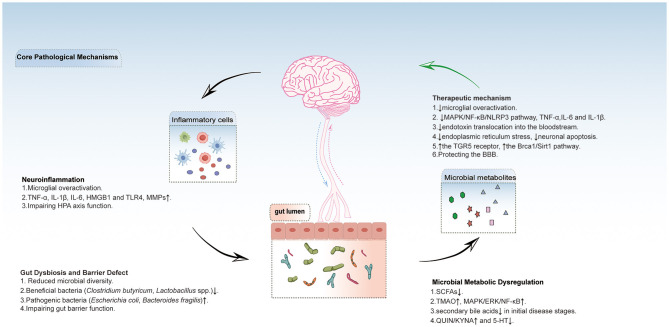
Microbial TPH metabolites, such as indoles, kynurenines, and 5-HT, may modulate neuroimmune balance. Firstly, the kynurenine pathway balance is critical for neuroinflammation. A prospective clinical study involving 23 stroke patients demonstrated significant correlations between baseline serum levels of quinolinic acid (QUIN), kynurenic acid (KYNA), the QUIN/KYNA ratio, and post-stroke cognitive performance (). Both QUIN and KYNA participate in modulating synaptic plasticity. Notably, gut dysbiosis may disrupt the QUIN/KYNA balance, where elevated QUIN levels induce excitotoxicity through NMDA receptor activation, whereas KYNA exerts neuroprotective effects (). Clinical studies demonstrated a negative correlation between serum 3-hydroxykynurenine (3-HK) levels and Montreal Cognitive Assessment (MoCA) scores in stroke patients (;). Furthermore, AD patients exhibit TPH depletion and elevated KYNA/TPH ratios, which are associated with accelerated cognitive decline (). Another study on ischemic stroke patients has shown that the KYNA/TPH ratio is positively correlated with stroke severity. Simultaneously, metabolomic analysis has revealed elevated serum lactate and glutamate levels, along with reduced TPH levels in these patients. Moreover, statistical correlations have indicated a robust link between elevated brain QUIN levels and the severity of autism-related behavioral deficits, as well as neurotransmitter imbalances. Oral administration ofCCFM1077 effectively modulated QUIN concentrations in the brain, rebalanced the glutamate to γ-aminobutyric acid (GABA) ratio in the central nervous system, and simultaneously reduced cerebellar microglial activation (). Additionally, numerous studies have found that indole-3-lactic acid can activate the aryl hydrocarbon receptor (AhR), which suppresses IL-1β, IL-6 and repairs neuroimmune homeostasis (). Indole-3-carboxaldehyde (I3C), a gut microbiota-derived metabolite, functions as a gut-brain signaling molecule through the AhR pathway. I3C attenuates NF-κB activation and NLRP3 inflammasome formation. This suppresses neuroinflammation and promotes hippocampal neurogenesis, ultimately reducing host susceptibility to stress (). Moreover, Certain bacteria in the gut, such asand, can participate in the metabolism of TPH, which is a precursor for serotonin (5-HT) synthesis. Research has found that Epimedium total flavonoids can improve cognitive function in the PSCI rat model, increase the levels of acetylcholine, DA, 5-HT, and norepinephrine, while decreasing the levels of amyloid beta 1-42 (Aβ1-42) and neuron-specific enolase (NSE) (). SCFAs stimulate gut 5-HT synthesis, improving barrier function and reducing neuroinflammation.This also suggests the existence of a dynamic regulatory network among microbial metabolites ().shows how post-stroke cognitive impairment (PSCI) interacts with the gut microbiome through via gut-brain axis. [Cogo et al., 2021] [Hertelendy et al., 2018] [Braidy and Grant, 2017] [Sandvig et al., 2024] [Roth et al., 2021] [Kong et al., 2022] [Qian et al., 2024] [Chen et al., 2025b] [Yang et al., 2024] [Silva et al., 2020] Figure 1 Bifidobacterium Escherichia coli, Lactobacillus Bifidobacterium

This chematic diagram shows how post-stroke cognitive impairment (PSCI) interacts with the gut microbiome through via gut-brain axis. Post-stroke neuroinflammation and gut microbiota disruption form a bidirectional vicious cycle: Neuroinflammation damages the intestinal barrier and microbiota balance, reducing SCFAs while increasing harmful metabolites (TMAO, QUIN). These metabolites enter the brain, further activating microglia and exacerbating neuroinflammation, ultimately damaging the blood-brain barrier and neurons. Supplementing beneficial metabolites can inhibit inflammatory pathways through their receptors, alleviating neuroinflammation, protecting the blood-brain barrier, and breaking this cycle. TNF-α, tumor necrosis factor-α; IL-6, interleukin-6; IL-1β, interleukin-1β; HMGB1, high mobility group box 1; MMPs, matrix metalloproteinases; HPA axis, hypothalamic-pituitary-adrenal axis. SCFAs, short chain fatty acids;TMAO, trimethylamine n-oxide; ERK, extracellular signal-regulated kinase; QUIN, quinolinic acid; KYNA, kynurenine acid; 5-HT, serotonin; MAPK, mitogen-activated protein kinase; NF-κB, nuclear factor kappa-light-chain-enhancer of activated B cells; NLRP3, NOD-like receptor family pyrin domain containing 3; TGR5, the G protein-coupled bile acid receptor, Gpbar1;BBB, blood brain barrier.
Impact of Chinese medicines and their components on gut microbial communities
An important strategy for intestinal flora regulation and barrier protection includes restoring intestinal flora homeostasis and strengthening intestinal barrier integrity to attenuate systemic inflammation and cognitive decline (Supplementary Table S1). Schisandrin (Zhang et al., 2022; Fu et al., 2023) and Panax notoginseng saponins (Hu et al., 2025) increased Firmicutes/Bacteroidetes ratios (F/B), enriched the abundance of Eubacterium, and enhanced intestinal barrier function while reducing the endotoxin leakage. Panax notoginseng saponins (Hu et al., 2025) elevated the abundance of Lactobacillus reuteri, promoted histidine synthesis and alleviated ischemic neuronal injury. Walnut-derived peptide LPLLR (Qi et al., 2023), Pueraria lobatae and Ligusticum chuanxiong (Chen et al., 2019a) upregulated tight junction proteins, such as Zona Occludens 1 (ZO-1), Claudin-1 and mucin-2 (MUC2). These findings collectively suggest that such interventions reduce gut permeability and systemic inflammation. Meanwhile, probiotics like C. butyricum (C. butyricum) and Lactobacillus increased the abundance of bile acids. Especially butyrate, inhibited neuroinflammation via the gut-brain axis and TLR4/MyD88/NF-κB inhibition (Song et al., 2024). Baicalein, eucommiae cortex polysaccharides (Sun et al., 2022), and Naoxintong capsules (Li et al., 2025) inhibited TLR4/NF-κB activation and reduced hippocampal TNF-α, IL-1β, and IL-6 levels, thereby attenuating microglia overactivation and neuronal apoptosis. Huanglian Jiedu Decoction inhibited Cyclooxygenase-2 (COX-2)/5-lipoxygenase (5-LOX) pathways, reducing Aβ deposition and tau hyperphosphorylation in AD models (Gu et al., 2021). Gastrodia elata Bl. elevates prefrontal 5-HT, DA, and 3,4-dihydroxyphenylacetic acid (DOPAC), improving stress-induced depression and cognitive deficits in a stress-induced model. As well it modulates neuroprotection through metabolites and reduces neurotoxic compounds (Huang et al., 2023). Lycium ruthenicum Murray (Fan et al., 2024) increased tauroursodeoxycholic acid (TUDCA) and neurotransmitters (e.g., 5-HT, γ-aminobutyric acid), counteracting high-fat diet-induced synaptic dysfunction. Resveratrol remodeled gut microbiota, reducing TMAO as a pro-atherosclerotic metabolite associated with cognitive decline (Chen et al., 2016). Luteolin enhanced brain-derived neurotrophic factor (BDNF) and cAMP-response element binding protein (CREB) expression, promoting neurogenesis (Daily et al., 2021). Cistanche deserticola (Gao et al., 2021) and Qifu Yin (Liu et al., 2024) boost antioxidant enzymes (superoxide dismutase, glutathione peroxidase), reduced the levels of malondialdehyde (MDA) and reactive oxygen species (ROS), rescuing cognitive deficits. Saponins from Radix polygalae extent demonstrated therapeutic potential by restoring gut microbiota diversity, attenuating peripheral oxidative stress markers (e.g., lipid peroxidation products [LPO] and advanced oxidation protein products [AOPP]), and ameliorating age-associated cognitive deficits (Zeng et al., 2021). Furthermore, Shouhui Tongbian capsule exerted neuroprotective effects through dual mechanisms: suppression of lipid peroxidation and ferroptosis via modulation of Shigella and Lactobacillus populations, thereby preserving BBB integrity (Wei et al., 2025).
Microbiota-targeted strategies for post-stroke cognitive recovery
Emerging evidence suggests that interventions targeting the microbiota represent an effective approach to alleviate PSCI. Substantial data from studies across various cognitive impairment-related pathological conditions including ischemic stroke, neurodegenerative diseases, and metabolic disorders have established robust evidence for microbial-targeted therapies (). These strategies demonstrate the capacity to modulate gut microbiota composition, enhance beneficial metabolite production, suppress neuroinflammation, repair intestinal and blood-brain barriers, regulate neurotransmitters and neurotrophic factors, and promote synaptic plasticity. Critically, their core mechanisms of action exhibit high congruence with the pathophysiology of PSCI. Consequently, they provide essential theoretical underpinnings and potential translational avenues for developing microbiota-directed therapeutics against PSCI. Supplementary Table S2
Probiotics
Probiotics, represented byand(LP), restore gut eubiosis by enriching beneficial taxa (e.g.,, Firmicutes) while suppressing pathogens (e.g.,). In ischemic stroke models, butyrate produced byinhibits excessive microglial activation via Akt phosphorylation, downregulates hippocampal TNF-α/IL-1β levels, and reduces infarct volume (,). This mechanism directly targets post-stroke neuroinflammation and is highly relevant for PSCI treatment. Furthermore,increased SCFAs, reduced plasma endotoxins and TNF-α, IL-1β, and IL-6, and synergistically protectd blood-brain barrier integrity by upregulating the expression of intestinal Claudin-2/3 and cerebral Claudin-5, thereby improving post-stroke cognitive impairment (). It was reportedGG lowered serum TMAO and triglycerides in atherosclerosis models and ameliorates lipid disorders by modulating bile acid metabolism (). These mechanisms are highly relevant to the neuroinflammation and metabolic imbalance in PSCI. LP reduced Aβ plaques and tau protein phosphorylation while increasing levels of synaptic markers, such as PSD95 and synaptophysin (). Moreover, LP may activate intestinal AHR signaling through TPH metabolism to counteract inflammation (). C. butyricum, Limosilactobacillus reuteri Lactobacillus plantarum Bifidobacterium Enterobacteriaceae, Helicobacteriaceae C. butyricum Akkermansia muciniphila Lactobacillus rhamnosus [Sun et al., 2016a] 2020 [Li et al., 2023] [Liang et al., 2020b] [Wang et al., 2020] [Zuo et al., 2025]
Fecal microbiota transplantation (FMT)
In stroke models, FMT reshaped the post-stroke disordered gut microbiome by introducing microbial communities from three healthy donors, which significantly increased the F/B ratio, elevated the abundance of beneficial bacteria (e.g., Akkermansiaceae, Enterobacteriaceae), and reduced pro-inflammatory bacteria (e.g., Muribaculaceae). Additionally, transplantation of young microbial communities enhanced angiogenesis and lymphatic in growth (;;). These findings suggest that gut microbiota and their metabolites (e.g., SCFAs), inhibit neuroinflammation detrimental to cognitive recovery while promoting vascular regeneration. Although antibiotic use reduces gut microbial diversity, its rational application mitigated ischemic brain injury in mice. It was identified that fecal transplantation from antibiotic-sensitive microbiota donors significantly suppressed the trafficking of effector T cells from the gut to the leptomeninges in post-stroke mice (). Gut bacterial alterations further led to local Treg expansion in the small intestine and inhibition of IL-17+ γδ T effector cells, with gut-derived T cells transported to the meninges exerting neuroprotective effects. Furthermore, clinical trials have demonstrated the feasibility of fecal transplantation in modulating post-stroke outcomes (;). [Singh et al., 2016] [Yuan et al., 2024] [Chen et al., 2025a] [Benakis et al., 2016] [Chen et al., 2023] [Zeng et al., 2023]
Prebiotics
Prebiotics such as fructooligosaccharides (FOS), xylooligosaccharides (XOS), and yeast β-glucans modulated gut microbiota composition by increasing the abundance ofandwhile reducing(;;). Their mechanisms included boosting SCFA production (e.g., acetate, propionate), thereby enhancing intestinal expression of ZO-1 and occludin to reduce gut leakage and cerebral inflammatory factors. FOS improved cognitive deficits in Alzheimer's disease mice by upregulating synaptic proteins and PSD-95 expression (). Although the models are different, the mechanism of improving synaptic plasticity has important implications for PSCI treatment. Prebiotic interventions also regulated inflammatory cytokines (e.g., IL-1β, IL-6, TNF-γ, IL-10, IL-12, IL-17α, and IL-4), inhibited microglial activation, alleviated neuroinflammation and oxidative stress, and promoted cognitive recovery [e.g., chitosan oligosaccharides (COS), oligosaccharides]. Additionally, COS demonstrated cross-system regulatory potential by improving cognitive function in hepatic encephalopathy mice via the gut-liver-brain axis (;). Bifidobacterium Lactobacillus Clostridium [Sun et al., 2019] [Han et al., 2020] [Xu et al., 2020b] [Sun et al., 2019] [Sarkar et al., 2022] [Liu et al., 2023]
Postbiotics
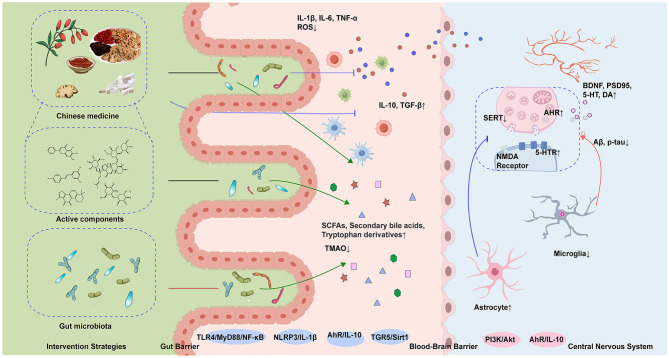
Postbiotics, defined as non-viable microbial preparations or components that confer health benefits, include inactivated probiotics and their metabolites, offering enhanced safety. Representative postbiotics such assubsp. lactis IOBL07, Lactiplantibacillus plantarum IOB602, and IOB413 () increased the abundance of Firmicutes (e.g.,) while reducing pathogenic bacteria (e.g.,). Promoting neurotransmitter balance and synaptic function is a key strategy for improving Post-Stroke Cognitive Impairment (PSCI). The postbiotic derived from Bifidobacterium animalis subsp. lactis IOBL07 lowered cerebral LPS levels and suppressed TLR4/NLRP3 inflammasome activity, thereby inhibiting Iba-1+ cell activation and the release of IL-6 and TNF-α. Additionally, the cell-free supernatant derived from LP directly elevated 5-HT, DA, and BDNF levels in the brain and serum, enhancing synaptic plasticity (). In MCAO rat models, cell-free supernatant (CFS) from probiotics Lactobacillus rhamnosus UBLR-58 and Bifidobacterium breve UBBr-01 ameliorates neurological deficits in rats by improving sensorimotor performance (foot-fault, rotarod, adhesive removal, forelimb placing tests), reducing infarct volume and neuronal degradation, suppressing neuroinflammatory markers, enhancing intestinal barrier integrity (). This provides direct evidence of the positive effects of such strategies on neurological functional recovery in stroke models, offering robust support for PSCI applications.provides a schematic overview of therapeutic approaches, key mechanisms, and their implications for post-stroke cognitive impairment.shows the schematic diagram of the mechanism regulation of cognition impairment after stroke by Chinese medicine and its active ingredients and microbial therapy. Bifidobacterium animalis Ruminococcaceae Mucispirillum [Xiao et al., 2025] [Wu et al., 2022] [Rahman et al., 2024] Figure 2 Figure 2
In summary, emerging evidence delineates a gut-brain regulatory paradigm wherein microbial metabolites, such as, SCFAs, TPH derivatives, drive PSCI by modulating microglial phenotypic reprogramming and synaptic network adaptation through neuro-immune-metabolic tripartite crosstalk. Strategic synergism between probiotic adjuvants and these metabolites enables multidimensional targeting of the microbiota-metabolite-neuroimmune axis, establishing a polypharmacological framework that surpasses the mechanistic constraints of single-pathway therapeutics.

This diagram demonstrates the synergistic mechanisms of herbal medicine and microbiota in ameliorating post-stroke cognitive impairment (PSCI). Key processes include: modulation of gut microbiota structure (elevated Firmicutes/Bacteroidetes ratio) and microbial metabolites acting on the central nervous system via the gut-brain axis to enhance synaptic plasticity; dual therapeutic actions of herbal compounds involving direct suppression of cerebral TLR4/MyD88/NF-κB and NLRP3 inflammasome pathways to reduce pro-inflammatory cytokines (TNF-α, IL-1β) and neuroinflammation, alongside indirect regulation of gut microbiota composition and metabolite production. SCFAs, short-chain fatty acids; TMAO, trimethylamine n-oxide; SERT, serotonin transporter; AhR, aryl hydrocarbon receptor; NMDA, N-methyl-D-aspartate receptor; 5-HTR, 5-hydroxytryptamine receptor; BDNF, brain-derived neurotrophic factor; PSD95, postsynaptic density protein 95; DA, dopamine; TLR4, toll-like receptor 4; MyD88, myeloid differentiation primary response 88; NF-κB, nuclear factor kappa-light-chain-enhancer of activated B cells; NLRP3, NLR family pyrin domain containing 3; TGR5, G protein-coupled bile acid receptor 1; Sirt1, sirtuin 1; IL-10, interleukin-10; IL-1β, interleukin-1 beta; TGF-β, transforming growth factor beta; Aβ, β-Amyloid; p-tau, phosphorylated tau protein.
Synergistic applications of medicinal plants and microbial therapies
Clinical trials have demonstrated the promise of combined therapies. For instance, the Huayu Ditang Yizhi formula combined with cognitive rehabilitation (Wang et al., 2024) significantly improved MMSE and MoCA scores in post-stroke cognitive impairment (PSCI) patients, alongside increased gut microbiota diversity (Chao1 and Shannon index) and elevated neurotransmitter levels (5-HT and dopamine). Similarly, FMT from healthy donors combined with probiotics ameliorated gut dysbiosis in AD patients, reduced endotoxemia and inflammatory responses, and improved cognitive function (Fan et al., 2025). Additionally, FMT synergized with Tongnao Yizhi granules (Liu et al., 2022b) restored the Bacteroidetes/Firmicutes ratio, enhancing spatial memory in vascular cognitive impairment models. Notably, Eleutheroside E combined with FMT activated the PKA/CREB/BDNF signaling pathway via gut microbiota modulation, mitigating radiation-induced cognitive deficits (Song et al., 2022). Likewise, the combination of Corni Fructus and Limosilactobacillus reuteri concurrently modulated neuroinflammation and gut inflammation, alleviating dextran sulfate sodium (DSS)-induced colitis and cognitive dysfunction by reducing pro-inflammatory cytokines and enhancing short-chain fatty acid (SCFA) production (Lee et al., 2022). These results demonstrate that a polypharmacological approach combining phytopharmacology with microbiome-based therapeutics holds significant therapeutic potential. This strategy highlights the multi-target advantages of combined therapy in modulating the microbiota-immunity-metabolism network, paving the way for more effective interventions against cognitive impairment (Supplementary Table S3).
We therefore hypothesize that multi-target synergism and precision interventions within combined regimens will synergistically ameliorate cognitive deficits. For example, the combination of baicalin, which inhibited the TLR4/NF-κB inflammatory pathway, and C. butyricum (a butyrate-producing bacterium) may exert dual regulatory effects. The former directly attenuated the release of pro-inflammatory factors in the hippocampus (Song et al., 2024), whereas the latter enhanced intestinal barrier integrity via butyrate production and suppressed microglial overactivation (Sun et al., 2016a), collectively establishing an "anti-inflammatory and microbiota-metabolic" synergistic mechanism. Upon this basis, further incorporation of metabolic reprogramming strategies may enable simultaneous mitigation of oxidative damage and reinforcement of synaptic plasticity, such as schisandrin regulating brain-gut axis lipid metabolism (e.g., modulating the arachidonic acid pathway) (Zhang et al., 2022) and XOS enhancing the proliferation of butyrate-producing bacteria (Han et al., 2020). These combination methods connect local anti-inflammatory and systemic metabolic repair to form a whole, which can improve PSCI more comprehensively. Future research ought to prioritize precision microbial interventions, including dynamic "clear-rebuild" strategies. For example, phage-mediated targeting of pathogenic Enterobacteriaceae (e.g., Escherichia coli.) could reduce systemic inflammation (Chai et al., 2025). This could be followed by resveratrol administration to promote the colonization of Lactobacillus and Bifidobacterium while consolidating the balance of the flora through antioxidants. Moreover, complementary neuroregulatory approaches, such as Eleutheroside E (BDNF enhancement) coupled with Lactobacillus rhamnosus (TPH-to-5-HT conversion), could synergistically enhance gut-brain signaling through vagal pathways, collectively restoring neural-immune-metabolic homeostasis. This multi-step approach—from "pathogen inhibition" to "beneficial bacteria activation" and "neuro-flora signaling"—can systematically restore gut-brain axis.
Last and most notably, the therapeutic integration of probiotics, herbal bioactive substances, and microbial metabolites requires careful assessment of potential adverse reactions and interaction risks. First, any treatment has its appropriate target population. Current reports on adverse effects of microbial therapies predominantly focus on gastrointestinal disorders and immune-related conditions. For instance, immunocompromised individuals may develop bacteremia due to strains of Lactobacillus or C. butyricum, particularly in patients with immunodeficiency, gastrointestinal ulcers, or bleeding (Sada et al., 2024). Furthermore, Microbe- or microbial metabolite-drug interactions further increase the complexity of combination therapies. For instance, gut dysbiosis may enhance arsenic toxicity through two distinct mechanisms: elevating arsenic bioaccumulation and disrupting one-carbon metabolism. However, certain microbes such as Bacteroides and Clostridium species absorb arsenic and promote its methylation (Chi et al., 2019; Abdelsalam et al., 2020), thereby exacerbating challenges to drug stability and safety. Critically, however, adverse reactions associated with co-administration of TCM with microbes or microbial metabolites remain substantially underreported. Consequently, any inferentially derived therapeutic strategies require future validation through rigorous safety studies to ensure clinical safety.
Summary and prospects
Despite the promising prospects of gut microbiota and TCM modulation in PSCI research, the inferred scheme assumptions still need to be verified due to the complexity before they can be truly applied to patients. The core challenge involves validating the safety and efficacy of these approaches, standardizing microbial formulations, and implementing dynamic therapeutic monitoring. Future research must prioritize three validation fronts: 1. Integrating TCM with microbiology to modulate gut microbiota through TCM principles (e.g., "warming the lungs to dispel turbidity" and "resolving phlegm stagnation while promoting descent"), while incorporating microbiological insights for comprehensive stroke interventions; 2. Multi-omics convergence of metagenomic, metabolomic, and transcriptomic data to build predictive models for microbiota-based personalized therapy; 3. Essential screening for immunosuppression, hepatic impairment, and concomitant medications, with regular monitoring of serum TMAO, hepatic enzymes, and intestinal permeability biomarkers. In summary, microbiota-metabolite modulation is driving a paradigm shift in PSCI research from "broad-spectrum interventions" to "precision restoration." By integrating multidisciplinary technologies, future research holds the potential to achieve personalized and dynamic microbiota-based therapies, offering innovative solutions for post-stroke cognitive impairment.