
What this is
- This review analyzes glucagon-like peptide-1 receptor agonists (GLP-1RAs) in treating type 2 diabetes mellitus ().
- It discusses the mechanisms of action of GLP-1RAs, including their effects on insulin secretion and glucagon inhibition.
- The review also highlights the clinical value of GLP-1RAs, emphasizing their benefits in glycemic control, weight loss, and organ protection.
Essence
- GLP-1RAs provide a multi-faceted approach to treatment, enhancing insulin secretion while preventing glucagon release, leading to improved glycemic control and weight management.
Key takeaways
- GLP-1RAs activate multiple signaling pathways, including cAMP-PKA and PI3K-Akt, to regulate insulin secretion and improve insulin sensitivity.
- These agents also promote weight loss and protect pancreatic β-cells from apoptosis, addressing key challenges in management.
- The review underscores the need for individualized treatment strategies and further research into the long-term effects and mechanisms of GLP-1RAs.
Caveats
- Current research primarily focuses on single-agent studies, limiting insights into the comparative efficacy of different GLP-1RA formulations.
- There is a lack of validation in human clinical samples for some proposed mechanisms of action, necessitating further investigation.
Definitions
- GLP-1: A peptide hormone that regulates glucose metabolism, promoting insulin secretion and inhibiting glucagon release.
- T2DM: A chronic metabolic disorder characterized by insulin resistance and progressive β-cell dysfunction, leading to hyperglycemia.
Simplified
Introduction
Type 2 diabetes mellitus (T2DM) is a chronic metabolic disease with a rapidly increasing global incidence, characterized by chronic hyperglycemia (Galicia-Garcia et al., 2020). According to the 2022 International Diabetes Federation statistics, there are approximately 536 million people with diabetes worldwide, and this number is projected to reach 783 million by 2045 (Leite, 2025). As the disease progresses, patients are prone to develop a series of serious complications such as diabetic nephropathy and retinopathy. These complications not only increase the medical burden on patients but also significantly reduce their quality of life. In addition, patients with T2DM face a higher risk of cardiovascular disease, with a prevalence 1.5 to 3 times that of the general population (Einarson et al., 2018). Therefore, there is an urgent clinical need to develop both safe and effective therapeutic strategies. However, current mainstream T2DM treatments—such as insulin and sulfonylureas—are commonly accompanied by weight gain (Chaudhury et al., 2017), making it difficult to meet patients demand for comprehensive metabolic management. Against this backdrop, glucagon-like peptide-1 (GLP-1) has attracted widespread attention. GLP-1 is a multifunctional peptide hormone secreted by intestinal L-cells under the regulation of nutrient intake, neural and endocrine signals (Lim and Brubaker, 2006). It not only modulates glucose homeostasis by promoting insulin synthesis and secretion, suppressing glucagon release, delaying gastric emptying, and reducing food intake, but also stimulates proliferation and neogenesis of pancreatic β-cells while inhibiting their apoptosis, thereby offering a key therapeutic target for T2DM. Glucagon-like peptide-1 receptor agonists (GLP-1RAs), developed based on GLP-1, represent a novel class of glucose-lowering drugs that have demonstrated notable advantages in overweight or obese patients with T2DM (Gourdy et al., 2023). In addition to reliable glycemic control, they effectively reduce body weight and show potential for cardiovascular protection. To date, nine glucagon-like peptide-1 receptor agonist (GLP-1RA) formulations have been approved for clinical use in China (Yao et al., 2024). Although all these agents lower blood glucose by activating the endogenous GLP-1 receptor, differences in their molecular structures and amino-acid homology to native GLP-1 result in considerable heterogeneity in pharmacokinetic profiles and clinical efficacy. In addition, GLP-1RAs have been shown to ameliorate central neurodegeneration (Monti et al., 2022) and exhibit promising therapeutic effects in Alzheimer's disease, vascular dementia, and Parkinson's disease. Consequently, expert consensus now recommends GLP-1RAs as an important therapeutic option after metformin. Although GLP-1RAs have become a cornerstone of T2DM management, and their glucose-dependent glucose-lowering efficacy, weight-reducing action, and organ-protective potential are widely recognized, current research remains largely confined to single-agent explorations or short-term outcome evaluations. A systematic integration of their multi-target networks is still lacking, and comparative studies on how distinct structural-modification strategies enhance enzymatic stability or refine tissue selectivity remain insufficient. Moreover, the precise molecular mechanisms through which GLP-1RAs protect the liver, kidney, and central nervous system have so far been demonstrated only in animal models (Grieco et al., 2019), and validation in human clinical samples is still lacking. Likewise, real-world data that compares the efficacy, long-term safety, and health-economic profiles of long-versus short-acting GLP-1RA formulations remain scarce. Driven by these gaps, the present review integrates the latest omics datasets and functional experimental findings to systematically chart the research-and-development rationale, mechanisms of action, and clinical value of GLP-1RAs, thereby providing a theoretical framework for precision intervention and rational use in T2DM and delineating future research directions in this field.
Overview of diabetes
Pathogenesis of diabetes
The pathogenesis of diabetes is multidimensional and complex, revolving around two main subtypes, type 1 diabetes mellitus (T1DM) and T2DM (Zaccardi et al., 2016). Although their mechanisms differ markedly, both ultimately disrupt glucose homeostasis. T1DM arises when genetic susceptibility and environmental triggers—such as viral infections—ignite an autoimmune response (Ilonen et al., 2019) that destroys pancreatic β-cells, leading to an absolute insulin deficit and loss of glycaemic control (Katsarou et al., 2017). Accounting for more than 90% of all diabetes cases, T2DM is driven by core defects of insulin resistance and progressive β-cell failure (Author anonymous, 2017), peripheral tissues (muscle, adipose, liver) become less sensitive to insulin, impeding insulin-signalling pathways and causing defective glucose uptake and utilization (Mu et al., 2019). Meanwhile, pancreatic β-cells fail to compensate adequately, their proliferative capacity declines, and apoptosis increases as the disease advances, resulting in a relative insulin deficiency that perpetuates a "resistance–under-secretion" vicious cycle (Eguchi et al., 2021). In addition, factors such as intestinal dysbiosis (e.g., altered microbial metabolites like short-chain fatty acids), chronic low-grade inflammation (e.g., adipokine imbalance), and genetic polymorphisms (e.g., TCF7L2 variants) further modulate metabolic and immune pathways, contributing to the development of diabetes and together forming a complex pathophysiological network.
Social impact of diabetes
Accelerated population ageing, rapid urbanisation, and changing lifestyles have led to a continuous rise in the incidence of diabetes, obesity and other chronic non-communicable metabolic diseases, posing a major public-health threat to the nation (Habib and Saha, 2010). In 2020, the number of people with diabetes in China reached 260.4 million, with older adults accounting for 30% of this figure and T2DM being the predominant form (Zhang Z. et al., 2024), nevertheless, clinical data show that only about 49.2% of patients with T2DM achieve the glycaemic target of glycated hemoglobin A1c (HbA1c) < 7.0% (Qaseem et al., 2018), chronic hyperglycaemia markedly increases the risk of chronic complications such as diabetic peripheral neuropathy—which principally affects sensory and motor nerves and seriously disrupts daily life—and also damages the eyes, heart, kidneys and other vital organs, precipitates acute metabolic crises, and remains a leading cause of cardiovascular disease, blindness and renal failure (Lotfy et al., 2017). From a global perspective, the International Diabetes Federation's IDF Diabetes Atlas 2021 identifies diabetes as the fastest-growing global health emergency of the 21st century (Van Netten et al., 2024). These data underscore the enormous unmet clinical need for diabetes and obesity management and highlight the critical practical and therapeutic value of developing safe, effective prevention and treatment strategies.
Overview of GLP-1
GLP-1 synthesis and actions
GLP-1 is a peptide hormone synthesized and secreted by intestinal L-cells (Chun and Butts, 2020), its release is jointly regulated by nutrient intake, neural inputs, and endocrine signals, endowing it with multiple biological functions including glycaemic control (Sandoval and D'Alessio, 2015). The hormone exerts its effects through the specific GLP-1R, which is predominantly localized to pancreatic islet β-cells (Mei et al., 2002). Upon binding to and activating GLP-1R, GLP-1 employs a dual-control mechanism to regulate glucose metabolism, it markedly stimulates pancreatic β-cells to synthesize and secrete insulin, thereby enhancing whole-body glucose uptake and utilization, while simultaneously suppressing glucagon secretion to curtail endogenous glucose production (Pabreja et al., 2014). Through this synergistic action GLP-1 efficiently restores glucose homeostasis and achieves a sustained hypoglycaemic effect, providing a pivotal target for diabetes-related research.
Structure and function of GLP-1R
GLP-1R belongs to the class B family of g-protein-coupled receptors and is widely expressed in multiple organs, including the brain, heart, pancreas, and gastrointestinal tract. The gene is located on chromosome 6 (6p21.2), spans 42.5 kb, and encodes a protein of 463 amino acids (Brubaker and Drucker, 2002). The receptor comprises a typical extracellular domain (ECD) and transmembrane domain (TMD). The ECD (residues 58–135) contains a flexible α-helix, two antiparallel β-sheets, and six conserved cysteines that confer specific ligand recognition (Hohenester and Engel, 2002). Upon binding to the receptor, the ligand's C-terminal helix first docks with the ECD, and its N-terminal segment then engages the TMD to activate the receptor (Changeux and Christopoulos, 2016). This activation triggers the dissociation of the G-protein α-subunit from the β/γ complex and initiates intracellular signalling (Changeux and Christopoulos, 2016). GLP-1 is an incretin hormone encoded by the pro-glucagon gene on chromosome 2 (six exons and five introns, with the coding region in exon 4) and secreted by intestinal L-cells. Its release is triggered by intraluminal glucose and other nutrients, but the peptide has a half-life of only 1–2 min because it is rapidly inactivated by DPP-4, thus, its biological effects are exerted primarily through binding to GLP-1R (Zhao et al., 2016). In the pancreas, binding of GLP-1 to its receptor activates adenylyl cyclase (AC), raising intracellular cyclic adenosine monophosphate (cAMP) levels and thereby stimulating both protein kinase A (PKA) and Epac2 pathways, PKA promotes expression of proinsulin genes and insulin synthesis by modulating ion channels (closing K+ channels and opening voltage-dependent Ca2+ channels), while Epac2 facilitates fusion of insulin granules with the plasma membrane and the release of secretory vesicles (Lang, 1999). Meanwhile, the phosphatidylinositol 3-kinase (PI3K)/protein kinase B (Akt) andmitogen-zctivated protein kinase (MAPK) pathways—including cAMP- and cAMP-GEF-mediated cross-talk—are activated to promote β-cell proliferation and differentiation while suppressing apoptosis (Hou et al., 2009). cAMP/Epac2 also upregulates cAMP response element-binding protein and anti-apoptotic factors such as B-cell cLL/lymphoma 2 (Bcl-2) and B-cell lymphoma-extra large (Bcl-XL). Within the gastrointestinal tract GLP-1 slows motility and gastric emptying, restrains food intake and augments satiety, thereby reducing body weight, and it blunts post-prandial chylomicron secretion to lower triglycerides (Wang et al., 2023). GLP-1R agonists further attenuate hepatic steatosis and inflammation in models of non-alcoholic steatohepatitis (NASH), alleviating hepatocyte injury (Nevola et al., 2023).
Distribution and function of GLP-1R
GLP-1R belongs to the class B G-protein-coupled receptor family (Donnelly, 2012) and is widely distributed across multiple tissues and organs, with the highest expression in the pancreatic islets and gastrointestinal tract, it is also present in the central nervous system and cardiovascular system, providing the structural basis for its pleiotropic regulatory effects (Wen et al., 2021). Within the pancreatic islets, GLP-1R is predominantly localized to β-cells and is expressed at lower levels in α-cells (Tong et al., 2025). Upon binding of GLP-1 to GLP-1R on the β-cell surface, Gs protein is rapidly activated, causing intracellular cAMP levels to rise and triggering a downstream signalling cascade that culminates in multiple physiological effects (Lymperopoulos et al., 2025), insulin release is accelerated, while β-cell apoptosis is suppressed and their proliferation and differentiation are enhanced, thereby preserving β-cell functional homeostasis. Within the gastrointestinal tract, activation of GLP-1R slows gastric emptying, suppresses gastric acid and pepsin secretion, and reduces intestinal motility, thereby decreasing food intake and nutrient absorption and effectively blunting post-prandial glucose excursions (Farré and Tack, 2013). In the central nervous system, GLP-1R is localized to areas critical for appetite regulation and energy balance, notably, in the hypothalamus its activation promotes satiety, curbs appetite, and lowers food intake (Drucker, 2022). In addition, GLP-1R expression in the cardiovascular system confers direct cardioprotection on GLP-1, manifesting as reduced myocardial ischemia–reperfusion injury and improved cardiac function, thereby further broadening the physiological regulatory value of GLP-1R (Saraiva and Sposito, 2014).
Limitations of GLP-1 in diabetes therapy and the discovery of GLP-1RA
GLP-1 is a key incretin and a master signal for glucose homeostasis (Baggio and Drucker, 2007), its biological effects require specific binding to and activation of GLP-1R on target cells (Zou et al., 2025). This engagement modulates metabolism in two ways, it stimulates β-cell insulin biosynthesis and secretion while suppressing α-cell glucagon release, achieving bidirectional glycaemic control (Quesada et al., 2008), and it slows gastric emptying to blunt post-prandial glucose peaks and stabilise overall glycaemia (Meloni et al., 2013). However, native GLP-1 has a severe pharmacokinetic flaw that limits its direct use—its circulating half-life is only 2 min, too short to sustain meaningful biological activity (Aaboe et al., 2008). The culprit is rapid degradation by DPP-4, a serine protease that selectively cleaves the Ala2–His1 peptide bond at the N-terminus of GLP-1 (Zhang M. et al., 2024; Mulvihill and Drucker, 2014), inducing a conformational change that abolishes receptor binding and leads to prompt inactivation and clearance. To circumvent this hurdle, drug-discovery efforts have focused on GLP-1RAs engineered for proteolytic resistance. The dominant strategy is site-specific amino-acid substitution, replacing Ala8 with glycine or α-aminoisobutyric acid markedly reduces DPP-4 recognition (Lam et al., 2025), prolongs residence time, and extends duration of action, providing a foundation for long-acting pharmacotherapy of T2DM and obesity.
Clinical applications of GLP-1RA
Introduction to GLP-1RA
GLP-1RAs lower blood glucose by activating the GLP-1 receptor and potentiating glucose-dependent insulin secretion (Zhao et al., 2021). The first agent of this class, exenatide, was approved by the U.S. food and drug administration for patients with T2DM in 2005. Besides glycaemic control, it also confers beneficial effects on body-weight reduction, blood-pressure lowering, and renal and hepatic protection. Currently, liraglutide, semaglutide, dulaglutide and polyethylene-glycol loxenatide are available in China. Since liraglutide was included in the National Reimbursement Drug List in 2018, the use of GLP-1-based therapies has entered a phase of explosive growth (Turnock et al., 2025), and in 2022 their market size exceeded that of insulin for the first time.
Clinical pharmacological effects of GLP-1RA
Glycaemic control is achieved through glucose-dependent activation of the GLP-1 receptor, which augments insulin secretion (Hedeskov, 1980) by enhancing voltage-gated Ca2+ influx and calmodulin activation via endoplasmic-reticulum Ca2+ release, while simultaneously suppressing glucagon secretion (Ramracheya et al., 2010). As plasma glucose returns to normal, the stimulatory effect wanes automatically, markedly lowering the risk of hypoglycaemia. For weight reduction, GLP-1RAs act on central appetite circuits to inhibit hunger, delay gastric emptying, and dampen gastric motility, thereby increasing satiety and decreasing food intake (Jalleh et al., 2024). Clinical studies show that short-term liraglutide reduces central food-cue responses in T2DM, although long-term effects require further validation (Anyiam et al., 2024). Organ protection is partly mediated by miRNA regulation in the liver (Schueller et al., 2018). GLP-1RAs downregulate hepatic miR-34a/21 and upregulate miR-200b/c, decreasing intrahepatic lipid accumulation and steatosis and providing a rationale for treating NASH, although protection appears confined to livers with simple steatosis (Petrovic et al., 2023). Renal protection operates through multiple mechanisms, including inhibition of proximal-tubular Na+/H+ exchange to promote natriuresis and lower blood pressure, activation of PKA and inhibition of protein kinase C (PKC) can attenuate renal injury, meanwhile, upregulation of atrial natriuretic peptide activates the protein kinase G (PKG) pathway, which in turn exerts anti-inflammatory and antioxidant effects and improves renal arterial perfusion (Aperia et al., 1994). It should be noted that because GLP-1RAs lower glucose by potentiating insulin secretion, they are not suitable for type 1 diabetes and cannot replace insulin therapy (Nauck et al., 2022).
Mechanisms of GLP-1RA in the treatment of T2DM
Specific signaling pathways of GLP-1RA in T2DM therapy
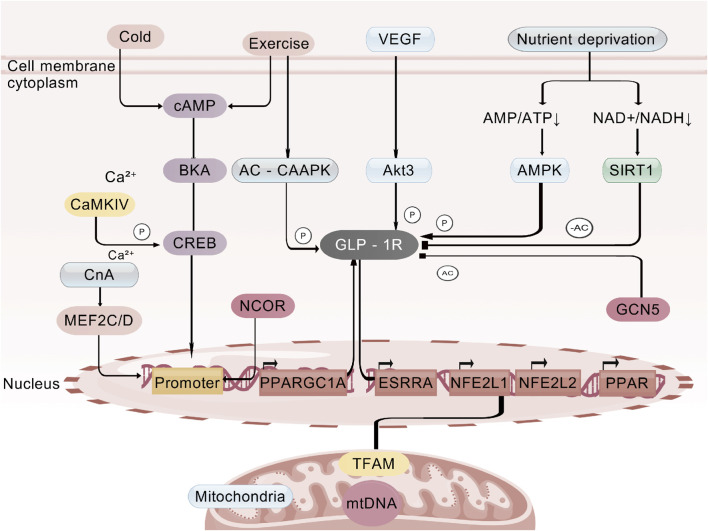
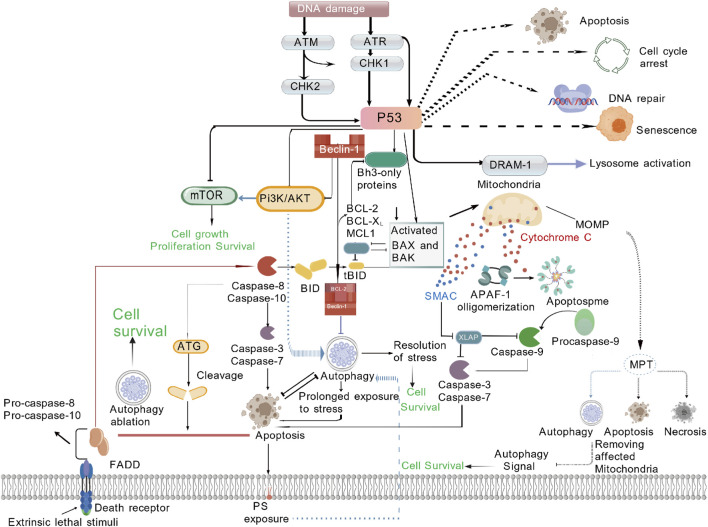
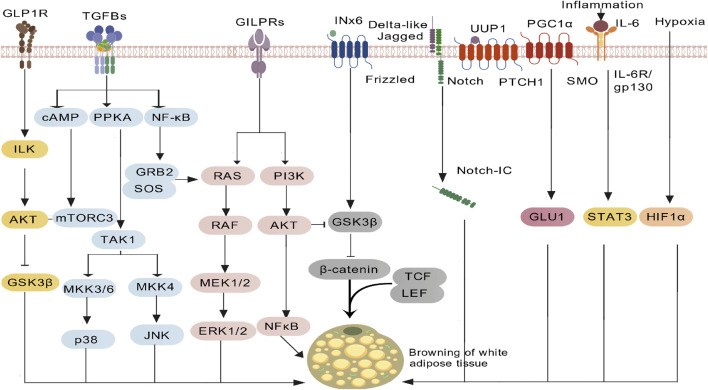
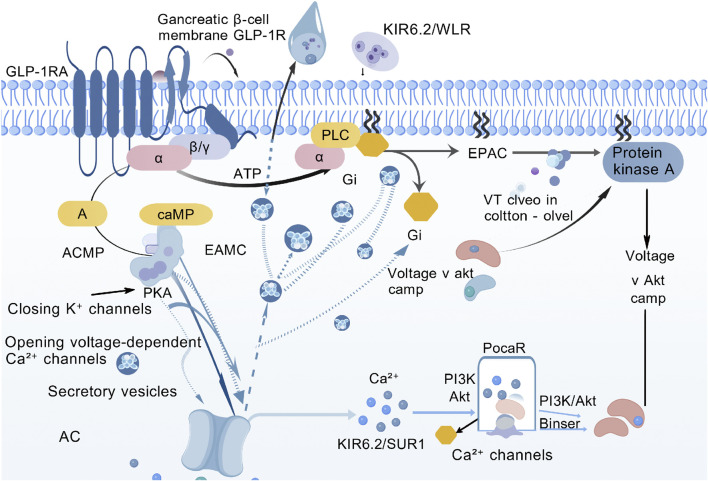
Rather than relying on a single pathway, GLP-1RAs coordinately engage four core signalling axes—cAMP-PKA, PI3K-Akt,interleukin-6 (IL-6)/signal transducer and activator of transcription 3 (STAT3) and adenosine monophosphate-activated protein kinase (AMPK)—together with central and peripheral regulatory networks to achieve glycaemic control (Table 1). cAMP-PKA axis, After GLP-1RA binds GLP-1R, Gs-protein-coupled AC is activated, raising intracellular cAMP. cAMP in turn stimulates PKA and exchange protein activated by cAMP (EPAC), closes KIR6.2/SUR1 K+ channels, opens voltage-dependent Ca2+ channels (VDCCs) and triggers Ca2+ influx, promoting insulin-granule exocytosis. This sequence is strictly glucose-dependent—engaged only when plasma glucose is elevated—so hypoglycaemia risk is minimal (Figure 1). PI3K-Akt axis, Within β-cells the PI3K-Akt cascade downregulates pro-apoptotic bcl-2 associated death rromoter (Bad) and bcl-2 associated x protein (Bax), upregulates Bcl-2, boosts antioxidant enzymes (superoxide dismutase (SOD), catalase (CAT)) and suppresses tumor necrosis factor-α (TNF-α)/IL-6-mediated inflammation, delivering dual "anti-apoptotic + pro-proliferative" protection. In peripheral tissues the same pathway drives glucose transporter 4 (GLUT4) translocation to the membrane and inhibits hepatic glucose output (PEPCK/G6Pase), ameliorating insulin resistance (Figure 2). AMPK axis, GLP-1RAs elevate adiponectin, activating AMPK, decreasing free fatty acid (FFA) release, restraining hepatic lipid deposition (down-regulating miR-34a/21 and up-regulating miR-200b/c), and increasing GLUT4 expression in skeletal muscle, thereby augmenting glucose uptake and sustaining multi-organ metabolic homeostasis (Figure 3). In terms of cytokine signaling mechanisms, IL-6-mediated STAT3 activation is crucial for the regulation of adipocyte differentiation and function, in preadipocytes, activated STAT3 phosphorylates and translocates into the nucleus to regulate the expression of thermogenesis-related genes, promoting browning of white adipose tissue and enhancing thermogenic efficiency; the IL-6/STAT3 signaling also upregulates thermogenic genes such as uncoupling protein 1 (UCP1) and peroxisome proliferator-activated receptor γ coactivator 1α (PGC-1α) to increase adipose energy expenditure, improve glucose metabolism, thereby synergistically contributing to the anti-diabetic and metabolic improvement effects of GLP-1RAs (Figure 4).

cAMP-PKA (core glucose-lowering) pathway.

PI3K-Akt (β-cell protection and peripheral glucose regulation) pathway.

AMPK (β-cell proliferation) pathway.

IL-6/STAT3 (adipose tissue browning) pathway.
| Pathway name | Core biological function | Core mechanism of action | Key molecules/Targets | Literature support |
|---|---|---|---|---|
| cAMP-PKA | Glucose-dependent blood glucose lowering (avoiding hypoglycemia) | GLP-1RA→GLP-1R→Gs→AC↑→cAMP↑→PKA/EPAC→closing KIR6.2/SUR1, opening VDCC→Ca↑→insulin exocytosis2+ | GLP-1R, Gs, AC, cAMP, PKA,EPAC, KIR6.2/SUR1, VDCC | ,,,, [Petrovic et al. (2023)] [Mei et al. (2002)] [Tomlinson et al. (2022)] [Warwar et al. (2006)] [Jones et al. (2018)] |
| PI3K-Akt | β-cell protection and improving insulin resistance | Anti-apoptosis, ↓Bad/Bax, ↑Bcl-2, antioxidation, anti-inflammation, Pro-proliferation, ↑CyclinD1/PCNA, Peripheral tissues, ↑adiponectin, ↓hepatic glucose output, ↑GLUT4 | PI3K, Akt, Bcl-2, Bad/Bax, SOD, CAT, CyclinD1, PCNA, GLUT4,a diponectin, PEPCK, G6Pase | ,,,, [Tengholm and Gylfe (2017)] [He et al. (2025)] [Wang and Wang (2017)] [Sesti (2006)] [Zhang X et al. (2025)] |
| AMPK | β-cell proliferation and multi-organ metabolic homeostasis | Activation of AMPK→promote β-cell proliferation, Adiponectin→↓FFA, Hepatic miR→reduce lipid accumulation, Skeletal muscle→↑GLUT4 | AMPK, adiponectin, FFA,miR-34a/21, miR-200b/c, GLUT4 | ,, [Jalleh et al. (2024)] [Wang et al. (2023)] [Zhou et al., 2025] |
| IL-6/STAT3 | Brownification of adipose tissue + heat production + glucose utilization | GLP-1RA→hyaline leukocyte GLP-1R→IL-6↑→axunge IL-6R/gp130→STAT3→UCP1/PGC-1α↑ | GLP-1R,IL-6,IL6R/gp130, STAT3,UCP1,PGC-1α | ,, [Essaouiba (2020)] [Zhang X et al. (2025)] [Xu et al. (2009)] |
Accelerating the release of insulin
GLP-1RA specifically bind to GLP-1R on the surface of pancreatic β-cell membranes, initiating a cascade signaling pathway mediated by Gs protein-coupled receptors, thereby achieving precise regulation of insulin secretion (Yang et al., 2014). Its core pathway is as follows, After receptor binding, Gs proteins are activated, driving conformational changes and activation of AC. AC then catalyzes the conversion of intracellular Adenosine Triphosphate (ATP) to cAMP, leading to a significant increase in cAMP levels. The elevated cAMP further activates PKA and EPAC (Mei et al., 2002). These two molecules synergistically regulate the opening of membrane calcium channels, accelerating extracellular calcium ion influx and promoting the migration, anchoring, and membrane fusion of insulin-containing secretory vesicles, ultimately achieving extracellular insulin release. In addition, GLP-1RA can inhibit the ion transport function of inwardly rectifying potassium channels (KIR6.2/SUR1) in pancreatic β-cells (Tomlinson et al., 2022). This reduces potassium ion efflux, triggering membrane depolarization, which further promotes the opening of VDCC and enhances the calcium influx effect, forming a "dual regulatory pathway" for insulin secretion (Warwar et al., 2006). Compared with traditional sulfonylurea secretagogues, the secretagogue effect of GLP-1RA is strictly glucose concentration-dependent (Ashik, 2023). When blood glucose exceeds the physiological threshold, the binding efficiency of GLP-1RA to GLP-1R and the activation intensity of downstream signals are significantly enhanced, efficiently promoting insulin release to lower blood glucose (Jones et al., 2018). When blood glucose returns to the normal range, the activation efficiency of this signaling pathway decreases with the decline in blood glucose, and insulin secretion is correspondingly reduced (Henquin, 2000), thereby reducing the clinical risk of hypoglycemia at the molecular mechanism level.
Inhibiting glucagon release
Pancreatic α-cells, as the main secretory source of glucagon, express functional GLP-1R on their cell membrane surfaces, providing an important target of action for GLP-1RA (Shilleh et al., 2024). After GLP-1RA specifically binds to GLP-1R on α-cells, it initiates a Gi protein-mediated inhibitory signaling pathway (Ma et al., 2021), by activating Gi protein subtypes, it directly inhibits the catalytic activity of AC, blocks the conversion of intracellular ATP to cAMP, and leads to a significant decrease in cAMP levels in α-cells, since cAMP is a core second messenger for glucagon synthesis and secretion, the reduction in its level directly inhibits the extracellular release of glucagon granules (Tengholm and Gylfe, 2017). Meanwhile, GLP-1RA also regulates α-cells through an "indirect synergistic pathway" (He et al., 2025), it promotes insulin secretion from pancreatic β-cells, and this insulin can bind to insulin receptors on the α-cell membrane surface, activate the downstream PI3K/Akt signaling axis, and further inhibit glucagon secretion. This dual regulatory mode of "direct inhibition + indirect synergy" forms a difference in signaling pathways from the Gs protein-dependent activation effect of GLP-1RA in β-cells, and together they constitute the molecular basis for its bidirectional regulation of blood glucose—it not only lowers blood glucose by promoting insulin secretion in β-cells, but also prevents excessive blood glucose fluctuations by inhibiting glucagon release in α-cells.
Regulating pancreatic β-cell function
Pancreatic β-cell dysfunction is a core pathological link in the progression of T2DM (Zhang X. et al., 2025), with increased β-cell apoptosis and decreased proliferation/differentiation capacity as the main causes. GLP-1RA regulates β-cell fate through multiple dimensions, in terms of anti-apoptosis, it exerts effects through three mechanisms—first, it downregulates the expression of pro-apoptotic proteins Bad and Bax via the PI3K/Akt signaling pathway (Vergès et al., 2022), while upregulating the anti-apoptotic protein Bcl-2 to maintain the balance of apoptosis-related proteins and directly inhibit apoptosis, second, it enhances the activities of SOD and CAT, reduces the production of reactive oxygen species (ROS), and alleviates oxidative stress damage (Ghosh et al., 2023), third, it inhibits the release of inflammatory mediators such as TNF-α and IL-6, and reduces β-cell damage caused by inflammation (Vallon and Thomson, 2017). In terms of promoting proliferation and differentiation, long-term hyperglycemia impairs β-cell proliferation capacity and leads to dysfunction (Wang and Wang, 2017), while GLP-1RA can activate pathways such as PI3K/Akt to promote the expression of proliferation-related genes including cyclin dopamine receptor D1 (D1) (which promotes the transition of cells from gap 1 phase (G1) to S phase) and proliferating cell nuclear antigen (PCNA) (which is involved in DNA replication), at the same time, it can induce the directional differentiation of pancreatic endogenous stem cells and progenitor cells into functionally mature β-cells, enrich the source of β-cells, and improve the problem of insufficient β-cell quantity.
Improving insulin resistance
Insulin resistance is characterized by decreased insulin sensitivity and impaired glucose uptake and utilization in tissue cells as core pathological features (Sesti, 2006), and it is a key link in the progression of T2DM. GLP-1RA regulates insulin resistance through multiple targets by targeting three major metabolic tissues, adipose tissue, liver, and skeletal muscle (Petrovic et al., 2023), in adipose tissue, it regulates adipocytokine secretion, promotes adiponectin release and reduces leptin resistance, adiponectin activates the AMPK pathway to promote glucose uptake and oxidation in adipocytes, while inhibiting lipolysis to lower circulating free fatty acids, reducing their interference with the insulin receptor substrate 1(IRS-1)/PI3K/Akt insulin signaling pathway and enhancing insulin sensitivity (Notaro, 2024), in liver tissue, GLP-1RA inhibits the activity of key gluconeogenic enzymes such as phosphoenolpyruvate carboxykinase (PEPCK) and glucose-6-phosphatase (G6Pase), reduces hepatic glycogenolysis and gluconeogenesis, lowers endogenous glucose production, and at the same time regulates hepatic lipid metabolism, reduces triglyceride accumulation in hepatocytes, and alleviates the damage of lipotoxicity to hepatic insulin sensitivity (Wewer Albrechtsen et al., 2016), in skeletal muscle tissue, GLP-1RA relies on the activation of the PI3K/Akt pathway to promote the upregulation of GLUT4 expression and its membrane translocation, accelerate glucose uptake and utilization in skeletal muscle cells, and directly improve the responsiveness of skeletal muscle to insulin.
Cytokine signaling regulation
GLP-1RAs bind to GLP-1Rs on monocytes (Kumar, 2025), and induce transient IL-6 secretion via the cyclic adenosine monophosphate-PKA-nuclear factor kappa b aignal transduction pathway (cAMP-PKA-NF-κB) axis (lasting 2–4 h, with a plasma concentration <10 pg/mL) (Romagnoli et al., 2001). Meanwhile, as confirmed by relevant studies (Yousif et al., 2021), glycoproteins secreted by dendritic cell (DC) can inhibit excessive NF-κB activation in monocytes and reduce the binding efficiency between soluble IL-6 receptor (sIL-6R) and IL-6, thereby preventing chronic IL-6 accumulation and subsequent inflammation. Circulating IL-6 binds to the IL-6 receptor/glycoprotein 130 complex on adipose tissue, activates STAT3, and promotes its nuclear translocation. This process upregulates the expression of UCP1 and PGC-1α, inducing browning of white adipose tissue and thermogenesis (Bargut et al., 2017). At the same time, it synergizes with the AMPK and PI3K-Akt pathways to enhance insulin sensitivity (Owen et al., 2000; Camaya et al., 2022).
The efficacy of GLP-1RA in the treatment of T2DM
GLP-1RA has significant clinical value in T2DM patients with poor glycemic control (Ren et al., 2025). In combination therapy, adding Liraglutide (subcutaneous injection once daily, half-life of 13 h) to the basis of dapagliflozin can enhance blood glucose lowering, inhibit blood glucose fluctuations, and reduce blood lipids and body mass index (James, 2008), combining metformin with polyethylene glycol loxenatide (subcutaneous injection once weekly, half-life of 5.5 days) can reduce HbA1c more significantly without adverse reactions such as hypoglycemia or weight gain, and injection site reactions are mild, making it suitable for patients who need simplified treatment regimens, adding dulaglutide (subcutaneous injection once weekly, half-life of 5.4 days) or Lixisenatide (subcutaneous injection once daily, half-life, not available) to conventional treatment can also improve islet function, lower blood glucose, and has high safety (Wu et al., 2023). In terms of monotherapy and application in special populations, semaglutide (subcutaneous injection once weekly or oral administration daily, half-life of 7 days) can lower blood glucose in elderly T2DM patients and reduce vascular endothelial damage, although high doses are more effective in lowering blood glucose, reducing blood lipids, and anti-inflammation, the risk of adverse reactions needs to be balanced, and its effects on glycemic control, weight loss, and improving islet function are better than conventional treatment alone (Toth et al., 2020),Clinical data from 8 weeks of Semaglutide treatment further confirmed that, in obese patients with T2DM, the phosphorylation level of STAT3 in subcutaneous adipose tissue increased by 38%, the proportion of beige adipocytes rose by 15%, and the level of sIL-6R in the circulation decreased by 32% under the regulation of the DC buffer system, thus preventing the activation of systemic inflammation (Xu et al., 2009). This suggests that the weight-loss effect of GLP-1RAs relies not only on the activation of the IL-6/STAT3 pathway, but also on the control of "inflammatory risk" by the DC buffer system. Benaglutide (subcutaneous injection three times daily before meals, half-life of 1.1 h), as a short-acting preparation, can significantly reduce postprandial blood glucose and has a particularly prominent weight loss effect in obese T2DM patients, but the incidence of gastrointestinal adverse reactions is relatively high, requiring initiation at a low dose, treatment with 2 mg exenatide microspheres (subcutaneous injection once weekly, half-life of 4.6 days) for 12 weeks can significantly improve islet function and alleviate β-cell dysfunction, which is the core of T2DM progression (Idris, 2019). GLP-1RA with different half-lives have their own advantages, liraglutide has good effects on controlling fasting and postprandial blood glucose, dulaglutide achieves stable blood glucose lowering, has the most significant improvement in time in range (TIR), and can delay early diabetic nephropathy, benaglutide has prominent effects on postprandial blood glucose control and weight loss, exenatide has excellent lipid regulation and low administration frequency, but gastrointestinal adverse reactions are generally common in such drugs. In terms of cost-effectiveness, insulin glargine and lixisenatide injection (subcutaneous injection once daily) can reduce treatment costs, while long-acting GLP-1RA have more significant effects on blood glucose lowering and HbA1c reduction (Table 2).
| Drug name | Administration regimen | Half-life | Core clinical advantages | Main adverse reactions | References |
|---|---|---|---|---|---|
| Exenatide | Twice daily or once weekly (subcutaneous injection) | 1.3 h/4.6 days | Lipid regulation, optional short/long-acting formulations | Nausea, diarrhea (common in the initial stage) | ,, [Nevola et al. (2023)] [Lymperopoulos et al. (2025)] [Zou et al. (2025)] |
| Liraglutide | Once daily (subcutaneous injection) | 13 h | Dual control of fasting and postprandial blood glucose, improves endothelial function | Nausea, decreased appetite (relievable) | ,, [Wen et al. (2021)] [Tong et al. (2025)] [Wewer Albrechtsen et al. (2016)] |
| Semaglutide | Once weekly (subcutaneous injection) or daily oral administration | 7 days | Good tolerance in the elderly, cardiovascular protection, stable blood glucose reduction | Nausea, constipation (low incidence) | , [Donnelly (2012)] [Razavi et al. (2022)] |
| Dulaglutide | Once weekly (subcutaneous injection) | 5.4 days | Most significant improvement in TIR, delays early nephropathy | Diarrhea, abdominal distension (transient) | , [Lymperopoulos et al. (2025)] [Romagnoli et al. (2001)] |
| Polyethylene Glycol Loxenatide | Once weekly (subcutaneous injection) | 5.5 days | No hypoglycemia when combined with metformin, weight-neutral | Injection site redness and swelling (3%–5%), mild nausea | , [Zou et al. (2025)] [Kumar (2025)] |
| Benaglutide | Three times daily (subcutaneous injection before meals) | 1.1 h | Controls postprandial blood glucose | Vomiting, abdominal pain (high incidence, requires initiation at a low dose) | , [Lymperopoulos et al. (2025)] [Romagnoli et al. (2001)] |
Adverse reactions of GLP-1RAs
The adverse reactions of GLP-1RAs are mainly gastrointestinal reactions (Liu et al., 2022), including common symptoms such as nausea, vomiting, diarrhea, abdominal distension, and decreased appetite. These reactions are mostly transient or alleviable by starting with a low dose, and the incidence of gastrointestinal reactions is relatively higher in short-acting formulations. For some injectable formulations, mild reactions such as injection site redness and swelling may occur (with an incidence of approximately 3%–5%) (Usach et al., 2019). In addition, since GLP-1RAs rely on promoting insulin secretion to exert their effects, they are not suitable for patients with T1DM or T2DM with complete pancreatic β-cell failure, and cannot replace insulin therapy (Wajchenberg, 2007).
Literature search and selection strategy
Literature retrieval covered public medicine database, PubMed, Embase, Web of Science and cochrane library, with core search terms including GLP-1RA and T2DM, supplemented by terms such as "molecular mechanism", "clinical trial", and "preclinical study". Included were English full-text original studies and high-quality systematic reviews/meta-analyses focusing on the association between the two, excluded were non-T2DM models, conference abstracts without complete data, literature published before 2015, and duplicate publications (Sun et al., 2022). Two researchers independently screened the literature in the sequence of "title→abstract→full text", with discrepancies resolved by a third researcher through arbitration, and the included studies were categorized and integrated by type (Van Harten, 2012).
Discussion
T2DM is a chronic metabolic disease with a high global incidence (Hameed et al., 2015), characterized by insulin resistance and progressive decline in pancreatic β-cell function as its core pathological features. The core advantage of GLP-1RAs lies in the establishment of a "multi-dimensional and low-risk" metabolic regulatory network. Its innovation is reflected not only in the enzymatic degradation resistance brought by structural modification, but also in the integration of a threefold mechanism, "classic pathways regulating glucose metabolism, cytokine signaling regulating energy metabolism, and DC buffer system regulating safety" — which perfectly aligns with the pathological nature of "metabolic syndrome" in T2DM. Long-term hyperglycemia is prone to inducing complications in multiple organs such as the heart, liver, and kidneys, significantly increasing the disability and mortality rates of patients (Kawahito et al., 2009). According to statistics from the International diabetes federation, in 2021, the number of T2DM patients aged 20–79 worldwide reached 537 million (Sun et al., 2022), and this number is expected to increase to 783 million by 2045, china accounts for nearly one-third of these patients, and only 49.2% of them can achieve the glycemic control target of HbA1c < 7.0% (Van Netten et al., 2024). Although traditional hypoglycemic drugs such as insulin and sulfonylureas can control blood glucose in the short term, they generally have limitations such as weight gain and increased risk of hypoglycemia, making it difficult to meet the clinical needs of "comprehensive metabolic management" for T2DM (Bailey et al., 2016). Against this background, GLP-1RA overcomes the metabolic shortcomings of endogenous GLP-1 through structural modification (Zheng et al., 2024). A "glucose concentration-dependent" multi-dimensional regulatory system was established, which not only achieves precise blood glucose lowering but also exerts effects such as weight loss and organ protection. This regulatory system has thus become a revolutionary breakthrough in the field of T2DM treatment. The core innovation of GLP-1RA lies in site-specific modification of the amino acid sequence (Zheng et al., 2025) (e.g., replacing alanine at position eight of natural GLP-1 with glycine or α-aminoisobutyric acid), which significantly enhances resistance to DPP-4 and extends the in vivo half-life to several hours to several days (Razavi et al., 2022), solving the problem that endogenous GLP-1 cannot be clinically applied due to rapid degradation (with a half-life of only 1–2 min) (Chun and Butts, 2020). From a molecular mechanism perspective, the regulation of glucose metabolism by GLP-1RA exhibits high specificity and synergy (Zhang Y. et al., 2025), in pancreatic β-cells, after binding to GLP-1R, it activates the Gs protein-coupled signaling pathway (Meloni et al., 2013), driving AC to catalyze the conversion of ATP to cAMP, the increased cAMP further activates PKA and EPAC. Among them, PKA promotes calcium ion influx by closing inward rectifier potassium channels (KIR6.2/SUR1) and opening VDCCs, thereby promoting the migration and membrane fusion of insulin-secreting vesicles (Yang et al., 2014), EPAC enhances the secretory effect by regulating the exocytosis of insulin granules (Seino et al., 2009). More importantly, this secretory-promoting process is strictly dependent on glucose concentration—when blood glucose exceeds the physiological threshold, the binding affinity of GLP-1RA to GLP-1R and the activation intensity of downstream signals are significantly enhanced, efficiently promoting insulin release (Moiz et al., 2025), when blood glucose returns to the normal range, the activation efficiency of the signaling pathway naturally decreases with the decline in blood glucose (Henquin, 2000), avoiding the risk of hypoglycemia caused by the "non-glucose-dependent" secretion promotion of traditional sulfonylurea drugs at the molecular level, which is also its core advantage distinguishing it from traditional secretagogues. In the regulation of pancreatic α-cells, GLP-1RA forms a dual network of "direct inhibition-indirect synergy", at the direct level, after binding to GLP-1R on the α-cell membrane, it activates gi protein, inhibits AC activity, and reduces intracellular cAMP levels, as cAMP is a key second messenger for glucagon synthesis and secretion, the decrease in its level can directly inhibit the release of glucagon granules, at the indirect level, insulin secreted by β-cells under the promotion of GLP-1RA binds to insulin receptors on the α-cell membrane through paracrine action, activating the PI3K/Akt signaling pathway to further inhibit glucagon synthesis (Zhang Y. et al., 2025; Meir et al., 2025). This bidirectional regulatory mode enables GLP-1RA to not only lower blood glucose by promoting insulin secretion but also prevent excessive blood glucose fluctuations by inhibiting glucagon release (Essaouiba, 2020), perfectly matching the pathological core of "glucose metabolism imbalance" in T2DM. Beyond islet regulation, the improvement of insulin resistance by GLP-1RA exhibits multi-tissue targeting characteristics, covering three core metabolic organs, adipose tissue, liver, and skeletal muscle (Eizirik et al., 2020). In adipose tissue, GLP-1RA regulates the secretion balance of adipocytokines, promotes adiponectin release, and alleviates leptin resistance—adiponectin accelerates glucose uptake and oxidation in adipocytes by activating the AMPK pathway, while inhibiting lipolysis to reduce circulating FFA levels, thereby reducing the interference of free fatty acids with the IRS-1/PI3K/Akt insulin signaling pathway and enhancing insulin sensitivity, in liver tissue, GLP-1RA inhibits the activity of key gluconeogenic enzymes such as PEPCK and G6Pase, reduces hepatic glycogenolysis and gluconeogenesis, lowers endogenous glucose production, and simultaneously regulates hepatic lipid metabolism, reduces triglyceride accumulation in hepatocytes, and alleviates the damage of lipotoxicity to hepatic insulin sensitivity, in skeletal muscle tissue, GLP-1RA relies on the activation of the PI3K/Akt pathway to promote the upregulation of GLUT4 expression and its translocation to the cell membrane, accelerating the uptake and utilization of glucose by skeletal muscle cells and directly improving the responsiveness of skeletal muscle to insulin. This multi-organ synergistic regulatory mode allows GLP-1RA to improve the insulin resistance state of T2DM from the source, rather than simply relying on "exogenous supplementation" or "forced secretion" of insulin for symptomatic treatment. The progressive decline in pancreatic β-cell function is a core driving factor for T2DM progression (Zhang X. et al., 2025), and the "protective-reparative" dual effect of GLP-1RA on β-cells makes it go beyond the therapeutic scope of traditional hypoglycemic drugs. In terms of anti-apoptosis, GLP-1RA exerts its effects through three mechanisms (Xu et al., 2009), first, it downregulates the expression of pro-apoptotic proteins bad and bax and simultaneously upregulates the level of anti-apoptotic protein Bcl-2 by relying on the PI3K/Akt signaling pathway, maintaining the balance of apoptosis-related proteins, second, it enhances the activity of antioxidant enzymes such as SOD and CAT, reduces the production of ROS, and alleviates the damage of oxidative stress to β-cells, third, it inhibits the release of inflammatory mediators such as TNF-α and IL-6, reducing the damage of chronic low-grade inflammation to β-cells. In terms of promoting proliferation and differentiation, GLP-1RA can activate pathways such as PI3K/Akt and MAPK, promote the expression of proliferation-related genes including cyclin D1 (which promotes the transition of cells from G1 to S phase) and proliferating cell nuclear antigen (proliferating cell nuclear antigen (PCNA), involved in DNA replication), and simultaneously induce the directional differentiation of pancreatic endogenous stem cells and progenitor cells into functionally mature β-cells, enriching the source of β-cells. This dual effect of "quantity protection + function repair" on β-cells provides a molecular basis for delaying T2DM progression and even reversing early lesions, and is also a key feature distinguishing it from symptomatic treatment drugs such as insulin. From the perspective of clinical translation, the application of GLP-1RA has expanded from "poor glycemic control" to "comprehensive metabolic management", and its clinical value is significantly reflected in combination therapy, special populations, and dosage form selection. In combination therapy, the combination of GLP-1RA and metformin exhibits the advantage of "mechanism complementarity"—metformin mainly improves insulin resistance in peripheral tissues, while GLP-1RA focuses on protecting islet function. From the perspective of mechanism synergy, the discovery of the IL-6/STAT3 pathway and the DC buffer system has filled the gaps in traditional research, the IL-6/STAT3 pathway extends the regulatory dimension of GLP-1RAs from "simple glucose lowering" to "enhanced energy expenditure" (Alharbi, 2024). It achieves the synergy between weight loss and glucose control through adipose tissue browning, while the DC buffer system, as revealed in relevant literature can regulate the persistence and action range of IL-6, enabling the GLP-1RA-induced IL-6 to only target adipose tissue for exerting effects without triggering systemic inflammation (Vallon and Thomson, 2017) which is also a key feature distinguishing GLP-1RAs from other IL-6-promoting drugs, their combined application can increase the HbA1c reduction by 0.5%–1.0% without the risk of weight gain, the combination with sodium-glucose cotransporter 2 (SGLT2) inhibitors (e.g., dapagliflozin) can superimpose cardiovascular and renal protective effects, GLP-1RA improves vascular endothelial function through anti-inflammation and antioxidant effects, while SGLT2 inhibitors reduce intraglomerular pressure by reducing glucose reabsorption (Huynh et al., 2023), and the two synergistically reduce the risk of cardiovascular events and renal failure in T2DM patients, aligning with the current therapeutic goal of T2DM focusing on "complication prevention and control". In special populations, the individualized advantages of GLP-1RA are particularly prominent, elderly T2DM patients have good tolerance to semaglutide (Gasmi et al., 2023), which not only effectively lowers blood glucose but also reduces vascular endothelial damage by inhibiting oxidative stress and inflammatory responses, thereby reducing the risk of cardiovascular complications in elderly patients, overweight/obese T2DM patients show a more significant response to benaglutide (Moiz et al., 2025), which inhibits the central appetite regulation center and delays gastric emptying rate, achieving weight loss while controlling postprandial blood glucose with an average weight loss of 3–5 kg, effectively improving obesity-related insulin resistance, for patients with significant postprandial blood glucose fluctuations, short-acting GLP-1RA (e.g., benaglutide) is more likely to match the changes in postprandial blood glucose peaks due to its rapid onset and short duration of action (Zhou et al., 2025), long-acting formulations (e.g., dulaglutide, semaglutide) significantly improve patient medication adherence due to their once-weekly administration frequency, and have more stable blood drug concentrations, longer-lasting hypoglycemic effects, and the most significant improvement in TIR, among them, dulaglutide has also been proven to delay the progression of early diabetic nephropathy, further expanding its organ protection value. However, GLP-1RA still faces challenges to be addressed in clinical application and mechanism research. At the mechanism level, some pathways of its organ protection effect have not been fully clarified, for example, in the process of liver protection, the specific molecular association between the downregulation of miR-34a/21 and upregulation of miR-200b/c by GLP-1RA and the improvement of hepatic lipid metabolism has only been verified in animal models, lacking further confirmation from clinical samples, in the process of renal protection, the cross-linking mechanism between the PKA/PKG signaling pathway and the improvement of renal artery endothelial function has not yet been fully elucidated, thus, more in vivo experiments are still needed to explore the interaction between the signaling molecules involved in this process. In addition, drugs such as liraglutide exhibit "effect attenuation" in central appetite inhibition during long-term application (e.g., weakened inhibitory effect after 12 weeks of treatment), which suggests the possible existence of GLP-1R desensitization or body compensation mechanisms. However, the molecular basis of this "effect attenuation" (e.g., downregulation of GLP-1R expression) remains to be further clarified. Changes in the activity of downstream signal adaptor proteins) and response strategies (e.g., dose adjustment, combination medication) still need in-depth research. At the clinical practice level, gastrointestinal reactions are the main factor limiting the application of GLP-1RA, although the administration method of starting with a low dose and gradually increasing the dose can alleviate some discomfort, 5%–10% of patients still discontinue treatment due to adverse reactions such as nausea, vomiting, and diarrhea, how to reduce gastrointestinal irritation through dosage form improvement or combination medication is the key to improving patient tolerance. At the same time, GLP-1RA has obvious therapeutic limitations, as it relies on promoting insulin secretion to exert its effect, it is not applicable to patients with type 1 diabetes or T2DM patients with complete failure of pancreatic β-cell function, and cannot replace the role of insulin in the diabetes treatment system, existing cost-effectiveness data are mostly based on short-term (6–12 months) clinical studies, and the long-term (more than 5 years) economic impact of long-acting GLP-1RA on complications such as diabetic nephropathy and cardiovascular events still needs further verification through large-sample, multi-center cohort studies, especially in regions with limited medical resources, there is still controversy over whether its cost-effectiveness ratio is better than that of traditional drugs. To address the above challenges, future research on GLP-1RA can seek breakthroughs in three aspects, first, dosage form improvement—on the basis of the launch of oral formulations (e.g., oral semaglutide), further optimize delivery systems (e.g., lipid nanoparticles, enteric coating technology) to improve oral bioavailability, and develop targeted delivery systems (e.g., liver-targeted, pancreas-targeted nanoparticles) to reduce the distribution of drugs in non-target organs and lower the incidence of adverse reactions such as gastrointestinal reactions, second, mechanism deepening—explore the interaction between GLP-1RA and intestinal microecology (e.g., the regulatory effect of short-chain fatty acids on GLP-1 secretion, the impact of changes in flora composition on the efficacy of GLP-1RA) and the cross-talk with longevity-related signaling pathways such as the Sirtuin family, providing a theoretical basis for expanding its indications in metabolic-related diseases such as NASH and alzheimer's disease. In precision medicine practice, a prediction model is established based on the genotyping of diabetes susceptibility genes such as combined with patient metabolic indicators (e.g., insulin resistance index HOMA-IR, β-cell function index HOMA-β), aiming to screen patient groups with better response to GLP-1RAs. This approach is designed to realize "individualized medication" in the clinical application of GLP-1RAs for T2DM treatment. avoid unnecessary treatment waste, and at the same time accumulate medication experience in patients with different comorbidities (e.g., hypertension, chronic kidney disease) through real-world data registries to guide drug selection in complex clinical scenarios. In summary, GLP-1RA overcomes the metabolic shortcomings of endogenous GLP-1 through structural modification[119], and with a "glucose concentration-dependent" precise regulatory mode, achieves multi-dimensional intervention in the pathological links of T2DM (insulin resistance, β-cell decline, glucose metabolism imbalance), while having effects such as weight loss and organ protection, completely reshaping the treatment pattern of T2DM. However, in the process from "basic research" to "clinical translation", it is still necessary to overcome challenges such as unknown mechanisms, insufficient tolerance, and unclear cost-effectiveness. In the future, through closed-loop research of "mechanism analysis-clinical verification-translational application", the efficacy and safety of GLP-1RA will be further optimized, which is expected to enable it to play a more core role in the comprehensive management of T2DM and related metabolic diseases (e.g., obesity, NASH), providing a more complete treatment strategy for global diabetes prevention and control.
Conclusion
With the widespread application of GLP-1RA in T2DM treatment, the advantages of its multi-targeted and multi-organ synergistic effects have become increasingly prominent. Through structural modification, GLP-1RA effectively extends its half-life, overcomes the defect that endogenous GLP-1 is easily degraded by DPP-4, and establishes a glucose concentration-dependent precise regulatory network, achieving multiple effects including blood glucose lowering, weight loss, β-cell protection, and multi-organ function preservation. GLP-1RAs establish a regulatory network consisting of "classic pathways (cyclic AMP-PKA/phosphoinositide 3-kinase-Akt/AMP-activated protein kinase, cAMP-PKA/PI3K-Akt/AMPK)+IL-6/STAT3 cytokine signaling + DC blood buffer system", thereby achieving comprehensive treatment for T2DM with effects of glucose lowering, organ protection, and weight loss. In clinical practice, their monotherapy or combination therapy (e.g., with metformin) can significantly reduce HbA1c, and they are particularly suitable for elderly and obese patients. In the future, it is necessary to further deepen the analysis of the DC buffer mechanism, develop individualized regimens based on biomarkers, and promote their transition from "glucose-lowering drugs" to "metabolic regulation platforms". Clinical studies have shown that GLP-1RA, either as monotherapy or in combination with sodium-glucose cotransporter two inhibitors, metformin, and other drugs, can significantly reduce HbA1c, lower the risk of hypoglycemia, and exhibit more significant efficacy in elderly patients, obese patients, and those with large blood glucose fluctuations. Meanwhile, GLP-1RA has also shown potential protective effects in the liver, kidneys, and cardiovascular system, providing a theoretical basis for its expanded application in metabolic syndrome and its complications. Although current application data in special populations is still limited, and some mechanisms—such as miRNA-regulated lipid metabolism and PKA/PKG-mediated renal protective pathways—still require further clinical verification, GLP-1RA, as an important tool for precise T2DM treatment, will continue to strengthen its core position in diabetes and related metabolic diseases through structural optimization, dosage form improvement, and the development of multi-target agonists. In the future, research on its individualized treatment, combined medication strategies, and long-term safety should be strengthened to promote the transformation of GLP-1RA from a "hypoglycemic drug" to a "metabolic integration and regulation platform," providing more comprehensive, sustainable, and safe treatment options for T2DM patients.