
What this is
- This review explores the connections between and glucagon-like peptide-1 () pathways.
- It highlights the bidirectional relationships between and signaling, particularly in diabetes and obesity.
- The review evaluates the therapeutic implications of receptor agonists ( RAs) in managing periodontal disease.
Essence
- may impair signaling and worsen glucose metabolism, while receptor agonists show promise in treating both periodontal and metabolic health.
Key takeaways
- is linked to systemic conditions like diabetes and obesity, affecting pathways. This relationship may exacerbate metabolic dysfunction.
- receptor agonists, such as liraglutide, exhibit anti-inflammatory and regenerative effects in periodontal disease, suggesting dual benefits for metabolic control.
- Dipeptidyl peptidase-4 (DPP-4) activity from periodontopathic bacteria may disrupt signaling, indicating a complex interplay between oral health and systemic metabolism.
Caveats
- The review synthesizes existing literature but does not provide new empirical data, limiting direct clinical applications.
- Further research is needed to clarify the efficacy of RAs across diverse patient populations and delivery methods.
Definitions
- Periodontitis: Chronic inflammatory disease affecting the supporting structures of teeth, leading to tissue destruction and tooth loss.
- GLP-1: A hormone that regulates glucose metabolism and has anti-inflammatory properties, relevant in diabetes and obesity management.
Simplified
Introduction
Periodontitis, a chronic inflammatory disease affecting the supporting structures of the teeth—including the gingiva, periodontal ligament, and alveolar bone—is one of the leading causes of tooth loss worldwide. It is increasingly recognized for its systemic health implications. Its pathogenesis involves dysbiosis that triggers a persistent host inflammatory response, leading to destruction of periodontal tissues, including the alveolar bone. Beyond local effects, periodontitis is strongly associated with systemic conditions such as cardiovascular disease and obesity and it has an established bidirectional relationship with diabetes, underscoring the interconnectedness of oral and systemic health (1, 2).
A previous scoping review has highlighted emerging evidence of a potential interplay between periodontitis and the incretin hormone glucagon-like peptide-1 (GLP-1), a key regulator of glucose metabolism with anti-inflammatory properties. The novelty of this review is its focus on GLP-1 receptor agonists (GLP-1 RAs), widely used to treat type 2 diabetes and obesity. GLP-1 RAs have shown promise in reducing systemic inflammation and promoting tissue regeneration (3, 4). Because type 2 diabetes and obesity share similar GLP-1 pathways of metabolic dysregulation, this review considers how these pathways may be leveraged in managing inflammatory conditions such as periodontitis.
A key aspect of this relationship is the role of dipeptidyl peptidase-4 (DPP-4), the enzyme responsible for degrading GLP-1. Notably, certain periodontopathic bacteria, such as Porphyromonas gingivalis, exhibit DPP-4–like enzymatic activity, which may disrupt GLP-1 signaling and glucose homeostasis (5 –7). This mechanism suggests a bidirectional interaction between periodontitis and GLP-1 pathways, in which periodontal inflammation could exacerbate systemic metabolic dysfunction and vice versa.
Preclinical studies have further explored the therapeutic potential of GLP-1 RAs, such as liraglutide, in mitigating periodontitis. These agents have demonstrated anti-inflammatory effects and promoted bone regeneration in experimental models, suggesting a dual benefit for managing both metabolic and periodontal health (8 –10). However, the direct mechanistic links and clinical relevance of these findings remain under investigation.
Given the shared inflammatory and metabolic pathways underlying periodontitis, diabetes, and obesity, understanding the interactions between these conditions and GLP-1 pathways is critical. Unlike prior reviews (e.g., 11), which emphasized the periodontitis–diabetes axis, this review takes a broader perspective that integrates obesity-related evidence and highlights therapeutic implications across both populations.
This review addresses the following four specific objectives applied throughout the manuscript:
Materials and methods
This scoping review was conducted to synthesize and evaluate existing evidence on the interplay between GLP-1 RAs and periodontitis. The review aimed to investigate the therapeutic potential and underlying mechanisms of GLP-1 RAs in the context of periodontal health, focusing on outcomes in individuals with type 2 diabetes, those with obesity but without diabetes, and mixed populations. The methodological framework was guided by the five-step process described by Arksey and O'Malley, with refinements, and was further informed by recommendations by Levac et al. to enhance rigor and transparency in scoping reviews.
Identification of the research question
The central research question was the following:
This question emerged from an exploratory literature review that revealed emerging evidence of GLP-1 RAs modulating inflammatory pathways, bone metabolism, and periodontal tissue healing.
Literature search strategy
A comprehensive literature search was performed using PubMed, Embase, and the Cochrane Library to identify relevant studies. The search strategy incorporated combinations of Medical Subject Headings (MeSH) terms and keywords, including the following:
These agents and trade names were chosen because they represent widely studied and clinically approved GLP-1 RAs and DPP-4 inhibitors for diabetes and obesity management. Including both generic names and trade names ensured a comprehensive capture of relevant studies across clinical and translational research.
The search included peer-reviewed studies published in English between January 1990 and January 2025. Bibliographies of selected articles were also manually screened for additional relevant studies.
Study selection
Inclusion criteria were the following:
Exclusion criteria were the following:
Screening was performed in two phases: title and abstract review, followed by full-text review for eligibility.
Data charting and synthesis
Data from the selected studies were extracted and charted using Microsoft Excel (Microsoft Corporation, United States). Key variables included:
Charted data were synthesized into descriptive summaries to highlight emerging patterns and gaps in the literature.
Reporting and analysis
The findings are presented as a narrative synthesis organized around four objectives:
The review process and study selection followed PRISMA-ScR guidelines, with a revised PRISMA flow diagram provided.
Results
Search results and study selection
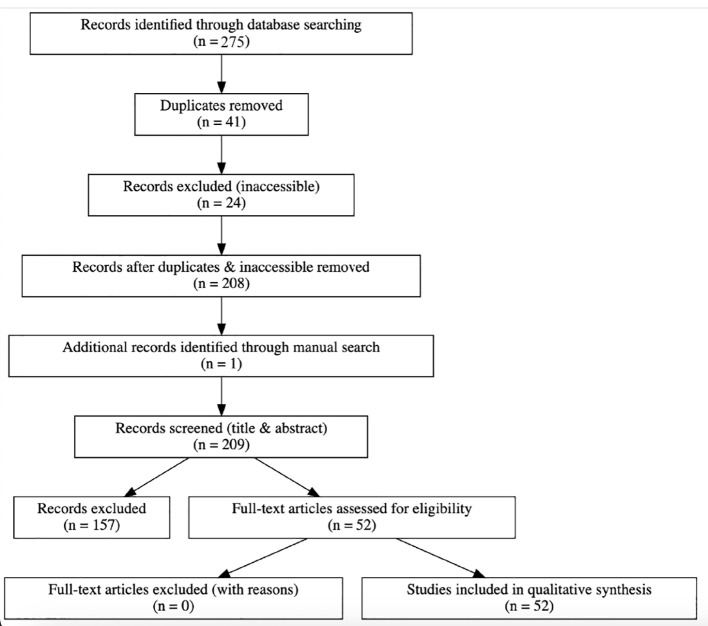
A total of 275 records were identified through electronic database searches (PubMed, Embase, and Cochrane). After removing 41 duplicates and excluding 24 inaccessible articles, 208 unique records remained for title and abstract screening. One additional study was identified through manual searching. After screening and conducting full-text reviews, 52 studies met the inclusion criteria and were included in the final synthesis (Figure 1: PRISMA Flow Diagram).

PRISMA flow diagram.
Thematic synthesis of evidence
Impact of periodontitis on GLP-1 levels and glucose metabolism in diabetes
Eight studies investigated how periodontitis influences GLP-1 activity, glucose metabolism, and related pathways under glucotoxic and lipotoxic conditions, particularly in the context of diabetes (Table 1).
Together, these studies support a bidirectional link between periodontal inflammation and impaired glucose metabolism, mediated partly by GLP-1 pathways.
| Author(s) | Year | Type of publication | Population | Intervention | Outcomes measured | Key findings | Limitations |
|---|---|---|---|---|---|---|---|
| Gheonea TC et al. () [11] | 2024 | Scoping Review | N/A | N/A | Role of DPP-4 and GLP-1 in periodontitis-diabetes link | Suggests DPP-4 inhibitors and GLP-1 agonists may benefit periodontal and glycemic outcomes | Limited to existing literature, no experimental data |
| Sun Y et al. () [12] | 2024 | Review | N/A | N/A | Lipotoxicity in diabetes and periodontitis | Proposes lipotoxicity as a key mechanism linking diabetes and periodontitis | Conceptual framework; lacks empirical evidence |
| Kang WS et al. () [13] | 2021 | Experimental Study (Animal) | Diabetic rat model | Gemigliptin (DPP-4 inhibitor) | Salivary function, glucose levels | Gemigliptin improves salivary function in diabetic rats | Animal study; lack of human data limits clinical relevance |
| Wang M et al. () [14] | 2023 | Experimental Study (Cell culture) | Periodontal ligament stem cells | Exendin-4 (GLP-1 receptor agonist) | MAPK and WNT signaling, osteogenic activity | Exendin-4 alleviates osteogenic inhibition in high glucose environment by modulating signaling pathways | study; effects in humans not confirmedIn vitro |
| Yang M et al. () [15] | 2022 | Review | N/A | N/A | Therapeutic potential of Liraglutide in diabetes-periodontitis comorbidity | Decreased alveolar bone resorption (reduced RANKL/OPG ratio), improved microvasculature of alveolar bone, reduced periodontal inflammation (IL-6, TNF-a, IL-1b) (p<0.05), upregulated ALP mRNA and Runx2 mRNA in gingival epithelium (impt for osteoblast differentiation). | Theoretical analysis; lacks primary data |
| Wang Z et al. () [16] | 2020 | studyIn vitro | Human periodontal ligament stem cells (hPDLSCs) | GLP-1 | PKCβ2 phosphorylation, osteogenic differentiation | GLP-1 inhibited PKCβ2 phosphorylation, enhancing osteogenic differentiation in an AGE microenvironment | findings; requiresvalidationIn vitroin vivo |
| Mohamed HG et al. () [17] | 2015 | Cross-sectional Study | Adults with and without Type 2 Diabetes | Measurement of glucoregulatory biomarkers | GCF biomarker levels and periodontitis severity | Chronic periodontitis was linked to altered glucoregulatory biomarkers, highlighting a possible link between periodontitis and metabolic dysregulation | Cross-sectional design limits causal conclusions; potential confounders not fully accounted for |
| Bajinka O et al. () [18] | 2023 | Review | N/A | Review of gut microbiota pathways | Diabetes mechanisms | Explored the role of gut microbiota in diabetes, including GLP-1 modulation, highlighting potential links to periodontal health | Review article; lacks direct experimental evidence |
Interplay among periodontitis, GLP-1 pathways, and dyslipidemia in obesity
Five studies examined links among periodontitis, GLP-1 pathways, and dyslipidemia or lipotoxicity in obesity and metabolic syndrome (Table 2).
These findings suggest that GLP-1 modulation may represent a shared therapeutic pathway for obesity, metabolic dysregulation, and periodontal disease.
| Author(s) | Year | Type of publication | Population | Intervention | Outcomes measured | Key findings | Limitations |
|---|---|---|---|---|---|---|---|
| Mesa F et al. () [19] | 2019 | Review | N/A | N/A | Mechanisms linking periodontitis and cardiometabolic risk | Identifies inflammatory pathways and immune responses contributing to cardiometabolic risk in periodontitis patients | Lacks primary data; mainly theoretical perspectives |
| Solini A et al. () [20] | 2019 | Observational Study | Severely obese individuals | N/A | Glucoregulatory hormones, periodontal status | Periodontitis affects glucoregulatory hormones in obese patients | Observational design; no causal relationship proven |
| Suvan J et al. () [21] | 2021 | Cohort Study | Obese and non-obese individuals with periodontitis | Periodontal treatment | Changes in incretin hormones (GLP-1, GIP), metabolic markers | Periodontal treatment improved incretin hormone levels, with greater effects in obese patients | Observational design; causality cannot be confirmed |
| Li F et al. () [22] | 2023 | Experimental Study | Specific Pathogen Free (SPF)-grade Wistar rats | Liraglutide administration | Inflammation, oxidative stress (Nrf2/HO-1 pathway) | Liraglutide reduced inflammation and oxidative stress in periodontitis by activating the Nrf2/HO-1 pathway, suggesting therapeutic potential | Animal study; human clinical relevance needs further investigation |
| Marchetti E et al. () [23] | 2009 | Review | N/A | Analysis of metabolic syndrome and periodontal disease | Systemic health connection | Highlighted the bidirectional relationship between metabolic syndrome and periodontal disease, emphasizing systemic inflammation pathways | Review article; lacks direct experimental data |
Role of DPP-4, periodontopathic bacteria, and molecular pathways in periodontitis
Twenty-seven studies have explored the contributions of DPP-4 activity, bacterial proteases, and host–microbe interactions to periodontal pathogenesis (Table 3).
Together, these studies identify host–microbe enzymatic interactions as key drivers of periodontal tissue destruction and possible systemic effects.
| Author(s) | Year | Type of publication | Population | Intervention | Outcomes measured | Key findings | Limitations |
|---|---|---|---|---|---|---|---|
| Elgün S et al. () [24] | 2000 | Observational Study | Patients with periodontal disease | N/A | Salivary enzyme levels (Alanine aminopeptidase, DPP-IV) | Higher enzyme levels associated with periodontal disease | Small sample size; observational design limits causal inference |
| Aemaimanan P et al. () [25] | 2009 | Observational Study | Chronic periodontitis patients | N/A | Salivary levels of Alanine aminopeptidase and DPP-IV | Elevated levels of these enzymes were associated with chronic periodontitis | Cross-sectional design; cannot establish causality |
| Ohara-Nemoto Y et al. () [26] | 2022 | studyIn vitro | Bacterial enzymes | N/A | Substrate specificity of bacterial DPP-7 | Expanded substrate specificity enables degradation of bioactive peptides | findings; implications for human health not directly establishedIn vitro |
| Ohara-Nemoto Y et al. () [5] | 2018 | Observational Study | Human oral microbiota | N/A | Distribution of DPP4, DPP5, DPP7, and DPP11 | Presence of these DPPs is linked to periodontopathic bacteria, suggesting biomarker potential | Microbiota study; functional impact on periodontitis not fully explored |
| Ohara-Nemoto Y et al. () [6] | 2017 | Experimental Study (and)In vitroin vivo | Periodontopathic bacteria | N/A | Incretin degradation and blood glucose modulation by bacterial DPP-4 | Bacterial DPP-4 degrades incretins, potentially impacting blood glucose levels | and animal model findings; human relevance needs further validationIn vitro |
| Jiang Y et al. () [27] | 2021 | Experimental Study ()In vitro | Saliva-derived microcosm biofilms | Manipulation to resemble dysbiotic subgingival microbiota | P. ging added to biofilm and noted increase in DPP4 activity and butyric acid production. Biofilm composition and structure | Successfully manipulated biofilms to mimic dysbiotic subgingival microbiota, offering a model for studying periodontal disease | model; may not fully replicateconditionsIn vitroin vivo |
| Rea D et al. () [28] | 2017 | Experimental Study (Crystallography and inhibitor profiling) | Porphyromonas gingivalis DPP-4 enzyme | Inhibitors targeting DPP-4 | Enzyme structure, inhibitor efficacy | Crystal structure revealed active sites for DPP-4, aiding in inhibitor design to combat periodontopathogens | Focuses on structural biology; lacksfunctional analysisin vivo |
| Kennett CN et al. () [29] | 1996 | Histochemical and immunocytochemical study | Human gingival tissue | N/A | Localization of DPP II and DPP IV | DPP II and IV localized in gingival tissues, suggesting roles in periodontal health and disease | Descriptive study; does not assess functional impact |
| Teshirogi K et al. () [30] | 2003 | Experimental Study | Porphyromonas gingivalis | Monoclonal antibody against DPP IV | Inhibition of DPP IV activity | Monoclonal antibody inhibited DPP IV activity in P. gingivalis, suggesting potential for therapeutic targeting | study; clinical implications require further investigationIn vitro |
| Yost S, Duran-Pinedo AE () [31] | 2018 | Experimental Study | Tannerella forsythia | Analysis of DPP IV role | Collagen degradation | DPP IV contributed to collagen breakdown, implicating its role in tissue destruction in periodontitis | Mechanistic study; needsvalidationin vivo |
| Cox SW et al. () [32] | 1992 | Observational Study | Human gingival tissue and crevicular fluid | None | DPP II and IV activity in periodontitis lesions | Elevated DPP II and IV activities in periodontitis sites, suggesting involvement in disease progression | Cross-sectional study; cannot establish causality |
| Cox SW, Eley BM () [33] | 1992 | Observational Study | Chronic periodontitis patients | Basic periodontal treatment | Enzymatic activity (DPP IV, cathepsin B/L, elastase, tryptase, trypsin) | Reduction in DPP IV and other protease activities post-treatment, indicating a role in inflammation and tissue breakdown | Limited sample size; observational design limits causal inference |
| Clais S et al. () [34] | 2014 | Experimental Study | Clinical isolates of P. gingivalis | Analysis of biofilm formation and DPP IV | Pathogenicity and biofilm formation | DPP IV activity was crucial for biofilm formation and virulence in P. gingivalis, suggesting a target for therapeutic intervention | study; clinical relevance needs further explorationIn vitro |
| Rea D et al. () [35] | 2004 | Experimental Study | Porphyromonas gingivalis | Expression and crystallographic analysis of DPP IV | Protein structure and activity | Successfully expressed and purified DPP IV from P. gingivalis, providing a basis for structural and functional studies | Preliminary study; functional implications require additional research |
| Suzuki A et al. () [36] | 2004 | Genetic Association Study | Severe periodontitis patients | Genomic marker analysis | Genetic susceptibility to severe periodontitis | Identified genomic markers potentially associated with increased risk of severe periodontitis | Observational study; requires validation in larger, diverse populations |
| Kumagai Y et al. () [37] | 2000 | Experimental Study | Porphyromonas gingivalis | Characterization of DPP IV | Enzymatic properties and virulence | DPP IV contributed to virulence through enzymatic activity, supporting its role in periodontal pathogenesis | findings;effects need to be confirmedIn vitroin vivo |
| Nemoto E et al. () [38] | 1999 | Experimental Study | Human gingival fibroblasts | Cytokine and bacterial stimulation | CD26/DPP IV expression | Cytokines and bacterial components significantly increased CD26/DPP IV expression on gingival fibroblasts, suggesting a role in immune response and inflammation | study;relevance requires further investigationIn vitroin vivo |
| Kumagai Y et al. () [39] | 2005 | Experimental Study | Porphyromonas gingivalis | Analysis of DPP IV activity | Connective tissue destruction mechanisms | DPP IV contributed to connective tissue destruction through enzymatic activity, implicating it in periodontal pathogenesis | Mechanistic study; clinical implications need validation |
| Mizutani T et al. () [40] | 1990 | Cross-sectional Study | Human gingival tissue | Measurement of DPP II and IV activity | Enzyme activity in chronic periodontitis | Increased DPP II and IV activity was observed in periodontitis-affected gingiva, suggesting a link to tissue breakdown | Observational design; lacks longitudinal data to determine causality |
| Eley BM, Cox SW () [41] | 1992 | Longitudinal Study | Chronic periodontitis patients | Comparison of enzyme activities pre- and post-surgery | Protease activity in GCF | Elevated DPP IV-like activity was detected in GCF, which decreased post-surgery, indicating its involvement in periodontal inflammation and healing | Limited sample size; other inflammatory markers not assessed |
| Kennett CN et al. () [42] | 1997 | Experimental Study | Gingival crevicular fluid samples | Analysis of proteases and inhibitors | Cellular contribution to protease activity | Host tissue proteases, including DPP IV, were significant contributors to GCF activity, highlighting their role in periodontal disease progression | Focused onenzymatic activity;dynamics require further explorationin vitroin vivo |
| Kumagai Y et al. () [43] | 2003 | Experimental Study | Porphyromonas gingivalis | Analysis of DPP IV peptidase activity | Virulence and pathogenicity | DPP IV peptidase activity was crucial for virulence but not solely sufficient, suggesting other factors contribute to P. gingivalis pathogenicity | Focused on bacterial mechanisms; host immune response not assessed |
| Nemoto TK, Ohara Nemoto Y () [7] | 2021 | Review | N/A | Review of dipeptidyl-peptidase function | Protein processing in P. gingivalis | Highlighted the role of dipeptidyl-peptidases in processing extracellular proteins, impacting bacterial virulence | Review article; experimental validation required |
| Miller DP, Scott DA () [44] | 2020 | Review | N/A | Analysis of protein catabolism genes | Role in P. gingivalis metabolism and virulence | Identified inherently and conditionally essential genes for protein catabolism in P. gingivalis, highlighting targets for therapeutic intervention | Review article; lacks experimental validation |
| Ohara-Nemoto Y et al. () [45] | 2014 | Experimental Study | Porphyromonas gingivalis | Identification of DPP-5 | Enzyme characterization and function | Identified and characterized DPP-5 in P. gingivalis, contributing to understanding of bacterial protein processing and potential virulence | Focused on bacterial mechanisms; host interactions not explored |
| Shibata Y et al. () [46] | 2003 | Experimental Study | Prevotella intermedia | Purification of DPP enzyme | Enzyme activity and characterization | Purified and partially characterized a DPP from P. intermedia, providing insight into its potential role in periodontal disease | Limited tofindings;relevance not assessedin vitroin vivo |
| Grenier D et al. () [47] | 2001 | Experimental Study | Porphyromonas gingivalis | Study of aminopeptidase activities | Enzyme activity and virulence | Demonstrated aminopeptidase activities in P. gingivalis, contributing to tissue destruction and virulence | Focused on enzymatic activity; host immune response not evaluated |
Therapeutic potential of GLP-1 receptor agonists in periodontal inflammation and regeneration
Twelve studies investigated GLP-1 receptor agonists and related incretin-based therapies for periodontal inflammation, osteoprotection, and regeneration (Table 4).
Taken together, these findings suggest that GLP-1 RAs exert multifaceted benefits in periodontitis by reducing inflammation, protecting alveolar bone, enhancing osteogenesis, and potentially modulating microbial virulence.
| Author(s) | Year | Study design | Population | Intervention | Outcomes measured | Key findings | Limitations |
|---|---|---|---|---|---|---|---|
| Sawada N et al. () [8] | 2020 | Experimental Study (Animal) | Rodent model | GLP-1 receptor agonist (Liraglutide) | Periodontal inflammation, bone loss | Liraglutide reduced periodontal inflammation and bone loss | Animal study; results may not directly translate to humans |
| Zhai S et al. () [9] | 2023 | Experimental Study (Animal) | Zebrafish scale regeneration model | GLP-1 receptor activation | Osteoblast differentiation, bone formation | GLP-1 receptor promotes osteoblast differentiation and enhances bone formation | Animal model may not fully replicate human biology |
| Zhang Y et al. () [10] | 2020 | andstudyIn vitroin vivo | Periodontitis model (cell cultures and rodents) | Liraglutide | Bone destruction, inflammatory markers | Liraglutide reduces bone destruction and inflammation in periodontitis | Results in animal models may not be directly applicable to humans |
| Liang Q et al. () [48] | 2021 | andstudyIn vitroin vivo | Human periodontal ligament stem cells (PDLSCs) and animal model | Stromal cell-derived factor-1 and Exendin-4 co-therapy | Cell proliferation, migration, osteogenic differentiation, bone regeneration | Co-therapy enhanced proliferation, migration, and osteogenic differentiation of PDLSCs, promoting periodontal bone regeneration | Preclinical study; human clinical trials needed for validation |
| Pang Y et al. () [49] | 2019 | studyIn vitro | Human periodontal ligament cells | Liraglutide | Cell proliferation, migration, osteogenic differentiation | Liraglutide promoted proliferation, migration, and osteogenic differentiation of PDL cells | results; clinical relevance requires furtherstudiesIn vitroin vivo |
| Murai H et al. () [50] | 2024 | Experimental Study | Porphyromonas gingivalis cultures | Curcumin | Bacterial growth, dipeptidyl peptidase activity | Curcumin inhibited DPP activity and growth of P. gingivalis, suggesting therapeutic potential | study;effects and clinical relevance need investigationIn vitroin vivo |
| Moraes RM et al. () [51] | 2015 | Animal Study | Rats with periodontitis | Exenatide and Sitagliptin | Inflammatory markers (IL-1β, MMP-9, NOS2), alveolar bone loss | Reduced inflammatory markers but did not decrease alveolar bone loss | Animal model; may not fully translate to human outcomes |
| Liu H et al. () [52] | 2019 | studyIn vitro | Human periodontal ligament stem cells | Exendin-4 | Wnt and NF-κB signaling, osteogenic differentiation | Exendin-4 regulated Wnt and NF-κB signaling, promoting osteogenic differentiation | model; clinical trials needed for confirmationIn vitro |
| Guo Z et al. () [53] | 2018 | studyIn vitro | Human periodontal ligament stem cells | Exendin-4 | Cell proliferation, osteoblastic differentiation | Exendin-4 countered high glucose-induced inhibition, promoting proliferation and osteoblastic differentiation | model; clinical relevance needs to be exploredIn vitro |
| Eley BM, Cox SW () [54] | 1992 | Correlational Study | Periodontitis patients | Measurement of protease activity in GCF | Clinical and radiological attachment loss | Significant correlation between GCF protease activity (including DPP IV) and periodontal attachment loss, indicating a role in disease severity | Correlational design; cannot establish causality |
| Qi J et al. () [55] | 2020 | Experimental Study | Animal model | DPP-4 inhibitor administration | Tooth movement and root resorption | DPP-4 inhibitor reduced orthodontic tooth movement and root resorption, suggesting potential for therapeutic application | Animal study; human clinical relevance needs confirmation |
| Suzuki Y et al. () [56] | 2016 | Experimental Study | Animal model of periodontitis | Glucose-dependent insulinotropic polypeptide (GIP) | Inflammation and periodontal tissue health | GIP exhibited anti-inflammatory effects in periodontitis, indicating a protective role and potential therapeutic use | Animal study; translation to human clinical application requires further investigation |
Discussion
This scoping review highlights a complex, interdependent network linking periodontitis, diabetes, and systemic metabolic dysfunction, with inflammation, oxidative stress, lipid metabolism, and microbial dysbiosis serving as central mediators. Elevated dipeptidyl peptidase-4 (DPP-4) activity and disturbances in glucoregulatory hormones—particularly in gingival environment—connect periodontal inflammation with impaired glycemic control. Evidence increasingly supports the role of GLP-1 and its analogues, such as exendin-4 and liraglutide, in not only improving glycemic outcomes but also enhancing bone regeneration, mitigating oxidative damage, and reducing local inflammatory responses. These effects are particularly relevant for diabetic patients, in whom lipotoxicity and advanced glycation end-products (AGEs) exacerbate periodontal tissue destruction, but may be attenuated by agents including metformin, omega-3 fatty acids, and GLP-1 analogues. Moreover, gut microbiota dysbiosis contributes to systemic inflammation and insulin resistance, while natural compounds such as resveratrol may help restore microbial and immune balance—underscoring the value of integrated therapeutic approaches.
Overall, the reviewed studies have reinforced the bidirectional relationship between periodontitis and cardiometabolic disorders. Periodontitis is more prevalent among individuals with obesity and type 2 diabetes, while also contributing to disease progression through chronic inflammation, oxidative stress, and dysregulation of the incretin axis. In severely obese populations, periodontitis correlates with elevated glucagon and GIP levels alongside reduced GLP-1, suggesting a mechanistic pathway that exacerbates glucose dysregulation. Notably, periodontal therapy has been shown to restore GLP-1 and GIP levels even in non-diabetic populations, although systemic markers such as hs-CRP often remain elevated in obese individuals, indicating an attenuated systemic response.
The therapeutic relevance of GLP-1 RAs is particularly compelling. Liraglutide demonstrated anti-inflammatory and bone-preserving effects in experimental periodontitis models through activation of the Nrf2/HO-1 oxidative stress pathway. GLP-1 receptor signaling also enhanced osteoblast differentiation in human dental pulp–derived stem cells via the LINC00968/miR-3658/Runx2 axis, sustaining osteogenesis even in hyperglycemic conditions. Similarly, exendin-4 reversed LPS-induced suppression of osteogenic differentiation in periodontal ligament stem cells (PDLSCs) by modulating NF-κB and Wnt/β-catenin signaling. Combined therapies, such as SDF-1 with Ex-4, further synergized to enhance PDLSC activity and bone regeneration in vivo, supporting the potential of stem cell–based regenerative approaches in periodontology.
The enzymatic role of DPPs, particularly DPP IV, emerges as another critical node at the intersection of microbial virulence and host systemic health. Elevated DPP IV activity in saliva and gingival crevicular fluid correlates with periodontitis severity and with the presence of Porphyromonas gingivalis. Since P. gingivalis relies heavily on DPP4, DPP5, DPP7, and DPP11 for nutrient acquisition in its asaccharolytic environment, inhibiting these enzymes disrupts its growth and pathogenicity. Strikingly, bacterial DPP IV mimics its human counterpart, degrading GLP-1 and thereby potentially worsening systemic insulin resistance. Host cells, including macrophages and fibroblasts, also upregulate DPP IV expression during inflammation, reinforcing its centrality at the host–pathogen interface. The structural similarities between bacterial and human DPP IV enzymes highlight opportunities to repurpose or redesign existing DPP-4 inhibitors for both systemic and periodontal applications.
Adjunctive approaches demonstrate potential. Curcumin, for instance, disrupts amino acid metabolism in P. gingivalis and inhibits DPP activity, causing nutrient deprivation stress. Human leukocyte elastase (HLE) has shown anti-inflammatory effects by downregulating CD40 on gingival fibroblasts, thereby impairing cytokine signaling central to periodontal tissue inflammation.
Together, these findings underscore the incretin axis and proteolytic enzyme systems as key regulatory nodes linking periodontal inflammation and systemic metabolic dysfunction. Targeting these pathways presents promising opportunities to develop dual-benefit therapies for both periodontal disease and cardiometabolic conditions.
Future directions
Animal studies and clinical translation
Future preclinical studies should use long-term and disease-complex models that better mimic chronic diabetes-associated periodontitis, including aged, obese, or genetically modified rodents. Studies of localized delivery systems for GLP-1 RA or DPP-4 inhibitors (e.g., biodegradable gels or microspheres) may clarify the feasibility of site-specific periodontal therapies with minimized systemic exposure. Moreover, animal models can clarify the impact of incretin-based therapies on the oral microbiome, oxidative stress, and immune-cell dynamics (e.g., M1/M2 macrophage polarization). Gene knockout or CRISPR-based modulation of bacterial and host DPP activity could further reveal mechanistic drivers of disease progression and resolution.
Clinical trials
Translation to human trials is the next critical step. Early-phase studies should assess GLP-1 receptor agonists and DPP-4 inhibitors as adjuncts to conventional periodontal therapy, particularly in patients with metabolic comorbidities. Non-diabetic or prediabetic populations with moderate-to-severe periodontitis may be ideal initial cohorts. Primary endpoints may include clinical attachment gain, inflammatory biomarkers, and systemic measures such as GLP-1 levels, HbA1c, and lipid profiles.
Randomized controlled trials
Comparisons of administration routes (oral, injectable, and localized delivery) and patient subgroups (e.g., obese vs. non-obese) will provide valuable insight into personalized therapy. Incorporating microbiome profiling and biomarker analysis may further reveal systemic and microbial shifts associated with treatment. Such translational trials will be essential to validate the dual periodontal and metabolic benefits of incretin-based therapies and protease inhibitors.
Conclusion
In summary, preclinical and observational evidence provides a strong rationale for exploring GLP-1 receptor agonists and DPP-4 inhibitors as novel adjunctive therapies in periodontology. Although preliminary data are promising, well-controlled human trials—conducted with careful ethical oversight and interdisciplinary collaboration—will be key to advancing these therapies into clinical practice. By targeting shared pathways of metabolic and periodontal dysfunction, incretin-based therapies hold potential to transform periodontitis management within the broader landscape of cardiometabolic health.