
What this is
- The Northern Colorado SARS-CoV-2 Biorepository (NoCo-COBIO) collects longitudinal data from COVID-19 survivors.
- It includes diverse biospecimens and clinical information to study ().
- Participants are monitored over time to understand symptoms and health impacts associated with SARS-CoV-2 infection.
Essence
- The NoCo-COBIO biorepository provides critical insights into the long-term effects of COVID-19, particularly , by tracking diverse health outcomes and biological responses in infected individuals.
Key takeaways
- Sixty-six percent of participants completed 2 visits, while 33% completed 4 visits, demonstrating strong engagement in the longitudinal study.
- Nineteen participants identified as Hispanic or Latino, with 15 hospitalized, highlighting the demographic diversity within the cohort.
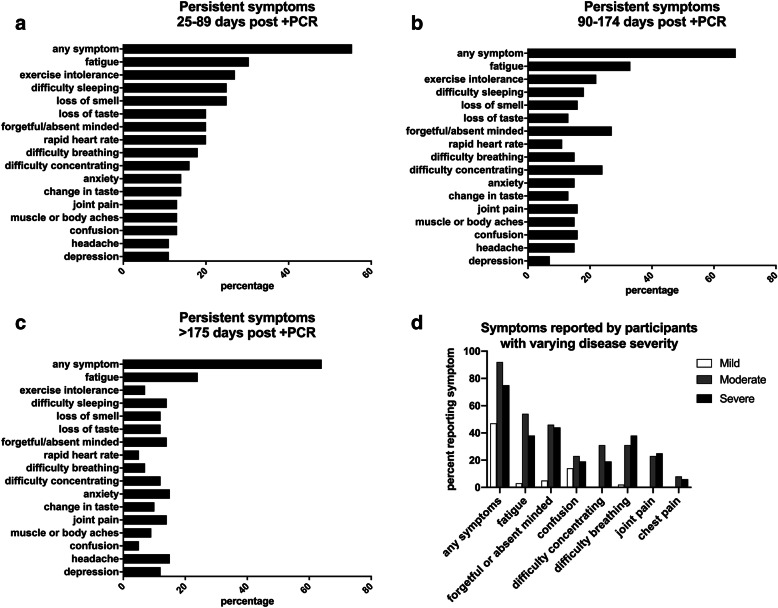
- Eighty-nine percent of hospitalized participants experienced persistent symptoms at 90–174 days post-infection, indicating a significant prevalence of .
Caveats
- The biorepository lacks racial diversity and a matched control group, which may limit the generalizability of findings.
- The study's reliance on self-reported symptoms may introduce bias in assessing prevalence.
Definitions
- Post-acute sequelae of COVID-19 (PASC): Persistent symptoms or new health issues that arise after the acute phase of COVID-19.
Simplified
Background
Since its initial identification in December 2019, severe acute respiratory syndrome-coronavirus-2 (SARS-CoV-2) has caused a global pandemic, killing millions and infecting over 100 million individuals worldwide [1, 2]. SARS-CoV-2 leaves behind millions of survivors, most of whom recover, but for many, symptoms persist [3 –7]. A broad range of symptoms can last over 6 months, and can include persistence of initial acute symptoms or development of new symptoms [3, 8, 9]. Persistent or new symptoms affecting COVID-19 survivors are named post-acute sequelae of COVID-19 (PASC) [9, 10]. Risk factors for developing PASC are currently being defined globally. A systematic and calculated approach to investigating the course of SARS-CoV-2 infection is needed to understand varied susceptibility to severe SARS-CoV-2 disease and COVID-19 sequelae. Scientists and industry have expressed the importance of a biorepository as an essential building block for critical research [11 –17]. Biobanking efforts for SARS-CoV-2 are underway globally, yet most are comprised of limited specimen types collected from participants at a single time point [16, 18 –21]. The Northern Colorado SARS-CoV-2 Biorepository (NoCo-COBIO) is uniquely multifaceted and contains longitudinal clinical data, electronic medical records (EMR), demographics, quality of life surveys, and biological specimens of stool, saliva, nasopharyngeal swab specimens, plasma, serum, peripheral blood mononuclear cells (PBMCs), and breastmilk if available, from each SARS-CoV-2-infected participant. The biospecimens are immensely valuable to longitudinally evaluate mechanisms underlying persistent symptoms and PASC. This clinically integrated-biorepository and COVID-19 survivorship project has been successful in securing patient compliance to long-term follow-up visits with the study team, and is a powerful resource for global collaboration and co-creation of statistically-powered study designs for assessing molecular, immune, and metabolic signatures associated with PASC in adults [22].
Methods
Participant identification and enrollment
The identification and enrollment of participants into NoCo-COBIO is a joint effort between Colorado State University (CSU), a land grant institution with a coordinated state-wide extension system, and the University of Colorado Health System (UCH). Individuals are eligible for participation if they have had a positive SARS-CoV-2 polymerase chain reaction (PCR) test and are at least 18 years of age. Participants are recruited from the community via the health department screening, local medical clinics, emails, recruitment flyers, web-based announcements, and directly through UCH northern Colorado hospitals, including Poudre Valley Hospital (PVH) in Fort Collins, Medical Center of the Rockies (MCR) in Loveland, and Greeley Hospital in Greeley. The UCH Trauma Research Department (TRD) identifies eligible hospitalized patients through Epic, the EMR platform. UCH clinicians that oversee patients at the northern Colorado hospitals are aware of the biorepository and may refer potential participants to the biobank research team for follow-up. UCH staff directly approach eligible, hospitalized patients on the ward for consent and enrollment. The UCH investigators also conduct frequent EMR searches to recruit recently discharged/diagnosed COVID-19 patients. Additionally, enrolled participants have also assisted via word-of-mouth and personal networks.
This biorepository was approved by CSU's Research Integrity and Compliance Review Office Institutional Review Board (IRB; protocol ID 20-10063H), as well as UCH IRB (Colorado Multiple IRB 20–6043) and is registered with ClinicalTrials.gov↗ (NCT04603677↗). All enrolled participants provide written informed consent. Adults with no history of infection and with a negative SARS-CoV-2 PCR test are enrolled for the same study visit and specimen collections. Given that these individuals are not matched to infected individuals, they were not included in the comparative analysis. All participants receive $25 cash compensation at each of the four study visits.
Clinical data
The study team administers the Rand SF-36 item health survey (SF-36) at two clinical follow-up visits to assess social impacts and quality of life after COVID-19. This survey gives an average maximum score of 100 in 8 different categories: general health, physical functioning, role limitations due to physical health, role limitations due to emotional health, energy level, emotional wellbeing, social functioning, and pain. A total, combined score is also given, with a maximum of 3600. The survey asks questions about the participants' emotional and physical well-being during the 4 weeks prior to survey administration. This validated instrument [28, 29] also compares current health to their health 1 year prior, as well as reports on the expectations for future health outcomes.
| System | Symptom |
|---|---|
| General | Fever, fatigue, exercise intolerance, weakness, appetite loss, hair loss, night sweats |
| Neurologic | Headache, dizziness, loss of consciousness, deafness or change in hearing, numbness, tingling, or burning sensation in extremities, loss of taste, loss of smell, change in taste, forgetful or absent minded, confused, difficulty concentrating |
| Ocular | Eye pain, redness, tearing, light sensitivity, floaters, loss of vision, blurry vision, flashes of light, eye burning |
| Head and Neck | Sore throat, runny nose, congestion, sinusitis, facial pressure, neck pain, mouth sores |
| Cardiac | Palpitations, chest pain, lower extremity swelling, chest burning, chest pressure, rapid heart rate |
| Pulmonary | Difficulty breathing, cough, phlegm in the back of throat, wheezing |
| Gastrointestinal | Abdominal pain, diarrhea, constipation, nausea, vomiting, reflux |
| Integumentary | Rash, dry skin, itching, jaundice |
| Musculoskeletal | Muscle aches, body aches, back pain, joint pain |
| Reproductive | Erectile dysfunction, amenorrhea, change in menstruation |
| Hematologic | Easy bruising, bleeding, clot |
| Psychologic | Anxiety, depression, difficulty sleeping |
| Other | Patients are asked about other persistent or new symptoms not mentioned above |
Biospecimen collection and transport
Participants consent to provide all biospecimens at 4 visits over an enrollment period of 6 months. The approximate time points for each of the study visits with symptom and specimen collections are: at the time of enrollment (Baseline Visit 1), 1 month after baseline (Visit 2), 3 months after baseline (Visit 3), and 6 months after enrollment (Visit 4). The second and third visits may take place in the hospital if the participant remains hospitalized. Follow-up visits take place at designated campus clinical research labs, medical clinic sites or in some specialized cases at home. After 6 months, participants may provide additional consent for a one-year follow-up visit.
Each patient sample is de-identified and labeled with a unique study code identifier. Information linking participant identification to the study codes is stored in the offices of the investigators and will be maintained for up to 5 years following the cessation of the study. Nasopharyngeal swab and saliva in VTM from acutely infected patients are transported to and processed in CSU's biosafety level-3 (BSL-3) facilities. Blood, nasopharyngeal samples, and saliva collected from convalescent patients and all fecal samples are transported to and processed in biosafety level-2 (BSL-2) facilities in accordance with CSU's IRB and Centers for Disease Control and Prevention (CDC) recommendations. Transportation of specimens from clinical sites to laboratory facilities is done in accordance with U.S. Department of Transportation hazardous materials regulations.

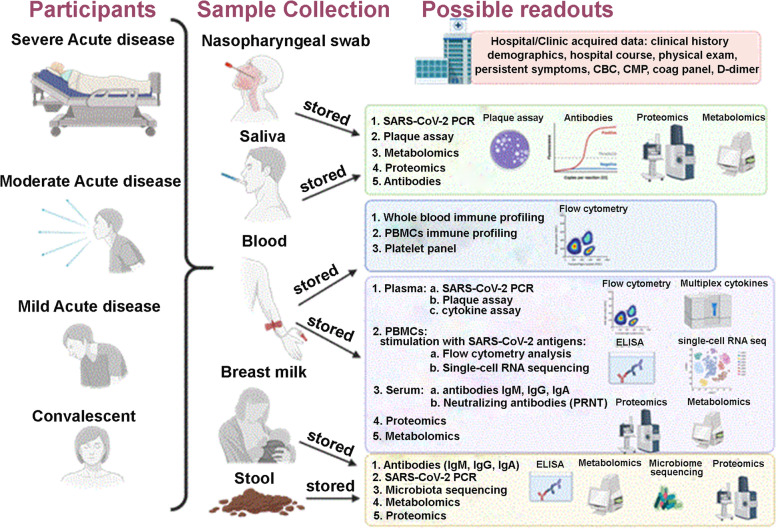
Schematic of multi-matrix biorepository, sample processing, analysis and storage from adults across the clinical spectrum of disease severity. Image was created using(Toronto, ON, Canada). PBMCs denotes peripheral blood mononuclear cells, CBC complete blood count, CMP comprehensive metabolic panel, Coag coagulation BioRender.com
Whole blood processing protocol
An aliquot of whole blood is removed from a CPT, incubated with platelet surface markers, and analyzed by flow cytometry with LSR II (BD Biosciences) and FACSAria Cell Sorter (BD Biosciences) instruments. A second aliquot of blood is removed from the CPT and stained for leukocytes and endothelial cells and analyzed by flow cytometry on a Cytek Aurora (Cytek Biosciences) instrument. The CSU Flow Cytometry Core has instruments with the same laser configurations inside and outside the BSL-3 facility to preserve consistent results when analyzing samples in different locations.
The CPTs are then centrifuged according to manufacturer instructions. The plasma is removed, and the PBMCs are separated and washed. A small aliquot of PBMCs is removed for additional antibody staining and flow cytometry analysis. PBMCs are cryostored in freezing media (90% heat inactivated fetal bovine serum (FBS) (Avantor) and 10% dimethyl sulfoxide (DSMO) (Sigma Altrich)). PBMC are first stored in an isopropanol-filled Nalgene® Mr. Frosty (Thermo Scientific) at − 80 °C for 24 h and transferred into liquid nitrogen for long-term cryopreservation.
Plasma and serum aliquots
Following removal from CPTs, plasma is stored in 1 mL aliquots at − 80 °C. Blood collected in serum separator tubes is allowed to clot for 30 min, and then spun at 1000 x g at 4 °C for 10 min. Serum is removed and stored in 300 uL aliquots at − 80 °C. Each participant's samples are designated to an individual cryobox and organized by their visit for quick sample retrieval.
Saliva and nasopharyngeal processing
An aliquot of both saliva and nasopharyngeal sample in VTM are sent for quantitative PCR (qPCR) analysis for SARS-CoV-2. The remaining saliva is centrifuged, the pellet is discarded, and the supernatant is aliquoted for − 80 °C storage. Nasopharyngeal samples are aliquoted and stored at − 80 °C for SARS-CoV-2 viral titer analysis using plaque assay.
Stool processing
Stool samples are aliquoted and stored at − 80 °C for DNA, RNA, secretory immunoglobulin A, and metabolite analysis.
Statistical analysis
Statistical analysis was performed using Fischer's Exact Test.
Results
Sixty-six percent (N = 79) of all participants have completed 2 visits, 50% (N = 59) have completed 3 visits, and 33% (N = 39) have completed 4 visits. Including follow-ups, 301 visits have been conducted, and at 88% of these visits, participants were able to provide all samples requested. Participant visits are conducted at the time of enrollment (Visit 1-Baseline), and at 1 month (Visit 2), 3 months (Visit 3), and 6 months (Visit 4) from the time of enrollment. Nearly every visit or study encounter has yielded blood, nasopharyngeal, and saliva samples (99, 99, and 98% respectively), and 88% of visits yielded stool samples. The team typically processes 10 sample sets in a single day. The time to obtain, process, and store samples from 10 participants is approximately 50 personnel hours (5–7 people) and costs $1500 U.S. dollars per sample.
The participants included in the biorepository thus far represent a broad age range (18–82 years), and the elderly were more likely to have moderate or severe COVID-19 (Table 2). Seventy-one percent of participants are females, and 29% are males. Of participants that suffered severe disease, 69% are males. Nineteen participants identify as Hispanic or Latino, and of these, 15 were hospitalized with COVID-19. Obese participants in our cohort were also more likely to suffer from moderate or severe COVID-19. The average body mass index (BMI) of participants with mild disease was 26, in contrast to an average BMI of 36.5 in both the moderate and severe groups (Table 2).
The individuals included in this biorepository also have a variety of underlying health conditions that have been associated with severe COVID-19, including, but not limited to, obesity, stroke, diabetes mellitus, liver disease, connective tissue disease, chronic obstructive pulmonary disease (COPD), congestive heart failure, and coronary artery disease [23, 24, 30 –33]. In our cohort, PASC is more prevalent in those with obesity and advanced age. This may be confounded by disease severity, given most participants with severe COVID-19 are obese and elderly, and a larger sample size is needed to correct for bias. When comparing those with and without PASC in participants with mild disease only, there was no significant difference in age, gender, BMI, or underlying health conditions. Interestingly, nearly all patients with PASC had normal physical exams.

Percentage of participants reporting symptoms between 25 and > 175 days post infection.25–89 days ( = 56),90–174 days ( = 55), andgreater than 175 days ( = 42). The number of participants in the surveys vary for each time point.Percentage of participants who suffered mild ( = 43), moderate ( = 13), or severe ( = 16) COVID-19, reporting symptoms at any follow-up visit (from days 20–243 post infection) a b c d N N N N N N

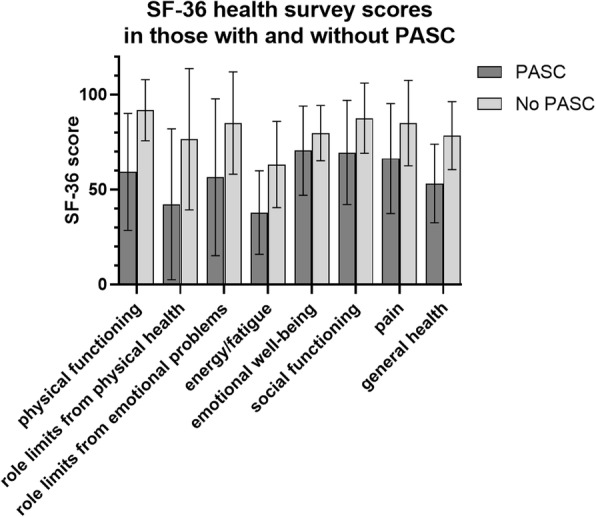
Rand SF-36 item health survey scores in participants with and without Post-Acute Sequelae of COVID-19 ( = 69). The survey was administered an average of 125 days post SARS-CoV-2 positive PCR diagnostic test result N
| Characteristics | Mild( = 58)n | Moderate( = 30)n | Severe( = 31)n |
|---|---|---|---|
| Age, mean (SD), y | 39.2 (15.9) | 62.1 (14) | 59.7 (13.3) |
| Sex, no. (%) | |||
| Female | 42 (71) | 15 (52) | 9 (29) |
| Male | 16 (29) | 15 (48) | 22 (71) |
| BMI, mean (SD)a | 26.3 (5.3) | 36.5 (7.5) | 36.5 (10.7) |
| Ethnicity, no. (%) | |||
| Non-Hispanic/Latinx | 54 (93) | 23 (76.6) | 18 (58) |
| Hispanic/Latinx | 4 (7) | 7 (23.4) | 13 (42) |
| Co-existing conditions, no. (%) | |||
| CVA | 3 (11) | 1 (3.2) | |
| COPD | 1 (2) | 5 (18.5) | 3 (9.7) |
| DM | 1 (2) | 8 (26) | 16 (48.4) |
| HTN | 1 (2) | 11 (40) | 19 (57.6) |
| CAD | 1 (2) | 2 (7.4) | 1 (3.2) |
| Active cancer | 3 (11) | ||
Discussion
Although challenging to implement and establish, longitudinal SARS-CoV-2 biobanking efforts are a valuable investment and resource to expedite research and further our knowledge of COVID-19 and PASC [11, 22, 34]. In this cohort, obesity, age, male sex, and Hispanic/Latinx ethnicity were risk factors for severe COVID-19. These clinical characteristics have been previously associated with severe disease [35 –37], validating the NoCo-COBIO cohort. Hospitalized patients were also significantly more likely to suffer from PASC than non-hospitalized participants, similar to what has been previously reported for PASC [4, 5, 7]. The duration of PASC in this prospective cohort analysis is extensive, and we found that symptoms persisted in 89% of hospitalized participants at 90–174 days post infection, and in 90% after 174 days. Some of these participants required prolonged hospital stay, and many symptoms could be attributed to injuries or sequelae sustained from ICU stay alone [38]. However, those hospitalized with moderate disease (oxygen requirement of 1-5 L/min, not requiring ICU stay) were equally as likely to develop PASC as those who had severe disease (oxygen requirement of greater than 5 L/min). Twenty-three percent of our participants who were not hospitalized for COVID-19 also developed PASC. Although those who suffered mild COVID-19 are not at as high of a risk for developing PASC as those who were hospitalized, a staggering amount of people could be affected by PASC given high infection rates in the population. We have enrolled adults with no history of SARS-CoV-2 infection for matched biospecimens (N = 17). These non-infected individuals also completed the symptom questionnaire and did not report any symptoms. This is important, given some symptoms of PASC such as anxiety or fatigue could be perceived as attributable to social isolation and decreased activity during the pandemic. The adults with PASC had lower quality of life scores on SF-36 surveys when compared to those without PASC, consistent with previous research [39]. PASC could further burden our health care system during an already strained pandemic time, and continued prospective follow-up is essential to understand the pathophysiology underlying the physical difficulties and emotional complications of PASC [40, 41]. We aim to further analyze our cohort to find immunologic, metabolic, microbial, proteomic, and long-term clinical differences in those with and without PASC. Physical examinations and symptom surveillance over time increase the significance of this biorepository as it allows for depth during examination of those with post-viral sequelae. The administration of quality-of-life questionnaires is an additional unique aspect of this protocol, providing a structured tool to further assess those with PASC. This multifaceted approach to post-viral symptom surveillance is of important correlative and potential causal biological value with the linkages to innumerable data points and analytes that are under investigation from the specimens.
Though we were able to include individuals with Hispanic or Latinx ethnicity, the lack of racial diversity is one major shortcoming of the biorepository and we aim to enroll participants of various races to the biobank. Another shortcoming is the lack of a control group. The non-infected adults enrolled were healthier and younger than the COVID-19 infected participants. We do seek to enroll a participant-matched control group for age, BMI, sex and other co-morbidity characteristics. Additionally, the Cameron Peak wildfire was a major disturbance to air quality and outdoor activity in northern Colorado during the August–October 2020 portion of our data collection, which may have affected health perception and symptoms.
This biobank protocol with a manual of operations and standard operating procedures provides a template for other academic-clinical teams that reside outside of traditional metropolitan settings to replicate for ensuring compliance and follow-up for patient-matched, multi-matrix biospecimens. These stored sample sets are needed for improving diagnostic designs, advancing therapeutics research and development of SARS-CoV-2 vaccines, as well as understanding those with prolonged course of illness and those without PASC.
Conclusions
People have diverse and complex courses of illness from COVID-19 across organ systems. In this cohort, patients who were hospitalized for COVID-19 were more likely to have PASC than those not requiring hospitalization, yet the 23% of patients who were not hospitalized and developed PASC also merit research attention and quality of life assessments. This patient-matched, multi-matrix, longitudinal biorepository from COVID-19 survivors will allow for current and future research to better understand the pathophysiology of disease, prolonged symptoms and to identify targeted interventions to reduce risk for PASC.